Year: 2009

Standing on their shoulders

Constance Singam takes a look at three women whose commitment to women’s causes has helped to reshape the world and transform women’s lives. It is women such as these, she says, who are the true feminist mentors.
I watched an episode of The Oprah Show some time ago when her guests were the feminist icons – the real feminist mentors – Gloria Steinem and Billie Jean King. Two very extraordinary women, among many others both ordinary and extraordinary, whose commitment to women’s causes transformed our lives. They are agents of change, dedicated to shaping a world that fits the needs of its people.

They started their ‘crusade’ against all forms of discrimination in the 1960s and they are still at it with amazing passion, energy and clarity of vision about the kind of world they would like to see.

Gloria Steinem, for those who have not heard of her, is one of the foremost feminist thinkers of the late twentieth century. As a journalist, she helped shape feminist dialogue and had an influence on the political landscape.

gloriagloria2

With other feminist leaders of the sixties and seventies, she co-founded the National Women’s Political Caucus. She went on to co-found both NEW YORK magazine and MS. magazine. Among the books she has written are Outrageous Acts and Everyday Rebellions (1983) and Revolution from Within (1992).

The Steinem I watched on “Oprah” was a stunning 75-year-old, as energetic as ever and still making waves. In 2005, for instance, she co-founded with Jane Fonda and Robin Morgan The Women’s Media Center, a non-profit progressive women’s media organisation. The Women’s Media Center makes women visible and powerful in the media, ensuring that women’s stories are told and women’s voices heard.

Billie Jean King is a tennis legend. She won 39 Grand Slam singles, doubles and mixed doubles tennis titles, including a record 20 titles at Wimbledon.

In 1973, she challenged Bobby Riggs to a match and defeated him. This was arguably one of the greatest moments in sports history. It was hailed as the Battle of the Sexes and is remembered for its contribution to the women’s movement. I watched it on TV, sitting on the edge of my seat, along with millions of others around the world, willing her to win.

billie

Billie Jean King spoke out for women and their right to earn prize money comparable to men in tennis and other sports. Her constant lobbying helped to break many barriers. In 1968 when she first started in tennis championship matches, women were awarded only 37% of the prize money that men got. Today, thanks to Billie Jean King, tennis champions such as Venus Williams take home the same amount of prize money as male tennis players.

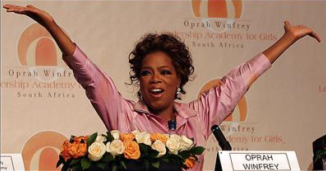
Oprah Winfrey herself, of course, is a feminist icon. She emerged from a humble background to become one of America’s most influential women.

oprah

Born to unwed teenage parents, Winfrey was raped by a cousin when she was nine years old and endured many other hardships. But, as she once said: “I knew there was a way out. I knew there was another kind of life because I had read about it. I knew there were other places, and there was another way of being.

My own life experience has taught me that there is indeed another way of being, and I am continuing to learn that way of being. My classroom was AWARE. All I knew, when I started on my feminist path, was that women were treated as second class citizens and had very little power over their lives. I would not be the woman I am today if not for my active participation in AWARE. What an exhilarating and empowering journey it has been!

The empowerment of women is a powerful tool for eliminating inequality and injustice. The empowered woman becomes an agent of change in the home, in the schools, at the work place.

During that episode of her show with Steinem and King, Winfrey at one point turned to her audience and said “You are the woman leader you have been waiting for.”

She’s right, you know. You are. Yes, you.
The writer, a social activist and writer, was president of AWARE for a total of six terms (1987-89, 1994-96, 2007-09) and president of the Singapore Council of Women’s Organisations (1990-92).

AWARE audience applauds The Blue Mansion

blue-mansion-iconGlen Goei’s film The Blue Mansion got enthusiastic rounds of applause at its Singapore fundraising premiere on 14th and 15th October.

Some 550 people attended the screening at GV Grand at Great World City on 15th October, with a further 130 or so present at the special corporate event screening on 14th October at GV Vivocity.

Glen mingled with guests at the pre-movie reception on both nights, as did members of his cast. They included Lim Kay Siu, Adrian Pang, Neo Swee Lin, Emma Yong, Claire Wong, Tan Kheng Hua, Huzir Sulaiman and Pam Oei.

In his message in the programme booklet, Glen said he had picked AWARE for the charity premiere because it “seeks gender equality, embraces diversity, and respects the right of individuals to live the life they choose – values that I would expect to prevail in any civilised society. These are the very themes that I explore in the film.”

In her message, AWARE President Dana Lam said “Glen’s film is a satire about the family and its espoused values. It is also about love and the importance of imagination – the ability to imagine realities other than one’s own.

“Ultimately, it is about courage – the courage to be one’s self and to allow others to be themselves. It is about the need to have the imagination, and the courage, to accept. And the tenacity to carry on in spite of difficulties. At AWARE, we understand this well.”

AWARE thanks all who helped to make the fundraising premiere a success. Special thanks to Glen, and to our sponsors:

Fundraising premiere on 15th Oct:


Private Event Screening on 14th Oct:


ABOUT THE BLUE MANSION
The Blue Mansion (NC16) is a quirky murder mystery about a wealthy Asian tycoon who dies suddenly under mysterious circumstances. He returns as a ghost to try to uncover the secret of his death with the help of his family and the police.

It was filmed entirely on location at a UNESCO Architectural Heritage Award recipient, the Cheong Fatt Tze Mansion in Penang. Larry Smith Bsc, the Director of Photography for Stanley Kubrick’s film Eyes Wide Shut, leads the international production team.
The Blue Mansion is brought to you by

Watch the movie trailer at the official movie website.

Come for breakfast with Connie

AWARE continues its Women in Conversation Series over BreakfastConnie Singham

Constance Singam, one of Singapore’s leading feminists and former President of AWARE, will lead an informal discussion for members about self-discovery.

Over breakfast at the AWARE Centre on 24 October, she will share her personal experience with transformation at different stages of her life.

The first was precipitated by being made a widow at a young age, then obtaining her Masters degree at the age of sixty. And in her seventies, she became AWARE’s President again.

Most recently, retirement has triggered a period of self-reflection as she begins the next chapter of her life.

The process of finding yourself has no age limits and is constantly evolving. Participants are encouraged to share their own stories.

“Finding Yourself at Any Age”
Special Guest and Chef: Constance Singam
Date: 24 October 2009
Time: 9.30 am
Venue: AWARE Centre
Price: $15.00 per person

Reservations for this event are closed.

About ConstanceConnie SinghamConstance Singam holds an MA in Literature. She is a teacher, social activist and writer. She was the president of AWARE, a past president of the Singapore Council of Women’s organisations and a founder member of TWC1, TWC2 and MediaWatch.

Her research interests over the past twenty years have been Singapore women’s history, feminist issues, and the state of civil society activism in Singapore. She has published several essays on these subjects. Her latest book – co-edited with Audrey Chin – “Singapore Women Re-Presented” was launched in Dec. 2004.

Why should we care about Kartika?

By Vivienne Wee
How did you react when you heard in July that a woman was about to be caned in Malaysia? Did you think something like this? “What’s so bad about drinking beer? These fundamentalists are too much.” But did you think that what was to happen to Kartika had anything to do with you? No?

Actually, the sentence of caning imposed on Kartika is relevant to you. Perhaps you may say, “But I’m not even Muslim. Why should I care?” Or you may say, “I am unlikely to be caned. So what does this have to do with me?”

To use an analogy, even if you are yourself not a victim of domestic violence, does this mean that you don’t care whether domestic violence happens? If only those who suffer are to care about their condition, then there is no need for AWARE to have a hotline.

The AWARE hotline says: “Call us, we care.” We imply that we care for all women, not just some women. Perhaps you may say, “But Kartika didn’t call us. What is more, she even accepted the sentence of caning.”

True, Kartika did resign herself to being caned just to get it over and done with. This did cause some to hesitate about whether to speak out against the sentence of caning. There was a debate about this in email conversations that spanned Singapore, Malaysia, Indonesia, Hong Kong, Thailand, India, South Africa, Uzbekistan, France, UK and other countries.

Are you surprised at the number of countries mentioned? Yes, there was international concern about this sentence of caning of one woman in Malaysia. Letters were being written to Malaysian ambassadors all over the world, not to mention the attention of the international media.

Farish Noor (Senior Fellow, S. Rajaratnam School of International Studies) noted:

The conservative Islamists of Malaysia … simply do not seem to understand how and why the international community is upset with the idea of a woman being caned for drinking a pint. …The Mufti of Perak, Harussani Zakaria…even asked why there was such a fuss being made about a woman being caned six times when, in his opinion, the punishment ought to have been 80 lashes instead?

Why was there international concern even though Kartika herself had accepted the sentence? In the email exchange between feminists across countries, the following point was made by Shanti Dairium (former member of the UN Committee for the Elimination of All Forms of Discrimination Against Women [CEDAW] and founder of International Women’s Rights Action Watch, Asia-Pacific):

The fact that she [Kartika] does
not want to appeal is not the main consideration. It is not only about her individual rights being violated and securing a treatment for her that protects her human rights…. The important issue here is the deterioration of human rights standards as applied by the State. If the caning takes place, a bad precedent is set. Furthermore if a person accepts a certain treatment that violates human rights and harm is done to her, human rights defenders cannot stand by and say it is her choice. Take the case of sati in India; there were also arguments that if a widow chooses to immolate herself then there should be no interference. We have to act against anything that will contribute to normative standards that go against human rights.

Perhaps you may argue: “But 6 strokes of the cane would not have killed the woman. It’s not as bad as sati where the woman is burnt alive.” Does this mean we should accept practices that inflict violence as long as these do not kill?

At its 61st Annual General Meeting (17 March 2007), the Malaysian Bar called for the abolition of whipping as a punishment for any offence as it is “anachronistic and inconsistent with a compassionate society.” However, the deputy president of Parti Islam Semalaysia (PAS), Nasharudin Mat Isa, has spoken against the Malaysian Bar’s resolution by justifying whipping as enshrined in the Quran and Hadith.

Whipping is also mentioned as a punishment in the Jewish Talmud and the Old Testament of the Christian Bible (Deuteronomy 25:2). Chinese imperial law legalised many forms of torture, including whipping. (See Tradition of the law and law of the tradition: law, state and social control by Xin Ren 1997). Indeed, ancient legal codes are replete with cruel, inhuman and degrading punishments. But should any of these ancient legal codes be used to justify such punishments today?

In 1984, the United Nations General Assembly adopted the Convention against Torture and Other Cruel, Inhuman or Degrading Treatment or Punishment. This Convention developed out of article 5 of the Universal Declaration of Human Rights (adopted by the UN General Assembly in 1948) and article 7 of the International Covenant on Civil and Political Rights (adopted in 1966). Both these articles “provide that no one shall be subjected to torture or to cruel, inhuman or degrading treatment or punishment.”

Despite these international Conventions, we are nevertheless encountering a growing proclivity among some to justify “anachronistic” punishments in the name of ancient legal codes, often associated with fundamentalist interpretations of religion. The result is the making of “normative standards that go against human rights.”

That is why the sentence of caning imposed on Kartika concerns us. If she were to be caned, not only would she be the first woman ever to be caned in Malaysia, she would be so punished on the basis of a particular interpretation of sharia law. It is quite clear that this is just a particular interpretation, because in Malaysia, only three states (Pahang, Perlis, and Kelantan) impose whipping as a punishment on Muslims for drinking, while in the other ten states, they are merely fined.

It is also clear many Muslims in Malaysia disagree with such a punishment. Women, Family and Community Development Minister Datuk Seri Shahrizat Abdul Jalil stated, ““The overriding view was that the sentence meted out was too harsh and is not commensurate with the offence…. This one particular case could have damaged the image of Malaysia in its fair and just implementation of the Shariah law…. I feel the person concerned should appeal to the state authorities and not be so willing to accept the punishment.” (New Straits Times 25 August 2009). Even the Malaysian Prime Minister Najib Razak has urged Kartika to appeal the sentence.

“Very interesting,” you may be saying, “but all this is happening in Malaysia. So why does it concern us in Singapore?” Kartika is a Malaysian citizen and a Singaporean permanent resident. So what happens to her is of concern to us as Singaporean citizens and permanent residents.

Moreover, what happened to her can also happen to a Muslim woman who is a Singaporean citizen and who is found drinking in one of those three states. The President of the Malaysian Syariah Lawyers Association, Mr. Mohd Isa Abdul Ralip, pointed out: “All Muslims, regardless of whether they are tourists or Malaysians, are subject to local Islamic laws” (The Straits Times, 24 July 2009).

If Kartika were to be caned, it would set a dangerous precedent for the caning of Muslim women in Malaysia, “regardless of whether they are tourists or Malaysians.” As noted by Farish Noor, “The costs of caning Kartika are simply too high, and should that line be crossed the country would have jumped one rung up the Islamisation ladder yet again.” This would have serious implications beyond Malaysia.

For all these reasons, AWARE is right to have co-signed with seven Malaysian women’s organisations, one other Singaporean organisation (Maruah) and one Indonesian women’s organisation, a letter sent to the Office of the High Commissioner for Human Rights in Geneva, addressed to the UN Special Rapporteur on Violence Against Women, the UN Special Rapporteur on Torture and Other Cruel, Inhuman or Degrading Treatment or Punishment, and the High Commissioner for Human Rights.

We are glad that the voicing of national and international concern seems to have produced a tentatively positive result. The caning is now deferred, pending a legal review. However, the saga is not over. On 11 September 2009, the Pahang Islamic Religious Department announced that it is still prepared to proceed with the caning of Kartika Sari Dewi Shukarno after Hari Raya Aidil-fitri. But the implementation of the punishment would depend on the review by the Kuantan Syariah High Court Appeals Panel, expected to be concluded after Raya. So we still have to wait and see what the outcome of that review will be.
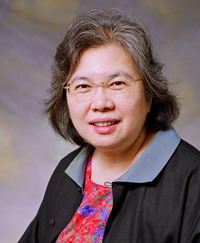
Vivienne WeeThe writer is a founder member of AWARE, an anthropologist and, needless to say, a feminist.

Older and wiser – or just poorer?

by Corinna Lim
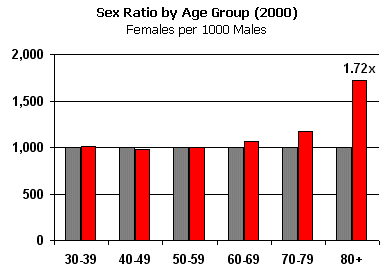
As a woman, you are likely to outlive your husband by a good 10 years. This is because women tend to marry men who are about five years older, and on average women live five years longer than men.

But this longevity comes at a price.

Your husband is likely to get chronically ill before you do, and you may find that the family funds have been used up for his care by the time you are in need yourself.

sex-ratio

In 2005, AWARE issued its report “Women Growing Older and Poorer” which showed that women were at risk in old age for a number of reasons, not least of all because they had much less CPF savings upon retirement.
Women tend to:

  • spend more time out of the workforce to care for their dependents
  • opt for less demanding jobs in order to care for dependents (“mommy track”)
  • get paid less for the same work (women earn 73% of men’s wages according to the 2008 Report on Wages in Singapore by Ministry of Manpower).

As a result, by the time of retirement, the average woman is in a much weaker financial situation than the average man. The AWARE survey found that men had, on average, 69% more CPF savings than women.

cpf-savings
All the more reason to plan

A woman’s increased vulnerability makes it important that she understands her financial situation and plans for her retirement.

Understanding her financial situation means knowing several things:

  • what the family assets are: insurance (including beneficiaries), bank accounts (account details, signatories, balances), investment portfolios, properties (including mortgages);
  • the family income sources, expenses and liabilities (including guarantees);
  • location and content of family’s wills (including beneficiaries).

Planning for retirement means:

  • ensuring that you have enough funds (savings, CPF, endowments) to maintain your living standard;
  • having sufficient and appropriate insurance to cover illnesses and other emergencies.

Most women are not prepared.

An online survey conducted recently by AWARE and ipac financial advisors showed than only 10% of women were planning for retirement.

Are you among that 10%? If not, perhaps it is time to start paying attention to your long-term financial needs. It’s time to think about what you need to do to have the peace of mind that you will be financially secure in your old age.

Learn more about how you can secure your financial future by attending the upcoming talk A Man is Not A Financial Plan.More

No To Rape. No Exceptions.

VIEWPOINT

By Jolene Tan

At first blush, the campaign name No To Rape seems odd. Who could disagree?

No To Rape But reality is odder still. The law itself, the Singapore Penal Code, says “yes” to rape. A man can force a woman to have sex with him, and never be prosecuted or convicted for rape, so long as they are married. (There are limited exceptions – for instance, where the couple is “living apart” and the woman has applied for a protection order – but they do not apply to most marriages.) This is known as marital immunity for rape.

Shockingly, marital immunity extends not only to adult women but also to minor wives. A man penetrating a girl of 14 or 15 without her consent will not be treated as committing rape, so long as he is her husband.
No To Rape calls for marital immunity for rape to be abolished completely, so that all rape complaints face the same processes of investigation, and the same potential for prosecution and conviction, regardless of who the perpetrator might be. More than 2,400 people have signed our petition at NoToRape.com to show their support for this position.

**

Why does marital immunity exist to begin with? This provision was bequeathed to us by the British. Traditionally, in many societies, women were not understood as full people, but partly property. Women were assumed not to have sex for their own purposes. Sexual access to their bodies was decided by their owners – fathers if they were not married, and husbands if they were.

Rape was a crime against “purity”, a quality for which a woman’s body was a vehicle, and from which her body derived value. This value belonged to her father or husband. Rape destroyed this value, and had the character of a property crime against the relevant man. That being so, how could forcing your wife to have sex be rape? The man was simply accessing the value to which he was entitled. The woman’s feelings were irrelevant. Her non-consent was a kind of malfunction, a failure of a thing to serve its proper purpose; maybe regrettable if you were sentimental, but not a matter for law. The husband had “already had her” and was licensed to do so, the wife had long lost her “purity” to him – and it was purity, and not women, that the law protected.

Thanks to the global struggles of women’s rights campaigners, this understanding of rape is now alien and abhorrent to many. We understand rape as a crime because it is an act of violence. It is an invasive appropriation of the victim’s body against her will and contrary to her purposes, to serve the desires and wishes of the rapist. It says that her right to choose what to do with herself does not matter, that she is simply a resource to be used by the rapist. And this is just as heinous whether the rapist is a stranger, an acquaintance, a colleague, a friend, a lover, or a husband.

Prosecuting marital rape is not interference with a private relationship any more than is prosecuting any other form of domestic violence. Rape is not sexual intimacy – it is just a beating carried out with a sexual organ instead of a fist. A marriage certificate should not be a license to commit violence. If you agree, please sign the No To Rape petition today.

The writer, a charity fundraiser with a legal background, is one of the organisers of the No To Rape campaign. AWARE supports the campaign.

Financial Clinic By iPAC @ AWARE

Event title: Financial Clinic By iPAC
Date: 9 October 2009
Time: 7-10pm
Venue: AWARE Centre

Description: One on one consultation with iPAC financial consultants for women earning less than $3000 and are facing changed financial circumstances – divorce, death of spouse, loss of job, partner loss of job, increased debt servicing and impoverishment from loss of investment.

Financial consultants will assist clients to plan their finances, optimise their resources and reduce expenses.

To register call Priyanka at 67797137 or email priyanka@aware.org.sg

Glen Goei picks AWARE for the premiere of his new film

The Blue Mansion
The Blue Mansion
Don’t miss the special screening of Glen Goei’s latest film The Blue Mansion on 15th October. It’s a fundraising premiere and the net proceeds will go to AWARE.

Don’t miss the special screening of Glen Goei’s latest film The Blue Mansion on 15th October. It’s a fundraising premiere and the net proceeds will go to AWARE.

There will be a pre-movie cocktail reception where you can meet Glen and members of his cast. They include Lim Kay Siu, Adrian Pang, Neo Swee Lin, Emma Yong, Claire Wong, Tan Kheng Hua, and Huzir Sulaiman.
bluemansion_yachtRemember to bring your business card because there will be a business card draw and you could win a 4-hour cruise valued at $3,000, with soft drinks and snacks, for 10 people on this yacht.
Buy a block of 20 seats and you will get:
  • A token of appreciation from Glen
  • A photo session with Glen and the cast members.
If your company buys blocks of 10 or 20 seats, we’ll put your company’s logo on our webpage and other material.
Get all the sponsorship details here.

Event details:
Date: Thursday 15th October
Venue: GV Grand 6, Great World City
(Cocktail reception at the Garden Terrace)
Time: 7.30pm

Price: Tickets are $50 each (Tax deductible)
Book your seats now – send email to bluemansion@aware.org.sg or call Rina at 6779-7137

Special thanks to our other sponsors:
Fundraising premiere on 15th Oct:
Private Event Screening on 14th Oct:
A Family Photo
A Family Photo

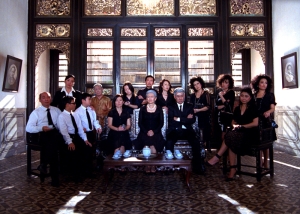
The Blue Mansion (NC16) is a quirky murder mystery about a wealthy Asian tycoon who dies suddenly under mysterious circumstances. He returns as a ghost to try to uncover the secret of his death with the help of his family and the police.

It was filmed entirely on location at a UNESCO Architectural Heritage Award recipient, the Cheong Fatt Tze Mansion in Penang. Larry Smith Bsc, the Director of Photography for Stanley Kubrick’s film Eyes Wide Shut, leads the international production team.

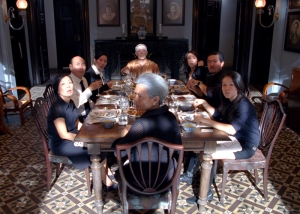
Sitting down to a meal @ the Blue Mansion

The credits read like a roll call of Singapore’s first families of stage and screen – Lim Kay Siu, Adrian Pang, Neo Swee Lin, Emma Yong, Claire Wong, Tan Kheng Hua, Huzir Sulaiman, to name just a few.

Larry Smith Bsc, the Director of Photography for Stanley Kubrick’s film Eyes Wide Shut, leads the international production team.

The Blue Mansion is brought to you by

bluemansion_logo_TigerTiger

Watch the movie trailer at the official movie website.

The director and some of the cast

Glen Goei
Glen Goei

Tan Kheng Hua
Tan Kheng Hua

Neo Swee Lin
Neo Swee Lin

Emma Yong
Emma Yong

Adrian Pang
Adrian Pang

President’s Message: The crisis that opened up the space for debate

DanaLamAWARE faced a crisis earlier this year. But, says AWARE President DANA LAM, it was a crisis that was good for Singapore because it got Singaporeans thinking and talking about sensitive issues. And it led to Singapore women taking a stand that will let AWARE continue its work for gender equality.

The Prime Minister’s National Day rally speech gives us pause. We share his concern for balance and secularism.

Activists for women’s rights the world over have long identified the rise of fundamentalist religion as the major threat to women and contemporary societies this century. The ‘AWARE Saga’ as it has been described showed that fundamentalist religion is on the rise in Singapore. After the news broke, stories of evangelism, proselytisation, hospital bed conversions – many of them first person encounters – began to surface and abound.

The news that a secular woman’s group in Singapore could be taken over by a bunch of fundamentalists was a shock to many. It jolted them out of their comfort zone and spurred them to stand up and be counted. It became clear that there are many in Singapore who value our secularism above other things, and that this secularism, taken for granted for so long, needs to be protected.

For us at AWARE, the battle was not only for the preservation of Singapore’s secular space but also for gender equality, for the continuation of our nearly a quarter of a century’s work to level the playing field for women, to remove the obstacles that keep women from reaching their potential.

Fundamentalist religion inevitably returns women to the dark ages. In the most extreme forms of fundamentalism, women are regarded almost as chattel, with no rights, no role other than that of a totally subservient and submissive wife and mother. Even in a less repressive form of fundamentalism, such as seen in Singapore, women are deemed to be subordinate to men.

When it was discovered that a good number of the women who had staged the takeover of AWARE came from the Church of Our Saviour, we looked at the church’s website and noted with great concern statements that it was in the natural order of things that women should rank after men, that the woman’s role was to:
1. Marry
2. Bear children
3. Guide the house
4. Not be a reproach to her husband.

This brought back memories of the mid 1980s when Singapore women, making good progress on the road to gender equality, suddenly found themselves caught in a resurgence of patriarchy. This was when the government, noting that graduate women were not marrying and that those who did marry were either delaying having children or not having them at all, produced a slew of draconian pro-natal policies that privileged one group of women over another group.

Graduate mothers were provided with incentives to have more children, non-graduate mothers were penalised for having a second or third child. Women in lower socio-economic groups were provided with monetary incentives to surgically remove the possibility of further pregnancies.

It was in that climate of patriarchal attitudes and policies that AWARE was born in 1985. It was reprehensible to find, in 2009, that AWARE had been taken over by a group of women who appeared to accept patriarchy and whose faith-based values were in direct contradiction to AWARE’s.

Since 1985 AWARE has played a pivotal role in challenging the status quo and in identifying and addressing those areas of habitual thought that still impinge on and discriminate against women’s equal participation in family and society. This includes recognising and respecting women’s rights over their own bodies, their sexuality, and procreation matters.

Much has been achieved, but the work goes on.

As we celebrate this 44th year of Independent Singapore, women are still grappling with issues that limit them because of their gender. One such issue is the stand taken by far too many employers on pregnant women. This attitude is seen in a letter to the media in early August: “…pregnant women…fail to understand the damage and loss caused to an employer …by having to maintain on its payroll an employee who, throughout her maternity leave, saddles her colleagues with heavier workloads, does not contribute to the company’s revenue and causes loss to the company by continuing to draw pay.”

Coincidentally, this letter was published around the time of the 14th Apec Women Leaders Network meeting that was held in Singapore. One of Singapore’s most outstanding women, Ambassador Chan Heng Chee, made this observation in her opening address at the meeting:

“The more open the country, the deeper the rule of law, the greater the transparency, the more rooted its political and social institutions, the deeper the respect for human rights, the more women can fulfil their lives.”

Ambassador Chan added she did not get the sense that young Singapore women were short of role models. She said: “They believe they can be what they want to be. They believe they are entitled to a good education. They also tell me that they do not feel their employers doubt their intelligence and abilities. Rather, the employers question their commitment to their careers because the assumption is that they will get married and start families.”

As Singapore enters its 45th year of independence, and as AWARE prepares for its 25th anniversary, there is still much to do to ensure true and lasting gender equality. A few months ago, AWARE faced a crisis. But it was a crisis that got Singaporeans thinking and talking about the sensitive issues of race and religion. It opened up the space for debate, bringing to the surface a shared concern about the rise of fundamentalist religion.

And it led, on 2 May 2009, to a decisive stand by Singapore women and not a few good men for secularism, for inclusiveness and openness, and for AWARE to continue its work for gender equality.