


Saga is a limited-series podcast about the 2009 AWARE Saga, hosted by Bharati Jagdish and written and produced by Jasmine Ng and Kelly Leow. For Saga, the creative team interviewed 50 individuals about their role in the AWARE Saga and their observations about its legacy in Singapore.
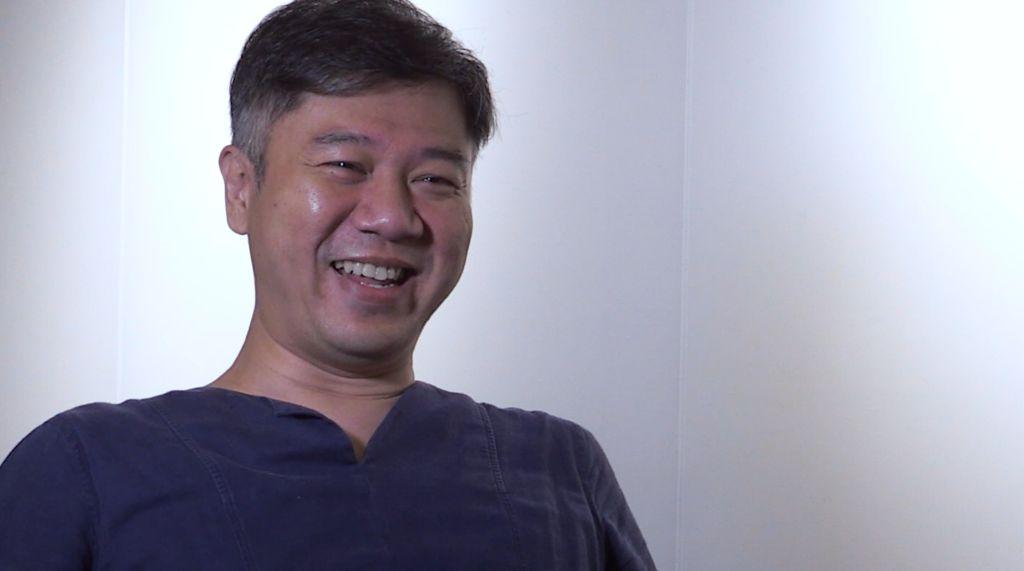
One of those individuals was Tong Yee—a staunch Christian, influential educator and public speaker who runs social enterprise the Thought Collective and sits on various national committees. Tong Yee has known AWARE Executive Director Corinna Lim for a while, and he generously agreed to have a discussion with her for the podcast (with a small crew of Jasmine, Kelly and intern Allysa de Silva present). Due to restrictions on runtime, we were only able to include short excerpts of his interview in the main podcast; however, we are here presenting the full transcript of Corinna’s conversation with him, which took place in September 2020.
Listen to Saga and read more about the podcast here.
Tong Yee (TY): Hi Corinna.
Corinna Lim (CL): Hi. You can just introduce yourself, your name and a short description of yourself. That would be great.
TY: Sure. My name is Tong Yee. I am currently 46 years old. I think I consider myself a social entrepreneur. I started off as a teacher. I’ve been doing civil society work, maybe for the past about 20 years or so. And well, I guess if I’m here, I’m here. I don’t know… I don’t know if I’m a representative, but I’m Christian. Right. I think that’s about it.
CL: OK, so we’re here to talk about the AWARE Saga. Where were you in 2009 when the AWARE Saga took place? What are your memories from that time about this episode?
TY: Yeah. Where was I? 2009. Uh, my first child was born. So I think I remember—at that point in time, actually, I was more distracted with being an early father than actually paying attention to what was going on with the AWARE Saga. I remember seeing it, feeling it was very dramatic. Feeling a bit of a “tsk tsk. Like why the church like that,” then sigh and then just move on with changing nappies [laughs]. Yeah so it was really off the cuff… it was really out of my peripheral vision.
CL: OK, so you weren’t following the news reports? The daily news reports that were happening?
TY: Only the headlines and being judge-y on the side. Yeah, but really digging in? No, I wasn’t digging.
CL: And were you familiar with AWARE’s work then?
TY: Yes. Um, so actually it was interesting because, before the AWARE Saga, my own impression of AWARE was largely that, uh, it was a feminist group, but it never really showed up that particular way. I saw that it was present within schools and I knew it was doing basic sex ed programs then and that’s all. I don’t think itself that point in time there was any real conversation that AWARE is, like, you know… like a strong feminist group or things like that. Yeah.
CL: So did the Saga change your view? Or the reports change your view of what AWARE was?
TY: The Saga didn’t change my view, but what had happened over here was that shortly after that particular incident, the narrative began to change. I began to hear a lot more other people in the course of my work talk about AWARE, or suddenly there’s this unsaid silence. That when I mention AWARE, there would be this dead silence, and then suddenly change topic. It just moves and you’re like, “Whoa, what’s going on here?” And there was something around that… I didn’t really get a sense of what was going on at that point in time.
CL: OK. And are you familiar with AWARE’s work—the women’s rights movement in Singapore in general—now?
TY: I’m far more aware. Uh, I’m sorry. [laughs] Yeah. So now, uh, maybe because of actually the different positions that you’ve been putting out, primarily within Parliament, and actually getting a lot more representative voices within the space… I’ve been following most actively itself around the single mothers issue. Right. So, that one has actually got my attention quite a bit. So yeah, I’m far more aware itself of that particular work.
CL: Do you consider yourself a feminist?
TY: Yikes. [laughs] Oh, trap question. OK. So, uh, let’s try this: Honestly, I don’t know what it means. Yeah. My sense of it over here is that the word “feminism” or “feminist” has had such broad definitions across different spectrums, right, that no one can really identify… even if you’re asking me a question on whether or not I’m Christian, I don’t even know what you’re associating with that particular term. Right? So, I would just say over here that as far as my life is concerned, I’m still deeply grateful to the women who have impacted it. Even my own work around the social sector. Thought Collective itself is about 80-85% women. Um, so I think primarily because of the virtue of actually the kind of work we’re doing in the past two decades, um, I am more “culturalised”, maybe, to where the standards or the position, or even, I guess, the experience of women are. Whether that makes me feminist, I’m not so sure. I’m quite sure there are also invisible, horrible assumptions that I make itself that I’m not aware of at all. Uh, but I’m open to be educated on that lah. Yeah I do support and I stand for the equality of women. I believe there is actually, there is definitely maybe because of patriarchy or whatever history we’ve had, some level of subjugation there, so I am for that as much as possible. So if you call that a feminist then OK, can.
Jasmine Ng (JN): Congratulations! You are a feminist! You just ticked all the boxes.
CL: There’s one more box. The last box is whether you feel like you want to play a role in actually pushing the needle towards gender equality.
TY: I would want to. That’s the one that I’m not so certain about whether or not this makes me a feminist, because I’m more concerned about pushing the box on guaranteed equality for all different groups that are somehow disenfranchised. So not championing women per se, but rather a much more equal society.
CL: Feminism also has moved towards that, right? So we now think there won’t be gender equality unless there is equality of all. So that’s why you see us in many different spaces as well because you can’t just fight for gender equality.
TY: Precisely. Yeah.
CL: OK, tell us about your work with Thought Collective over the years.
TY: Thought Collective’s work… Honestly as a founder, it began first with personal pain. So I don’t think I would have necessarily championed, in the beginning, the whole plight of repeat students in Singapore if I wasn’t a repeat student myself. Right? And I believe that actually much of NGO work is founded upon some level of personal pain that somebody has experienced and would like to actually do better for others.
So at least within the first, maybe seven to nine years of my work, right, it was borne from that particular space. Then I began to realise later on, in my second phase of the work, that there’s actually a lot of complexity in pain. I used to think itself that’s there’s very clearly a perpetrator and very clearly a victim. Now I’m not so sure about that anymore. I think everybody is a perpetrator and everybody is a victim. I’ve started to begin to just say that, actually, I’m more in support of trying to find some level of safe space so that we can talk about each other’s pain. I’m moving towards the idea of restoring, I guess, society to be as healthy as possible.
The most recent stage over here: I realise that not everybody wants to come in touch with this type of work. It is extremely complex, very nasty to be part of it over here. And it does take quite a bit of personal health and personal leadership to be able to hold this space well. So at least when it comes down to many people within our own organisation, we’ve realised over here that the work is really about standing in the gap—being able to just create enough space so that people can have the conversations they need to have. Yeah. And not keep talking over one another to go, “No, ma’am, no you shouldn’t say that,” you know? Yeah. That’s where it is right now. And we’ve realised that this kind of work is necessary: anything from gender equality to race, to, wow, class, is a huge thing. Hearing each other’s pain is quite critical.
CL: Tell us about your personal journey with Christianity. What role does faith play in your life and in the work that you do?
TY: Hmm, OK. That’s another challenging question. This is a really personal take, right? I’ll respond actually to my own journey of Christianity, as a personal description of the experience. Then the second question itself, I think it’s easier to respond that way.
CL: OK. Great.
TY: My personal journey with Christianity really began… I became Christian when I was the age of 11. I was one of those where the neighbour was bringing pamphlets to our house and going, “Hi. Hi. Would you like to hear about Christ?” [laughs] Don’t knock on the door. Open door. And then my neighbour would therefore bring me down to church. And my mother itself was really quite open to it. Yeah. She was just very happy that I wasn’t sleeping in on Sunday morning. I was never truly understanding, I think, the Christian message or the Christian journey until maybe I was in my early 30s, honestly. Yeah so from 11 to 30, I think—like most of the people—although I heard the messages, I didn’t get it. That it’s not about the rituals or the practices or going to church and taking communion or whatever the case was over there. It’s really about a personal relationship that I have together with God. And honestly, I did not explore my personal relationship with God until I started to experience some genuine pain in my life. Yeah. So, throughout the period itself of 25, all the way itself to my mid-30s or so, I experienced I think what people might call mental health issues. Yeah. So, I suffered from severe depression, constant [thoughts of] suicide and during that period of time, I think God was, I guess, the main entity that carried me through the whole period. I had met multiple people who would support me and minister to me at the time. Some of them were Christian, some of them were not. During that particular journey, I think, I began to have a much more personal relationship with God. And I began to maybe take a bit a step away from looking at organised religion per se. Yeah. And looking at what, essentially, the Bible is talking about or what their faith is about. Yeah. So that’s where I am right now.
As far as my Christian walk is concerned, I would firmly identify myself as Christian. Although I do have some reservations about how human systems and the way they organise and what they do to one another. And that’s another story altogether. But that’s, that’s my personal journey.
What role does my faith play in my work or my life?
CL: Both.
TY: Both ah? OK. Um, I hope this is not too clunky a response. Within the Christian, I guess, theology, a lot of the times, we call it salt and light in the world. Right? Salt being the preserver of everyday society and light being that which brings the gospel. Or to live a life such that we shine. Yeah. So a lot of my work within civil society is less about the “light” work. I try to leave that itself to the organisations that set themselves up primarily to spread the message. In my work in society, I try to do a lot more of the “salt” work, which means the preservation of society, making sure that the conditions are as healthy as possible for, um, I guess all the people to have opportunity. Yeah. So I do a lot more of the preserving work: Make sure we don’t self-combust. Look at fragmentation itself, right, within society. And I think that positioning allows me to be more moderate? Because we don’t actually put out very strong, like, Christian messages per se. Uh, we tend to be more collaborative in that particular sense, because we are talking about the context of the soil as opposed to the seed. Yeah. So people get very upset with what seeds you’re planting, but no one has a problem with you tilling the soil. Yeah. So in doing that particular work, that’s how we, or at least I, position my own work in light with my own faith.
In my own life… I think the biggest role that God has in my life is in purpose and mission. If I put this in no uncertain terms, I think social development is shit lah. It’s not the most… I don’t why anyone would do it. Honestly speaking, just sitting with and listening to the complexities of what people are going through on a daily basis is not easy. And even looking at systemic solutions, where we can start on anything from poverty to LGBT issues, to mental health issues… these particular issues, they are challenging to deal with. And I think without that sense of purpose and mission, um, I wouldn’t hang in there. I was earning much, much more as a tuition teacher—honestly, I should just go back to teaching tuition! But by doing this, I think, that’s what plugs me in. It’s purpose and mission in my life.
CL: OK, thank you for that. Wow.
JN: Actually, how do you do this work? What work is actually being done? You are talking about the objective, the goal, the motivations, but how do you actually do it?
TY: Sure. Yeah, the way we begin to see the work is… OK, I’m going to use a bit of jargon. I’ll try to be as clear as possible. As far as human systems are concerned, actually, there are many ways by which to take a look at what is going on within human systems. So, we begin with what we call “work with ourselves” and we know that a lot of shit starts with ourselves now, ’cause we’re not doing our own self work, right? And, uh, another layer of work happens interpersonally. Right? All of the interpersonal dynamics that go on, there’s also self-work that happens on a group level where we start to play politics, power, things like that. And, of course, all the systems issues, right? How we organise ourselves, the hierarchies. All the work processes that we’re looking at. Yeah. So, one way of beginning to describe it is that the field of organisational development, or OD, begins to see humans as parts of larger systems, right? Every time, whether we’re looking at healthcare or education or any form of movements, we always want to study: How do we help these systems become as healthy as possible to do the work that they want to do? So, I can’t describe the work because it really depends upon what it really is, I guess, firing up at that point in time. Sometimes people just need a personal conversation and a listening ear. Sometimes people need to have a mediation around the interpersonal dynamics and yes, there are times where entire systems are in some level of dysfunction and they have no freaking idea what exactly is going on. So the work that we do is to step into human systems, get a time to learn about the system, what’s going on, where the power structures are, where the resistance is and how do we help these systems unlock what is unsaid to flash the conversations that needed to be had?
We know that unsaid conversations have great ability to sabotage any one given work. Yeah. Sometimes you just want to tell the boss that, “Wow, you’re really difficult to work with,” but no one says it and they’re on tiptoes around the boss. Right? And creates so much pain in the system. So our work really is to go in and make the conversations that are typically unsaid—make them possible. Yeah. And that frees up human beings to do the kind of work they need to be to do. That’s, in gist, what we do.
CL: And can you describe or give us an illustration at a group level?
TY: One of the conversations, and I want to describe this as an emerging conversation that I think, as Singaporeans, we have no real sense of. I think for decades, we’ve been talking about how racial harmony day is very token. It’s a bit of a tokenistic ritual that we go through, right? And just teach children that, OK as long as you eat your ketupat and you wear your sarong kebaya, you are somehow a lot more aware of racial dynamics. Honestly speaking, I find that to be grossly… not enough to handle the complexity there. And right now, actually, I’m starting to start to convene the groups to start listening to what really is the pain of minority groups in Singapore. And being a male and being Chinese and being, you know, from maybe a higher socio-economic class, gives me a place of privilege where I’m not able to see these particular conversations at all. The work right now that I’m most interested in is trying to understand racial dynamics within the country, um, and let these conversations that always been under the carpet to start to flash. Yeah. But in a safe space that doesn’t trigger institutions. That doesn’t [make people] go, “Oh my god, why are you saying this?” You know? To have those conversations and to, I guess, translate the conversations in a way that other people are therefore more ready to listen and to pay attention to. Sometimes the raw pain is too difficult for people to take. Yeah. So our aim is not to euphemise it but rather to frame it in a way that allows it to land for different groups, including policyholders, trade associations, company policies, company HR, and so on and so forth. That translation work actually is quite something.
CL: So with this OD lens, looking at 2009 and what happened during the AWARE Saga, what observations do you have about that?
TY: It’s quite dangerous to speak off the cuff but I’m going to try. The first thing that jumps out at me is power dynamics. If this were really 2009 and I had the lens that I have right now, uh, taking it from the OD perspective, I think the main thing that jumps out at me right now would be the power dynamics that was happening at that point in time. Singapore in 2009 was actually a very different Singapore from what it is right now. Right? The societal conversation around power or power dynamics, or actually who gets to speak, who doesn’t get to speak over here. Actually, we are looking, and I hate to use the term, a lot… a lot more “woke” as a generation. Yeah. And, uh, I appreciate actually what you guys are doing right now with this particular podcast because it’s much more timely. At that point in time, I think Singapore society was more willing to watch and see the drama of what was happening with the AWARE Saga more as a TV serial, as opposed to, “This is actually a precursor of what is happening down the road”.
A lot of what was happening with the AWARE Saga over here was actually ahead of its time. It was a very early, I guess, a case study of where really are the boundaries between church, state, NGO. You know? And who is are. So at that point in time, I don’t think Singapore was as diverse as it is right now, but [we are] coming into a space where every generation sees it completely differently. Complete penetration of porousness of media within the country. We are clearly looking at a much more diverse society at this point in time. Right? And when you look at diversity, boundaries immediately come in play.
One thing I think that Singaporeans were not processing at the point in time was, “Oh my God, so many boundaries were being crossed,” right? These were unsaid boundaries that we have lived with for decades over here, invisible to us. Right? And I’m quite sure that the people who were involved in the particular saga at that point in time were experiencing unimaginable hurt. There’s quite a lot of pain that was going on there. I was quite guilty of watching by the sidelines and taking up popcorn and going, “Oh, these crazy feminists”, as opposed to understanding that actually, no, if we truly study it, many of the issues that were being raised at that point in time actually are relevant to us right now in this day and age. Yeah. So I’ll be happy to unpack that with you, but I think those are my immediate thoughts that jump out at me.
CL: Can you say a bit more about the power dynamics? Where was power?
TY: Sure. Can I talk about power dynamics in the light of a metaphor? Because I think it’s helpful for me to unpack it. In reflection and preparing for this particular interview, I began to reflect on what was it that—despite the fact of I’m being Christian myself—that I found something incredibly unfair in this entire thing when I was watching. I think the first thing that jumped out at me was, as part of a secular civil society… the game, or at least the context, is that we live in a society that actually gives everyone equal opportunity to put out the messages they want to put, and in these particular messages over here, as long as they’re not illegal, they don’t cross physically state boundaries or laws, actually is a fair game. What I did not understand over here is why the Christian church would choose to enter into a secular organisation, take it over and use the platform, which they never built in the first place, to suddenly propagate the message. I mean, if you want to begin to propagate a message or alternative message, just set up your own freaking NGO, right? One thing I didn’t understand over here is the sheer size of numbers. Church as an organisation, because of how well-established it is, obviously, it has huge numbers. Um, Church of Our Saviour, at the point in time, I’m not sure what the numbers were. It could’ve been 4,000 or so in terms of their congregation. And NGOs being NGOs will typically be the size of 200-300, right? So it’s like having two basketball teams, right? Coming in, one with infinite reserves and one itself with a team of five and they are going up against one another and playing. Obviously in those power dynamics over here, I think it is very difficult for any one given NGO to begin to contend with those kinds of numbers.
The tricky thing over here was that they worked within the constitution of AWARE. So technically nothing was being done that was wrong right, per se. But in entering in over here through that constitution—I don’t know whether you’ve revised the constitution by now—but in doing so over here, it felt as if everything done was right but not, I don’t know, ethical or safe.
If in 2020, we were looking at this, many Christians would be up in arms. Yeah. In the short game, you win some, I don’t know, token champion over LGBT rights, issues or things like that. But in the long game, where you’re meant to be people within society that demonstrate trust or that create trust among each other? I think you’ve lost the long game. Yeah. In this case over here, um, I think it was not one thing itself that many Christians this day would say that we were proud of. Right? Yeah. In wanting to be associated ourselves with that particular move.
JN: What were you hearing from other people in 2009? What were you observing? Were you shocked even when it happened?
TY: I truly think that point in time where the AWARE Saga happened, we are not as aware as a society as we are right now. I think many Christians today, if it happened today, OK, we’d be up in arms about this. And will say that this is very unfair or even unethical practice. I wouldn’t be surprised if people stood up today and just said, “Hey, that was wrong.” But in 2009, it was really just seen as a dramatic episode. We were not aware as a society. I don’t think we stood up over here to actually look at the implications of what was going on. We just thought “Oh, OK lor”. If the AWARE Saga happened in 2020, today, with a far more aware society, I’m quite sure there’ll be multiple Christians that’ll be up in arms.
Our role is really to, as much as possible, build trust: The quality of the message really is the messenger. If I don’t trust the messenger, then what do you do with the message? So if our work as Christians is really to spread the gospel, then we have to live the gospel and the gospel is not just one value. It’s not just about, you know, homosexuality—the gospel itself is huge, right, in terms of what exactly it can stand for. And I guess we need to be more discerning and reflective as Christians. We can just say, you know, how do we balance all these particular things? And I think that is complexity in this, right? Yeah. So, uh, and from what I’ve heard over here, multiple different church groups… people are struggling with how to balance all these particular things in the context of today.
So the short answer is that if the AWARE Saga happened today, you would probably get a lot more response even from the Christian community. In 2009, if anything, it was a lot of unnecessary drama, like “why must it be like that”, that kind of thing. You know, you remember Singapore in 2009. It was like, aiyah, nothing we’re looking at now lah. The word “complexity” only really starts to enter the mainframe of everybody maybe around 2015, 2016 or so. Yeah. Most people didn’t talk about it much. We just let it pass. Yeah. You know: “It must be just crazies, you know, doing whatever they’re doing over there.”
CL: So do you feel that society is more empowered now? That they will take stands more than they used to? Is that what has happened?
TY: Definitely. I think society, or these different members of society, today are far more vocal. I’m not so sure this itself is good progress, because now everybody has their own soapbox. Everybody wants to set up their own online episode, podcast, and say something yourself. I’m more concerned in this day and age with whether or not we have a coherent narrative—that we’re so decentralised, right? I’m not so sure where we’re moving as a nation. Yeah. So I’m less concerned about personal voice and more concerned about leadership and being able to find some coalescence as far as our perspectives are concerned.
JN: But could you describe: What were the kind of the range of perspectives you were hearing in 2009, and since?
TY: Actually, I haven’t heard that much. It‘s not as if people keep talking about [the AWARE Saga]. I think people miss the opportunity to really start to have the conversations that they need to have about it. Yeah. It just came and went. Within the feminist circles, I think it became a deep conversation point. But if you’re out of it, no, no one had these conversations. Yeah.
CL: Did the AWARE Saga contribute to the ability to have these conversations or not? What do you think the impact was on where we are today?
TY: You see, that’s the part that I’m invisible to, I’m sorry… I am truly unclear about it. Whether or not it did penetrate and cause other ripples for deeper conversations or so on and so forth—I think no one has really begin to track. I think if you are at the heart of it, you will probably be able to track what exactly did it lead to, in terms of new policy discussions and so on and so forth, but for the most part over here, um, yeah, I’ve not seen a direct correlation between the two episodes—between this season of 2020 and what was happening 2009. Yeah. But what I’m confident of is that if we take 2009 as a case study and we raise it again today, we will have tons of things to unpack and to listen to. That will give us insight, lah, into the kinds of issues that we’re struggling with right now.
CL: When we first told you we were doing the podcast about the Saga, what was your reaction?
TY: Yikes! [laughs] It was like die, die; another shit to clean up. Basically: “Oh, for God’s sake, do you really need to?” So it was, “Oh, you know, we’ve got enough issues right in Singapore to talk about and deal with and, you know, must we really?” That was my honest response. All quietly in my head. I was just like bitching about you in my head. So that was what was happening there.
Then in deeper reflection, when I began to go back that night and I really did my research. I began to read up on all the stuff that was going online and things like that. And I was going, oh my God, what an amazing case study. Yeah. And I was looking at the richness of what was going on and some genuine questions… even when I sit between the boundary of being a Christian but also basically doing civil society work, right, I know that I had no clear answers for this first particular question. I think that’s where the rich conversation really is. When the boundary is murky, right? That’s how we mature as a society. Right? So we wade into that murkiness to get clearer on what is the game, right? Yeah. So that’s why I got excited about the podcast and I semi-agreed to come to this interview and, you know, subject myself to this very complex torture. That’s why I agreed. We must be willing to wade into the murkiness. Yeah. And not everybody is lah.
CL: You did come across a few naysayers when you said you were participating in this project. What were some of their concerns, their sentiments? How did that impact you?
TY: I think the biggest concerns were whether or not, you know, the people who are producing this documentary would take whatever it is that I was going to say over here and edit it out context and god knows, do whatever, and then I become a meme and I [laughs] basically sit as a gif for the rest of my life, you know? This is what the terror is. Honestly, I don’t even think it’s a response to AWARE per se, but rather the response to actually how fraught our whole information system is right now. Right? Everything is decontextualised and used for whatever our nefarious purposes that we want to use, right. But I think then the balance I have is that, OK, then who are the leaders that will step up and enter into the murkiness of this space? I think we extend trust to the people who are trying to do this particular work, to forward the conversation that needs to be had, and I’m for that. Yeah. So honestly, most of the naysayers were not even talking about, you know, the AWARE Saga or what was going on, but rather “Watch your back and be careful of yourself”.
CL: During the Saga, some of AWARE’s values, particularly LGBT rights and maybe even feminism in general, seemed to be at odds with Christianity. We were taken over by Christian group over LGBT issues. What is your take on this?
TY: I think the response to the question… My first immediate response to your question is “Abuden”. Of course [these issues are] freaking at odds, right? And that’s why it’s tough, this conflict, in the first place. But how much it is at odds, whether they can coexist… I must have interviewed at least a good eight to 10 Christian leaders—pastors of their own churches or people within Singapore society that hold themselves with a Christian identity. When I interviewed them, the first thing that really stood out was every single one differed, right? In what they’re saying. General lines on whether homosexuality is, you know, wrong or right or things like that—most of them would actually lean towards what the Bible is saying. Right. Yeah. But whether or not they could coexist with other sorts of secular values or progressive values, right, is one where almost every leader had a different take on it. Yeah. One of the things that really struck me as far as a metaphor—and I hope this lands well—is a basketball game, and we have two teams. By right both teams should have a fair play and the referee is therefore needed to come to allow that particular fair play. But if you notice, in the neighbourhoods, they all self-referee themselves and say this is the rules of the game. Right? What happened with the AWARE Saga is that there’s some level of respect that was lost. Right? And one group came in and changed the whole game.
So if one team wants to win in this contestation of values—which value should get the final say—some teams want to win 51 – 50. As long as basically I win by one point, it’s fine, OK, fair game. Other teams want to freaking dominate. Right? And they say, I will only consider myself a win when it’s 50 – 0, because if we allow them one point, they will gain confidence. And the next game they will win two. Right. And this is something that is very… I have found to be quite personality-dependent. As far as the contestation of values is concerned, I think the Christian Church does want to have final say over where the values are. That’s where the ethos is in terms of value systems, and the hope that they can live within societies that have value systems in line with their own beliefs. But whether or not they are winning 51 – 50 or 51 – 0, right, that I have found differs among leaders. Yeah. So, if it’s a 51 – 50, is that considered coexisting? And if I nudge a bit, let you score a few points? But ultimately I’ve got the final say.
JN: Is the metaphor of the basketball court society or is the basketball court an organisation?
TY: The basketball court is society. Ultimately, in every single society, there are people who will always want to contest over values. Right? Which values work, which values don’t. And I think all teams that come in by right should have fair play. [For example,] America is one of those countries that just says, “It’s really fair play. It’s supposed to be fair play. There shouldn’t be dominance of groups and so on and so forth.” Yes. The basketball court is society.
JN: So were you surprised [that] no other leader said, “Hey guys, chill chill chill. Relax ah”, you know, in the basketball court?
TY: I wasn’t so much shocked, I was more disappointed. I felt that Church of Our Saviour should not have actually had—I guess I do not know whether the word is “orchestrated”, but—whatever happened should not have happened. But honestly, at the point in time, I did not care enough about AWARE or basically the whole feminist movement to even want to, you know, stick my head out. Yeah. Was I, you know, like flabbergasted? No, I really wasn’t and I let it pass like all other things. Until we come to a space of having been attacked ourselves or being subjugated ourselves, I think very rarely do we step up and say, “Hey, you know, this shouldn’t be happening to other people.” “No personal attack against me.” Yeah. I did not take it personally. I didn’t feel invested in actually supporting AWARE at any one point in time.
CL: Did you see this as a fringe Christian group, “not something that I’m a part of”? Were you just an observer with no alignment with that group?
TY: What was interesting was at that point in time was that I did see it from both sides. So it was interesting because one of my early churches, right, that I had grown up in, actually did teach that the whole idea of feminism is changing the hierarchy or the order of what God had necessarily ordained in the first place. I had actually grown up with that particular narrative from a very early part of my own Christian life. So when I heard that Church of Our Saviour had stepped in to actually do that particular piece, actually, I did in some part resonate with these particular, you know, stories. And maybe that could have contributed in part to why I did not speak up or, you know, move into it. So I sort of took the position of, “I get where they’re coming from.” Yeah. And, uh, I think I just silenced my own voice in the attempt not to disrupt my Christian faith. Yeah. Nowadays I’m a bit more, I guess, discerning and asking myself: “So what really is the Christian faith?” I remember itself as a younger Christian, I would take everything hook, line and sinker. Now I begin to look at it, I understand that human systems are human systems. Right? As some of the current landscape, many religious organisations have gone through all sorts of controversy. It’s not just the Christians, right? I began to be a bit more discerning over what narratives am I really taking in for myself.
CL: So today, is feminism seen still to be at odds with Christianity with the leaders that you’ve spoken to? What is your sense of this in general?
TY: This day and age, when I speak to many Christian leaders, I guess the the wisest response I have is that God has not always propagated war. OK? So if we look at many texts within the Old Testament, God has talked about war. Blessed or ordained war, to either take over Jericho or do whatever the case with it, entering a space. The instruction among God’s people is: Engaging in warfare, take away what is not pleasing to my sight.
What Christian leaders have said is that there definitely has been a context, but there’s also been context a lot within the New Testament, right? And even parts of Old Testament, where we are called to coexist, we are called for seasons of reconciliation to work. To move among those that are against your own beliefs. Right? And even Christ himself did it, a lot. As the Christian leaders said, at this current juncture, there’s been no instruction at all. No burning bush that says, “engage in warfare”. Yeah. One of the things Christian leaders began to talk about in 2009 was, if war is called and they hear from God, there should be resonance among different churches. They’re not there to question whether or not Church of Our Saviour heard that directly from God. They know that they didn’t hear it. But they’re not there to question therefore whether Church of Our Saviour directly heard that from God.
They say that there is context for both. There’s context for reconciliation. There’s also basically precedence for, uh, for war. Yeah. So at this current juncture, nobody has heard anything about engaging in that particular way. So, the clarity is actually on the sovereignty of God, that God does speak to his people… I think we have not heard anything, which means that by status quo, it should be “reconciliation, peace, coexist” as much as possible. Yeah. And I do believe that that is the desire lah. As much as possible. But when push comes to shove, right, then yeah, then we’ll obey.
CL: Same with LGBT rights? Sometimes it seems like there is a Christian movement against LGBT rights, like a war. Maybe not in all quarters, but certainly in some quarters.
TY: I’m really uncertain about that. So if you ask me whether or not there’s a direct, you know, war against LGBT coming from the Christian front? I think all Christians will understand what the Bible says about homosexuality, but whether or not it’s “engage” or “not engage” war, I don’t know. Sometimes it could be personalities. Sometimes it really could be cultural. Yeah. My personal take is that I don’t necessarily understand why there’s a hierarchy of why certain sins are more, you know, upsetting than others. Yeah. And if you want to take down the LGBT movement, why not take down TikTok? [laughs] At the end of the day itself, there’s so many things… I mean when I look at domestic violence alone, I am appalled at what’s going on over here, but why do we not take a stronger stance itself at domestic violence? Why do we not spend our energy itself going and moving against domestic violence as opposed to moving against LGBT? So I would say, as far as our Christian sensibilities are concerned, actually we should be equally upset by multiple different issues. But there is something itself about LGBT that really riles up some parts of the Christian community and I don’t know whether or not that’s a cultural issue. It’s nothing to do with Christianity but rather a personal upfront, “what I believe to be wrong or right”.
CL: Is this one of the conversations you want to bridge? As a Christian yourself, do you feel particularly well placed to try to bridge this LGBT and Christian divide?
TY: No. [laughs] I don’t know who is insane enough to enter this conversation! Yeah. Put that on the record. Yeah, I have no idea.
CL: Is this is harder than racial harmony?
TY: Oh yeah. You see, racial harmony sits very well within the culture of how Singapore has branded itself. Nobody is actually really against racial harmony. Yeah. We are still are more or less coherent as a society that we do want to work towards racial harmony. There is enough precedence for us to work towards real cohesion. There’s an equal aspiration for that. But for LGBT issues, there isn’t an equal aspiration. There’s actually a conflicting aspiration. Yeah. And in that conflicting aspiration, we’ll still fundamentally get to decide, have to decide, 51- 50 or 51 – 0, and I’m not sure who is willing to be the referee for this one over here.
JN: Who else could have that discussion? A community leader from a religious organisation or such who would be willing to step up? Or you just think the ideological divide is why people don’t speak up?
TY: I think at the evolution of where Singapore is as a society, we’ve done a freaking good job at building up the infrastructure and the institutions that allow Singapore to be, I guess, in the state of health that it is economically or societally. The next phase of our development is really the question of inclusion, right? In an existential way, any country that reaches the level of success that we have is going to invite diversity. So people are going to come in because they all want to be part of success and as the diversity comes in, I think this is where we have to start building up a whole new capability as a city: to know how to handle the conversations that come about as a result of this bigger diversity. So up to 2010 or so, I think we were at the brink of feeling this diversity. Most people who were coming to Singapore, new ideas coming in, were all willing to be subjugated one way or another, just play a secondary or tertiary role to the primary Singapore narrative. These days, it’s not so clean anymore. So as far as Singapore is concerned, I think the the main work is: Do we have the capability to catch the conversation if we open it up? I’m not sure if [the problem is] that people are unwilling to begin to broach the conversation. I think they are saying, “If we broach the conversation, then what? And can you catch the wildfire that will happen as a result of opening up the can of worms? And do we have the capabilities to be in the catch net?” My understanding is that if AWARE were to come into this bigger space, I don’t know how many facilitators you have. Right? So if, let’s assume, 1 million people want to talk about it, right, out of the 6 million, we don’t have the capabilities.
For myself, when it comes down to LGBTQ conversations, I don’t shirk away from the courage to open up the can of worms. I just don’t know whether there are enough forks to go around for everyone to eat these worms as they go. Yeah. So, that’s where my fear is. We are a very young nation that has not prepared itself right for these deep conversations yet. And I think people don’t really understand what we mean by [the idea that] we don’t have the social infrastructure to catch this.
CL: Well, if it’s a public conversation, if it’s something that’s going on social media, how would you start this? Let’s say we want to try to work towards this, right. To bridging and to greater acceptance and understanding. How to start?
TY: That’s the thing. Social media, by design or by structure—all the horrible stuff that Facebook is doing and things like that—it’s not meant for collaborative conversation. It is not meant for cohesion. It is meant to polarise. Yeah. So, in the design of it, I find that the online space is a horrible space to have these kinds of conversations. But if we’re talking about civic facilities in the country, then how many civic facilities do we have? What do we do? Do we have any community centres in Singapore that have the capabilities to handle conversations like this? You know, it’s not even just our civic spaces… teachers, even, in schools, I think they are worried about these kinds of conversations. When I listen to their anxieties, they’re like, “How? [Kids are] in our classrooms all the time. All we can say is, ‘Don’t talk, don’t talk’, ‘shhh’, these kinds of things.” But teachers in their own private space say, we have to start engaging. They just don’t know—then what?
So I don’t think the conversation should be about the fact that we don’t have enough leaders who have the courage to bring this up. I think we are pre-built to be a society that thinks two steps ahead, if not 12 steps ahead. I’m already thinking about step six, step seven. Yeah. So, I think we’re ready for the time to say, “OK, there’s a can of worms. We’ve got a can opener.” I think people are deciding right now.
CL: The leaders of the country are deciding that right now—is that what you’re saying?
TY: That we have the can opener. We just don’t have enough forks to dish out the worms.
CL: I do have a question but I’m not sure whether Tong Yee is in a position to answer it: how the organised Christian religion has evolved between 2009 and 2020, in relation to issues like this—dealing with these thorny societal issues. Do you have a sense of this?
TY: I have a sense of it but I’m not representative. I’m sure you can ask the archbishop but OK, yeah, let’s give it a shot. I don’t think the broader Christian context, today in 2020, is very dissimilar from actually what you are already talking about. The Christian church itself is as subject to all this disruption and, you know, diversity issues as any other system in the world. So, they are even internally itself starting to just question, “so, you know, is what pastor saying really, really true?” And I think a lot of legitimacy that the pastors used to experience before is starting to not be so rock-solid. Yeah. There’s so much availability of content everywhere itself from churches everywhere across the world, that people are all listening to this and consuming it. And as a consumer, there are different narratives that are being pushed out. So in the same way that political leaders are experiencing a loss of legitimacy, church leaders are also experiencing a loss of legitimacy. They’re also experiencing it across different generations—the younger generation, which wants to hear a much more emotive and maybe conciliatory or even progressive narrative, are rejecting the conservative narrative. Yeah. The whole question is, therefore, how do we still keep congregations? How do we still grow? And should we, therefore, stick to our guns and hold the story? Or should we adapt the story, or adapt what is it we’re preaching to actually, you know, relate to where newer congregations are today? And does that mean that we’re fundamentally changing the gospel? Yeah. And these are deep existential questions that the church itself is struggling with.
CL: So you’re saying the church is becoming more progressive and less conservative?
TY: No, the congregation, by sheer virtue of how much exposure they have to different viewpoints, are becoming more progressive. Yeah. So the church itself now has an “identity vs. relevance” question. Do we stick to the core identity of who we are? Or do we play the game to start staying relevant? What I understand over here is, most religious leaders will try to stay conservative, which means they will stay basically to the core. Yeah. But I don’t know how they’re going to keep that whole relevance game going. Yeah. So it’s a very big challenge. And I don’t think it’s, again, true of just Christianity, but religious organisations all across the world. They are as subject to porousness as most globalised nations are and the troubles that come together with it. So the overall sense over here is that when I’m even speaking to Christian leaders today, I think most of them are in dilemmas over their own systems, their own survival. I think a lot of them in their private moments… they always ask, “Why is God not more clear with the guidebook? How come the burning bush is not here? I want some talking donkey that comes and tell me what to do.” And I don’t know. I think with all this complexity we are as looking for miracles as anybody else, right? Yeah. Everyone is open to obedience. They just don’t know where the guide manual is lah, yeah.
JN: What’s something positive that you can take out of all of this?
TY: I think the one thing I’m certain of, as far as Singapore, the context of concern, is that we have a good a chance as any other nation in the world to address this or fix this. We have an excellent foundation of basically playing a fair game right? Uh, the fact is, we still begin to… I mean the whole City Harvest case, I think, was a clear case of this—that no matter how powerful a church is, if they cross lines, right, the state will step in. The state itself wants to begin to create an environment of having a fair society for all.
But sometimes, this conversation, it cannot be just the state declaring it. Sometimes it has to be a conversation that citizens have. And what we’re seeing yourself with these increasingly woke generations of people is that people are more willing to step up to the plate to have these kinds of conversations. And again, I want to reiterate this: I truly think that we have a better chance than most of the countries to figure this out. Our pain is not as entrenched or as generational itself as many other countries that have gone through this, which means I think that we can begin to overcome this. But the whole question is, we need to do the 10, 20 years of capability-building to get into this. So, I don’t have an immediate hope for 2025, but I have very strong hope for 2035. Yeah. And I do have a sense that the social organisations today are very much more focused on capacity-building, as opposed to awareness-building. We’ve got to do both concurrently. When it comes down to actually handling the much more complex and difficult conversations that society needs to begin to have, awareness is really only the beginning of the game. Yeah. And that the difficulty really comes in the long tail: How do we handle all this complexity and where does it go and what do we do as a society? And I’m grateful to say that I think civil society organisations are concerned with both levels of work—of advocacy work, but also the capacity-building work necessary to carry these difficult conversations all the way through lah. Yeah.
CL: Thank you.
Listen to Saga on Spotify, Google Podcasts, Apple Podcasts or aware.org.sg/saga.