
Month: August 2010

Old and new faces on new AWARE Board

Election of 7-member governing body marks new phase of growth
and service AWARE
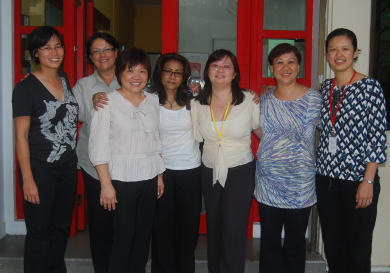
Exco 2010

AWARE has begun a new phase of growth and service.

At the 25th Annual General Meeting on 28 August, members elected a seven-member Board that will serve for two years instead of one and will provide leadership for the association in a governance rather than an operational role.

The new Board, comprising both veteran and relatively new members, is led by corporate lawyer Nicole Tan as President and family lawyer Halijah Mohamad as Vice President. [See full list of Board members.]

Nicole, who has been an AWARE member for 13 years, served on the last Executive Committee as the Assistant Secretary and Chair of the Legal Subcommittee. She was also a member of the Professionalisation Subcommittee and drafted the new bye-laws.

“AWARE”, said Nicole, “provides a forum for exploration, expression and education on gender equality issues. This forum is precious. It was precious to the giants before me; it is precious to me; and – unless AWARE succeeds beyond our wildest imagination – it will be precious for my daughter.

“This year AWARE celebrates its 25th anniversary. We are also embarking on a new, more professional phase. My professional training as a lawyer, in particular a corporate lawyer, equips me with skills that are relevant and important in this phase of evolution of the Association.

“Like many of our members, I juggle family and work. I truly empathise with the woman who wants it all, the woman who fears that something’s got to give. So it is not without trepidation that I put this new role on my already full plate; and I thank my family, in advance, for the sacrifices that they will have to make.

“That said, I am very glad that I have on the board a mixture of old and new members balancing continuity with the infusion of new blood. We have lawyers, an entrepreneur and educationist, media and marketing professionals, academics, and a financial adviser, each bringing to the table their different perspective of being a woman and their different professional skills.”

Nicole, who is bilingual, added: “During the next two years, AWARE will draw on her strengths in research and public education and reach out to the non-English speaking public. AWARE will also strengthen her competencies and engage in discussion and debate on issues that affect us all. I say to all who can contribute, please join us!”

Welcoming the “great mix of old and new faces’” on the new Board, former President Dana Lam said it had been a privilege to serve AWARE in what had been an exceptionally challenging year.

“I’m very proud of the team,” she said. “We pulled together and we have definitely come out of the year stronger. What I am most proud of is the team’s commitment to renewal and continuity. The threat to AWARE’s values and principles led many of us to realize that we must protect and advance what we believe in. This has served us very well in the past year and I am sure it will continue in the future.

“In the past year, we focussed on identifying our key needs and on the professionalization process. This commitment to professionalising our operations began when Constance Singam was leading AWARE in 2008. We are fortunate that Corinna Lim was able and willing to take on the task of being Executive Director. With her leading the operations of AWARE, we are now more ready than ever to move forward.”

Corinna Lim, who became Executive Director in March this year, described the members of the new Board as “strong individuals, dynamic and smart, each with a wealth of experience in their respective fields”.

She added: “I have worked closely with both Nicole Tan and Halijah Mohamed and have the highest regard for them as individuals and as professionals. I have no doubt that with their leadership, the Board will be an effective and high functioning team that will see AWARE reaching new heights.

“I would also like to say a Big Thank You to the outgoing Board, especially to Dana Lam and Chew Ijin, for their courageous dedication and leadership. This was a more onerous year than usual and they have sacrificed a great deal to see AWARE through the year and to turn what was a crisis into an opportunity to strengthen AWARE.”

The switch from a 12-member Executive Committee that served for one year to a seven-member Board serving for two years follows changes to AWARE’s Constitution approved by members at the 23rd AGM held in March 2008. Another change requires candidates for the Board to have been AWARE members for at least two years.

Members of the AWARE Board 2010-2012

President
Nicole Tan
aware_NicoleTan Vice President
Halijah Mohamed


Immediate
Past President
Dana Lam


Treasurer
Ann Seow
 

Secretary

Lindy Ong


Members
Chew I-Jin aware_Chew-I-Jin Margaret Thomas aware_MargaretThomas
Teo You Yenn

My goodness, you missed my point!

When policy-makers make decisions that profoundly affect the lives of people, are they able to suspend the influence of personal factors, such as sex, race and religion? That, says CONSTANCE SINGAM, was the question she was posing in her article A Secular Society Interrupted, and not the question of whether there is such a thing as innate goodness.

A war of words raged on these pages a few weeks ago. My article A Secular Society Interrupted led several readers to engage in a heated debate about whether there is such a thing as innate goodness.

I would very much like to believe in the ‘innate goodness’ of human beings. But I have no empirical evidence to support that belief.

The French philosopher Jean Jacques Rousseau believed in the innate goodness of man, that man did not acquire ethical and moral values but was born with them. According to Immanuel Kant, the German philosopher, these innate ideas are the only things we have certain knowledge of, and thus are the most important and trustworthy of all.

Confucian philosophy is built on the l belief that man is basically good. He did say, though, “I for my part have never yet seen one who really cared for goodness, nor one who really abhorred wickedness.” (Analects 4:6)

What I was arguing in A Secular Society Interrupted was simply that one should not assume that those who do not subscribe to a religion have no sense of right and wrong, or that their stand on certain issues is suspect since they don’t believe in God.
In making that argument, my main concern is whether we are able, if we owe allegiance to a religion, to suspend our religious values in a public space in a secular society rich in diversity of religion, culture and race. This is not, however, a denial of the role of religion in public life and debate on issues and policies. Every individual has a civic responsibility to engage in public debate in areas that matter to them.

My point is that the need to suspend personal beliefs is a critical requirement of policy-makers. Every day, policy-makers are called upon to make decisions that profoundly affect the lives of people. Are they able to suspend the influence of personal factors, such as sex, race and religion, and make decisions based on facts? Or, at least, can they tell us, the citizens, on what basis they have made their decisions on matters that affect us? Are they able to be transparent?

As I see it, the problem, particularly in Singapore, is the lack of a safe place for such questions to be raised; for an open discussion on the role of religion, the role of conscience in public life.
Meanwhile, on the discussion about ‘innate goodness’ – my Google research revealed that it is a very hotly debated topic. I have yet to discover which side is winning the argument.

I conclude, on a lighter note, with a story. It’s from Faith without God: Finding Courage in Hard Times by Lawrence Bush of the Brooklyn Society for Ethical Culture. He writes:

There is a Jewish story about a devout man who is on a difficult business trip and realizes that he’ll never get home before the sun sets and the Sabbath begins. He presents himself at the home of the local rabbi and says, ‘Rabbi, the Sabbath is about to begin, please let me stay with you and keep me from sinning.’

The rabbi says, ‘My good man, I have a household full, I cannot fit one more. Go in good health; I’m sure that God will provide.’

The poor traveler goes to another house, with religious ornamentation on its door, and he gets the same friendly rebuff, ‘I’m sure God will provide.’ This keeps happening, as the sun sinks and darkness spreads.

Finally he comes to the home of the local Bundist, the radical, the atheist. And he is amazed to be brought in. And he is amazed that the Bundist has Sabbath candles on the table, waiting to be lit, and bread and wine, waiting to be blessed and eaten.

They do all that together, and the traveler says, ‘My friend, how can it be? All of the religious Jews in your town send me away from their door, telling me that God will provide; and you, a rascal, an atheist, you bring me in and treat me to kindness . . .’
‘Because, my brother,’ says the Bundist, ‘I know that God will not provide.’

AWARE Roundtable Discussions

Are you concerned about what’s happening around you?

Join us on the 2nd Thursday of every month for discussions at AWARE: Next session is on Thursday 14 October

If you have an interest in social and other issues and would like to have your say about them, come to our monthly AWARE Roundtable meetings.


Discussion and debate have always been an important part of AWARE. In gatherings large and small, formal and informal, we have discussed issues and examined policies.

The discussions sometimes led to submissions to the authorities or to publications; other times they kept AWARE abreast of current affairs, public policies and social trends.

As AWARE turns 25, we want to make this discussion and debate a regular activity with a more formal structure. A key aim is strengthen AWARE’s capacity to identify, understand and respond to a wide range of trends, issues and policies. Therefore, in September, we launched The AWARE Roundtable, a monthly event open to AWARE members and invited guests.

October

The topic for the October Roundtable is The rise of fundamentalism and its impact on women. This will take place at 7pm on October 14th.

Speaker: Daniel PS Goh, Assistant Professor of Sociology, NUS
Chair: Vivienne Wee

Register here for October’s Discussion
A number of members led by former AWARE president Constance Singam have made a commitment to attend the sessions and lead the discussions. We would like invite other members to join this core group so that we have a large enough pool of people to tap.

This discussion will be part of the preparation for a planned conference on the subject in November to mark AWARE’s 25th anniversary.

What’s needed is an interest in issues, a willingness to read and prepare for discussions, and a commitment to attend all, or at least a majority, of the sessions.

If you’d like to join the group please register at the links above.

If you have any queries, please email training@aware.org.sg.

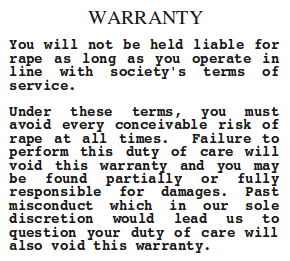
Singapore Gang Rape Case

Do we judge a victim of rape more harshly than the victim of any other crime? A look at reactions to a local gang rape case that suggest we do.

The judge said it was factually rape.

Five young men aged 17-19 versus one young woman aged 17.

… a gang sexual assault of a grave nature which the accused persons had perpetrated without her consent.

Despite this fairly clear-cut assessment, the charges were reduced and the five accused were found guilty of the lesser charge of “aggravated outrage of modesty.”

Why did the public prosecutor* agree to reduced charges? We may never know but the favoured theory of the rumour mill was echoed in recent TNP coverage:

Blame: Exhibit 1

“…she […] was not completely blameless.”
– The New Paper (14 August)

In other words, it was partly her fault.

If this reasoning sounds familiar or even sensible it is because we believe it to be true in almost every case of rape. You don’t even have to know the facts of a case to know this will be suggested.

So what are the facts in this particular case?

According to various news sources the story goes like this (some details omitted for brevity):

WARNING: This account is graphic. Skip to the next section if you are disturbed by stories of violence.

The boys wanted female company. The group leader got the girl’s number from one of the others and called her claiming to be a schoolmate. The victim accepted the invitation for supper and was surprised when she arrived at the apartment to find a group of guys she didn’t know (only one of the five was known to her). After some reluctance, she agreed to enter the flat. There they played drinking games and she consumed more than five shots of vodka. Her head was spinning and her vision impaired. In this state, after some pressure, she became aroused by the boy who kept hitting on her. She agreed to sex with him alone in the bedroom. When the two later emerged, she went to sleep off her stupor on a bench in the common area. While she rested, she was carried back into the bedroom and stripped naked. Someone said “let’s start.” Then, over the course of the next two hours, each took their turn as they held her down. Some penetrated her vaginally, others orally. When they were done, she was left bleeding from vaginal trauma. They helped her wash up then gave her $10 for cab fare home.

So how can she be blamed in such a hideous scenario?

One lawyer explained it as follows:

It’s like driving while intoxicated. You have to take some responsibility for your actions.

It seems the victim was guilty of drunk driving a vulva.

Let’s look at a very similar situation.

If a man were to get completely drunk and wander into a dark ally, is he responsible when he gets beaten up and robbed? We acknowledge that his behaviour was risky and the outcome foreseeable. But would his risky behaviour be grounds for reducing the sentences of the perpetrators? Do we say, “Well yes that was wrong of them but he did tempt them so it’s not totally their fault. He’s partly to blame.”

In this scenario, we do not mistake foolishness with provoking attack. The attacker doesn’t receive leniency just for finding easy prey.

Then why, in the case of rape, does the same failure result in blame?

As a society we generally hold the belief that women must always be on guard to protect their virtue because men cannot always control their natural urges.

To be raped is to fail at this duty of care. It is thus a matter of shame to be a victim. What other crime causes the victim to feel such shame?

And when we blame the victim, the inference is “so it’s not totally his fault.”

A rapist is not a victim of opportunity. His youth or mental capacity may provide reasons for leniency but we should feel no sympathy simply because he found an easy victim who failed to expect violence and failed to exercise caution.

Now before anyone gets bent out of shape because of situations where there may be a genuine misunderstanding about consent, let’s remember where we started this discussion. This is a clear-cut case of gang rape. Any guy finding himself with four friends holding down and penetrating a drunk girl is under no doubt he is engaged in a violent criminal act.

So why, even in this very shocking scenario, do we still ask, “How may she have brought this on to herself?”

It seems we just can’t help ourselves. It’s illogical, indefensible and certainly not just or compassionate. Yet the idea of female culpability is deeply entrenched in our psyche.

Stop blaming the victim.

A woman may expose herself to risk for many reasons: youthful innocence, a trusting nature, a carefree attitude, lack of cynicism and suspicion, thrill seeking behaviour, desire for acceptance, and so on.  Whatever the reason, it is not an invitation to rape.

The failure of a woman to adequately assess the risk of attack does not mean that she caused what happens and should take blame for it.

Yes, we should educate and encourage women to limit their risks, but this should not in any way imply that the victim is responsible for being violated.  We need to stop blaming the victims of rape.
*The public prosecutor acts on behalf of the state, not the victim. The prosecutor is NOT the victim’s lawyer. Rape carries a sentence of up to 20 years in jail. Aggravated outrage of modesty carries a sentence of up to 10 years however the public prosecutor only asked for 3-5 years in this case.

More:


Note: AWARE is concerned about this case and has written to the Attorney General’s Chambers to seek clarification as to why such unusual leniency was shown in this serious gang sex assault case.


A Secular Society Interrupted

Those who argue that a secular system is lacking in values are being arrogant and patronising, says CONSTANCE SINGAM as she continues her discussion about secularism. They deny the possibility of moral human beings whose actions are governed by their innate sense of goodness.


Last year the extraordinary development that the media dubbed ‘The AWARE Saga’ forced us, AWARE members, to re-examine our commitment to a secular organization and to affirm our values. We – and many others in Singapore – realised that our secularism needs to be fought for, defended and protected.

History shows us that secularism is not a settled state but one that requires periodic reviews, and safeguards, especially when its concept and practice is threatened. Hindu fundamentalists in India, for instance, continue to challenge the secularism of India. Mahatma Gandhi paid the ultimate price when he was killed by a Hindu fanatic for his defence of pluralism. The main opposition to secularism comes from fundamentalism, and fundamentalism poses the greatest threat to women’s rights.

Singapore was a secular state at independence. With our early cosmopolitan population, we were in fact well on our way to being a secular state long before independence. The first Chinese Temple, the Thian Hock Keng Temple, was built in 1821; the first Hindu temple in 1823, the first mosque in 1824, the first Church in 1835.

Most secular states – UK, USA, and many European countries, for example – evolved their secularism over centuries, sometimes after bloody struggles to wrest power away from the dominant Christian Church. Countries which are well-known as constitutionally secular states include India, France, Turkey and South Korea.

So what is ‘secularism’?

Secularism, in its most extreme form, means completely denying any public voice to religious communities. In this view, religion remains in the private domain.

In political terms, secularism can refer to reducing ties between a government and religion and replacing laws and policies based on scripture (such as the Ten Commandments and Syariah law) with civil laws, and eliminating discrimination on the basis of religion. No one set of values has precedence over other value systems.

The more benign definition of secularism allows for public expression of religious views. In other words, religious groups have as much right as non-religious groups to promote and advocate their positions and their values. They are thus participants in the political process of the country. Last year’s takeover of AWARE by a group of fundamentalist Christian women was a highly political process as was the struggle by the secularist members to win it back.

Singapore’s secularism is a benign one given the existence of institutions, such as hospitals and schools, run by religious organisations which receive state aid but whose existence is contingent upon state approval and public policies. Their active participation in the state is a historical recognition of their contribution to society as serving the public good.

A more important condition of secularism is that public policies be based on facts and not on the basis of religious or cultural proscriptions. An obvious example of this is the attitude towards the use of condoms.

The fact is that the use of condoms prevents unwanted pregnancies and STI (sexually transmitted infections). That the use of condoms is wrong or immoral is a religious view not based on fact. Another example is the status of women. The claim that women should be subservient to men is a religious and/or cultural attitude and not one based on fact.

In this sense, secularism requires politicians to make decisions based on secular reasons rather than on religious ones. It follows then that decisions about many contemporary issues, such as stem cell research and sex education, should not be based on religious beliefs.

The opponents to secularism would argue that a secular system is lacking in values and is morally unacceptable. This argument, besides being arrogant and patronizing, also denies the possibility of moral human beings whose actions are governed by their innate sense of goodness.

George Jacob Holyoake, who coined the terms ‘secularism’ in 1851and ‘jingoism’ in 1878, defines secularism as ‘a code of duty pertaining to this life, founded on considerations purely human. Its essential principles are three: (1) The improvement of this life by material means (2) That science is the available providence of man (3) That it is good to do good. Whether there be other good or not, the good of the present life is good, and it is good to seek that good here in this world.’

Feminists Are Tarzans

by Pamela Ng

In university, I belonged to a student group that hoped to raise awareness about women’s rights. We wrote poetry, published monthly articles and books compiling creative writing, shared research and media articles on women and gender issues, had peaceful walks in Melbourne’s city streets every 8th of March, International Women’s Day.

Overall, we were a happy community of women who cared about women. At least, that is how we saw ourselves.

Fellow university mates who found out I was in the group expressed disbelief:

“But you are not lesbian!” “You are pretty, wear dresses and have long hair, hardly a man-bashing sort.” “Why would someone like you join a club like that? You seem like a happy sort.” “You shave, don’t you?”

Like a criminal profiler, society has shaped a feminist as a: gay, angry, unattractive, male-hating, chest-beating female specimen who has enough underarm hair to braid and form bridges over gender issues.

Just to put it out there: A feminist can be a male or female. Point number one.

What binds them together is not the superficiality of their appearance but rather their deep-seated concern for women’s rights in the world. This can entail better legal protection for women, workplace rights, protection and shelter of abused women, micro-financing impoverished communities through the empowerment of the local women.

I could go on. There are so many ways women have been subjected to gender-biased, unjust practices or inhumane acts because they are female. It is a basic consideration and care for another human being.

It’s a shame that people cannot view the world holistically and see the need to narrow the disparity. I guess some people are still swinging from the trees.