Month: March 2011

Roundtable Discussion – April

Are you concerned about what’s happening around you?

If you have an interest in social and other issues and would like to have your say about them, come to our monthly AWARE Roundtable meetings.

Discussion and debate have always been an important part of AWARE. In gatherings large and small, formal and informal, we have discussed issues and examined policies. The discussions sometimes led to submissions to the authorities or to publications; other times they kept AWARE abreast of current affairs, public policies and social trends.

As AWARE turns 25, we want to make this discussion and debate a regular activity with a more formal structure. A key aim is strengthen AWARE’s capacity to identify, understand and respond to a wide range of trends, issues and policies. We are thus launching The AWARE Roundtable, a monthly event open to AWARE members and invited guests.

If you have any queries, please email Pam at publiceducation@aware.org.sg or call AWARE on 6779 7137.

April

7.30pm on April 7th

Beyond managing homelessness
People who are homeless are so for various reasons. Some have made poor choices in life, some are involved with alcohol or drugs, yet others are part of the system of generational poverty in which inadequate life skills are handed down from one generation to the next, resulting in an entire culture of people who do not know how to take advantage of the educational, cultural or employment advantages available to them. Some of the homeless are also those who may have had some education, a job and a place to live, but without a “safety net” of family or friends to help them through a difficult time, found themselves evicted from their homes after they lost their job or had a financial crisis. But whatever the circumstances, homelessness is but the symptom of root problems.

Speaker: Ravi Philemon
Chair: Braema Mathi

Ravi Philemon is a community worker and he identifies himself as a blogivist – an activist with a blog. He is a former Chief Editor of The Online Citizen and is a founding member of MARUAH (working group for an ASEAN human rights mechanism, Singapore). He is also the Executive Director of SUN-DAC (an organisation which serves people with disabilities). Ravi has been an advocate for the people who are homeless in Singapore since 2008.

Register here for April’s discussion

Fighting Diskriminasi in South Sulawesi

This piece has been modified for length by the author from its original version on cedaw-seasia.org, a website about CEDAW (Convention on the Elimination of Discrimination Against Women) by UN Women.

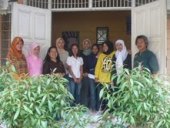
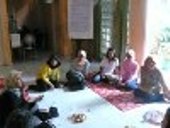
Eight women sit cross-legged on straw mats in a circle talking animatedly while they drink tea and munch on sweets. The women are in Makassar, the capital of South Sulawesi, and they belong to an NGO network called Forum Pemerhati Masalah Perempuan (FPMP, or Forum Concerning Women’s Problems). South Sulawesi is one of Indonesia’s larger provinces, and the FPMP members are discussing cases of diskriminasi taking place in a village in the next district.

Word is, that one village in Bulukumba, has begun enforcing new regulations that impose a strict dress code on women. The new rules require that all women must abide by traditional Islamic dress, and wear the jilbab or headscarf if they want access to public services, including healthcare. The eight have heard that in Bulukumba, women are actually being turned away from clinics by officials. Girls, even as young as six or seven, must also don the jilbab if they want to attend school.

“As Muslim women, the jilbab that we wear is a matter of choice,” said Hajar, one of the FPMP women who herself wears the headscarf. “If local laws are going to force all women to wear this, then this is going against our right to choose. There is no similar dress code for men. What’s more, many poor women can’t even afford to buy the jilbab to wear it everyday!”

FPMP fears that other villages will follow suit. From what they know, there are already 30 other local regulations (“interpretations” of Syariah law by local authorities, which were never around or enforced before) which impede on women’s rights being enforced in other districts. All have been established in the name of Syariah law, and purport to protect women from negative situations that can arise as a result of the behaviour of men and women. Under the new local regulations, women are prohibited from leaving the house in the evening without a male family member. ‘There is also a regulation called “zina”, where women and men who are not married or related cannot be in close proximity. The common penalty for this tends to be heavier on the woman, who typically is shamed in public, sometimes by caning, while men usually pay a small fine.

This is but one negative effect of the growing influence of religious fundamentalist groups on the formulation of government policies, say the women. In recent times, political shifts in Indonesia have seen the decentralisation of authority from the central government in Jakarta to provinces and districts around the country. This, in turn, has led to a greater risk of local laws being interpreted and enforced differently, subject to the whims of local administration officials.
To the FPMP this means the need to help women understand their rights and stand up to discrimination is more urgent than ever, especially in rural areas. The network helps raise awareness about women’s rights among women and local officials. They conduct public forums, give out information on reproductive health, education and access to basic services. Most importantly, they encourage women to speak up about the problems they face.

“Village women generally have a poor understanding of their rights. Most of them don’t even know what ‘women’s rights’ is when we first approach them to talk about it,” said FPMP member Marcelina May. “But now, many of them are starting to ask questions, for example, when they go to the clinic, there is often no information given on the medicines they or their children are told to take, so they never know what they are taking, even if it could be harmful, or maybe useless. They are starting to ask the health workers what the medicine is and what exactly it is for.”

FPMP said that one of the most troubling issues in villages is domestic violence. Because it happens behind closed doors, it is considered a ‘family matter’ and a taboo subject, and many women are afraid to discuss it. The customary practice of dowry-giving makes matters worse. Since dowries tend to be hefty in South Sulawesi, once a man pays a woman’s family to marry her, he feels like he owns her and can treat her any way he wants.

Corruption is another challenge. For example in schools. Education is supposed to be free for all children at the elementary and junior high school levels. However parents are often faced with ‘illegal school fees’ in the form of extra payments required by school and administrative officials. If they don’t pay, they find their children excluded from certain school activities and classes. Over the last few years, the FPMP has spent considerable effort highlighting and educating women about this kind of corruption.

It’s an uphill climb. The group said that corruption among local officials is such a common occurrence that most people are simply resigned to it. They tell of an ongoing case against a Bupati (regency council chief) who raped his maid. Police continue to refuse to prosecute even though the maid, who is unmarried, is now pregnant. “Everyone knows he is guilty, and yet no one is doing anything about it,” said Marcelina. “This is why we have to keep speaking out, and trying to get women to come forward. Taking action together is the only way for things to change,” she adds.

Indonesia is party to CEDAW, the United Nations Convention on the Elimination of Discrimination Against Women. In 2003, a law was passed requiring a 30% quota of women to be included in political parties and in legislatures at both the national and local levels.

The FPMP hopes to get more rural women from South Sulawesi involved in public life. They have met with some success says Hajar, “More and more of them are questioning why there are so few women among the village elders. More are now saying they want to be included in the decision-making process, and are asking how they can participate,” she said.

The road to equality is long, but the good news is that the FPMP is in it for the long haul.

To learn more visit these websites:

UN Women www.unifem-seasia.org
Women Living Under Muslim Laws (WLUML) www.wluml.org
CEDAW South-East Asia http://cedaw-seasia.org

Leigh Pasqual is an AWARE volunteer. She headed up AWARE’s Sexual Harassment sub-committee in 2008 and works as a writer and communications consultant on women’s rights and development. Originally from Singapore, she now lives in New York.

Made In Dagenham Exclusive Preview

Dagenham, England, 1968. An ordinary woman fights for equal pay and achieves something extraordinary.

Golden Village is offering preview tickets to an exclusive screening of Made In Dagenham, on Wednesday March 23rd, 7pm at Cinema Europa ,Vivocity.

The film, from the director of Calendar Girls, stars Bob Hoskins and Sally Hawkins and is based on the true story of the the 1968 women’s strike at the Ford auto factory in Dagenham, east London.

A group of female sewing machinists staged a walk-out when they found out they were classified as “unskilled workers” while their male counterparts were considered skilled, and hence got paid much more for doing the same job.

The women stopped work for three weeks, and demanded equal pay for equal work. Their strike fast-tracked Britain’s Equal Pay Act of 1970 which made it illegal for employers to apply different pay scales to male and female staff. Read more about the Dagenham women’s strike here.

The advance screening will be followed by a dialogue session called Blog Aloud. Led by AWARE’s president Nicole Tan and honourary secretary Lindy Ong. Nicole and Lindy will discuss the film and explore the greater issue of workplace gender equality.

Date: Wednesday 23rd March
Time: 7pm (Movie Screening), 8:55pm (Blog Aloud dialogue session)
Venue: Cinema Europa GV Vivocity
Tickets: $10. They can be bought online here.

What Are My Choices As A Young Woman In Singapore?

This Opinion Editorial was published in the 8th March 2011 edition of Today. View the story as it was published here. The writer recently joined AWARE as Research and Advocacy Executive.

Siti Nadzirah Samsudin, a 23-year-old Singaporean woman and AWARE employee finds herself asking some tough questions this International Women’s Day.

As a young woman in Singapore, I enjoy many luxuries. I can walk the streets alone at night and still feel safe; I have access to clean water and food; I can vote (if I ever have the opportunity to) and I have access to education. In theory, I have the same opportunities as a man my age.

Ideas of gender and how society views men and women differently were planted in my mind during my studies at the University of Melbourne. It was only after I graduated, returned to Singapore and began looking for my first job did I realise that, things for me and my male counterparts aren’t so equal after all.

I was applying to NIE to become a teacher and saw that the pay scale was different depending on your gender. Regardless of job performance or experience, men earn more, to make up for the fact that they serve mandatory National Service. A little more research and I found out that more men hold higher positions earning more money than women. Of the few women occupying higher ranks, I could only imagine the discrimination and the stereotyping they are faced with. And where a woman gets pregnant, she may be dismissed because the company does not want to deal with her absence during her pregnancy. The unfairness of this! This made me re-think my entire career. What do I want to do? What can I do?

At Women’s Choices, Women’s Lives, Shaping the Next 25 Years, a conference organised by AWARE last Saturday, I found myself asking more questions. Questions about what it means to be a young woman in Singapore, and what the future holds for me and my fellow females.

The conference featured experts like Dr Kanwaljit Soin talking on the plight of older women, Professor Linda Lim doing a comparison between women in the economy today and 25 years ago, Professor Teo You Yenn on women’s choices in relation to family and Braema Mathi on gender discrimination in general

Listening to these speakers, I asked myself “Indeed, what are my choices?” Are the measures that have been put into place now by the government enough to support my decision to juggle family and career at the same time? Letters streaming into the media detailing a working mother’s struggle. They plead for more options, more help but instead we have the government announcing that they will not intervene on the issue of parental care. But yet, they call on more women to start making babies. Is a monetary gift enough of an incentive? I do not think so. Sure, the money will be a great help, but for how long?

Will my employer be considerate and understanding if I have to take urgent leave to care for my child? What about those couples who choose not to get married but still have children – they are contributing towards Singapore’s fertility rate, so will they get the same support? What about single mums who need even more help than two-parent families? And the most pressing question: Isn’t whether I do or do not have children my personal decision to make, and not the government’s?

Looking further into the future… How will I live out my golden years? Will I be healthy and happy? What if I contract chronic illness? The World Health Organisation ranked Singapore’s health care system 6th in terms of effectiveness. But, when looking at fairness of the system we ranked 101 out of 191. Why? Perhaps because anyone aged above 85 is not covered by Medishield or Medisave. So in our ageing society, elderly people and their caregivers (usually children, the very same ones being pushed to have more children of their own) are expected to shoulder costly medical expenses. And yet in the recent budget the government set aside 25.6% on defence, and only 5% for health care.

So many questions. And such difficult choices. I feel like being a woman has its disadvantages, but that does not mean that I should accept it as the status quo. I should work towards changing the circumstances around me to my advantage. I say, there is no such thing as “no choice”. There is always a choice even if it is limited. We choose how we respond, how graciously we accept our choices or lack of choices. My choice is to work towards creating more choices for me, for women, for Singapore.

Siti Nadzirah Samsudin recently joined AWARE as Research and Advocacy Executive. She graduated from the University of Melbourne in 2010 with a degree in Arts majoring in Political Science and Development.

Media Release: Gender Equity Essential for Singapore’s Next Lap


AWARE-NUSS conference calls for Constitution to prohibit gender discrimination and quota set for women in Parliament.

Singapore, March 8th 2011 – For all the progress made in the last 25 years, gender discrimination still exists in Singapore today. This was the unanimous view of the 200 or so participants at the Women’s Choices, Women’s Lives: Shaping the Next 25 Years conference held on Sat 5 March.

This discrimination must be eradicated and gender equity achieved if Singapore is to truly flourish in the next 25 years and if the challenges of the low fertility rate and the ageing population are to be tackled effectively, the conference participants agreed.

The conference, organised by AWARE and the National University of Singapore Society, was a reprise of the eponymous 1984 NUSS forum which led to the founding of AWARE. It marked both the close of AWARE’s 25th anniversary celebrations and the 100th anniversary of International Women’s Day on March 8th.

Following presentations by Singapore’s leading feminists, participants took part in facilitated group discussions and drew up a gender equity wish list to present to policy makers.

The key recommendations to policy makers are:

1. A quota of 30 per cent be set for women in Parliament as recommended by the Convention on the Elimination of All Forms of Discrimination Against Women (CEDAW), which was ratified by Singapore in 1995.

2. That an independent body (such as an ombudsman or commission) be formed to ensure equal opportunities for both women and men.

3. The Singapore Constitution be amended to prohibit gender discrimination.

4. All policies and legislation be reviewed and all gender discriminatory laws, policies and practices be removed or replaced with laws, policies and practices that promote an equitable and sustainable work-life balance for both women and men.

5. Gender studies be added to the core curriculum for all students, and in the Civil Service.

6. Budgetary allocations to health care be increased significantly so as to ensure the good health of older people.

7. Care-giving (of the young and the elderly) should be recognised as a gender-neutral skill, and the quality of, and access to, care facilities and services for children, elderly and the disabled should be improved.

Recommendations were also made for corporations, as well as individual men and women, to consider. The main ones are:

8. Employers should adopt non-discriminatory policies and practices as part of their organisations’ corporate culture, including zero tolerance of sexual harassment.

9. Employers should optimise flexibility for employees in terms of workplace and working hours, based on the understanding that productivity is enhanced by workers who are able to sustain a supportive work-life balance.

10. Individual men and women should seek to build equal partnerships in all spheres of life, including the workplace and the home, with shared responsibilities for the care of the young and the old.

The above are some of the 100 recommendations that were submitted by participants during the conference. AWARE will be reviewing these and will submit finalised recommendations to policy makers and other stakeholders.

Kapap Ladies’ Self-Defense 2-hour Sampler

AWARE is offering a 2-hour sampler workshop on KAPAP Self-Defense. No frills self-defense training course for women of the general public, ages 13 and above. It’s easy to learn, practical, and safe to practice.

Here are the techniques you will learn:

– 3 principles of takedown

– shield

– stance and movement

– palm strike

– forearm grabs and hairpull

– street grappling

KAPAP is the Hebrew acronym for Face To Face Combat. It is the original combat system of defensive tactics, hand-to-hand combat and self-defense employed by the Israeli defense and security forces, the Israeli National Police, and its special operations and anti-terrorist units.

Sign-up details:

Sampler -2-hour Kapap Ladie’s Self-Defence

Date: September 24, 2011, Saturday


Time:  10am to 12 noon


Where:
AWARE Centre

How much?

Non-member -$100 for one sign-up or $180 for a pair sign-up
Member- $80 for one sign up or $140 for a pair sign-up

Reserve your spot now!  Click HERE to register.

Email publiceducation@aware.org.sg for more information.

This crash course gives you an overview of our 10-session Ladies’ Self Defense class, where you will learn so much more. See Kapap Women’s 10-session Self-Defense.