
Month: August 2011

What women want (in a President)

This article does not condemn or endorse any particular candidate.

It’s time to make non-sexist comments on women’s issues a key part of the ‘new normal’ in Singapore politics.

By Lisa Li

I don’t know. Certainly, women are not a homogeneous mass – there are lines drawn by race, religion, income, sexual orientation and so on, and even those in the same categories are obviously not the same.

And women don’t just blindly vote for other women, for the sake of female political representation. (ie. Even if there were no Nicole Seah, we wouldn’t all vote for Tin Pei Ling just because she’s a woman.)

But I can tell you what many women do not want in a President. We do not want our political leaders to perpetuate sexist stereotypes, because words from the top carry weight, and through the media, these words can reverberate through society, influencing and perpetuating certain attitudes.
Dr Tan Cheng Bock: On wives getting permission from husbands

During The Online Citizen’s Face 2 Face forum (Part 2, 00:58), adjunct lecturer Ms Hani Mohamed asked the Presidential candidates what they would do to encourage women to enter politics or take on higher decision-making roles. Dr Tan Cheng Bock replied that “some of our top CEOs are women” but “the political arena is a difficult area for women in Singapore because the commitment is really very heavy. So you got to get the permission of your husband.”

There was a loud, collective ‘OH!’ from the shocked audience. Everyone seemed to realise how sexist that sounded, but rather than realise his faux pas, Dr Tan Cheng Bock merely smiled broadly.

However, at a later date, when asked for clarification by Yahoo! Singapore, Dr Tan said he was referring to the need for family support when either the husband or wife enters politics. “The first thing we do, we seek our wives concurrence,” he said.

Of course I agree with Dr Tan that family and spousal support is crucial for both men and women. But did he really mean it in a gender-neutral way? Why then did his original comment refer to politics as being “a difficult area for women” in particular?

In the absence of convincing clarification, I have to take his original reply, which specifically mentioned women, as indicative of his real opinion. I can only infer that Dr Tan is fine with the current level of female political representation, he assumes that all women are married, and he expects women to accord a certain subservience to their husbands.
Mr Tan Jee Say: Giving women the choice to be housewives

During the same forum (Part 2, 1:04), AWARE President Ms Nicole Tan asked the candidates for their views on the Baby Bonus – whether it was still necessary, and whether it had been effective.

Mr Tan Jee Say replied: “I would like to go back to the days when women can afford to be housewives… I’m not discriminating against women working, it’s just that women would like to have the choice of not working. After a certain stage in life, they (women) want to really look after their family. And the present circumstances do not allow such choice, because of cost.”

I agree that people should have this choice, but by focusing specifically on women instead of making a gender-neutral point, Mr Tan is merely reinforcing the attitude that women should be the ones to have “the choice” to “really look after their family”. Does he realise that this unequal burden placed on women, including those who work by choice, is precisely why some cannot cope with having more babies?

In fact, these gender stereotypes have a real impact in creating an unequal burden for women. The MCYS Singapore Fatherhood Public Perception Survey 2009 found that fathers spend about half the amount of time alone with a child during a weekend compared to mothers, due to work responsibilities (63%) as well as “society‘s views on how men should behave” (39%).

I thought Singapore was moving towards gender equality in households, with house-husbands or house-wives, or for both men and women to pursue career and financial independence while taking care of the household together… So why is Mr Tan moving backwards in proposing the ‘solution’ of giving women – not men – “the choice of not working”?
Dr Tony Tan: Capitalizing on Dr Tan Cheng Bock and Mr Tan Jee Say’s mistakes

In this respect, perhaps Dr Tony Tan played his cards well. During the lunchtime rally at UOB Plaza on August 24, one of his supporting speakers Ms Trina Lin-Liang, president of UNIFEM (Singapore) rebutted Dr Tan Cheng Bock’s comments by pointing out that “surely in this day and age of shared responsibility in a modern marriage, I would hope a wife need not ask for permission, like asking a superior. I hope modern marriage is a consultative process between two equals, very much like what I see Dr Tony Tan and wife to be!”

As for Mr Tan Jee Say’s proposal, Ms Lin-Liang reminded the crowd that “Singapore women have contributed hugely to the economic growth in Singapore. Although I have no objection to any woman who chooses to be a home-maker, by not having a proper survey of the needs and aspirations of Singapore women and truly understanding what modern Singaporean women want, why should my future President spend his time thinking of how he can make more housewives out of happily working women?”

And to drive home the point that he fully supported gender equality, Dr Tony Tan re-emphasized that “I have not one, not two, but three women speaking today [to support me] at this rally!”

“Everybody knows that in this Presidential race, we have four Tans, but fewer people have realised that the four Tans are all men. I am confident that this will not be the case forever. Things will change. All of us, our sons and daughters, must know – and I’m confident – that it won’t be too long before we have our first female President!” This garnered loud applause from not just his ‘official’ supporters, but many others from the crowd.
So what do women want?

So does that mean women definitely voted for Dr Tony Tan, since he appeared to be the most progressive out of the four candidates, at least on the gender equality front? Surely not. Our voting decision is coloured by so many other factors, including our assessment of the candidates’ values, character and opinions. And of course it is easy to voice one’s support for gender equality without any genuine belief or action.

It is easy. Which is why I am concerned that some of the Presidential candidates weren’t aware enough to make gender-neutral, non-sexist comments. Surely none of them would dream of saying anything discriminatory against certain races or religions, so why should it be any different for comments on women? How can we make sexist comments clearly taboo, from our homes, schools, offices, right up to the courts, Parliament and the Istana?

Lisa Li is a teacher and writer.
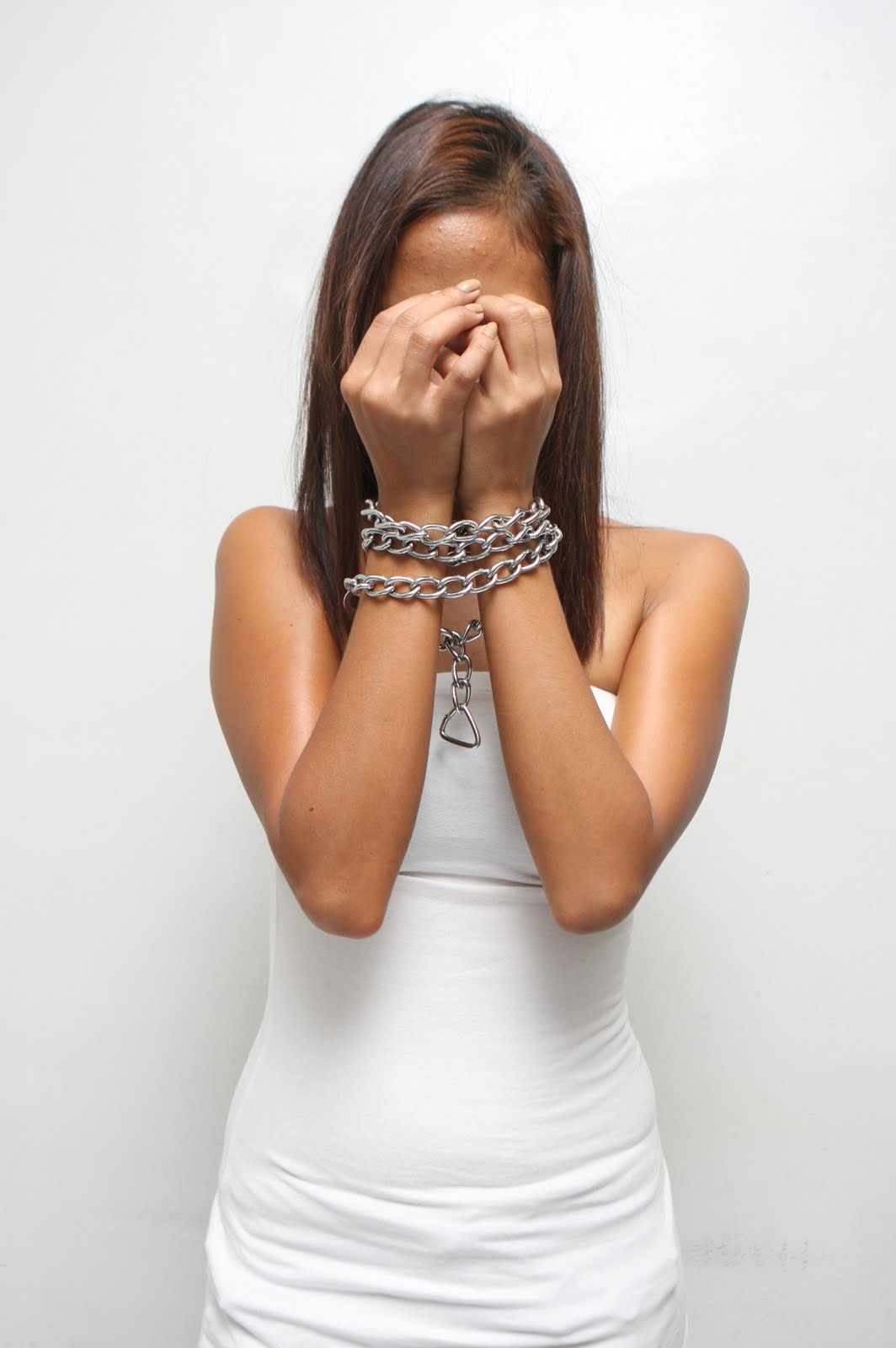
Roundtable Discussion: Fighting sex trafficking

What’s up with sex workers in Singapore? A discourse on those trafficked

AWARE explores this discussion in Part 2 of our Roundtable series on sex workers.

Date: August 31, Wednesday
Time: 7.30pm
Venue: AWARE Centre (Block 5 Dover Crescent #01-22)

Last week, we heard about the decisions that sex workers make, their rationale for decisions made or not made and also gained an insight into the work of volunteers who suspend judgement and focus on reaching out to sex workers.

In this upcoming Roundtable Discussion, we come to grips with trafficking in the entertainment industry and how such individuals are supported.

This discussion outlines how labour and sex trafficking are being dealt with by the authorities in Singapore, focusing on the inadequacies of current legislation and system in giving due recourse and protection to trafficked victims and in punishing perpetrators of trafficking.

Speakers:

Noorashikin Abdul Rahman

The current vice-president of TWC2, an NGO concerned with the rights and welfare of migrant workers in Singapore. She has been a member of the board of TWC2 since it was first registered as a society in 2004. At TWC2, she has taken responsibility of various projects in diverse areas such as direct services, capacity-building, policy research and advocacy. Noor also has a doctorate in Social Sciences and has published several academic articles on migration and migrant domestic workers in Singapore.

Mark Goh

Chairperson of the Archdiocesan Commission for the pastoral care of Migrants and Itinerant People (ACMI)

Chair: Ms Braema Mathi

Register here for this event.

Find out more about AWARE’s monthly Roundtable Discussions here.

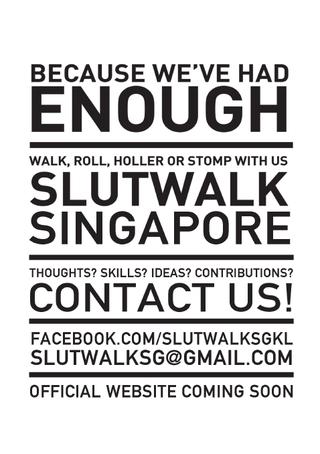
SlutWalk Singapore: Happening this December

Organisers aim to take a stand against sexual violence and victim-blaming

2011 has been an exciting year so far, and it looks set to end with yet another ground-breaking event – Singapore’s first SlutWalk.

If all goes according to plan, the local version of this international anti-slut-shaming movement will take place in December.

Workshops on relevant issues are being planned for Dec 3, with the SlutWalk itself slated for Dec 4.

It all began in January, when these words left the lips of Canadian police officer Michael Sanguinetti during a safety forum: “Women should avoid dressing like sluts in order to not be victimized.”

Outraged by the suggestion the way women chose to dress were to blame for the sexual violence inflicted on them, thousands gathered for the first SlutWalk march in Toronto in April.

The movement caught on swiftly, resulting in what some commentators have termed the “summer of slut”. More than 50 SlutWalk marches have since been held around the world, making it one of the most high-profile instances of feminist activism in recent memory.

It was Asia’s first SlutWalk, held in New Delhi in July, that made graphic designer Cher Tan, 24, think that such an event was possible in Singapore.

“I had a vague idea of doing something when I first heard about the SlutWalk,” she tells AWARE. “When I found out that it was happening in India, I thought, why not try to organize a SlutWalk in Singapore too?”

Together with her fellow organisers (there are currently a total of 11, and their ages range from 22 to 30), Tan started the ball rolling by creating a Facebook page and talking to her friends to gauge their interest.

The SlutWalk Singapore team has since crafted a manifesto (see below) and is talking to organisations and potential sponsors who might be interested in collaborating. Besides the actual SlutWalk, they also plan to hold talks and workshops for members of the public to discuss issues like sexual assault and the need for more support services for rape victims.

So, what will SlutWalk Singapore be like? For starters, it probably will not be a walk, says Tan, who has in mind an event closer to the model of a Pink Dot-style gathering.

Unlike SlutWalks in Western countries, where many protestors turned up in skimpy attire to march, there will be a conscious move to de-emphasize the importance of the word ‘slut’ for the event here.

“We want to be as inclusive as possible,” says organiser Vanessa Ho, 23. “The ultimate goal is to create awareness about victim-blaming. If people aren’t comfortable with reclaiming the word ‘slut’, then they don’t have to reclaim it.”

This willingness to shift their focus away from the semantic implications of the word ‘slut’ reflects the organisers’ desire to tailor SlutWalk Singapore to the needs and sensitivities of the local context.

Tan notes that in India, the SlutWalk was re-named the Shameless Front by organisers in a bid to emphasize the message of protesting sexual violence. “This is not about the right to wear skimpy clothes, but rather the right to be without fear,” she says. “That’s why they changed the name – to reclaim the right to feel safe.”

Look out for fringe events throughout the month of November, organised by various groups and individuals in collaboration with SlutWalk Singapore. Details for these events will be rolled out by late September, as will the official SlutWalk Singapore website. Check their Facebook page for updates.

Want to be a part of SlutWalk Singapore? Write to slutwalksg@gmail.com to find out how you can contribute.

The following is an excerpt from SlutWalk Singapore’s manifesto. You can read the full text here:

We are proudly taking a stand against sexual violence and the bully tactics of victim-blaming, as we are tired of being oppressed by slut-shaming; of being judged by our sexuality and feeling unsafe as a result. This is not just a women’s issue nor is it just a men’s issue; it is everyone’s issue – regardless of gender identification, sexual orientation, class, religion, race or any other identity markers.

We seek to:

  • Challenge the sentiment that it is acceptable to live in a victim-blaming society as we do, where we are taught “don’t get raped” instead of “don’t rape”.
  • Emphasize that no means no, yes means yes, and that only our words can consent for us – not our bodies or our clothes, and regardless if we participate in sex for pleasure or for work.
  • Fight the stereotypes and myths of sexual assault (e.g. men jumping out of bushes) and supporting a better understanding of why sexual violence happens (not limited to physical violence), supporting victims and survivors.
  • Create an understanding that sexual assault affects all genders, while acknowledging the fact that it disproportionately affects women.
  • Create a network of safe spaces for victims of sexual assault to seek solace and empowerment.
  • Reclaim the right to express our sexuality without fear by critically examining the value system imposed upon the word ‘slut’. One does not need to identify as a ‘slut’ to be part of SlutWalk.

Am I a slut/ Do I have to be a slut to be part of this?

One does not need to identify as ‘slut’ to be a part of SlutWalk. We are asking you to join us for SlutWalk, to make a unified statement about sexual assault and victims’ rights and to demand respect for all. You do not have to wear your sexuality on your sleeve, we just ask that you come gather with us. We are not asking for you to ‘vamp it up’ either, as that would be falling into the traditional stereotype that we are working hard to break. SlutWalk Singapore is asking you to COME AS YOU ARE – whether in T-shirt and jeans, in fishnets, in a sari, in a jacket, or in a tudung. No matter how you visually identify, we are welcoming ALL those who feel that prevailing attitudes as to why sexual assault happens need to change. We believe in the simple concept that everyone deserves to be respected for who they are. There will also be a series of talks and workshops the day before to contextualize our effort, to spark further discussion and to engage one and all in meaningful dialogue to create awareness about the various issues surrounding sexual assault, sexuality, and consent.

We demand respect.

AWARE CEDAW Forum

Play your part and help shape women’s rights in Singapore for the next five years

Date: September 10, Saturday
Time: 11am to 2pm
Venue: AWARE Centre (Block 5 Dover Crescent #01-22)

You may think that discrimination against women does not exist in Singapore, but it still does, in ways big and small, as shown through AWARE’s Shadow report to the United Nations Committee on CEDAW (Convention On The Elimination Of All Forms Of Discrimination Against Women).

CEDAW is an international Bill of Rights for Women which Singapore ratified 16 years ago. Last July marked the government’s fourth time to the UN to report on its efforts to eliminate discrimination against women.

AWARE will continue to raise awareness on CEDAW and encourage more women and women-oriented groups to engage on this process. The AWARE team has just come back after lobbying at the UN at the 49th session of CEDAW in New York, and we are keen to share with you the process, the outcomes and work with you on a way forward to lobby on certain important issues.

Women in Singapore can play a bigger role using the CEDAW process to support other women in our country, who may not have it easy because of systemic shortfalls.

So please come and listen to new voices on the CEDAW process, join us in the next phase of advocacy and knowledge-sharing and if you are smitten by CEDAW as we are, then own it too. You can also come just for a knowledge top-up as CEDAW is for all women.

Our programme for the day will include a sharing on the process at the UN, a discussion on the Concluding Observations and a facilitated Call to Action on CEDAW.

This is open to all, not just AWARE members, and especially to all those individuals and groups keen to engage on CEDAW. So come along to the AWARE’s CEDAW Forum on Saturday, September 10, 2011.

Click here to register for this event.

For more information, contact Nadzirah at advocacy@aware.org.sg or 6779-7137.

The two messages of SlutWalk

The first is simple: A woman is never responsible for being raped because of what she wears. The second is trickier: Reclaim the word ‘slut’.

By Anu Selva-Thomson

The SlutWalk movement has generated a great deal of controversy over the past few months. As followers of this contemporary feminist campaign prepare for a march in Singapore, it is worth examining the sources of this controversy so as to understand what this movement is all about.

The first SlutWalk was held this April in Toronto, in response to a police officer advising women at a safety forum to (in a nutshell) stop dressing like sluts if they didn’t want to be raped. Since then, women all over the world have been organising similar protest walks in their cities.

The aim of these SlutWalks, as I see it, is to educate people on two primary things.

Firstly – how one chooses to dress has nothing to do with a rapist’s choice to rape. It is preposterous to blame victims or argue that they brought the assault upon themselves. Blaming victims is known as secondary victimization, where the victim is re-victimized by society and/or legal authorities.

The second aim: The word ‘slut’ has been used to dehumanize and objectify women and we need to re-appropriate the word.

I’m fully in favour of the first aim. Rape is a pretty easy word to understand. It means forced and unwanted sexual intercourse. Forced and unwanted are also fairly easy words to understand. When one is forced to do something, it’s generally the case that they do not want to do it and have not agreed to do it – they do it against their will. When something is unwanted, it is unwelcome. Most of us know what these words mean. It is for this reason that I’ve always been confounded by talk about women asking to be raped.

For those of us who need more than the simple definitions, there have been feminists, activists, criminologists, psychoanalysts and social workers who have disputed, debated and discussed the elements of rape in much more detail.

And still, it seems, there are too many people who just don’t get it. The fact is that clothes have very little to do with rape. Rapists don’t hang around void decks or car parks assessing women and their clothing before attacking. They don’t ponder the merits of zippers versus button-fly and wish women would all just wear Velcro.

Rapists rape for a vast variety of reasons. These can include: Hostility towards women; beliefs that support sexual violence; a desire for impersonal sex; a society that supports male dominance and sexual entitlement; environments rife with violence, poverty and a lack of proper law enforcement; and sexual or social inadequacies that result in a need to exert power.

There are many more reasons, none of which include a woman’s choice in clothing. Women in track suits get raped, nuns have been raped, thousands of women in burqas get raped, still thousands more get raped by their husbands or boyfriends – how do we account for provocative clothing as a reason in these cases? We can’t.

There’s a vast difference between telling men and women to practice caution with measures like avoiding dark and lonely places, and telling them that not taking these precautions means they are to blame for getting robbed, stabbed or raped. Correlation does not imply causation.

Arguing that the way women dress causes them to get raped neglects the fundamental fact that human beings have what philosophers call ‘agency’. We make choices. A man who feels sexually aroused by an attractive or ‘provocatively’ dressed woman can choose not to force sex upon her in order to satisfy his arousal. A man who forces sex on another person chooses to do so. Rapists choose to rape.

I shouldn’t have to worry about bringing the trauma of rape upon myself the next time I decide what to wear, in the same way that a man shouldn’t have to worry about bringing the trauma of a battering upon himself the next time he decides to toot his car horn on the highway.

As for the second goal of SlutWalk – that’s a little trickier and I’m not sure I’m convinced. I don’t like the word ‘slut’. I’ve never thought it was a word that had any positive or soul-strengthening connotations. Its etymology dates back to the early 1400s, when it was used to describe someone who was sloppy and dirty. Over time, it became a degrading and demeaning term used to describe women who demonstrate an enjoyment of sex or engage in sex with multiple partners. It’s not a word I would want to reclaim or reconstitute or re-appropriate, because it’s been used as a debasing and negative word.

A woman who enjoys sex, with one or multiple partners, and is comfortable with her sensuality and sexuality shouldn’t have any special word as a descriptor. We don’t have special words that describe a person who generally enjoys food (gourmand or epicure don’t count because they describe persons who have a
particular kind of enjoyment of particular kinds of food) or beautiful scenery, presumably because we think these enjoyments are natural and acceptable.

In the same way, women’s enjoyment of sex and their desire to exist as sensual beings should be perceived as the natural thing it is. My only concern with SlutWalk is that it might be giving weight and attention to a word that, while important as a term that sheds historical and conceptual light on gender and feminist issues, would otherwise be better withdrawn from our contemporary lexicon.

Some proponents of re-appropriating the term ‘slut’ argue that their purpose is to make it meaningless, rather than to remove the word from its patriarchal context and apply it in a positive way. While I do appreciate the intellectual concept behind stripping such words of their meaning, and am aware that the word ‘slut’ was the word used by the police officer whose comments sparked off this movement, I do not agree that raising awareness for an issue as important as secondary victimization should be tied up with highfalutin’ post-structural redefinitions of binaries.

There is certainly a place for discussing the need to tear down Madonna/Whore binaries that have long been used to shackle female sexuality and sensuality. But I’m not convinced that this march is that place. Also, whether reclaiming the word ‘slut’ is the best way to tear down these binaries is another question for another article.

A march like this needs to focus on its primary message – that clothing or dressing has nothing to do with rape. It also needs to make that message accessible to the most number of people. Highly intellectualized discourse that defends the use of the word ‘slut’ is likely to leave too many people confused.

People have also commented on the attire that protestors have chosen to wear in these marches. Many women and men have showed up to SlutWalks wearing little else but their underwear as a statement. While there is nothing inherently wrong with this, it seems that how people are choosing to dress for these walks
is preventing the message from being spread as effectively as it might (more conservative countries are uncomfortable with giving the walk the green-light) and distracting from the essential point concerning secondary victimization.

But activism isn’t perfect. There are bound to be many well-meaning women and men who march for SlutWalk without fully understanding what it means or what responsibilities they have as protesters and as voices in society. Or they may understand it fully but want to highlight one particular aspect over another.

When there are so many people involved in raising awareness, it is inevitable that that we see signs of individual identity and interpretation. What we need to do is make sure we keep our focus on the issue that began all of this – a woman is never responsible for being raped because of what she wears.

The writer is a former teacher who is currently pursuing a Master’s degree in philosophy at the National University of Singapore. She is also the founder and editor of The Mohini Myth website, a platform for sharing views on feminist issues.

Armpits: To censor or not to censor?

This is an account of the talk A Short History Of Modesty In South-east Asia: From The Control Of Women’s Selves To Their Bodies, given by Dr. Farish Ahmad Noor, Senior Fellow at the S. Rajaratnam School of International Studies, NTU Singapore. This event was held on August 6, as part of Etiquette 2011, a multidisciplinary showcase of art, writing and film created by and about women.

by Lisa Li & Zarina Muhammad

Sixty people at the Substation are listening to Dr Farish Noor talk about armpits…

A woman dressed in a singlet reaches up for bananas, her armpits exposed to passers-by. Eyes are quickly averted, armpits censored. Onscreen, a message reads: “Do not wear tight and revealing clothes”.

This was part of a series of advertisements screened by Malaysian TV station 8TV during the recent month of Ramadan, urging Malaysians to maintain good standards of public decency. Eventually, a huge public outcry led to the removal of these advertisements.

When did an exposed armpit become the marker for public immodesty? Has this always been the case? If not, what was our ancestors’ understanding of the idea of modesty and morality?

Contrary to the modern-day perception of traditional conservatism, sensibilities in ancient South-east Asia were not necessarily defined by bodies or women. In fact, our ancestors often did not regard the body as ‘dirty’, or as a site to be policed.

Dr Farish Noor cited the example of penis-piercing for the enhancement of sexual pleasure, which was a regular practice up till the 8th century. The positive ideas and attitudes towards sex and sexuality in the ancient Kama Sutra also shaped the worldview of ‘greater India’, that is, present-day South-east Asia.

So, if public immodesty of the classical period was less linked to bodies and sexuality, what then were the markers for public modesty, and how was this influenced by the dominance of Hinduism and Buddhism?

Dr Farish Noor pointed to the two epic Hindu poems – the Ramayana and the Mahabharata – which he described as having given our ancestors the vocabulary to articulate and understand their moral and political landscape.

Of particular interest was the complexity in the representation of female figures in these texts – beautiful, ill-fated Draupadi in the Mahabharata, and strong-willed, loyal Sita in the Ramayana. In certain readings of these two texts, interestingly, the marker of modesty and morality appears to be the demonstration of one’s will in a public space and the woman’s individual actions, rather than her flesh and body.

So just when and how did modesty get transferred from self to the body?

Dr Farish Noor suggested that one factor was the 15th-century arrival of two Abrahamic religions – Islam and Christianity. To mark this change, the body then became the site to write the narrative of a new religion. 14th-century traveller Ibn Battuta described Asian women who went uncovered and free, but with the Islamization of South-east Asia, women started to cover up their bodies in order to outwardly display their conversion and changes in belief system.

The arrival of colonialism was another factor for this shift. With the British, Dutch and Portuguese expanding South-east Asian ports, the towns became predominantly young, single and male, and this was matched by the rise of prostitution of Asian women.

In these cities, racialized colonialism often kept the different races in separate quarters, partly due to the fear of what was then perceived as ethnic-specific diseases. Ironic then, that the different races met in the same brothels, and the prostitute became a vector for disease. Her body literally became the centre of public morality and scrutiny. It is also likely that ‘decent’ women were drawn into this scrutiny of women’s bodies, and strived to look clearly different from prostitutes.

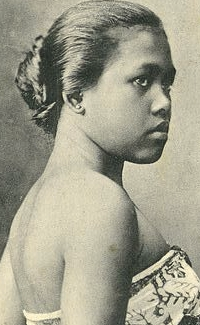
At the same time, it became popular for European men to produce and purchase erotic postcards of nude African women for their private collections. It is unclear why there were no equivalent erotic postcards made of South-east Asian women.

Of course, things are not to be painted in simplistic terms. The notion of the woman’s body as a marker for public modesty continue to be shaped by different identities, representations and interpretations.

In the South-east Asian wars of the 20th century, for example, many women took on the identities of guerilla and freedom-fighter. And running counter to the ulama tradition of Islamic scholarship was Syed Sheikh al-Hady’s 1926 novel, the Hikayat Faridah Hanum – the first modern feminist novel written in vernacular Malay. Up until the 18th century, the Encyclopaedia Of Java was commonly used as a reference for matters related to sexuality and bodies, without any notion of immodesty.

What then do we make of contesting representations of women’s bodies and standards of modesty? And in a global culture that increasingly objectifies women’s bodies, yet polices them with the notion of public modesty, how much control do women have over both the display and the policing of their own bodies? And if our current conception of modesty is indeed a historical construct, is it possible to ‘de-gender’ or ‘de-body’ modesty?

Back to armpits. Should armpits be censored or not? It appears that people haven’t quite decided.

Lisa Li is a teacher and writer. Zarina Muhammad is a curator, writer, art historian, educator and the co-founder of Etiquette. Etiquette’s Visual Art Exhibition will be on at the Substation till August 28.

Dirty, sexy, funny

What the rise of raunchy female-driven comedies says about the changing view of gender roles

By Hong Xinyi

One of the nice things about working at AWARE is the opportunity to meet the many bright young women who take up internships here in order to pursue their interest in gender issues.

It was lunch hour one day in the office when the conversation turned to Sex And The City. “I never liked that show,” said an AWARE intern, a university student.

In addition to the series’ rampant promotion of consumerism as empowerment, she was also irked by how, at one point, the character Carrie Bradshaw (played by Sarah Jessica Parker) had an affair with a married ex-boyfriend. “They tried to make it seem like it was because he was her true love, but if you’re a woman who respects yourself you just wouldn’t put yourself in that situation,” said my colleague, quite firmly.

You don’t have to be a feminist, of course, to dislike this particular pop-culture creation. I’ve met many women who simply cannot stand Carrie’s materialism, whininess, and those godawful puns. And I do understand where they are coming from.

Still, I’ve always liked Carrie. I like how unlikeable she often was. I like that she had bad habits that she didn’t really want to kick, for a while anyway. I like the way her romantic delusions co-existed with a rich lode of sincere cynicism. I like that she loved her friends but wasn’t always good to them, and that the tensions and evolution of these friendships were documented with as much, if not more, care than her romantic relationships. I like that, in an industry where even the best actresses have to wrestle for screen-time, we got to watch Carrie and her friends grow older and wrinklier and fall apart and put themselves together again and again over the course of six TV seasons and 2 movies.

I like that she often screwed up – the way even self-respecting feminists can, from time to time, because life doesn’t always care about your best intentions; the way not many female protagonists are allowed to, because so many of them are still written as one-dimensional characters. As far as I know, Carrie is the only female lead in a mainstream pop-culture franchise in recent memory who has stated – wistfully yet matter-of-factly – that she has had an abortion. Her aforementioned affair may not have been the act of a self-respecting woman, but it was several other things that seem, to me at least, more interesting than the depiction of female moral perfection: well-written, honest and, at times, painfully funny – the anatomy of a bad decision.

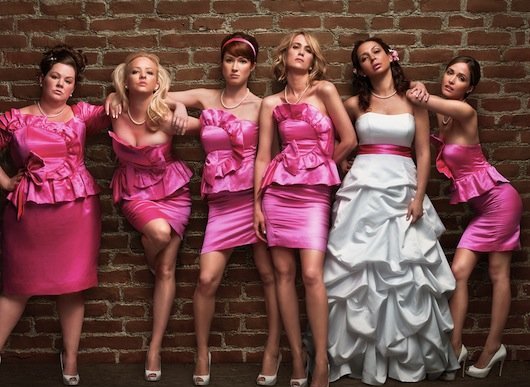
Much has been made of how the recent comedy Bridesmaids has surpassed the 2008 Sex And The City movie as the top-grossing R-rated female comedy of all time. Comedian and co-screenwriter Kristen Wiig stars as down-on-her-luck baker Annie, who has to organize pre-wedding festivities for her recently-engaged best friend. Madcap mayhem ensues, including a scene featuring the female cast vomiting and having diarrhea while dressed in expensive bridal gowns; several one-night-stands gone woefully, hilariously wrong; and lots and lots of potty-mouthed punchlines.

Many film critics have in fact taken Bridesmaids’ crudeness as evidence of its feminist stripes, in marked contrast to the critical drubbing heaped on the more conventionally ‘girly’ 2010 Sex And The City 2. Slate describes Bridesmaids as “a giddy feminist manifesto that responds to the perennially circulated head-scratcher ‘Can women really be funny?’ with a whoopee-cushion fart”. The New York Times thinks the movie proves that “women can go aggressive laugh to aggressive-and-absurd laugh with men”.

Taken with a recent spate of raunchy comedic female roles that includes Cameron Diaz as an unrepentant gold-digger in Bad Teacher and Jennifer Aniston as a sex-crazed dentist in Horrible Bosses, Bridesmaids’ gross-out style seems emblematic of a generational shift in tone for female-driven comedy.

After all, what could be further away from the arch, cutesy tone and preening consumerism of Sex And The City than Bridesmaids’ deliberate toilet humour and off-kilter comedic rhythms?

So – silly movies about shoes and shopping are out and silly movies about women behaving as badly as men are supposed to are in? Why is one supposed to be better than the other? Why is this considered progress?

In her 2006 book Female Chauvinist Pigs: Women & The Rise Of Raunch Culture, American journalist Ariel Levy described the phenomenon of women practicing what she considered to be reverse-sexism:

“We decided long ago that the Male Chauvinist Pig was an unenlightened rube, but the Female Chauvinist Pig has risen to a kind of exalted status. She is post-feminist. She is funny. She gets it. She doesn’t mind cartoonish stereotypes of female sexuality, and she doesn’t mind a cartoonishly macho response to them…Raunch provides a special opportunity for a woman who wants to prove her mettle. It’s in fashion, and it is something that has traditionally appealed exclusively to men and actively offended women, so producing it or participating in it is a way both to flaunt your coolness and to mark yourself as different, tougher; looser; funnier – a new sort of loophole woman who is ‘not like other women’, who is instead ‘like a man’. Or, more precisely, like a Female Chauvinist Pig.”

There are ways in which this thesis can be applied to the glee that has greeted the brand of raunchy female humour currently in vogue. In one sense, yes, it’s great that it is now acceptable – and, crucially, profitable – for women to behave in certain outrageous ways on-screen. But the fact remains that in many glowing reviews, this behavior – crudeness, aggression – is still automatically coded as ‘masculine’ and therefore worthy of emulation. Would a male-driven comedy with characters behaving in stereotypically ‘feminine’ ways be given similar approbation?

More importantly, this focus on raunch is an over-simplification of what is happening to female-driven comedy today.

Levy was writing at a time when Britney Spears hadn’t yet shaved her head and Paris Hilton was one of the biggest celebrities on the scene. There’s been a shift in pop culture since then. For one thing, today’s It girls are of a distinctly different breed. From sullen Kristen Stewart to sarcastic Emma Stone, there are few up-and-comers who fit the conventional sexpot mold.

For another, female comedians like Tina Fey, Amy Poehler and Bridesmaids’ Wiig have become some of the most beloved and sought-after performers in their industry. It is not coincidental to their success that these funny ladies, like most comedians, write and produce their own material, and raunch is just one of the many different tools they use to craft their characters.

The commercial success and cultural resonance of Bridesmaids’ bawdy women may in fact be due not just to their outrageous comedy (which is, don’t get me wrong, very very funny), but to the fact that these characters are written as exaggerations but not stereotypes. Unlike their counterparts in the cookie-cutter romantic comedies of recent years, these caricatures may be broad, but they are not banal.

Which is to say, really, that Bridesmaids is more like Sex And The City than you might expect. Raunchy is just one of the many things these women are allowed to be. They can be materialistic and whiny, yes; and sometimes confused, selfish, and competitive; and also loyal, perceptive and brave. They are not perfect, because they are not idealized – they contain multitudes. We all do.

There is a brief but pensive little scene in Bridesmaids that I remember more fondly than the vomit-diarrhea one, during which Annie – who lost all her savings when her bakery went under during the recession – makes a single cupcake. She mixes the batter, fills the mold, watches the oven and then pipes on petals of frosting – the sequence is an elegant, efficient way of expressing the inner world of this character, of showing us her particular form of creativity, her ambition, and her sadness at losing her way. Showing a woman doing something that she cares about, that she’s good at, in a compelling way that furthers the story – how often do you see that in a movie? She also reacts to the news that her best friend is getting married with a clichéd blend of Martha Stewart-style decorum and Oprah Winfrey-level enthusiasm in her voice, even as her eyes grow wide with… what is that look? Panic? Loss? Envy? How often do you see this cocktail of emotions in a female-driven comedy structured around a wedding?

You will probably not be surprised to learn that I like Annie. I don’t like her as much as Carrie – but then, I haven’t had a chance to really get to know her yet. I hear that Bridemaids 2 is almost certainly happening though.

The writer is a freelance journalist and a communications consultant for AWARE.

Forum on the Presidential Elections

Date: August 20, 2011, Saturday

Time: 3.30pm to 5.00pm

Venue: 9 Penang Road, #13-15 Park Mall (map)

MARUAH (Working Group for an ASEAN Human Rights Mechanism, Singapore) has put together this public forum to continue our key role in increasing public awareness of Singapore’s election processes and our country’s constitutional matters.

We strongly believe that information is crucial to acting and voting responsibly. The Presidential Elections and the mandate it confers on the Elected President has to be clearly discussed so that the Singaporeans can make informed choices.

Our speakers, constitutional expert Dr Kevin Tan and activist blogger Alex Au, have been asked to share with us their insights and knowledge on the mandate of the Elected President and how we can make decisions that is the best for Singapore.

This Forum has also been timed to take place in advance of the Presidential polling date and we hope that through this Forum, Singaporeans will be made aware of their rights as citizens and their responsibilities as voters.

To register, please visit this link.

About the speakers

Alex Au Waipang is a well-known web commentator, writing on Yawning Bread. His cutting and insightful analysis on society and politics has not only earned him a loyal following, but the attention of opinion of policy makers from time to time. In activism, he is primarily known for his work in equal rights for gay, lesbian, bisexual and transgendered persons but has also spoken out for civil liberties, abolition of the death penalty, fair treatment for migrant workers, and human rights in general. Au has contributed chapters to several books that look at politics and governance in Singapore, most recently a chapter on political parties’ performance in the general election of 2011 in Voting in Change (Ethos Books).

Kevin YL Tan has been teaching constitutional law for the past 25 years. A graduate of the Faculty of Law, National University of Singapore and of Yale Law School, he has written and edited over 25 books on law, history and politics. He is currently Adjunct Professor at the Faculty of Law, National University of Singapore and Adjunct Professor at the S Rajaratnam School of International Studies, Nanyang Technological University.

Visit the Maruah Singapore website for more information.

Our take on UN’s Concluding Observations

There remain many areas where gender equality can be improved in Singapore.

AWARE is very heartened by the Concluding Observations made by the United Nations’ (UN) Committee on the Elimination of Discrimination against Women. But we remain concerned about the Singapore government’s level of commitment to gender equality.

AWARE urges the State to meet its obligations on some of the key areas of the Convention on the Elimination of All Forms of Discrimination against Women (CEDAW), as highlighted in the UN’s Concluding Observations, which contains the UN CEDAW Committee’s principal areas of concern and its recommendations of measures the State should take to ensure the non-discrimination of women in the country.

These areas are:

  • To localise CEDAW in the community; to ensure that Parliament is aware of its own Obligations to CEDAW principles; and to incorporate CEDAW into the local legal system
  • To elevate the status of the national machinery and support it with adequate resources
  • To remove reservations, especially to Article 11(1), Article 2 and 16, within a clear timeline
  • To harmonise the local laws with those of the Convention and to include the legal fraternity and non-governmental organisations in the consultations
  • To define discrimination and equality in accordance with CEDAW principles and so remove all forms of discrimination against women in Singapore, including sexual minority groups and female migrant workers and foreign wives
  • To put in place a comprehensive strategy to modify or eliminate patriarchal attitudes and stereotypes that discriminate against women, including those from sexual minority groups; and to eliminate cultural concepts, such as “the head of the household”, that negatively impact the equality of men and women
  • To ratify the UN Protocol to Prevent, Suppress and Punish Trafficking in Persons; and to regularly train police officers and the judiciary on these matters, as well as on the issue of violence against women.
  • To take effective measures to eliminate occupational segregation between men and women at the workplace
  • To ensure that all women, regardless of marital status, are given the same maternity benefits
  • To offer legislative protection to foreign domestic workers, including a regular day off
  • To enact a law to deal with workplace sexual harassment; and to increase public education on this issue
  • To establish a national human rights institution
  • To ratify the Optional Protocol, which allows the UN CEDAW Committee to receive complaints from individuals or groups

AWARE notes that the UN CEDAW Committee also reiterated six Observations that were first put forward to the State four years ago. While AWARE appreciates some of the changes made by the State to improve the status of women in Singapore, many of the core areas of CEDAW have been left untouched.

This lapse has been noted by the UN CEDAW Committee, particularly in key areas such as: a clear timeline for the removal of reservations; sensitization to and temporary special measures for disadvantaged women; elevating the status of the national machinery; and incorporating a definition of discrimination into legislation. These are core equality principles.

AWARE also notes that at the 49th Session, the government of Singapore appeared more receptive and open to the UN CEDAW Committee, while also being non-committal in its answers in these core areas.

AWARE hopes that the State, which takes its international treaties obligations seriously, will work on some of the key Observations as outlined by the UN CEDAW Committee. We hope to see improvements in the core areas as outlined in the Concluding Observations.

We would also like to take this opportunity to congratulate the UN CEDAW Committee on their role at the Reporting Session in New York, where AWARE was represented.

AWARE will always be ready to help the State in any way possible to ensure that these Concluding Observations can be made into a reality.