
Year: 2011

Our stand on the London Weight Management ad

AWARE sent the following letter to the Advertising Standards Authority Of Singapore, the Media Development Authority, MediaCorp and London Weight Management’s parent company Ames United.

Complaint about London Weight Management Television Advertisement

We are writing to express our concern about the misleading and damaging messages about health, body image and self-esteem conveyed by slimming centre London Weight Management’s latest television advertisement (recently removed from the Internet). We strongly recommend that this commercial be withdrawn from television stations as soon as possible.

In accordance with the Singapore Code of Advertising Practice, advertisements should not:

  • Mislead by way of exaggeration
  • Play on fear without justifiable reason
  • Misrepresent information to mislead consumers into believing any matter that is not true
  • Feature testimonials or endorsements that are exceptional experiences (i.e., which do not reflect the experience that an average user of the product would ordinarily expect to have)
  • Further, the section on “Advertising for Slimming Products and Services” of the Code of Advertising Practice states that “independent testimony from published journals/reports will be required as to any physiological effects claimed. Testimonials from users do not constitute substantiation”.

This advertisement is in clear violation of the above guidelines.

By dramatizing scenes of depression, contemplation of suicide and family conflicts, it seeks to exploit the fears of insecure female consumers. It also reinforces social stereotypes by perpetuating the pernicious view that a woman’s worth hinges on her looks, and that men are incapable of looking beyond appearances when interacting with their female partners.

The ad states that the story it portrays is based on the experiences of an actual client. Independent and trustworthy testimony from relevant experts is absent from the ad. The viewer has no way of knowing how closely this dramatization of a purportedly real story sticks to the truth of what happened. Even if the ad is based on the actual experience of a client, it surely does not reflect the experience of the average overweight person.

Instead, it is overtly asserted that the female protagonist in this ad was terminated from her job due to her weight and appearance. The ad also claims that the woman’s weight is to blame for strained marital relations as well as other physiological and psychological issues.

These claims are simplistic and extremely dangerous. Firing someone for being overweight is not only offensive, but may be illegal if that is the only ground for her termination when her performance was not affected by being overweight.

Depression, suicidal thoughts and verbal abuse by one’s partner are serious issues that should not be trivialized in this way. It is crucial that women who are suffering from these problems not be misled into thinking that weight loss is the answer to their woes.

It is not surprising that this advertisement has been the subject of heavy criticism (see reports here and here). Consumers in Singapore have become increasingly sophisticated and do not care for the irresponsible messages in such advertisements, be they overt or subliminal. It is disappointing that companies like London Weight Management have not kept pace with the customers they court.

We believe that more stringent advertising standards are needed in order to prevent the public airing of such misleading and harmful messages.

AWARE strongly urges the immediate removal of this advertisement. We look forward to hearing from you about this issue.

Yours faithfully,
Corinna Lim
Executive Director

Kwan Jin Yao
Chair
Food Is Not the Enemy (Eating Disorders) Sub-Committee

Read about the latest update on this issue here.

Helping sex workers, fighting sex trafficking

In 2 separate Roundtable Discussions, experts shared their experiences of combating the prejudice and exploitation that plague the world’s oldest profession.

With all the cultural baggage that surrounds sex work, it can be hard for many people to focus on the ‘work’ part of sex work. But sex workers, like any other wage-earner, also grapple with decisions and concerns about their job-related welfare.

This was the approach social worker Wong Yoke Leng took when she spoke about sex workers in Geylang during AWARE’s August 18 Roundtable Discussion.

Wong works for Project X, which was started in 2008 to improve the welfare of sex workers. Its volunteers work the ground at Geylang to provide assistance to sex workers in need of aid such as subsidies for medical care.

When asked by an audience member during the Roundtable Discussion whether there were any rehabilitation initiatives “to help sex workers return to society”, Wong replied that while such schemes were lacking, “it is also an issue of perseverance and determination – making a career switch would be very, very challenging. I myself have been a social worker for many years and I can’t imagine going into sales”.

She recognised that this sort of empathy with sex workers was rare in most cultures, and that changing mindsets in Singapore will require a great deal more advocacy work.

“We always associate this job with a lack of dignity and morality,” she said. “Once, I tried working with businesses to help give sex workers jobs, but the employers were quite prejudiced and asked me, ‘Do they steal?’ But they’re friends to me, my mentors even, so I don’t see it that way.”

In addition to cultural prejudices, many non-governmental organisations in Singapore also tend to focus on sex workers as victims of sex trafficking.

While acknowledging that trafficking and coercion was a serious problem, Wong pointed out that many of the sex workers she worked with had entered the profession willingly. In any case, “our role at Project X is not to rescue them but to facilitate their needs, such as accompanying them to the Ministry of Manpower or to the clinic if they need to go there”, she said.

Other problems sex workers encounter in Singapore include:

  • Verbal and sexual harassment by members of the public, and the discriminatory attitudes of medical professionals who staff drop-in centres for sex workers.
  • Urinary tract infections (UTIs) are common for sex workers in Geylang, as there are few toilets in the area and many do not want to miss out on potential customers by taking bathroom breaks. “This is, in some aspects, worse than STIs because a lot of those can be treated with antibiotics, whereas UTIs lead to daily discomfort,” said Wong.
  • Foreigners who work as sex workers in Singapore may have entered the country on social visit passes or may not have possession of their passports (which are often retained by their pimps). As such, if they are robbed or raped during their stay here, many are afraid to make police reports for fear of being jailed and deported for taking part in sex work. They also have to raise their own money for airfare if they are deported.

The pressing problem of dealing with sex trafficking was then addressed in a separate Roundtable Discussion on August 31.

The speakers were: Noorashikin Abdul Rahman, vice-president of migrant worker rights advocacy group TWC2; and Mark Goh, chairperson of the Archdiocesan Commission For The Pastoral Care Of Migrants And Itinerant People (ACMI).

Goh, a criminal lawyer, pointed out that as the burden of proof in sex trafficking cases lies with the trafficked person, such cases are hard for prosecutors to win because the victim rarely has evidence such as receipts that can definitively prove that she has been coerced or deceived into taking part in sex work.

Because of the evidential burden of mounting a sex trafficking case, prosecutors tend to focus on smaller offences committed by traffickers so they can win their cases. These offences can include forging passports or violating work passes.

This strategy has worrying implications for combating sex trafficking in Singapore. Besides the fact that traffickers get away with lighter sentences, authorities can also point to the low number of official sex trafficking cases as proof that the problem is negligible in Singapore.

Noorashikin pointed out, however, that various research reports have shown that Singapore is a destination for trafficked women brought in from the Philippines, Indonesia, Bangladesh, India, Sri Lanka, Vietnam, Thailand and Cambodia.

That Singapore is a destination rather than a recruitment ground for trafficking is one of the reasons why the government is reluctant to sign regional anti-trafficking treaties.

Said Goh: “The sequencing of trafficking is recruitment, the act itself, and going home. Singapore is in between. If I sign the treaty, what assurance do I have that the other signatory countries will make sure they keep the other parts of the bargain? You can have a lot of laws, but are they enforced? It makes no sense to sign a protocol when your partners are not going to enforce it.”

The pro-business environment in Singapore also means that laws here tend to be biased against victims of sex trafficking.

Noorashikin pointed out, for example, that there are not enough background checks on ‘phantom’ employers applying for work passes that are actually meant for victims of sex trafficking.

“Essentially, trafficking is about exploitation – it benefits businesses and citizens,” she said. “Sex trafficking in Geylang is about providing an outlet. There are 700,000 male migrant workers here with no access to their partners back home, and who not allowed to get married while they are here. Sex workers service this group. Even the British did that in colonial days. The sex work industry also contributes to a more vibrant nightlife, although it is not advertised in official tourism brochures.”

In stark contrast, victims typically have no access to a source of income when they try to mount expensive private prosecution cases against their traffickers, as they are not allowed to work. The victim and the trafficker may even be held in the same location, allowing ample opportunities for intimidation.

In the United States, the government provides victims with not just shelter, but also healthcare, and sometimes even citizenship, said Noorashikin. They can also get monetary compensation, with the money coming from fines collected from prosecuted traffickers.

Such measures may seem far-fetched for Singapore at the moment. “But that doesn’t mean we shouldn’t advocate for them,” said Noorashikin.

Find out more about AWARE’s monthly Roundtable Discussions here.

Alamak! Award 2011: The nominees

The results will be announced at AWARE’s Big Ball on October 17, 2011.

We are well into the 21st century and yet we still have remarks, commercials and policies that perpetuate gender stereotypes and sexist attitudes. So AWARE has created the Alamak! Award, an annual search for the most annoying, face palm, gut wrenching, you-have-got-to-be-kidding-me instance of sexism in Singapore.

Here are the nominees for the first Alamak! Award, submitted by members of the public. Nominations were closed on August 31. The voting deadline was extended to Oct 15 from October 7th due to popular demand BUT IS NOW CLOSED.

Here are the nominees:

Obedient Wives Club Singapore

This initiative by the controversial Global Ikhwan group promotes the view that wives should keep their husbands happy in the bedroom by serving them like “a first-class prostitute”, so as to prevent social ills like prostitution, divorce and domestic violence. News that the Obedient Wives Club was setting up a branch in Singapore made international headlines this year. We say that the Club’s distorted and reductive views of marriage and gender roles is socially divisive and dismissive of the real root causes of marital problems.

Read more here.


The Singapore Armed Forces’ “Our Army, My Boyfriend” Ad

Sexist stereotypes can alienate both men and women, which leaves this recruitment ad in the unfortunate position of pleasing no one. Featuring a group of women giggling and gushing over their girlfriend’s army scholar boyfriend, this ad annoyed men with its shallow portrayal of the SAF soldier as a trophy boyfriend who, rather implausibly, “always has time” for his adoring partner. And it would take a woman with nerves of steel not to be irritated by the ad’s depiction of women as wide-eyed, simpering bimbos—that cloying chorus of “so sweeeet” alone is enough to turn your stomach.

Watch the ad here.


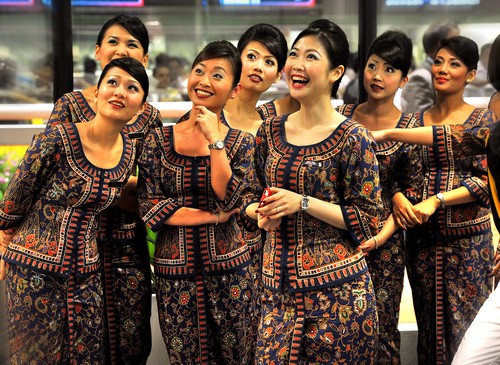
Singapore Airlines’ Employment Policies

It’s a great way to fly—well, perhaps not so much for its female cabin crew. Unlike most other global carriers, SIA’s stewardesses have to resign once they are pregnant unless they can get a ground position, which is difficult to obtain. Steps in the right direction: The airline’s Returning Mothers Scheme, which allows crew to rejoin the company if they meet employment criteria, as well as the initiative announced last year that grants pregnant cabin crew an ex-gratia payment amounting to two months of their basic salary when they resign. But such an exceptional airline and national icon should be held to higher standards of excellence. How about doing away with the automatic termination, paying full maternity benefits, extending the crew members’ flying years and hiring female pilots?

Read more about SIA’s employment policies here, here and here.


Great Eastern’s “It’s Great To Be A Woman” campaign

It is great to be a woman. Also great: Great Eastern’s declaration that “we’ve committed ourselves to helping women live well, stay healthy and be empowered”. Not so great: This campaign’s consistent, persistent use of cutesy pastel pink, which seems more infantilizing than empowering. Even less great: Campaign taglines like “It’s great to be a Daddy’s girl. It’s sad to be a Mummy’s boy”; “Discrimination works. Especially on Ladies’ Night”; and “Imagine the fuel we save by asking for directions”. Trading in sexist stereotypes that imply all women relish being coddled like princesses is not only a strange way to convey a message of empowerment, it also has nothing to do with the stated mission of “uplifting womanhood and helping women take charge of their health”.

Visit the website.


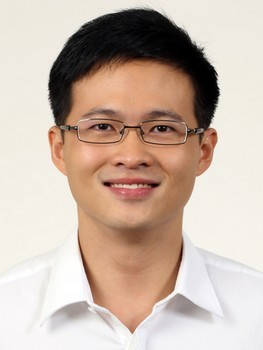
Desmond Choo, the People’s Action Party’s candidate for Hougang during GE2011

During a rally, the 33-year-old PAP candidate spoke in Teochew of meeting an old man who said that choosing an MP is like choosing a wife. “If your wife is unable to cook, there’s no point. You must choose a wife who is able to do things for you,” Mr Choo quipped, thus delivering arguably the most sexist analogy of the recent General Elections. In the final tally, the first-time candidate received only 35.19 per cent of valid votes. No one can say for sure whether his loss boiled down to his old-fashioned concept of wifely duties, but it certainly didn’t help.

Read more here.

Note: AWARE called for nominations from the public over the last 2 months and these were the names submitted.

AWARE Awards 2011: The nominees

We had such strong nominations for the inaugural AWARE Awards that the judges had a tough time deciding on the short list.

The nominations for Singapore’s first gender equality awards were made by members of the public, as well as members of AWARE.

Each nominee has made a significant contribution to promoting gender equality. For the judges, the key factors for deciding of the shortlist were the effort and impact of the nominee’s contribution and the nominee’s identification with gender equality.

The judging panel comprised: AWARE board member and education entrepreneur Lindy Ong, playwright Eleanor Wong, journalist Ong Soh Chin, academic Philip Holden and ambassador-at-large Professor Tommy Koh.

The winners will be unveiled at our Big Ball fundraising gala on October 17.

SHORTLIST OF NOMINEES FOR THE AWARE HEROINE AWARD

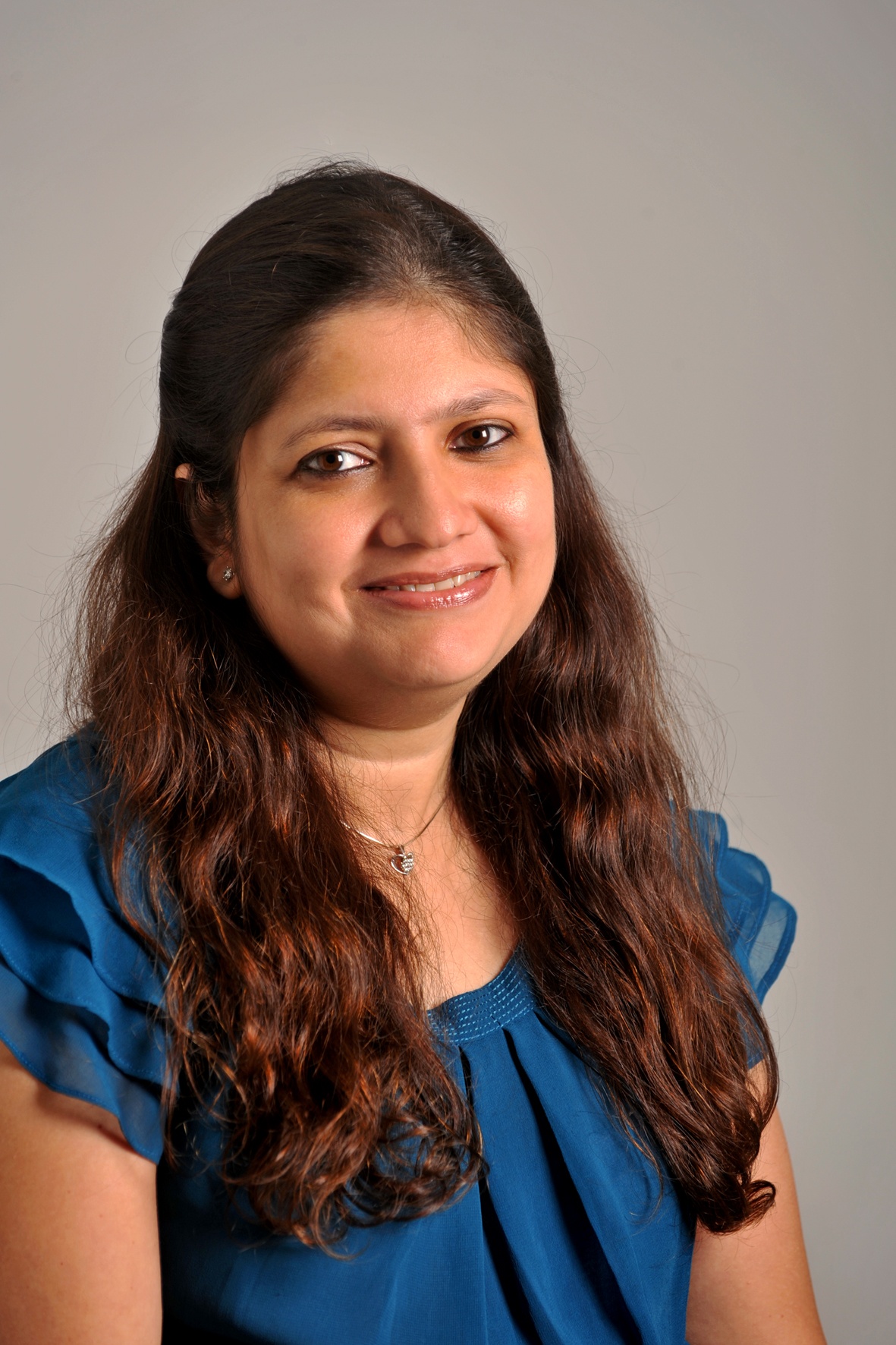
Radha Basu, Senior Correspondent, The Straits Times

Nominated for her tireless pursuit of news stories that raise awareness about issues facing women in Singapore, particularly marginalised and vulnerable groups such as domestic workers and victims of trafficking.

Readers and policy-makers alike have taken notice of her work, which include news articles, features and commentaries that document concerns such as gender equality, fertility, aging, discrimination faced by pregnant women, family violence, human trafficking and gender wage gap.

Jean Chong, Co-Founder, Sayoni

Nominated for representing Singapore women on issues of discrimination based on gender identity and sexual orientation, including presenting a shadow report on LGBT issues to the UN CEDAW committee.

She co-founded LGBT activism group Sayoni and facilitated projects to give lesbians a voice. These include the publication of the Coming Out Guide for LGBT persons and a bi-annual national survey of queer women.

She was the first chairperson of the Free Community Church, the first LGBT friendly church in Singapore, representing women in the Christian community.

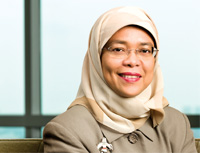
Halimah Yacob, Minister of State, Ministry of Community Development, Youth and Sports (MCYS)

Nominated for her leadership and vision as the Director of NTUC’s Women’s Development Secretariat, which provides support to single mothers, lower-income women seeking employment, women rejoining the work force and women seeking leadership in various unions.

As a Member of Parliament, she has been passionate about raising issues that improve the lives of women, including anti-discrimination measures for pregnant female employees, protecting the rights of domestic workers, as well as protection against sexual harassment.

SHORTLIST OF NOMINEES FOR THE AWARE HERO AWARD

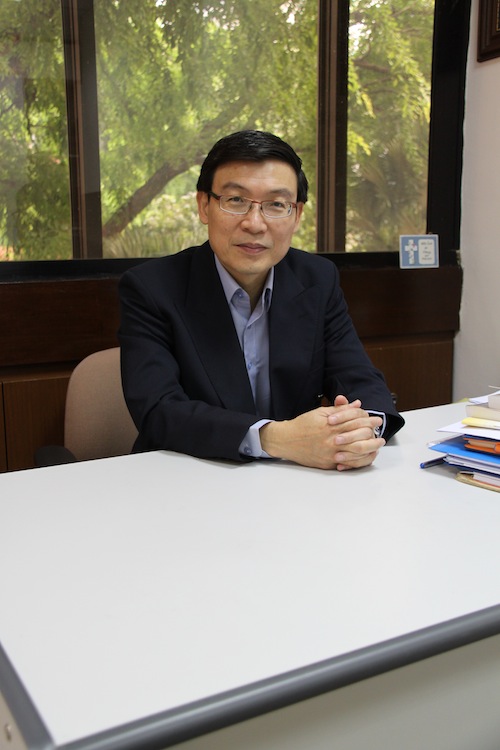
Benny Bong, Director, FamilyWorks

Nominated for his sterling work in the prevention of family violence and violence against women, especially in counselling male perpetrators of violence. He has made a significant contribution to policy discussions, training programmes and public education campaigns in this field.

He advocated for criminalising marital rape and has been instrumental in initiating training programmes for police officers on family violence dynamics. He was also the joint organiser of the International Violence Against Women Survey in Singapore in 2009.

Chan Wing Cheong, Associate Professor, NUS Law School

Nominated for his relentless advocacy for gender equality in family and criminal law. He regularly gives talks and writes papers on the subject, including a recent piece on giving homemakers due recognition in family law.

He conducted the International Violence Against Women Survey in 2009 together with Mr Bong. This was the first comprehensive effort of its kind in Singapore. He has also been outspoken about criminalising marital rape in the country.

SHORTLIST OF NOMINEES FOR THE AWARE YOUNG WONDER AWARD

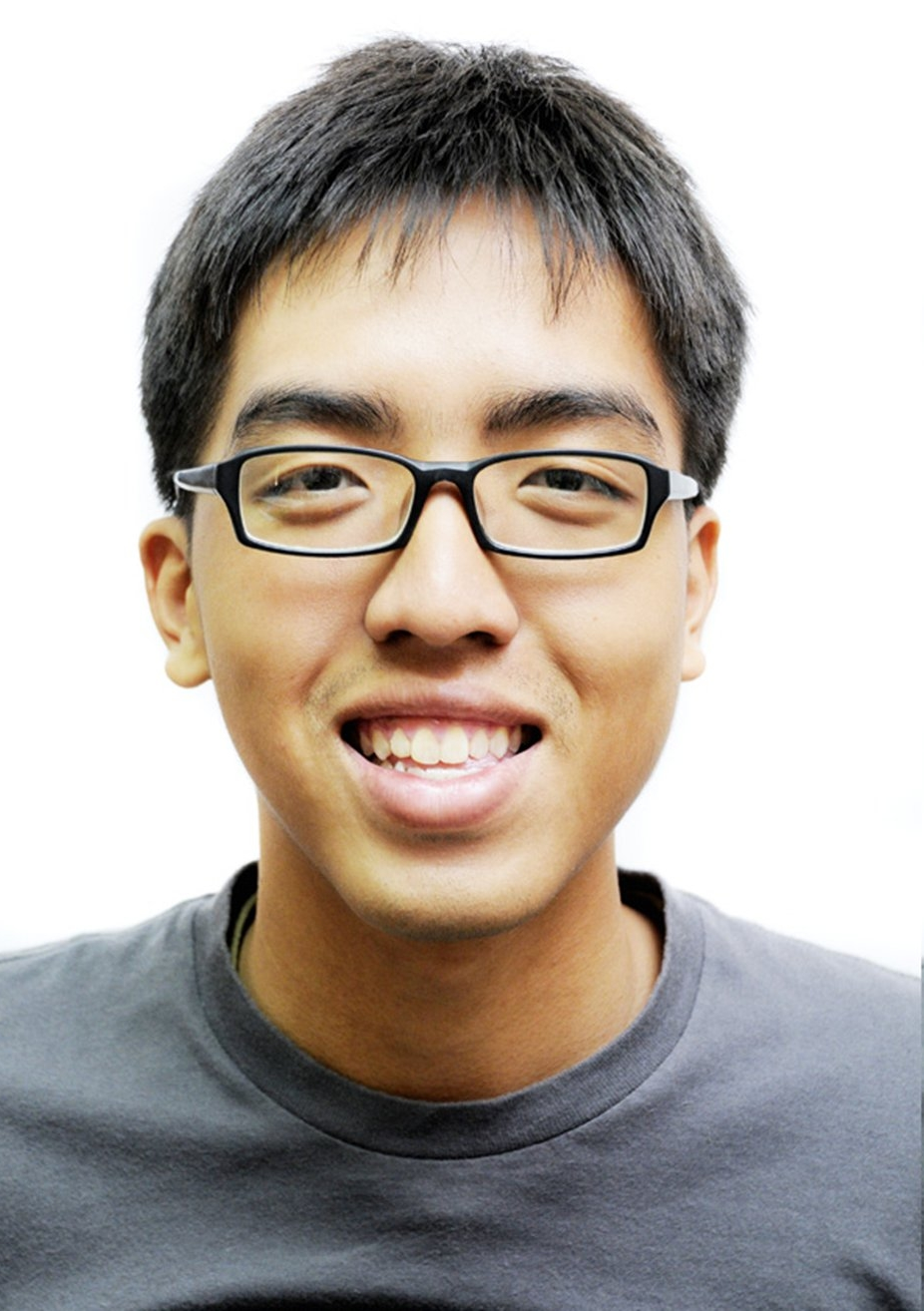
Kwan Jin Yao, 20, Student Activist and Blogger

Nominated for his work in raising awareness and understanding of eating disorders and body image issues. He has organised road shows, exhibitions, workshops, programmes and campaigns such as Food is Not The Enemy (FiNTE), Beauty Redefined and Project WiTHIN to promote self-esteem and healthy eating habits among youth.

These initiatives aim to address significant social issues that contribute to eating disorders, and create a support system for those battling eating disorders.

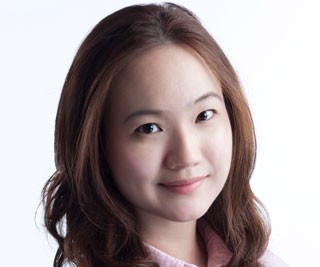
Nicole Rebecca Seah, 24, Politician and Advertising Executive

Nominated for shattering gender and age barriers by becoming the youngest woman ever to run for Parliament, in the 2011 General Elections. She garnered 43.3 per cent of the vote share in the Marine Parade GRC, as a candidate from the National Solidarity Party.

She is a positive role model for young women and has inspired them to speak up and take a stand for what they believe in.

Jolene Tan, 28, Blogger and Co-Founder, No To Rape campaign

Nominated for her relentless efforts to combat sexism and misogyny in business, media, government and the society at large. She has brought the issue of marital rape to the forefront of public consciousness by co-founding the successful No To Rape campaign.

She also continues to provide a feminist perspective on various issues through her contributions to several sites and blogs such as The F word, a UK-based feminist website. Unlearning patriarchal conditioning and creating female-friendly spaces is her constant endeavour.

Wong Pei Chi, 27, Core Team Member, No To Rape campaign

Nominated for her work in raising awareness on the issue of marital rape through the No To Rape campaign, which collected over 3,600 signatures in a petition that asked the Prime Minister to abolish marital rape immunity in Singapore law.

Driven by a chance conversation with a marital rape survivor, she continues to keep this issue in the public consciousness through discussions with the media, Members of Parliament, community leaders, as well as members of the public.

AWARE Awards 2011: The nominees

We had such strong nominations for the inaugural AWARE Awards that the judges had a tough time deciding on the short list.

The nominations for Singapore’s first gender equality awards were made by members of the public, as well as members of AWARE.

Each nominee has made a significant contribution to promoting gender equality. For the judges, the key factors for deciding of the shortlist were the effort and impact of the nominee’s contribution and the nominee’s identification with gender equality.

The judging panel comprised: AWARE board member and education entrepreneur Lindy Ong, playwright Eleanor Wong, journalist Ong Soh Chin, academic Philip Holden and ambassador-at-large Professor Tommy Koh.

The winners will be unveiled at our Big Ball fundraising gala on October 17.

SHORTLIST OF NOMINEES FOR THE AWARE HEROINE AWARD

Radha Basu, Senior Correspondent, The Straits Times

Nominated for her tireless pursuit of news stories that raise awareness about issues facing women in Singapore, particularly marginalised and vulnerable groups such as domestic workers and victims of trafficking.

Readers and policy-makers alike have taken notice of her work, which include news articles, features and commentaries that document concerns such as gender equality, fertility, aging, discrimination faced by pregnant women, family violence, human trafficking and gender wage gap.

Jean Chong, Co-Founder, Sayoni

Nominated for representing Singapore women on issues of discrimination based on gender identity and sexual orientation, including presenting a shadow report on LGBT issues to the UN CEDAW committee.

She co-founded LGBT activism group Sayoni and facilitated projects to give lesbians a voice. These include the publication of the Coming Out Guide for LGBT persons and a bi-annual national survey of queer women.

She was the first chairperson of the Free Community Church, the first LGBT friendly church in Singapore, representing women in the Christian community.

Halimah Yacob, Minister of State, Ministry of Community Development, Youth and Sports (MCYS)

Nominated for her leadership and vision as the Director ofNTUC’s Women’s Development Secretariat, which provides support to single mothers, lower-income women seeking employment, women rejoining the work force and women seeking leadership in various unions.

As a Member of Parliament, she has been passionate about raising issues that improve the lives of women, including anti-discrimination measures for pregnant female employees, protecting the rights of domestic workers, as well as protection against sexual harassment.

SHORTLIST OF NOMINEES FOR THE AWARE HERO AWARD

Benny Bong, Director, FamilyWorks

Nominated for his sterling work in the prevention of family violence and violence against women, especially in counselling male perpetrators of violence. He has made a significant contribution to policy discussions, training programmes and public education campaigns in this field.

He advocated for criminalising marital rape and has been instrumental in initiating training programmes for police officers on family violence dynamics. He was also the joint organiser of the International Violence Against Women Survey in Singapore in 2009.

Chan Wing Cheong, Associate Professor, NUS Law School

Nominated for his relentless advocacy for gender equality in family and criminal law. He regularly gives talks and writes papers on the subject, including a recent piece on giving homemakers due recognition in family law.

He conducted the International Violence Against Women Survey in 2009 together with Mr Bong. This was the first comprehensive effort of its kind in Singapore. He has also been outspoken about criminalising marital rape in the country.

SHORTLIST OF NOMINEES FOR THE AWARE YOUNG WONDER AWARD

Kwan Jin Yao, 20, Student Activist and Blogger

Nominated for his work in raising awareness and understanding of eating disorders and body image issues. He has organised road shows, exhibitions, workshops, programmes and campaigns such as Food is Not The Enemy (FiNTE), Beauty Redefined and Project WiTHIN to promote self-esteem and healthy eating habits among youth.

These initiatives aim to address significant social issues that contribute to eating disorders, and create a support system for those battling eating disorders.

Nicole Rebecca Seah, 24, Politician and Advertising Executive

Nominated for shattering gender and age barriers by becoming the youngest woman ever to run for Parliament, in the 2011 General Elections. She garnered 43.3 per cent of the vote share in the Marine Parade GRC, as a candidate from the National Solidarity Party.

She is a positive role model for young women and has inspired them to speak up and take a stand for what they believe in.

Jolene Tan, 28, Blogger and Co-Founder, No To Rape campaign

Nominated for her relentless efforts to combat sexism and misogyny in business, media, government and the society at large. She has brought the issue of marital rape to the forefront of public consciousness by co-founding the successful No To Rape campaign.

She also continues to provide a feminist perspective on various issues through her contributions to several sites and blogs such as The F word, a UK-based feminist website. Unlearning patriarchal conditioning and creating female-friendly spaces is her constant endeavour.

Wong Pei Chi, 27, Core Team Member, No To Rape campaign

Nominated for her work in raising awareness on the issue of marital rape through the No To Rape campaign, which collected over 3,600 signatures in a petition that asked the Prime Minister to abolish marital rape immunity in Singapore law.

Driven by a chance conversation with a marital rape survivor, she continues to keep this issue in the public consciousness through discussions with the media, Members of Parliament, community leaders, as well as members of the public.

A step forward: Shaping CEDAW in Singapore

Last Saturday morning, enthusiastic participants gathered at AWARE to attend a public CEDAW Forum. The forum is part of AWARE’s efforts to raise awareness on CEDAW and to encourage everyone to play a bigger role using the CEDAW process to support other women in our country. The forum was graced by AWARE’s President, Ms Nicole Tan, who gave the opening address.

The day started with short presentations from our invited speakers, Ms Kelly Then from LGBT advocacy group Sayoni and Mr John Gee from migrant workers’ rights group TWC2. These speakers shared the main points of their CEDAW Shadow Reports as well as their experiences as participants for the 49th Session of CEDAW at the United Nations.

AWARE’s CEDAW committee member and Vice-President, Ms Halijah Mohamad also talked about the CEDAW Reporting Process and AWARE’s lobbying efforts to raise key issues to the UN CEDAW Committee Members.

After lunch, there was a sharing session on the United Nations’ just-released Concluding Observations (July 2011) on singapore’s compliance with CEDAW. This document highlights the UN CEDAW Committee Members’s concerns on issues such as:

  • The prevalence and persistence of patriarchal attitudes in Singapore
  • The continued prevalence of trafficking of women and girls
  • The lack of statistical data on domestic and sexual violence

The UN CEDAW Committee also made suggestions as to how the Singapore government can enact measures and initiatives to further promote gender equality and protect women’s rights. Some of these suggestions reiterated recommendations rmade by the Committee in previous Concluding Observations (August 2007). This is a clear indicator that the State has not acted upon the Committee’s recommendations.

For example, on the issue of the National Machinery for women, the Committee repeated its 2007 recommendation that the State should elevate the status and strengthen the mandate of the Office of Women’s Development.

Following the session, participants were divided into groups for a short workshop on Moving CEDAW Forward. This is an opportunity for participants to brainstorm ideas that will make CEDAW more accessible to all.

Each group had a different topic to discuss:

  • Group 1: Public education on CEDAW
  • Group 2: Outreach
  • Group 3: Identifying the top 3 issues for research and advocacy
  • Group 4: How to form a CEDAW coalition?

Each group came back with great ideas. Group 1 suggested we conduct talks on CEDAW in schools and universities. Group 2 suggesting that we set-up creative productions on CEDAW, while Group 3 identified the need to increase political participation of women. Group 4 suggested establishing a secretariat for CEDAW.

It was heartening and inspiring to see participants actively engaging with CEDAW. We hope that everyone who attended gained a better understanding of CEDAW and walked away with new insights and perspectives on the Convention.

Our response to “A PhD’s fine, but what about love and babies?”

AWARE’s Letter to the Straits Times Forum Page, published September 13, 2011

The stark choice between motherhood and professional advancement presented in Mr Lee Kuan Yew’s comments to Ms Joan Sim is not new (‘A PhD’s fine, but what about love and babies?’, Straits Times, Sept 6, 2011).

In 1983, he said: ‘We shouldn’t get our women into jobs where they cannot, at the same time, be mothers.’ In 1994, he said that ‘attractive and intelligent young ladies’ should go to finishing colleges so that they will be ‘marvellous helpers of their husband’s career’. And now, Ms Sim has been advised to stop wasting time on her doctorate and find a boyfriend instead.

These views contradict the recent statements by Minister of State for Community Development, Youth and Sports Halimah Yacob to the United Nations Committee on the Elimination of Discrimination against Women (CEDAW) that gender equality is central to Singapore’s socio-economic growth and that ‘maximising the full potential of every individual, male or female, is a priority’.

Under CEDAW, the Government is obliged to ‘take appropriate measures to modify the social and cultural patterns of the conduct of men and women based on the idea of stereotypical roles of men and women’. However, state policies have not kept pace with social developments and changing gender roles.

Fathers are not entitled to paid paternity leave, reinforcing the social expectation that mothers should bear most of the caregiving responsibilities. Flexible working arrangements attractive to mothers of young children are not widely available. Infant care facilities are inadequate for the country’s needs.

Such policies make raising children a daunting prospect for working women who want to continue their careers after becoming mothers. The State should take the lead in making family a more attractive option for these women, starting with a change of governmental attitude and the policies stated above.

The Scandinavian countries have shown that appropriate state policies that counter social norms can reverse declining fertility rates.

Public statements made by influential figures like Mr Lee are also important to shaping social attitudes.

Remarks that imply that women belong at home and men should be primarily providers undermine the efforts of men and women who struggle every day to meet the demands of family and working life.

Implying that marriage and motherhood are more important than education and work belittles the choices and contributions of women who prefer to be single or childless.

Such comments also perpetuate sexist stereotypes for a younger generation.

Nicole Tan
President, Association Of Women For Action & Research (AWARE)

Read the published letter here.

What women want (in a President)

This article does not condemn or endorse any particular candidate.

It’s time to make non-sexist comments on women’s issues a key part of the ‘new normal’ in Singapore politics.

By Lisa Li

I don’t know. Certainly, women are not a homogeneous mass – there are lines drawn by race, religion, income, sexual orientation and so on, and even those in the same categories are obviously not the same.

And women don’t just blindly vote for other women, for the sake of female political representation. (ie. Even if there were no Nicole Seah, we wouldn’t all vote for Tin Pei Ling just because she’s a woman.)

But I can tell you what many women do not want in a President. We do not want our political leaders to perpetuate sexist stereotypes, because words from the top carry weight, and through the media, these words can reverberate through society, influencing and perpetuating certain attitudes.
Dr Tan Cheng Bock: On wives getting permission from husbands

During The Online Citizen’s Face 2 Face forum (Part 2, 00:58), adjunct lecturer Ms Hani Mohamed asked the Presidential candidates what they would do to encourage women to enter politics or take on higher decision-making roles. Dr Tan Cheng Bock replied that “some of our top CEOs are women” but “the political arena is a difficult area for women in Singapore because the commitment is really very heavy. So you got to get the permission of your husband.”

There was a loud, collective ‘OH!’ from the shocked audience. Everyone seemed to realise how sexist that sounded, but rather than realise his faux pas, Dr Tan Cheng Bock merely smiled broadly.

However, at a later date, when asked for clarification by Yahoo! Singapore, Dr Tan said he was referring to the need for family support when either the husband or wife enters politics. “The first thing we do, we seek our wives concurrence,” he said.

Of course I agree with Dr Tan that family and spousal support is crucial for both men and women. But did he really mean it in a gender-neutral way? Why then did his original comment refer to politics as being “a difficult area for women” in particular?

In the absence of convincing clarification, I have to take his original reply, which specifically mentioned women, as indicative of his real opinion. I can only infer that Dr Tan is fine with the current level of female political representation, he assumes that all women are married, and he expects women to accord a certain subservience to their husbands.
Mr Tan Jee Say: Giving women the choice to be housewives

During the same forum (Part 2, 1:04), AWARE President Ms Nicole Tan asked the candidates for their views on the Baby Bonus – whether it was still necessary, and whether it had been effective.

Mr Tan Jee Say replied: “I would like to go back to the days when women can afford to be housewives… I’m not discriminating against women working, it’s just that women would like to have the choice of not working. After a certain stage in life, they (women) want to really look after their family. And the present circumstances do not allow such choice, because of cost.”

I agree that people should have this choice, but by focusing specifically on women instead of making a gender-neutral point, Mr Tan is merely reinforcing the attitude that women should be the ones to have “the choice” to “really look after their family”. Does he realise that this unequal burden placed on women, including those who work by choice, is precisely why some cannot cope with having more babies?

In fact, these gender stereotypes have a real impact in creating an unequal burden for women. The MCYS Singapore Fatherhood Public Perception Survey 2009 found that fathers spend about half the amount of time alone with a child during a weekend compared to mothers, due to work responsibilities (63%) as well as “society‘s views on how men should behave” (39%).

I thought Singapore was moving towards gender equality in households, with house-husbands or house-wives, or for both men and women to pursue career and financial independence while taking care of the household together… So why is Mr Tan moving backwards in proposing the ‘solution’ of giving women – not men – “the choice of not working”?
Dr Tony Tan: Capitalizing on Dr Tan Cheng Bock and Mr Tan Jee Say’s mistakes

In this respect, perhaps Dr Tony Tan played his cards well. During the lunchtime rally at UOB Plaza on August 24, one of his supporting speakers Ms Trina Lin-Liang, president of UNIFEM (Singapore) rebutted Dr Tan Cheng Bock’s comments by pointing out that “surely in this day and age of shared responsibility in a modern marriage, I would hope a wife need not ask for permission, like asking a superior. I hope modern marriage is a consultative process between two equals, very much like what I see Dr Tony Tan and wife to be!”

As for Mr Tan Jee Say’s proposal, Ms Lin-Liang reminded the crowd that “Singapore women have contributed hugely to the economic growth in Singapore. Although I have no objection to any woman who chooses to be a home-maker, by not having a proper survey of the needs and aspirations of Singapore women and truly understanding what modern Singaporean women want, why should my future President spend his time thinking of how he can make more housewives out of happily working women?”

And to drive home the point that he fully supported gender equality, Dr Tony Tan re-emphasized that “I have not one, not two, but three women speaking today [to support me] at this rally!”

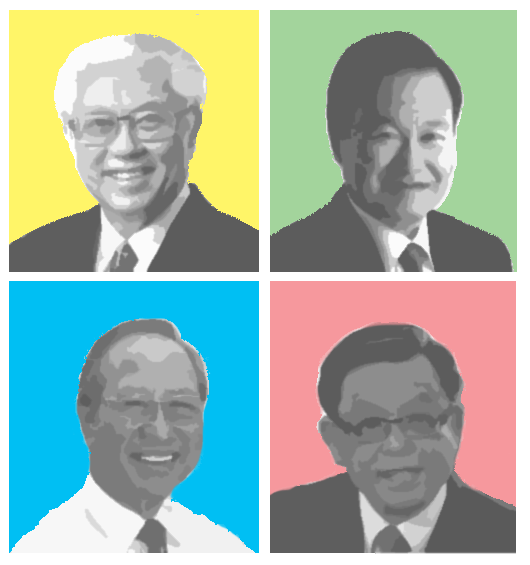
“Everybody knows that in this Presidential race, we have four Tans, but fewer people have realised that the four Tans are all men. I am confident that this will not be the case forever. Things will change. All of us, our sons and daughters, must know – and I’m confident – that it won’t be too long before we have our first female President!” This garnered loud applause from not just his ‘official’ supporters, but many others from the crowd.
So what do women want?

So does that mean women definitely voted for Dr Tony Tan, since he appeared to be the most progressive out of the four candidates, at least on the gender equality front? Surely not. Our voting decision is coloured by so many other factors, including our assessment of the candidates’ values, character and opinions. And of course it is easy to voice one’s support for gender equality without any genuine belief or action.

It is easy. Which is why I am concerned that some of the Presidential candidates weren’t aware enough to make gender-neutral, non-sexist comments. Surely none of them would dream of saying anything discriminatory against certain races or religions, so why should it be any different for comments on women? How can we make sexist comments clearly taboo, from our homes, schools, offices, right up to the courts, Parliament and the Istana?

Lisa Li is a teacher and writer.

Roundtable Discussion: Fighting sex trafficking

What’s up with sex workers in Singapore? A discourse on those trafficked

AWARE explores this discussion in Part 2 of our Roundtable series on sex workers.

Date: August 31, Wednesday
Time: 7.30pm
Venue: AWARE Centre (Block 5 Dover Crescent #01-22)

Last week, we heard about the decisions that sex workers make, their rationale for decisions made or not made and also gained an insight into the work of volunteers who suspend judgement and focus on reaching out to sex workers.

In this upcoming Roundtable Discussion, we come to grips with trafficking in the entertainment industry and how such individuals are supported.

This discussion outlines how labour and sex trafficking are being dealt with by the authorities in Singapore, focusing on the inadequacies of current legislation and system in giving due recourse and protection to trafficked victims and in punishing perpetrators of trafficking.

Speakers:

Noorashikin Abdul Rahman

The current vice-president of TWC2, an NGO concerned with the rights and welfare of migrant workers in Singapore. She has been a member of the board of TWC2 since it was first registered as a society in 2004. At TWC2, she has taken responsibility of various projects in diverse areas such as direct services, capacity-building, policy research and advocacy. Noor also has a doctorate in Social Sciences and has published several academic articles on migration and migrant domestic workers in Singapore.

Mark Goh

Chairperson of the Archdiocesan Commission for the pastoral care of Migrants and Itinerant People (ACMI)

Chair: Ms Braema Mathi

Register here for this event.

Find out more about AWARE’s monthly Roundtable Discussions here.