Year: 2011

Arts fest Etiquette returns with an inaugural film event

The organisers will donate all profits from ticket sales for this Aug 5 & 6 showcase of 10 female film-makers to AWARE.

Get ready for arts festival Etiquette II, happening August 3 to 28.

An annual event in its second installment, Etiquette is staged by women and showcases multi-disciplinary artworks about women. This year’s line-up features an all-female crew of over 35 established and emerging artists, writers, filmmakers and curators.

For the first time, Etiquette will have a film component. On August 5 & 6, the work of 10 Singaporean and Singapore-based female filmmakers will be showcased at The Substation Theatre. Tickets are priced at $25 per night or $45 for a 2-night package. All profits from the ticket sales of this event will be donated to AWARE.

So show your support for AWARE by checking out these exciting films. The line-up includes: Dirty Bitch by Sun Koh, a love letter to the Singapore censors; She Shapes A Nation by AWARE past president Dana Lam, a documentary about women’s lives in Singapore over five decades of nation-making; and Pink Paddlers by Jasmine Ng and Suzette Cody, about Singapore’s first dragonboat team made up of breast cancer survivors.

Tickets for the film showcase and all other Etiquette events will be available at The Substation Box Office from July 1. From Mondays to Fridays, 11.30pm to 8pm, call 6337-7800 or email boxoffice@substation.org to reserve tickets, or visit The Substation at 45 Armenian Street to purchase tickets.

Other highlights of Etiquette II include a visual arts exibition at The Substation Gallery (Aug 3 to 28), and a literary reading at The Substation Theatre (Aug 4). The festival is curated by Tania De Rozario, Zarina Muhammad, Mardhiah Osman and Mabelyn Ow. Participating artists this year include playwright Ovidia Yu, contemporary craft collective POPIN, installation and performance artist Lynn Lu and sculptor Hilary Schwartz.

More information about Etiquette II is available at the Etiquette website, the Etiquette Facebook Page, and the Etiquette Twitter account. Email ExhibitingEtiquette@gmail.com with your questions.

Reclaim Islam’s message of equality

The Obedient Wives Club is an opportunity to discuss how archaic gender roles impede engagement with today’s social problems.

By Mohamed Imran Mohamed Taib
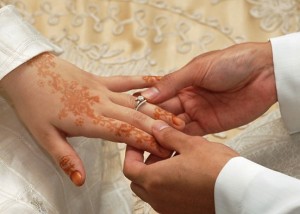
mw

Like many Singaporeans, I was initially amused when news broke about a group of Malaysians setting up an Obedient Wives Club (OWC).

But the amusement quickly turned to dismay when The New Paper reported that some local men and women are intending to set up a branch of the OWC in Singapore and promote the idea that social ills can be solved through wives pleasing their husbands in bed – and in the words of the OWC’s founder, through wives performing in bed “like a first-class prostitute”.

Never mind that the proponents of this club are from Global Ikhwan. This fringe group is an offshoot of the Al-Arqam, a movement outlawed in Malaysia but still active in the region. The fact that they have decided to promote their views warrants a response.

My concern is less about what people do in the confines of their bedroom. Rather, what is worrying are the ludicrous claims made by proponents of the OWC and their assumptions concerning what Islam says about the role of wives and the position of women in general.

While it is easy to dismiss such patriarchal and sexist views and dissociate them from Islam and/or the Malay community in general, it may take a lot more to unpack the assumptions governing the thoughts of people who support the OWC or who are at least sympathetic to their views.

In fact, it may not be too difficult to trace the extreme views of the OWC to some of the more subtle but dominant patriarchal orientations existing within segments of the Malay/Muslim community in Singapore.

Try visiting some of the bookstores in Geylang Serai that stock up popular writings on Islam written in Malay, particularly on the subject of marital relations.

Subjects ranging from lovemaking etiquette to instruction manuals on how wives can please their husbands fill the shelves. It would almost be excusable for general observers to conclude that the subject of sex is definitely not taboo for the community. What is unmistakably clear from these writings is the absolute right of the husband to be sexually gratified by their wives at all times.

While it is clear that classical juristic writings by early Muslim scholars highlighted the mutual rights of husbands and wives to have their biological (sexual) needs met in a marriage, patriarchal tendencies often dominated and gave husbands unrestricted access.

According to academic Kecia Ali’s recent book, Marriage & Slavery In Early Islam (2010), this tendency developed as a consequence of the marriage contract being treated like a business transaction, where a man’s right to a woman’s body is balanced with the woman’s right to the mahr or dowry.

Thus, marriage is primarily seen not as a fulfillment of mutual love and respect, but as a set of duties and obligations. The man, as the absolute leader of the family, is entitled to absolute obedience from the woman. Any form of denying or subverting the authority of the husband may constitute nushuz (‘rebellion’).

This, inadvertently, includes the authority and right for men to demand sex, even if she refuses.

Such writings, which advocate the absolute submission of wives, are by no means rare. They form part of the episteme of traditionalist Islam. The popularity of books like Tohfa-e-Doulhan (Gift For The Bride), sold in local bookstores, obviously latches on to this dominant orientation as much as it seeks to entrench patriarchy through religious discourse. This is the crisis of traditionalist thought in Muslim jurisprudence.

One cannot comprehend the gravity of the proposal to set up the OWC without being aware of how central this notion of ‘obedience’ is in traditionalist discourse on Islam.

In Malay, obedience is called taat. This term proliferates in almost all discussions on the role and responsibilities of the Muslim wife with regards to her husband. Given the centrality of the notion of taat isteri kepada suami (wife’s obedience to the husband), it is not surprising that all social ills relating to family life, such as divorce and delinquency, are tied to the notion of ‘straying’ from the concept of ‘obedience and authority’.

In the simplistic minds of the traditionalists, since the family is the basic unit of society, all problems can be addressed when men perform their rightful authority responsibly and women obey men as an act of submission to ‘God’s Will’.

Within this patriarchal structure, men are a degree above women. Thus, an internal Muslim critique on gender biases is often dismissed as an imposition from alien worldviews such as ‘Western feminism’.

A notable Muslim jurist, Professor Khaled Abou El Fadl, brilliantly dissected such problems in contemporary Muslim discourse on gender in his book, Speaking In God’s Name: Islamic Law, Authority & Women (2001).

Scholars like him have identified the prevalence of the language of ‘obedience’ as an example of how the Muslims’ religious discourse on gender is in serious need of reform. This is a task that has been undertaken by contemporary reformists such as Ziba Mir Hosseini (Iran), Asma Barlas (USA), Riffat Hassan (Pakistan), Farid Esack (South Africa), Asghar Ali Engineer (India), KH. Hussein Muhammad (Indonesia), Nawal El Saadawi (Egypt), Fatima Mernissi (Morocco) and countless others.

In their progressive interpretation of Islam, a woman’s ‘obedience’ is owed directly to God as a principle of tawheed (monotheism), and not via ‘obedience’ to the male/husband.

They also highlighted that marriage is based on the equality of men and women, and, as specified in the Qur’an, “so that you may dwell in tranquility” and develop “deep feelings of love and mercy” (Q.30:21). Furthermore, roles and responsibilities are to be negotiated in mutual trust and respect, and are not pre-determined by God.

What is important is that their vision is grounded in the same sacred sources of the Qur’an and Hadith (prophetic traditions). Unfortunately, these perspectives have often been neglected and sometimes outright rejected in the name of an ossified and fossilised ‘Islam’.

The recent sensational news about the formation of the OWC provides an opportunity to open up discussion about one of the most taboo topics in public discourse – sex in marital life.

For reform-minded gender activists, this is the time to seize the moment and correct centuries-old assumptions about gender roles and relations – from issues of reproductive rights, inheritance law to marital rape.

It is also an opportunity to highlight the limits of traditionalist thought in properly diagnosing social issues and problems. For Muslims in particular, it is time for critical self-reflection, for reclaiming the egalitarian message of Islam, and for repositioning women as equally dignified partners in all spheres of life, marital relations included. It is time for a new gender discourse to take shape in the community.

The writer is a post-graduate student at the National University of Singapore’s Department of Malay Studies, and a social activist with The Reading Group, Singapore. His research focuses on the religious orientation of the Malays and contemporary discourses on Islam.
This article was commissioned by AWARE for our website. An edited version was published in the Straits Times on June 22, 2011. Read more about this issue here and here.

Untold stories about women of faith

Gender equality featured prominently in the early stages of many religions. This needs to be more widely known.

There are too many important stories about women of faith that we do not know well enough, or do not know at all. These stories may well change our expectations for gender equality in the realm of religion.

This was the common theme that emerged during May’s Roundtable Discussion about the relationship between faith and gender roles.

Academic Lai Ah Eng, who chaired the discussion, remarked on how gender equality originally formed the basis of many faiths.

“Equality is written about, sanctioned and practised. But great deviations and things happened along the way,” she said. “The story now is that we want it back. We want what is good back.”

The event, which was attended by more than 30 people, was jointly organised by AWARE and the South East Community Development Council.

The speakers were: Angie Monksfield, former president of the Buddhist Fellowship; Sister Julia Ong, secretary of Ecclesia Of Women In Asia; Amy Daniel, a theology specialist; K. Kathirasan, a teacher of Hinduism; Mohamed Imran Mohamed Taib, a social activist and post-graduate student at the National University of Singapore’s Malay Studies department; and Jamshed K. Fozdar, the former honorary secretary of the Inter-Religious Organisation Of Singapore.

Mr Fodzar, who spoke on his own Baha’i faith as well as other religions, highlighted the seemingly irreconcilable relationship between gender equality and religion that remains in many societies. Mr Fodzar is the son of Shirin Fozdar, one of Singapore’s most important feminists.

“There have been women who have championed women’s rights, and they have reached great heights in Pakistan, Bangladesh, etc,” he said. “But they have had to do so by leaving their religious background behind, because the religious community has not found this acceptable.”

Within the institutional hierarchies of religious life, women also continue to find their roles limited. For instance, while Buddhism is fundamentally egalitarian when it comes to the path to enlightenment for both genders, cultural constraints exist for formal participation in religious life.

Ms Monksfield touched on this when she related the story of Buddha’s mother, whom Buddha reluctantly ordained as a nun. “She attained enlightenment. There is no discrimination as to who can attain enlightenment,” said Ms Monksfield, who suggested that Buddha’s hesitation about the ordination of women was due to his doubt about the degree of support nuns would receive from their community.

Similar limitations exist in the Catholic Church.

The limited role of women in the official hierarchy of the Church is at odds with the important role women play in the Bible.

“Mary Magdalene was recorded as the first person Jesus appeared to after his resurrection. How did the one who had the title of “Apostles of Apostles” become known simply as a prostitute?” asked Sister Julia.

Ms Daniels also pointed out that although women in his time were defined according to their relationship with men, “Jesus treated women with respect. He allowed women to become his disciples. We take this for granted, but it was counter-cultural at the time. In the gospels, these women are actually named, but these passages were later removed”.

Equality was also evident in the early days of Hinduism. Mr Kathisaran highlighted India’s Vedic Age (3000 BC to 500 BC), during which the Vedas – the oldest Hindu scriptures – were composed.

“During this period, women were able to choose whether they wanted to study the Vedas or pursue domestic life,” he said. “During this period, women were educated. At this particular stage, the idea of equality was present.”

The education of women is also an important tenet of the Baha’i faith, which stresses gender equality. It views the education of women as a crucial means of achieving this equality in everyday life, and the education of daughters in fact takes precedence over that of sons when a family cannot afford to educate all its children, not least because the faith views the education of mothers as essential to the proper upbringing of children.

Gender equality is also evident in the Koran. Said Mr Mohd Imran: “There are many verses that allude to gender equality. The Prophet made education compulsory for men and women at a time when women were not being educated. He also abolished the practice of selling women as chattel.” Islam does not lack strong female figures, he pointed out. For example, Aisha, the Prophet’s wife, was an accomplished jurist who taught both men and women in a mosque.

A more patriarchal society took root after the Prophet’s death, in which women were no longer allowed to be the co-interpreters of religious texts. From the mid-20th century onwards, said Mr Mohd Imran, “reformists, including those who tried to advocate for the rights of Muslim women, were also often seen as stooges of the West. This contestation is still going on. The role of women in Islam is one of the most urgent issues facing the Muslim world”.

These ancient stories about the significant roles that women played in the practice of their faiths need to be told more often, and more widely – they are a fundamental part of the grand narratives that form the basis of so many religions.

And women are the ones who have to become the storytellers, suggested Ms Monksfield. “We have to bear in mind that most of the authors of these books and histories are men. It’s not as if they are going to write these stories in women’s favour. So now it’s time for us to take up our pen and start writing. This is something positive that we can do.”

Find out more about AWARE’s monthly Roundtable Discussion events here.

No to Obedient Wives Club

The organisation’s stated beliefs about marriage are reductive and belittle both men and women.


AWARE is troubled by the news that there are plans to set up the Obedient Wives Club (OWC) in Singapore.

We stand opposed to perspectives that undermine the role of women, and we believe that the views expressed by the OWC will obstruct the rights of our Muslim sisters. The Club’s aim to “teach women to be submissive and keep their spouses happy in the bedroom as a cure to social ills” is reductive and belittles both men and women.

We say this after reviewing the statements issued by the OWC in Malaysia and also noting that it is an initiative of the controversial Global Ikhwan group, a multi-national conglomerate formed by ex-members of the banned Al-Arqam group.

AWARE works closely with the Muslim women’s groups in the Association of Southeast Asian Nations (ASEAN) and has undertaken relevant academic research on women’s roles for the United Nations’ Convention On The Elimination Of All Forms Of Discrimination Against Women (CEDAW).

It is our view that the Club’s call for women to become “obedient wives” distorts the concept of “nusyuz” or disobedience, which applies to both women and men. The OWC is a misrepresentation of the teachings of Islam, which enjoins women and men to conduct their marriages on the basis of mutual co-operation.

We urge the Minister in charge of Muslim Affairs and MUIS to comment on the OWC and so contextualise the teachings in Islam that illuminate this concept of obedience. We need these authorities to speak up so that women and men can make informed choices as they try to live by the teachings of their faith.

This would be in line with the official response to the OWC in Malaysia, where the Minister for Women, Family and Community Development, religious groups and women’s groups have all been vocal about disagreeing with the OWC’s stated beliefs.

AWARE would further add that the Singapore government ratified CEDAW in 1995, which commits it to ending discriminatory practices and nurturing gender equality. Since 2004, the Singapore government has also been
committed to the ASEAN Declaration on the Elimination of Discrimination Against Women in ASEAN, which again obliges the State to reduce gender inequalities and to advance women’s rights.

Over the past 25 years, AWARE has helped enough women through our Helpline, Legal Clinic and counselling sessions to state categorically that the quality and longevity of a marriage requires dedication and hard work from both the husband and the wife, who must recognise each other as equal partners.

Whatever their faith and ethnicity, genuine communication and the willingness to work with each other on an equal footing is more likely to yield rewards for a couple than any one party feeling the pressure to adopt any role in the bedroom.

For more news about this issue, click here and here.

Our response to “Singapore toughens stance on human trafficking”

AWARE’s Letter to the Straits Times Forum Page, published June 14, 2011

We refer to the report “Singapore toughens its stance on human trafficking” ( ST June 11). We are very heartened to learn that the government intends to sign the United Nations Protocol to Prevent, Suppress and Punish Trafficking in Persons (Palermo Protocol, 2000).

This is welcome news as the world is moving closer to accepting a universal definition on trafficking in persons. Singapore will soon also join hands with many other countries and agencies to combat the problem of global trading in people and to offer assistance to the victims.

Signing the trafficking treaty will align Singapore more closely to the ASEAN Declaration Against Trafficking in Persons Particularly Women and Children that was adopted in 2004. It also means that Singapore will fulfil its obligation under Article 6 of CEDAW ( Convention on the Elimination of All Forms of Discrimination Against Women) which it ratified in 1995. We also note with appreciation that an inter-agency task force chaired by MHA and MOM, has already been set up.

As the government prepares the ground processes for ratification of this UN treaty, we ask that two groups of women not be forgotten:

– The foreign lower-skilled women who work under exploitative conditions such as in some karaoke lounges or in some homes as domestic workers.
– Foreign less educated women who are deceived or coerced into marrying Singaporean men, and find themselves being exploited and/or abused.

The government says it will sign the UN trafficking treaty once it has put in place domestic measures to ensure adherence to it. We would like to suggest that these measures do include the following:

– Amend Section X1 of Women’s Charter Articles 141 and 142, 146 to 148 to increase the punishment of traffickers and pimps from the current imprisonment for a term not exceeding 5 years and a fine not exceeding $10,000.
– Put in place speedier investigation and prosecution processesso that victims do not have to stay in Singapore for too long and can return to families faster.
– Include civil society that work on issues related to women and migrants in the discussions to implement the UN Protocol on Trafficking.
– Introduce, in due course, legislation, in the form of perhaps an Anti-Trafficking in Persons Act, to suppress all forms of trafficking in women.

Ms Braema Mathi
Chair, AWARE CEDAW Sub-Committee

For the original article referred to in our letter, click here. To read the published letter, click here.

How she became indomitable

From prosecuting more sex traffickers than the Nepal government to helping former sex workers start new lives, activist Anuradha Koirala is living proof that nothing is impossible.

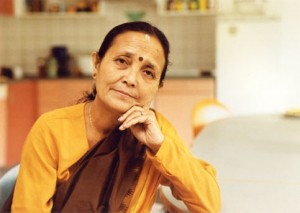
Nepalese activist Anuradha Koirala is often photographed, and with good reason. The 56-year-old founder and executive director of Maiti Nepal, a non-profit organisation that helps victims of sex trafficking, has received much international attention for her work.

This includes awards and accolades from the United Nations, the International Peace Council, and the Oprah Winfrey Show, to name just a few. In 2010, after she received CNN’s Hero Of The Year Award, a huge crowd turned up at the Kathmandu airport to welcome her home.

But Mrs Koirala is not often photographed smiling – no, not even when she clutched her CNN Award proudly amid throngs of cheering supporters. Perhaps there is also good reason for this pensive demeanour. She has been candid about how living with her abusive ex-husband – which meant enduring daily battering, verbal abuse and three miscarriages – spurred her to help women victimized by sex trafficking and domestic violence.

Since it was founded in 1993, Maiti Nepal, which means “mother’s home” in Nepali, has provided more than 12,000 women with shelter, work, education, counselling and medical assistance. It also runs a hospice for HIV-positive women and children. That’s more than 12,000 tales of woe. One might guess that the plight of these women weighs heavily on Mrs Koirala, perhaps accounting for her deeply furrowed brow in so many photographs.

But these photographs do not really convey what becomes immediately obvious when you encounter this petite, sari-clad former school-teacher in the flesh – namely, that she is made of steel; and a surprising glint of wry humour tempers that formidable strength of character.

Speaking to AWARE on May 18, when she was in Singapore for several fund-raising events, Mrs Koirala’s response to our question about the dangers her work exposes her to was swift and emphatic: “I am not scared. Why should I be scared? The traffickers try to stay away from me, they are scared of me.”

They have good reason to be. Because Maiti Nepal rescues and shelters former sex workers, the organisation is able to provide crucial testimonies from these women when it goes after sex traffickers in court. To date, its legal team has been responsible for the prosecution and conviction of 415 sex traffickers. That’s a success rate that bests the Nepalese government’s prosecution record considerably, says Mrs Koirala.

Border patrol is another area where Maiti Nepal’s efforts are trumping government efforts. To catch sex traffickers in the act, the organisation deploys a total of 50 women to patrol 10 official border crossings between Nepal and India.

“Most of these women are survivors of sex trafficking themselves, so they are the most skilled in identifying the techniques of the traffickers,” Mrs Koirala tells us. She adds, with discernible pride, that Maiti Nepal’s border guards stop an average of 40 to 50 women from being trafficked across the border daily.

These border patrollers are not volunteers. Rather, they are paid by Maiti Nepal. “Having jobs helps them get their dignity back, and become financially independent,” she says.

This emphasis on economic self-sufficiency is consistent with her earliest attempts to help disadvantaged women. As a school teacher, she used to loan female beggars 1,000 rupees each, taking the money out of her meagre salary so they could start small businesses.

Giving victims of sex trafficking the means to earn their own keep through measures like micro-credit loans, education and training is particularly important, she stresses.

Nepalese communities remain extremely resistant and unwelcoming when these women try to re-integrate back into mainstream society. Mrs Koirala believes that these prejudices will fade if these women are business-owners who can provide the community with jobs. “Because if you have money, people will forget even if you were a murderer, you see,” she notes. “They will forget about anything.”

The quip has the succinct power of a deadpan punchline, but you’re not really sure if it’s okay to laugh. Mrs Koirala tends to speak very very fast, each word running full speed into the next in her firm, no-nonsense tone. It can be hard to tell if she’s being intentionally humorous, like when she says the lodgings at Maiti Nepal are “very very clean, very very nice, people say it should be a five-star hotel”. You’re only sure when she breaks into a sudden, brief smile – it has the feel of a fairly rare occurrence.

Hopefully, she will have more reasons to smile in the near future. After all, from where she’s standing, things are looking up. The very existence of Maiti Nepal is testament to a more open society in Nepal. “Before 1990, the political situation was very different. Nobody could speak,” she recalls of Nepal’s former system of absolute monarchy. After a parliamentary monarchy was introduced, “many NGOs came up championing the rights of women and children”.

Maiti Nepal is one of these groups, and when she first started it, Mrs Koirala says she barely knew what an NGO was. With her fellow activists, she went village to village, organising camps to raise awareness about how to help sex trafficking victims. Her numerous international awards and high profile in Nepal show clearly that these efforts have borne fruit.

Getting more stable and sustainable sources of funding for Maiti Nepal’s 21 shelters remains a pressing issue, she acknowledges. The organisation needs US$1million a year for its operations. But all in all, she says: “Everything is very encouraging. People are starting to recognise the issue of trafficking, and even the Nepal government is changing – they’re changing slowly.”

Find out more about Maiti Nepal, here.

– Reporting by Kylie Goh

Our response to “Divorce and the attractive woman”

AWARE’s Letter to the Straits Times Forum Page, published June 8, 2011

We refer to the article “Divorce and the Attractive Woman” (ST, 3 June) and the judgment rendered by the High Court in this case.

The High Court took the view that it was relevant for a judge to take into account the “attractiveness” of a wife in determining her chances of remarriage when exercising its discretion on whether to grant lump sum or monthly maintenance.

AWARE is surprised and disturbed by this judgment. While it may be valid to take into account a person’s imminent prospects for marriage, e.g. where there is evidence that a party intends to marry another party, it surely is not right for a court to go down a speculative line of reasoning as to whether a person, based on her looks, personality, ethnicity, nationality or relationship history is likely to be remarried.

It is moreover problematic to assume that an “attractive” woman is more likely to be married. What are the criteria for deciding who is “attractive?” Whose criteria are applied? And on what basis are we to establish a connection between this alleged “attractiveness” and remarriage?

We hope that this judgment, which dealt with the issue of the bias of the judge in deciding the issue of maintenance, will not be used as a precedent to support such a line of inquiry in future cases relating to maintenance. This would result in women being penalised and discriminated against if they do not fit normative – and indeed judges’ subjective – notions of beauty.

Yours faithfully,
Teo You Yenn
Board Member
Association of Women for Action and Research (AWARE)

For the original article referred to in our letter, click here. To read the published letter, click here.

Hot or not, it shouldn’t matter to the law

Linking a divorcée’s appearance to her alimony sets a dangerous precedent.

It may sound like an episode of Ally McBeal, but fact has once again proved stranger than fiction.

On June 3, the Straits Times reported on the High Court’s ruling that it was relevant for a judge to take into account the “attractiveness” of a wife in determining her chances of remarriage, when exercising its discretion on whether to grant lump sum or monthly maintenance.

The judgment stemmed from the divorce settlement of a 37-year-old Vietnamese Singaporean woman, in which a judge had asked if the woman in question was attractive.

Not surprisingly, the report inspired prompt rumblings of discontent from feminists. AWARE, for example, received calls and emails from many of our members, who were disturbed by the clear danger for arbitrary judgment that may result from this ruling.

Business Times columnist Joyce Hooi seems to have caught wind of similar rumblings. Her June 4 piece on this ruling discusses and then dismisses feminist arguments against the judgment – namely, that attractiveness is subjective, and that a woman’s attractiveness does not automatically make her more likely to get remarried.

First of all, Ms Hooi asserts, beauty is not really in the eye of the beholder – attractiveness is more or less objective. “While there might be room for quibbling about how someone is more of a 7 than an 8, the gulf between a 2 and an 8 is wide enough for most people to see…Railing against the objective definition of beauty is like saying that America’s Next Top Model is bunk; it is futile and makes everyone suspect that the person doing the complaining is ugly.”

Furthermore, to say that attractiveness does not impact one’s chances of financial security is “naïve”. Citing studies that show good-looking people tend to earn more than their plainer counterparts, she argues that “even if a beautiful women never marries, she is likely to be better taken care of by the workplace and quicker to find a companion” than a plainer woman. By taking such probabilities into account, she believes that “the court’s approach can be seen to be incidentally progressive”.

Stay with us while your mind reels. We do not dispute that most cultures have normative standards of beauty. However, it is presumptuous to assume that a woman’s desired prospective partner will subscribe to these same standards, and that beauty by whatever standard will be a crucial factor for him when deciding whether or not remarriage is on the cards.

By making a woman’s looks a factor when ruling on maintenance payments, this judgment may well be used as a precedent to support such a line of inquiry in future cases, which could penalize women who simply happen to fit a judge’s subjective notion of beauty.

Furthermore, as feminist website Barnyard Chorus points out: “What happens when changes (physical and otherwise) occur after the ruling?” If, for example, a woman gets a nose job after her divorce settlement and becomes more normatively attractive, does this entitle her ex-husband to a court review of her maintenance payments? Surely a ruling that is so vulnerable to individual caprice is inherently flawed.

Finally, why should the court assume that remarriage is the ultimate goal for a divorced woman, as the ruling clearly implies? There is, again, no reasonable basis for this assumption.

Even if you take into account Ms Hooi’s logic, which may lead one to the conclusion that a normatively attractive woman who chooses to stay single is likely to earn more than her plainer counterpart, this slippery slope hardly seems worth the trouble of navigating.

Studies also show that tall people earn more than short people, and extroverts earn more than introverts. The law does not and should not penalize the tall and the extroverted for their perceived and generalised social advantages. Otherwise, we would truly pity the leggy, outgoing and beautiful divorcée who runs into a judge inordinately optimistic about her future happiness, as he defines it.

To read the letter AWARE sent to the Straits Times Forum Page regarding this judgment, click here. For more about this issue, click here, here, and here.

Come for AWARE’s Book & Bake Sale!

Join us on at the AWARE Centre on Saturday, July 9, for our Book & Bake Sale!

We will be selling second-hand items donated by members and friends of AWARE. There will also a small cafe were you can buy baked goods and tea or coffee to enjoy while looking over your new purchases.

This event is open to AWARE members and their friends, and all proceeds will go towards running costs of the AWARE Centre.

Donate your books, DVDs, VCDs and CDs

Bring along your used books, CDs, VCDs and DVDs to trade for AWARE dollars!.

Each item donated in good condition will entitle you to a voucher for 1 AWARE Dollar, which can be used towards the purchase of items at the sale. AWARE DOLLARS WILL ONLY BE GIVEN TO DONATIONS MADE BEFORE 2PM!

Due to overwhelming strong response to the call for used books, we cannot take any more books in advance of the event but AWARE dollars will still be available to donation on the day before 2pm. Thanks for your understanding.

Baked Goods

We also would like donations of baked goods for the cafe. If you are willing to donate baked goods, please contact Evon at evon@aware.org.sg or 6779 7137.

More information

For more info on donations or the event, please contact Evon at evon@aware.org.sg or 6779 7137.

Details
Date Saturday, July 9
Time 1pm to 5pm
Venue AWARE Centre (Block 5 Dover Crescent #01-22)