Year: 2011

Financial Awareness & Confidence Training 1: Money & Me

The main focus of this course is on achieving and maintaining financial independence.

What does this mean and how do you achieve it at the different stages of your life?

This workshop will teach you the following:

·How to achieve financial independence

·Fun with budgeting

·Making your money stretch

·Managing debt

·Relationships and money- joint or separate expenses, accounts, assets?  What happens if things don’t work out?

·Estate Planning – Wills, Lasting Power of Attorney and Advanced Medical Directives

Learn to take charge of your personal finances and make informed choices to achieve financial freedom.

You should definitely attend this workshop if you identify with these concerns:

·I have been working for 3 years and I’m kinda clueless about saving and planning for the future. What do I need to know and do?

·I am married or about to be married. Money is always a sensitive topic with my partner. How do I deal with this?

·I am worried about my aging parents, their falling sick and dying. How can I plan ahead to take care of these contingencies?

Training Date: 22 Aug 2012

Money Club Dates:
29 Aug 2012
5 Sep 2012

Where:
AWARE Centre (Dover Crescent Block 5 #01-22)

Time: 7pm-9pm

How much?
Single: $50
Pair: $80

AWARE members who log in at the website and purchase will receive a 40% discount. That is just $30 for the workshop or $48 for a pair.

Register here to reserve your spot.

Please send us an e-mail to publiceducation@aware.org.sg if you have any questions.

Other FACT modules:
Go to Women & Money or call 6779-7137 for more information.

“Bitches in heat” & other gendered insults

Women in the public eye regularly get flamed with sexually violent language by anonymous Internet commenters. It’s time to put a stop to this behaviour.

Disclaimer: This article contains strong language, quoted verbatim from Internet message boards.

By Lisa Li

Is the People’s Action Party (PAP) candidate Ms Tin Pei Ling bearing the brunt of criticism and prejudice because, and only because, she is a young woman?

Or, as a friend pointed out, is it sexist to assume that “Ms Tin wouldn’t be mocked as badly if she were a Mr Tin”? After all, if a hypothetical Mr Tin had behaved the same way or demonstrated similar weaknesses, wouldn’t he have been criticised as well?

It is heartening that these two views value gender equality, differing only on the nature of discrimination and how we should respond to perceived sexism. Still, it is this small difference that creates some tensions among those of us who desire gender equality.

Should we speak out against sexism, pointing out how it drives criticism of female public figures? Or is speaking out against perceived sexism itself a sexist act since it creates an unfair distinction based on gender, when the criticism may in fact be gender-blind?

I think both views are worth considering. A certain degree of gender-blindness is necessary, because to label the criticism as purely sexist (or ageist) ignores the valid concerns people have regarding Ms Tin’s capabilities and views on public policies in Singapore.

However, to be completely gender-blind would also mean ignoring the current reality. Simply put, female public figures still receive criticism based on sexist stereotypes, discrimination and gendered violence.

Take a quick look at online forums and you will find many sound, articulate opinions – and also many comments that are utterly sexist and offensive.

Apart from PAP’s Ms Tin, other female public figures in Singapore have also received similar treatment in recent months. In late 2010, The New Paper reporter Ms Ng Wan Ching was criticised for her alleged role in exposing the personal details of website Temasek Review’s founders. On a separate occasion, Ms Braema Mathi, chairperson of human rights NGO MARUAH , was criticised for supposedly being a “PAP plant”.

Regardless of one’s opinion on these different matters, surely nothing justifies such gendered insults:
“She is “a bitch on heat [which] knows no boundaries.”
“Let’s f her. But yuck! Can’t ‘stand’ her sight”
“BITCH, WE ARE COMING FOR YOU”
“Can somebody post the link for me to see what type of “f**K me pls” face of this prostitute?”
“Leave politics to the pigs and do something to help the dwindling birth rate”
[She is] “still wet in the panties”
“Her mouth is looks like a drive-thru for blowjobs”
[She] “is only fit for selling her cheebye”

These comments are quoted verbatim from forums such as Temasek Review, The Online Citizen and YouTube, which is not an indictment of these websites, but an indictment of the anonymous netizens who posted these comments.

The insults were directed at the aforementioned women for different reasons, yet the vitriol is remarkably uniform in nature. They clearly invoke the familiar insults of violence against women, reducing the female public figure to a body part or a vulnerable female who can be prostituted or raped – all of which is completely unwarranted and unrelated to the issues these women are supposedly being criticised for.

One could argue that this type of violent online language is the work of trolls who are, in all likelihood, immature cyber-flashers who delight in provoking shock or fear, and therefore not even worth acknowledging.

You might even argue that this language is colourful but common, and the sexual aggression is less an actual threat than a habit of speech. Perhaps people rely on such swearing to communicate the extent of their rage, and not to physically threaten anyone.

Do these possibilities excuse such behaviour? I think not. There have been countless cases of verbal harassment that cause an individual to live in a state of fear. Verbal harassment may be less of a crime compared to physical abuse, but it is no less serious.

Still, what’s the point of speaking out against it? After all, swearing is clearly universal behaviour, writes British journalist Peter Silverton in his 2009 book Filthy English. The same likely applies to these gendered and sexist insults as well.

This was also a point of discussion during Harvard psychology professor Steven Pinker’s 2008 interview with The Guardian. Pinker explained that he developed his interest in language “because it reflects our obsessions and ways of conceptualising the world”. Swear words, in particular, were “a window on to the domains of life that arouse the strongest emotions: bodily secretions, powerful deities, death, disease, hated people or groups and depraved sexual acts”, he said.

The power of the violent swear word and the misogynistic insult makes it the dirtiest, cheapest, quickest way to attack someone and convey intense anger, and it seems here to stay.

Yet, inevitable or not, silence in the face of such sexist insults is a form of resigned consent. I believe censorship is not the solution – education and persuasion is. Whatever our differences when it comes to the discussion of issues, the common deminominator should be a discourse that avoids sexist criticism, be it in our homes, classrooms or offices. Such blatant sexism is offensive and hurtful to the individuals involved, and to all of us who wish for a better way for our children.

The author is a teacher, writer and AWARE member.

Time Management Mastery Workshop

Are any of these situations familiar to you?

•    You throw yourself from solving one crisis to another
•    Your to-do list never gets done
•    You feel under pressure with tight deadlines and ‘no time’ to do anything properly
•    You spend too much time on social networks
•    You struggle to balance work, family life, and your personal well-being
•    You are overwhelmed with life and have no time to enjoy things

If the answer is yes, please pause for a moment…

•    Do you really have to do so much right now?
•    Who decides your timelines?
•    What will happen if you took more time to do certain things?
•    Who won the race – the tortoise or the hare?

This workshop offers solutions on how to manage your time, and maintain a high level of productivity simultaneously.

Workshop Highlights:

1.    The Wheel of Life
a. Importance:  Career, Money, Health, Friends & Family, Relationships,  Fun & Recreation, Personal Growth & Spirituality / Community / Personal Space? How much time do you allocate for each area?
b. Quality of Life’? Is your life balanced?

2.    Setting SMART Goals & allocating time for each of them
a.    Parkinson’s law
b.    Focus & total immersion principle

3.    Planning and the art of prioritisation
a.    Pareto law – the ‘80/20’ rule
b.    Can the task be eliminated or delegated?
c.    Procrastination – reasons and ways to overcome it

4.    Recognising interferences
a.    Dealing with emails and phone calls
b.    Handling requests and interferences from bosses, colleagues, friends and family

At the end of the workshop, participants will know that time management is a personal choice. We can use the tools to organise our lives and set the schedules. We can adopt the perspective that time is unlimited. We can choose to believe that we control time, and leave the rushing behind.

When: 12 November 2011

Time:  9:30am-12:30pm

Where: AWARE Centre (Dover Crescent Block 5 #01-22)

How much:

Individual –  $50

Pair-  $80

AWARE members who log in at the website and purchase will receive a 40% discount.  That is just $30 for the workshop or $48 for a pair.

About the trainer:
Maria Kassova is the founder and Managing Director of RoseSky Pte Ltd.  In 2009, she conducted workshops on building self-esteem at Aidha (www.aidha.org), a non-profit organisation for domestic workers dedicated to enriching lives through financial education. Following her experience there, Maria decided to use her energy and skills to help others nurture their self-esteem and live empowered and fulfilled lives.

A certified Business Coach by the Institute of Business Coaches, UK and a master practitioner in Neuro Linguistic Programming (NLP), Maria also holds an MBA and a BA in International Economic Relations.   The daughter of a Bulgaria diplomat, she has over 10 years of experience working for MNCs like BBC Worldwide and Discovery Communications International.

Register HERE.

For more information, contact Pam at publiceducation@aware.org.sg or call 6779-7137.

Still groundbreaking at 50

Two new books explain why the Singapore Women’s Charter, first passed in 1961, remains ahead of its time

By Hong Xinyi

Outside of a law school classroom, it is probably rare to hear a piece of legislation discussed with the fervour and affection that was bestowed on the Singapore Women’s Charter on March 25, during the launch of two books marking the Charter’s 50th anniversary of the Singapore Women’s Charter.

Organised by the Institute Of Southeast Asian Studies (ISEAS), AWARE and Singapore Management University, the event was held at the National University Of Singapore (NUS) Society.

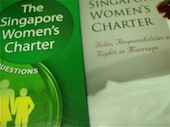
The two books launched were: Singapore Women’s Charter: 50 Questions, a clear and concise explication of the Charter’s workings written by Professor Leong Wai Kum of the NUS Faculty of Law; and Singapore Women’s Charter: Roles, Responsibilities & Rights In Marriage, a collection of commentaries on different aspects of the Charter, edited by ISEAS Gender Studies Programme coordinator Dr Theresa Devasahayam.

The Charter first took shape as an election promise by the People’s Action Party (PAP), and came into effect in 1961. Introduced at a time when polygamy was a common practice and the legal rights of women here were murkily defined, to say the least, it marked a great leap forward for gender equality in Singapore.

By making monogamy for non-Muslim Singaporeans the legal norm and by framing marriage as “the equal cooperative partnership of different kinds of efforts for the mutual well-being of the spouses”, the Charter effectively gave married women the same rights as their husbands for the first time.

Speaking at the launch, AWARE president Nicole Tan called the Charter something that was “dear to AWARE’s heart”. Minister Lim Hwee Hua, the guest of honour, lauded it as “the first legal guarantee of gender equality”. Social activist and former AWARE president Constance Singam began her remarks on this celebratory note: “The passing of the Charter was revolutionary. We should be setting off white doves and balloons and ringing the church bells.”

Professor Leong, a well-known family law expert, was similarly effusive when she spoke during the event. “I have a very soft spot for the Women’s Charter,” she told the audience. “It is one of the finest pieces of legislation we have in Singapore.”

Indeed, the words “pride” and “remarkable” crop up often in both her book 50 Questions, and the chapter on the Charter’s significant provisions she penned for Roles, Responsibilities & Rights In Marriage.

Why is the Charter so remarkable? For starters, its conception of marriage – an equal partnership where spouses are expected to treat each other reasonably for their mutual benefit – is an unusually pronounced moral stance.

As Professor Leong put it at the book launch: “There is no command and no punishment for failing to meet this ideal. This is exceptional, because Singapore belongs to the Commonwealth family of nations long dominated by the view that law is command backed by penalty. There is no equivalent of the Singapore Women’s Charter in the marriage laws of the UK and the US because of this classic view, which is too narrow. Family law must make explicit moral statements.”

It is somewhat ironic that one of the ways the Charter’s emphasis on equality in marriage manifests most clearly is in the law regulating the equitable division of assets between husband and wife upon divorce.

This law, writes Professor Leong in Roles, Responsibilities & Rights In Marriage, “may well be one of the finest areas of the law in Singapore. The decisions from its courts stand up to the best in the world. The courts are truly committed to ensuring that all manner of different efforts of a couple, whether they contribute financially to the family coffers, or non-financially to the well-being of the family and care of the children, receive close to equal credit”.

Also in Roles, Responsibilities & Rights In Marriage is a chapter written by Mrs Ann Wee, an associate professorial fellow at the NUS Department of Social Work. Her lively account of the political and social debates that preceded the passing of the Charter deserves to be expanded into a whole book, as much for the valuable historical perspective she provides as for her arresting prose.

Take, for example, this vivid passage on pre-Charter informal marriage certificates for Chinese couples, which were usually purchased from bookstores: “Usually the wife’s copy was emblazoned with a large red and gold phoenix while the husband’s with an equally resplendent dragon. Although not legal documents, they were treasured as such. The husband who in a fit of rage destroyed the certificates and/or wedding photographs caused matrimonial panic, sending his distraught wife rushing to the Welfare Department, convinced that he had endangered the legal status of the marriage – which, of course, was not so.”

It could almost be a scene from a MediaCorp drama series (one of the good ones). Like the many declarations of affection made by the speakers at the book launch, the anecdotal details in Mrs Wee’s chapter help give a compelling human texture to something that can easily be viewed by many as a remote abstraction.

With recent proposed amendments in the works for the Charter, this is as good a time as any to remember that by safeguarding the rights of women, the Charter played a fundamental role in Singapore’s rapid development as a nation. A new generation of lawmakers and citizens must bear this legacy in mind when seeking to make improvements to this groundbreaking piece of legislation.

In the words of Professor Leong: “The law tell stories about the people it serves. In this regard, the Women’s Charter tells stories about us, in particular, how we view the obligations husband and wife owe each other and their children. In most respects, the Women’s Charter tells good stories.”

Read the speech given by former AWARE president Constance Singam at the book launch here.

Singapore Women’s Charter: 50 Questions is available here and Singapore Women’s Charter: Roles, Responsibilities & Rights In Marriage is available here.

Honouring those who fought for the Women’s Charter

The following is the speech given by social activist and former AWARE president Constance Singam at the March 25 launch of two books marking the 50th anniversary of the Singapore Women’s Charter.

In the history of every nation, there comes a moment which can be called a defining moment. A defining moment is the point at which a situation is clearly seen to undergo a change.

And in this instance, it changed the lives of many – men, women and children – changed the way men and women viewed relationships within marriage, changed our perception about the male/female relationship and the status of women in our society.

The passing into law of the Women’s Charter was our nation’s, our society’s, our women’s defining moment.

Dr Goh Keng Swee described the Bill during the debate in the legislative assembly as a “major advance in social legislation, not only in the country, but in Southeast Asia”.

It is hard to imagine just how different the world was for women before the 1960s.

Mrs Ann Wee gives us a glimpse of that world and the atmosphere during that process. The other writers, especially Professor Leong Wai Kum, inform us about how the law applies, its impact on our lives, and its shortcomings.

However, I would like us to move away from the focus on the Women’s Charter and bring the spotlight on the women of those times: The women who formed the Singapore Council of Women (SCW) in 1952 under the leadership of Mrs Shrin Fozdar and Mrs George Lee; the women such as Madam Chan Choy Siong of the People’s Action Party (PAP); and women such as Mrs Seow Peck Leng in the Legislative Assembly – the likes of whom we have not seen in independent Singapore.

They were responsible for several very significant outcomes that need to be recorded.

It took the SCW almost a decade of lobbying the politicians to take on board the status of women and the issue of polygamy.

They were functioning in an environment that was far more conservative, far more traditional, and far more male-dominated than ones we have ever had to confront.

The various groups of women (there were 30 then) functioned along racial or clan lines. They were mostly welfare and social organisations. There was no such thing or animal as a Singapore community.

These women, who came together to form the Council, managed to mobilise women from different communities. They suspended cultural, sectional and religious differences to join together to fight for a cause. Theirs was a remarkable achievement.

That mobilisation of women was and is the most successful moblisation of women in our history. With that moblisation, those women set in motion the idea of a Singapore community – a Singapore nation. That is my first point.

The next point I want to make is that women were empowered in the process – and not just the women who were leading the process. This sense – a new sense of themselves as women, treated with dignity and respect, a sense of empowerment and celebration – was palpable.

Observing these changes, The Straits Times reported on June 3, 1962, a year after the Charter was passed, that more women were participating in community activities. For example, the annual International Bazaar in aid of the blind – the women made it the most colourful and biggest bazaar and raised $101,000 in 1960 and $120,000 in 1961. Whereas in previous years the Bazaar had collected much less – the most recorded was about $70,000.

The same Straits Times story reported that Singapore women were “taking more than a lively interest in various conferences relating to women’s interests”.

The Singapore Council of Women was also functioning in a very political environment and political parties, especially the PAP, were fighting to establish their dominance. That helped too. Then there were women within the PAP who were also campaigning for a women’s rights charter.

A confluence of forces came together to enable success: The democratic political situation; an active civil society; an NGO, the SCW; the PAP’s women members; and the socially progressive spirit of the times. The outcome was a very revolutionary document, that was, as Dr Goh said, “a major advance in social legislation”.

Will we ever again be fortunate enough to come to a time when all these forces come together?

The Women’s Charter has yet to deliver on all the promises that it made in 1961.

Mrs Singam also blogs at Living Life At 70.

Find out more about the recently launched books, Singapore Women’s Charter: 50 Questions and Singapore Women’s Charter: Roles, Responsibilities & Rights In Marriage, here.

Faith & Gender Roles – A Special Roundtable Discussion

Note: Because the elections are being held on May 7, this event has been postponed to May 21.

Jointly organised by South East Community Development Council (SECDC) and AWARE, this half-day exploratory session is part of SECDC’s Monthly Inter-faith Dialogue Series that strives to create a space for participants to reflect and talk about what it means to be a member of a certain gender in a faith-based context.

What does your faith say about women’s roles? How have women been portrayed in your faith? To what extent does faith help or erode gender equality? Can gender equality be reconciled with the values and beliefs of different faiths?

When: 21st May 2011

Time: 9:00 am- 1:30 pm

Where:  AWARE Centre (map)

Nominal Fee:  $5.00

Programme:

09:00 am        —    Registration and Breakfast

09:30 am        —    Welcome and Introduction

09:40 am        —    Panel Discussion

Speakers:

Ms Angie Chew Monksfield (Buddhist), Sister Julia Ong and Ms Amy Daniel (Christian), Kathirasan K (Hindu), Mohamad Imran Taib (Muslim) and Jamshed K. Fozdar (Baha’i).

Chair:  Ms. Lai Ah Eng

11:05 am        —   Q & A

11:45 am        —    Facilitated breakout sessions (3 groups)

01:00 pm        —    Lunch

Limited to 30 seats only. Register HERE

For more information about the event, email Pam at publiceducation@aware.org.sg or call 6779-7137.


To find out more about SECDC’s Exploration Into Faith Series, visit their website www.eif.com.sg or contact Mr Derrick Ang at 6319-8725.

Profiles:

Angie Monksfield was the President of the Buddhist Fellowship for 4 years from 1997 – 2010 and was a one of the founding members.  She is a senior IT professional whose career spanned Accenture, Visa International and Singapore Airlines. She served in the Singapore Computer Society as the Vice President for 6 years from 1995 – 2011.

Sister Julia Ong is an Infant Jesus sister, who is currently the Secretary of the Ecclesia of Women in Asia (EWA). The EWA seeks to develop theology from Asian women’s perspectives and recognise Asian Catholic women as equal partners in the life of the Church. Sister Julia is currently an Allied Educator in St Joseph’s Institution working on curriculum development of the religious and moral education programmes. She has a Masters in Education, majoring in Religious Formation.

Amy Daniel Profile

K. Kathirasan is a passionate teacher of Hinduism and a dedicated volunteer under the arm of The Hindu Centre, Singapore. He is highly respected for his spiritual knowledge and discourses on the truths of Hinduism based on Hindu scriptures. He has taught Hinduism to youths, adults and elderly alike for over 12 years. Kathirasan himself has been under the tutelage of Swami Satprakashananda Saraswati for several years since 1999 studying the subject of Traditional Advaita Vedanta (non dualism). His area of interest lies in the areas of philosophy, rituals, and means to spiritual enlightenment. He independently conducts research and writes materials on Hinduism.

Mohamed Imran Mohamed Taib is a social activist with The Reading Group, Singapore, and a postgraduate student at the Department of Malay Studies, NUS. His research focuses on the religious orientation of the Malays and contemporary thought on Islam. He writes and comment frequently on socioreligious and interfaith issues, and an advocate for a progressive interpretation of Islam that includes reconfiguring Muslim views on gender. He has co-edited and published two books: Islam, Religion and Progress (2006) and Moral Vision and Social Critique (2007); and was chief editor of a Malay journal on critical religious thought, Tafkir (2009).

Jamshed K Fozdar was from 1996-1999 honorary secretary on the Inter-Religious Organisation of Singapore.  He is also the author of 3 books on comparative religion including the highly-acclaimed “The God of Buddha”. As an engineering consultant Mr. Fozdar was associated with pioneer work on Radio Astronomy and Electron Microscopy at the US National Bureau of Standards, Washington D.C. At the age of 22, Mr. Fozdar was the recipient  of the letter of commendation from the late Albert Einstein for his paper on the 4th Dimension. He is a consultant in the field of Telecommunications and a member of the Professional Engineers Board of Singapore. He has also been a member and often Chairperson of Baha’i National administrative bodies  in many countries like Singapore, Sri Lanka, Indochina and etc.

Lai Ah Eng is currently senior research fellow at the Asia Research Institute, NUS and she also teaches a module on religions in the contemporary world at the University Scholars Programme, NUS.  A social anthropolgist by training, she works on issues related to multiculturalism, religion, migration and gender, and has published several major works on these topics. She has also sat on several national committees and subcommittees on various issues related to family, ethnicity and religion. She is a founding and life member of AWARE.

The determined dames of Dagenham

New movie Made In Dagenham highlights how female factory workers fought for equal pay in 1960s Britain.

By Kylie Goh

We remember 1968 as a year of revolutions: The civil rights movement comes to a boil in the United States, political liberalisation in Czechoslovakia blossoms into the Prague Spring, Yale starts admitting female students and the students of Paris stage legendary protests against traditional authority figures. Inspired by all the upheaval, The Beatles release their single Revolution, which goes on to sell six million copies.

To this list of events that shaped the course of history, we must add the 1968 equal-pay revolution that starts in the east London suburb of Dagenham.

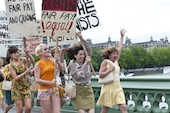
It begins like this: 187 female sewing machinists in Ford Motor Company Limited’s Dagenham assembly plant are informed that their jobs have been re-graded as less skilled Category B production jobs. This seems to contradict the fact that their work – putting together car seat covers for Ford automobiles – clearly requires a great deal of skill.

To add insult to injury, these women are also told that they will be paid 15 per cent less than the full Category B wage paid to male workers. The resulting strike by these female workers was a pivotal event that ultimately led to Britain’s Equal Pay Act in 1970.

The story of how these women fight for equal pay is the subject of the BBC movie Made In Dagenham, which was screened for an audience of 84 people on March 23 by Golden Village. Part of its Blog Aloud series, the event was held at VivoCity’s Cinema Europa.

Made In Dagenham certainly took me on a rollercoaster ride of emotions. At times, the troubles faced by the sewing machinists brought me to tears. When they experienced leaps of progress, my heart would sing with optimism.

Equally arresting was the post-movie discussion led by AWARE president Nicole Tan and honorary secretary Lindy Ong, which touched on key aspects of the film and the broader issue of workplace gender equality.

The discussion kicked off with a quick look at the facts, which were not at all encouraging. Singaporean women are paid an average of 72 cents for every dollar earned by men. Less than 7 per cent of Singapore’s listed companies have a woman on their board of directors. Other aspects of employment, such as attitudes towards women in the workplace and the provision of benefits to female employees, were also touched on.

As a 19-year-old who has yet to enter the workforce, these facts were not at all reassuring. Part of the joy of work must surely come from being appropriately recognised and rewarded for one’s contributions. It seems unfair that as a woman, I could be required to work much harder simply to get an even break.

The concept of equal value was also discussed. Observations included the fact that jobs traditionally undertaken by women, such as childcare providers, are often lower-paying jobs. And even though both spouses’ incomes are increasingly needed these days to support a family, the practice of regarding the husband as the primary breadwinner while the wife provides supplementary income persists.

We also talked about the F Word and discussed the connotations of it as an unsavoury word. Yes, I’m referring to the word ‘feminist’. As a young girl, I grew to identify with the word ‘feminist’ before I knew the negative connotations associated with it.

It was a shock for me when I proudly announced that I was a feminist only to be met with derision and scorn from acquaintances, and even friends. A feminist is someone who believes in gender equality, which I think is only reasonable. The need to reclaim the original meaning of this word was a sentiment shared by the audience during the discussion.

In Made In Dagenham, we are introduced to Barbara Castle, then Britain’s Minister of Employment. Strong and opinionated, she was one of the most important Labour politicians of the 20th century, and one of the few female politicians of her time.

Yet, much as the presence of a woman in a high position does inspire, it is also important to avoid the easy conclusion that the glass ceiling does not exist. It is also important not to overlook the many personal sacrifices that have to be made in order to reach such a position, sacrifices that many men need not make.

The film is a reminder that much of the gender equality we enjoy today was won by the women and men who came before us. AWARE president Nicole Tan said it best when she remarked: “The fight is for the next generation, like the women who fought for us – because we have all loved someone who is a woman.” It was truly a privilege to witness this dedication towards working for the benefit of the next generation, of my generation.

The writer is an AWARE intern who plans to pursue an undergraduate degree in biology. Made In Dagenham (M18) is now showing in cinemas.

Roundtable Discussion – April

Are you concerned about what’s happening around you?

If you have an interest in social and other issues and would like to have your say about them, come to our monthly AWARE Roundtable meetings.
Discussion and debate have always been an important part of AWARE. In gatherings large and small, formal and informal, we have discussed issues and examined policies. The discussions sometimes led to submissions to the authorities or to publications; other times they kept AWARE abreast of current affairs, public policies and social trends.

As AWARE turns 25, we want to make this discussion and debate a regular activity with a more formal structure. A key aim is strengthen AWARE’s capacity to identify, understand and respond to a wide range of trends, issues and policies. We are thus launching The AWARE Roundtable, a monthly event open to AWARE members and invited guests.

If you have any queries, please email Pam at publiceducation@aware.org.sg or call AWARE on 6779 7137.

April

7.30pm on April 7th

Beyond managing homelessness
People who are homeless are so for various reasons. Some have made poor choices in life, some are involved with alcohol or drugs, yet others are part of the system of generational poverty in which inadequate life skills are handed down from one generation to the next, resulting in an entire culture of people who do not know how to take advantage of the educational, cultural or employment advantages available to them. Some of the homeless are also those who may have had some education, a job and a place to live, but without a “safety net” of family or friends to help them through a difficult time, found themselves evicted from their homes after they lost their job or had a financial crisis. But whatever the circumstances, homelessness is but the symptom of root problems.

Speaker: Ravi Philemon
Chair: Braema Mathi

Ravi Philemon is a community worker and he identifies himself as a blogivist – an activist with a blog. He is a former Chief Editor of The Online Citizen and is a founding member of MARUAH (working group for an ASEAN human rights mechanism, Singapore). He is also the Executive Director of SUN-DAC (an organisation which serves people with disabilities). Ravi has been an advocate for the people who are homeless in Singapore since 2008.

Register here for April’s discussion

Fighting Diskriminasi in South Sulawesi

This piece has been modified for length by the author from its original version on cedaw-seasia.org, a website about CEDAW (Convention on the Elimination of Discrimination Against Women) by UN Women.

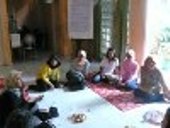
Eight women sit cross-legged on straw mats in a circle talking animatedly while they drink tea and munch on sweets. The women are in Makassar, the capital of South Sulawesi, and they belong to an NGO network called Forum Pemerhati Masalah Perempuan (FPMP, or Forum Concerning Women’s Problems). South Sulawesi is one of Indonesia’s larger provinces, and the FPMP members are discussing cases of diskriminasi taking place in a village in the next district.

Word is, that one village in Bulukumba, has begun enforcing new regulations that impose a strict dress code on women. The new rules require that all women must abide by traditional Islamic dress, and wear the jilbab or headscarf if they want access to public services, including healthcare. The eight have heard that in Bulukumba, women are actually being turned away from clinics by officials. Girls, even as young as six or seven, must also don the jilbab if they want to attend school.

“As Muslim women, the jilbab that we wear is a matter of choice,” said Hajar, one of the FPMP women who herself wears the headscarf. “If local laws are going to force all women to wear this, then this is going against our right to choose. There is no similar dress code for men. What’s more, many poor women can’t even afford to buy the jilbab to wear it everyday!”

FPMP fears that other villages will follow suit. From what they know, there are already 30 other local regulations (“interpretations” of Syariah law by local authorities, which were never around or enforced before) which impede on women’s rights being enforced in other districts. All have been established in the name of Syariah law, and purport to protect women from negative situations that can arise as a result of the behaviour of men and women. Under the new local regulations, women are prohibited from leaving the house in the evening without a male family member. ‘There is also a regulation called “zina”, where women and men who are not married or related cannot be in close proximity. The common penalty for this tends to be heavier on the woman, who typically is shamed in public, sometimes by caning, while men usually pay a small fine.

This is but one negative effect of the growing influence of religious fundamentalist groups on the formulation of government policies, say the women. In recent times, political shifts in Indonesia have seen the decentralisation of authority from the central government in Jakarta to provinces and districts around the country. This, in turn, has led to a greater risk of local laws being interpreted and enforced differently, subject to the whims of local administration officials.

To the FPMP this means the need to help women understand their rights and stand up to discrimination is more urgent than ever, especially in rural areas. The network helps raise awareness about women’s rights among women and local officials. They conduct public forums, give out information on reproductive health, education and access to basic services. Most importantly, they encourage women to speak up about the problems they face.

“Village women generally have a poor understanding of their rights. Most of them don’t even know what ‘women’s rights’ is when we first approach them to talk about it,” said FPMP member Marcelina May. “But now, many of them are starting to ask questions, for example, when they go to the clinic, there is often no information given on the medicines they or their children are told to take, so they never know what they are taking, even if it could be harmful, or maybe useless. They are starting to ask the health workers what the medicine is and what exactly it is for.”

FPMP said that one of the most troubling issues in villages is domestic violence. Because it happens behind closed doors, it is considered a ‘family matter’ and a taboo subject, and many women are afraid to discuss it. The customary practice of dowry-giving makes matters worse. Since dowries tend to be hefty in South Sulawesi, once a man pays a woman’s family to marry her, he feels like he owns her and can treat her any way he wants.

Corruption is another challenge. For example in schools. Education is supposed to be free for all children at the elementary and junior high school levels. However parents are often faced with ‘illegal school fees’ in the form of extra payments required by school and administrative officials. If they don’t pay, they find their children excluded from certain school activities and classes. Over the last few years, the FPMP has spent considerable effort highlighting and educating women about this kind of corruption.

It’s an uphill climb. The group said that corruption among local officials is such a common occurrence that most people are simply resigned to it. They tell of an ongoing case against a Bupati (regency council chief) who raped his maid. Police continue to refuse to prosecute even though the maid, who is unmarried, is now pregnant. “Everyone knows he is guilty, and yet no one is doing anything about it,” said Marcelina. “This is why we have to keep speaking out, and trying to get women to come forward. Taking action together is the only way for things to change,” she adds.

Indonesia is party to CEDAW, the United Nations Convention on the Elimination of Discrimination Against Women. In 2003, a law was passed requiring a 30% quota of women to be included in political parties and in legislatures at both the national and local levels.

The FPMP hopes to get more rural women from South Sulawesi involved in public life. They have met with some success says Hajar, “More and more of them are questioning why there are so few women among the village elders. More are now saying they want to be included in the decision-making process, and are asking how they can participate,” she said.

The road to equality is long, but the good news is that the FPMP is in it for the long haul.

To learn more visit these websites:

UN Women www.unifem-seasia.org
Women Living Under Muslim Laws (WLUML) www.wluml.org
CEDAW South-East Asia http://cedaw-seasia.org

Leigh Pasqual is an AWARE volunteer. She headed up AWARE’s Sexual Harassment sub-committee in 2008 and works as a writer and communications consultant on women’s rights and development. Originally from Singapore, she now lives in New York.