Year: 2013

Sign up for our women’s self-defence programme!

self defense

There are many ways for you to protect yourself in various situations. Learn to use pressure points and body mechanics to take a person down with little effort.

More importantly, gain the self-confidence to know that you can defend yourself while in Singapore or overseas.

The Kapap personal protection system was developed in the 1940s for the Israeli Special Forces. And it has now been condensed into a 10-week workshop specifically designed for women.

Attend a FREE TRIAL CLASS on 15 March, 10am – 12pm to get a better idea of what Kapap is like.

Details:
Date:
15 March
Time:
10am – 12pm
Venue:
AWARE Centre, 5 Dover Crescent, #01-22
Click here to register!

The starting date of the 10-week course will be confirmed after trial class

Attire:
Loose fit and comfortable clothing
Yoga mat for street grappling (optional)

Email publiceducation@aware.org.sg for more information.

Some of the things you will learn include:

• Defensive stance
• Elbow and other strikes
• Pressure points and take downs
• Forearm and body grabs
• Control and restraints
• Street grappling
• Street style kicks and foot trips
• Knife disarming
• Gun disarming
• Improvised weapons i.e., umbrella, pen, purse, water bottle etc

Why does world population growth matter to Singapore?

by Vivienne Wee and Faizah Jamal

ebrahimpour20091212220952125

World Population Day, 11 July, passes largely un-noticed in this “global city”. However, we cannot ignore how a world population now reaching 7.2 billion affects all life on this planet. Increasing demands for finite resources are aggravated by inequitable and unsustainable resource use. The massive extinction of species is disrupting the global ecosystem, adversely affecting climate and, consequently, our sources of food and medicines.

Paradoxically, Singapore espouses a pro-natalist policy, recently reiterated in the White Paper (January 2013), again calling on citizens with the means to have more children. This plan for population growth is driven by a paradigm requiring an increased proportion of those of working age to provide for an aging population. But what happens when those of working age, in turn, grow old? Are we to have an ever increasing population and an ever more degraded environment?

In her speech to Parliament in February, NMP Faizah Jamal said:

“…we act as if all that economic growth, all the companies and foreign talent that we want to entice, all the goodies that we desire in life, all the construction that will happen, does not in fact come from somewhere and end up somewhere, in the environment. Yet there is no mention in the White Paper about the impact of so many people on our carbon footprint, our food security….”

This footprint will further strain overstretched environmental resources. Decisions made here have environmental impact beyond Singapore, just as we experience the impact of actions elsewhere, including forest fires.

While it is the Government’s responsibility to provide infrastructure, its planning process does not prioritise environmental sustainability. The proposed Cross Island Line will cut through the Central Catchment Nature Reserve, affecting unique species found nowhere else worldwide. Reclamation plans will affect dugongs, wild dolphins, and the endangered green and Hawksbill turtles. Pulau Ubin’s Chek Jawa will disappear.

Plans for population growth in a finite environment manifest problematic values: first, that non-human species can be destroyed whenever expedient; second, that forests and mangroves are useless because their benefits are not monetised; third, that policies adopted here only affect Singapore; fourth, that short-term interests outweigh long-term concerns.

Expediency also characterises the control of women as instruments for producing the desired quantity and “quality” of future generations. The gendered inequalities that disadvantage women relate to inequitable resource use that benefits the favoured few while harming others.

The discriminatory pro-natalism practised here symptomises elitism – a view of the world as serving only the elite’s short-term interests. Reproductive preference is given to middle and upper class Singaporeans, including “new Singaporeans” categorised as “talents”, while those of low education and low income are incentivised not to reproduce after two children. The issue is not just numbers but the valorisation of elite consumption as overriding all else.

This World Population Day, we must recognise we need an inclusive, just and sustainable worldview, respecting the rights of all. As inhabitants of a shared planet, if we are not part of the solution, then we are part of the problem.

Vivienne Wee is an anthropologist and Research and Advocacy Director of AWARE. Faizah Jamal is an environmental educator and Nominated Member of Parliament.

Quen on Her Forum Theatre Experience

947389_582646458436956_1059559065_n


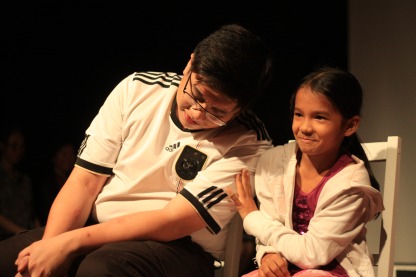
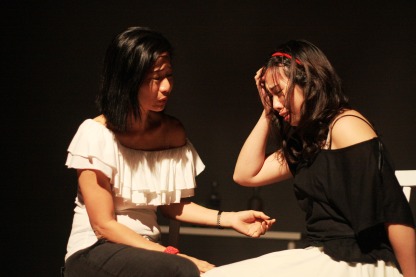
Quenyee Wong plays a grandmother in “Just A Bad Day”. Here is what she has to say about her experience as an actor and what it means to be a Change Maker of the We Can! campaign.


For me, it truly was a tall order. Here was an email asking people with full-time jobs and a life – well, we certainly hope so! – and maybe even a dog, to put months of their lives “on hold”, to be in a play.  Really? Who does that? Once upon a long time ago, I too wanted to run away with the circus, but I’ve since quite adjusted to the demands of life today, thank you.

What did actually get me to sign up for the We Can! forum theatre workshop was, in fact, what the play was going to be about: violence against women. Something went “bing!” in my head. Women’s rights, human rights, the rights of the downtrodden and misunderstood have always been close to my heart. Over a great part of my life, I did identify with the downtrodden. And here was a chance to do something that took on these issues directly!

So two weeks later saw me walking into a room full of strangers of all ages and races, shapes and genders. You’d only see a more diverse group, well, at the circus. After the initial hellos and introductions, the amazing journey of forum theatre training began! Under the careful moulding of a veteran theatre practitioner named Li Xie, we started to open up and warm towards each other through different trust-building exercises. In one such exercise, we wandered with eyes closed within the confines of a room and, at the instruction of Li Xie, reached out to find a “hand buddy”. That is, we proceeded to feel the hand of the person we had partnered up with, perhaps even smelling it or rubbing it against our faces, so that we could “know it”, all the while with our eyes shut. Then, after mixing us all up again, we had to find our hand buddy purely by feeling dozens of “stranger hands”! What a weird thing to do, I thought, but guess what? Many of us did find our hand buddies, and experienced a most uncanny sense of connection with that person.

The artistic process was most liberating. Soon, this motley crew of volunteers migrated together from a place of shy, giggly awkwardness to a full-on, I-haven’t-even-shared-this-with-my-mom, safe circle of revelatory sharing! The day always ended with everyone coming together in a circle and sharing what we felt or had learnt. And the bare-bones honesty surprised us all! Here was a group of ordinary folk who had come together because we had witnessed or experienced unspeakable violence in our own lives, and now we were bonding over long-hidden secrets. Rape, peer pressure, gender discrimination – you name it, it figured in our individual experiences. It made you think, wow, violence really is just one or two degrees of separation away! In fact, if you were willing to look, you would see it happening in your own life as well.

These stories made their way into a piece of theatre that explored violence in both physical and non-physical forms, set in the everyday scenarios where we had first experienced them. Through a progressive series of exercises involving creating tableaux of actions, we pieced the action together and weaved a coherent whole. In a process called “hot seating”, we had questions posed to us as the character we played (for example, a woman who felt compelled to fulfil the roles of wife, mother and daughter-in-law to the highest degree) and we answered them in character. This helped us better understand the stakes involved and our character’s motivations and “buttons” – words or actions that would make them think twice or even change their behaviour. These were “buttons” that our audience members could “push” in order to trigger a different way of thinking or acting.

All in all, the process of creating a forum theatre devised piece made each of us more aware of why protagonists in any particular situation make the decisions they do, which create or add to a cycle of action. We had all come with a certain set of ideas about the issues in violence, and through role-play and discussion, had discovered a lot of the “grey” in things we used to think of as pretty black-and-white. Taking on these issues didn’t sway our resolve. On the contrary, it imbued us with some wisdom: solutions are not cut and dry, and people have to arrive at their own solutions organically.

At the We Can! forum theatre workshop, we found our “therapy” – sharing our stories and putting them together in a theatre piece had, in effect, released us from their hold and re-purposed them for good. Now, it is time to take our process to the masses, to get them to share as well!

We named the play, “Just A Bad Day”, and recognised ourselves as “Change Makers”. Using everything we have learnt from the workshop, the “Just A Bad Day” Change Makers will take the play to Singapore’s multi-racial, multi-religious, multi-abled, multi-gendered, multi-affiliated communities over an entire year.

People need to feel empowered to say no, to pipe up when they would ordinarily have kept mum, to step in where they might have stepped aside before because they thought that violence was a private matter.  But it isn’t. Just as you can step into the world of the forum theatre and do something differently, we want people to know that they can change the course of real life, and hopefully history, simply by acting on it.

Roundtable: “Alienation and the Disappearance of Things”

This August, we are proud to have Constance Singam, Singaporean writer and activist, at our roundtable discussion.

The theme for this month’s roundtable is Alienation and the Disappearance of Things”, excerpts from her memoir “Where I was: A Memoir from the Margins”

EVENT DETAILS
Date: Saturday, August 17th
Time: 3pm
Please click here to register!

About the Speaker:
Connie-1Constance Singam is an author and civil society activist. She began her career in journalism, before taking a degree in English Literature in her forties, and a Master’s degree in her sixties. Her civil society work has focused on women’s rights and social justice. Since its inception in 1985, she has been closely associated with the Association of Women for Action and Research (AWARE), Singapore’s leading gender equality advocacy group, including serving as its President for three terms.  She is also a co-founder of civil society groups such as TWC1 and TWC2. She has been a columnist in several publications. Her works include “A history of the TWC: Building Social Space in Singapore”, “Re-Presenting Singapore Women” which she co-edited and has just released her memoir “Where I was: A Memoir from the Margins”. She blogs at: http://connie.sg
About the Book: “Where I Was is a rich, entertaining and compelling account of the life of an extraordinary woman. In a land of many cultures, many races, many religions; in a state where politics and public policies impinge, sometimes callously, on the daily lives of its denizens, Constance Singam is an individual marginalised many times over by her status as a woman, an Indian, a widow and a civil society activist. Through humorous and moving accounts, Constance captures in words the images of the people, places and events that are the source of her most powerful memories. These images are connected to key turning points in her personal journey, set against or within the context of important historical events.”

For further information, please contact Sahar at sahar@aware.org.sg

Community Theatre At Its Best!

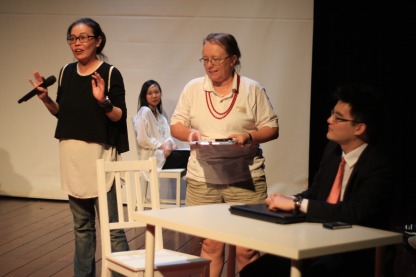
The response to the premiere of Just A Bad Day, the flagship project of the We Can! End All Violence Against Women campaign, was overwhelming. On June 22nd, around 220 people came down to the Substation Theatre to watch our forum theatre piece on violence against women. The evening show was brimming with people, some of whom had to sit on the floor because we were sold out.  Our guest-of-honour, Member of Parliament Mr Zainudin Nordin, graced the evening show with his presence and committed to being a We Can! Change Maker – taking a pledge to practice and promote non-violence.

Among the audience were Member of Parliament Ellen Lee, Workers’ Party Chairman Sylvia Lim and the family of the late Raj Verma. Raj Verma was a founding member of AWARE and is considered an icon of the spirit of feminism and social justice. Several Change Makers who were touched by the campaign came down to show their support as well.

IMG_7718-1

It was only in May this year when a team of enthusiastic Change Makers came together to devise the play. These volunteers, from all walks of life in Singapore, came forward to share their stories of violence, oppression and vulnerability. They went through an intensive 40-hour workshop that included basic theatre exposure and a Change Maker workshop, as part of the We Can! campaign. Through this powerful experience, the Change Makers were able to mold compelling characters who mirrored their struggles, their society.

Many of the cast and crew members of Just A Bad Day have little or no experience in theatre. This includes lead actresses Rachel Chung and Jasmine Hu.

The play contains numerous scenes that are familiar to all of us: A woman blusters into her office, late. A grandmother waits for her family to come home for dinner. Friends gather for a boisterous birthday celebration. Yet, in all these apparently normal situations, there are moments of deep discomfort and tension, sometimes culminating in outright violation. Conflicts escalate with seemingly no resolution in sight.

But then, each scene was replayed, and the audience was given the chance to stop it at any point they felt something was not right; to step into the role of one of the characters and try to make it right. The forum theatre formatis not only thought-provoking, but also allows for audience discussion on important issues, with the help of a facilitator who took them into the world of the play and gave them a chance to change the injustice they see. In turn, the actors had to respond to the new situation, showing the audience that their actions had consequences. This highlighted some of the difficulties faced by characters in the play.

IMG_7872-1Many members of the audience were extremely eager to jump in when they could. One of the most memorable interventions came towards the end of the evening, when a witty audience member stepped in to replace a character who was a powerless bystander to “dude talk” that was quickly morphing into an ominous situation. Through his eloquence and a pinch of realism, he managed to convince the other characters to change their point of view while speaking their language.

12-year-old Theo Chen intervened, twice, replacing the perpetrators of violence in the workplace and family scenarios to show the audience how it’s done.

Despite being inexperienced actors, the cast did a fantastic job, especially when it came to improvisations during interventions. It is no easy feat to think up responses on their feet while keeping in character. It was clear that all the actors poured their hearts into their role as they interacted with audience members, young and old.

IMG_8126-1


Quen Wong, who also played one of the lead roles in the play, said of the experience, “The artistic process was liberating. But more than that, this was a group of people who had come together in the first place because we had witnessed or experienced unspeakable violence in their own lives.” Quen played a grandmother who constantly chided her daughter-in-law for not being a “good wife” according to her traditional expectations.

By the end of the play, there were new sign-ups for the We Can! Change Maker workshops, and requests from the audience to bring the Forum Theatre Tour to their community!

Just A Bad Day is definitely off to a great start. Plans are underway to bring the play to audiences across Singapore. Schools, Family Service Centres and organizations such as the National Council of Social Services have shown interest in future partnerships, which is extremely encouraging for the We Can! team.


AWARE Holds 28th Annual General Meeting

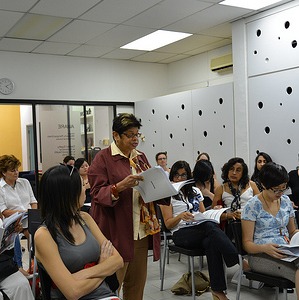
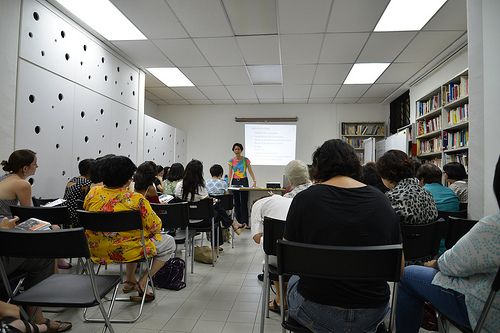
Forty-eight members, old and new faces alike, came together on 1st June to attend AWARE’s 28th Annual General Meeting at the AWARE Centre.

8924433293_316c67a706-1Quorum was achieved despite this being a non-election year. Members came to show their support and were keen to find out more about the activities of 2012 and the Board’s plans for the future. The Annual Report (with amendments) and Financial Statements for 2012 were also adopted by those present.

President Winifred Loh shared some of the fruits of the Board’s work in the previous year. Project Butterfly, established to enhance AWARE’s operations, was one highlight. Winifred emphasised the importance of strengthening the partnerships between the key stakeholders of AWARE: members, volunteers, staff, and Board. Following the discussions under Project Butterfly, some of the crucial developments that have taken place in this area are the refinement of processes for engaging and supporting our volunteers, and the increased channels of communication between the Board and the members.

Executive Director, Corinna Lim, shared about AWARE’s growing outreach and increased stability over the last five years. Media coverage and the outreach numbers of AWARE’s Training Institute and Support Services had increased significantly during this period, reflecting AWARE’s effectiveness in pushing for social change and gender equality in Singapore.

8924413751_f9baa65464

The Research and Advocacy Department recapped a productive year, in which it submitted a record nine sets of policy recommendations and embarked on a concerted effort to promote public discourse of gender inequality. One of the most significant successes celebrated at this AGM was the adoption of AWARE’s recommendations on the Voluntary Sterilisation Act, passed in Parliament in October last year. This achievement has strengthened AWARE’s resolve to persevere in lobbying women’s and gender-related issues.

The meeting was a chance to discuss new ideas as well. Members put forth suggestions on revising the membership scheme, shifting the focus from the payment of fees, to the intangible contributions of talent and effort by AWARE’s supporters. Another exciting proposal was to raise awareness among a wider section of the population by inaugurating a series of AWARE lectures, with speakers on topics such as women and the law.

The AGM ended on an anticipatory note, with volunteers coming up to share on events that members, friends, and the public can look forward to in the coming months. These include the 2013 edition of the Big Red Ball on September 16, and ongoing nationwide projects such as the We Can End All Violence Against Women campaign.


The joys of shared parenting

by Callan Tham

Following AWARE’s article with three fathers who shared their views on paternity leave in Singapore – “What fathers say on Father’s Day”, published in The Online Citizen on 16 June 2013 – Callan Tham, another father, wrote to AWARE to add his opinion about the current paternity leave policy. He looks forward to a policy change that would support shared parenting between fathers and mothers.

Nothing really prepares one for parenthood. It is one of those contradictions in life – something that is not completely what one expects it to be, and yet entirely how one expects to experience it.

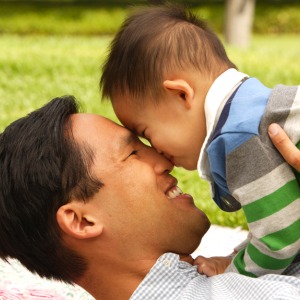
father.and.sonWhen my son Ayrton was born almost 3 years ago, I was lucky enough to be working on rotational shifts. This meant I could accumulate my off-days and paid leave, and take about 6 weeks off from my job to care for both my wife and son, right after we welcomed him into the world. Every night, I fed him and changed his soiled diapers while my wife rested. I took naps in the day as my wife took care of him. He is a shared responsibility through and through. This shared parenting enabled me to bond with him. It also strengthened my bond with my wife.

Even before I stepped into fatherhood, I’ve always wondered what it would be like. I know many colleagues who become fathers and have to struggle to cope without the luxuries that many of us take for granted. We managed to hire a good domestic helper and my parents helped to look after Ayrton in the weekdays, as both Karen and I work. These are luxuries for which we are grateful, but one plays the hand one is dealt.

My experience as a father would have differed greatly, had I held a typical 9 – 5 job with limited leave flexibility. This is why the current policy situation is curiously and woefully lacking, especially in the light of our fertility rate, which resembles a chart depicting a catastrophic stock market crash.

Fathers want to be a part of their children’s life growing up, but are only given a mere fraction of paid leave to do that. While it is an improvement over zero, it is hardly enough. In its current state, it is akin to a band-aid, or a panadol tablet — a temporary measure that does nothing in the long term.

I think the Swedish model for paternity leave could be adapted for Singapore. That would require the Government to take a huge leap of faith in an act of legislative courage. I am nevertheless hopeful that I can see such an act in my lifetime. As a father, I do not want to see mothers bear the burden of childbearing and child-raising alone, while fathers are deprived of the joys of shared parenting.

What fathers say on Fathers’ Day

by Abdul Shariff Aboo Kassim, Kamaludeen Mohamed Nasir, Chan Kin Kok with Vivienne Wee and Ranjana Raghunathan

image1.000To mark Father’s Day, AWARE invited three fathers to give their views of the newly introduced paternity leave and conversion of one week of maternity leave to shared parental leave. They were Kamaludeen Mohamed Nasir (father of a five-year-old son and a nineteen-month-old daughter), Abdul Shariff Aboo Kassim (soon to be father of a second child) and Chan Kin Kok (father of a four-year-old daughter).

Voicing their views independently, they converged on two points. On the one hand, they welcome the new leave policies. Kamaludeen describes these as recognition of “the significant roles of fathers in the care of children.”

Abdul Shariff concurs: “When my first child was born, the lack of paternity leave meant that I had to return to work just days after my wife was discharged from the maternity ward. I welcome the legislation of paid paternity leave and hope that my daughter, due in four months’ time, will not face the same plight as her brother.” Chan notes that the six-day paternity leave will be particularly useful to those fathers with limited annual leave, who cannot carry over leave from previous years.

On the other hand, they agree that care-giving fathers need better support. Abdul Shariff considers the six days of paternity leave insufficient “for men who wish to be more involved parents. It merely provides a week’s relief to mothers of a newborn.”

Their views are congruent with AWARE’s 2011 survey of 1001 parents, which showed 91 per cent agreeing on mandatory paid paternity leave, with 80 per cent asking for more than 6 days and 44 per cent, more than 11 days. Most agreed that four weeks of the 16-week maternity leave should become parental leave, available to either spouse.

Kamaludeen notes that “fathers play a pivotal role in the development of their children beyond these months of infancy.” He hopes for paternity leave to be expanded beyond current stipulations that make such leave available only within 16 weeks after the birth of a Singapore Citizen child or flexibly within 12 months after the birth, pending mutual agreement between employer and employee. He points out that flexible paternity leave is needed should the mother fall ill, as no woman can be expected “to stay healthy 365 days a year “, regardless of whether they work or stay at home.

Although many fathers value their roles as caregivers, they are not given sufficient opportunities to develop the skills, sensibilities and habits necessary to be good caregivers. Chan identifies the problem as a work environment that stigmatises fathers who take time off to care for their children, expecting men to prioritise work over family.

Abdul Shariff observes that “caregiving is still perceived as a woman’s domain.” The perpetuation of gender stereotypes pressures many women to drop out of the workforce, sacrificing career and financial security to be the main parent responsible for the children’s well-being.

Abdul Shariff notes that support given to fathers will help mothers to stay in the workforce. He suggests that flexible work arrangements for fathers, especially during the child’s first three months, will allow working mothers to spread their 16 weeks of maternity leave over 24 months. Currently, working mothers have to take eight weeks’ leave as a block, with only the remaining eight weeks available for flexible use over 12 months.

“Such a move would relieve employers, who otherwise have to bear with their female employees’ lengthy absence. This would, in turn, encourage them to be more flexible with male employees”, he said.

This father’s suggestion echoes the call by NTUC and AWARE for flexi-work arrangements to be made available to all working parents. AWARE has always advocated shared parenting, with fathers more involved in childcare.

image1.001Abdul Shariff points out that in contemporary families, men do have to play a greater role as caregiver and women, as wage-earner: “Getting married later in life is a growing trend. It makes sense for women to strive for financial independence. The shift in mean age of having the first child means that caregiving needs are much greater now. Couples wishing to have more children cannot afford to have large age gaps between their children, in view of age-related risks. Moreover, parents’ expectations are higher as they endeavour to secure a stable future for their children amidst increasing uncertainty. These factors emphasise the growing need for shared parenting. While I am thankful that many existing policies have been enhanced, I hope they will be improved further to enable fathers to play a bigger role in caring for their children.”

Policies are genuinely pro-family only if they support fathers and mothers as both care-givers and wage-earners, able to meet family needs.

(Abdul Shariff Aboo Kassim, Kamaludeen Mohamed Nasir and Chan Kin Kok are the fathers of young children. Vivienne Wee and Ranjana Raghunathan are, respectively, AWARE’s Research and Advocacy Director and Research and Advocacy Coordinator.)

The article is published on The Online Citizen, on 16 June, 2013.

The trouble with limited paid paternity leave

image1-1When I became a mother five years ago, I experienced acutely what I had known as a sociologist — structural conditions matter.

In the first week after our baby was born, my husband and I were equally pathetic in our cluelessness; the learning curve was steep and we tried and failed together. We were on equal footing with caring for baby on most fronts.

After he went back to work and I stayed home with the baby, however, our paths on that learning curve quickly diverged. While he remained committed to playing a major role — waking up for night feeds to change the diapers before passing baby to me, and soothing the baby back to sleep afterward — I inadvertently became the more competent and more confident parent.

It is reasonable that women receive more public support when it comes to being at home with an infant; they do need the time after the birth of a child for recovery and to establish breastfeeding. However, for men to learn to be fathers in the way women have to learn to be mothers, they need comparable opportunities and support for developing competence in everyday acts of caregiving.

Anything worth doing takes practice to do well. This includes parenting. Mothers and fathers are made, not born. They are made through hands-on learning, through multiple trial and error. When we speak in glowing terms about the importance of motherhood and fatherhood, we often speak in general terms without considering the everyday caring for the young.

Particularly for the middle-class, popular culture is permeated with references to “quality time” and “involvement”, without adequate attention to the significance of everyday acts — wiping noses, sneaking vegetables into meals, nagging for the 10th time that it is time for a shower.

Paying attention to these small acts that populate a child’s day, we see that being a caregiver is not always pretty and indeed often tediously mundane. Yet, tedium and mundaneness are part of any long-term relationship and no less important than more photogenic moments.

To speak of valuing parenthood and children, then, we need to speak more often of those spaces between developmental milestones and Facebook status updates. And when we do, we see stark differences in the extent to which women and men participate in these everyday practices.

UNDERVALUED WORK
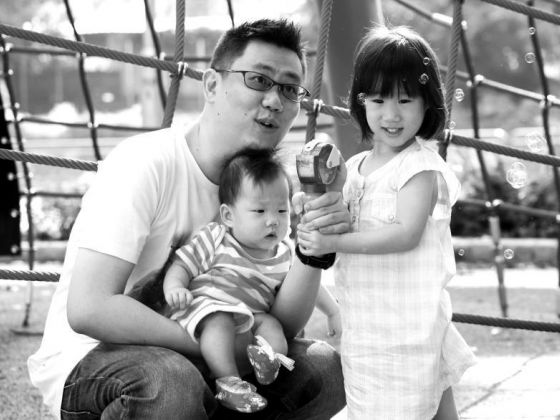
image2


If we take a child’s perspective and see these acts as dominating their conscious lives, and if we recognise that these everyday gestures are a privilege of parenting, we see that many men — particularly those who do not have flexible work and time-off — face constraints and barriers as parents. This is something public policy reinforces and that it can and must address.

Extensive maternity leave and limited paternity leave creates a situation in which women and men, regardless of their desires, are compelled to become families where mothers play bigger roles than fathers by virtue of more opportunity to practice and learn.

To address this, paternity leave must be extended beyond the current one week. Particular attention should be paid to ensuring that all men — regardless of their socio-economic circumstances and job types — have access to this privilege to parent.

Caregiving is simultaneously hard work and privilege. Public policies have produced hard divisions of labour such that some do most of it — mothers, grandmothers, and for some portion of the middle-class, domestic workers.

In the process, those who do not partake in everyday care often fail to appreciate both its difficulties and its rewards. The work itself becomes devalued. Children become, paradoxically, a category of highly-valued persons whose care is often invisible and undervalued.

Policy makers frequently invoke the notion of “mindsets” as limiting their capacity to alter policy. Yet, sociologists have shown that for attitudes to change, conditions must exist for certain practices to become norms.

Employers will not spontaneously decide that they ought to support men in becoming particular types of fathers. In the abstract — not having had opportunity to acquire competence in childcare beyond changing some diapers — men will not spontaneously see that they can be different sorts of fathers.

Women, for that matter, will not believe that their male partners are indeed capable of doing everything they can do, as long as they are given time to practice. For so-called mindsets to change, conditions have to shift.

It has taken years for paternity leave to be introduced. We must keep the conversation going so that it does not take years to expand it so that it actually counts.

Teo You Yenn is Assistant Professor of Sociology at Nanyang Technological University, board member at the Association of Women for Action and Research, and author of Neoliberal Morality in Singapore: How family policies make state and society.

This article is published on TodayOnline, on 17 June, 2013.