
Year: 2015

Thank you for an amazing 2015!

Thank you 2015

2015 has been amazing for AWARE! Thanks to your generous support, our programmes and initiatives have met with great success.

Here are some of the highlights of the year:

1. Our beloved AWARE Centre now has a new look!

The Centre closed for renovations in May, and in August we opened our doors to a brand new space, with a dedicated wing for our support services, and a new events space for the AWARE community. Drop by to take a look!

2. Promoting equality and women’s representation in GE2015

We injected gender equality advocacy into election season in September! We engaged political parties with a statement on promoting inclusion and diversity, highlighted the lack of women’s representation both on electoral slates and in the Cabinet, and called out numerous sexist statements about candidates, which collectively earned this year’s Alamak! Award.

3. Placing gender equality on the policy map

AWARE continues to keep up with the rapid pace of policy development.  This year we participated in public consultations on proposed reforms to the Women’s Charter as well as the national Budget, ensuring that support for caregiving, protection from violence and gender equality remain firmly in the public and policy-maker eye. In December, we welcomed Minister for Social and Family Development Tan Chuan-Jin to the AWARE Centre to discuss our plans and our work.

4. Men standing up against violence against women

Violence against women matters to everyone. #WhiteRibbonSG united men and boys from all walks of life, including Minister K Shanmugam and Adrian Pang, on the importance of ending it.  November’s campaign week brought thought-provoking videos, widely circulated think pieces and Ride Against Violence – where 25 Harley bikers, 5 Chrysler jeepers and boys from Beyond Social Services took the anti-violence message to the streets.

5. A critical service for women in crisis

Despite a dip during Centre renovation, AWARE’s Helpline received more than 2,500 calls and conducted over 680 counselling sessions as of November, with all services receiving ratings of above 90% from clients. In 2015, we held two divorce support groups that helped women support one another through difficult times. More will be introduced next year!

6. Expanded the Sexual Assault Care Centre’s services and reach

The Sexual Assault Care Centre (SACC), still Singapore’s only specialist service for people who have faced sexual assault, is reaching out to more who need help. As of November 2015, the SACC has supported more than 240 people who have faced sexual assault. With a new WhatsApp service and a welcoming new website, SACC is lending a helping hand and sharing information on sexual assault with more people than ever before.

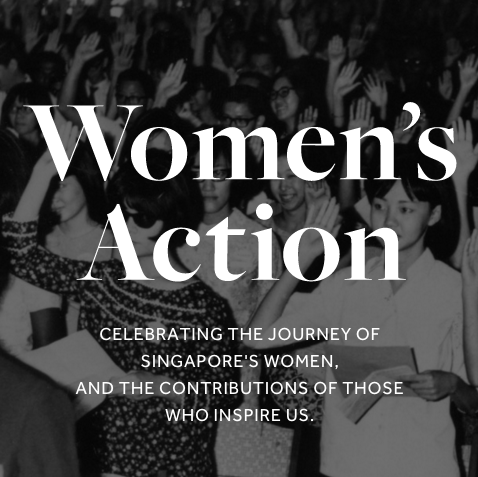
7. Women’s Action: honouring the women’s movement

Where was the women’s movement in the SG50 story? November saw the launch of Women’s Action, a richly immersive website telling the story of the struggle for gender equality in Singapore – its landmark achievements, its champions, and the deep impact of its work on ordinary people. Original videos and photo essays, carefully curated archival images and meticulously researched exposés will be released in phases until April 2016.

8. Mainstreaming anti-harassment norms and practices in workplaces

AWARE was delighted to work closely with the Ministry of Manpower in developing a Tripartite Advisory on Managing Workplace Harassment. Building on last year’s anti-harassment law, it sends a robust signal to employers that preventing and responding to workplace harassment is their responsibility. Catalyse Consulting, AWARE’s new corporate training arm, has begun training employers on implementing this Advisory, as well as on other issues such as unconscious bias and diversity & inclusion.

9. Working towards justice and equality in Muslim families

In late February, Gender Equality is our Culture (GEC), a collaborative initiative with Solidaritas Perempuan to promote gender equality in Muslim communities, co-organised a regional conference, drawing participants from Indonesia, Singapore and Malaysia to Yogyakarta, Indonesia, to share and develop strategies for achieving justice and equality in Muslim families in diverse contexts.

10. The Big Birthday Ball – our biggest fundraiser to date

We celebrated our 30th anniversary with our biggest and boldest birthday party ever! On 7 November, 500 friends and supporters gathered to raise $357,000 for AWARE’s work, including $117,000 for #asinglelove, our new collaboration to stand up for single parents. Building on our in-depth interviews with 50 single mothers and 25 children, the campaign will empower single parents and promote policies and attitudes that are inclusive to them.

We will continue to strive to advocate for a more equal society as well as better support for women in crisis in the coming year, and we hope that you will join us as well.

Thank you so much for your support once again. See you next year!

AWARE Update: December 2015


Check out the latest news and happenings at AWARE
December 2015
Any questions, comments or suggestions?

Send an email to aware@aware.org.sg

HELPLINE
1800-777-5555
(Mon – Fri: 3pm – 9:30pm)
AWARE Centre

Blk 5 Dover Crescent
#01-22
Singapore 130005

Tel +65) 6779 7137
Fax (+65) 6777 0318

www.aware.org.sg

Thank you for an amazing 2015!

Thanks to your generous support, our programmes and initiatives have met with great success – in promoting gender equality at home and in politics, as well as helping more women in crisis. Read on for our highlights of the year!

NEWS & VIEWS

AWARE welcomes new anti-harassment Advisory

A new Tripartite Advisory on Managing Workplace Harassment was released by MOM, NTUC and SNEF after a consultative process with AWARE. Follow the link for our comments or to read the Advisory here.

Gender equality in the public eye

Here are 10 reasons to support the Alliance of Like-Minded CSOs in Singapore (ALMOS) and their call to remove marital immunity for rape. ALMOS also submitted a Universal Periodic Review to the United Nations to highlight human rights issues in Singapore.

Women’s Action

Women’s Action chronicles the past 50 years of the women’s movement in Singapore. Take a look at the newest additions to the site: Politics and Work and Economy, with Migration set to launch on 13 January.

Membership Sign-Ups and Renewal

Not an AWARE member yet? Or is your membership expiring soon? This month is a great time to sign up or renew your membership! You will also receive an AWARE mug or t-shirt in addition to playing a role in promoting gender equality.

WHAT’S ON

Gender Justice: A Conversation For Change

Do you find it unfair that boys and girls are treated differently? If you’re between 14-19 and wish to speak up about issues related to gender, join other like-minded teens in a two-day youth forum on 23 and 24 January. Sign up by 11 January!

Wanted: Catalyse Consulting is hiring

Catalyse Consulting, a start-up corporate training enterprise of AWARE, seeks a Manager and an Executive to manage and build CC as a key provider of Diversity and Inclusiveness Training and Leadership Programmes for Women.

We Can! Change Maker workshop

Be a part of the We Can! campaign to end gender-based violence by coming for the workshop and becoming a Change Maker on 3 February. Sign up now!


AWARE welcomes new anti-harassment Advisory; Catalyse Consulting offers employers guidance and training

writingAWARE strongly applauds the newly issued Tripartite Advisory on Managing Workplace Harassment (the Advisory) from MOM, NTUC and SNEF, as well as the consultative approach of the Tripartite Workgroup in developing it.

“Workplace harassment is against the law,” said Corinna Lim, Executive Director of AWARE. “This Advisory confirms that employers must play a proactive role in preventing and addressing it.”

AWARE has long highlighted the prevalence and seriousness of workplace sexual harassment in Singapore. In 2015 to date, AWARE’s Sexual Assault Care Centre (SACC) has received 62 complaints about workplace sexual harassment. The figure in 2014 was 61.

“Usually, people facing workplace sexual harassment aren’t looking to punish the harasser,” said Corinna Lim. “They just want to see employers put a stop to it. If they have no confidence in the employer, they may suffer in silence, or just leave. But if an employer has proper policies and processes, it makes a real difference.”

Most major business centres – including Hong Kong, London and New York – make employers responsible for addressing harassment at the workplace.

The Advisory advises employers to develop a harassment prevention policy, to provide staff with information and training on workplace harassment, and to implement appropriate reporting and response procedures.

Catalyse Consulting – AWARE’s corporate training arm – has updated its anti-harassment curriculum to help employers understand and implement these recommendations effectively. This builds on AWARE’s long-standing experience with anti-harassment training, which AWARE began offering in 2010.

“Introducing anti-harassment measures for the first time can seem challenging to employers,” said Rachel Yeoh, Executive at Catalyse Consulting. “But we draw on our experience to make the transition a smooth one. The results are a more inclusive workplace – and more engaged employees.”


About Catalyse Consulting
Catalyse Consulting is the corporate training division of AWARE, which aims to inspire diverse and inclusive workplaces for people to maximise their full potential. Our international team offers Diversity & Inclusion training and consulting for public and private organisations in the region.

About the Sexual Assault Care Centre (SACC)
SACC is Singapore’s first and only specialist service supporting people who face sexual assault. It has seen more than 200 clients in 2015 so far compared to the 234 cases of sexual assault received in 2014.

SACC features a drop-in centre with an on-site social worker who can assist clients immediately (open Mon-Fri, 10am to 7pm), a helpline (6779 0282, Mon-Fri, 10am to midnight), WhatsApp chat (9781 4101, Mon-Fri, 10am to 7pm) and email support (sacc@aware.org.sg).

SACC’s services include free legal information from an experienced lawyer, therapeutic counselling by specialists, and Befriender services – where a trained befriender accompanies clients to the police station, hospital or court, providing support through processes which can often be difficult and intimidating

These safe, free and confidential services have supported hundreds of clients through their recovery after sexual assault.

10 reasons to end marital immunity for rape

law_smallAccording to the Penal Code, “She’s my wife” can be a complete legal defence to charges of rape (s375). TheAlliance of Like-Minded CSOs in Singapore (ALMOS), who collaborated in the submission of a shadow report to the UN for Singapore’s Universal Periodic Review, is calling for this to change. Here are ten reasons to support us.

  1. Everyone deserves protection from violence. Rape is violence. Spousal violence is unacceptable. No ifs, no buts, no excuses, no justifications.
  1. Horrifyingly, marital immunity applies to the Penal Code offence of sexual penetration of a minor under 16 (s376A). The immunity applies to minors aged 13 and above. We are not a humane society if our law makes special provision to excuse the rape of children.
  1. Rape within marriage is a reality, both globally and in Singapore. AWARE’s helpline and the Sexual Assault Care Centre encounter several such cases a year – and we believe many more go unreported precisely because the law says it’s not really rape. 
  1. Protection from violence shouldn’t depend on prior paperwork. The law recognises rape within marriage only if proceedings for divorce, separation or a personal protection order began before the attack. (More on the law.) 
  1. Consent matters. The government told the UN that this paperwork “clearly signal[s]that [a wife’s]consent to conjugal relations has been withdrawn”. Surely it should be good enough to say “no”, “stop”, “not tonight”, “I don’t feel like it”…? How can we promote a culture of consent and mutual respect if our law codifies this kind of disrespect?
  1. Marriage mustn’t nullify women’s fundamental rights. It’s 2015 – five decades since the Women’s Charter declared that spouses “shall have equal rights in the running of the matrimonial household.” The Penal Code should follow suit. The idea that marriage takes away the right to say “no” is out of step with societal values, which cherish equality and autonomy. 
  1. We should encourage reporting. In Singapore, as all over the world, most rapes gounreported. Marital immunity for rape contributes to a hostile societal atmosphere which suggests that rape won’t be taken seriously – deterring reporting.
  1. Lesser charges aren’t good enough. A rapist who attacks his wife may be convicted of voluntarily causing hurt (s321) or wrongful restraint (s241), as in the landmark case of PP v N (1999). But these carry much lighter penalties than rape or sexual penetration of a minor. We should call rape what it is. 
  1. Removing marital immunity means allowing due process. As with rape outside marriage – or other offences with no marital immunity – due process would apply. To secure a conviction, the prosecution must prove its case in a court of law.
  1. Singapore ought to keep pace with the rest of the world. Our marital rape law is out of step with many other countries, including other Asian countries such as the Philippines and Hong Kong. We have been repeatedly questioned about this at the United Nations. It is time to join the international community in recognising the human rights of women to live free of sexual violence.

For more information about sexual assault and AWARE’s specialist services for those who have faced sexual assault (including within marriage), visit the new Sexual Assault Care Centre website.

You can also find out more from No To Rape, a 2009 volunteer-led campaign against marital immunity for rape.

This article was first published on The Online Citizen on 16 December 2015.

The all new SACC website

sacc smallThe Sexual Assault Care Centre (SACC) at AWARE provides free services to those who have experienced sexual assault, helping them deal with their experiences and make decisions about their next steps.

We have an all new website with a refreshing new look, updated content and information about sexual assault and harassment, as well as how and where to seek help.

We also have a client referral form for social workers or counsellors to refer their clients to us, as well as a page for people who have faced sexual violence to share their experiences.

If you need help, or feel unsure about a sexual encounter and just want to talk, please call, WhatsApp, email or visit us. No appointment needed.

See below to get a feel of our new site, or simply click here to visit.

Screen Shot 2015-12-14 at 12.15.54 pm Screen Shot 2015-12-14 at 12.16.12 pm
Screen Shot 2015-12-14 at 12.16.31 pm

Media statement by ALMOS on the Universal Periodic Review

almosAbout ALMOS

The Alliance of Like-Minded CSOs in Singapore (ALMOS) is a group of civil society organisations (CSOs) that have collaborated to submit a Universal Periodic Review (UPR) to the United Nations in 2015, to highlight human rights issues in Singapore.

ALMOS is represented by AWARE, Function 8, HOME, Project X, Sayoni, Singapore Anti-Death Penalty Campaign, The Online Citizen, Think Centre, We Believe in Second Chances and WWF Singapore, who have synergised efforts to increase international and local awareness of civil and political rights of Singaporeans through a combination of lobbying and public engagement activities.

ALMOS’s advocacy will involve a lobbying effort surrounding the UPR mechanism, and a public education initiative in Singapore to draw attention to its overarching belief: That human rights matter to everyone, because it eradicates discrimination and fosters inclusiveness within our society.


MEDIA STATEMENT BY ALMOS ON THE UNIVERSAL PERIODIC REVIEW

As Singapore prepares to engage other United Nations member states on its human rights record at the Universal Periodic Review (UPR) in January 2016, it is clear that much more needs to be done by the government to properly address human rights issues, including to engage Singaporeans on the meaning of human rights in an inclusive society.

As such, in conjunction with World Human Rights Day on 10 December, the Alliance of Like-Minded CSOs in Singapore (ALMOS) has published its UPR submission to the United Nations and launched a public engagement campaign, starting with its Facebook page.

To date, ALMOS has engaged foreign embassies in Singapore to provide them with more informed perspectives on Singapore’s human rights situation at the United Nations. ALMOS has also met with Singapore’s Ministry of Foreign Affairs to advocate its primary positions and to highlight the major shortcomings in the government’s approach towards human rights. ALMOS acknowledges that the Singapore government is committed to the peer review process outlined to the UPR and is just as interested to play its role in engaging the government on these issues.

The UPR submission sets out ALMOS’ key recommendations to improve Singapore’s performance in human rights. Areas for improvement include: Systemic and long-standing issues in Singapore’s legal and justice framework; the government’s discriminatory policies on matters concerning families and minority groups; a near-exploitative work environment that impacts citizens and non-citizens alike; restrictive laws surrounding civic and political participation; and the practice of addressing our social and environmental security only on a needs basis. Underpinning all these issues are the lack of open access to information and the suppression of media interested in reporting on human rights violations.

The government has adopted a few measures as recommended at the United Nations, and there is reason to believe that some recent changes to Singapore’s legal framework, such as laws on the death penalty, indicates that the State is responding positively to UPR recommendations. However, it has not shown a commitment towards safeguarding human rights in Singapore in all aspects of life. Such rights seem to be doled out only in a discretionary and non-accountable way.

ALMOS is particularly concerned by the government’s overly-broad citation of “national security” in response to questions on the human rights impact of its practices. Citizens are not given a clear indication of the parameters of these security concerns; nor are they provided with convincing evidence that what the state practices is in proportion to the supposed security risks. The government has also not justified clearly to citizens or allowed open debate on why it cannot reveal simple statistics like the numbers detained under the Internal Security Act and the Criminal Law (Temporary Provisions) Act, or why individuals so detained are not rightfully accorded an open trial at any time for their alleged offence. It has also failed to explain how national security necessitates the turning away of refugees who have been persecuted in their home countries.

ALMOS believes that human rights should be a matter of intimate concern to each and every Singaporean. The government urgently needs a dedicated focus on human rights, rather than its current piece-meal approach, to make Singapore a more inclusive and harmonious society where progress and liberties go hand in hand.

Women’s Charter should be Family Charter

This post was originally published as a letter in The Straits Times on Dec 8, 2015. 

law-portalThe Ministry of Social and Family Development (MSF) recently conducted a public consultation on the Women’s Charter (“Proposed maintenance for ex-husbands to go ahead”; Dec 8).

The Association of Women for Action and Research (Aware) applauds MSF’s move in consolidating and publicly responding to the feedback received, as this promotes transparency and citizen participation in policymaking.

However, further changes to the Women’s Charter are needed.

First, spousal maintenance should be based on fairness and need, not gender.

Married individuals who take on domestic and caregiving work make economic sacrifices which boost their spouse’s earning power. These effects last even if the marriage ends. Spousal maintenance is only fair in such cases.

Most maintenance orders should still be made in favour of women, with 273,000 women out of the labour force due to family responsibilities, compared with 12,200 men.

But we should value and support anyone who performs domestic work and caregiving, regardless of their gender. Male caregiving should be encouraged, not devalued.

Second, for live-in partners experiencing domestic violence, MSF suggested that the Protection from Harassment Act (POHA) is an adequate substitute for personal protection orders (PPOs).

However, this is not sufficient. Unlike breaches of PPOs, breaches of POHA orders are not seizable.

If protection cannot be provided by the Women’s Charter regime, one solution could be to make breaches of POHA orders seizable.

The Women’s Charter regime should cover domestic violence rather than family violence. It should be possible for not just live-in partners but also tenants or domestic workers to obtain PPOs against anyone in their household.

We also question why MSF will allow under-21s to apply for PPOs only if they are or have previously been married. Everyone should be able to access protection from domestic violence, regardless of age or marital status.

Finally, we support the calls for the Women’s Charter to be renamed. Five decades ago, this law made ground-breaking advances for women, such as abolishing polygamy for non-Muslim marriages, confirming that women can hold property and ensuring we can keep our birth names on marriage.

Today, happily, we can take those matters for granted. Aside from spousal maintenance, the Charter’s family law and anti-violence provisions are gender-neutral. Thus, “Family Charter” is a more accurate and less polarising name.

Jolene Tan (Ms)

Senior Manager

Programmes and Communications

Association of Women for Action and Research

To fight domestic violence, strive for gender equality

crime-sceneBy Kokila Annamalai, We Can! Campaign Manager

The case of the woman who died at the hands of her husband demonstrates that rethinking gender roles is critical to preventing domestic violence (“Chinese national, 61, gets 10 years’ jail for strangling wife”; Nov 3).

The husband became violent towards his wife because he felt humiliated at receiving financial support from her. He was also angered that she refused intimacy after he woke her at 4am. Just after this refusal, he attacked and killed her.

Parts of this story are familiar. The Association of Women for Action and Research has encountered several cases of husbands turning abusive once their wife earned more than them or enjoyed career advancement.

As with this man, they used violence, sexual coercion and controlling behaviour to regain the power they believed they had lost in the relationship. These cases highlight how destructive gender roles can be.

First, in a mutually supportive relationship, a husband would celebrate his wife’s career success. But if his role and self-worth are tied to being the family’s chief breadwinner, then her achievements become threatening to his status.

Rigid gender norms of what a real man should be like in a relationship are harmful. They can transform a man’s natural distress at unemployment or career difficulties into an unreasonable resentment of the woman who is assisting him.

Second, in an equal relationship, spouses respect each other’s boundaries and right to decide whether to have sex at any one time.

But if a husband believes marital sex should primarily serve his needs, then his wife’s refusal of a sexual request may be seen as a denial of his entitlement, rather than something he should accept as part of mutual respect.

We are troubled that the violence here was presented as a fight, rather than an attack, and that the victim was described as provoking the killer.

How can a woman’s wish to stay in the same country as her daughter, her refusal to have sex after a 4am quarrel or her financial support of a husband in need be considered provocations?

If we are serious about addressing domestic violence, we must call it by its name and reject attempts to excuse or minimise its severity.

To reduce domestic violence, both state and society must emphasise the importance of gender equality within marriages and relationships. A woman’s financial success is a reason for her husband to feel glad, not ashamed.

We urge the Government to fully remove marital immunity against rape in the Penal Code, to send a strong signal that women have the right to decide whether to have sex with a spouse. Marriage is not blanket consent.

Fostering equal relationships based on mutual respect is critical to preventing domestic violence and ensuring the safety of all members of society.

This letter first appeared in TODAY Voices on 9 November.

Looking for single fathers for project on single parents

tampines HDBAWARE’s Research and Advocacy team is looking to interview single fathers about their experiences accessing public housing after divorce.

Those who meet the following criteria are eligible to participate in the study:

  • Singapore citizen or PR
  • Divorced, separated, never married, widowed or with spouse in prison
  • Has care and control of child(ren)
  • No age limit
  • Qualifies for public housing, or has ever applied for public housing

This research project will examine issues single parents face, such as:

  • Long waiting periods are often involved in applying for a new flat
  • Complicated housing regulations which are always subject to change adds to the sense of confusion
  • Lack of housing stability that can adversely impact children of such divorces

The recorded interview will be conducted at a time and place of your convenience in December 2015. We will reimburse interviewees with a token sum of $30 at the end of the interview.

If you are a single father who meet the eligibility criteria and would like to share your experiences with us, or if you have any questions about this project, please sign up here or email Megumu at associate@aware.org.sg.

Thank you! Your participation in this project will help us better support single parents in future initiatives.