Year: 2015

Launch of WomensAction.sg – a celebration of the women’s movement in Singapore

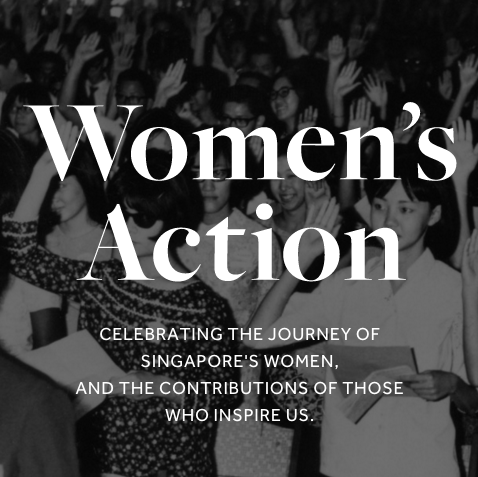
women's actionAmid SG50’s stories of national progress, one major facet of Singapore’s achievements – the struggle for women’s rights and gender equality – will soon be brought under a spotlight.

Last week, AWARE released an exciting video preview of Women’s Action, a richly immersive website telling the story of the women’s movement in Singapore – its landmark achievements, its champions, its past and ongoing struggles, and the deep impact of its work on the daily lives of ordinary people.

The visually sumptuous website, which goes live on 7 November, presents this history with:

  • Up-close video interviews with figures as diverse as MP Tin Pei Ling and the ‘Founding Mother of Social Work’, Ann Wee.
  • Beautiful photo-essays exploring a wide range of experiences, from the personal dimensions of civil society work to the challenges of navigating a transnational family.
  • Meticulously researched articles across nine key themes, featuring striking archival photographs and interviews with over 60 individuals who have been part of the women’s movement.
  • An informative timeline capturing key milestones in the last 50 years of the women’s movement.

Last week’s video preview, ‘The Origins of AWARE’, features an interview with AWARE’s founding members Lena Lim and Margaret Thomas, about the events leading to the formation of AWARE in 1985.

Material under each theme will be released in stages over the course of the next five months, beginning with Civil Society and Education on 7 November. All videos featured can also be found in AWARE’s YouTube channel.

“This website is a much-needed permanent and easily accessible record of Singapore women’s struggle for equality,” said Margaret Thomas, founding member of AWARE and current board member. “It’s so easy for details of history to be forgotten.”

“Many have heard of the Women’s Charter, but how did it get passed? What is the backstory behind the legal recognition of family violence?” said Jolene Tan, Programmes and Communications Senior Manager of AWARE. “This website showcases these and other struggles for greater gender equality.”

The first three themes, two videos and a photo essay will be released on 7 November at womensaction.sg and AWARE’s Facebook and Twitter sites. Follow them for the latest release of this initiative.

Coordinated by AWARE and put together by a team of writers, researchers, photographers and videographers, with website development by Minitheory, this project is supported under the Singapore Memory Project’s irememberSG Fund, as part of the SG50 celebrations.

This post was originally released on 4 November as a press release.

AWARE’s Big Birthday Ball celebrates 30 years of gender equality advocacy in Singapore

On 7 November, AWARE hosted the Big Birthday Ball – its fifth and biggest ever fundraising gala. 500 guests came together at the Shangri-La Hotel to celebrate AWARE’s 30th birthday, and to support its work assisting women in crisis and promoting gender equality.

This stellar evening of food and entertainment was hosted by Cultural Medallion winner Ivan Heng and actor/director Oon Shu An. Popular parody troupe Chestnuts and Singapore’s favourite a cappella group Vocaluptuous joined them on stage.


Photo by: Jacqueline Choo | Invertigo Studios

The Big Birthday Ball has raised a total of $357,000 for AWARE’s work in gender equality, of which $117,000 will go to #asinglelove, AWARE’s new collaboration to stand up for single parents.

Together with Daughters of Tomorrow and Kinetic, #asinglelove will nurture a strong peer support network of at least 100 mothers, offering mutual assistance and access to services, skills training, employment mentoring and more. An accompanying high-profile communications campaign will promote inclusion and equality for single parents.


Photo by: Jacqueline Choo | Invertigo Studios

The evening also saw the crowning of the AWARE and Alamak! Award winners for 2015. The AWARE Awards recognise individuals and organisations that promote gender equality in Singapore. There are three AWARE Award winners this year:

  • Aidha received the Financial Empowerment – NGO Award.
  • Citi received the Financial Empowerment – Corporate Initiative Award.
  • Student group, The G Spot, received the Student Initiative Award.

Do scroll down for further details on the winners!

The popular Alamak! Award, ‘honouring’ the public’s favourite sexists, was also announced. After six weeks of online polling, the anti-mother sexists of GE2015 have pulled 78% of the total votes, as the public rallied together to give them a unified Alamak!

This collective nomination included NSP’s Cheo Chai Chen, who called Tin Pei Ling’s new mother status a ‘weakness’, Mothership’s Belmont Tay who derided Kevryn Lim’s modelling photos as ‘unmotherly’, PAP’s Lim Boon Heng’s suggestion that women ‘put mother-child relationships at risk’ when they stand for elections, and TODAY’s headlines labelling SDP’s Jaslyn Go as ‘mother-of-two’ while male candidates were introduced by profession.

Click here to see more photos of this spectacular event.


AWARE Awards 2015 receipients

Financial Empowerment: NGO – Aidha

AidhaForeign domestic workers have a marginalised status in Singapore – labour laws don’t adequately protect them, and many women don’t get their day off every week. Sometimes they are tied to abusive employers due to their financial circumstances.

Aidha seeks to help them escape the cycle of poverty with financial empowerment courses that impart skills such as financial and computer literacy, as well as entrepreneurship and business management.

Aidha has taught over 2,700 women since 2006 – 714 in 2014 alone. In 2015, they aim to take in 1,000 new students. For many students, Aidha’s courses are a rare chance to develop not only financial skills, but also self-confidence, as well allowing them to enjoy a sense of community. The skills they learn enable them to manage their own finances and break out of poverty by developing and meeting savings goals and achieving long-term financial plans. Over 70% of Aidha’s students succeed in either opening small businesses of their own or making investments in productive assets, such as land and livestock.

Financial Empowerment: Corporate Initiative – Citi

CitiAs Singapore’s population ages, it becomes more urgent than ever to meet the needs of older people. Lower-income older women are one of the most financially vulnerable segments in Singapore. These women are often caregivers of both their children and aged parents, and their financial priorities may lie within their family rather than themselves. As a result, they may run into financial problems later in their silver years, due to a lack of savings for themselves and their longer life expectancy.

Tsao Foundation brought these findings to Citi, and they collaborated to develop a long-term strategy and vision for large-scale and sustainable financial literacy education. Citi drew on its in-house expertise to inform the curriculum, and offered financial and material support to raise funds and awareness to ensure the successful launch of the programme in 2008.

The Citi-Tsao Foundation Financial Education Programme for Mature Women has built capabilities for numerous lower-income women aged 40-60 to understand their roles and relationship dynamics within their families, and has equipped them with basic financial knowledge and skills to work towards retirement adequacy. Since 2008, the programme has reached over 6,000 women. In 2012, People’s Association Women’s Integration Network (PA WIN) adopted the programme with the target to offer the programme at every community centre in Singapore. The programme is available in English, Malay and Mandarin, and has been replicated in Indonesia and Malaysia.

In 2013, an impact assessment from a study of 1,360 participants who completed the programme from August 2008 to August 2012 concluded that the programme has been effective in improving the lives of the mature women through higher financial literacy and positive financial behaviour change.

  • % who started a financial plan for retirement after programme : 50.4%
  • % who are more knowledgeable of financial products that suit their needs: 49.3%
  • % who felt more empowered on money matters: 46.5%
  • % who started building their emergency fund at end of course: 32.8%

Student activism – The G Spot

G spot logoWhile many others spend their university days studying or socialising, the students behind The G Spot work hard to advocate gender equality and LGBT inclusion on campus. Founded in 2013, The G Spot adopts an intersectional approach, recognising the links between different forms of discrimination, and how attitudes to gender and sexuality are closely related.

The G Spot has organised innumerable events on gender equality and LGBT inclusion, reaching hundreds of students and members of the public, often in collaboration with and support of NGOs and other student organisations. From intimate sharing sessions to large expert panel discussions, some notable events include an interfaith discussion on sexuality, visual arts workshops for migrant domestic workers, and a successful fundraiser for a shelter for transgender people in crisis.

The G Spot has led the way in on-campus student activism and organising for student peer support and resources. With the student government, they made newspaper headlines by successfully lobbying for gender-neutral accommodation on the Yale-NUS campus, sparking national discussions on gender, youth and sexuality.

After successfully making waves not only on campus, but also in the public eye at only two years old, we are excited to see what kind of activism The G Spot will nurture in the years to come.

Equality among adults begins with kids

inclusive communityBy Teo You Yenn, Board member

In past decades, we have seen more gender equality in education. Gender gaps in terms of mean years of schooling and as highest levels of education attainment have narrowed. In younger cohorts, we see no significant difference in overall education outcomes.

Yet, in the university classroom, I still see some stereotypical differences in how women and men participate. Beyond the classroom, gendered differences persist in the “choices” young women and men feel they should make about study, careers and family. Young men continue to feel great pressure to pursue breadwinning as their main role and caring for children as secondary; young women still recognize that they have primary responsibilities in the home, even as they are also increasingly expected to do wage work.

How can this be? How can we see increasing educational equality and persistent inequalities between men and women in educational, familial and work environments? My past research has focused on how structural conditions—differences in the support workers who are mothers or fathers receive, for example—influence the choices people can and cannot make.

During the course on the Sociology of Gender that I teach, students have alerted me to how their childhood experiences shaped how they think, speak, move and engage with the world. In particular, they have been taught that girls and boys are different, and have different standards for appropriate behaviour. Boys are supposed to be stronger than girls; boys are expected to be somewhat rough while girls are expected to be gentle and docile.

As outmoded as these lessons in gender stereotypes may seem, when I asked students to write reflection notes about their school experiences, three key themes emerged.

First, gender was pervasively used to organise students, with lasting unintended effects on their self-image.

Students recalled being either divided up or paired together on the basis of gender. They were sometimes teamed up with kids of the same gender and other times with kids of different gender. In both cases, gender was the basis of organization: if pairs were to be boy-girl, then all pairs in the class would be boy-girl; if girls and boys in the class are to be separated, then all girls would form teams with girls and all boys with other boys. Teachers sometimes made clear that gender was the principle for division; for example, a girl might be paired up with another girl and be told that if they make too much noise that they would be “punished” by being paired to a boy.

Beyond forming lines and teams, students recalled segregation around activities. Particularly at older ages—secondary school and junior college—they recalled being divided up for Physical Education. Beyond segregation, there was differentiation: girls and boys played entirely different games. In the process, certain sports became marked as “girls’ sports” (e.g. netball) and others as “boys’ sports” (e.g. soccer).

Teachers sometimes openly signaled that they expected different things from kids depending on their gender. Boys were more frequently asked to help with tasks like moving tables. Girls received more attention from teachers in Design and Technology classes while boys were more often ignored when they asked for help.

As a teacher, I empathise with the need to sort students into groups to facilitate activities. Gender is convenient, and most teachers probably do not intend for girls and boys to feel that they have radically different capabilities as a result. Nonetheless, that students remember these seemingly trivial details so vividly years later suggest that, intended or not, students did pick up on the message that girls and boys have different capabilities. Girls were far more likely to be given the impression that teachers expected less from them in terms of physical strength; boys were more likely to be given the impression that they had to be technically competent in order to be “real” boys. One student wrote about how, as someone transitioning from an all-girls to a co-ed school, she was initially surprised that tasks like moving tables were now someone else’s role rather than all students’ responsibility; over time, she too took for granted that she was less capable at helping than the boys.

A second theme that emerged in my students’ writings, particularly by the women, reflects their strong memories of bodily discipline.

In every school in Singapore, students wear school uniforms that are already gender-specific. Boys wear shirts and pants while girls wear blouses and either pinafores or skirts. This difference sets up different items of clothing to police. Importantly, there appears to be more policing of skirts than pants. Teachers and girls battle over the length of their skirts. Teachers are daily vigilant, while girls find creative ways to lengthen and shorten their skirts to pass inspection at one time and to satisfy their own preferences at another. Students point out that boys in fact also modified their clothes—tapering their pants, for instance, for a “skinnier” look. Nonetheless, no one recalled pants being contentious in the way skirts were.

As students got older, they were also policed on their bras. Teachers, including men, made remarks about bra straps and the colour of bras under girls’ blouses, creating intense feelings of shame.

Beyond clothing, the disciplining of the body also focused attention on comportment “appropriate” to one’s gender category. Boys received the message that they should be physically strong. Women students recalled being told to smile more, to be gentle; they heard teachers praise students for being “sweet” or “pretty.”

Girls were constantly reminded to sit with their legs closed; girls from all-girls’ schools reported slightly more freedom, but only insofar as there were no boys around. This taught them that gendered performances were about “protecting” themselves from boys. Boys may not have received such disciplining in their postures, but they are an important part of this equation: in this schema, they are cast as potential aggressors.

Finally, the violation of gender norms came with negative consequences.

Shame was the major tool. Teachers used it in ways that elicited self-policing and mutual disciplining. A student recalled being told by a teacher that girls should not get too sweaty and smelly because boys would not like them; another remembered being told that girls should not be too noisy. Several students recalled heterosexual teasing—in which befriending people across gender lines invited taunts about them being somehow romantically involved. These came both from teachers and other kids, and caused them to back away from cross-gender friendships.

We know from sociological research that boys are less constrained in ways that may be harmful insofar as they do not receive adequate instruction on the need for respect for others’ space and agency; adults’ lower expectations of their behaviors, often through the “boys will be boys” lens, can also lead to lower levels of academic performance and self-control. On the other hand, we also know that adolescent girls and young women suffer disproportionately from issues of low self-esteem and negative body image.

In contemporary Singapore, many now speak of the importance of gender equality. Some claims can be made about the strides we have made as a society. Yet, significant differences persist in the roles men and women play at home; inequalities persist in the realm of work in terms of positions, trajectories, and salaries; and stark unevenness persists in the realm of public service and formal leadership. These differences are often attributed to varying “tastes” and “choices.” It may certainly be true that women and men are drawn to different practices. But “tastes” and “choices” are social phenomenon—they are cultivated and constrained by social forces; they are articulated in the face of differential social options and conditions.

My students’ reflections reveal the depth of gender differentiation in schools. They signal that much is happening with kids, to kids, in these important institutions, that shapes them to think of themselves as having limited options: “I can’t do this because I’m a girl; I can’t be that because I’m a boy.”

To address gender equality in the “adult” world, we must rethink the environment we provide to children. Schools and teachers have crucial roles to play in disrupting, rather than perpetuating, the gender stereotypes that harm and limit our kids. Our youth have rich potential for capacities in a multitude of areas. If we want a better world for our kids, as we imply we do when we open up educational opportunities to all, we have to make more conscious effort to transcend the limitations of our own experiences. We must do our best to nurture all their talents, not just those that fit adults’ narrow imaginings of appropriate gender roles.

Teo You Yenn is a board member at the Association of Women for Action and Research (AWARE), Associate Professor in Sociology at the Nanyang Technological University, and author of the book Neoliberal Morality in Singapore: How family policies make state and society (Routledge, 2011).

This article first appeared in The Online Citizen on 29 October 2015.

Atmosphere of fear prevents pregnant maids from seeking help

pregnant_silhouetteBy Goh Li Sian, Research and Advocacy Coordinator

We were concerned to read that a foreign domestic worker was arrested after giving birth to a stillborn baby (“Maid hides her stillborn baby in drawer”; Oct 21).

According to Article 12 of the Convention on the Elimination of All Forms of Discrimination Against Women, to which Singapore is party, all pregnant and postnatal women should have access to appropriate support and healthcare.

We are concerned that societal prejudice and labour regulations create an atmosphere of fear and stigma that prevents pregnant and postnatal domestic workers from receiving the support that they need.

Pregnancy and childbirth are prohibited under a domestic worker’s work pass. Under the law, employers are technically required to report pregnancies to the Ministry of Manpower, leading to cancellation of the work permit and the worker’s deportation.

It is, therefore, very hard for a domestic worker to raise the matter of her pregnancy, as her livelihood is at risk.

Moreover, the idea of a domestic worker’s pregnancy is negatively perceived by Singaporeans. A domestic worker may fear that raising the issue will trigger anger and abuse from her employer.

In view of this, the worker’s attempts to hide her pregnancy and birth were likely the acts of someone who felt backed into a corner with no other options. We question whether it is fair to further penalise a woman in this position with the threat of prosecution under criminal law.

Moreover, stillbirth is frequently a physically and emotionally traumatising experience, which can lead to post-traumatic stress disorder in subsequent pregnancies.

A woman who has endured this urgently needs physical and mental healthcare, without the further trauma of arrest and criminal investigations into an understandable act of desperation.

This is not the first reported case of a foreign domestic worker becoming pregnant and attempting to conceal her childbirth, and it likely will not be the last.

In 2010, it was reported that 100 workers are deported each year (“100 pregnant maids sent home a year”; Sept 29, 2010). Some women may also turn to black-market products in an attempt to terminate their pregnancy themselves, which is dangerous.

We urge the Government to consider the stigma and harm that the policy of pregnancy deportation creates. At the very least, pregnant and postnatal women who find themselves in this difficult situation should not be subject to criminal proceedings as a result.

This letter first appeared in the Straits Times Forum on 28 October 2015.

AWARE Update: October 2015

Check out the latest news and happenings at AWARE
October 2015
Any questions, comments or suggestions?

Send an email to aware@aware.org.sg

HELPLINE
1800-777-5555
(Mon – Fri: 3pm – 9:30pm)
AWARE Centre

Blk 5 Dover Crescent
#01-22
Singapore 130005

Tel +65) 6779 7137
Fax (+65) 6777 0318

www.aware.org.sg

Unsubscribe

30 years: Blazing a trail

On 7 November, AWARE’s Big Birthday Ball was hosted in conjunction with our 30th birthday. 500 guests raised $357,000 in support of AWARE’s work in promoting gender equality. Thank you so much for your support!

NEWS & VIEWS

Women’s Action

Amid SG50’s stories of national progress, one major facet of Singapore’s achievements, previously overlooked, has now been brought under a spotlight with Women’s Action – a richly immersive website telling the story of the women’s movement in Singapore.

AWARE’s submission to the Women’s Charter consultation

AWARE was recently invited to submit recommendations to the proposed amendments of the Women’s Charter (Amendment) Bill 2016 through the public consultation portal REACH. We have submitted our comments. Read them here.

Gender equality in the public eye

Read our letters about how Singaporean women’s representation in politics is lacking, how the atmosphere of fear prevents pregnant maids from seeking help, and how gender equality should be taught to kids in schools.

Gender Justice: A Conversation For Change

Do you find it unfair that boys and girls are treated differently? If you’re between 14-19 and have a strong will to speak up about issues related to gender, join other like-minded teens in a two-day youth forum.

WHAT’S ON

RALLY: Arts Fest 2015 highlights

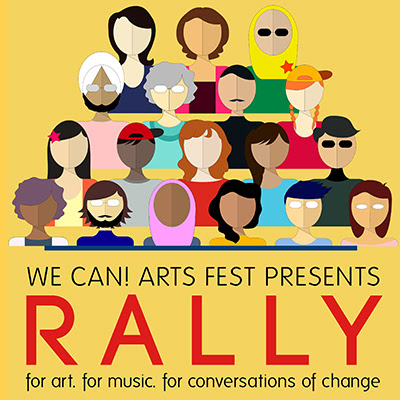
A lineup of amazing events is in store at RALLY on 6 December at the Singapore Art Museum! A sneak peek: Author Neil Humphreys, also an anti-violence ambassador, will be making a speech to call on other men and boys to take a stand against violence.

We Can! Change Maker workshop

Be a part of the We Can! campaign to fight gender-based violence by coming for the workshop and becoming a Change Maker on 18 November. Sign up now!

Be an intern with AWARE!

Are you enthusiastic about ending gender inequality in Singapore? Would you like to experience life in an advocacy organisation? Learn more about our work by contributing to it firsthand through an internship with us.

Unclouding the Haze: What People Can Do

Singapore-On-World-MapWhere does the haze come from? How does haze affect other, pre-existing inequalities in South-East Asia and beyond? Most importantly, what can we do?

Join AWARE at 4 pm on Saturday, 31 October as we hold a panel discussion and community meeting. Featuring speakers Ang Peng Hwa, Vaidehi Shah, and Erik Meijaard, the panel will discuss the links between climate change, gender, and other vulnerabilities, as well as strategies to combat the haze. Following the panel discussion, members of the audience will be split up into breakout sessions to strategise ways different individuals can play their part.

Professor Ang Peng Hwa is a Professor at NTU’s Wee Kim Wee School of Communication and Information. He is the co-founder of Haze Elimination Action Team (H.E.A.T.), a ground-up initiative to fight haze and provide clean air for Singapore. Formed in 2007, H.E.A.T. is seeking to sue and boycott the companies involved in starting fires in Indonesia.

Vaidehi Shah is a journalist at Eco-Business, where she covers a range of sustainability issues including agriculture and forestry, policy and finance, climate change, and sustainable development. Prior to that, she managed outreach and environmental projects at local non-profit Singapore Environment Council and has also done policy work at the National Climate Change Secretariat. Vaidehi studied Geography at the National University of Singapore, and Gender and International Development at the University of Warwick.

Erik Meijaard is a conservation scientist coordinating the Borneo Futures initiative and an Honorary Associated Professor at the University of Queensland. Based in Indonesia, he will be Skyping in to the event.

The panel discussion will be moderated by Dr Vivienne Wee, AWARE’s Research and Advocacy Director.

It will be followed by breakout sessions in which participants discuss how they can get involved with efforts to stop the haze. These breakout sessions will be guided by the People’s Movement to Stop the Haze’s (PM.Haze) Blueprint on a haze-free future, presented by Tan Yi Han, President, PM.Haze and Benjamin Tay, Forum Director, People’s Forum on Haze.

Programme:

4.00 – 4.30 pm Speaker presentations
4.30 – 5.10 pm Open discussion
5.10 – 6.00 pm Breakout sessions
6.00 – 6.30 pm Summary

Please click here to record your attendance at this event.

Click here to know more about this event.

Women’s representation in politics here still lacking

businesswomenNEWBy Jolene Tan, Programmes and Communications Senior Manager

Oct 5 was a big milestone for Singapore. We celebrated 20 years of commitment to gender equality after acceding to the Convention on the Elimination of All Forms of Discrimination Against Women (CEDAW) in 1995.

Despite some commendable steps towards gender equality, one area where Singapore is still lacking badly is political leadership, as became evident in the recent Cabinet appointments.

Disappointingly, only five of the 37 office-holders are women, making up 13.5 per cent of Cabinet. Only one full Minister, out of 20, is a woman. CEDAW recommends that women’s political representation should be at least 30 per cent to have a real impact on political style and content of decisions.

The Diversity Action Committee, which aims to increase representation of women directors on corporate boards, clearly recognises the need for gender diversity. The same should apply to the most important decision-making institution in Singapore, the Cabinet. Of course, it is unreasonable to expect 50-50 representation in Cabinet at this stage, when about a quarter of Parliament is female.

But after 20 years of CEDAW, it is fair to expect the Government to develop a specific roadmap for addressing the barriers to women’s participation in politics and ascension to leadership roles.

One issue that may be worth investigating is the barrier of unconscious bias. Unconscious bias affects every area of our lives. We naturally gravitate towards people who look like us, think like us and come from backgrounds like ours. Everybody has unconscious bias, but it is crucial to manage this so it does not affect important decision-making processes.

Research has shown that while people believe they would not reject a female job applicant based on gender alone, many employers have unconscious biases that respond more favourably to the same resume when it has a male rather than a female name.

Gender stereotypes, in many cases unconsciously held, are still prevalent in the political domain. From one politician calling his rival’s new-mother status a “weakness”, to another politician’s statement that fielding women “puts mother-child relationships at risk”, one does not have to look far for pervasive attitudes against women’s participation in public life.

Many corporations also suffer from a lack of gender diversity, but, crucially, have taken steps to implement solutions. Multinational companies such as Google and Facebook set targets for women’s advancement by acknowledging unconscious bias. Other corporate initiatives include staff training in unconscious bias, creating processes to remove biases through structured interviews and gender-diverse panels, and providing mentorship schemes.

The Government is answerable not only to shareholders, but to a diverse body of citizens with a rich variety of experiences. It is time for the Government to show leadership by setting up its own Diversity Action Committee, and take steps towards finally fulfilling the 20-year promise of CEDAW.

This letter was first published in TODAY Voices on 10 October 2015.

Dialogue Session: The Lines of Consent

YAM LOGOJoin Yes, All Men and SGRainbow in talking about consent in social and sexual settings. Whether it’s intimacy in a long-term relationship or chatting someone up at a bar, how do we express our boundaries and needs, while showing respect for others?

Consent can seem complex and difficult to navigate. Will saying something when we’re uncomfortable leave our partners feeling let down? How do we keep flirting fun and friendly without crossing any lines?

Bring a friend along, and share your thoughts and stories in a safe, supportive and non-judgmental space. Explore practical strategies for seeking, giving and withdrawing consent across different scenarios.

Details

Date: 17 October 2015 (Saturday)
Time: 7pm – 9pm
Venue: Registered participants will be notified of the venue via email

This session is open to all queer men aged 18-25 years old.

Register here.SGRainbow Logo FULL

AWARE Update: September 2015


Check out the latest news and happenings at AWARE
August 2015
Any questions, comments or suggestions?

Send an email to aware@aware.org.sg

HELPLINE
1800-777-5555
(Mon – Fri: 3pm – 9:30pm)
AWARE Centre

Blk 5 Dover Crescent
#01-22
Singapore 130005

Tel +65) 6779 7137
Fax (+65) 6777 0318

www.aware.org.sg

Unsubscribe

Vote for your favourite sexists!

The Alamak! Award is back again! You have two votes and four amazing candidates to choose from. Voting is open till 22 October. You know what to do!

Big Birthday Ball 2015

Join us as we strive towards gender equality! We will be celebrating our 30th anniversary at Shangri-La hotel, 7 November 2015. It will be a spectacular night hosted by Ivan Heng and Oon Shu An. More details are in our microsite.

NEWS & VIEWS

Gender equality in the public eye

Read our open letter to the PM and DPM requesting that the Cabinet be made of 22% women to reflect the percentage of female PAP MPs elected. Also check out our infographics celebrating 20 years of CEDAW and illustrating the difference between maternal and paternal leave.

Call out for volunteers for AWARE Big Birthday Ball

Do you enjoy dressing up, interacting with people, and the excitement of delivering a memorable event? We need you to help us out in our annual fundraising gala on 7 November!

Dialogue Session: The Lines of Consent

Whether it’s intimacy in a long-term relationship or chatting someone up at a bar, how do we express our boundaries and needs while showing respect for others? Join Yes, All Men and SGRainbow in talking about consent.

WHAT’S ON

RALLY: Arts Fest 2015 highlights

Human Library will feature three unique individuals about experiences that are often made invisible. Learn how to keep the conversation going at the Big Words, Small Talk panel, especially when people try to excuse sexist remarks by saying ‘It’s just a joke!’. Join us at RALLY on 6 December!

We Can! Change Maker workshop

Be a part of the We Can! campaign to fight gender-based violence by coming for the workshop and becoming a Change Maker on 31 October. Sign up now!