
Year: 2016

Human Rights Day seminar 2015: Progress and Perspectives for Women’s rights in Singapore and ASEAN

human-rightsA guest blog post by Camille Neale

On 10 December 2015, in celebration of the annual international human rights day, the Delegation of the European Union to Singapore hosted a seminar on “Progress and Perspectives for Women’s rights in Singapore and ASEAN”. The seminar explored the progress of women’s rights since Singapore’s accession to CEDAW in 1995, with a particular view to the future – what still needs to be done, what are the current challenges and what are the challenges that may emerge down the line. Particular issues that came to the fore included Singapore’s marital immunity for rape, the danger of increasing extremism for women, and the lack of government data in Singapore. Speakers included Dr. Noeleen Heyzer, the former under-secretary general of the UN and Dr. Vivienne Wee and Jolene Tan from AWARE.

In the keynote speech, Dr. Heyzer cited a lack of commitment as the biggest barrier to advancing a women’s rights agenda today. She asserted that the goal now is to create a world fit for women, one that values their experiences and their voices. To achieve sustainable development we must address women’s rights.

The first panel looked at Singapore’s progress since ratifying CEDAW. The speakers were Ms. Malathi Das, President of Singapore Council of Women’s Organisations (SCWO), Ms. Jolene Tan, Programmes and Communications Senior Manager of AWARE, and Dr. Anamah Tan, Lawyer at Ann Tan & Associates. Ms. Das started off by tracing the positive gains in women’s rights in Singapore, namely the increasing movement towards the removal of the reservations – a good sign for advocacy organisations. SCWO’s “wishlist” of issues to be addressed for women’s rights include the gender wage gap, women in leadership and a need for more participation by women’s groups in dialogue with women. Ms. Tan’s presentation underlined particular issues in Singapore, and the areas yet to see progress. A major problem is the harmful way that women’s roles are construed in public policy. Patriarchal traditionalist views of women’s reproduction continues to dominate in Singapore; domestic care labour continues to be seen as women’s work, and the capitalist system relies on women’s designation as carers. Dr. Tan spoke to the difference between progress and sustainable progress – if progress is not sustainable then there will be a regress.

The second panel dealt with emerging challenges to women’s rights in the ASEAN region. Speaking on the panel were Ms. Laura Hwang, Singapore’s government representative for women’s rights on the ASEAN commission for the promotion of women and children’s rights, Ms. Braema Mathi, President of MARUAH, and Ms. Halijah Mohamad, Attorney in practice and managing director of Halijah Mohamad & Co. Issues raised on this panel included the threat of climate change, which impacts will be borne disproportionately by women, increasing radicalisation, and violence against women using technology. Ms. Halijah emphasised in particular the issue of certain interpretations of religious law as a major challenge to women’s rights.

The last panel dealt with perspectives of women’s rights from Europe and Asia. On the panel was Dr. Vivienne Wee, a founding member of AWARE and the current director of research and advocacy, H.E. Berit Basse, Ambassador of Denmark to Singapore, and Ms. Thelma Kay, the former senior advisor to the Ministry of Community development, Youth and Sports. H.E. Basse spoke about some of the measures taken in Denmark to improve women’s lives, though she noted that Denmark too continues to face the problem of a highly segregated gender market. Dr. Wee talked about the emergence of the ‘Asian Values’ concept and its impact on the women’s rights movement. Ms. Kay suggested that we need to replace patriarchal ideology with socio-cultural norms grounded in social justice in order to be a more egalitarian society. All speakers brought up the issue of unconscious biases as a major issue to tackle.

The seminar concluded with remarks from H.E. Chan Heng Chee who responded to questions raised during the seminar, in particular on the issue of unconscious bias.

As Dr. Heyzer stressed in her opening address, there has been progress, but that progress is still not enough. The frameworks to promote women’s rights are there, but there is not enough action. There was also agreement on the need for male champions to push a women’s rights agenda. Although progress in women’s rights has largely been achieved by women, it is still men for the most part who hold positions of power and influence. Men need to accept responsibility in promoting change as well.

About the author: Camille Neale is currently an intern at AWARE.

AWARE Update: January 2016


Check out the latest news and happenings at AWARE
Is this email not displaying correctly?
View it in your browser.
Check out the latest news and happenings at AWARE
January 2016
Any questions, comments or suggestions?

Send an email to aware@aware.org.sg

HELPLINE
1800-777-5555
(Mon – Fri: 3pm – 9:30pm)
AWARE Centre

Blk 5 Dover Crescent
#01-22
Singapore 130005

Tel +65) 6779 7137
Fax (+65) 6777 0318

www.aware.org.sg

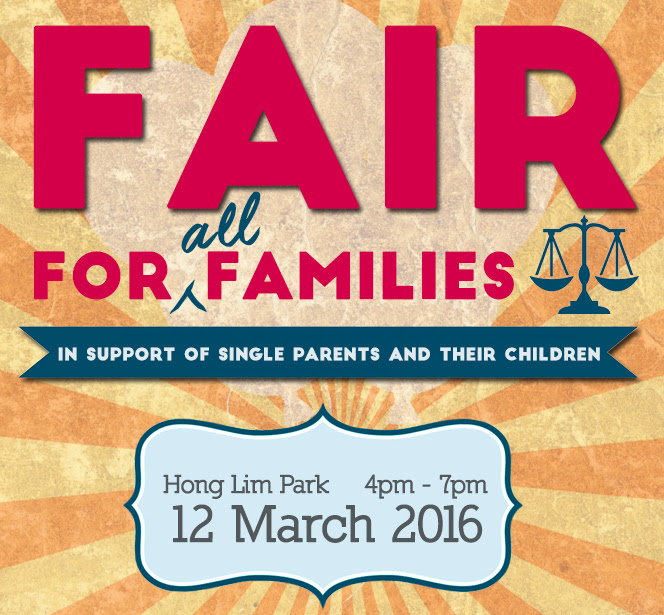
Save the Date: Fair for All Families

This March, AWARE will be organising a Fair for All Families in support of single parents and their children! Join this extra fun, extra loud fair where ALL kinds of families are embraced, or help out as a volunteer and/or corporate sponsor. 

NEWS & VIEWS

UPR and ALMOS Press Conference

Following the Universal Periodic Review (UPR), ALMOS held a press conference that addressed some of the questions raised about human rights in Singapore. A full recording of the press conference and articles by Sayoni and HOME are included here.

Gender equality in the public eye

AWARE wrote a letter about how LGBTQ persons are especially vulnerable to exploitation and was featured two Channel 8 news segments about flexible working hours and divorce trends.

Catalyse Consulting Launches New Website

AWARE‘s new corporate training arm, Catalyse Consulting, has a brand new website! We offer training and workshops for organisations in topics such as workplace harassment, unconscious bias and diversity.

WHAT’S ON

Pre-Budget Forum 2016

Join us on 18 February (7.30 to 9.30 pm) to give your comments on AWARE’s recommendations for the Singapore Budget 2016. Please RSVP here if you would like to be a part of this Forum.

Body/Language Workshop for Youth

Body/Language is a creative writing workshop that gives participants the skills and the space to uncover and express their identities. We have two workshops coming up: 27-28 February (specially for the youth) and 12 March!

We Can! Change Maker Workshop

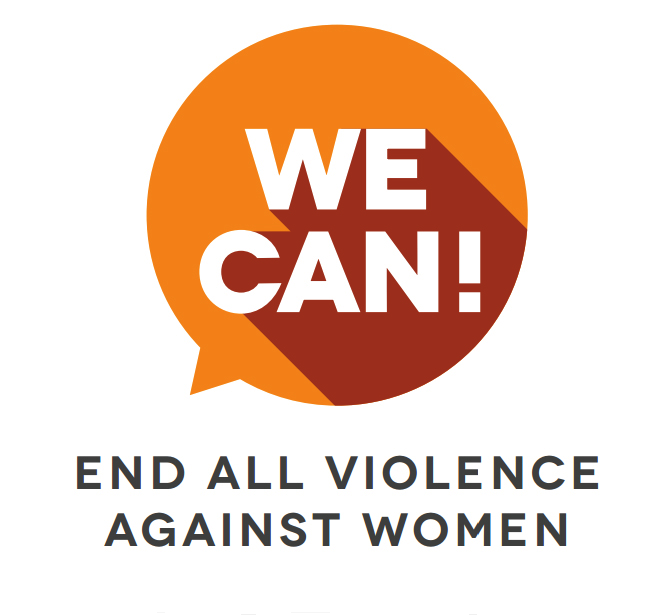
Be a part of the We Can! campaign to end gender-based violence by coming for the workshop and becoming a Change Maker on 12 March. Sign up now!

Non-profit social campaign Breast-Feeding Friends changing social stigma

A guest blog post by Alison Kuah bff

Breast-Feeding Friends (BFF) is a non-profit social campaign initiated by four students from Nanyang Technological University (NTU) who wish to promote an inclusive breastfeeding-friendly culture in Singapore, especially in public places.

“[Oviyum] chanced upon an article about breastfeeding which really struck a chord with us and made us realise how little we knew about it. This prompted us to research deeper on how it’s received in Singapore,” said Alyssa Teo, one of the team members.

BFF is not the first of its kind and is reminiscent of the “Breastfeeding Welcome Scheme” in the United Kingdom, and the #SayYesToBreastfeeding campaign by UNICEF Hong Kong. It works towards preventing the exclusion of breastfeeding mothers from social spaces in Singapore.

The campaign aims to advocate for mothers who choose to breastfeed in public, and takes concrete steps towards creating a supportive and conducive environment for breastfeeding mothers in Singapore.

Their initiative stems from research and focus group interviews with breastfeeding mothers that revealed that breastfeeding in Singapore is very much stigmatised. Mothers cited being asked to leave restaurants and family lounges, or members of the public’s refusal to leave breastfeeding rooms, as evidence of their exclusion from social spaces.

“Some mothers have even had restaurant managers tell them breastfeeding in public is illegal, which is not true,” Teo said. “I think a lot of backlash comes from the misconception that breastfeeding mums are too lazy to pump their breast milk, and that laziness results in an inconvenience to the public. People don’t realise that babies need to be fed five to eight times a day and that some mothers have difficulty pumping milk.”

Jolene Tan, a mother herself and AWARE’s Programmes and Communications Senior Manager, found these perceptions deeply troubling. “Why should pumping be taken as a default or a norm?” she asked. “It is one arrangement which works for some, but it shouldn’t be a standard against which all are judged. Mothers should not be obliged to incur the expense of pumping, whether in time, effort or money – especially when they are already dealing with the considerable challenges of care for a newborn. That is a far cry from being lazy.”

Countries such as the UK, Australia, the Philippines and Taiwan have laws protecting a mother’s right to breastfeed in public, and the Singapore Police Force has stated that: “It is not an offence to breastfeed in public if the woman is decently clad and she does not expose her breast more than is necessary to breastfeed her child.”

Yet besides overt discriminatory actions against breastfeeding mothers that exclude them from public spaces, much of the public’s perception about breastfeeding is less than supportive.

“A couple of months ago the story about a breastfeeding mother asked to leave a cab was picked up and circulated widely on Facebook,” Teo said. “The backlash and misogynistic comments about breastfeeding mothers showed the need for more education and awareness.”

With ongoing education via social media, BFF is taking great strides towards changing the perception and stigma around breastfeeding in public and early efforts have already produced results. Over 40 establishments have pledged their commitment to make their premises more breastfeeding friendly and this number is steadily increasing. Cafes and restaurants such as Standing Sushi Bar, Fika and Bar Bar Black Sheep have agreed to show their support for breastfeeding mothers in a variety of ways, from the simple gesture of offering breastfeeding mothers a glass of water and a seat with back support, to building a private nursing room.

“Seeing establishments actively adopt the culture and lifestyle that we want to promote is one of the most rewarding parts,” Teo said. “Most recently, we heard from a breastfeeding mother that the staff at Tolido’s Expresso Nook had already proactively begun to present themselves as a BFF, even though our portal had not even been officially launched at that time. That was rewarding beyond words.”

Additionally, BFF Finder, a website for breastfeeding mothers, has just been launched for mothers to easily locate places where they can nurse on the go.

Besides being featured on the BFF Finder, establishments that have pledged to welcome and protect breastfeeding mothers at their premises are provided with a toolkit with suggestions on how to be breastfeeding friendly.

Suggestions include:

  • Briefing staff (who are often the ones telling mothers to stop breastfeeding or cover up) about the establishment’s welcoming stance
  • Provide discreet or private feeding areas for breastfeeding mothers
  • Customise menu to include lactation-friendly items
  • Include baby friendly features

Future actions for BFF include further developing the BFF community to create an inclusive public environment for breastfeeding mothers through a public pledge programme, as well as a roundtable discussion co-organised by AWARE on public breastfeeding in the coming months.

However, changing public perception will require much more involvement from those who already pay lip service to the creation of an inclusive social environment for breastfeeding mothers. A reason for negative public sentiment towards breastfeeding mothers is the lack of visibility of breastfeeding in Singapore, such that when breastfeeding is visible, the image is jarring for members of the public. Personally, I feel that these negative perceptions exist not only because breasts are portrayed as a sexualised image, but also because of the seeming overlap between bare breasts and public indecency.

While initiatives like World Breastfeeding Week are an important reminder to advocate for less stigma and more acceptance, it places the sole burden on breastfeeding mothers. I feel that more people who believe that breastfeeding mothers have a right to feed their children any way they see fit wherever they see fit, could do much more to call out those who attack, degrade and shame the right of mothers to breastfeed.

Sign up for Women in TESOL launch on Mar 11-13

WIT iconTeachers of English to Speakers of Other Languages, Inc. (TESOL) Asia recently announced its newest division, Women in TESOL (WIT), the first and only international TESOL organization for women.

TESOL is a professional association with a mission to ensure excellence in the English language by bringing together educators, researchers, administrators, and students.

WIT is a global organization of women with passion for holistic development in education especially in TESOL and language learning. It promotes women empowerment and steers not only awareness but also involvement in social development encouraging positive change.

This year’s Inaugural Conference will officially launch Women in TESOL to the TESOL community. It will also be a gathering of TESOL practitioners, experts, educators, and students to encourage research projects, academic curriculum, institutional policies and practices that will improve the position of women in this ESL industry. Although this Conference is focused on women, men are very welcome to be part of the event as presenters or attendees.

Conference Details

Date: March 11-13, 2016
Theme: Opportunities and Challenges Facing Women in the Teaching Profession
Venue: Clark Freeport Zone, Pampanga, Philippines

List of speakers

  • Dr. Winnie Cheng
    Associate Dean, Faculty of Humanities, Professor of English and Director of Research Centre for Professional Communication in English (RCPCE), Department of English, The Hong Kong Polytechnic University.
  • Dr. Phyllis Chew
    Professor of Sociolinguistics and Language Methodology at the Nanyang Technological University, Singapore
  • Dr. Beata Webb
    Professor of Undergraduate and Postgraduate programs in Linguistics at Bond University, Australia
  • Dr. Stephen Krashen
    Professor Emeritus on Second Language Acquisition and Bilingual Education at the University of Southern California, USA

Those interested may sign up here.

Membership Sign Up and Renewal

Support AWARE! Get or renew your membership in January and enjoy your free gift!

women

As we continue to strive to advocate for a more equal society, we would like to encourage you to become a member of AWARE. In this new year, we look forward to your continued support, and hope that you will stay with us in the coming years. Our members’ opinions are important to us, and the more members we have, the stronger, and more diverse and inclusive, AWARE’s voice is.
SIGNING UP TO BE A MEMBER
 
You may sign up to be a member of AWARE via our website or by coming down in person to the Centre located at 5 Dover Crescent, #01-22, Singapore 130005.

Our membership schemes are as follows:-

  • 1-year membership: $40
  • 2-year membership: $75
  • 3-year membership: $100
  • Life membership: Members who have been with us for 10 years or more can convert their subscriptions to a lifetime membership – a one-time $400 conversion fee applies

If you sign up for a two year membership during the month of January, you will also be given a FREE t-shirt or mug from AWARE. But there’s limited availability, so sign up quick!

Members with at least a two year membership also receive one of our exciting membership cards – which carry discounts at a range of participating shops and cafes! Student and pioneer memberships are available too! Find out more on our website.
RENEWING YOUR MEMBERSHIP
 

Renewing your AWARE membership is a simple process. Click the “Login” tab on our website and enter your Username and Password given to you when you had signed up to be a member.(If you have forgotten your username, please drop an e-mail to membership@aware.org.sg and we will retrieve it for you.) Payment can be made online via the portal.

Alternatively, you may come down to the AWARE Centre in person submit the membership fee in cash or cheque (written to “AWARE”).

If you have any further questions about membership or volunteer opportunities, feel free to drop Sumithri an e-mail at membership@aware.org.sg.