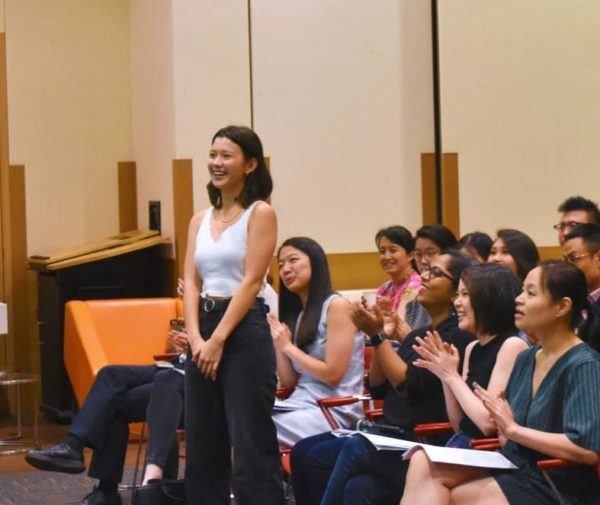
On Saturday 14 December, something magical happened: AWARE’s executive director, Corinna Lim, moderated a conversation with former First Lady of the United States Michelle Obama, in front of an audience of 3,500 people at Singapore Expo.
Their hour-long talk covered notable landmarks from Michelle’s life—including quitting a high-flying lawyer job to work at an NGO (just like Corinna!)—and themes from her autobiography, Becoming.
A few highlights of the conversation:
On the importance of finding your voice, and encouraging kids to find theirs: “If you’re hiding your story, it’s hard for you to advocate when you finally get a seat at the table,” said Michelle. “We sow seeds of doubt in [kids’] souls and we’re surprised when we have a society of doubters.”
On caregiving: We are told that parenting should be a 50/50 split, Michelle noted, but “then that inequity happens”. Paternity leave should be mandatory as well, not just maternity leave. “We have to start with making sure the load is shared from the beginning.”
On her marriage to Barack Obama: “I don’t just love him, I like him. And I respect him. And I think he feels the same way about me… It is a really good marriage. Is it perfect? It’s as imperfect as any marriage is.”
On learning the art of politics while at the White House: A significant achievement of Michelle’s was her campaign against childhood obesity, for which she worked intensely behind the scenes with food manufacturers, restaurant chains and other stakeholders. While she was surprised at how controversial the campaign became, she realised that she could deflect the negativity by focusing the optics onto her White House garden project. “On the surface, we were just planting carrots,” she joked. “‘There’s no need to look over here—it’s just a carrot!’”
On activism: “If you do this work expecting to see your win, then don’t do it. We do this work for our grandchildren… We don’t have a right to not do this for our kids.” About her famous “when they go low, we go high” quote, Michelle said, “Why do I go high? Because it’s a better place to be… I treat people with kindness and decency and I have no expectation that that will come back to me.”
As the session drew to a close, Corinna shared a few words from a sexual harassment survivor who had passed a card to Michelle via AWARE: “Throughout my darkest days, struggling through university and coping with difficult emotions, I used to watch your videos, read your interviews, and now Becoming. You have shaped the way I live my life, think and function… I hope that as I continue to grow older, I will become the woman that you are.”
About the night, Corinna wrote afterwards, “From the very first hug she gave me where she whispered how much she enjoyed my earlier intro of her, I knew it was going to be just fine. Michelle Obama was warm, down to earth, very funny, charming and wise. She has great presence but does not dominate and has a great way of connecting with the audience and me at the same time.”
What an incredible honour for Corinna—and for us at AWARE! Thank you to The Growth Faculty for making this happen, and of course to Michelle Obama and her team.
AWARE this year lost two of its earliest members and staunchest supporters, Ann Wee and Myrna Blake.
Ann died on Wednesday, 11 December 2019, aged 93. She had been in good health and was looking forward to a busy Christmas when, while reading the newspaper at breakfast, she closed her eyes and died.
Myrna died in June, aged 83. She had been diagnosed with Alzheimer’s
disease some 15 years earlier but continued with her work and community
activities for as long as it was possible.
Ann and Myrna were both pioneering social workers and educators who touched countless lives—students, clients, colleagues, policymakers, members of the public—in their many years of visionary, caring and dedicated service.
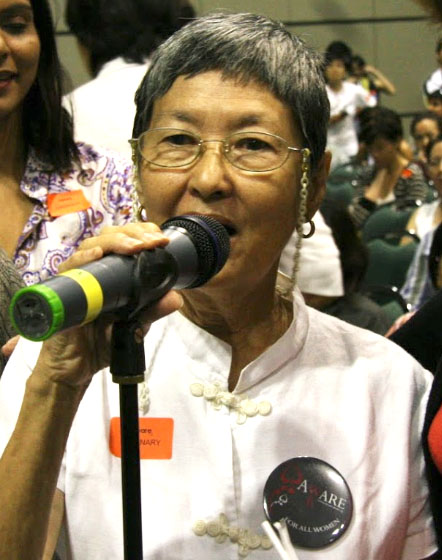
Myrna Blake speaking at the AWARE Extraordinary General Meeting in May 2009
When AWARE was formally launched in March 1986, Ann and Myrna were among the first to sign up as members. They were active members, each serving several stints on the Executive Committee and various subcommittees. They regularly turned up for annual general meetings and other events, and were always ready to lend a hand or offer their views whenever there was a need.
In 1991, when AWARE started its Helpline, Myrna provided invaluable
guidance. For more than a decade she led the Helpline subcommittee and
supervised the training of the Helpline volunteers.
In a blog post about Myrna shortly after her death, former AWARE president Constance Singam wrote: “As a social worker, she embodied the best of social work ethics and code of practice. In AWARE as well as in PAVE, she was committed to pursuing social change, particularly on behalf of vulnerable and oppressed individuals and groups of people. She focused primarily on issue of poverty, and discrimination, and other forms of social injustice.
“We at AWARE owe her a debt of gratitude for her invaluable work with the AWARE Helpline. And also for her many reminders of the feminist value of treating women and men as equals, and with respect whatever the differences in their circumstances.”
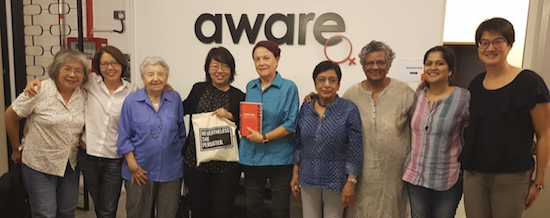
Ann Wee (third from left) at the AWARE Centre in 2018
Interviewed in the mid-1990s by the National Archives Oral History Unit, Ann spoke about how she had gone through the rigorous training to be a Helpline volunteer and was doing twice-monthly duty on the Helpline. She said: “I find that very interesting because from the number of calls that come in, there are obviously a lot of women who need somebody neutral to talk over their problems.”
She also talked about being a member of AWARE: “I think one real circle that has taken me away from just kind of mixing with colleagues was membership of the Association of Women for Action and Research… I [have] come across women of all age groups and all kinds of different occupations and backgrounds. That has been very enriching.”
AWARE, meanwhile, has been enriched by the participation and support of Ann and Myrna. They will be very much missed.
We are no longer accepting applicants for this role.
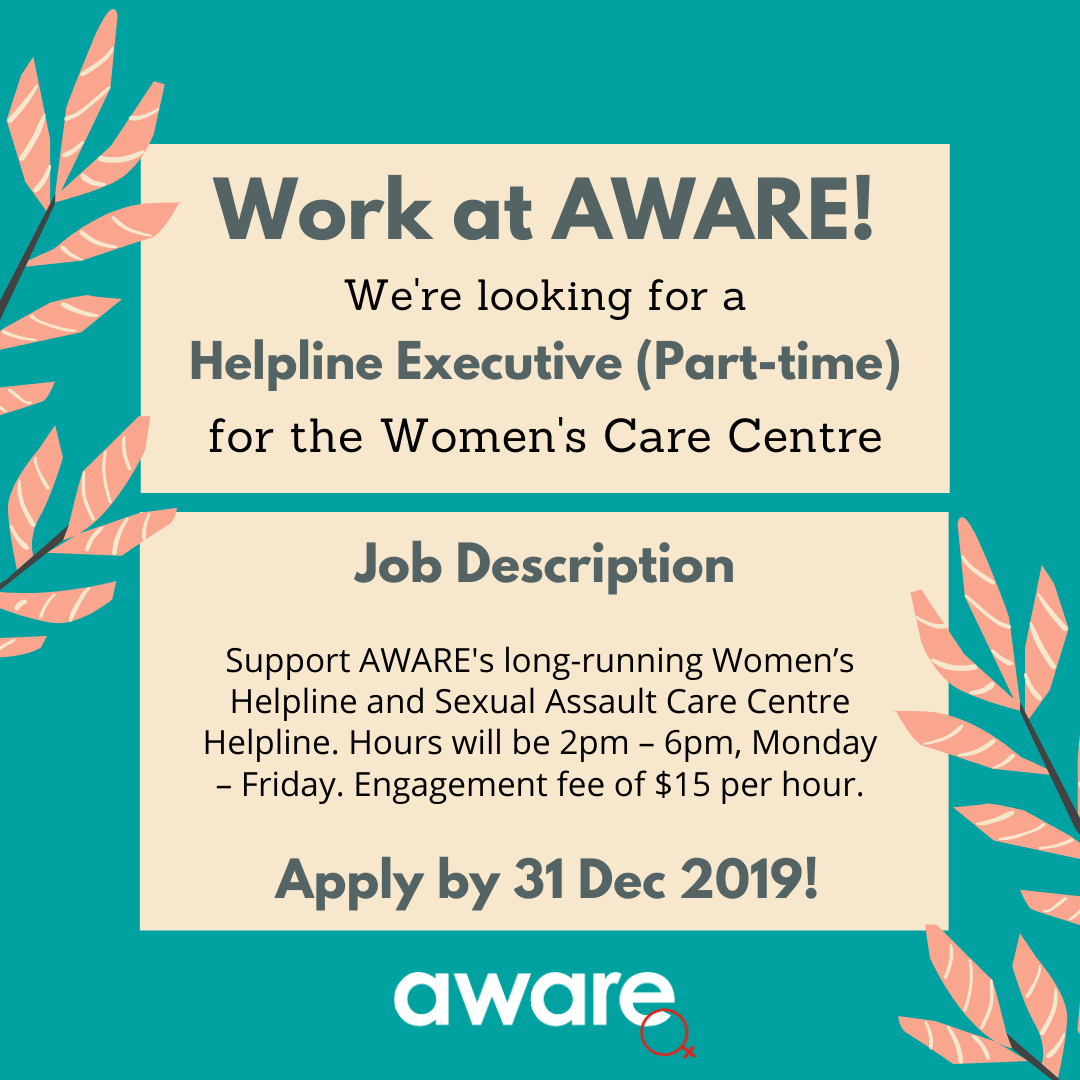
AWARE’s CARE department is looking for a part-time Helpline Executive for our Women’s Helpline.
Position: Helpline Executive Department: CARE – Women’s Care Centre (WCC) Commitment: 2pm – 6pm shifts, Monday – Friday (3 days/2 days split preferably) Engagement Fee: $15 per hour Starting date: 2 January 2020 Last date of application: 31 December 2019
Job Description:
Support all Women’s and Sexual Assault Care Centre helpline calls (English and either Mandarin or Tamil), ensuring a high quality of helpline support and call log entries
Check and complete Women’s Helpline voicemail callbacks daily
Support the WCC team to build relevant resources for volunteers and clients
Act as helpline mentor during helpline volunteer practical training
Support to identify and improve current helpline processes
Work closely with WCC staff and helpliners to support each other’s work
Please note that due to the large number of applications, only shortlisted applicants will be contacted for an interview. If you have any questions about this position, please email careers@aware.org.sg.
From 9 December to 6 January, both Women’s Helpline (1800 777 5555) and SACC Helpline (6779 0282) will operate from 10am to 3pm from Mondays to Fridays. Helplines will be fully closed from 24 December until 2 January.
Women’s Care Centre counselling service
No referrals and counselling appointments will be taken for new clients during this period. Callers can contact the helpline for emotional support in the interim and can call back on or after 6 January 2020 to get a referral.
Our staff will respond to your request for counselling to arrange appointments within two weeks of 6 January.
Women’s Care Centre Legal Clinic
Referrals will continue to be taken during this period for the next legal clinic on 9 January 2020. Our staff will confirm your legal clinic appointment from 6 January onwards.
SACC services
WhatsApp, email, walk-in, counselling, befriending, legal consultation and case management services will only be available for cases where the sexual assault occurred within the past 72 hours.
If you have recently experienced sexual assault, you may refer to this page for suggested actions. For emergencies, please call 999 for the police. You can also call 1800 221 4444 for the Samaritans of Singapore (SOS) if you have thoughts of hurting yourself, including thoughts of suicide.
AWARE is delighted to announce that our very own Executive Director, Corinna Lim, will moderate former First Lady Michelle Obama’s very first event in Singapore, An Evening with Michelle Obama.
Corinna will facilitate a wide-ranging conversation exploring Mrs. Obama’s experiences and events, both public and private, that have shaped her, from her childhood on the South Side of Chicago to her years as an executive balancing the demands of motherhood and work, to the eight transformative years spent at the most famous address in the world.
As First Lady, Mrs. Obama helped create the most welcoming and inclusive White House in history, while also establishing herself as a powerful advocate for women and girls in the U.S. and around the world.
“For me, becoming isn’t about arriving somewhere or achieving a certain aim. I see it instead as forward motion, a means of evolving, a way to reach continuously toward a better self. The journey doesn’t end.”
Michelle Obama
Don’t miss one unforgettable evening with Michelle Obama
Written by Aria Lee. Photographs courtesy of CAPE/Sun Jie Min.
“Never doubt that a small group of thoughtful, committed, citizens can change the world. Indeed, it is the only thing that ever has.” –Margaret Mead
The third iteration of the Apa Itu Activist? conference was held on Saturday, 9 November 2019 at Yale-NUS College. Co-organised by AWARE, Community for Advocacy & Political Education (CAPE) and several civil society members, Apa Itu Activist? aims to take stock of civil society in Singapore, and develop practices to facilitate meaningful change in the nation’s political climate. It is also a chance for activists from a variety of causes to start important conversations and facilitate meaningful change together.
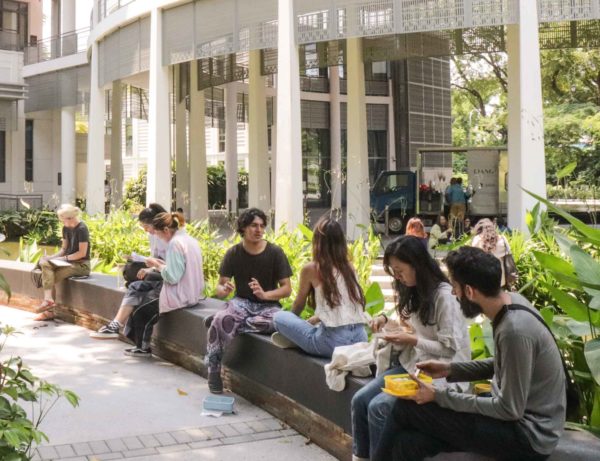
Divided into morning and afternoon sessions, the panel discussions and workshops were filled with more than 200 passionate participants: students, activists, artists, social sector workers, academics, writers, journalists and regular citizens. (As part of the conference’s eco-friendly efforts to reduce single-use disposables, these guests also brought their own utensils for refreshments.)
Around 200 participants attended Apa Itu Activist? at Yale-NUS on 9 November 2019
A morning panel entitled “From Merdeka to Millenials: Doing Democracy in Singapore” was moderated by Sudhir Thomas Vadaketh, with speakers Chain Wai Han (Function 8), youth activist Daryl Yang, T. Saasitharan (Arts Engage) and Wong Cai Jie (SG Climate Rally). These intergenerational activists discussed the meaning of activism, how the political environment of Singapore has changed over the years, and the most productive strategies for the future generation of change-makers in the era of social media. Some recommendations included employing strategic research, using social media to show people they are not alone, engaging different sides of political issues and taking an intersectional approach.
The other morning panel, “#callpolice and Other Bad Habits: A Workshop on Empowered Citizen Action”, was moderated by Kokila Annamalai, with Izzaty Ishak and Sobikun Nahar (both from Beyond Social Services), Natalie Pang (NUS), comedian Preeti Nair and musical artist Subhas Nair. This session focused on empowering citizens to shift away from relying too heavily on police intervention and consider various forms of community action when problems arise. Participants analysed real-life situations, such as this year’s E-Pay “brownface” scandal, various recent sexual assault cases in Singapore and Meet-the-People sessions. The conclusion: Perhaps instead of turning to the authorities for every single conflict (and thereby draining state resources), Singaporeans could work harder to foster intra-community dependency, focus on survivor-centric solutions, manage their own strategic partnerships and use online platforms to learn and share.
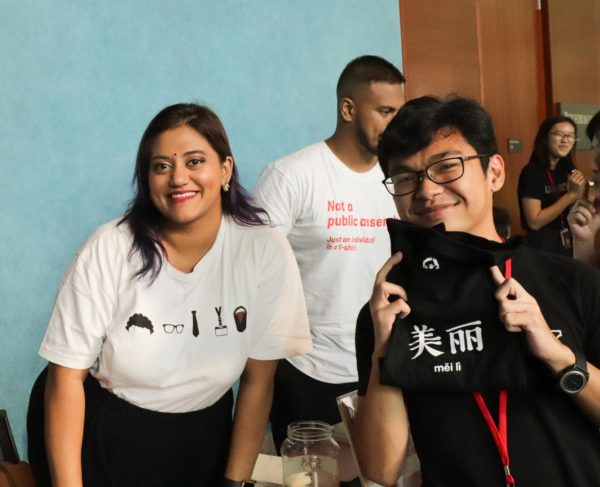
Preeti Nair (a.k.a. Preetipls) with a fan
At the afternoon workshop session “Toolkit for Change: A peer learning platform”, speakers from various organisations discussed topics from support groups set up on Telegram to larger-scale community mobilising. They also shared numerous ways to get involved with movements at an individual and community level, such as attending public forums, volunteering and signing petitions.
At “Community for Organising: From Potluck to a People’s Movement”, panelists Akm Mazharul Abedin (Kohon Recitation Learning Centre), Jolovan Wham (Community Action Network), Nurul Fadiah Johari (Penawar), independent community organiser Willie Yeo and community activist Zubee Ali talked about giving underrepresented people a voice. They emphasised the need to recognise structural issues that made it difficult for these communities to be represented, to pay attention to smaller-scale issues and to be mindful of generational, cultural and socio-economic divides.
At “You Don’t Need Much Space To Do Advocacy: Creative Resistance in Shrinking Spaces”, writer and human rights activist Jolene Tan, June Chua (The T Project), Annika Mock and Wong Pei Chi (both from SG Climate Rally) and Jean Chong (Sayoni) reflected on the constraints of the civil society space in Singapore. As civil society faces various barriers and limitations today, the speakers said, it has become more vital than ever for disparate organisations to build coalitions, pool their information and resources, and overall keep resilient in a changing political climate.
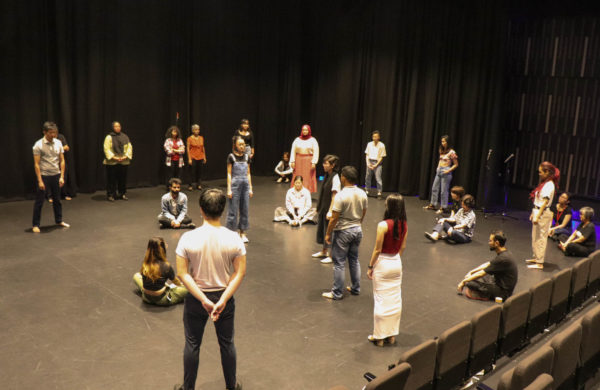
The workshop “Community Care: Sustaining Ourselves and Each Other” tackled self-care and community care
“Community Care: Sustaining Ourselves and Each Other” focused on the draining and exhausting aspects of activism and the importance of both self-care and community care. It was led by theatre director Chong Gua Khee, Reetaza Chatterjee and Rachel Pang (both from Your Head Lah!), Rocky (Cassia Resettlement Team), Vanessa Ho (Project X) and social worker Yap Ching Wi. Participants discussed how community care must include community accountability as well, and that we should not feel guilty for taking time off our work for ourselves.
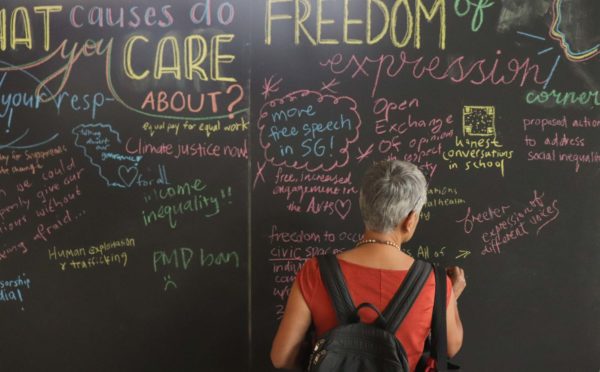
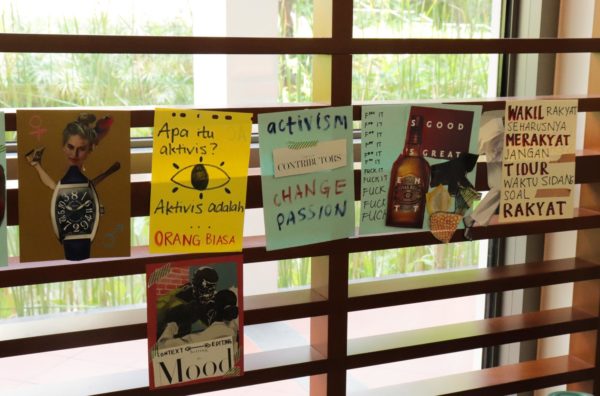
During breaks, participants also had the opportunity to take part in several hands-on activities, including a zine-making booth and a free speech corner containing boards upon which guests could sound off with their thoughts.
Artwork created by participants at a zine-making booth
One main takeaway from Apa Itu Activist? was that activism is not homogenous. While there was much to agree upon at each panel discussion, the diversity of speakers in every session meant the occasional clashing of perspectives on Singaporean activism. During “From Merdeka to Millenials: Doing Democracy in Singapore”, for example, younger and older speakers squared off about how “radical” modern activism is compared to activism of yore. Of course, healthy debate of divergent opinions is very much in the spirit of grassroots democracy, and the crowd welcomed the chance to hash things out in an open forum.
Another takeaway was that having a strong passion for social justice is not enough: Beyond that, strategic organisation and utilisation of resources is key for any kind of effective change. Knowing which sectors of the community to engage, which departments of the government to collaborate with, and which community resources (e.g. social workers and NGOs) to leverage are all essential in translating passion into actual results.
Finally, the conference affirmed that we can all stand to learn from one another. Every speaker brought unique insight to the table, forged by their own particular identities and circumstances. This drove home, too, the importance of forums like Apa Itu Activist?. Without continuing opportunities to gather and learn from each other’s experiences, activists would be greatly stymied, doomed to repeat the same mistakes.
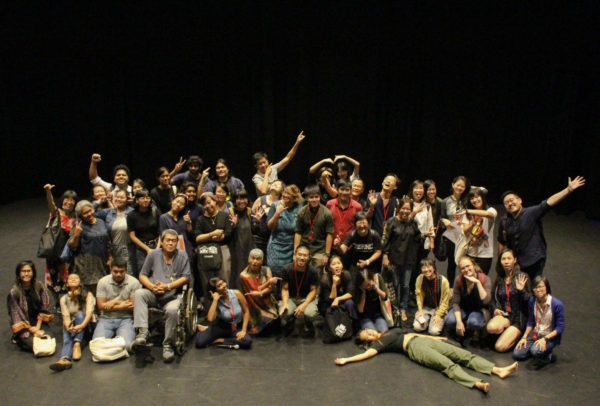
A group selfie at the end of a long, fulfilling conference
As such, step by step, we must continue to break down any barriers to communication and collaboration, and move towards a more progressive future together.
At AWARE’s Taking Ctrl, Finding Alt 2019 event on Monday, 25 November, the audience submitted dozens of excellent questions about technology-facilitated sexual violence (TFSV) for the panel, many of which had to go unanswered that night. We’ve compiled the top six questions as upvoted by attendees at the event, and answered them to our best ability here.
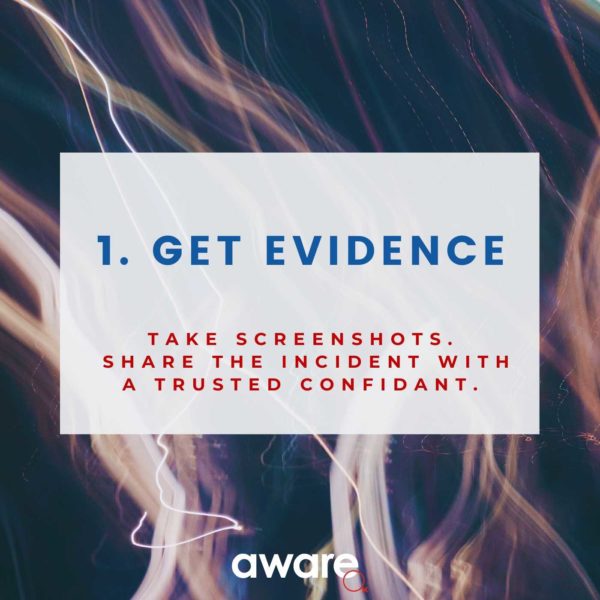
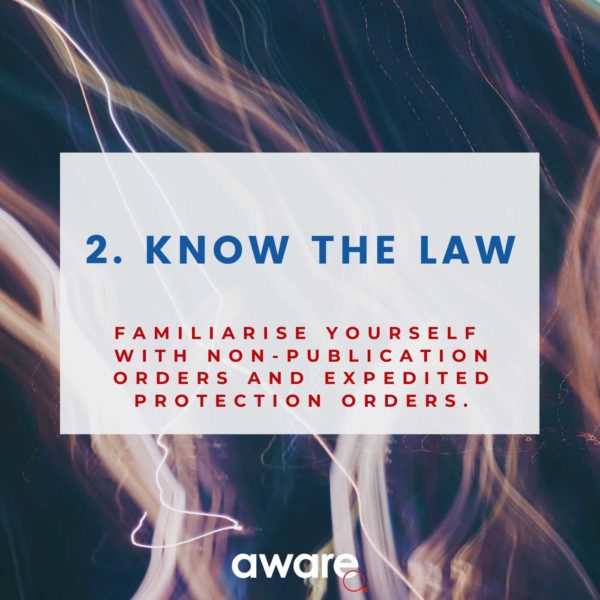
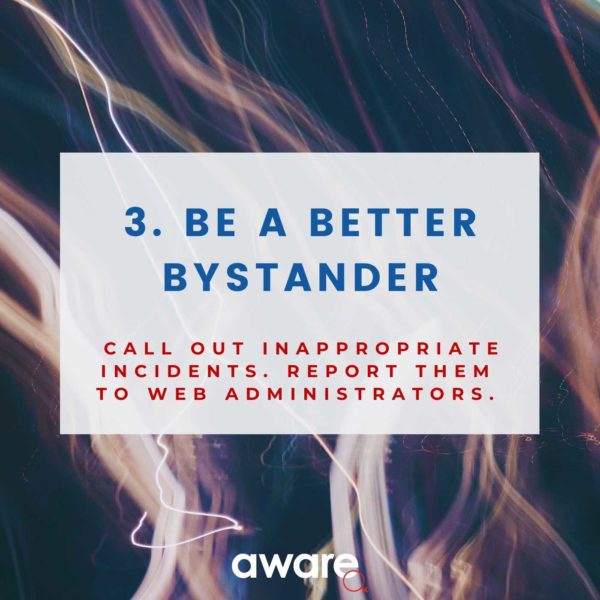
To start, the basics of what to do when tech-facilitated sexual violence occurs:
Please note that the below should not constitute legal advice.
Q: How would the law address the distribution and sexualisation of non-sexual photographs of women, if at all (i.e. the xiao mei mei Telegram groups)?
Any act that causes distress, alarm or harassment would be covered under the current Protection from Harassment Act. With the new Penal Code changes—depending on how the photo has been sexualised and which parts of the body are depicted—this behaviour may be covered under Section 377BE.
Section 377BE finds a person (A) guilty of an offence who “intentionally or knowingly distributes an intimate image or recording of another person (B) without B’s consent to the distribution; and knowing or having reason to believe that the distribution will or is likely to cause B humiliation, alarm or distress.
The “intimate image or recording” in this section refers to an image or recording of B’s “genital or anal region, whether bare or covered by underwear”; “of B’s breasts if B is female, whether bare or covered by underwear”; “of B doing a private act”. It also includes “an image or recording, in any form, that has been altered to appear to show any of the above, but excludes an image so altered that no reasonable person would believe that it depicts B”.
If B (the survivor) is below 14, A shall on conviction be punished with imprisonment for a term which may extend to 5 years and shall also be liable to fine or to caning.
Q: What if we don’t know who the perpetrator is?
You can still file a police report. The police would attempt to find out who the perpetrator is. However, you would not be able to file a protection order against an unknown person.
You would still be able to apply for a non-publication order, which would be served to websites. Again, though, this would be limited by jurisdiction.
Q: Are the laws currently in place sufficient or effective in deterring acts of IBSA? Are there any gaps, and how can these be addressed?
This is a great question. There is not enough research right now about how effective our current laws are. We would welcome research that examines the effectiveness before and after the recent Penal Code changes.
Q: Priscilla Chia mentioned new legislation around protection orders, e.g. expedited orders. Are protection orders effective in stopping violence? Is there data on this?
Expedited protection orders are not a new thing in Singapore. However, recent POHA amendments do make court processes more efficient, which should speed things up significantly.
In our Sexual Assault Care Centre‘s experience, in some cases where protection orders were applied, these orders have helped to stop the sexual violence to date. However, in other domestic violence cases seen by AWARE’s Women’s Care Centre, we have seen perpetrators breach their protection orders.
Ultimately, the effectiveness of protection orders in Singapore is an area that requires more research.
Q: What can a bystander do if the person being sexually harassed (and experiencing obvious distress) doesn’t want to report it for fear of embarrassment?
A good bystander will validate the feelings and experiences of the survivor without judgment or prescription of any one course of action. Filing an official report is, of course, one way for a survivor to seek justice and closure after tech-facilitated sexual violence. However, every survivor has the right to weigh the pros and cons of making a report, including the practical risks that might follow: e.g. retaliation, public shaming and/or negative attention. Ultimately, she should prioritise her physical and emotional well-being, and do what she needs to do for her recovery.
In SACC’s Sexual Assault First Responder Training, we share four tenets of effective support for when someone discloses an experience of sexual violence to you: “It’s not your fault.” “It’s your choice how you want to move forward.” “It’s your experience, not anybody else’s.” “I’m here to support you.”
Q: What are the biggest problems in boys’ education that contribute to a culture of TFSV? Besides legislation, does AWARE believe that it is possible to educate people against committing acts of IBSA?
Surveys have shown that young people (of all genders) in Singapore suffer from a dearth of comprehensive information about sex and relationships, possibly due to a lack of comprehensive sexuality education in schools. A strong sex education curriculum would cover not only physical health, but emotional well-being, empathy and respect for others, healthy relationships and, particularly, consent—what it looks like, what it doesn’t look like, and how to negotiate it in a real-life scenario. We believe that this is the best, most “upstream” way to prevent young people from turning to sexual violence of any kind.
Along with our ongoing Aim for Zero campaign, which combats sexual violence by increasing awareness and conversation, AWARE has a programme called Birds & Bees. Birds & Bees is a workshop for parents that enables them to impart comprehensive sexuality education to their children. It provides simple, easy-to-use tips for communicating values about sex and relationships, and building more trust and openness on these subjects with youth. Email publiceducation@aware.org.sg to secure a spot in our next workshop.
Lastly, if you are a survivor of sexual violence, please reach out to SACC for support by calling our Helpline (6779 0282), or texting our SACC WhatsApp at 9781 4101.
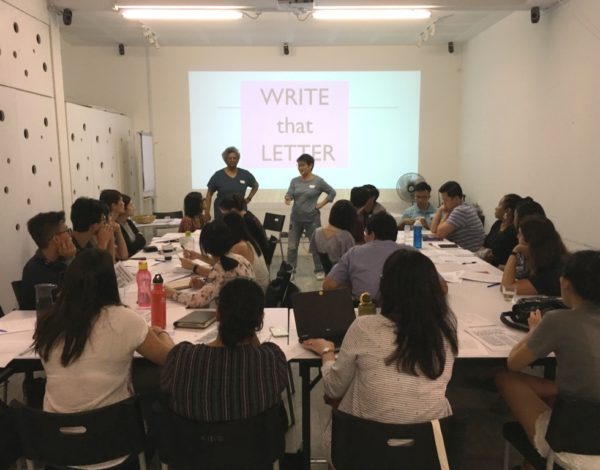
This was the question that Dana Lam, former president of AWARE, was asked by an aunt when she wrote her first forum letter to a newspaper.
“Little did she know,” said Dana now, years later. She grinned cheekily as around the room, workshop participants chuckled. Write Forum was a letter-writing workshop that took place at the AWARE Centre on Saturday, 16 November, 2019. Dana, along with Constance Singam (another former AWARE president), led the session. The two women shared their extensive experience writing letters advocating for policy and social change in Singapore over the years.
Write Forum’s 20-something participants came from various organisations, advocating for many different causes. Accordingly, they were themselves familiar with how slowly change can take place in society, and the need for activists to speak up to push the needle on social issues. Participants noted that many ideas we take for granted today—such as the right for Singaporean women living overseas to have their children granted citizenship, or equal gender representation in medical schools—were advocated for over many years before they were widely accepted. Indeed, some were met with ridicule.
So where does writing letters (concerned citizen letters, group representative letters, campaign letters, and even longer op-eds) come in? Well, because newspapers continue to reach a broad audience in Singapore, they provide one of the best platforms for a regular citizen to get his or her views to the relevant authorities—who may not always get the perspective of citizens on the ground of an issue.
From there, pressure may slowly mount around an issue. Sometimes it takes a few generations of letter-writers telling the story over and over and continually bringing up a problem until the issue can no longer be ignored.
Constance (better known as Connie) began by recounting how she wrote to a newspaper after her husband suffered a heart attack during the night while in hospital. He did not receive prompt medical attention, and sadly passed away. Connie believes that her letter, in combination with another similar critical accident occurring around the same time, led to the government requiring hospitals to have doctors in attendance 24/7.
After Connie joined AWARE in the ’80s, her letter-writing took off even more. Connie and Dana cited the many different letters they had written to engage the government and public, on issues including expanding awareness on violence, getting hospitals to keep better records, and improving training for police and service providers on cases of abuse and sexual assault.
For example: In a letter written in response to housing and aid policies favoring married women, Connie wrote, “A woman in Cabinet would have told the Prime Minister that no woman would take on the burden of single motherhood willingly… Most single mothers are abandoned mothers. First, the father abandons them, then the state, too, abandons them.”
After walking through the above examples, Dana and Connie imparted their best letter-writing tips. These included:
Responding to relevant recent events in a timely manner
The two women also stressed that writers should keep in mind the big picture and ensure that their core messages are kept at the forefront of a piece.
“Remember,” Dana said, “your objective is to get a policy examined and start a productive discussion, not to just rant.”
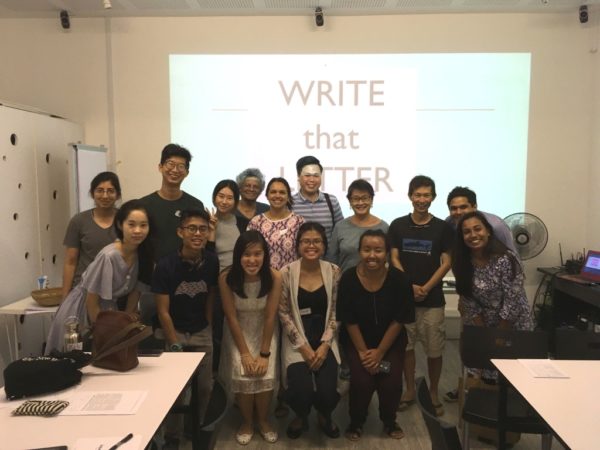
Write Forum attendees with Constance Singam and Dana Lam
After the main presentation, participants got into small groups and analysed six different advocacy letters, making comments and asking questions to the presenters. Then, they were given time to practice writing their own letters and garner some feedback.
Connie and Dana noted that regardless of the level of response one letter may receive, someone is listening. Activists, therefore, must not become discouraged when impact is not immediate. Despite its difficulties, advocacy has come a long way in Singapore, they reflected, and time has proven that there are always people willing to learn and speak up. Ultimately, everyone has a voice and collectively, these voices matter.
“In the end, if you can’t do anything about an issue at the moment, at least you can inform your fellow citizens about it,” Dana concluded.
Written by Jasmine Gomez. Photographs by Kaspen Paraskakis Narayan.
One hundred and twenty-four: That’s is the total number of survivors of technology-facilitated sexual violence who sought help at AWARE’s Sexual Assault Care Centre (SACC) in 2018.
These 124 survivors experienced harassment ranging from unwanted explicit sexual messages and calls to the non-consensual creation, obtainment and distribution of sexual images of themselves.
That number, in fact, has been constantly rising every year. It was 99 in 2017, and 46 in 2016. However, there is a silver lining: the fact that the Singaporean public is waking up to the pervasiveness of the issue of tech-facilitated sexual violence (TFSV), and interested in doing something about it.
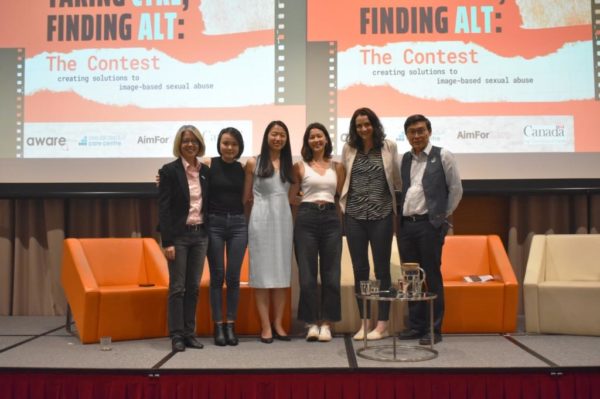
On 25 November—in commemoration of the International Day for the Elimination of Violence Against Women, as well as the one-year anniversary of AWARE’s Aim For Zero campaign against sexual violence—around 150 participants made their way to the Lifelong Learning Institute in Paya Lebar, for a multi-part event called Taking Ctrl, Finding Alt 2019. It comprised the public launch of a new set of statistics on the TFSV cases seen by SACC in the past couple of years, followed by a panel on the barriers and challenges faced by survivors of this type of sexual violence, and a launch of a solutions-oriented contest to combat image-based sexual abuse.
The panel constituted four speakers: Monica Baey, an advocate for sexual violence survivors and a recipient of AWARE’s “Woman of Courage” Award at the 2019 AWARE Ball; Amber Hawkes, the Head of Safety Policy, APAC at Facebook; Benny Bong, counsellor and president of the Society Against Family Violence; and Priscilla Chia, litigator and SACC volunteer lawyer. The conversation was moderated by Lim Xiu Xuan, a senior case manager at SACC.
Corinna, AWARE’s executive director, welcomed the participants with an opening speech which brought to light the success of the Aim For Zero campaign and the #MeToo movement in Singapore, and later revealed another cause for celebration: 25 November also marked AWARE’s 34th year of existence in Singapore.
Anisha Joseph, Head of AWARE’s Sexual Assault Care Centre
Anisha Joseph, head of SACC, then kick-started the event by presenting the newest statistics on TFSV cases at SACC. Out of the 124 cases in 2018, she explained, more than 50% involved IBSA—i.e. sexual images of the survivor that were nonconsensually shared, obtained and/or created. Anisha summarised her presentation by noting that TFSV is often “folded into” pre-existing practices of violence, such as verbal harassment or voyeurism.
The subsequent panel discussion covered the mental, social and emotional impact of technology-facilitated sexual violence on survivors and the journey that survivors have to go through towards recovering from and/or reporting the crime. It also touched on practical and legal resolutions available to survivors in Singapore, or to bystanders who witness IBSA on social media platforms such as Facebook.
Litigator Priscilla Chia provided an overview of this year’s amendments to the Penal Code and the Protection from Harassment Act. Because sexual violence that occurs in the digital realm is criminalised, survivors are afforded the ability to apply for an expedited Personal Protection Order (PPO) against someone circulating their sexual images and videos without consent online. Additionally, should such images or videos be uploaded on a certain Facebook or Instagram page, for instance, those entities can be a part of the PPO as well. Priscilla also dispelled a few myths with respect to the application process: Namely, she highlighted that there is no need for the engagement of a lawyer to apply for the PPO.
To complement those legal recourse options, Amber Hawkes brought up the policies Facebook has put in place for its users’ safety as well as the reporting process on the platform.
Counsellor Benny Bong then weighed in on the common misconception that perpetrators of sexual violence, whether online or offline, commit their actions because they are suffering from mental illnesses. Many perpetrators have confessed to him, in fact, that they did what they did because they were confident in being able to get away with it.
Finally, Monica Baey enlightened the crowd with her own personal experience as a well-known survivor of on-campus voyeurism last year. She spoke about accepting the fact that she had been violated, receiving support from her friends and family following the incident, reporting it the police and her university, and the messages that poured in from online users after she posted about her experience on her Instagram account.
“I’ve always felt all this time that I always wanted to make a change, and I know a lot of people who feel the same way,” Monica added passionately. “People are afraid that their actions are too insignificant… but it’s about speaking up in general. Every small voice counts for something. Every person who speaks up makes a difference, but it does take a community to make social change”.
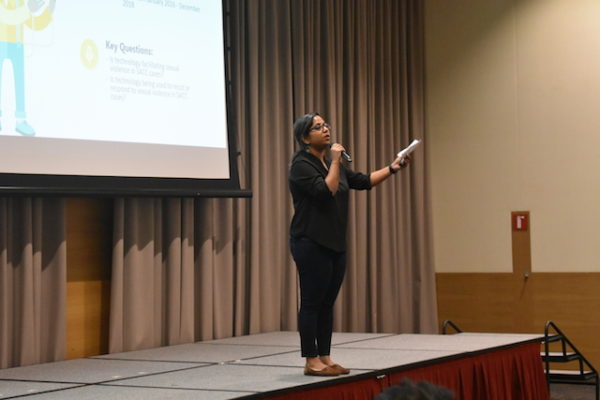
Monica Baey, advocate and tech-facilitated sexual violence survivor, at Taking Ctrl, Finding Alt 2019
Those interested can submit their proposals before 8 February next year. Successful applicants will receive funding of up to $6,000 and development support for a pilot phase over six months next year.