Author: Comms Executive

AWARE’s response to Budget Statement 2025

An extract of this article was sent to the press on 18 Feb 2025.

The Budget 2025 statement on 18 February promised some important measures  to support seniors and caregivers. The new Matched MediSave Scheme is a welcome step, helping low-income seniors build healthcare savings—but many may struggle to set aside the cash to benefit from it.

“We also welcome enhancements to ComCare and caregiving grants, but caregiving remains a major financial strain, especially for women.” said Sugidha Nithiananthan, the Director of Advocacy and Research at AWARE.

“More sustained support is needed to ensure that unpaid caregiving and low-wage work don’t leave families struggling. We hope to see further steps towards a more secure, inclusive future for all.”

Increased Support for Seniors, Yet Not So Accessible

This year’s Budget introduces key improvements for Singapore’s ageing population, set to take effect in July 2026 with interim enhancements from July 2025.

Support for Lower-Income Seniors’ Healthcare Savings:

  • Lower-income seniors aged 55 to 70 can get a boost to their MediSave.
  • For every dollar they contribute, the government will add another dollar.
  • This matching is capped at $1,000 per year.
  • The scheme will run for five years.
  • To qualify, seniors need to meet certain criteria, including an income limit of $4,000 or less per month and limited property ownership. Their MediSave balance also needs to be below a certain level.

Increased Long-Term Care Subsidies:

  • The government is increasing subsidies to help with the costs of long-term care for frail and ill seniors.
  • For Singaporeans born in 1969 or earlier:
    • Subsidies for staying in residential long-term care facilities will go up by as much as 20%.
    • Subsidies for receiving care at home or in the community will increase by up to 25%.
  • For Singaporeans born after 1969:
    • Subsidies for residential long-term care will increase by up to 15%.
    • Subsidies for home and community care will increase by up to 10%.

After these increases, eligible Singaporeans can receive:

  • For those born in 1969 or earlier:
    • Subsidies of 15% – 80% for residential long-term care facilities.
    • Subsidies of 35% – 95% for home and community care.
  • For those born after 1969:
    • Subsidies of 10% – 75% for residential long-term care facilities.
    • Subsidies of 20% – 80% for home and community care.

This new MediSave matching scheme works alongside the existing Matched Retirement Savings Scheme, which helps people build their retirement funds. This scheme now has a higher matching cap and is open to those aged 55 and older.

AWARE has long advocated for better support for seniors and their caregivers and is pleased to see these developments. However, low-income families may struggle to set aside the cash to fully benefit from the Matched MediSave Scheme.

Promising Increase to ComCare

Enhancing ComCare is a step in the right direction; AWARE has consistently called for improvements to ComCare—including higher payouts and longer durations of assistance—to provide more stable relief to low-income households.

Changes to the ComCare Long-term Assistance Rates:

Household Size Current Rates Increased Rates
(From April 2025)
1 person $640 $760
2 persons $1,080 $1,250
3 persons $1,510 $1,760
4 persons $1,930 $2,230

The increases will need to not only outpace inflation but also ensure that all households meet living wage standards.

Marginal Subsidies to Cost of Raising Children

The lowered preschool fee caps—to $640 a month for anchor operators and $680 for partner operators—and the new Large Families Scheme—which gives parents $5,000 for each third and subsequent Singaporean child—will help make having children more accessible and affordable. We hope that the much higher cost of living can be more adequately addressed, as it remains a barrier for low-income families.

We also hope that subsidies designed to help parents will include the non-citizen children of Singaporeans in the future. Excluding non-citizen children has a long-term impact on the Singaporean families to which they belong because the higher non-citizen school fees they have to pay impacts the overall cost to the family. For example, our research shows that parents of a primary-school Singaporean child pays $13 a month for public schooling, whereas a permanent resident child would be charged $293. Parents of foreign students are at a further disadvantage; those going to primary school would pay $559 (ASEAN) and $949 (non-ASEAN) monthly.

Small Enhancement to Caregiver Support

Caregiving remains a full-time commitment for many, especially women. The $200 increase in the Home Caregiving Grant (from $400 to $600), and the greater accessibility with the increase in maximum qualifying per capita household income to $4,800, are welcome steps in recognising caregivers’ financial strain.

However, these measures don’t meaningfully address the loss of income experienced when caregiving responsibilities compete with paid work. We urge further investment in sustained income support and re-employment pathways to ensure caregiving does not come at the expense of financial security.

This could come in the form of the government paying caregivers a universal basic income, or a more robust Caregiver Support Grant with cash and CPF components.

Singapore also needs to collect disaggregated data based on gender, age, ethnicity, and nationality, amid other characteristics, and develop policies that fully address our caregivers’ needs.

The Workplace Fairness Act must go further if we are to stamp out discrimination

This op-ed was originally published in The Straits Times on 16 January 2025.

Protection for workers has taken another major step forward in the new year. After months of hard work from the Government and its tripartite partners, stakeholders and various MPs, the new Workplace Fairness Act (WFA) was passed on Jan 8 in Parliament.

The WFA has five categories of protected characteristics: age; nationality; sex, marital status, pregnancy status, and caregiving responsibilities; race, religion, and language; and disability and mental health conditions.

An employer cannot discriminate against workers based on any of these characteristics when making employment decisions.

While Aware is happy to see this landmark anti-discrimination legislation finally passed, it does not go far enough to protect all workers. This is something many MPs also raised during the debate on the Bill which was tabled in November 2024.

The definitions of these protected characteristics leave out some groups of vulnerable workers. For example, the definition of “disability” does not include learning disabilities such as dyslexia or attention deficit hyperactivity disorder (ADHD), or chronic medical conditions such as cancer or long Covid.

This contrasts with the functional approach of other jurisdictions. For example, “disability” is defined as a physical or mental impairment that substantially limits one or more major life activities under the Americans with Disabilities Act.

Protecting such vulnerable workers will not further burden employers because the law provides exceptions where the genuine requirements of the job require certain hiring decisions to be taken.

Another troubling exclusion arises from the definition of “sex” in the WFA, which explicitly excludes sexual orientation and gender identity. Minister for Manpower Tan See Leng assured Parliament: “Let me state clearly that we do not tolerate workplace discrimination, including towards LGBT individuals. We currently handle such cases under the TGFEP (Tripartite Guidelines on Fair Employment Practices) and will continue to do so.”

While this is comforting, the fact that the WFA expressly excludes sexual orientation and gender identity may send the wrong signal to society. According to a 2021 study, when people learn that the law tolerates discrimination against a certain group, it can foster more prejudicial attitudes. At the very least, it may indicate to society that the rights of lesbian, gay, bisexual, transgender and queer (LGBTQ) workers are not as important as the rights of workers protected under the WFA.

In a forum letter in November 2024, a Ministry of Manpower (MOM) representative explained that the protected characteristics covered almost all complaints reported to the Tripartite Alliance for Fair and Progressive Employment Practices (Tafep) from 2018 to 2022.

However, during this period, sex between consenting male adults was still a crime under section 377A of the Penal Code – it was repealed as at Jan 3, 2023 – and this fed a general lack of acceptance of LGBTQ people in society, too. Given that situation, it can easily explain why there were very few or no complaints by LGBTQ workers to Tafep during this period.

The reality on the ground reveals that discrimination against LGBTQ workers is prevalent. A recent study found that over half of 400 LGBTQ survey respondents had experienced some form of workplace discrimination and harassment. Yet, only about one in 10 reported their experiences to their companies, Tafep or MOM. Most chose not to do so because they feared retaliation, or believed that they would not receive support.

Several MPs raised this issue during the debate on the Bill and three referred to surveys on the prevalence of such discrimination, including the 2022 Aware-Milieu survey on workplace discrimination. MP Louis Ng also pointed out that there was likely to have been significant under-reporting of such cases.

Despite the Minister’s reassurance, it is worrying that the LGBTQ community has been singled out as the only group whose characteristics have been explicitly excluded from the WFA. The Minister’s unwillingness to accede to Mr Ng’s proposal to update the Tafep website to expressly include sexual orientation and gender identity as characteristics protected under the TGFEP adds to this concern. This sends a mixed signal about the status of LGBTQ people in society.

Troubling two-tiered approach

According to the Minister, workers who are not covered under the WFA will still be protected from workplace discrimination under the TGFEP, which prohibit all forms of workplace discrimination. This would purportedly include LGBTQ workers, workers with criminal records, physical and medical conditions and discrimination by association. The Minister also said that the guidelines will be updated to provide protection for platform workers and outsourced workers.

This begs the question: Why choose to legislate the WFA if the TGFEP is able to protect all workers? Clearly, the TGFEP and Tafep have been unable to provide sufficient protection to workers, necessitating the enactment of the WFA. It is cold comfort to those vulnerable groups not protected under the WFA to be told the protected characteristics in the WFA cover 95 per cent of all discrimination complaints reported to Tafep. Why stop at 95 per cent?

Ironically, in legislating against discrimination, the WFA paves the way for its own two-tier, discriminatory approach to workplace discrimination. On the one hand, some workers enjoy formal legal protection under the WFA. On the other hand, those who are not covered under the WFA may only make a complaint to Tafep, which has no power to compel an errant employer to compensate or reinstate the worker.

These workers would also not be protected from retaliation by their employers if they make a complaint to Tafep. Under the WFA, the protection from retaliation applies only to actions taken by workers under the Act, such as commencing an action against an employer. This issue was also raised in Parliament and the Minister acknowledged that workers not protected by the WFA will also not be protected against retaliation by their employers.

As a result, excluded groups, such as LGBTQ workers or those with chronic medical conditions, may well choose not to report their cases to Tafep for fear of retaliation. The under-reporting would then reinforce misplaced perceptions of low rates of discrimination faced by these groups and contribute to flawed assumptions about workplace discrimination.

Discrimination by association

Another gap in the Bill involves this scenario: a non-Chinese worker marries a Chinese person, and is then fired by their employer purely because the employer is against interracial relationships.

Is that discrimination against the worker on the basis of race? The answer, oddly, is no – under the WFA it is not discrimination to fire that worker on the basis that they married outside their race.

The WFA explicitly excludes discrimination based only on the protected characteristic of another person related to or associated with them. In this example, the non-Chinese worker would not be protected under the WFA as the dismissal is not because of their own race but the race of their spouse.

This exclusion is troubling, given that such attitudes are not uncommon. In 2021, a polytechnic lecturer was jailed for harassing an interracial couple with remarks like “such a disgrace, Indian man with a Chinese girl” and “you’re preying on Chinese girl”.

Some MPs questioned this exclusion. The Minister said it was difficult to draw the line on what constituted association.

Why not simply define association in the legislation? Hong Kong’s laws define an “associate” as a spouse, domestic partner, relative, carer or a person in a business, sporting or recreational relationship. At a minimum, the WFA could have adopted a narrower definition of “associate” that covers family members, which is a defined term in the Women’s Charter.

Narrow focus of the Act

The WFA has been drafted narrowly to prohibit direct discrimination only in relation to formal employment decisions, such as whether to hire a candidate or to promote or dismiss an employee.

However, discrimination can occur at the workplace in other ways, too. For example, a non-Chinese employee may be unable to perform their duties effectively because their colleagues prefer to communicate in Chinese during meetings. Under the WFA, this would not be discrimination unless it relates in some way to an employment decision.

Salary decisions are also not included in the definition of “employment decisions”, even though MOM’s Fair Employment Practices report shows that salary discrimination is the most prevalent form of unfair treatment at work (43.4 per cent of those who reported unfair treatment in 2023).

This is also a missed opportunity for the WFA to address the gender pay gap, an area of discrimination we should all be concerned about. According to MOM, the adjusted gender pay gap in 2023 between men and women was 6 per cent for the same job, in the same industry, at the same age and education level. That is unacceptable.

Where do we go from here?

The Minister’s assurances in Parliament that all forms of discrimination are not condoned and that workers can approach Tafep for help, whether under the WFA or the TGFEP, is important.

We are also pleased that Tafep will be tracking, analysing and sharing information on the complaints it receives and which it resolves under the WFA and TGFEP. But this data should be shared publicly to enable all stakeholders to contribute to the discussions. It would be good if its data includes cases where the complainant chose not to follow through.

It does make us wonder, though: Is Tafep sufficiently resourced and its officers trained to fulfil the promise of meaningful protection for all workers?  How will workers who raise complaints to Tafep be protected against retaliation from employers?

And when will the TGFEP be revised to include platform workers and other types of workers?

We’d like to see the TAFEP website updated to expressly include sexual orientation and gender identity as the characteristics protected under the TGFEP.

Businesses with fewer than 25 workers will be excluded until MOM reviews this point (which is expected to be five years after the legislation comes into effect) – but MOM does not need to wait till then for a review.  That is a long time for the 25 per cent of the workforce affected by this.

And when the WFA is reviewed, the relevant committee should include civil society organisations representing the different vulnerable groups. After all, the WFA is an important step in Singapore’s journey towards a more equal and inclusive society.

Sugidha Nithiananthan is AWARE’s Director of Advocacy and Research. Rayner Tan is assistant professor at the Saw Swee Hock School of Public Health at the National University of Singapore.

AWARE recommendations for 2025 National Budget: Diversity of Singaporean families and workers should be fully accounted for

The 2025 National Budget should reflect the growing diversity of the country as it turns 60 years old this year, says gender equality group AWARE. This sentiment is central to AWARE’s recommendations for National Budget 2025, which we submitted to the government on 12 Jan.

We underlined that our housing, education and healthcare policies do not account for the diversity of Singaporean families. Singaporean families with single parents or same-sex parents face restrictions in their ability to buy or rent HDB flats, as our housing policies do not recognise them as families. Low-income transnational families, that is, families with Singapore citizen(s) and one or more migrant family members, face cripplingly high costs of education and health. This is because migrants face a higher cost burden for these resources in comparison to Singaporeans.

Ultimately, Singaporean families with single or same-sex parents, or transnational families, are all Singaporean families, and they deserve equal access to housing, education and healthcare.

The diversity of workers is also not fully accounted for in the Workplace Fairness Act, which passed on 8 Jan. While it protects employees from discrimination on the basis of sex, marital status, pregnancy status, caregiving responsibilities and more, it excludes discrimination on the basis of sexual orientation and gender identity, which is predominantly targeted at LGBTQ+ workers. It also excludes foreign domestic workers, migrant workers, gig workers and platform workers from protection under the Act. The WFA should be expanded to protect all workers.

Our recommendations also include our long standing calls for universal basic income or a Caregiver Support Grant to provide financial security to caregivers, who often have to move to part-time work or forego work entirely to fulfil their caregiving duties.

You can read our full list of recommendations below.

SG60: Building Our Singapore Together

  • To cultivate a cohesive national identity, inclusivity must be central to our progress. Our education system must integrate lessons on diverse family structures—such as those led by single parents or same-sex couples—to normalise differences and reduce stigma.
  • Housing policies must evolve to reflect the diversity of Singaporean families. We should not discriminate against unwed parents, who currently do not qualify as a family nucleus with their children for the purchase or rental of HDB flats. They are only entitled to purchase HDB flats as singles once they are 35 years old or above. Parents under 35 years of age or who cannot afford to buy and wish to apply for a rental flat can only appeal to HDB and have their applications considered on a case-by-case basis.
  • All children should have equal access to education and health. Low-income Singaporean families with a migrant spouse or migrant children suffer cripplingly high costs of education and health for non-Singaporeans, affecting their well-being on many levels.
  • Enabling decent livelihoods for all is key to a stable society. Workfare Income Supplements should be more easily accessible and recognise the critical need for a higher cash component, especially for low-income self-employed persons.
  • Singapore’s success as a harmonious home depends on addressing the various systemic barriers that prevent vulnerable groups from thriving, so as to create a more equal playing field for them.
  • Empathy underpins a compassionate society, and Comprehensive Sexuality Education (CSE) is key to fostering it. Addressing consent, gender stereotypes, and gender-based violence equips youth with values for respectful relationships. It is also where we should start to address gender-based violence. A 2022 survey found 55% of respondents wanted sex education to include sexual consent, while 86% of parents identified it as the most crucial topic. We urge the government to adopt UNESCO’s International Technical Guidance to implement CSE in an age-appropriate manner.

Providing Opportunities for Skills Upgrading and Jobs for Workers

  • Addressing the gender wage gap and labour force participation disparity (LFPD) is paramount in fostering a fairer economy and social cohesion. Annual evaluations of these gaps and setting targets to reduce the unadjusted gap to below 10% and the adjusted gap to below 3% within a decade would result in more focussed and intentional interventions. Targets to reduce the LFPD between men and women to below 5% within 10 years should also be set and worked towards. These measures should align with recommendations in the White Paper to better protect women, including improving caregiver support and workplace protections.
  • The Workplace Fairness Act should be expanded to safeguard all workers – such as gig and migrant workers and platform workers – against all forms of discrimination. There should also be comprehensive legislative protection against harassment in the workplace, with requirements for grievance-handling mechanisms, protection against retaliation and the right to compensation for aggrieved workers. These measures will ensure Singapore’s working environment remains a place where everyone can thrive. To this end, the Tripartite Alliance for Fair and Progressive Employment Practices (TAFEP) should be well-resourced and trained to deal with all forms of discrimination and harassment that are raised to it, whether under the Tripartite Guidelines on Fair Employment Practices or the Workplace Fairness Act.

Supporting Singaporeans across Different Life Stages

  • A family-friendly nation is one built on policies that support parents at every stage of their journey. Expanding childcare options through licensing childminders and increasing night care services will address gaps in accessibility. Waiving late childcare pick-up fees for low-income families will ease financial pressures. This is especially so for unmarried and/or migrant parents with children, offering much-needed stability to underserved groups.
  • Caregivers play an invaluable role and are often unpaid and unrecognised. Flexible family care leave would ease the strain on working caregivers and the introduction of a universal basic income or Caregiver Support Grant, with cash and CPF components, together with contributions to retirement funds, would provide financial security to non-working caregivers. Enhanced collection of disaggregated data—including gender, age, ethnicity, and nationality—is crucial for developing nuanced policies that enable targeted interventions that can address the needs of care recipients and support caregivers in their care plan.
  • By embracing inclusivity, fostering empathy, and supporting vulnerable groups, Singapore can build a society where everyone is valued, thrives and contributes to a united and progressive nation.

Previous recommendations by AWARE for the National Budget can be found here: 2021, 2020, 2019, 2018, 2017, 2016, 2015, 2014.

What it takes to create more community awareness about gender-based violence: Insights from IDEVAW 2024 (4/4)

Sobikun Nahar, started Girls’ Night in 2018, where girls who could come together and talk about sexual violence, sexuality, relationships and other topics they find difficult to discuss in their community. The girls would deconstruct incidents that happened to them using applied drama, and act out how they would respond in the future.

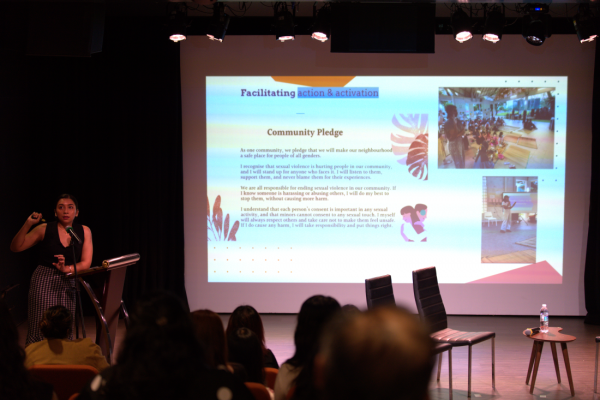
As a community organiser at Beyond Social Services, Sobikun would take the experiences and thoughts that the girls discussed, anonymise them, and share them with people in their neighbourhoods. She’d ask neighbours to sign a pledge, to commit to learning how to create safe spaces in their community.


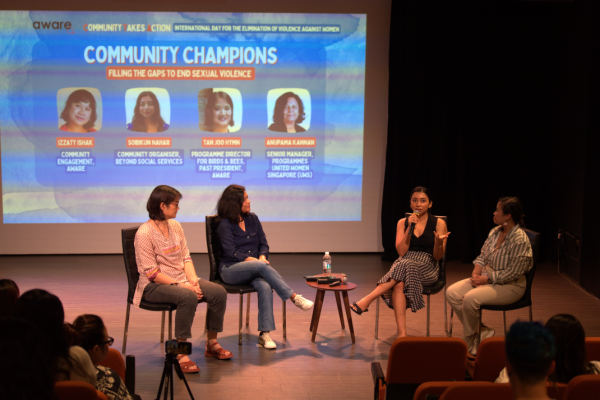
Tan Joo Hymn, Anupama Kannan, Sobikun Nahar and Izzaty Ishak talking about comprehensive sex education at IDEVAW 2024. Photograph by Bernadette Xiao (@bernadette.xiao on Instagram).

Sobikun shared why she shares these girls’ stories at a panel at IDEVAW 2024—a full-day event on 30 November 2024 by AWARE where advocates and experts convened to talk about gender-based violence.

“Young girls, who are often the most vulnerable and the most at risk of harm, are completely essential to leading the change and are necessary to transform communities,” Sobikun said to the audience.“And often they are the least consulted, the least asked for, and they’re mainly being prescribed solutions.”

Beyond Social Services received 60 signatures from a neighbourhood initiative, and went on to train these neighbours on how to be active bystanders, and how to respond when a neighbour tells them they have experienced sexual assault.

Sobikun said that due to these conversations, girls, who ordinarily would not feel safe talking to boys about abuse or assault, learned that the boys in their neighbourhood would willingly talk about how they can provide support.


Sobikun Nahar, a community organiser at Beyond Social Services, showing a community pledge that neighbours signed, promising to create safe spaces for survivors of sexual assault. Photograph by Bernadette Xiao (@bernadette.xiao on Instagram).

While Sobikun creates community support with willing participants, Tan Joo Hymn, the programme director of Birds & Bees, AWARE’s comprehensive sex education (CSE) workshop, said she currently works with captive audiences. For the last three to four years, she has been teaching CSE in residential care homes. These homes impose a lot of restrictions on their clients, who she said feel forced to attend CSE.

“We can’t create a safe space,” Joo Hymn said at the panel. “The issue is how to create as safe a space as humanly possible in a space that is inherently unsafe.”

To tackle this issue, she said the programme must constantly evolve. She takes data from the responses she receives from residential care home clients, from boys, from vulnerable communities, and changes the programme to fit their needs. An interesting note she learned from teaching boys is that male gender expectations to perform prohibit them from being receptive to CSE.

“You’re either alpha or you get pummeled,” Joo Hymn said. The boys felt, “if I ask my girlfriend for consent, she’s going to think I’m damn lame, man. Just get on with it. Who the hell asks for consent in that situation?”

To address these male thoughts and norms, Anupama Kannan from United Women Singapore teaches ‘Boys Empowered,’ a CSE programme tailored to boys and men between 13 and 25 years old. Anupama and her programme team create safe spaces for boys to challenge gender stereotypes, and think about what healthy masculinity looks like.

“We start where the boys are, so we make a little bit of impact with the time we have,” Anupama said. She found it rewarding to see these boys understand why certain gender stereotypes were unhealthy. Yet, like Joo Hymn, she said she is limited by the amount of time she has with each class, and needs to refine the programme to meet these limitations.

Before the panel, IDEVAW 2024 attendees sat in focus group discussions to talk about CSE. In the morning, Devanantthan Tamilselvii, founder of Mental ACT hosted a discussion about how to foster healthy masculinity.

Male attendees talked about how there is a social cost for men when they attempt to be progressive. To break traditional masculine roles is to defy expectations and alienate themselves from their communities.

“I was really interested in hearing from the men on where they get their idea of masculinity,” ZY, an event attendee said.


Darren, a Yale-NUS College student, reflects on the barriers to providing comprehensive sex education in Singapore. Photograph by Bernadette Xiao (@bernadette.xiao on Instagram).

Knowing that it is difficult to enter male spaces to teach CSE effectively, attendees suggested that trainers need to meet young men in the community spaces that they are comfortable in. Ian, an attendee, suggested teaching trainers in judo, fishing, woodwork, and other traditionally male-dominated activities, on how to talk to their male clients about their emotions. These trainers have the opportunity to guide them through gender-informed perspectives.

ZY also attended our improv consent workshop, where instructor Prescott Gaylord taught attendees how to communicate consent. In one of his activities, attendees would engage in ‘Prescott says’ and one attendee would decide to say “no.” When they did, Prescott and the group would give a round of applause.

“Rejection can be a gift,” ZY learned from the exercise. “The person is trusting you enough to state their boundaries.”

Prescott gives all his attendees permission to replicate his training anytime, anywhere. His aim is for people to teach their community members that rejection is okay.

Joo Hymn intends to create and refine CSE programmes for vulnerable girls who have already experienced some form of violence. Before her panel, she hosted a focus group discussion with attendees on how they could create this programme.

Attendees raised that teaching parents CSE may be necessary, as they are the adults that will be responsible for answering their children’s questions. This could be the solution to addressing the time limitations of CSE programmes.

Darren, a Yale-NUS College (YNC) student, was one of the participants who attended the session. He works with Kingfishers for Consent, a YNC CSE programme, and noted that there were individuals from MOE and MSF who shared their opinions during the session. He said he enjoyed “learning more about their approaches to teaching consent in Singapore.”


This article is one in a four-part series on IDEVAW 2024. Click below to read the other aspects of gender-based violence that we tackled at the conference.

What it takes to stop deepfake nudes: Insights from IDEVAW 2024 (1/4)

What it takes to stop domestic violence: Insights from IDEVAW 2024 (2/4)

What it takes to disrupt discrimination at work: Insights from IDEVAW 2024 (3/4)

What it takes to disrupt discrimination at work: Insights from IDEVAW 2024 (3/4)

By Athiyah Azeem

Are you automatically assigned more ‘submissive’ roles like taking notes or office housework? Dr. Annette S. Vincent asked this question to a group of people attending IDEVAW 2024—a full-day event on 30 November 2024 by AWARE where advocates and experts convened to talk about gender-based violence.

Many of the attendees, who were all femme-presenting, raised their hands. While someone who doesn’t experience this might think it is not a big deal, it is when it is a perpetual form of gender discrimination, Dr. Annette said; 20% of women report being made to do more office housework, like taking notes, than men. Dr. Annette calls this a microaggression.


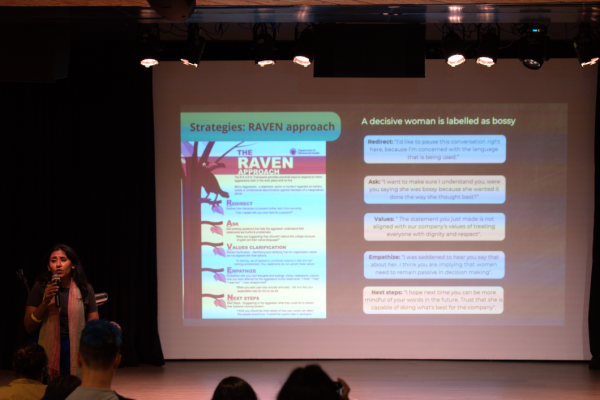
Dr. Annette S. Vincent teaching the RAVEN approach to disrupting discrimination in the workplace. Photograph by Bernadette Xiao (@bernadette.xiao on Instagram).

“The underlying factor is that it communicates harm and discrimination towards minorities in our community, causing psychological, emotional and sometimes physical harm,” Dr. Annette said. Ultimately, due to the cumulative stress these ‘small’ incidences cause, it has a big impact.

“Even a side remark at your workplace about women…in the long run, it does create a scar,” Sairino, a long-time AWARE volunteer who attended the workshop, said to an AWARE representative. She hopes to see more public awareness of the impact of microaggressions at work.


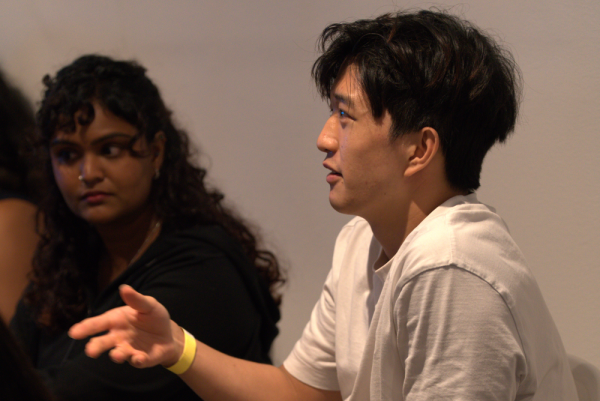
An event attendee asks Dr. Annette Vincent a question about microaggressions. Photograph by Bernadette Xiao (@bernadette.xiao on Instagram)

There are ways that we can disrupt microaggressions. Dr. Annette calls on survivors and bystanders to use the R.A.V.E.N. framework: where they can redirect the conversation to address the offending language directly; ask the offender probing questions so the offender understands what they did wrong; clarify the workplaces’ shared values like trust, diversity and inclusion; emphasise their own thoughts and feelings about the microaggression; and offer concrete steps on how the offender can change their behaviour moving forward.

For example, if someone interrupts their female colleague while they are speaking, you can redirect the conversation by saying, “Hey, she wasn’t done speaking. I’d like to hear what she was going to say.”

“If we have the power and privilege to interrupt microaggression, then we should call it out,” Dr. Annette said.


This article is one in a four-part series on IDEVAW 2024. Click below to read the other aspects of gender-based violence that we tackled at the conference.

What it takes to stop deepfake nudes: Insights from IDEVAW 2024 (1/4)

What it takes to stop domestic violence: Insights from IDEVAW 2024 (2/4)

What it takes to create more community awareness about gender-based violence: Insights from IDEVAW 2024 (4/4)

What it takes to stop domestic violence: Insights from IDEVAW 2024 (2/4)

By Athiyah Azeem. Lydia Ariani contributed to this article.

Faith Joyce Koh is a survivor of domestic violence. Her stepfather was a drunk, gambling womaniser who manipulated her, controlled her, and physically abused her. When she was 8 years old, he caned her so severely that her school reported it to the police.

Yet nothing came of it. Faith’s family members kept telling her to not talk about the abuse to the police—to not send her stepfather to prison. This pushed her not to talk, so the police dropped the case. Her school counsellor got frustrated when Faith wouldn’t talk, so he stopped seeing her. Amid the pressure, Faith felt like it was somehow her fault that her stepfather caned her. She felt like she deserved it.


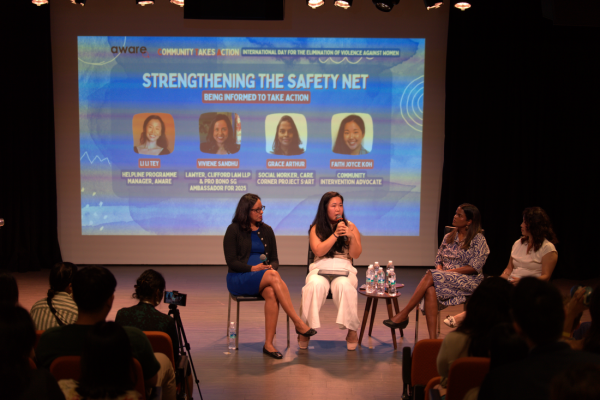
Viviene Sandhu, Clifford Law LLP and Pro Bono SG Ambassador for 2025; Faith Joyce Koh, a community intervention advocate; Grace Arthur, a social worker with Care Corner Project StART; and Li Li Tey, AWARE’s Helpline Programme Manager; talking about how to report domestic violence at IDEVAW 2024. Photograph by Bernadette Xiao (@bernadette.xiao on Instagram).


Insights at a glance:

  • Faith Joyce Koh, a survivor of domestic violence, shared how she felt the police and her school failed to stop her stepfather from physically abusing her
  • In Faith’s case, the system placed the responsibility on her when she was 8-years-old to progress the case
  • There are now resources like the Domestic Violence Emergency Response Team (DVERT), a group of social workers who can issue emergency orders to perpetrators, which can include asking them to leave the household
  • Social workers like Grace Arthur from Care Corner Project StART provide long-term case management to survivors
  • Survivors can also file for Personal Protection Orders (PPOs), or file under the Protection from Harassment Act (POHA)

Faith told her story on a panel at IDEVAW 2024—a full-day event on 30 November 2024 by AWARE where advocates and experts convened to talk about gender-based violence.

“In my experience, everything and everyone failed me as a child,” Faith said to the audience. “My safety, my happiness and my joy were really deprioritised in everything.”

“It is very disheartening what has happened [in Faith’s case],” said Grace Arthur, a social worker for Care Corner Project StART. “Our hope is that such cases are not repeated.”

In Faith’s case, the system placed the responsibility of progressing the case on the survivor, who was only a primary school student then. There are now processes available to survivors where social workers can intervene.

Since April 2023, when police receive a report about family violence and ascertain that there are immediate safety concerns, they will activate the Domestic Violence Emergency Response Team, or DVERT, according to the Ministry of Social and Family Development or MSF.

The DVERT team, made of MSF social workers, can issue an emergency order to the perpetrator, which could involve asking them to not come near the survivor or temporarily leaving the household. They could place survivors in crisis shelters. Ultimately, they can refer the survivor to social service agencies like Care Corner, who can provide long-term case management.

Domestic violence is a multifaceted issue, Grace said. To address this, she said Care Corner social workers work with neighbours and friends to establish a safety plan. They also use a Continuum of Care structure, where they will provide care to their clients as they move through different stages of life.

Ultimately, when survivors feel conditioned to not have a voice, Faith said bystanders play an important role in taking action.

Li Li Tey, the moderator of the panel and AWARE’s Helpline Programme Manager, added that bystanders can call the National Anti-Violence and Sexual Harassment Helpline at 1800-777-0000 to report the incident. All callers’ identification is kept strictly confidential.

“The assurance is that, as a bystander, even if your report turns out to be a false alarm, you will not be liable,” Li Li said.

Viviene Sandhu, a lawyer at Clifford Law LLP and Pro Bono SG Ambassador of 2025, said there are now more resources available for survivors than before—and they are online. Since 2014, survivors are able to file for protection from harassment, unlawful stalking and false statements of fact under the Protection from Harassment Act or POHA.

Viviene also said survivors can file for Personal Protection Orders, which is a court order that tells the offender not to use violence against a family member. You can learn more about PPOs on our website.

“I always say: it takes a village,” Viviene said. She said survivors must first identify that they are being abused, then tell the people they trust about it. She encouraged people close to survivors to help them take steps toward filing for protection. Part of the process involves writing brief descriptions of the incident and the injuries the survivor sustained.

Grace said Care Corner Project StART helps survivors apply for PPOs, and provides counselling support.

The panel makes it clear that the onus for reporting domestic violence is often on the survivors. They need to advocate for themselves and document the abuses that happened to them to file for legal protection. Survivors can be retraumatised in the process. Documenting abuse can be even more difficult when the abuse they endured is not obvious to the human eye, like emotional and psychological abuse, and coercive control.

The conversations social workers, authorities and advocates may need to have going forward, is how we can make it easier and less traumatic for survivors to report domestic violence, get to a safe space, and to be believed.


This article is one in a four-part series on IDEVAW 2024. Click below to read the other aspects of gender-based violence that we tackled at the conference.

What it takes to stop deepfake nudes: Insights from IDEVAW 2024 (1/4)

What it takes to disrupt discrimination at work: Insights from IDEVAW 2024 (3/4)

What it takes to create more community awareness about gender-based violence: Insights from IDEVAW 2024 (4/4)

What it takes to stop deepfake nudes: Insights from IDEVAW 2024 (1/4)

By Athiyah Azeem. Adilah Rafey and Racher Du contributed to this article.

Explicit nonconsensual deepfakes are making headlines right now.

Recently, news reported that male Singapore Sports School students created and circulated deepfake nudes of female students and teachers. Less than two weeks later, anonymous actors attempted to extort a Ministry of Health agency with explicit deepfakes of their staff, and extort 100 public servants, including five ministers, using “compromising” videos. News media reported all three incidents in November alone.

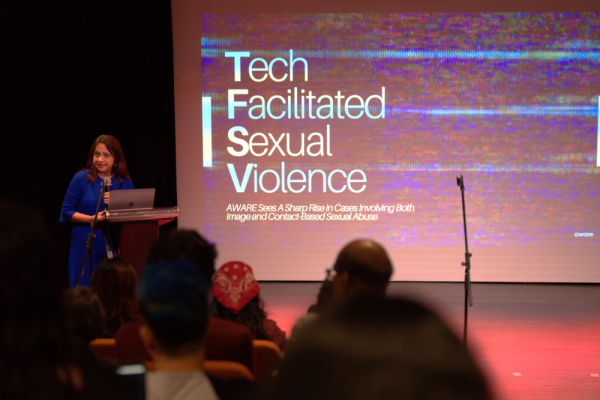
Sugidha Nithiananthan, Director of Advocacy and Research at AWARE, presenting data on tech-facilitated sexual violence at AWARE IDEVAW 2024. Photograph by Bernadette Xiao (@bernadette.xiao on Instagram).

Insights at a glance:

  • There is a rise in nonconsensual deepfake nudes and other types of tech-facilitated sexual violence
  • The people who use intimate images or create deepfake images to commit sexual violence are often the people you know
  • Developers are racing to implement guardrails in their AI to prevent it from creating deepfake nudes, but bad actors keep breaking these guardrails
  • The Ministry of Digital Development and Information is creating an agency that could quickly order takedowns of posts with TFSV without needing to make a police report. This could give survivors relief and agency
  • Comprehensive sex education and consent education can prevent future generations from committing TFSV

This isn’t new. Nonconsensual deepfake nudes are a type of Technology-Facilitated Sexual Violence, or TFSV, where perpetrators commit sexual violence online.

Every year, AWARE receives a sizable number of callers to our Sexual Assault Care Centre (SACC) helpline about TFSV. Out of 713 calls about sexual violence to SACC in 2023, 113 calls, or 16%, involved TFSV.

Sugidha Nithiananthan, AWARE’s Director of Advocacy and Research, presented what we’ve learnt from these calls at IDEVAW 2024—a full-day event on 30 November 2024 by AWARE where advocates and experts convened to talk about gender-based violence.

“A client’s ex-boyfriend used intimate images from when they were in a relationship to blackmail and harass her,” Sugidha said to the audience. “After they broke up, he continued to message her with death threats.”

This is an incident where the perpetrator committed both IBSA and CBSA. IBSA is Image-Based Sexual Abuse. Non-consensual deepfake nudes are a type of IBSA. CBSA is Contact-Based Sexual Abuse. CBSA includes online interactions that lead to sexual violence, sexually harassing messages or comments and cyberstalking.

In 2023, 25% of perpetrators committed both IBSA and CBSA—an increase from 16% in 2022 and 6% in 2021.

It is vital to understand that the people who commit TFSV are not strangers—81.4% of TFSV perpetrators are known to the survivors. They’re mostly acquaintances, or intimate partners and ex-partners.

“TFSV is not a niche form of violence that only affects a subset of people who choose to date online or live their lives on online and social media,” Sugidha said. “Digital technology is amazing but also adversely affecting women in gendered and sexualised ways.”

To understand the digital technology, chiefly AI, that is used to perpetuate IBSA, Mohan Kankanhalli, Director of NUS’ AI Institute, introduced us to how developers can tackle it.

“Anybody with the ability to click a mouse can actually create deepfakes. Which is scary,” Mohan said.

But developers can implement guardrails on their AI to prevent it from creating nudes. For one, they can make the AI refuse to create images when they receive a prompt that has keywords like ‘nude’ or ‘naked.’

Even then, perpetrators can input the keywords in unique ways, like ‘nude%’ or ‘&*nude’, and the AI would still recognise the word “nude” and generate an explicit image. So, Mohan said it is difficult to build keyword-based guardrails.

Watermarking technology could impose an unremovable brand on images to help survivors and authorities track which AI engine created it. But Mohan said this technology just isn’t there yet.

Right now, developers are working on machine unlearning, where they get the AI engine to forget how to generate a naked body in the first place.

After their presentations, Sugidha and Mohan joined Stefanie Thio, Chairperson of SG Her Empowerment, to talk about how to stop incidences of TFSV.


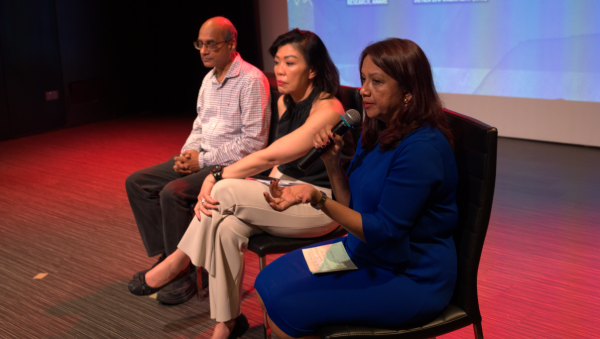
Mohan Kankanhalli, director of NUS AI Institute, Stefanie Thio, chairperson of SG Her Empowerment, and Sugidha Nithiananthan, director of advocacy and research, talking about tech-facilitated sexual violence at IDEVAW 2024. Photograph by Bernadette Xiao (@bernadette.xiao on Instagram).

SG Her Empowerment operates SHECARES@SCWO, a support centre for survivors of online harms. Stefanie said she was excited by a recent announcement by the Ministry of Digital Development and Information, who said they would create an agency to quickly take down online harms like intimate image abuse.

According to MDDI, this agency will allow victim-survivors to report abusive posts without needing to make a police report. This is important, as the criminal consequence of TFSV can stop survivors from making a report—especially when they know the perpetrator.

“What is important about this is not just how quick the takedown is, I think it is the sense of agency you give somebody who has been victimised,” Stefanie said. “It will signal to the community that these are bad actions.”

That said, Stefanie said that it is important for perpetrators to understand that what they are doing is wrong.

She introduced the idea of making a code of practice that schools can introduce to their students. This way, students understand and internalise that they should not commit or enable TFSV.

Sugidha and Stefanie talked about working together to create that code of practice.

On the developer side, Mohan said that having more women in tech will make TFSV more salient to tech companies and “get their due importance.” He said when tech companies prioritise creating better guardrails on their AI, it can help curb TFSV.

According to Sugidha, Stefanie and Mohan’s conversations, the technological solutions to TFSV are limited. As long as the technology exists on the internet, people will continue to use deepfake nude technology to commit IBSA to women they know.

And while it is true that putting images of yourself on social media increases your vulnerability to IBSA, TFSV does not just affect people with an online presence, Sugidha said. It is just a new way of perpetuating gender-based violence.

The reason why someone would commit TFSV, is often because they don’t respect the consent and autonomy of women and their bodies. Sugidha said it is important to teach people comprehensive sex education, including consent, gender stereotypes, gender-based violence and gender inequality, so future generations are less likely to commit TFSV.

You can read more about our TFSV findings in our press release.


This article is one in a four-part series on IDEVAW 2024. Click below to read the other aspects of gender-based violence that we tackled at the conference.

What it takes to stop domestic violence: Insights from IDEVAW 2024 (2/4)

What it takes to disrupt discrimination at work: Insights from IDEVAW 2024 (3/4)

What it takes to create more community awareness about gender-based violence: Insights from IDEVAW 2024 (4/4)

MSF announces more infant and childcare places from 2025 and a new process for applying for childcare subsidies from 9 Dec 2024

AWARE welcomes the recent announcement by the Minister for Social and Family Development (MSF) Masagos Zulkifli, regarding improvements in accessibility for lower-income families seeking childcare subsidies.

Starting 9 Dec 2024, all lower-income families with a gross monthly household income of S$6,000 and below will qualify for the maximum amount of childcare subsidies available for their income tier. Furthermore, these families will be able to apply for the subsidies online, directly through the LifeSG app, allowing greater ease and accessibility in managing childcare support. 

These changes, along with the addition of nearly 40,000 new infant and childcare places between 2025 and 2029, represent a constructive step in addressing some long-standing challenges within our childcare system that have restricted access to childcare and, by extension, limited many parents’ ability to seek employment.

These updates respond to some of AWARE’s key advocacy points, namely that:

  • The shortage of subsidised childcare places needs to be addressed 
  • Low-income families should be afforded subsidies that enable their children to have free childcare 
  • The application process should be improved to reduce the high compliance cost for parents and the administrative cost for childcare centres in order to access the subsidies
  • There should be no pre-condition of work to be able to access full childcare subsidies

The burden of compliance has, in the past, discouraged some childcare operators from enrolling low-income children. As one operator shared with AWARE, the substantial paperwork required can often be a disincentive. For more on the complexities of accessing childcare subsidies and other barriers to working, see our report, “Why Are You Not Working?

The government’s plans are a very good step in the right direction, addressing the supply issue, easing the criteria for qualification for full subsidies and reducing the bureaucracy involved in applying for subsidies. 

AWARE celebrates the fact that the current “work first, then childcare” approach will be replaced with a needs-based approach from 9 Dec 2024, that allows low-income families to access full childcare subsidies without having to prove they work at least 56 hours per month. 

We believe that every child in Singapore should have the opportunity to thrive, regardless of their family’s financial situation. We urge further steps to ensure a more equitable future for all Singapore families.

Limited services and closures for Women’s Care Centre and Sexual Assault Care Centre

The AWARE centre will be closed from 23 December, 2024 to 1 January, 2025.

The Women’s Care Centre (WCC) and Sexual Assault Care Centre (SACC) will provide limited services from 16 December, 2024 to 22 December, 2024 and 2 January, 2025 to 10 January, 2025.

Details of the limited services and closure are as follows:

WCC and SACC:

  • 16 Dec, 2024 – 22 Dec, 2024: Helpline services are available from 10 a.m. to 3 p.m., Monday to Friday; no new clients will be accepted for our counselling, legal clinic and case management services during this time.
  • 23 Dec, 2024 – 1 Jan, 2025: Closure. No services will be available.
  • 2 Jan, 2025 – 10 Jan, 2025: Services will restart at a limited capacity. Helpline services are available from 10 a.m. to 3 p.m., Monday to Friday; no new clients will be accepted for our counselling, legal clinic and case management services during this time.

Normal services for WCC and SACC will fully resume on Monday, 13 January 2025.


If you have experienced sexual assault within the last 72 hours, you may refer to this page for suggested actions.

If you require support, you may reach out to these alternatives:

  • National Anti-Violence Helpline (24-hour, for reporting of domestic and sexual violence): 1800 777 0000
  • Samaritans of Singapore (24-hour, for coping with self-harm or suicidal ideation):
  • IMH Helpline (24-hour, for mental health crisis): 6389 2222
  • ComCare Helpline (7am-12am, to locate your nearest Family Service Centre): 1800 222 0000
  • Care Corner Helpline (10am-10pm, for emotional support for Mandarin speakers): 1800 3535 800
  • Community Justice Centre (Mon-Fri, 10am-12.30pm, 1.30pm-4pm, 20 minutes free legal information, walk ins only, recommended to queue ~1.5h before it opens as its services are on a first-come-first-serve basis)
  • Pro Bono SG (Law Society Pro Bono Legal Clinic Services) (Free legal information, appointments needed)
  • Police 999, Medical assistance 995 (If you or someone you know is in danger or has an emergency)

We seek your kind understanding and patience. Thank you.