

Author: Comms Executive

Dads are equal parents, not assistants to mums

This op-ed, penned by AWARE Executive Director Corinna Lim, was originally published in The Straits Times on 10 October 2023. 

Konstantin exemplifies what equal parenting commitment looks like.

When he and his wife had their first child 10 years ago, he was entitled to only three or four days of paternity leave, so he approached his company for four months of leave. The couple saw the first six months of their child’s life as an intensive caregiving period.

While he was prepared to take no-pay leave, the company agreed to give him four months of paid leave with a requirement to spend two hours each morning with his team, ensuring that work was on track. Konstantin readily agreed to this compromise.

His wife took two months of maternity leave, and when she returned to work, he spent four months at home looking after their daughter and doing two hours of work every morning.

As a result, Konstantin shares a strong bond with his daughter, and also with his second child. He believes that fathers should remain involved in raising their children beyond birth, emphasising that both parents share equal responsibility for the physical and psychological well-being of their children.

“Parents need to adopt this sense of responsibility for their children. It will feel like your responsibility only when you’ve had time to grow into the role of a parent,” he told me.

Konstantin’s children are now 10 and eight. He and his wife are in upper management roles. Both value being active parents, and have different parts of parenting they prefer to handle. He hates to shop for clothes, for example, so she takes care of that, as well as the children’s music classes and sporting activities. He handles all the school-related things like parent-teacher conferences and school associations, and both are confident about managing all aspects of looking after the kids. When one has to travel for work, the other stays home to look after the children.

Equal parenting can start any time

Philip (not his real name) is a stay-home father to a five-year-old son and a three-year-old daughter.

When his kids were born, he took his full entitlement of two weeks of paid paternity leave. But this short duration left him feeling like his wife’s “helpmate”. Instead of being a primary caregiver of the baby, he was merely an extra pair of hands to assist his wife and the confinement nanny.

Looking back, he views being around after the confinement nanny leaves as critical, and thinks that a second month of paternity leave is required for parents to adjust to parenthood.

A year ago, he left his job to be a stay-home dad when his kids were two and four years old. This was not easy as they kept looking for their mother whenever a challenge emerged. But with his wife’s encouragement, he developed the necessary knowledge and skills to take over caring for their children.

Now, he buys the groceries, manages the household and handles day-to-day school activities like homework and enrichment classes, while his wife plans the meals, organises holiday activities and keeps in touch with education-related matters.

He eagerly anticipates mastering the next domain – cooking. Philip’s story illustrates that while starting early has benefits, equal parenting can be embraced at any stage.

Not there yet

In my S R Nathan lecture series in 2021, I passionately argued that active fatherhood would be a transformative force for society. I envisioned a world where fathers were not mere bystanders but active co-parents from day one, sharing the joys and challenges of raising their children.

At that time, I pointed out the glaring disparity between maternity leave, which stood at a generous four months, and the paltry two weeks of paternity leave, perpetuating the notion that caregiving was primarily a mother’s responsibility.

Fast-forward to now, and the Government has recently amended the law to double paternity leave from two weeks to four weeks. It is undoubtedly progress, but true equality requires more.

Research from the Nordic countries has demonstrated that equal parenting policies foster egalitarian gender norms within families. These set the stage for a lifetime of shared responsibilities and mutual respect.

The examples of Konstantin and Philip show that there is no set formula for what active co-parenting looks like. It can look different for each couple as they divide the duties and responsibilities in the way that works best for them. The key is to give them the opportunity to take this on as a joint responsibility and find the balance that is right for them. That requires time and needs to begin when the child is born.

The desire for work-life balance is palpable among Singaporeans, particularly millennials. As the latest Straits Times survey shows, many prioritise family over career, signalling a societal shift in values.

Mindsets about gender roles and caregiving are changing. A 2023 survey by Indeed shows that almost one in two (47 per cent) workers in Singapore supports equal parental leave.

There is a growing and encouraging trend towards equal co-parenting, with many men viewing their roles quite differently, compared with their fathers. They understand that being a father means more than being a breadwinner – it means being an actively engaged co-parent, who feels equally responsible for the child’s upbringing.

The Singapore Government has approached paternity leave extensions cautiously, aligning them with societal readiness, especially that of employers. The current increase is commendable, but we must think ahead. Policymakers should announce plans for further extensions that lead ultimately to equal maternity and paternity leave. We would like to see this happen ideally within the next five years.

Equal partners

Konstantin’s and Philip’s stories show that men can do everything that women can do in childcare – perhaps except direct breastfeeding.

Both felt that parenting is not about gender but about learning caregiving skills and assuming responsibility for the child. Men are fully capable of nurturing, soothing and caring for their children. It is a matter of spending the time needed so that fathers can actively participate in their children’s upbringing and grow into their role as a parent, just like mothers do.

Caring for an infant is not easy, and there is a lot of sleep deprivation involved in the early months, but what these men discovered was that fatherhood has enriched their lives and helped them form strong bonds with their children.

There is scientific research to explain this bonding. Oxytocin, a hormone associated with greater engagement with the child, was found to increase in fathers just as much as in mothers in the transition to fatherhood and during the first six months of fatherhood. So this bonding is not exclusive to mothers.

Supportive workplace policies and culture

Derick, the father of a two-year-old son and a newborn, underwent a remarkable transformation. His first child’s birth coincided with a fortunate opportunity – his workplace offered him its extended 20 weeks of paid paternity leave.

Yet Derick hesitated, concerned about the impact on his career. Fortunately, he encountered “fatherhood champions” within his company who set the example by taking their full paternity leave. They made it feel safe for him to do the same.

Today, Derick says his decision to embrace fatherhood proved the best choice he has ever made. Now, he is on paternity leave again for his second child.

More companies globally are going beyond legally mandated maternity and paternity leave requirements in moving towards true gender equality. For example, Deutsche Bank, Goldman Sachs and, recently, Standard Chartered Bank offer equal maternity and paternity or parental leave to staff.

A company culture that promotes paternity leave can make a significant difference in encouraging fathers to take an active role in parenting, as Derick’s example shows. The civil service sets an exemplary precedent, with an impressive 84 per cent of fathers taking paternity leave compared with the general population’s average of 40 per cent between 2018 and 2020, according to a 2023 government response to a parliamentary question on paternity leave usage.

Shifting towards equal paternity and maternity leave and equal parenting also makes economic sense. As more women than men graduate from universities and have the potential to earn higher salaries, it is crucial to ensure that both partners have the opportunity to balance family and work. This benefits not only families but also the nation’s workforce and economy.

Men and women are ready for more equal co-parenting, and policymakers should be proactive in supporting their desires. These aspirations align with the country’s priority of higher fertility rates and a thriving workforce.

With Singapore’s fertility rate hitting an all-time low of 1.04 in 2022, we should not wait too long to equalise paternity leave.

A Recap: ‘For Good Reason’, A Panel on Workplace Accommodations

On August 17 2023, around 50 people attended a virtual event titled ‘For Good Reason: A Panel on Workplace Accommodations’ to discuss how companies can create policies to help all individuals thrive and how such inclusive measures in turn benefit the companies.

Organised by the Disabled People’s Association (DPA) and AWARE, the session was moderated by Anthea Ong, a mental health advocate, social entrepreneur, and former NMP. Joining her on the panel were AWARE Executive Director Corinna Lim; DPA Research and Policy Manager Max Soh; Head of DEI, APAC at Mediabrands, Dharesheni Nedumaran; and Yap Qian Yin, a business analyst and former Paralympian.

The panel discussion was contextualised within the Ministry of Manpower’s recent acceptance of the Tripartite Committee’s recommendations for the Workplace Fairness Legislation (WFL). The panellists acknowledged this as a step in the right direction, though they pointed out some remaining gaps which will still leave certain groups of workers vulnerable.

Notably, the WFL only outlines the right for employees to request reasonable accommodations for disabilities, of which there is a stringent definition. An upcoming Tripartite Advisory, which will have no legal authority, will be in charge of monitoring any other worker’s right to reasonable accommodations. The question arises: How can workplaces facilitate reasonable accommodation requests to get the best out of a company’s workforce?

The necessity of reasonable accommodations in the workplace

According to the International Labour Organisation, reasonable accommodations refer to ‘any modification or adjustment to a job or to a workplace that is reasonably practical to enable [employees] to have access to, participate in, or advance in employment’. 

The panellists had a robust discussion built upon this definition. From Max’s perspective, reasonable accommodations were “essential modifications for individuals, not just persons with disabilities, to do work effectively”. Sharing his experiences as a legally blind person, he emphasised that any individual could face different barriers that impede their work capabilities. 

Corinna further highlighted that it is not just people with disabilities who are affected. The AWARE director pointed out that the workplace has always been designed for men or those without caregiving responsibilities. Today, reasonable accommodations are key to supporting a wide range of workers, including people with disabilities, caregivers, pregnant women, and older people. It also includes adjustments or modifications to an employee’s role or work environment that can help meet their specific needs. 

Similar accommodations have been legislated, with Corinna pointing out that “people don’t think about them as reasonable accommodations, but that is what they are”. 

Reasonable accommodations benefit all

Reasonable accommodations are crucial to enabling an environment where employees can perform at their best, which ultimately benefits both employers and employees. For Qian Yin, COVID-19 enabled greater flexibility in the workplace, which she “benefitted greatly as a wheelchair user”. She detailed the importance of access to basic facilities, sharing that she almost turned down the offer from her existing employer due to the lack of a handicapped toilet in her building. As Dharesheni puts it, the point of reasonable accommodations is “to remove those barriers that prevent someone from working”, allowing organisations to have a diverse workforce and fully capitalise on the full extent of their employees capabilities. 

An employer who supports reasonable accommodations for their team is also able to exercise effective leadership to deliver better outputs for their company. As Anthea noted, at the core of business and leadership is for employers to “take care of the humans under their charge”. 

Reframing the narrative 

The panellists agreed that it is time to reframe reasonable accommodations as a gain rather than a cost, as a cornerstone of good leadership rather than overburdening employers. Oftentimes, conversations about reasonable accommodations are underlined by biassed assumptions that someone cannot do the job properly. To Max, the main point to drive home was that “reasonable accommodations are a useful tool; a reasonable accommodation, after all, is not special treatment. Rather, it is the removal of barriers to enable more efficient and productive workflows”.

Another common perceived cost of reasonable accommodations is the potential for abuse, where employees take advantage of employers with their requests. As the panellists discussed, the likelihood of abuse from the employee is slim; these individuals are already dealing with a lot, and there is little to suggest abuse. As Corinna puts it, this argument against reasonable accommodations is “a red herring”. 

A gentle approach forward

Employees can advocate for themselves gently yet powerfully. Qian Yin spoke about how she did not “put forward a half fight”; instead, she “put forward entirely what is required”. Corinna agreed, emphasising that employees should “take care of the question marks” so employers can better understand what is required to offer support. 

Gathering support from allies in the workplace can also aid in calling out resistance to reasonable accommodations. Qian Yin spoke about how she respectfully advocated for herself in the workplace, sharing her story with colleagues to build momentum towards “a louder voice to push” for a handicapped toilet. Her small victory spoke volumes about the power of sharing stories so workplaces can learn how to better support each other. 

From a mindset of resistance to one of support

There are a multitude of ways in which employers can support employees in requesting reasonable accommodations. An effective and visible action is to have an employment policy that can guide employees in making reasonable accommodation requests. This then facilitates an open conversation where employees can request and employers can negotiate.

Having conversations about reasonable accommodations should be an interactive process that culminates in a shared agreement. Dharesheni stated that employers can have a policy that tracks whether reasonable accommodations are effective for them. Anthea added that having open conversations does not mean a floodgate is being opened. Rather, it’s about operating from a mindset of diversity and inclusion instead of discrimination.

The panel considered the difficulties encountered in offering reasonable accommodations for individuals with invisible disabilities. Anthea acknowledged the challenges that employers may face in accommodating different needs. In response, Max emphasised that reasonable accommodations should be approached on a case-by-case basis in a manner that does not “compromise the nature or output of the work”. Flexibility in these conversations is essential to “human-centred” leadership that recognises the unique needs of each employee.

Max also highlighted that there are organisations that can support workplaces in implementing reasonable accommodations, such as funds and grants which can cover financial costs involved in providing reasonable accommodations. There are also considerable resources available from organisations such as AWARE and DPA so employers “don’t have to go in alone”. 

The next reasonable step

While legislating reasonable accommodation seems out of scope currently, the panel acknowledged that the next big fight will lie in legislating policy changes. In the meantime, the conversation certainly does not end here. We must continue to push as a community as we enter this new era of workplace fairness.

Temporary closure of Women’s Care Centre and Sexual Assault Care Centre

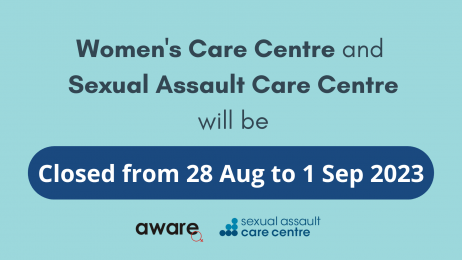
The Women’s Care Centre (WCC) and Sexual Assault Care Centre (SACC) will be temporarily closed from Monday, 28 August 2023 on Friday, 1 September 2023. During this period, all WCC and SACC services will be unavailable. Service will resume from Monday, 4 September onwards.

Our Workplace Harassment and Discrimination Advisory Helpline (6777 0318) will remain fully operational during this time.

If you have experienced sexual assault within the last 72 hours, you may refer to this page for suggested actions.

If you require support, you may reach out to these alternatives:

  • National Anti-Violence Helpline (24-hour, for reporting of domestic and sexual violence): 1800 777 0000
  • Samaritans of Singapore (24-hour, for coping with self-harm or suicidal ideation):
  • IMH Helpline (24-hour, for mental health crisis): 6389 2222
  • ComCare Helpline (7am-12am, to locate your nearest Family Service Centre): 1800 222 0000
  • Care Corner Helpline (10am-10pm, for emotional support for Mandarin speakers): 1800 3535 800
  • Community Justice Centre (Mon-Fri, 10am-12.30pm, 1.30pm-4pm, 20 minutes free legal information, walk ins only, first-come-first-serve basis)
  • Law Society Pro Bono Legal Clinic Services (Free legal information, appointments needed)
  • Police 999, Medical assistance 995 (If you or someone you know is in danger or has an emergency)

We seek your kind understanding and patience during this temporary closure.

[POSITION FILLED] Executive, Communications and Marketing Executive, Catalyse

This position has been filled and we are no longer accept applications.

We are seeking someone who is skilled and motivated to join our team at Catalyse as an Executive for Communications and Marketing. Catalyse is the consulting and training branch of AWARE, Singapore’s leading gender equality non-profit organisation. As Communications and Marketing Executive, you will play a crucial role in our organisation’s marketing efforts and will report directly to our Director of Strategy, Cynthia Chan.

Here’s what you can expect as part of our team:

Meaningful impact: You will play an essential role in our mission to foster inclusive workplaces. Your work with us will directly influence the growth and development of Catalyse, which ultimately aims to make a positive difference in the corporate world.

Diverse experiences: You will have exposure to a wide range of industries and projects, allowing you to become more well-rounded professionally and develop a versatile skill set. Additionally, you’ll have ample networking opportunities with clients, partners, and industry professionals, creating valuable connections for your future career.

Hands-on learning: Working alongside our experts, you will actively participate in business development strategies, conduct research, create content and assist in the development of social media campaigns.

Job Responsibilities:

  • Content creation:
    • Develop engaging content for various marketing channels, including but not limited to social media, website and email outreach
  • Project management
    • Coordinate and manage marketing projects
    • Oversee campaigns, track project progress and work with various teams on projects
    • Manage and process invoices
  • Website & social media management: 
    • Manage and update website content, optimise and craft content for search engines (SEO) and perform search engine marketing analysis
    • Manage our social media channels and craft content to enhance brand awareness, engagement and reach
  • CRM (Customer Relationship Management):
    • Manage and maintain customer database, ensuring accurate and up-to-date information
    • Monitor customer interactions and communication and update records accordingly
  • Business Operations
    • Provide support for ongoing business operations
    • Work with other members of the team to help grow Catalyse 
    • Other tasks as determined by the Director of Strategy 

Skills and Qualifications:

  • Attention to detail and ability to initiate and complete projects with accuracy
  • Demonstrated commitment and dedication to achieving goals
  • Excellent communication skills, both written and verbal
  • Proficiency in tools such as Microsoft Excel, Word and Google Documents, etc.
  • Familiarity with graphic design software like Photoshop, Adobe Illustrator, Canva or similar programmes
  • Expert professional knowledge of online digital marketing strategies and social media platforms such as Facebook, LinkedIn, Instagram and others
  • Basic understanding of website management and content management systems (CMS), plus points if you have basic CSS/HTML knowledge
  • Ability to conduct research and analyse data for marketing decisions
  • Strong copywriting and editorial skills and the ability to craft effective calls to action
  • Creative mindset and ability to think outside the box
  • Familiarity with statistical analysis and financial statements
  • Strong organisational skills 
  • Reliability, responsiveness and openness to learning new skills and technologies

Salary range: $3,500 – $4,200, depending on experience.

Selection Process:

  • Skills Test: Candidates will be given a take-home assignment which will assess their copywriting skills, specifically in crafting effective calls to action.
  • Interview: Shortlisted candidates will be invited for an interview. The interview will include a 15-minute portfolio presentation followed by a 45-minute structured interview.

If you are passionate about communications and marketing and feel you meet the above criteria, we encourage you to apply for this exciting opportunity. Do note that only shortlisted candidates will be contacted for interviews.

If you are interested in learning more about the role, please email Cynthia at: cynthia.chan@catalyse.sg. For more information about Catalyse and the impactful work we do, please visit our website at catalyse.sg.

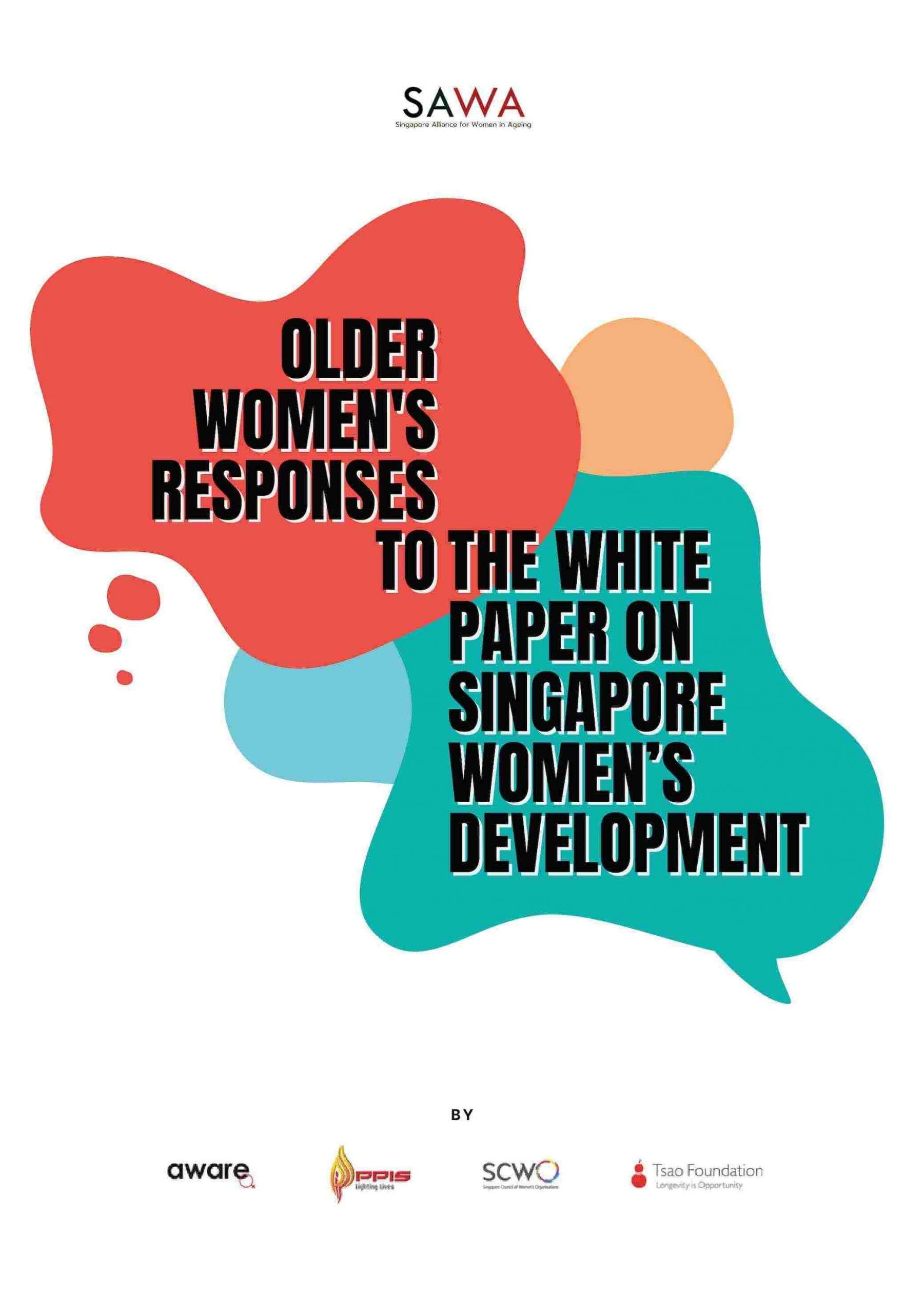
“Older Women’s Responses to the White Paper on Singapore Women’s Development”: Report by Singapore Alliance for Women in Ageing

Being stereotyped as “slow” and “less productive” at the workplace. Facing financial strain due to rising caregiving and healthcare costs. Experiencing isolation and loneliness as a result of living alone.  

These were some of the concerns raised by older women in a series of focus group discussions conducted by the Singapore Alliance for Women in Ageing (SAWA) in 2022 and 2023. 

Established in 2018, SAWA consists of AWARE, Singapore Council of Women’s Organisations, Singapore Muslim Women’s Association (PPIS) and the Tsao Foundation, and aims to raise awareness about the gendered nature of ageing in Singapore. 

SAWA’s latest report, titled “Older Women’s Responses to the White Paper on Singapore Women’s Development”, is a follow-up to the alliance’s 2021 submission to the Government’s national review of women’s issues. Last year, SAWA celebrated the White Paper on Singapore Women’s Development as a signifier of the Government’s commitment towards achieving gender equality. However, SAWA noted the White Paper’s lack of focus on older women, observing that the proposed action plans were largely aimed at a younger demographic.

To better understand the needs and challenges of older women, SAWA conducted four focus group discussions between June 2022 and February 2023, each in one of Singapore’s official languages (English, Malay, Mandarin and Tamil). In total, 170 women aged 55 and above attended to discuss the challenges they faced navigating Singapore as older women. 

One topic that was widely discussed was age-based discrimination in the workplace. Many older women recounted that they had been offered fewer promotion opportunities and job responsibilities as they aged. This made them feel excluded and undervalued, thereby impeding their ability to actively participate in work. 

Other concerns that participants raised related to caregiving and its impact on their retirement adequacy, access to community support and health and wellbeing.

During the focus group discussions, participants were also encouraged to share ideas for the government to address these challenges. Some recommendations included: 

  • Strengthening policy protection for re-employed workers in terms of remuneration and standards of workplace practices;
  • Enhancing subsidies for caregiving, healthcare and consumables for both caregivers and care recipients;
  • Reviewing the criteria for healthcare and caregiving subsidies regularly in tandem with the population’s profile;
  • Providing information and signs in vernacular languages in all healthcare settings to minimise confusion and delays;
  • Developing more programmes and opportunities in schools to forge stronger inter-generational bonds and tackle stereotypes against older persons. 

Read about the detailed findings and recommendations in SAWA’s report here.

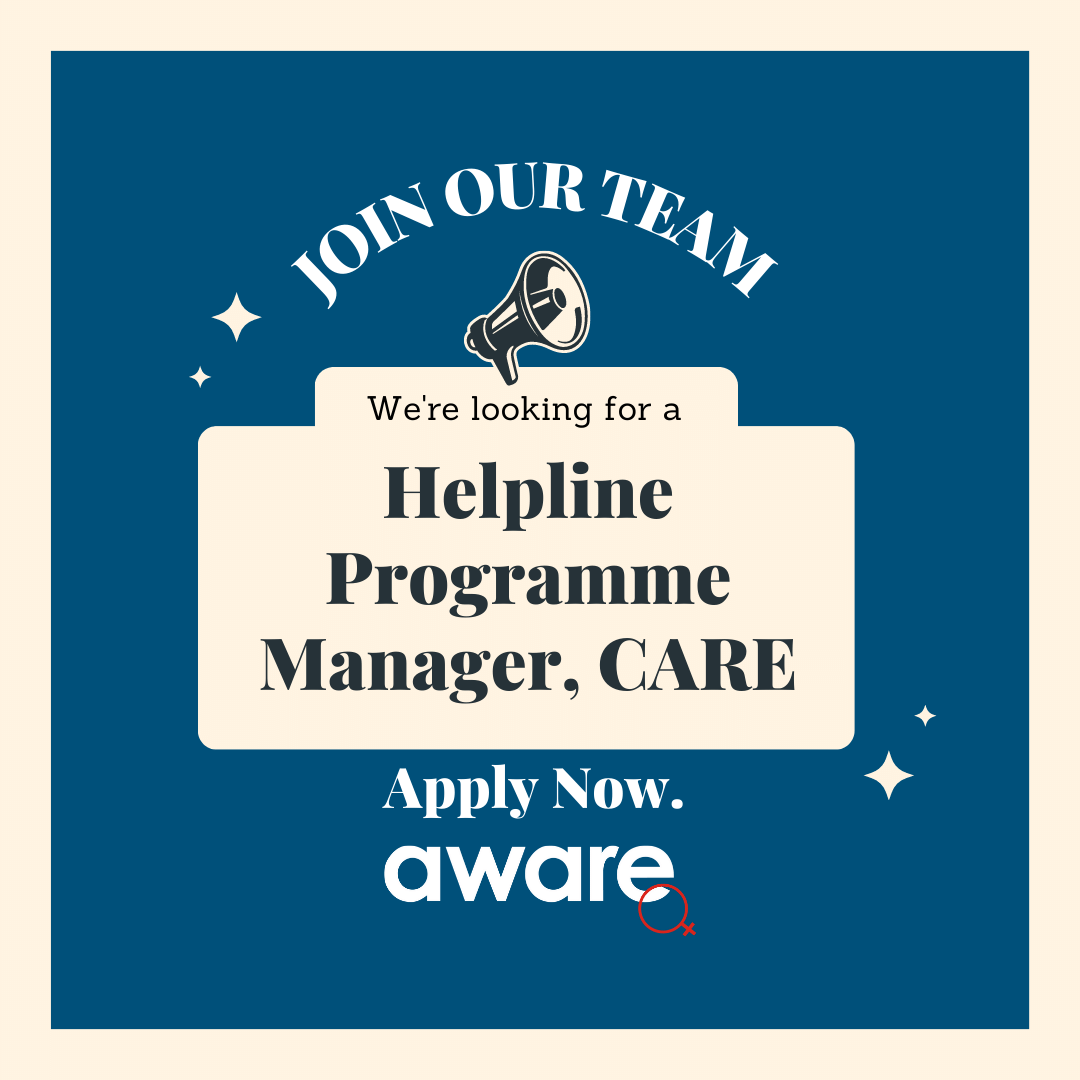
[Position filled] Helpline Programme Manager, CARE

Position: Helpline Programme Manager
Department: CARE
Commitment: Permanent full-time position with minimum commitment of 2 years
Salary range: SGD4,470 – SGD5,580
Starting date: Immediate
Work location: Hybrid

Are you passionate about making a meaningful impact on the lives of individuals in need? Do you have the
skills and experience to lead a dynamic team in providing crucial support services? If so, we have an
exciting opportunity for you. AWARE is a leading organisation committed to empowering women and addressing critical issues like abuse and violence. Our Women’s Care Centre and Sexual Assault Care Centre play a vital role in providing support and resources to those who need them most. We’re on the lookout for a First Response Operations Manager to lead our efforts and drive positive change in the community.

Job Description

Leading with Purpose: Oversee first response channels, including helplines, chat service, emails, and walk-ins, ensuring efficient and effective service delivery. Your work will directly impact the well-being of victim-survivors of sexual assault.
Innovation and Improvement: Develop and implement operational procedures and policies, making sure our services are consistently top-notch.
Team Empowerment: Manage and inspire a dedicated team of volunteers and staff, fostering an
environment where everyone thrives.
Data-Driven Impact: Use data insights to inform decision-making and contribute to strategic planning, helping us shape a brighter future.
Advocacy and Networking: Explore advocacy opportunities to expand access to support services and engage with like-minded organisations.

Requirements

Expertise: Ideally a social work degree and a minimum of five years in the social service sector.
Experience: At least two years of experience in people and performance management.
First Response: Proven track record in managing first response services in the abuse and violence field is a significant plus.
Knowledge: Good knowledge of Singapore social service landscape and criminal justice system.
Empathy and Compassion: Dealing with individuals in crisis or distress requires sensitivity, and we’re looking for someone who excels in this area.
Leadership Skills: Lead a dedicated team with your strong leadership and team-building abilities,
Tech-Savvy: Familiarity with various IT systems and tools.
Problem Solving: Quick thinking and strong problem-solving skills in order to manage high-pressure situations effectively.
Passion and Commitment: Be passionate about our mission and committed to gender- and trauma-informed practice.

Why Join Us:

Meaningful Work: Make a real difference in the lives of individuals in need and contribute to a vital cause.
Team Collaboration: Work with a dedicated team of professionals who share your passion.
Professional Growth: AWARE will support your growth with training and development opportunities.
Positive Work Environment: Join a workplace that values empathy, compassion, and making a difference.
Competitive Compensation: We offer a competitive salary and benefits package.

Click here to submit your application.

Please ensure that you have read and acknowledge the Privacy Statement here.

Please note that due to the large number of applications, only shortlisted applicants will be contacted for an interview. If you have any questions about this position, please email careers@aware.org.sg.

[POSITION FILLED] We are hiring! Case Manager, CARE

This position has been filled and we are no longer accepting applications.

CARE (consisting of Women’s Care Centre and Sexual Assault Care Centre) is looking for a Case Manager to support survivors of sexual assault along their journeys of recovery and help CARE in its day-to-day operations as well as programme development. The role will entail primarily working with survivors of sexual violence and there will be a smaller caseload of other forms of abuse and violence. The role also requires supporting the CARE team in advocacy and project-based work.

If you are passionate about helping survivors reclaim control of their lives after experiencing trauma, join AWARE in its fight against sexual violence. 

Position: Case Manager
Department: CARE
Commitment: 2 years, full time (40 hours a week)
Salary: SGD$3,500 – 3,800
Location: Hybrid (remote and at the AWARE office)
Reporting to: Case Management Programme Manager

Job Description 

  • Provide high-quality and timely case management services to survivors of sexual violence who approach AWARE through various modes (calls, messages, walk-ins, referrals and other platforms)
  • Conduct intake interviews and case sessions to assess client needs, risk and protective factors
  • Explore the clients’ options and plan interventions to ensure their best interest. This includes but is not limited to: gathering and sharing relevant information, exploring options and accompanying them through the justice system, advocating for their rights, advocating for survivor-centric policies and procedures around sexual violence, etc.
  • Collaborate with the client to develop a safety and/or care plan that addresses the identified needs and concerns
  • Coordinate internal and/or external services and support aligned with the care plan created with the client. Internal services include counselling, legal clinic, accompaniment through the civil or criminal justice system, etc. External coordination may include liaising with other agencies and institutions (e.g. criminal and civil justice system, medical system, social service system)
  • Maintain casework documentation in a timely manner for reporting and analysis, such as but not limited to case assessment and case plan, work done, client feedback and correspondence with relevant parties
  • Provide support to other SACC services and programme development work, including but not limited to: covering for other case managers during assigned legal clinic hours; project management of SACC initiatives and programmes; creating and improving standard operating procedures for SACC
  • Committing to continual learning and service improvement through supervision, knowledge and case-sharing, and discussions on service and process standards

Requirements

  • Minimum two (2) years of case work experience in a social service agency
  • Experience with conducting group work is a plus
  • Educational qualifications in social work, counselling, psychology or related fields preferred, with trauma management credentials a bonus (training will be provided as needed)
  • Strong belief in gender equality and the values of AWARE. Experience or interest in empowering individuals through case advocacy is a plus
  • Fidelity to clients’ best interests through a strong commitment to confidentiality on client information, and a strong commitment to empowering clients with knowledge on their rights, options and potential challenges
  • Excellent interpersonal, empathy and communication skills in English (verbal and written) to connect with clients, consult with colleagues, and correspond with relevant parties
  • Good analytical skills and ability to work independently
  • Superb time-management skills and ability to meet deadlines
  • Strong project-planning skills: highly creative, adaptable and a self-starter
  • Proficiency with computers, Google Drive apps and MS Office, especially Excel and Word

You must read and acknowledge our Privacy Statement here.

Please note that due to the large number of applications, only shortlisted applicants will be contacted for an interview. If you have any questions about this position, please email careers@aware.org.sg.

19 May 2023: Half-day closure of Women’s Care Centre and Sexual Assault Care Centre

The Women’s Care Centre (WCC) and Sexual Assault Care Centre (SACC) will be temporarily closed from 10am to 2pm on Friday, 19 May 2023. Service will resume from 2pm onwards.

Our Workplace Harassment and Discrimination Advisory Helpline (6777 0318) will remain fully operational during this time.

If you have experienced sexual assault within the last 72 hours, you may refer to this page for suggested actions, or consider other resources:

  • Call the National Anti-Violence Helpline at 1800 777 0000. They operate 24/7 and will be able to provide support for any violence you are facing.
  • For emergencies, please call 999 for the police.
  • Call 1767 for the Samaritans of Singapore (SOS) if you have thoughts of hurting yourself, including thoughts of suicide.

We seek your kind understanding and patience during this temporary closure.

Commentary: Turns out few understand maternity discrimination in Singapore

This op-ed was originally published in Channel NewsAsia on 14 May 2023. 

Long before anti-discrimination workplace legislation was mooted in Singapore, legal benefits and protections were already in place for working mothers: For example, the right to at least three months of maternity leave.

However, lest you take these protections as a sign of widespread progressive attitudes, consider this: Maternity discrimination is by far the most common form of discrimination seen by AWARE’s Workplace Harassment and Discrimination Advisory (WHDA).

Since its inception in 2019, WHDA has received 218 cases of maternity discrimination – from untoward job interview questions to wrongful dismissals, denial of bonuses and outright harassment. In 2022, such cases made up 85 per cent of the service’s entire discrimination caseload.

A peek at the online discourse around this issue is as telling as it is bleak. A wide swathe of Singapore’s netizens do not seem to think that maternity discrimination is unjust in the first place. They employ common narratives to dismiss and invalidate prejudices against pregnant women and mothers at the workplace.

This Mother’s Day weekend, let us unpack these narratives, in the hopes of doing away with insensitive and uninformed reactions for good.

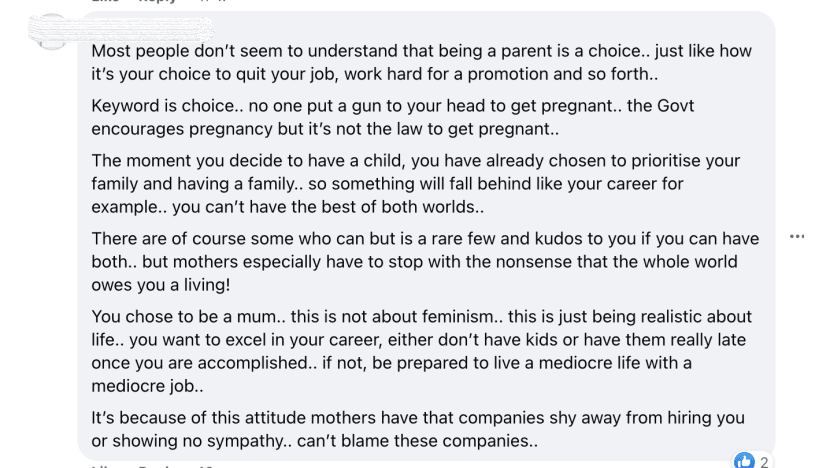
ARGUMENT 1: WOMEN MUST ACCEPT THE REPERCUSSIONS OF DECIDING TO HAVE CHILDREN

Or, as one Facebook user put it: “No one put a gun to your head to get pregnant… (as a working mum,) be prepared to live a mediocre life with a mediocre job.”

Screengrab of an online comment. (Source: AWARE)
It’s true that in an ideal society, every individual should be able to freely decide whether and when to have children. Yet in our patriarchal world, that decision can have vastly different repercussions, predicated on gender.

The disproportionate burden of childcare means that women are often forced to choose between motherhood and career, constantly searching for a functional balance. On the other hand, men are typically able to have children and thrive in their careers without one compromising the other. Why is this trade-off presented to one gender and not the other?

In fact, for many men, fatherhood does not hurt their professional prospects – it enhances them. Research by US think tank Third Way discovered a “fatherhood bonus” whereby, all else being equal, fatherhood increases men’s earnings by over 6 per cent.

The reasons posited for this include both the material (for instance, men increasing their working hours upon fatherhood to provide for their families) and the imaginary (such as fathers being perceived by superiors to be more mature, committed and stable).

This lies in contrast to the fate that awaits new mums, frequently called the “motherhood penalty”: A drop in earnings due to spending fewer hours at work to take care of the child.

ARGUMENT 2: WORKING MUMS HURT A COMPANY’S BOTTOM LINE

This argument assumes that female workers having children is fundamentally bad for business: Not only do they take time off while pregnant, their divided attention also worsens performance. However, this premise is flawed.

First, we must remember that bearing and raising children, most of whom become workers and support the economy, is a vital contribution to Singapore’s growth. Countries like Japan show how perilous falling birth rates are to a nation’s survival.

Research also suggests that the cost of replacing unhappy workers outweighs the cost of providing maternity leave and other benefits. In California, 87 per cent of businesses found no increased costs from the state’s paid maternity leave programme, while 9 per cent enjoyed cost savings from reduced employee turnover and not having to pay for staff benefits.

Indeed, when employees feel cared for and free to use their leave entitlement, they are likely to be more productive and loyal to their employers. Companies worried about their bottom line should take note.

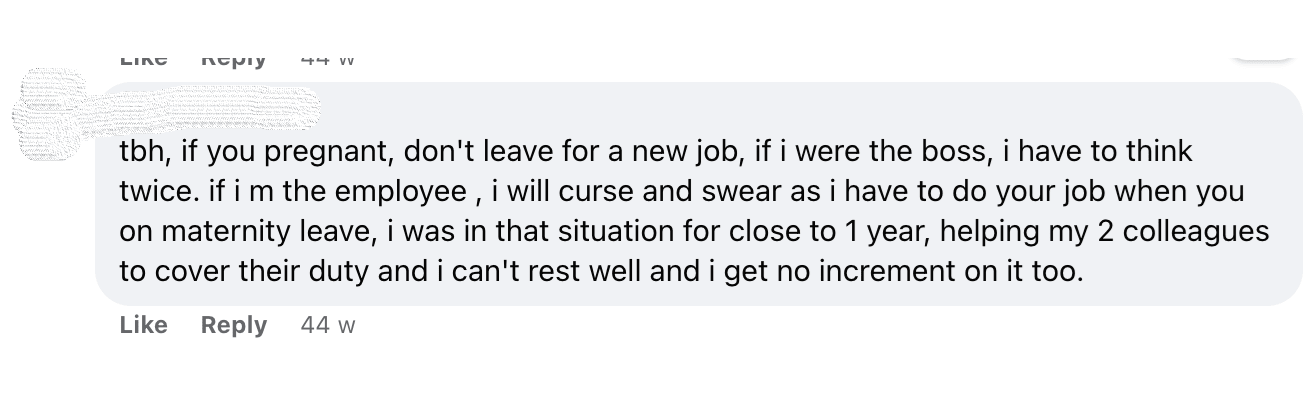
ARGUMENT 3: CHILDLESS COLLEAGUES ARE FORCED TO PICK UP THE SLACK

One Facebook commenter recounts a personal experience: “I have to do your job when you (are) on maternity leave. I was in that situation for close to one year, helping my two colleagues to cover their duty … I can’t rest well and I get no increment on it too.”

Screengrab of an online comment. (Source: AWARE)
It is not fair for colleagues to face abrupt increases to their workload when a colleague goes on maternity leave. But surely the fault in that situation lies not so much with the pregnant colleague, as with the employer who failed to ensure adequate cover for an employee who is merely exercising an entitlement.

With sufficient lead time and preparation, organisations should be able to ensure a smooth transition that prioritises both employee well-being and business needs, making up for a temporary absence without punishing the rest of their workforce.

Given their limited resources, small- and medium-size enterprises may find it challenging to adequately cover workers on maternity leave. This is where the Singapore government can provide additional support for them as part of its upcoming anti-discrimination legislation.

People take time off from work not just for childbearing, but also illness and injury, long-term health conditions and caregiving responsibilities. We all want compassion from our employers and colleagues during such times, and hope that, no matter our personal circumstances, we will not be perceived as less competent or dedicated.

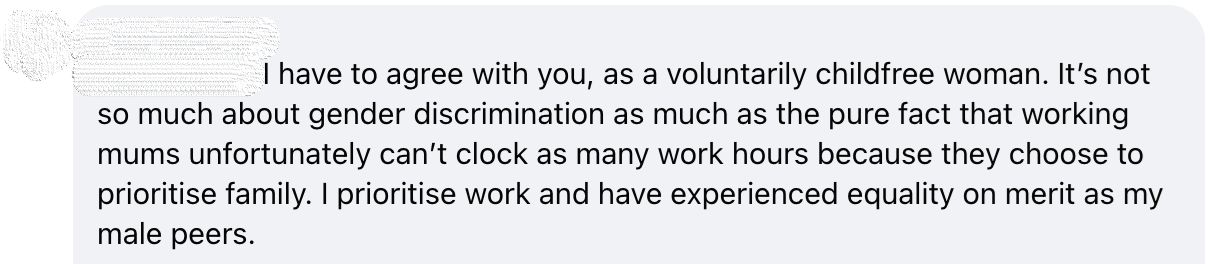
ARGUMENT 4: AS A CHILDLESS WOMAN, MATERNITY DISCRIMINATION IS NOT MY PROBLEM

As one Facebook user argued, because maternity discrimination only affects a subset of women, it should not be considered as a serious gender discrimination issue. “As a voluntarily childfree woman,” she wrote, “I prioritise work and have experienced equality on merit (with) my male peers.”

Screengrab of an online comment. (Source: AWARE)
Unfortunately, many women in Singapore have not been so lucky as to enjoy a fair and merit-based professional history – whether or not they are mothers. Women are sometimes punished simply for their childbearing potential.

AWARE’s WHDA has seen clients who faced discriminatory attitudes despite not being pregnant or planning to be pregnant: For example, invasive questions during recruitment about whether they plan to get married or become pregnant. So maternity discrimination does affect childless women too, often directly.

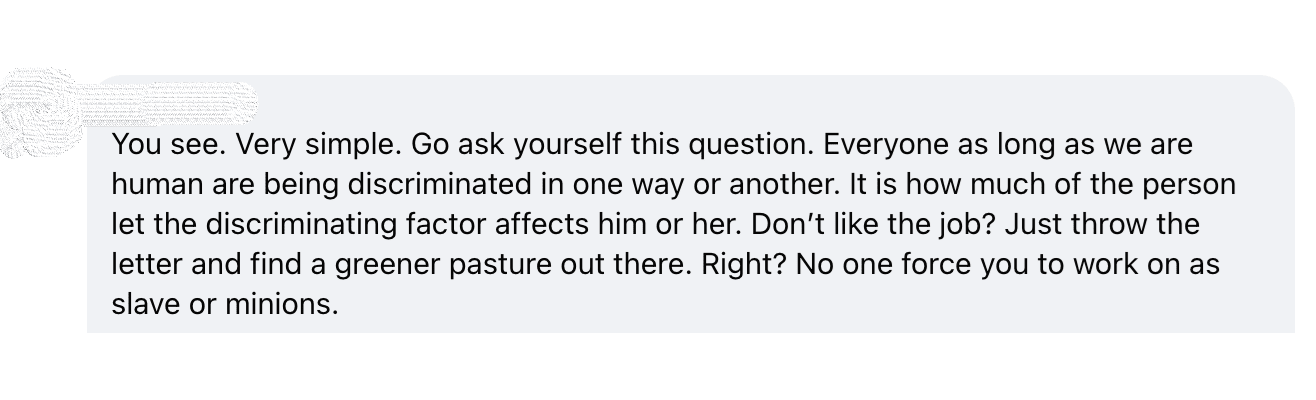
ARGUMENT 5: STOP COMPLAINING, JUST QUIT AND FIND A NEW JOB

One Facebook user made this point: “Don’t like the job? Just throw letter and find a greener pasture out there … No one forces you to work on.”

Screengrab of an online comment. (Source: AWARE)

The problem with this argument is that, like Argument 1, it presents an individual solution, namely switching jobs, to the systemic problem of unfair societal attitudes towards mothers.

What’s more, putting the onus on people facing discrimination to retreat from injustice smacks of victim-blaming. Why are we not asking the perpetrators of discrimination to reform and make up for their wrong-doing?

Securing a new job is not so easy for those facing maternity discrimination. Many employers are hesitant to hire mothers or pregnant candidates, which can leave them stranded without income for an indeterminate amount of time.

Anna (not her real name), a client at AWARE’s WHDA, went through this very ordeal. After being wrongfully dismissed from her workplace after announcing her pregnancy, it took her months to find a new job, despite being a consistent high-performer. She eventually took a contract role that did not offer benefits: A far-from-ideal situation that she accepted in desperation.

The negative impact of maternity discrimination on mothers and future generations should not be overlooked. Studies in other countries have found that pregnancy discrimination is significantly associated with postpartum depression and poor socioemotional development in infants.

MISCONCEPTIONS BUSTED. NOW WHAT?

The beliefs that underlie maternity discrimination – that caregiving makes someone less committed to their job, and that physical conditions like pregnancy impinge on professional performance – underpin other forms of discrimination too, such as against people with disabilities and people with caregiving responsibilities.

Instead of forcing women and other groups of people to drop out of the workforce, we need to address discriminatory ideas at their root. We hope that Singapore’s upcoming anti-discrimination legislation will not only stamp out the most egregious behaviours at workplaces, but also inculcate fairer and more inclusive attitudes in society.

One of the big-ticket items announced in this year’s Budget was that paternity leave entitlements would be doubled from two to four weeks. This goes towards acknowledging that men can and should pull their weight at home, and that outside of childbearing and breastfeeding, nothing separates women from men in terms of parenting ability.

Of course, some hand-wringing followed this announcement about whether fathers would in fact forgo this entitlement, for fear of eliciting the very same discriminatory reactions historically reserved for mums.

All we can say to working dads is this: If you find yourself the recipient of prejudices around your decision to have kids and participate in their upbringing … feel free to use the above arguments to defend yourselves.


Sugidha Nithi is Director of Advocacy, Research and Communications at AWARE.