
Author: AWARE Media

Civil society statement on racism and xenophobia

2205859730_29babd985f_zWe, the undersigned, are alarmed by the recent surge of racism and xenophobia in Singapore.  They threaten the human rights of all (especially migrants) and the health of our political conversation.

The key to addressing the economic frustrations felt by many Singaporeans is to amend the economic policies and structures that cause worsening economic inequality and marginalisation.  These inequitable policies were not instituted by migrants and will not automatically disappear if the migrant population decreases.  We urge for the energies of civil society to be directed toward creating a fairer, more equal society for all, including universal labour rights and employment protections.

Focusing on immigrants does not contribute to these structural changes and instead creates an unsafe and divisive society.  We see the widespread use of racist, aggressive and militarised rhetoric on social media, as well as a trend of blaming foreigners for social ills.  Ordinary people have been threatened in public spaces with nationalist and/or anti-foreigner language.  To identify “true blue Singaporeans”, people appeal to prejudices about race, class, skin colour, names, accent, language, and other markers of difference, creating an oppressive society where people constantly discriminate against one another. This supports various forms of discrimination, not just against non-Singaporeans but also among Singaporeans – for example, on the basis of gender, age, disability, class, ethnicity, descent and other characteristics.

This anti-foreigner approach also stifles constructive political discussion.  Some elevate pink identity cards or National Service to sacred emblems of belonging and entitlement, which cannot then be discussed openly and inclusively.

Discussion of immigration policy does not take place in a vacuum.  If we keep describing the presence of migrants as illegitimate and a threat to Singaporeans, this has inevitable effects on the treatment of migrants who are already in Singapore.  We must conduct any discussion of state policy in a way that is fully mindful of those effects.

For years, Government policy and rhetoric have marginalised migrants and others, for instance by not giving domestic workers full and equal employment protections.  Even though the Government’s policies have an inevitable impact on societal discrimination, each of us must be responsible for the impact of our own contributions to Singapore’s social climate and political conversation.

Civil society has a particular role to play in working to take care of the needs of minority groups such as migrants, rather than contributing to their marginalisation.  We should work to promote not only robust political debate, but also the values of equality and universal human rights.  Those values are the true animating force of our desire for social change, and they require us to unite in rejecting the politics of division, xenophobia and hate.

Signatories:

Organisations
Association of Women for Action and Research (AWARE)
Beyond the Border, Behind the Men
Function 8
Free Community Church
Humanitarian Organisation for Migration Economics (HOME)
LeftWrite Center
MARUAH
ONE (SINGAPORE)
Project X
Sayoni
Singapore Anti-Death Penalty Campaign
Think Centre Transient Workers Count Too (TWC2)
Workfair

Individuals

Alvin Tan Cheong Kheng
Andre Goh
Carolyn Oei
Chong Si Min
Constance Singam
Damien Chng
Farhan M. Idris
Fikri Alkhatib
Godwin Koay
Gwen Guo
Ian Chong
Janice Koh
Jean Chong
Jessica Yang
Jolene Tan
June Yang Yajun
Kirat Kaur
Kirsten Han
Lynn Lee
Mark Wong De Yi
Rachel Zeng
Shelley Thio
Siew Kum Hong
Stephanie Chan Man Yi
Tabris Chen
Tan Zong Xuan
Teng Qian Xi
Teo Soh Lung
Vincent Wijeysingha
Wong Pei Chi
Yap Ching Wi
Zaqeer Radzi

Note: Italicised names were added after the original statement was released on 28 May.

Caregiving support needed for board gender diversity

By Jolene Tan, Programmes and Communications Senior Manager, Association of Women for Action and Research

manIt is heartening to see a growing consensus that the under-representation of women in organisational leadership requires a proactive response (“Why boards need to ensure gender diversity”; May 14).

Measures focused on corporate boards, however, address the tip of the iceberg; there is a deeper pipeline issue resulting in a relative lack of women with sufficient professional experience for the highest levels of leadership.

Ministry of Manpower (MOM) statistics show that labour participation rates for women and men are comparable until the age of 30. Then, female labour force participation falls with age, creating a wider gap over time.

Accordingly, the higher we look up a business hierarchy, the more we can expect female under-representation.

There are two key reasons: First, employers do not adequately support employees with caregiving responsibilities; second, gender-inequitable attitudes persist in society.

Everyone has domestic needs and responsibilities. Men are as likely as women to have children or other family members who need care. But the burden of caregiving work continues to fall largely on women.

MOM statistics show that 43 per cent of women who are economically inactive cite housework and caregiving as the main reason, compared with 1.8 per cent of men.

In a recent Robert Half survey, 71 per cent of human resource managers in large firms believed that a lack of work-life balance was a barrier to women. None thought that women lacked ambition.

It is thus unsurprising that the latest Grant Thornton International Business Report showed Singapore has one of the lowest levels of women in senior management in the region.

If we are to build a society that truly gives everyone, regardless of gender, the chance to enjoy both economic well-being and a family life, changes must occur in workplace culture and everyday culture.

Access to flexi-work arrangements and accommodation for domestic responsibilities must be accepted as a normal, integral part of employment, not an exceptional concession. The Government has a role in fostering a climate where these changes can occur.

The expectation that workers do not need flexi-work arrangements is based on the assumption that someone else, usually a woman, is taking care of family needs behind the scenes.

If an economy aims to give opportunities for all to contribute, it cannot rely on this short-sighted approach, which ultimately holds women back from leadership positions.

This letter was first published in  TODAY on 17 May 2014.

What does it mean to be “pro-family”?

By Jolene Tan and Teo You Yenn

familyIn our society, families come in many forms.  Every person has family, at least at some point in their life. The same individual’s family can look quite different at different times.  These are empirical facts, not ideological positions.


It follows that the well-being of people within families, and the ways in which family relationships can affect that well-being, should be of interest to all.

Paradoxically, this universality leads to ambiguity in the idea of being “pro-family”.  Who, after all, would describe themselves as “anti-family”?  But if everyone is “pro-family”, what does that term, in practice, mean?

When we discuss societal efforts to promote the well-being of families and the people in them, it is important to be clear about what that entails.  What or whom are we trying to protect?  What specific ethical values and moral practices do we hope to enhance?  And, perhaps most significantly, how are these valuable to society as a whole?

In our view, society should take an approach to families that protects the disadvantaged and the vulnerable.  Because familial units are so central to people’s lives, inequalities and injustices perpetuated in and through families reverberate throughout society.  To build a just, equal and democratic society, our approach to families must place justice and equality at its core.

How can we put this into practice?  First, we must recognise and address the injustices and inequalities within families. Second, we must strive to understand and reduce the inequalities between different families in accessing stable and secure familial lives.

To tackle injustices and inequalities within families, we should promote families as places of mutual respect and care, rather than hierarchy, exploitation and control.

This means taking measures to stop domestic violence, including ending the denial of sexual autonomy embodied in marital immunity for rape.  The notion of family privacy is sometimes used to excuse or minimise violence done by one family member to another – putting the idea of an intact family unit above the safety of the people within it.

Making the family a place of respect and care means ensuring that everyone, regardless of age and gender, has rights to accurate information and autonomous decision-making on matters that concern their health and wellbeing.  It means supporting people in their aspirations for good lives, by ensuring that women and men are equally supported as both wage-earners and caregivers.

It also means tackling the prejudices and pressures that can damage parent-child relationships – for instance, when parents pressure their children to conform to particular gender or sexuality norms.  Ideas of family “honour”, “shame” and “reputation” are used to suppress the individual wishes and aspirations of family members, especially women.  Too often, “pro-family” is taken to stand for a punishing view of sexual morality, resulting in estrangement and needless anguish, for instance when parents refuse to accept the sexual orientation of their children.  Ironically, this damages good family relationships – sometimes irreparably – far more than it promotes them.

In addition to addressing inequalities within families, we must also address inequalities across families. In a society with a high level of income inequality, and where access to fundamental needs such as housing, healthcare, and education are highly contingent on income, families’ access to stable and secure family lives are unequal.  An approach to family that is centered on equality and justice must face this directly.

This means reducing reticence toward universal welfare.  It means far more aggressive measures to ensure that all types of families receive public support, and not just those that fulfill narrow criteria.  Maternity leave should be equally and universally available: unmarried mothers and their families deserve support in caregiving no less than married ones.  Public housing should likewise be accessible to all families, not only those who fit narrow criteria as to family structure.

Reducing inequality between families means providing sufficient alternatives to privatised childcare, so that options are not restricted to those with means.  It means ensuring that individuals need not depend so heavily on their families’ cultural and economic capital (such as the ability to pay for private tuition) to receive a good education.  Support for children should be channeled in ways that reach families at all income levels – unlike tax reliefs or matching deposits, which only benefit those with higher incomes.  We must also acknowledge, value and support varied forms of caregiving such as caregiving by grandparents, aunts and uncles, non-relatives.

Too many who claim the label “pro-family” use it primarily to exclude or ostracise. As the world commemorates the International Day of Families on 15 May, it is time for us to commit, instead, to an inclusive vision of justice and equality – one which centres on the genuine well-being of existing families in all their diversity, and the many real and varied people in them.

Jolene Tan is the Programmes and Communications Senior Manager at the Association of Women for Action and Research (AWARE). 

Teo You Yenn is a board member at AWARE, Assistant Professor in Sociology at the Nanyang Technological University, and author of the book Neoliberal Morality in Singapore: How family policies make state and society (Routledge, 2011).

This article was first published on the Straits Times website with the title ‘Celebrate all families on International Day of Families’ on 15 May, 2014.

Singapore can do more to support family life

By Jolene Tan, Programmes and Communications Senior Manager, Association of Women for Action and Research

Our society should rightly be pleased with its high ranking in the Save the Children report on motherhood (“Singapore best place in Asia to be a mum”; last Wednesday).

Singapore’s low rates of maternal and child mortality, high gross national income per capita and widespread availability of formal education are significant achievements.

However, it is useful to have a sense of perspective about how the report is compiled – and therefore what it misses – so that we do not rest on our laurels, but continue to improve our policies and practices.

The sub-title of the report is “Saving mothers and children in humanitarian crises”. Accordingly, it focuses on discussions of war and other violent conflicts, as well as natural disasters.

As a stable, wealthy country with well-developed infrastructure, facing little threat of natural disaster, Singapore naturally does well on the broad and fundamental measures on which the ranking is based.

familyoutlineHowever, the report does not take into account the specific challenges that parents often face in the advanced industrialised economies that are more comparable to Singapore than countries which experience difficulty with humanitarian emergencies.

For example, it does not address the parent-friendliness of workplaces. Ireland and Britain are ranked lower than Singapore, despite their much more generous legislated parental leave entitlements, available regardless of marital status or nationality.

A recent survey showed that 71 per cent of human resource managers in large firms thought work-life balance held women back in the workplace in Singapore. None attributed to women a lack of ambition.

The report also gives no consideration to the threat of employment termination for pregnancy, parenthood or taking parental leave.

A mother who returns from maternity leave to find her position terminated has little recourse in Singapore. By contrast, in Britain and Ireland, she could invoke legal protection, such as unfair dismissal claims.

Likewise, the report overlooks access to public housing – a particular difficulty for unmarried mothers in Singapore.

Nor is attention paid to the unequal sharing of parental caregiving, which greatly affects mothers’ quality of life.

In a 2012 Association of Women for Action and Research survey, 58 per cent of male respondents aged 18 to 29 felt that women should have primary responsibility for chores and childcare, compared with 38 per cent of female respondents.

Singapore’s level of development is a cause for celebration but not for complacency. We still have something to learn from other countries in supporting access to economic well-being and family life.

This letter was first published in the Straits Times on 12 May 2014.

How to help victims in abusive relationships

By Kokila Annamalai (Ms), Campaign Coordinator, We Can! End All Violence Against Women

We welcome Pave senior social worker Adisti Jalani’s letter (“Those in abusive relationships should get help early”; Monday).

we can logoResearch and the experience of professionals such as counsellors show that the victims in abusive relationships are more likely to confide in their informal networks first, rather than an authority.

Consequently, the responses of their friends and families often determine whether they seek help. If they encounter blame, judgment or a lack of support, they are more likely to stay in the relationship.

Bystanders have a significant role in preventing the feelings of “helplessness and hopelessness” that Ms Adisti identified as a barrier to leaving abusive relationships. Friends, family members, colleagues and others can help by listening to the victims without judgment, letting them know they have support, discussing their options and asking them what they would like to do. We should not impose decisions on them, but allow them to make their own choices.

We should remove the social pressure on victims to stay in relationships – including marriages – at the expense of their safety. Divorce should not be stigmatised; it can be an important means of self-protection.

In a 2012 Aware survey, only two in 10 people here believe there are no circumstances when women should stay in violent relationships. Many still find reasons to tolerate violence, making it harder for victims to seek help or exit the violent situation.

It is also important for family members and friends to recognise the different forms of abuse. Psychological and verbal violence, as well as financial and social control, can be just as damaging as physical violence, if not worse.

If we know someone abusive, we can express disapproval of their behaviour and let them know there are no excuses for violence. We can discuss their concerns with them and encourage them to seek help too.

Social attitudes must change if victims are to be given the supportive and welcoming environment that they need in order to speak up about abuse.

This letter was first published in the Straits Times on 10 May 2014.

Marriage, children evidence of one’s stake in S’pore

By Vivienne Wee, Research and Advocacy Director, Association of Women for Action and Research

In his commentary “Are you ‘of this place’?” (May 5), Dr Jeremy Lim made the important point that belonging derives from one’s commitment and contributions to the society of which one is a member.

2205859730_29babd985f_zIt is indeed questionable whether possessing academic qualifications, professional credentials and economic assets should be the primary measure of one’s stake in Singapore. Having a stake in a nation means staking something of personal value in a collective enterprise.

In examining how would-be citizens have invested in their dreams of the future, we could ask, as Dr Lim suggests, “upfront for a personal statement, evidence of contribution or commitment to the Singapore community in non-economic ways and even supporting letters from long-standing Singaporeans”.

Marriage to a Singaporean and/or giving birth to Singaporean children should be among the most relevant evidence of personal commitment to Singapore. Yet non-Singaporean spouses of Singaporeans, who are often also parents of Singaporean children, are routinely denied permanent residence and citizenship. This happens particularly when the Singaporean spouse’s income and education are deemed insufficiently attractive.

Low-income Singaporeans deserve an equal right to enjoy a stable, happy family life. They should not be discriminated against when they marry non-Singaporeans.

Most non-Singaporean spouses disadvantaged in this way are women. The Association of Women for Action and Research urges that their commitment and contribution be fully acknowledged through permanent residence and, eventually, citizenship.

The Long-Term Visit Pass-Plus given to some is no substitute for permanent residence and citizenship as a foundation for a stable marriage and family, as they can still be deported and, thus, separated from their children if pass renewals are not approved.

As their immigration position is precarious, they face additional vulnerability to domestic abuse. They may hesitate to take action against violent partners as they need spousal sponsorship to renew their visa and, therefore, continue to have access to their children.

An inclusive nation should provide equal rights to all citizens, not prioritise high-net-worth individuals over others, including high-commitment citizens-to-be who have forged deep ties to this society.

This letter was first published in TODAY on 10 May, 2014.

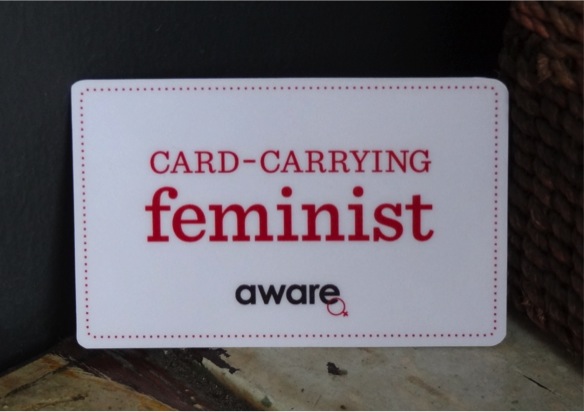
Have you collected your AWARE Membership Card?

card1

If you have two years or more left on your AWARE membership, you are entitled to one of our fabulous “Card-Carrying Feminist” AWARE membership cards. If you have less than two years left, renew your membership to today to qualify!

New members signing up for two years or more are also entitled to receiving one of these awesome cards!

Not merely a card that announces to the world what a fabulous feminist you are, it’s also a card that scores you some fantastic discounts with our merchant partners listed below:


booksactually


Books Actually will be offering a 20% storewide discount (with the exception of magazines and items on promotion) to all AWARE card-carrying members.


gardenslugThe Garden Slug will be offering the following:


Weekday Pasta Set Meal (Mon-Thu)
-Order any Pasta dish from the menu, and
-Enjoy 50% off Soup of the Day + Any Iced or Hot Tea Beverage

Weekend  All-day Breakfast Set Meal (Fri-Sun)
-Order any Breakfast dish from the menu, and
-Enjoy Hot Black Coffee or Hot Tea @ only $1


dough


Dough Empire will be offering a 15% discount off the total bill of every purchase from doughempire.com. Please enter the code “AWARE15PC” after providing your credit card details for payment. The sum will then be reduced after that to show the discount. As an additional offer, orders totalling $200 and above enjoy free delivery.


artistrylogo


Artistry Cafe will be offering a 10% discount off the total bill, with a minimum spending of $20 in a single receipt.


Please email Frederique at volunteering@aware.org.sg to make an appointment for your card collection. Please fill in “CCF Card – (Your Name)” as the title of the email.

For more information on how to become a member click here. If you are a member 65 years and older you are eligible for your own CCF membership card for FREE!

Tweak Women’s Charter for gender equality

WE WELCOME Justice Choo Han Teck’s suggestion to review the Women’s Charter, including its provisions on maintenance, to better reflect the values of gender equality (“Maintenance not an unalloyed right of women: Judge”).

Spousal maintenance is necessary because domestic labour remains unequally shared.

In an Aware survey last year, 58 per cent of male respondents stated that women should take care of household chores and caregiving, compared with 47 per cent of female respondents.

Manpower Ministry statistics show that 43.3 per cent of economically inactive women cited housework, childcare and other caregiving duties as the main reasons for not looking for a job, compared with only 1.8 per cent of men.

Clearly, it is still much more common for women than men to make economic sacrifices to take care of their spouse’s domestic needs and responsibilities. This boosts the husband’s career prospects and earning power, long after any divorce.

This arrangement also has a negative impact on the long-term employability and financial position of economically inactive spouses, especially their levels of Central Provident Fund savings.

Maintenance orders are just and appropriate in such situations. But they should be made on the basis of fairness, not gender. And they should likewise be available where it would be equitable for a woman to support her former spouse financially – a position championed by then Nominated MP Kanwaljit Soin as early as 1996.

Aware has long argued that much of the Women’s Charter should be rethought, including taking into account an increasing number of transnational marriages.

In 2010, we suggested numerous reforms, including the establishment of a central body to administer maintenance payments, a reduction in the time bars to divorce, and shorter timeframes for divorce in cases of desertion or separation.

We have also suggested that the statute be renamed Family Charter to more accurately reflect its content, as its provisions cover many aspects of marital and family law.

The existing name can give the misleading impression that it protects only women against men, when in fact most of its regime – including protection against family violence – rightly applies on a gender-neutral basis.

By Jolene Tan (Ms), Programmes and Communications Senior Manager, Aware (Association of Women for Action and Research)

This letter was first published in the Straits Times Forum on 26 April 2014.

More extensive, universal parental leave needed

MS JESSICA Jaganathan’s letter is timely (“Offer unpaid extension of maternity leave”).

A society that recognises the value of family life should structure employment so as to enable everyone, regardless of gender, to fully enjoy active parenthood alongside participation in the workforce. This aspiration underpins existing statutory entitlements to maternity and paternity leave, but how far has it been realised?

Women in Singapore have up to 16 weeks of statutory maternity leave, and men have only one week of paternity leave (though a couple can transfer one week of the mother’s entitlement to the father). But this does not apply to all. For instance, unmarried mothers or mothers of non-Singaporean children have only 12 weeks’ leave, though their care responsibilities are just as significant.

Ms Jaganathan noted that the 16-week period, of which only 12 are after birth, sits uneasily with the World Health Organisation’s recommendation that infants be breastfed exclusively for six months.

Indeed, the International Labour Organisation recommends that national laws provide for at least 18 weeks of maternity leave – a standard met by 20 per cent of countries.

Some even exceed this. Women in Ireland, for instance, enjoy six months of maternity leave and a further 16 weeks of unpaid leave. In Britain, parents divide a total of 52 weeks of leave between themselves – an arrangement that better suits individual families’ needs than pushing all into a single mould of gendered caregiving.

Of course, these rights are effective only if they are respected.

Recently, Deputy Prime Minister Tharman Shanmugaratnam spoke of the need for cultural transformation – for society to change how it views workers – to improve productivity (“S’pore firms ‘need mindset change’ “; March 3).

This applies to parental leave too. It imposes short-term costs on employers but, ultimately, organisations benefit from the higher morale and productivity of more fulfilled workers with happier family lives.

Moreover, businesses do not operate in a vacuum; they benefit from societal support and should also bear social responsibilities. We hear repeatedly that the economy requires more births – so why shouldn’t those who profit most from economic growth help support the conditions that enable it?

If Singapore truly wishes to support families, it should consider offering more extensive, and universal, parental leave. The Government should also consider stronger measures to prevent employers from discriminating against women, or any parent, because they are entitled to such leave.

By Jolene Tan (Ms), Programmes and Communications Senior Manager, Aware (Association of Women for Action and Research)

This letter was first published in the Straits Times Forum on 22 April 2014.