Author: AWARE Media

A teen’s-eye view of cyber-bullying

By Ian Mak Wei, 19, AWARE intern

Singapore is topping the charts again – in cyber bullying. A whopping 58%* of youths have been bullied online, the second highest in the world behind China. As a teenager myself, this statistic does not surprise me.

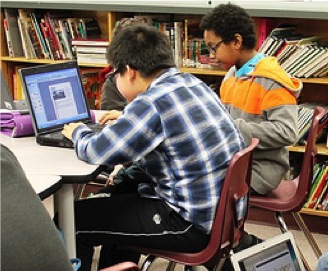
kid laptopThe Internet is probably the best invention of the 20th century, but it is also a place where the most nasty and vicious bullying takes place. Bullying that leaves permanent records – whether electronic or psychological.

Much of this takes place on social media platforms. Ask.fm, for example, allows users to ask one another questions, including anonymously. It seems to enable sharing, banter and casual enjoyment, but it has been hijacked by trolls armed with demeaning comments. ‘You’re fat’ and ‘No one likes you’ are often their weapons to break others down.

The Internet can bring out the worst in us, especially teenagers with pent up angst. The cloak of anonymity and easy platform to ‘flame’ remove accountability, sometimes changing the mildest of people into terrible, insulting bullies.

There is a strong gendered dimension to cyber bullying. Teenage girls are subject to especial amounts of ‘fat-shaming’ and ‘looks-shaming’ from peers, making them uncomfortable about their appearance. Girls are bombarded with messages about the importance of having an hourglass figure or small waistline, and bullies on the internet have an easy avenue to exploit the resulting insecurities.

Similarly, teenage boys who do not live up to rigid societal expectations of masculinity are labeled ‘pussies’ and subject to verbal abuse, such as in the case of Theo Chen, a 12-year-old student subjected to gay bashing from classmates.

We often forget the effect of our actions on others. In a fit of rage, we say mean things  – and since we’re not speaking face to face, we stick the knife in deeper.

A single comment can snowball into an entire group piling on to ostracise a person. Especially in the fragile and turbulent teenage years, this often hurts self esteem and even leads to self-harm including suicide.

Let’s make a commitment to not become the bully. Let’s refuse to spread hateful, baseless rumors. More than that, let us have the courage to intervene to halt cyber bullying as it happens to others. Only then can the Internet become a safe place where people are free to explore and express themselves, without fear of derision and harassment.

*Microsoft’s Trustworthy Computing unit study in 2013

An edited version of this letter was published in the Straits Times’ Youth Forum on 22 Jan 2014.

Women in Science

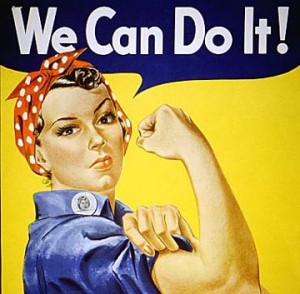
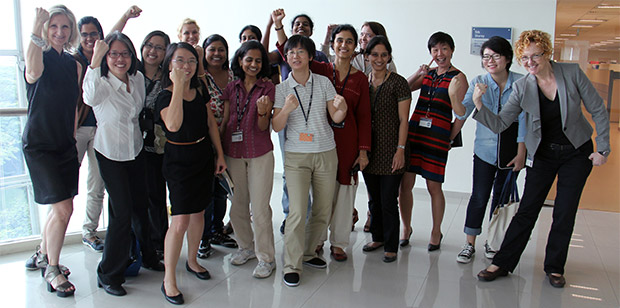
we_can_do_itOn 9 January 2014, AWARE was kindly invited to deliver a lunchtime talk to about twenty people at the newly formed Mechanobiology Institute-Women in Science (MBI-WIS) at the National University of Singapore.  Titled “Gender equality in Singapore: an introduction”, and touching on both state policy and societal practice, our presentation gave an overview of some of the gendered barriers in Singapore to the equal social, economic and political participation of all.

IMG_AW_42weCanDoIt

In their own words, MBI-WIS is

composed of graduate students, staff, post-doctoral fellows and faculty in the sciences in Singapore. We are dedicated to achieving equity and full participation of women in all areas of science. Our goal is to advance women in science and to discuss and make the research community aware of past, present and future challenges. We seek to increase the participation of women in science at all levels, and to enable the advancement and success of women scientists.

This is an exciting new group and we hope to hear much more from them.

AWARE has performed a few back-of-the-envelope calculations, based on the publicly available profiles of staff in the various university STEM (science, technology, engineering and mathematics) departments in Singapore.  Our investigations suggest that despite gender parity in terms of overall undergraduate enrolment numbers (see for instance figures at the Nanyang Technological University), women remain severely underrepresented at the level of STEM faculty.

This is part of a wider global trend, reflecting a simple statement made by Nature, one of the world’s most prestigious scientific journals: “Science remains institutionally sexist.”  Fortunately, research shows that straightforward efforts to be more inclusive in terms of organisational decision-making can have a tremendous positive impact on the scientific careers of women.  As Singapore moves toward seeking equality in the corporate boardroom, we hope that our centres of learning will follow suit.

An inclusive approach to family

By Teo You Yenn

2014 is the International Year of the Family. In the first days of the new year, there have been news stories about young couples welcoming newborns into the world and older ones renewing marital vows.

familyThis year we will no doubt bear witness to photogenic nuclear families cycling through East Coast Park and three-generational families sharing meals in rooms with beautiful lighting. At the same time, we will be constantly reminded of the importance of family, of families that are “pillars” we return to, our “shelter”, “what really counts” and that to which we return “at the end of the day”.

This year, too, lively public discussions around poverty and increasing income inequality will continue – and perhaps even intensify.

As a society, we in Singapore need to bring these two seemingly separate stories into the same frame.

In my ongoing research on low-income families in Singapore, one key issue sticks out: Family life is a privilege. Those who have the privilege take it for granted. Regular incomes support our families’ lifestyles of three meals a day every day. They ensure homes that are adequate for all members of our families at the same time, and provide savings that prevent us from falling into debt and despair when a family member falls ill. Regular work and decent income provide the bare-bones infrastructure underpinning stable familial lives.

Beyond this, there is the privilege of leisure. The privileged take weekly days off for granted, the same way many of us take for granted that we will have money for lunch tomorrow. Some of us spend it recklessly watching too much television or surfing the web. Others grudgingly and dutifully spend it bringing children to enrichment classes. Some of us take secret pleasure in stealing hours away from our offspring and loved ones, absence rendering the heart fonder et cetera.

For persons who have limited income, managing or trying to avoid crisis is an everyday activity. They must spend their time and energy figuring out whom among their extended families have floor space they can sleep on when Housing Board rules kick in after divorce and the matrimonial flat is sold. They need to strategise to figure out how to work enough to provide for the children while still being around to make sure they have meals to eat. They may have to walk an hour each way to and from the hospital to visit a sick child when there is no money left in their EZ Link cards. These efforts leave little space and capacity for much else.

Among persons with low income, I have witnessed tremendous efforts to keep families together and a great deal of familial love, kindness and generosity. This is not just between husbands, wives and children, but includes grandparents, uncles, aunts, cousins and siblings.

Their material conditions may be bare but their needs, capacities and aspirations for familial love are as rich as those of people with more wealth. Yet their families and familial struggles are neither properly recognised and respected nor adequately supported. Their divorces and reconstituted families are characterised as dysfunctional; their interdependence beyond the nuclear heterosexual couple sometimes viewed with suspicion.

On the other hand, the persistent rhetoric on the importance of family does not address their limited access to the conditions of material security and leisure that are taken for granted by better-off members of our society.

Promoting and lauding family life is not in itself problematic. It is problematic, however, to portray a limited vision of family life as universal, as the standard. It is moreover unjust to hold this ideal up, without addressing the uneven access members of our society have to the preconditions of stable familial lives, no matter the definition of family.

In Singapore, the narrow ideal of family is buttressed by public policies that affect Singaporeans’ access to public housing and support for children. While heterosexual, married, educated, professional women like myself easily access the full benefits of generous maternity leave, childcare centre subsidies, baby bonuses, and maid levy reliefs, my counterpart with less education and limited options for stable employment has to struggle to cobble together enough income from two part-time shift jobs, while worrying about whether the school will allow her older child, barely out of preschool himself, to pick up the youngest from childcare while she’s gone.

Childcare subsidies may be available, but working in low-wage jobs in order to qualify for them leaves gaps in her children’s care needs that higher-income families can resolve with other paid caregivers. With less cash to spare, she also gets less in the co-savings component of the Baby Bonus. Any blip to her tenuous arrangements–a sick child, an unanticipated loss in hours she is given work–can become a crisis that throws her off-course.

Differentiating policies create an environment where families that do not fit are seen as and see themselves as failing. They perpetuate a vicious cycle of inequalities: failure to live up to ideals mean more difficulty accessing public resources, less access to public resources result in greater struggles to establish stable familial lives.

As we laud “the family,” we must bring into view less photogenic but crucial elements of this issue: the celebration of one type of family should not undermine the many families who do not fit these narrow ideals. Importantly, if familial life is a good thing for our society, we must work to ensure that everyone has access to the basic conditions that enable it.

Teo You Yenn is a board member at the Association of Women for Action and Research (AWARE), Assistant Professor in Sociology at the Nanyang Technological University, and author of the book Neoliberal Morality in Singapore: How family policies make state and society (Routledge, 2011). This op-ed was first published in the Straits Times on 11 January 2014. 

This New Year, resolve to support self-acceptance

By Jolene Tan, Programmes and Communications Senior Manager, AWARE

For many, January is a time for reinvention, and one of the most common aspirations expressed is weight loss.  Many people, especially women, speak about “slimming down” as a high priority – even a duty.

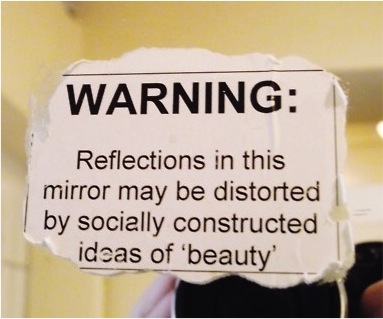
beauty mirrorSome are motivated by health concerns, but others are, unfortunately, driven by an unrealistic and narrow definition of beauty promoted by fashion, advertising and the media. Health can be served through paying attention to nutrition and exercise, regardless of weight. But many seeking weight loss may damage their health, for instance through developing anorexia and bulimia.

These health-damaging practices are on the increase. In 2012 Singapore General Hospital saw 95 teenage patients (13-19) with eating disorders, with a third needing hospitalisation. These harmful eating disorders are often motivated by feelings of insecurity caused by judgmental comments about how women should look, even when this is completely irrelevant to their actions or achievements.

Many teenage girls find it difficult to separate self-worth from external validation of their appearance.  A 2007 survey of teenage girls in Singapore, commissioned by Dove, found that 60% felt bad about themselves because of their looks or weight. 81% admitted to avoiding various activities due to their appearance. A quarter reported dieting before the age of 17 – an alarming finding given that their bodies are still growing and developing at that age.

Representation, validation and respect should be given to people of a wider variety of physiques. In Sweden, a major department store has started using larger mannequins to reflect the reality of many women’s figures and to provide a more accurate representation of their products to consumers. A British department store catalogue has made similar efforts to include an array of models of diverse body shapes and ethnicities, as well as visibly disabled models.

Adults should recognise that denigrating their own bodies as “not good enough” sets an example for the children and teenagers around us.  In particular, parents who are unkind to themselves or others about their weight are unconsciously teaching their children the same habit.

In 2014, we hope that the punishing pursuit of extreme beauty standards will give way to an attitude of self-acceptance, with everyone embracing the idea of being “me sized”.  This can only happen if society treats every individual as worthy of appearing in public space, no matter what their size or shape is.

An edited version of this letter was published in the Straits Times on 7 January 2014.

Employers must play their part

By Jolene Tan

By adopting and enforcing codes of conduct, backed up with formal processes for handling complaints, employers can set the right tone for inclusive working environments.

WSH_nhuThe case of cyber-stalker Colin Mak Yew Loong shows the need for better legal protection against harassment (“Singaporean jailed for stalking US singer online”; last Saturday).

Many sexual harassment cases have a significant negative impact on the victims. The constant threat of harassment can prevent them from carrying out their everyday activities.

Workplace sexual harassment is particularly problematic because the victims find it hard to avoid their harassers, who may be their supervisors.

With their livelihoods and careers at stake, the victims often feel powerless, and both their personal well-being and productivity suffer as a result.

Our 2008 survey of 500 respondents found that more than half had experienced workplace sexual harassment. Females made up 79 per cent of the victims, and 11 per cent had received career threats such as termination of employment or withholding of promotions.

Workplace sexual harassment creates a hostile environment that prevents women from participating in the workforce on an equal footing.

While criminal liability may be appropriate for severe cases, the most effective and equitable solution is usually for employers to take a proactive zero-tolerance stance against sexual harassment.

By adopting and enforcing codes of conduct, backed up with formal processes for handling complaints, employers can set the right tone for inclusive working environments.

Most victims do not seek punitive measures. Their primary aim is to continue working in a harassment-free environment.

Employer-facilitated mediation and enforcement of standards of conduct can achieve this much more efficiently than any court or police process.

However, most employers will not institute anti-harassment policies unless these are mandated under the law. Two-thirds of respondents to our 2008 survey were not aware of any such policies in their workplaces.

Many leading global business centres, including Hong Kong, have laws that specifically address workplace sexual harassment.

We hope the Government, in moving to strengthen anti-harassment laws, will require employers to play their part in ensuring safe and inclusive working environments for all.

Jolene Tan is the Programmes and Communications Senior Manager at AWARE. This letter was first published in The Straits Times Forum on 25 December 2013. Read the published version here

Troubling consequences of seeking consent for abortion

By Jolene Tan

The proposed consent requirements will thus have the greatest effect in cases where there is the danger of family violence.

abortionRecent calls for parental or spousal consent when minors or married women seek abortions overlook some troubling potential consequences (“‘Don’t ask, don’t tell’ policy not ideal” by Dr Yik Keng Yeong and “Why parental consent laws are necessary” by Mr Darius Lee; both published on Thursday).

These requirements would be triggered only when a patient has already decided to seek a termination. Therefore, the main effect of a parental consent requirement is to give parents the power to coerce minors to bring unwanted pregnancies to term and give birth against the children’s wishes.

Dr Yik also proposes a requirement for spousal consent or involvement. Taken in tandem with marital immunity for rape in the Penal Code, which treats marriage as a defence to charges of rape, this would give husbands the legal freedom to force their unwilling wives to have children.

Minors who have a relationship of trust with their family already consult their parents and listen to their views, even without a formal consent requirement. The same is true of women with loving and supportive husbands.

The proposed consent requirements will thus have the greatest effect in cases where there is the danger of family violence.

Introducing a court process will intimidate and distress patients, especially those who already live in fear of abuse. Legal inquiry into abuse allegations would be time-consuming, creating difficulties for patients already facing a 24-week time limit.

Moreover, it is difficult to see how a genuine investigative process could remain confidential and avoid the very disclosure to parents that minors at risk of family violence need to avoid.

Dr Yik believes a consent requirement may address the sexual abuse of minors.

In our experience, many sexual assault victims are reluctant to make reports because they fear they will not be trusted or believed. Denying them access to the medical services they have requested will do nothing to allay these concerns.

Mr Lee suggests that abortion carries the risk of complications, but he ignores the far greater risks attached to bringing a pregnancy to term and childbirth, which have much more significant impact on physical and mental health.

Notably, KK Women’s and Children’s Hospital identifies women under the age of 21 and those with unplanned pregnancies as two groups facing especially high risk of post-natal depression.

Jolene Tan is the Programmes and Communications Senior Manager at AWARE. This article was first published in The Straits Times Forum on 30 November 2013. See the published version here.

Pay maintenance on the basis of fairness, not gender

By Jolene Tan

An employment history with substantial gaps due to childcare translates into lower long-term earning power.

divorceI refer to Mr Oo Choon Peng’s letter, “Women’s Charter: Time to review basis for claiming maintenance” (Dec 26).

The Association of Women for Action and Research has long argued that maintenance should be paid on the basis of fairness and need, rather than gender.

The existence of maintenance reflects the fact that marriage often involves a sacrifice of career or economic prospects by one party to take care of the other party’s domestic needs.

Traditionally, women have scaled down participation in the formal workforce to engage in valuable domestic labour, including housework, childcare and other dependant care.

Social and economic norms have shifted since the Women’s Charter was drafted, but domestic labour remains unequally shared.

According to last year’s labour force survey, 43.3 per cent of economically inactive women cited housework, childcare and other caregiving activities as their main reason for not working or looking for a job, compared with 1.8 per cent of men.

This reduced labour participation has financial ramifications that cannot be undone simply by returning to the workforce later, as Mr Oo suggests. An employment history with substantial gaps due to childcare translates into lower long-term earning power.

Economically inactive spouses also miss out on years of Central Provident Fund payments, which is why women have less CPF savings than men do at retirement.

This sacrifice is made to address the couple’s joint needs, but it also boosts the career prospects and earning power of the working spouse. This benefit endures far beyond the divorce.

Consequently, fairness requires that maintenance payments reflect the contributions of unpaid domestic labour. The Women’s Charter requires the court, rightly, to consider the income and earning potential of the spouse seeking maintenance.

AWARE agrees that spouses should not be awarded maintenance if an assessment of all the circumstances, including these factors, renders it inappropriate.

We also support the extension of maintenance payments to situations where it would be equitable for a woman to support her former spouse financially.

Indeed, in 1996, then-Nominated Member of Parliament and former AWARE President Kanwaljit Soin proposed that women should pay maintenance to ex-husbands in suitable cases.

The principle underlying the payment of maintenance is one of fairness. Its core remains sound and relevant even today.

Jolene Tan is the Programmes and Communications Senior Manager at AWARE. This letter was first published in TODAY on 28 December 2013. Read the published version here

AWARE’s Top 10 in 2013

AWARE santa smallOut with the old year and in with the new!  As we plan our work for 2014, we’ve also been thinking about some of AWARE’s most significant achievements in 2013.  Here’s our top 10 list – all thanks to the help and support of our members and friends.

1) We took 3372 Helpline calls from women in need of information and/or support.  The AWARE Helpline, Singapore’s only helpline for women run by women, turned 22 this year, and continued to provide advice, assistance and a listening ear to women all across the island.  Our legal clinic provided free consultations to 248 clients facing challenging personal circumstances, while 178 clients benefited from our counselling services. Finally, our Sexual Assault Befrienders Service (SABS), launched in 2011, remained a vital source of support for victims of sexual assault, assisting 64 women in 2013 through reporting and/or recovery.

2) We made recommendations on population policy. Through submissions to government and media statements, AWARE pushed for the national conversation on policy to focus on human welfare and environmental sustainability, not just economic growth.  Population will almost certainly remain a major focus of debate in years to come, and AWARE will work to keep a gender equality perspective in the political conversation.

we can logo3) We initiated the We Can! campaign.  In May, Singapore became the 16th country to join the We Can! international movement to end violence against women, which empowers individuals and organisations to tackle the root causes of violence in their communities. In just seven months, We Can! has gone from strength to strength, including:

  • Recruiting over 700 Change Makers who pledged to commit to a violence-free life.
  • Encouraging bystander intervention through Would you step in, an inspiring video drawing over 116,000 views in a single month.
  • Sharing everyday stories of violence in Blk 2511, an innovative Facebook app.
  • Drawing 270 visitors to the inaugural We Can! Arts Fest – 89% said the event helped them better understand what they could do to end violence.

4) Paternity leave became a reality.  For years, AWARE has advocated more inclusive family policies, including paternity leave to support shared care-giving and give fathers the opportunity to better participate in family life. This year, our work paid off – fathers are now entitled to one week of paternity leave. Though this is less than we’d asked for, and we still have much to say about the 2013 Parenthood Scheme, it’s a good first step.

5) We pushed for a socially equal national Budget.  In February, we made extensive budget recommendations advocating lifelong comprehensive healthcare, especially for the elderly. (Here’s our press release summary.)  Pleasingly, the Prime Minister’s National Day Rally speech also outlined policy shifts towards more comprehensive healthcare and inclusive housing.  We’re heartened that recognition of these essentials is growing and we will continue to advocate for those in need with Budget 2014.

6) Our supporters celebrated at the Big Red Ball.  Over 350 friends and supporters raised more than $250,000 at our annual fundraising gala to support our work for a more equal society.  Our annual awards honoured pathbreaking icons Constance Singam and Rachel Chung, as well as others who have helped erode gendered barriers in Singapore, while the popular Alamak! award highlighted some egregious examples of sexism in the past year.

updated SHOUT7) We put the need to eradicate sexual harassment on the map.  AWARE has long lobbied to raise awareness of sexual harassment – including collecting over 1,700 signatures on our SHOUT petition.  In November, after consultation with us and others, Minister of Law K Shanmugam announced that the government will strengthen legal protection against harassment by next year.  We will keep the pressure on to ensure that these measures include employer responsibility for ending workplace sexual harassment.

8) We’ve been awarded our first United Nations grant! Specifically, a three-year grant by UN Women’s Fund for Gender Equality, one of the most significant global funds dedicated to women’s economic and political empowerment. Together with our Indonesian partner, Solidaritas Perempuan, AWARE won this grant in a worldwide competition for projects that innovatively advance gender equality and women’s empowerment. Our winning project, “Gender equality is our culture”, aims to train 500 gender advocates to promote the principle that gender equality, in accordance with CEDAW, does not contradict culture. AWARE is working with allies to develop context-appropriate training. Join us to reclaim gender equality within your own culture!

9) Gender equality in the military came under scrutiny.  AWARE pushed once again for a fresh look at gender and the military.  We also successfully persuaded the Ministry of Defence and the Singapore Armed Forces to halt the singing of certain marching song lyrics celebrating sexual violence.  This prompted a much-needed national conversation about the normalisation of sexual violence and the bonding rituals of masculinity – including an entire page of editorials in the Sunday Times.

10) We spoke up for sexual and reproductive autonomy.  AWARE supports the right of every person, especially women, to control our own bodies and fertility.  In 2013 this right came under heavy pressure from pro-natalist and other agendas – including through spreading misinformation.  AWARE vigilantly ensured that the public conversation included a robust defence of reproductive freedom, access to patient-centred medical services including abortion, and full and accurate information about health and sexuality.

Abortion, pregnancy: More accurate information needed

By Jolene Tan, Programmes and Communications Senior Manager, AWARE

Recent letters give an inaccurate picture of the health impact of abortion and pregnancy (“Abortions: Parental consent vital in family-oriented society” by Madam Ang Lay Choo; Forum Online, last Friday, “Why parental consent laws are necessary” by Mr Darius Lee and “Abortions raise maternal mortality risk” by Mr Edmund Leong; Forum Online, both on Nov 28).

littmann-master-classic-ii-stethoscope-adult-navy-blue-2147-12-214-240-lrAbortion has a very low risk of complication. According to the United Kingdom’s National Health Service (NHS), excessive bleeding occurs in about 0.1 per cent of abortions, with similarly low figures for cervical damage (no more than 1 per cent) or damage to the womb (up to 0.4 per cent of surgical abortions and less than 0.1 per cent of medical abortions at 12-24 weeks).

The other main risk, infection, is typically treated effectively with a simple course of antibiotics.

The NHS also confirms that abortions do not affect the chances of successfully carrying to term future planned pregnancies.

Given these assurances by medical experts, the broad numerical correlations found in the Danish population study cited by Mr Leong are unlikely to indicate any causal link between abortion and the mortality outcomes he quoted.

The study itself does not establish any plausible medical reason for such a link.

Indeed, it is strange that Mr Leong suggests that Irish abortion law reduces maternal mortality.

In the recent high-profile case of Ms Savita Halappanavar, a miscarrying woman died of septicaemia and organ failure in an Irish hospital after hours of agony.

She was denied the abortion she repeatedly requested and which could have saved her life.

The Irish Health Service Executive found that the hospital’s interpretation of abortion law was “a material contributory factor” to the failures in her care.

As a mother who has undergone labour ending in an emergency caesarean section, I am bemused by arguments downplaying the physical and psychological impact of pregnancy, childbirth and the post-partum period.

It is common knowledge that even the most straightforward pregnancies task the body and mind substantially.

Furthermore, significant risks include gestational diabetes, high blood pressure, pre-eclampsia, deep vein thrombosis, pelvic prolapse and yeast infection.

Complications at childbirth can require emergency surgery, as I found first-hand. Post-natal depression can result in long-term impairment or even death.

Carrying a pregnancy to term is no small matter even when it is wholly planned and desired. It is pregnant women who face these risks and who should have the final say over the process.

This letter was first published in the Straits Times Forum on 9 December 2013.