
Author: AWARE Media

Married women also at risk of HIV/AIDS

Most discussions of HIV/AIDS in Singapore focus on men, as new infections affect mostly them.
HIV picHowever, a qualitative study, commissioned by the Association of Women for Action and Research, of women with HIV or living with HIV-positive husbands or partners shows that married women are at risk from their infected husbands.

This five-year study was led by a team from the Saw Swee Hock School of Public Health, National University of Singapore, and supported by the Department of STI (Sexually Transmitted Infections) Control, National Skin Centre and the Communicable Disease Centre.

Through in-depth interviews with 60 women, the study shows that among respondents who were married and diagnosed with HIV/AIDS, more than half reported that their husbands had infected them.

When these women learnt of their diagnosis, they experienced denial, shock, anger, shame and sadness.

Many of these married women had been put at risk by a lack of sexual empowerment in marriage. Several were unaware of having any right to refuse sex or demand condom use. Those who had wanted to protect themselves, however, could not persuade their HIV-infected husbands to practise safer sex. Some husbands even became violent when asked to use condoms.

Many of the women surveyed lacked knowledge about the symptoms, transmission and prevention of STIs, about condom use or ways of successfully persuading partners to use condoms. Over 60 per cent had little or no knowledge of HIV/AIDS; many had the misconception that HIV affects only gay men, drug abusers and sex workers.

Patients’ difficulties were compounded by unsympathetic family, friends and community. Most women disclosed their condition only partially to those around them, holding themselves back from being helped by support groups or counsellors to cope emotionally, engage in self-care and improve social functioning.

Some women in the study could not hold on to full-time work, due to the stigma associated with HIV and their attempts to hide their condition.

Loss of employment made it harder for HIV-diagnosed women to access the costly healthcare required. More affordable medication and healthcare are needed.

The study highlighted helpful measures, such as empowering patients with more knowledge about the good prognosis of HIV/AIDS with treatment, as well as about coping strategies and self-care methods. Support from family, friends and other infected women further enables proactive responses.

Education about sexual health and empowerment must enable women to protect themselves from infection. The public should also be educated not to stigmatise and marginalise people infected with HIV/AIDS.

Our study shows that a lack of sexual rights has direct impact on women’s health. Should our society continue to provide legal immunity for marital rape, indicating that women cannot refuse sex with their husbands, even at the risk of infection?

World Aids Day (Dec 1) is dedicated to raising awareness about HIV/AIDS. We must raise such awareness to attain good sexual health as the right of all in society.

Wong Mee Lian is an associate professor at the Saw Swee Hock School of Public Health, National University of Singapore; Vivienne Wee is the Research and Advocacy Director at the Association of Women for Action and Research (AWARE); Shibani Pandya is an AWARE member.

This letter was originally published in TODAY on 7 December 2013.
Understand Little India events without racism

In the aftermath of recent events in Little India, racist and xenophobic comments are steadily surfacing online and offline, conflating the actions of a few with the culture, habits and tendencies of migrant workers from South Asia in general.

5795201144_a3e04428e9These migrant workers are experiencing a prejudiced characterisation of “their” “culture” as violent, unthinking and dangerous, and are being blamed for damaging or deviating from “the Singapore way”. We hear alarming calls to send foreign workers “back where they came from” or ban them from coming out of their dorms. One of AWARE’s staff members was informed by a cab driver that “you Indians” can display such behaviour in “your country”, but not in Singapore.

Not only are such xenophobic comments inaccurate and discriminatory, but they also create a hostile and exclusionary environment in which people (both migrants and citizens) of a certain skin colour might feel unsafe and unwanted. Migrants often have limited recourse against racist attacks and slurs. Far from providing solutions, such comments can increase a sense of division and alienation, sowing the seeds for further conflict. The actions of those who “rioted” in Little India need to be examined and understood without attaching blame to others of the same ethnicity or nationality.

It is heartening to see people take on these xenophobic comments. We need more people stepping up to call out those making ignorant, racist remarks, and to reject alarmist calls for greater segregation between local and migrant communities. Our nation is made of migrants and citizens of many different backgrounds and ethnicities, all of whom must be recognised as having a stake in Singapore’s culture, economy and society.

We hope that any examination of Sunday’s events will be informed by a thorough understanding of the marginalisation and discrimination experienced by migrant workers in Singapore.

‘Would you step in?’: the We Can! video

we can logoWhat would you do if you saw a man abusing his girlfriend in the middle of Orchard Road?  The We Can! campaign poses this question with a new video, Would you step in?, which has attracted more than 41,000 views on YouTube in just two days.

This video shows how we can all step in to help strangers in need and to end violence against women – a message that urgently needs to be heard. The Charities Aid Foundation, which measures the willingness of people to help strangers across 135 countries and economies, ranked Singapore in second last place in its latest index.

The video depicts violence in a public place, but it also points out that most violence against women happens at home. Visit the We Can! Facebook app, Blk 2511, to go behind the doors of a seemingly peaceful HDB block and uncover everyday stories of abuse.

Intervention is as important here as it is out on the street.  Many survivors of domestic violence cite a lack of support from family and friends as a major reason they were forced to remain in an abusive situation.  They may be told that it is their responsibility to placate their abusers, or that they should endure abuse for the sake of their children.  Leaving violent relationships can have consequences for matters such as finances and housing, which can only be addressed with support from others.

We Can! asks every one of us to provide that support.  On an individual level, we can offer a listening ear or a safe place to stay.  We can also intervene to let abusers know that their abusive conduct is unacceptable and correct the misconceptions that they use to justify it.  We can participate in changing the social structures and attitudes that enable, legitimise and perpetuate violence.  People who wish to find out more about the changes they can make are invited to participate in a We Can! workshop where these questions are explored in greater detail.


Frequently asked questions about ‘Would you step in?’

1.  Why focus on violence against women specifically?

Violence of any kind is deplorable, regardless of the gender of the victim.  Blk 2511 showcases a range of stories of violence, and both male victims and female abusers are among the characters featured.

However, the gendered attitudes that enable and excuse violence against women have many specific features that differ from societal attitudes towards other forms of violence, so it is helpful to address them separately.  Moreover, recent statistics released by PAVE indicate that spousal abuse is the most common form of family violence and most victims of spousal abuse are women.  This is consistent with global patterns in intimate partner abuse (see for example the findings of the World Health Organisation).

2.  Does the video trivialise violence against women?

The scenario acted out in the video, like the stories in Blk 2511, has been created based on the accounts of real people who have encountered violence.  One of the messages of We Can! is that violence isn’t always black and blue – it can take many forms and verbal abuse is often part of a broader pattern of abuse involving other kinds of violence too.

No shame in sex talk but sexual violence is no joke

By Jolene Tan, Programmes and Communications Senior Manager, AWARE

NS-uniform

Mr Chong Zi Liang suggests that a prudish drive to stamp out “lewd lyrics”, “swearing” and “dirty talk” in the military would be misplaced (“Aware missed an opportunity to engage”; last Sunday).

He might be surprised to hear that the Association of Women for Action and Research (Aware) agrees with him. Our concerns have never been based on squeamishness about “girlfriends, underwear, sex” or other purportedly impolite topics.

We are a strong proponent of frank and honest discussions about sexuality and human bodies; shame should not attach to these subjects.

However, we must distinguish between open (even vulgar but not sexist) conversation about sex, and the hostile and intimidating celebration of sexual violence against women.

A society where statements of intent to rape are seen as normal and amusing has profound consequences for women’s welfare and gender equality.

First, this communicates to rape victims that their experiences are merely a laughing matter. This worsens their trauma and the problem of under-reporting (“Sexual crimes remain under radar in S’pore”; last Monday).

Second, such jibes are frequently targeted at women, sending the message that they are not welcome to participate on an equal footing in social, professional and public spaces.

A society that tolerates widespread jokes about committing violence against particular ethnic or religious groups cannot claim to be truly inclusive. The same is true of gender-based violence.

Genuine openness cannot come about in social spaces saturated with bullying and discriminatory speech.

Our observations about the song Purple Light must be understood in the wider context of unwelcoming workplace environments.

We did not write to the Defence Ministry and Singapore Armed Forces about only one song. Rather, we highlighted practices and attitudes that exclude and marginalise both female soldiers and men who do not conform to narrow ideas of masculinity.

These have no place in a public institution intended for the defence of all. Singing about rape is only one piece of this puzzle.

It can be difficult for sensible people to appreciate how serious the normalisation of sexual violence has become.

At a recent forum theatre production, our student audience, far from recoiling from a scene of rape, cheered on the fictitious rapist. And opposition figure Nicole Seah revealed that rape threats are part of the landscape facing a young female politician (“Nicole Seah reveals struggles since being in political spotlight”; last Monday).

The discussion sparked by the move against Purple Light has been sorely needed.

This letter was first published in the Sunday Times on 1 December 2013.

Abortion laws should protect patients’ rights and welfare

By Jolene Tan, Programmes and Communications Senior Manager, AWARE

WE STRONGLY disagree with recent calls to reduce access to abortion services (“Tweak abortion laws to match medical advances” by Ms Joanna Chen and “Restore need for parental consent for girls under 18” by Mr Darius Lee; both published on Monday).

stethoscopeAbortion is a medical service. Laws and procedures relating to access to it should seek only to protect the rights and welfare of patients. They should not interfere with their health and bodies in the name of abstract agendas like “reducing promiscuity”.
Expert medical consensus does not support reducing the time limit for abortions from 24 weeks.

When the British Parliament recently discussed a similar proposal, the Royal College of Obstetricians and Gynaecologists and the British Medical Association rejected the idea, on the grounds that there was no medical or scientific justification for cutting the limit.

Currently, the 24-week limit provides women with time to find out about their unwanted pregnancies, seek support and make decisions. It must remain if we are to present patients with the full range of options for making a decision about their own bodies and their families’ needs.

Pre-abortion counselling should be available on a basis that prioritises patients’ health and empowers them to make informed choices based on their needs, circumstances and aspirations. It should not simply be a roadblock pushing everyone away from abortion.

Finally, parental consent should not be required. Aged-based regulations on cigarettes, alcohol, marriage and contracts exist to protect minors, not to impede their access to health care.

Mr Lee suggests this regulation may reduce suicide risks. But the main study making this claim is an abstract econometric analysis of statistical relationships with no psychiatric or medical content.

Minors may be at risk of family violence if made to disclose unwanted pregnancies to their parents.

Mr Lee suggests that minors with abusive parents can apply to the courts to bypass the requirement. But the legal system is a time-consuming and intimidating hurdle for a minor who is already facing distressing circumstances. It may also cause them to miss the 24-week time limit.

Ultimately, the consequences of unwanted pregnancies are most profoundly felt by the pregnant individuals themselves. Rather than placing obstacles in their path, regulations should ensure safe and timely access to a full range of medical services to help them make informed choices.

This letter was first published in the Straits Times Forum on 23 November 2013.

Break the silence of violence

By Carol Candler, Member, AWARE, and Moana Jagasia, Research and Advocacy Coordinator, AWARE

Does one know violence when one sees it? Does one recognise that checking a partner’s email or text messages without permission is abuse? What about casual put-downs of one’s partner as stupid, fat or ugly?

no_violence_logoNov 25 was International Day for the Elimination of Violence Against Women. According to the United Nations, one-third of women worldwide have experienced physical or sexual violence. This is the result of unequal relations between men and women.

Its roots lie in everyday images, attitudes and stereotypes that reinforce the view that women are inferior to men. These norms affect boys and men, who are socialised into the exercise of gender-based violence as a means of proving their masculinity.

Violence is not always black and blue; social and financial control as well as threats and psychological abuse constitute and contribute to violence.

Lewd comments towards women on the street, impossibly perfect images of beauty in the media and the hypercritical policing of women’s clothes and mannerisms reinforce the widespread social norms that make it acceptable to use violence.

Physical abuse is the tip of the iceberg; the deeper context is this overarching system of hierarchy and control.

In 2012-13, the Association of Women for Action and Research and Ngee Ann Polytechnic carried out research that shows some public understanding of the issues surrounding violence against women.

However, 16 per cent of the 1,322 respondents disagreed that slapping, threats of violence and threats to kill are physical violence.

The figures are more discouraging for subtler forms of violence: 24 per cent did not recognise harassment of one’s partner through social media as a form of violence; 27 per cent did not consider restriction of a partner’s access to friends and family as abusive.

A larger percentage, 36 per cent, did not acknowledge that controlling the finances of their wives or girlfriends is abusive. At a recent forum theatre production, our student audience, far from recoiling from a rape scene, cheered on the fictitious rapist.

How do we break this silence of violence? The campaign, We can! End All Violence Against Women, was launched in April, and it involves individuals, communities and organisations working towards changing the attitudes that excuse violence.

Taking an innovative approach to public education, the campaign is organising an arts festival on Dec 8. By bringing together artists, activists and survivors, it seeks to create an alternative space to enable the public to think differently about violence against women.

Ending gender violence is an important endeavour for women and men. It is possible to develop a more equal society, where no one has to live in the shadow of restrictive and dehumanising attitudes based on gender.

By challenging the harmful and debasing behaviours we witness every day — be it in our social circles, in the street or in the media — everybody can play a part in breaking the silence of violence.

Click here to get your ticket for the We Can! Arts Fest on 8 December.

This letter was published in TODAY on 29 November 2013. 

What does home mean? Explore Blk 2511

Blk2511

Today, 25 November, is the International Day for the Elimination of Violence Against Women and the start of the international 16 Days of Activism.  That’s a real mouthful of a title, and violence sounds like a dramatic matter – but what does it mean for ordinary people like you and me?

Find out by making a trip to Blk 2511, a new Facebook app from We Can! Singapore, the person-to-person campaign to end violence against women.

Go behind the closed doors of this seemingly peaceful HDB block and hear everyday stories of violence that affect women, men and children all around us.

“Isn’t it simply tradition for men to be the head of the household?”  “Boys need to toughen up and not cry.”  “Women should stay slim.”

we can logoAs you visit each unit, you can learn more about how attitudes and stereotypes that so many of us take for granted actually add up to encourage and tolerate abuse.  And most importantly, you will find out how you to take action to make a change for a violence-free society.

(Our sincere thanks to Xpointo Media for their hard work and generosity in making Blk 2511 possible.)

The perplexing case of Purple Light

Image courtesy of Justin See(Thanks to all who have come out in support of the move against the problematic Purple Light lyrics. Please take the time to read Fikri’s post and Nicholas Liu’s letter on this subject.)

Note: the post below contains examples of abusive language.

“Booking out, see my girlfriend
Saw her with another man
Kill the man, rape my girlfriend
With my rifle and my buddy and me.”

It started simply. Several men at a workshop on violence against women told us of these lyrics in an NS marching song. They were disturbed by the attitude expressed toward sexual violence. In their view, such lyrics should not be part of the National Service experience.

We agreed and raised the matter in a letter to MINDEF and SAF.

MINDEF and SAF agreed and said that they would take steps to “immediately halt” the singing of these lyrics.

So far, so agreed. Yet our brief Facebook update on this generated an explosive reaction and spawned a thread of more than 700 comments. Criticism of us quickly spiralled into extremely abusive language. We (and others who welcome MINDEF’s move) are, among other things, “sensitive little bitches” and a “useless bunch of morons” who run a “feminazi group” which is “pushing for female supremacy” through “nitpicking”. We should “get fucked”.

All because we think Singapore is better off without soldiers singing about their buddies and rifles standing by as they rape women, and we said so publicly.

We have also seen many positive and supportive messages from people of all genders, including men who were uncomfortable with singing the lyrics in NS. But the strength of the negative response is noteworthy. Why does this bother some people (mostly men) so much? This important question goes to the heart of why the lyrics are so problematic to begin with.

To explore this, we’re going to respond to the main criticisms we’ve heard.

1. Why did they ban the whole song? It’s not even the original version.
MINDEF told us it would halt the singing of the specific lyrics that we quoted. We repeated this on Facebook and to journalists. The idea that the ban applies to anything else originated somewhere else. Moreover, we criticised lyrics that have been sung by many and that are defended by many. That criticism doesn’t rest on it being the original version of the song.

2. AWARE doesn’t care about men.

  • Why do you pick on “rape my girlfriend” and not “kill the man”? Our particular expertise is violence against women and girls, and how sexual violence is trivialised, normalised and excused. Naturally we focused our remarks on the matter closest to this experience.
  • What about other verses involving sexual assault against men? Sexual violence is deplorable, regardless of the gender(s) of the victim or perpetrator. Initially, we had only been informed of the lyrics quoted above. Others have since told us about other marching song lyrics that take a cavalier attitude towards sexual violence. We will investigate these too.

3. There’s nothing wrong with these lyrics.

  • They keep morale up in NS when men are going through difficult times. Do men need to sing about raping women for this purpose? We have a higher opinion of them than that. Moreover, MINDEF and SAF do not appear to believe rape songs are necessary to military operations. In view of the use of rape as a tool of war, such as in the Congo and Bosnia, we suggest it is right to be cautious about tolerating these lyrics becoming a part of military culture.
  • It’s only words. So why are people so upset they might not be sung? Words are powerful. They shape social norms and our collective sense of what is acceptable. Our contention has never been that singing “rape my girlfriend” will by itself cause anyone to commit the deed. Rather, a society which treats mocking references to rape as entertainment then encourages rapists to view their acts as acceptable and causes rape victims to feel unsupported.Globally and in Singapore, rape is under-reported precisely because rape victims feel they will not be taken seriously. This is especially true of rapes by intimate partners. Contrary to stereotype, these are more common than stranger rapes involving men jumping out in a dark alley. Almost all rapes in Singapore involve a victim and a perpetrator previously known to each other, and marriage continues to be a defence to charges of rape. The scenario in the lyrics – rape by an angry partner – is not an outlandish joke. For many rape victims, it is a hellish reality.

4. AWARE has no right to make this criticism.

  • Because AWARE staff didn’t do NS. Men who have done NS first raised this issue with us. Moreover, in the recent Our Singapore Conversation exercise, many said NS experiences had an important influence on their values. All of society should be concerned with an institution so central to nation-building and which has a substantial impact on a large proportion of the population.
  • Because AWARE doesn’t support NS for women. We’ve actually spoken about our proposed reforms for NS many times, including several times in the last month.
  • Because AWARE doesn’t stop women from breaking up with their boyfriends who are doing NS. It’s true, we don’t.

5. AWARE shouldn’t have posted about this after doing it.
Why not? Too often social and political comment focuses on what’s gone wrong, without recognition of what’s been done right. Not only is this unfair to public bodies and figures when they make progress, it encourages a politics of despair, and a perception that all social and political conversation is empty grousing, done in vain. But we believe in the possibility of change and we seek to share this belief with others. We’re told this makes us “arrogant”; we prefer “hopeful”.

6. Other things are more important.
This has come up time and again: we were “making a mountain out of a molehill”. By writing a single polite letter to MINDEF and posting one Facebook update? Perhaps these critics believe the only appropriate amount of effort to spend on combatting the trivialisation of rape is none. Some offered a laundry list of alternative issues and campaigns for us, invariably without having found out anything else about our existing work first.

But this brings us back to the start. Why did so many people spend so much time writing over 700 comments on our Facebook page, and more elsewhere?

This episode has revealed how urgent the underlying issues are. Why are so many men so deeply attached to the idea that National Service should involve singing about raping women? Why do they find it so threatening that women have raised an objection to this, and that a public authority has taken that seriously? What other common practices and assumptions contribute to a hostile and degrading environment for women, in the military and elsewhere? And most importantly, what else can you and I do about it?

Don’t judge women’s worth on physical beauty

By Sumedha Jalote, Communications Executive, AWARE

The recent charges against two doctors involved in the death of a liposuction patient highlight the health risks of aesthetic surgery (“First liposuction death: Docs and clinic charged”; last Thursday).

With the growing popularity of cosmetic and weight loss treatments, we question the social attitudes that fuel the demand for such procedures despite their inherent risks.

Beauty is a booming industry, worth an estimated $200 million in 2008. It is boosted by a media culture that gives women (and men) no respite from burdensome expectations of beauty.

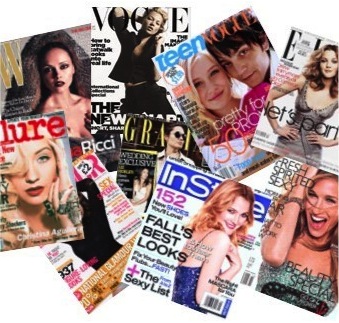
magazinesFrom advertisements in print and public spaces to the constant dissection of the appearances of public figures, women are continually told to prioritise looking “attractive” – a standard often defined by impossible criteria.

A woman’s worth is frequently judged based on physical appearance, overshadowing her work or personality.

Photoshopped images, movies and television shape the standards set for all women, but seldom depict an average woman accurately. This has strong repercussions for women’s health.

Around the world, a large number of women and girls are unhappy with their bodies, which they compare with airbrushed images.

Many experience eating disorders and psychological difficulties. Last year, the number of anorexia cases received by Singapore General Hospital crossed 120, compared with 34 in 2003.

People turn to weight loss pills, slimming treatments and aesthetic surgery to achieve the “ideal look”. The number of teenagers going for plastic surgery in Singapore has increased by 30 per cent over five years since 2006.

Such treatments are of dubious effectiveness and are sometimes performed in unsafe conditions. Few cases result in as dramatic a consequence as death, but there is a significant toll on women and girls in terms of time, money and emotional energy.

For the physical and mental well-being of all, society must stop insisting that women’s worth is based on matching these arbitrary and extreme standards.

We can start early. The Association of Women for Action and Research (Aware) offers body image and media literacy training, teaching students to critically analyse the images that are sold to them.

Parents and schools can look out for and address eating disorders and bullying.

And all of us must show more kindness – to recognise all women as full, complex human beings who look fine just as they are, and have so much more than beauty to offer.

This letter was first published in the Straits Times Forum on 18 November 2013.