Author: AWARE Media

The Best and the Worst of 2013!

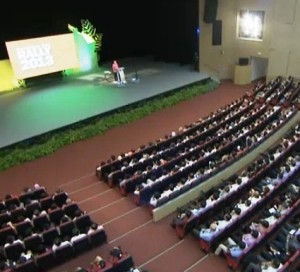
We announced the winners of our annual AWARE Awards, Singapore’s only gender equality awards, yesterday at AWARE’s Big Red Ball.

AWARE Award winners always stand out in their fields, shining examples of what one can achieve through dedicated work and a passion for doing what’s right. Each year, we present the AWARE Awardsto individuals and organisations doing exceptional work to further gender equality.

Optimized-RachelThis year’s AWARE Heroine Awards were given to domestic violence survivor, Rachel Chung and veteran social activist, Constance Singam.

AWARE Awards were also presented to Accenture as Corporation of the Year, for consistently and actively encouraging female leadership and empowering women in the workplace.

The Singapore University of Technology and Design won the award for Cause of the Year (Education), for attracting female students and achieving a balanced male-female cohort, an achievement few engineering schools can boast of.

Lastly, the Financial Women’s Association’s mentoring programme was named Initiative of the Year for adopting a professional and robust approach in a mentoring programme connecting younger members with senior members to develop their careers.

AWARE also declared the winner of the annual ALAMAK! Award, our tongue-in-cheek tribute to the most excruciating example of sexism over the past year.

0912_improve_Lorenzo-Morales-2

Candidates are nominated by the public, with the “winner” chosen through online voting.

With 61 per cent of the vote, the recent wig saga at St. Margaret’s Secondary School emerged the winner of the Alamak! Award 2013. Last month, Principal Marion Tan sparked the ire of the public when she demanded that students who had shaved their heads for cancer awareness wear wigs to hide their baldness.

The AWARE Awards and ALAMAK! Award will be back next year!


NDR Speech 2013: A Step In The Right Direction But More Needed

19 August, 2013

AWARE is heartened by the policy shifts outlined by Prime Minister Lee Hsien Loong in the National Day Rally speech 2013. We applaud the government’s commitment to invest in every Singaporean to reach their full potential, through much needed reforms in housing, education, and healthcare.

Much, however, is left to be done to improve social mobility and inclusiveness in our nation, and ensure the overall well-being of Singaporeans.

Healthcare

Thank you, PM Lee, for granting Singapore and AWARE one of the key items on our wish list – universal, compulsory health insurance for life. With rising life expectancies, lifelong health insurance will meet the needs of our aging population. AWARE called for this policy in our recommendations for Budget 2013, and we are very happy to see the recommendation met.

We ask the government to adopt a gender-sensitive lens in the implementation of this policy. Healthcare must account for the fact that women live longer than men and with more years in poor health. Women, especially housewives, earn less than men on average, and are disadvantaged under the current 3M healthcare system which is tied to employment.

AWARE trusts that the government will take this into consideration in its ‘means test’ to determine eligibility for lifelong health insurance.

Housing

In the past months, the government has taken steps to make public housing more affordable and inclusive. Opening up BTO-flats to some singles, for example, is a great step that has seen a positive response from the public.

However, the current policies of the Housing Development Board disqualify all singles under the age of 35 from owning or renting public housing directly from the government. In light of the growing number of singles under the age of 35, we need a comprehensive review of this policy.

HDB policies need to be expanded to include groups such as divorcees, who are often ineligible for subsidised public housing. AWARE calls on the government to act on a recent report from the Government Parliamentary Committee on National Development, which recommends treating divorcees as first-timers for public housing. We would also like to see singles allowed to access additional government grants and financial support for housing currently reserved for married couples.

Additionally, housing policies should provide for particularly marginalised groups such as singles with disabilities or unmarried caregivers, who often fall through the cracks.

Singaporean Aspirations

The government has said that ‘Our SG Conversation’ unveiled the core aspirations of Singaporeans which will serve as a guide for government policy. AWARE is glad that PM Lee announced strategy changes related to the areas of ‘Assurance’ and ‘Opportunities’, but we hope to see landmark shifts in policies affecting ‘Purpose’, ‘Spirit’, and ‘Trust’.

Purpose: We ask the government recognise that to Singaporeans, “progress” means more than GDP growth, and to therefore include ‘quality of life’ indicators such as environmental sustainability, a sense of well-being and happiness when making decisions for our future.

Spirit: Policies governing civil society and community action need to evolve, allowing Singaporeans to take ownership of the future of our nation. The government must liberalise the Registry of Societies Act and provide more space and liberties for people to organise, advocate, and carry out community-led initiatives. We would also like to see the government recognise and award public service by civil society members and everyday Singaporeans in the prestigious National Day Awards.

pm-rally-auditorium-viewTrust:  The government must also allow citizens to engage with it on matters that are important to the diverse communities that live in Singapore. It is crucial that Singaporeans have a say in government spending and nation building. Transparency is a critical part of building trust. AWARE calls on the government to release more socioeconomic data, disaggregated by factors such as gender, race, and age.


Young minds and bodies: Is ignorance bliss?

by Tan Jian Xiang and Catherine Smith

Sex-EducationSex education in Singapore is currently values-based, with abstinence as the main approach in keeping youth from premarital sexual activity. However, they can get information about sex from the Internet and their friends, without the supervision of parents or schools.

On this 13th anniversary of International Youth Day (Aug 12), let us consider what young people need to know so that they can develop healthy relationships. We suggest that an insistence on values does not justify ignorance.

A 2011 survey sponsored by Bayer Healthcare found that eight in 10 young respondents (100 men and 100 women aged 20 to 35) in Singapore do not use contraception when having sex with a new partner. This was among the highest rates among the nine Asia-Pacific countries surveyed.

Statistics from the Department of Sexually Transmitted Infections (STI) Control indicate a similar problem: There were 626 cases of infection among teenagers in 2010. There are also some 2,000 teenage pregnancies a year.

These statistics show that ignorance of contraceptive methods can have physical and mental consequences for these youth.

There is possibly a fear that teaching safe sex encourages youngsters to have sex. This assumption has been disproven. A 2007 study mandated by the United States Congress found that abstinence-only curricula did not postpone sexual behaviour.

Safe sex goes beyond STIs and unwanted pregnancies. It includes violence prevention, too. Many imagine rape to be a crime committed by a stranger, but sexual violence is often committed by someone known to the victim.

Failure to teach teenagers about what consent means and their right to withhold consent is likely to lead to a greater incidence of date rape.

The Education Ministry places an onus on parents to educate their children about sex, but it was reported last year that a Health Promotion Board poll, covering 1,169 Singapore households, found that less than half of parents had broached such topics with their teenage children.

To delegate sex education to parents would thus be inadequate.

The reality is that teens are involved in sexual activity. Withholding information about contraception, STIs, date rape and consent will not stop this. A comprehensive sex education programme, though, would enable teens to make better choices and thereby enjoy healthier lives and relationships.

Tan Jian Xiang and Catherine Smith are youth volunteers at AWARE. This article was initially published in Today Voices on 13 August, 2013.

Should singles be treated as lesser citizens in housing policy?

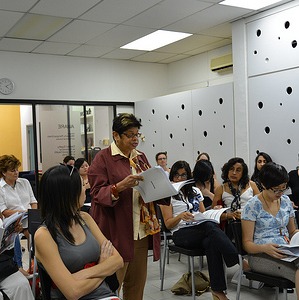
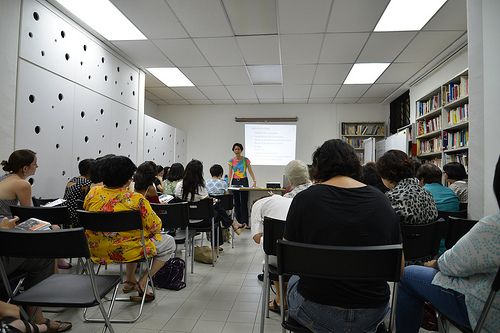
A Roundtable Dialogue on the housing challenges faced by unmarried people in Singapore was held at the AWARE Centre on 29 July.

Entitled ‘Housing Singaporeans – Should unmarried people be lesser citizens?’, the roundtable began with a thought-provoking presentation by the Singles Sub-committee of AWARE on the results of its research into this topic.

The presentation was followed by an engaging discussion by the participants on the right of unmarried people (who comprise nearly 35 per cent of Singapore’s population) to purchase or rent public housing from the Housing Development Board (HDB).

Under the current policies of HDB, single people below the age of 35 are unable to purchase or rent public housing, or access housing grants provided by the government. Public schemes favour heterosexual nuclear couples with children, leaving many unmarried people with few housing options.

Participants at the roundtable shared their personal experiences and stories, and offered their diverse views on the topic. For example, one of the issues raised was that many unmarried people are forced into homelessness or severe financial hardship by the current housing policies. Single mothers and divorcees, especially, suffer from policies that block their access to public housing.

The AWARE team emphasised that ‘singles’ are not a homogenous group – those who never married, divorced, disabled singles, homosexuals unable to get legally married, and many others are in the category and fall through the cracks of HDB’s current housing policies.

Former AWARE President Kanwaljit Soin also attended the event and offered her own opinions on how the policies should be modified to accommodate unmarried people.

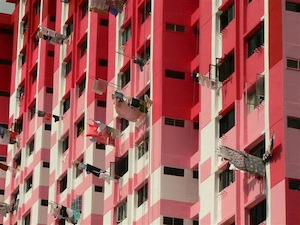
a_block_of_hdb_fla_galleryfullThe roundtable talk was a great success, as evidenced by the enthusiastic dialogue, which carried on beyond the allotted time and continued after the event.

Interested? Join in our next roundtable talk by Constance Singam, an author and civil society activist, on 17 August. Click here to register.

Why does world population growth matter to Singapore?

by Vivienne Wee and Faizah Jamal

ebrahimpour20091212220952125

World Population Day, 11 July, passes largely un-noticed in this “global city”. However, we cannot ignore how a world population now reaching 7.2 billion affects all life on this planet. Increasing demands for finite resources are aggravated by inequitable and unsustainable resource use. The massive extinction of species is disrupting the global ecosystem, adversely affecting climate and, consequently, our sources of food and medicines.

Paradoxically, Singapore espouses a pro-natalist policy, recently reiterated in the White Paper (January 2013), again calling on citizens with the means to have more children. This plan for population growth is driven by a paradigm requiring an increased proportion of those of working age to provide for an aging population. But what happens when those of working age, in turn, grow old? Are we to have an ever increasing population and an ever more degraded environment?

In her speech to Parliament in February, NMP Faizah Jamal said:

“…we act as if all that economic growth, all the companies and foreign talent that we want to entice, all the goodies that we desire in life, all the construction that will happen, does not in fact come from somewhere and end up somewhere, in the environment. Yet there is no mention in the White Paper about the impact of so many people on our carbon footprint, our food security….”

This footprint will further strain overstretched environmental resources. Decisions made here have environmental impact beyond Singapore, just as we experience the impact of actions elsewhere, including forest fires.

While it is the Government’s responsibility to provide infrastructure, its planning process does not prioritise environmental sustainability. The proposed Cross Island Line will cut through the Central Catchment Nature Reserve, affecting unique species found nowhere else worldwide. Reclamation plans will affect dugongs, wild dolphins, and the endangered green and Hawksbill turtles. Pulau Ubin’s Chek Jawa will disappear.

Plans for population growth in a finite environment manifest problematic values: first, that non-human species can be destroyed whenever expedient; second, that forests and mangroves are useless because their benefits are not monetised; third, that policies adopted here only affect Singapore; fourth, that short-term interests outweigh long-term concerns.

Expediency also characterises the control of women as instruments for producing the desired quantity and “quality” of future generations. The gendered inequalities that disadvantage women relate to inequitable resource use that benefits the favoured few while harming others.

The discriminatory pro-natalism practised here symptomises elitism – a view of the world as serving only the elite’s short-term interests. Reproductive preference is given to middle and upper class Singaporeans, including “new Singaporeans” categorised as “talents”, while those of low education and low income are incentivised not to reproduce after two children. The issue is not just numbers but the valorisation of elite consumption as overriding all else.

This World Population Day, we must recognise we need an inclusive, just and sustainable worldview, respecting the rights of all. As inhabitants of a shared planet, if we are not part of the solution, then we are part of the problem.

Vivienne Wee is an anthropologist and Research and Advocacy Director of AWARE. Faizah Jamal is an environmental educator and Nominated Member of Parliament.

Quen on Her Forum Theatre Experience

947389_582646458436956_1059559065_n


Quenyee Wong plays a grandmother in “Just A Bad Day”. Here is what she has to say about her experience as an actor and what it means to be a Change Maker of the We Can! campaign.


For me, it truly was a tall order. Here was an email asking people with full-time jobs and a life – well, we certainly hope so! – and maybe even a dog, to put months of their lives “on hold”, to be in a play.  Really? Who does that? Once upon a long time ago, I too wanted to run away with the circus, but I’ve since quite adjusted to the demands of life today, thank you.

What did actually get me to sign up for the We Can! forum theatre workshop was, in fact, what the play was going to be about: violence against women. Something went “bing!” in my head. Women’s rights, human rights, the rights of the downtrodden and misunderstood have always been close to my heart. Over a great part of my life, I did identify with the downtrodden. And here was a chance to do something that took on these issues directly!

So two weeks later saw me walking into a room full of strangers of all ages and races, shapes and genders. You’d only see a more diverse group, well, at the circus. After the initial hellos and introductions, the amazing journey of forum theatre training began! Under the careful moulding of a veteran theatre practitioner named Li Xie, we started to open up and warm towards each other through different trust-building exercises. In one such exercise, we wandered with eyes closed within the confines of a room and, at the instruction of Li Xie, reached out to find a “hand buddy”. That is, we proceeded to feel the hand of the person we had partnered up with, perhaps even smelling it or rubbing it against our faces, so that we could “know it”, all the while with our eyes shut. Then, after mixing us all up again, we had to find our hand buddy purely by feeling dozens of “stranger hands”! What a weird thing to do, I thought, but guess what? Many of us did find our hand buddies, and experienced a most uncanny sense of connection with that person.

The artistic process was most liberating. Soon, this motley crew of volunteers migrated together from a place of shy, giggly awkwardness to a full-on, I-haven’t-even-shared-this-with-my-mom, safe circle of revelatory sharing! The day always ended with everyone coming together in a circle and sharing what we felt or had learnt. And the bare-bones honesty surprised us all! Here was a group of ordinary folk who had come together because we had witnessed or experienced unspeakable violence in our own lives, and now we were bonding over long-hidden secrets. Rape, peer pressure, gender discrimination – you name it, it figured in our individual experiences. It made you think, wow, violence really is just one or two degrees of separation away! In fact, if you were willing to look, you would see it happening in your own life as well.

These stories made their way into a piece of theatre that explored violence in both physical and non-physical forms, set in the everyday scenarios where we had first experienced them. Through a progressive series of exercises involving creating tableaux of actions, we pieced the action together and weaved a coherent whole. In a process called “hot seating”, we had questions posed to us as the character we played (for example, a woman who felt compelled to fulfil the roles of wife, mother and daughter-in-law to the highest degree) and we answered them in character. This helped us better understand the stakes involved and our character’s motivations and “buttons” – words or actions that would make them think twice or even change their behaviour. These were “buttons” that our audience members could “push” in order to trigger a different way of thinking or acting.

All in all, the process of creating a forum theatre devised piece made each of us more aware of why protagonists in any particular situation make the decisions they do, which create or add to a cycle of action. We had all come with a certain set of ideas about the issues in violence, and through role-play and discussion, had discovered a lot of the “grey” in things we used to think of as pretty black-and-white. Taking on these issues didn’t sway our resolve. On the contrary, it imbued us with some wisdom: solutions are not cut and dry, and people have to arrive at their own solutions organically.

At the We Can! forum theatre workshop, we found our “therapy” – sharing our stories and putting them together in a theatre piece had, in effect, released us from their hold and re-purposed them for good. Now, it is time to take our process to the masses, to get them to share as well!

We named the play, “Just A Bad Day”, and recognised ourselves as “Change Makers”. Using everything we have learnt from the workshop, the “Just A Bad Day” Change Makers will take the play to Singapore’s multi-racial, multi-religious, multi-abled, multi-gendered, multi-affiliated communities over an entire year.

People need to feel empowered to say no, to pipe up when they would ordinarily have kept mum, to step in where they might have stepped aside before because they thought that violence was a private matter.  But it isn’t. Just as you can step into the world of the forum theatre and do something differently, we want people to know that they can change the course of real life, and hopefully history, simply by acting on it.

AWARE Holds 28th Annual General Meeting

Forty-eight members, old and new faces alike, came together on 1st June to attend AWARE’s 28th Annual General Meeting at the AWARE Centre.

8924433293_316c67a706-1Quorum was achieved despite this being a non-election year. Members came to show their support and were keen to find out more about the activities of 2012 and the Board’s plans for the future. The Annual Report (with amendments) and Financial Statements for 2012 were also adopted by those present.

President Winifred Loh shared some of the fruits of the Board’s work in the previous year. Project Butterfly, established to enhance AWARE’s operations, was one highlight. Winifred emphasised the importance of strengthening the partnerships between the key stakeholders of AWARE: members, volunteers, staff, and Board. Following the discussions under Project Butterfly, some of the crucial developments that have taken place in this area are the refinement of processes for engaging and supporting our volunteers, and the increased channels of communication between the Board and the members.

Executive Director, Corinna Lim, shared about AWARE’s growing outreach and increased stability over the last five years. Media coverage and the outreach numbers of AWARE’s Training Institute and Support Services had increased significantly during this period, reflecting AWARE’s effectiveness in pushing for social change and gender equality in Singapore.

8924413751_f9baa65464

The Research and Advocacy Department recapped a productive year, in which it submitted a record nine sets of policy recommendations and embarked on a concerted effort to promote public discourse of gender inequality. One of the most significant successes celebrated at this AGM was the adoption of AWARE’s recommendations on the Voluntary Sterilisation Act, passed in Parliament in October last year. This achievement has strengthened AWARE’s resolve to persevere in lobbying women’s and gender-related issues.

The meeting was a chance to discuss new ideas as well. Members put forth suggestions on revising the membership scheme, shifting the focus from the payment of fees, to the intangible contributions of talent and effort by AWARE’s supporters. Another exciting proposal was to raise awareness among a wider section of the population by inaugurating a series of AWARE lectures, with speakers on topics such as women and the law.

The AGM ended on an anticipatory note, with volunteers coming up to share on events that members, friends, and the public can look forward to in the coming months. These include the 2013 edition of the Big Red Ball on September 16, and ongoing nationwide projects such as the We Can End All Violence Against Women campaign.


The joys of shared parenting

by Callan Tham

Following AWARE’s article with three fathers who shared their views on paternity leave in Singapore – “What fathers say on Father’s Day”, published in The Online Citizen on 16 June 2013 – Callan Tham, another father, wrote to AWARE to add his opinion about the current paternity leave policy. He looks forward to a policy change that would support shared parenting between fathers and mothers.

Nothing really prepares one for parenthood. It is one of those contradictions in life – something that is not completely what one expects it to be, and yet entirely how one expects to experience it.

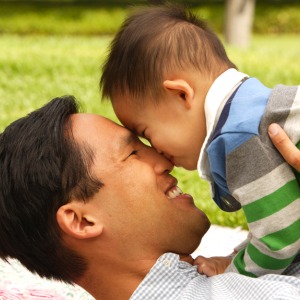
father.and.sonWhen my son Ayrton was born almost 3 years ago, I was lucky enough to be working on rotational shifts. This meant I could accumulate my off-days and paid leave, and take about 6 weeks off from my job to care for both my wife and son, right after we welcomed him into the world. Every night, I fed him and changed his soiled diapers while my wife rested. I took naps in the day as my wife took care of him. He is a shared responsibility through and through. This shared parenting enabled me to bond with him. It also strengthened my bond with my wife.

Even before I stepped into fatherhood, I’ve always wondered what it would be like. I know many colleagues who become fathers and have to struggle to cope without the luxuries that many of us take for granted. We managed to hire a good domestic helper and my parents helped to look after Ayrton in the weekdays, as both Karen and I work. These are luxuries for which we are grateful, but one plays the hand one is dealt.

My experience as a father would have differed greatly, had I held a typical 9 – 5 job with limited leave flexibility. This is why the current policy situation is curiously and woefully lacking, especially in the light of our fertility rate, which resembles a chart depicting a catastrophic stock market crash.

Fathers want to be a part of their children’s life growing up, but are only given a mere fraction of paid leave to do that. While it is an improvement over zero, it is hardly enough. In its current state, it is akin to a band-aid, or a panadol tablet — a temporary measure that does nothing in the long term.

I think the Swedish model for paternity leave could be adapted for Singapore. That would require the Government to take a huge leap of faith in an act of legislative courage. I am nevertheless hopeful that I can see such an act in my lifetime. As a father, I do not want to see mothers bear the burden of childbearing and child-raising alone, while fathers are deprived of the joys of shared parenting.

What fathers say on Fathers’ Day

by Abdul Shariff Aboo Kassim, Kamaludeen Mohamed Nasir, Chan Kin Kok with Vivienne Wee and Ranjana Raghunathan

image1.000To mark Father’s Day, AWARE invited three fathers to give their views of the newly introduced paternity leave and conversion of one week of maternity leave to shared parental leave. They were Kamaludeen Mohamed Nasir (father of a five-year-old son and a nineteen-month-old daughter), Abdul Shariff Aboo Kassim (soon to be father of a second child) and Chan Kin Kok (father of a four-year-old daughter).

Voicing their views independently, they converged on two points. On the one hand, they welcome the new leave policies. Kamaludeen describes these as recognition of “the significant roles of fathers in the care of children.”

Abdul Shariff concurs: “When my first child was born, the lack of paternity leave meant that I had to return to work just days after my wife was discharged from the maternity ward. I welcome the legislation of paid paternity leave and hope that my daughter, due in four months’ time, will not face the same plight as her brother.” Chan notes that the six-day paternity leave will be particularly useful to those fathers with limited annual leave, who cannot carry over leave from previous years.

On the other hand, they agree that care-giving fathers need better support. Abdul Shariff considers the six days of paternity leave insufficient “for men who wish to be more involved parents. It merely provides a week’s relief to mothers of a newborn.”

Their views are congruent with AWARE’s 2011 survey of 1001 parents, which showed 91 per cent agreeing on mandatory paid paternity leave, with 80 per cent asking for more than 6 days and 44 per cent, more than 11 days. Most agreed that four weeks of the 16-week maternity leave should become parental leave, available to either spouse.

Kamaludeen notes that “fathers play a pivotal role in the development of their children beyond these months of infancy.” He hopes for paternity leave to be expanded beyond current stipulations that make such leave available only within 16 weeks after the birth of a Singapore Citizen child or flexibly within 12 months after the birth, pending mutual agreement between employer and employee. He points out that flexible paternity leave is needed should the mother fall ill, as no woman can be expected “to stay healthy 365 days a year “, regardless of whether they work or stay at home.

Although many fathers value their roles as caregivers, they are not given sufficient opportunities to develop the skills, sensibilities and habits necessary to be good caregivers. Chan identifies the problem as a work environment that stigmatises fathers who take time off to care for their children, expecting men to prioritise work over family.

Abdul Shariff observes that “caregiving is still perceived as a woman’s domain.” The perpetuation of gender stereotypes pressures many women to drop out of the workforce, sacrificing career and financial security to be the main parent responsible for the children’s well-being.

Abdul Shariff notes that support given to fathers will help mothers to stay in the workforce. He suggests that flexible work arrangements for fathers, especially during the child’s first three months, will allow working mothers to spread their 16 weeks of maternity leave over 24 months. Currently, working mothers have to take eight weeks’ leave as a block, with only the remaining eight weeks available for flexible use over 12 months.

“Such a move would relieve employers, who otherwise have to bear with their female employees’ lengthy absence. This would, in turn, encourage them to be more flexible with male employees”, he said.

This father’s suggestion echoes the call by NTUC and AWARE for flexi-work arrangements to be made available to all working parents. AWARE has always advocated shared parenting, with fathers more involved in childcare.

image1.001Abdul Shariff points out that in contemporary families, men do have to play a greater role as caregiver and women, as wage-earner: “Getting married later in life is a growing trend. It makes sense for women to strive for financial independence. The shift in mean age of having the first child means that caregiving needs are much greater now. Couples wishing to have more children cannot afford to have large age gaps between their children, in view of age-related risks. Moreover, parents’ expectations are higher as they endeavour to secure a stable future for their children amidst increasing uncertainty. These factors emphasise the growing need for shared parenting. While I am thankful that many existing policies have been enhanced, I hope they will be improved further to enable fathers to play a bigger role in caring for their children.”

Policies are genuinely pro-family only if they support fathers and mothers as both care-givers and wage-earners, able to meet family needs.

(Abdul Shariff Aboo Kassim, Kamaludeen Mohamed Nasir and Chan Kin Kok are the fathers of young children. Vivienne Wee and Ranjana Raghunathan are, respectively, AWARE’s Research and Advocacy Director and Research and Advocacy Coordinator.)

The article is published on The Online Citizen, on 16 June, 2013.