

Author: AWARE Media

The trouble with limited paid paternity leave

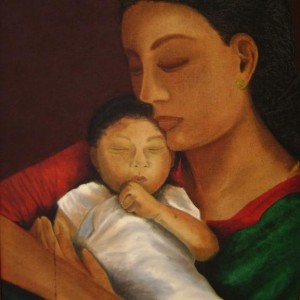
image1-1When I became a mother five years ago, I experienced acutely what I had known as a sociologist — structural conditions matter.

In the first week after our baby was born, my husband and I were equally pathetic in our cluelessness; the learning curve was steep and we tried and failed together. We were on equal footing with caring for baby on most fronts.

After he went back to work and I stayed home with the baby, however, our paths on that learning curve quickly diverged. While he remained committed to playing a major role — waking up for night feeds to change the diapers before passing baby to me, and soothing the baby back to sleep afterward — I inadvertently became the more competent and more confident parent.

It is reasonable that women receive more public support when it comes to being at home with an infant; they do need the time after the birth of a child for recovery and to establish breastfeeding. However, for men to learn to be fathers in the way women have to learn to be mothers, they need comparable opportunities and support for developing competence in everyday acts of caregiving.

Anything worth doing takes practice to do well. This includes parenting. Mothers and fathers are made, not born. They are made through hands-on learning, through multiple trial and error. When we speak in glowing terms about the importance of motherhood and fatherhood, we often speak in general terms without considering the everyday caring for the young.

Particularly for the middle-class, popular culture is permeated with references to “quality time” and “involvement”, without adequate attention to the significance of everyday acts — wiping noses, sneaking vegetables into meals, nagging for the 10th time that it is time for a shower.

Paying attention to these small acts that populate a child’s day, we see that being a caregiver is not always pretty and indeed often tediously mundane. Yet, tedium and mundaneness are part of any long-term relationship and no less important than more photogenic moments.

To speak of valuing parenthood and children, then, we need to speak more often of those spaces between developmental milestones and Facebook status updates. And when we do, we see stark differences in the extent to which women and men participate in these everyday practices.

UNDERVALUED WORK
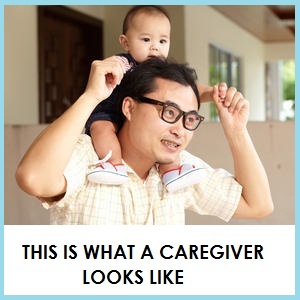
image2


If we take a child’s perspective and see these acts as dominating their conscious lives, and if we recognise that these everyday gestures are a privilege of parenting, we see that many men — particularly those who do not have flexible work and time-off — face constraints and barriers as parents. This is something public policy reinforces and that it can and must address.

Extensive maternity leave and limited paternity leave creates a situation in which women and men, regardless of their desires, are compelled to become families where mothers play bigger roles than fathers by virtue of more opportunity to practice and learn.

To address this, paternity leave must be extended beyond the current one week. Particular attention should be paid to ensuring that all men — regardless of their socio-economic circumstances and job types — have access to this privilege to parent.

Caregiving is simultaneously hard work and privilege. Public policies have produced hard divisions of labour such that some do most of it — mothers, grandmothers, and for some portion of the middle-class, domestic workers.

In the process, those who do not partake in everyday care often fail to appreciate both its difficulties and its rewards. The work itself becomes devalued. Children become, paradoxically, a category of highly-valued persons whose care is often invisible and undervalued.

Policy makers frequently invoke the notion of “mindsets” as limiting their capacity to alter policy. Yet, sociologists have shown that for attitudes to change, conditions must exist for certain practices to become norms.

Employers will not spontaneously decide that they ought to support men in becoming particular types of fathers. In the abstract — not having had opportunity to acquire competence in childcare beyond changing some diapers — men will not spontaneously see that they can be different sorts of fathers.

Women, for that matter, will not believe that their male partners are indeed capable of doing everything they can do, as long as they are given time to practice. For so-called mindsets to change, conditions have to shift.

It has taken years for paternity leave to be introduced. We must keep the conversation going so that it does not take years to expand it so that it actually counts.

Teo You Yenn is Assistant Professor of Sociology at Nanyang Technological University, board member at the Association of Women for Action and Research, and author of Neoliberal Morality in Singapore: How family policies make state and society.

This article is published on TodayOnline, on 17 June, 2013.

AWARE launches We Can! Campaign

singapore logoAWARE has launched the ‘We Can!’ campaign (or We Can End! All Violence Against Women), a ground-up initiative to trigger change in social attitudes towards violence.

The target is to mobilise, over the next three years, more than 1,000 individuals and community groups who will make a commitment to work towards a violence-free society. Each of them will aim to get the We Can! message to another 10 people, with the campaign eventually touching 10,000 people or more.

“Domestic violence is not a private matter. The We Can! campaign encourages bystanders to see violence as their concern and emboldens them to take action,” said AWARE’s Executive Director Corinna Lim.

The survey of 1,322 respondents (667 women and 655 men) from a wide cross-section of Singapore society was carried out by students of Ngee Ann Polytechnic School of Business and Accountancy.

The survey also found that:

  • While nine in ten people recognise physical violence, only seven in ten recognise non-physical violence
  • Negative stereotypes of women and conservative views on gender roles remain strong, especially among men aged 18-29.

Commenting on the survey findings, Ms Lim said these gender stereotypes and patriarchal attitudes contribute to the tolerance and perpetuation of violence against women.

“These gender stereotypes may not have been an issue 40 years ago. However, with more women entering the workforce, we are seeing more differences in expectations of gender roles between men and women. This could lead to an increase in conflict within marriage. This incompatibility could also be a contributing factor to fewer marriages and children,” said Ms Lim.

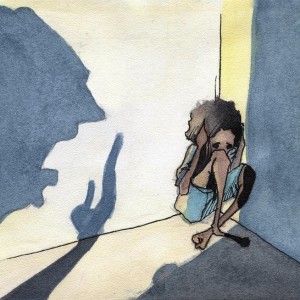
Violence Isn’t Always Black and BluePsychological_Violence_by_ars_aeternast

AWARE is also concerned that fewer Singaporeans recognise psychological violence compared to physical violence. Regular verbal abuse, harassment, and controlling of a partner’s finances and social life, are amongst the forms of violence that are less recognised.

Domestic violence survivor Rachel Chung says that it is crucial to pay attention to subtler forms of violence. Recounting her own experience, she says, “People think psychological violence is not really violence, that we’re making mountains out of molehills.

“Violence in my life started with verbal tirades, insults and put-downs from my partner. He then assaulted me with profanities. Soon, he started shoving me when I ‘stepped out of line’ and this escalated to more physical abuse like slapping and punching.”

She added: “The damage to my morale and self worth caused by the emotional abuse was no less than the physical injuries. I hope more people will come to realise that violence isn’t always black and blue. We need to recognise and reject all forms of violence in our own lives, and also around us.”

Find out more about Rachel’s story here.

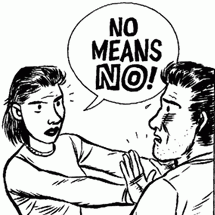
Rape Myths Especially Prevalent Among Younger Menrape-myth4

Another worrying finding is that rape myths persist across all age groups, but are particularly strong amongst 18-29 year old men.

Within this age group:

  • 13% of men think women who are raped often ‘ask for it’
  • 29% of men think women often make false claims of being raped
  • 21% of men think women often say ‘no’ to sex when they mean ‘yes’.

“These numbers are alarming,” said Ms Lim. “Our experience working with victims of rape and sexual assault indicate that the culture of victim blaming is still prevalent in Singapore, causing rape to be under-reported. The importance of consent in sex is also not well understood by this generation. It is particularly worrying that young men have these sexist views.”

AWARE’s ‘We Can!’ campaign

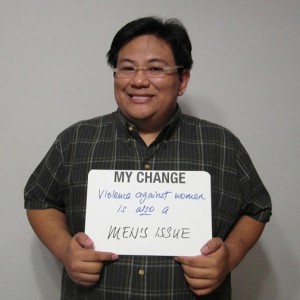
Optimized-AndrewWe Can! is a global campaign that has touched over 3.9 million individuals worldwide who have pledged not to commit or tolerate violence against women. Singapore is the 16th country to join the movement.

We Can! Singapore took off at the beginning of 2013. With the tagline ‘Change starts with me’, the campaign will mobilize over 1,000 individual ‘Change Makers’ – ambassadors of gender equality and non-violence – through art, performance, sports, community networks and new media.

These Change Makers will be active volunteers who take the campaign message forward and inspire change in their communities, and over the next three years reach more than 10,000 people in Singapore, inspiring them to speak out against violence in their own lives and around them.

“It’s a people’s movement for a violence-free society,” explains Campaign Coordinator Kokila Annamalai.

By building an alliance of schools, colleges, community groups, and other organisations in Singapore that are willing to work towards a violence-free society, the We Can! campaign will reach diverse segments of Singapore society. UN Women (Singapore) is the first alliance member of the campaign.

Optimized-RachelSo far, through interactive workshops on violence against women, the campaign has recruited more than 80 Change Makers who have pledged to end violence against women. Find out more about how to become a Change Maker here.

A team of 20 Change Makers have devised a forum theatre on violence against women, which premieres on 22nd June 2013. This play will be taken to communities around Singapore to provoke widespread thought, discussion and action to end violence against women. Get more details about the play here.

“We hope that as it grows, the We Can! campaign will go from being an AWARE-led initiative to an alliance-led and community-owned initiative,” said Kokila.

Read more about the results of the survey commissioned by AWARE here.

See the survey questionnaire here.

To find out more about AWARE’s ongoing work  on Violence against Women, click here.


The Journey From Great to Greater!

Win headshotYou may recall reading about Project Butterfly in my quarterly messages.  As we wrap up the first year of my term, I wanted to give you more information about what enhancements you will begin to experience at AWARE in the rest of 2013.

What drew me, and many other women, to AWARE has been, and always will be, about making a difference. In society at large, with women in need, and among family and friends.Passion is the fuel that drives us to work together – as members, volunteers, staff and Board at AWARE – on our vision of living in a gender-equal Singapore.  Project Butterfly allowed all of us to explore just what is the AWARE we want, and what we need to do differently to ensure that the AWARE of 2022 will remain relevant in our changing Singapore.

Soon after I took on the President’s role last year it became clear to me that AWARE as it approached its 27th anniversary, was well into what is known as the ‘consolidation’ stage of its development as an organisation. According to NGO Pathfinder International’s definition, some key characteristics of an organisation at this stage include:
• More sophisticated organisation chart showing units, and reporting relationships
• New systems implemented with SOPs
• HR policies in place but not consistently implemented
• Board is in place with diverse membership but not fully optimized
• Increased diversity of donors, and revenue
• Staff & Board training and development budgets set aside and plans implemented

For AWARE to continue to grow as an organisation with lots of heart and soul, impacting women’s lives and civil society in Singapore, we need to:
• Develop and implement strategic and sustainability plans
• Fully incorporate community outreach and participation into problem identification, planning, implementation and monitoring
• Review the supervision process with effective feedback and follow up mechanisms.

We launched Project Butterflyto focus on four key areas that will provide the operational support for our journey from Great to Greater: Volunteer management; Project management; Accountability structure; and Communications & feedback.

We had a dynamic team of AWARE members with lots of passion and diverse experiences and skillsets:
·       Connie Singam (Multiple-time past President)
·       Braema Mathi(CEDAW sub comm chair and Past President)
·       Schutz Lee (past Exco member and staff member)
·       Caris Lim (past Exco member, past Support Services volunteer)
·       Mao Ailin (current Singles sub comm co-chair)
·       Margaret Thomas (founding member and current Board member)
·       Corinna Lim (past Exco member and current Executive Director)
·       AntheaOng – Facilitator (longtime Aware supporter)
·       Winifred Loh – Project Leader (President)

The deliberations of the team over four months (September 2012 to January 2013), together with input from several focus groups, led to these key recommendations:
·       Accountability is critical to AWARE’s continued growth and effectiveness. Everyone who does work for AWARE functions within the accountability structure
·       Volunteers commit to a Volunteer Engagement Form that outlines the work being undertaken, the timeline and the deliverables
·       Volunteers assign or transfer ownership rights to AWARE but different rights arrangements can be negotiated
·       Every subcommittee exists to drive a Change Agenda and has clear terms of reference that specify its timespan and deliverables. It will also have an Accountability Partner, usually a senior staff member, who will provide support and monitor its progress.
·       Any AWARE member can propose and initiate projects via the new ‘Expression of Interest’ process.

A pilot programme has begun and will continue till October this year. All new volunteers and sub committees will be introduced to the new processes, and feedback will be sought from everyone involved. We will then review the feedback at the end of the pilot for further enhancements.

Meetings are being held with on-going subcommittees to plan the transition over the next couple of months.Current projects with completion dates in the next 6 months will NOT be involved in the transition.

Meanwhile, we have re-launched five Board Committees and added two.  These are HR, Audit, Fundraising, Board Recruitment, and Programmes – as mandated by National Council of Social Services – as well as Volunteer Recruitment and Engagement, and Communications.

The role of Board Committees, which include Board and non-Board members, is to assist the board in providing guidance, setting policies and mobilizing resources for Aware.

We’re living in interesting times. Singapore is changing and civil society has an increasingly important role to play. We believe that the enhancements we are piloting at AWARE will strengthen our ability as an organisation to work for the changes we want to see in our society.


Press release and report from the IPS-SAFV-AWARE’s discussion on violence against women

violence against women8 March 2012

 Addressing Violence Against Women: in commemoration of International Women’s Day, 8 March 2012 (press release)

Today is International Women’s Day – a day for recognising women’s right to freedom from violence, and to gender equality.

Singapore ratified the Convention on the Elimination of All Forms of Discrimination Against Women in 1995. Inherent in that ratification is a State obligation to promote, protect and fulfil women’s rights in our society. Singapore has done many things right for women – especially giving girls and women equal access to education, which has, in turn, given them better access to livelihoods.

One area – domestic violence – where Singapore has put in place reasonable systems and policies is, however, becoming an area of concern that is worth re-visiting for improvements. The Association of Women for Action and Research (AWARE) and the Society Against Family Violence (SAFV) would thus like to raise awareness about violence against women. We still have too many women and girls who are beaten, molested and raped. Official statistics from the Singapore Police Force show an increase in cases of spousal violence and rape.

Yet these figures only tell one part of the story. Data from the International Violence Against Women Survey (SAFV-NUS, 2010) reveal, significantly, that almost 72 per cent of abused women would not make a report and among them, almost 59 per cent have experienced repeated victimization.

Violence too today is no longer just physical abuse. There is now greater recognition of the psychological and emotional trauma that destroys self-esteem and limits the life-choices of victims.

So today, we ask that more comprehensive steps be taken to eliminate violence against women. In this context, AWARE and SAFV held a closed-door discussion co-organised with the Institute of Policy Studies, resulting in key recommendations as captured by the two organizations for putting the brakes on violence.

On International Women’s Day we owe it to women around the world to take this challenge seriously — to end violence against women, and strike a blow for equality, development and peace.

Noeleen Heyzer, Executive Secretary,
Economic and Social Commission for Asia and the Pacific (ESCAP) who made this remark on 8 March 2007 when she was Executive Director of the then UNIFEM

————————————————————————————————————————————–

Report on Closed-Door Discussion on CEDAW Report 2011 on Addressing Violence Against Women
(sent to the media on 5 March 2012)

The Institute of Policy Studies organised a Closed-Door Discussion on CEDAW Report 2011 “Addressing Violence Against Women” on Monday, 5 March 2012. This was initiated by AWARE (Association of Women for Action and Research) and SAFV (Society Against Family Violence).

Fifty-one people from various backgrounds – academia, Government and non-Governmental representatives – participated in the fast-paced 2.5-hour discussion.

The discussions were grounded in the Concluding Comments made by the UN CEDAW Committee on the persistence of violence against women in Singapore. AWARE and SAFV are very heartened by the openness of Government representatives at the meeting and look forward to further collaboration.

The presenters from AWARE and SAFV made the following points:

  • Violence today has expanded to new victims (elderly, youths, foreign workers, foreign wives, homosexuals) and new forms (virtual crimes, sexual grooming), which need new measures to tackle.
  • As conceptual understanding of violence shifts, structural reforms will be shaped accordingly.
  • Data on violence are still not easily available and inconsistently documented at various agencies, depending on which ‘door’ the victim enters to lodge her case.
  • Gender-sensitive approaches are still missing in what seems to be a patriarchal environment though it is acknowledged that some agencies are more sensitised
  • Collaboration among agencies is still not maintained through systemic processes.
  • The Personal Protection Order and Domestic Exclusion Orders do not always offer protection to victims of violence.
  • Domestic violence is still seen as a private matter, severely inhibiting the reporting of cases by victims.

The presenters also shared the findings of the Sterne Report from the UK, which looks at definitions of violence, focusing on the element of coercion in all forms of violence.

The presenters discussed three possible areas for improvement and collaboration between Government and non-government agencies. The discussions that followed are summarised as recommendations by AWARE and SAFV:-

  1. The Government and non-government stakeholders form a Working Group to look at new definitions of violence that include ‘coercion’, identify new trends on domestic violence and sexual violence; identify vulnerable communities beyond the current family model, to enhance their protection.
  2. A comprehensive review of policies and procedures should be undertaken by Government and non-government stakeholders to identify gaps, prioritise issues and consider a new focus on coercion in approaches to violence against women, while keeping in mind the need for adequate resources and specialist social workers.
  3. The Government and the community should work together to enable better coordination between various social service providers and social workers/counsellors, with the possibility of setting up a pool of multi-lingual trained volunteers to support social work agencies, the police or the hospitals. The aim would be a ‘no wrong door’ policy to enable victims to be met by well-trained, sensitised staff at any ‘door’ used.
  4. Comprehensive and consistent data – disaggregated by sex, age, ethnicity, relationship to perpetrator- should be collected at all ‘doors’ or entry points.
  5.  The Government and the community jointly increase efforts in public education to change notions of domestic violence as a private matter in our society.


Happy mothers are willing mothers!

By James Wong, Shimona Leong, Jolene Tan and Vivienne Wee

No one should be manipulated into becoming a parent through misinformation and fear. On this and every Mother’s Day, let us celebrate women’s right to be mothers by choice.

mother and child 2On Mother’s Day, we celebrate those who have chosen to be mothers and enjoy motherhood. To have or not to have children – that is a right that everyone should have. Exercising this right is particularly important for women as they are the ones who become pregnant and give birth, with consequences for their health and future.

In 1994, Singapore and 178 other governments adopted the Programme of Action that resulted from the International Conference on Population and Development. As stated in that Programme of Action, implicit in the freedom to decide if, when and how often to have children is “the right of men and women to be informed and to have access to safe, effective, affordable and acceptable methods of family planning of their choice.”

Both the World Health Organisation and the United Nations cite information accessibility as a key component of the right to health. We can make the right decisions for ourselves only if we have accurate information about our bodies and our health. Yet we encounter the dissemination of harmful myths and inaccurate information by some groups that purport to provide support for pregnant women. This results in people making major decisions for their bodies and their lives, based on wrong information.

A Straits Times article (19 March 2013) recently mentioned several services that supposedly assist those facing unwanted pregnancies. It is disconcerting that the website of one of these services claims, without qualifiers, that abortion is not safe and that the use of birth control is like eating junk food.

mother childAWARE’s concern deepened when several callers who sought the advice of this service informed us of the wrongful information they had received when they called this hotline. They were told by the service that abortion is always medically invasive. There was no mention of non-invasive methods, such as oral medication or injections.

Another inaccuracy conveyed to callers was that abortion makes it difficult for women to get pregnant in the future. In fact, based on analysis of 11,814 pregnancies in women with previous abortions, a 2007 study in The New England Journal of Medicine concluded that a medical abortion (i.e. abortion by means of medication) causes no adverse health effects on subsequent pregnancies.

The service also claims, wrongly, that pregnancy is risk-free. This contradicts a 2012 study published in Obstetrics and Gynecology that found that legally induced abortion is markedly safer than childbirth, with the risk of death associated with childbirth approximately 14 times higher than than with abortion.

The callers to this hotline were then warned that abortion always leads to depression. This has been disproved by a large-scale 2011 Danish study of 365,550 teenagers and women, published in The New England Journal of Medicine, which shows that having an abortion does not increase the risk of mental health problems.

One caller was told that teenage parents can still achieve their personal goals while raising a child without support from their family and partner. There was no mention of the significant personal sacrifices that teenage parents often make in the form of truncated education, lost career opportunities, pervasive discrimination, social stigma and reduced psychological well-being, especially when they do not have the necessary support and resources for childcare.

Mother and Child II Diana Ong (b.1940 Chinese-American) Computer graphicsIs such misinformation the result of ignorance? Or is it motivated by an agenda that may be neither transparent nor aligned with the values or interests of the women who seek the help of such services? If it is the latter, what would be the intended effect of such misinformation? Is it to scare women into becoming mothers?

Unwanted pregnancies do not just happen to teenagers. They also happen to those who are married, to those who already have children, and to those who are victims of sexual violence. All who find themselves in this position must have access to accurate information about their choices so that they can make the best decision for themselves.

Happy mothers are willing mothers. No one should be manipulated into becoming a parent through misinformation and fear. On this and every Mother’s Day, let us celebrate women’s right to be mothers by choice.

James Wong, Shimona Leong and Jolene Tan are volunteers at AWARE. Vivienne Wee is the Research and Advocacy Director at AWARE.

Mums aren’t super, they’re just ordinary

By Teo You Yenn

The expectations, presumptions, and institutionalised norms for mothers to be special and unique are irrational, unjust and harmful to society.

no-more-supermomMothers are not special.

They do not have superhuman powers to create more hours in a day. They cannot free themselves of societal constraints to act as independent saviours. They do not raise children in social vacuums.

Pop culture and public policies conspire to frame mothers as extraordinary, as people — indeed, women — who possess special qualities such that they can be relied on to do things other people are not expected to.

The focus in public policy, for example, is on mothers as dominant players in children’s lives. There are lengthy maternity leave, versus insignificant paternity leave, and a range of tax reliefs only for working mothers. These compel us to think of and experience the caregiving of children as something that mothers are uniquely positioned to do.

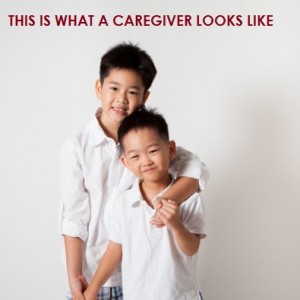
caregiverMen who want to and do play roles as caregivers are unsupported and unrecognised; women as grandmothers, teachers, and paid caregivers are symbolically relegated to being secondary and inferior substitutes.

The expectations, presumptions, and institutionalised norms for mothers to be special and unique are irrational, unjust and harmful to society.

They create undue limitations on women as mothers, while depriving men as fathers both symbolic and material access to be genuine caregivers to children. They send the message to our youth — both young women and men — that the only sort of family life they can expect is one where they have to suppress some aspect of their varied capabilities and aspirations to fit into narrow gendered boxes. They obscure various differences that exist between women as mothers — socioeconomic circumstances and marital status, for example — and therefore their varying advantages and struggles in relation to the ideal of “supermoms”.

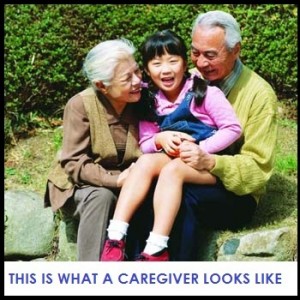
Finally, in framing mothers as ideal caregivers, they undercut the important roles played by various non-parent adults — teachers, babysitters, grandparents — in children’s lives.

Focus on kids’ needs, not mums’ roles

caregiver 2It is entirely within the realm of possibility to alter public policy orientations in ways that would disrupt these unhealthy dynamics. The first step is for policy to focus broadly on children’s needs rather than narrowly on mothers’ roles.

The economist Nancy Folbre has argued compellingly for viewing children as public goods. Whether or not we have children and however we feel individually about wanting them, Professor Folbre points out, children grow up to become participating members of society. Their health, knowledge, and civic orientations invariably shape the society we grow old in.

As such, it is our collective interest and shared responsibility to enable children’s care and growth. Mothers should not be the only ones with either the responsibility or privilege to raise children. Instead, a whole range of adults — fathers, teachers, grandparents, babysitters — should be acknowledged and supported as legitimate and important caregivers.

In countries such as Sweden and Norway, the implementation of this child-centred approach has been in the form of publicly-funded leave for parents regardless of gender and marital status. There is also publicly-funded support for a range of institutional and home-based care for children regardless of their parents’ socioeconomic and employment status.

The outcome has been more egalitarian divisions of labour within the home; a greater range of life paths and arrangements around work and family; more equality of opportunity among children and less pronounced societal inequality; and greater respect for domestic, care and pedagogical labour. The universality of support also breeds a stronger sense of citizens as having collective responsibilities and obligations in the well-being of their shared future. As it turns out, when support for caregiving extends beyond the narrow lens of mothers as being and doing everything, everyone can lead better lives.

grandparentsIn Singapore, we as a society know that mothers have limited capacities like everyone else in dealing with the various demands and challenges in everyday life. Increasingly, we also appear to know that not all mothers have the same resources and advantages to fulfil children’s needs.

Public policy needs to catch up with these sentiments.

This Mother’s Day, let us celebrate motherhood by recognising the ordinariness of mothers. We can change our social conditions such that mothers do not have to be super in order to be good.

Teo You Yenn is an AWARE Board Member, Assistant Professor of Sociology at the Nanyang Technological University, and author of the book Neoliberal Morality in Singapore: How family policies make state and society. This article was first published in Today on 6 May 2013. Read the published version here.

A safe workplace is free of sexual harassment

By Intan Wirayadi, Corinna Lim and Vivienne Wee 

To eliminate WSH, all stakeholders must be engaged. Companies should adopt zero tolerance to WSH and instate policies, procedures and training for staff to deal with this. AWARE has provided training to 36 companies, at their request, on how to handle such incidents and to promote awareness of WSH to their employees.

workplace safetyThe International Labour Organisation (ILO) has designated 28 April 2013 as World Day for Safety and Health at Work. The ILO has identified workplace sexual harassment (WSH) as a cause for a “hostile working environment in which the conduct creates conditions that are intimidating or humiliating for the victim”, with negative impacts on the economy and society.

In 2008, AWARE conducted a survey to ascertain whether sexual harassment is an issue in Singapore’s workplaces. Five hundred individuals and 92 companies participated in the survey. The results showed that 54.4% of the 500 respondents had experienced some form of workplace sexual harassment; 25% knew of others who had experienced this; 30% of those who had been harassed had been harassed several times; 12% of those who were harassed received threats of termination if they did not yield to the harassers. 79% of victims were female, 21% were male.

It is apparent from these figures that WSH is a problem in Singapore and measures are required to prevent it and protect employees’ well-being.

In November 2012, AWARE released a second WSH Report focusing on the inadequacies of current laws to deal with this problem. For example, criminal proceedings may not be the best course of action as while they might punish the perpetrator, they do not prevent or stop WSH. They also do not provide any compensation to the victims for their mental or physical sufferings. It is therefore important to institute a broad range of civil remedies and sanctions that address workplace sexual harassment.

WSH victims currently have few options for recourse as most companies in Singapore, including government bodies, do not have substantial internal policies dealing with WSH.  Further, there is no law or regulation that requires companies to adopt effective WSH policies. Victims of WSH thus silently suffer the consequences of the crime perpetrated on them with impunity, and perpetrators most often do not suffer any consequences from their wrongful actions.

Sexual-harassmentWSH survivors suffer negative health consequences and financial burdens because of the lack of an adequate legal framework in Singapore to deal with WSH effectively, compounded by social norms that prevent them from seeking justice. Female WSH survivors are often blamed by society for ‘asking for it’, while male WSH survivors may be reluctant to speak out because social conventions reject the idea that men can be victims of sexual harassment.

WSH survivors need sufficient support from their employer and the state. Data from many countries indicate that WSH hurts the economy substantially. For example, a survey of the US Merit Systems Protection Board showed that between 1992 and 1994, it cost the US government approximately USD 327 million to deal with WSH, including costs of sick leave, job turnover, and loss in productivity. A study should be conducted in Singapore to document the direct and indirect costs of WSH on individuals, families, companies and the Singapore economy as a whole.

To eliminate WSH, all stakeholders must be engaged. Companies should adopt zero tolerance to WSH and instate policies, procedures and training for staff to deal with this. AWARE has provided training to 36 companies, at their request, on how to handle such incidents and to promote awareness of WSH to their employees.

SHOUT logoAlthough sexual harassment is under-reported worldwide, the situation is worse in Singapore, due to the lack of adequate legislation or corporate policies against it. S.H.OUT (Sexual Harassment Out) is AWARE’s campaign to make workplace sexual harassment more visible, with the long-term aim of getting rid of it altogether.

As a result of this campaign, to date, nine companies have declared zero tolerance of WSH, and 1383 people have signed AWARE’s petition calling on the Singapore Government to put in place effective anti-sexual harassment legislation and procedures to stop WSH, in line with our international obligations under the Convention on the Elimination of All Forms of Discrimination against Women (CEDAW). The Inter-Ministry Committee on CEDAW, the Office for Women’s Development and the Ministry of Manpower have said that they will look into possibilities for progress in this and other areas.

Workplace sexual harassment is a problem not just for unfortunate victims but for all Singaporeans. A safe workplace is indispensable to employees’ well-being, enabling them to contribute to a viable and sustainable Singapore economy. The promotion of safety and health at work must include comprehensive measures to prevent sexual harassment, including the establishment of an administrative body with resources and competence to handle complaints and to promote application of the law against sexual harassment.

This World Day for Safety and Health at Work, we call upon Singapore state and society to take WSH seriously so that we can build inclusive workplaces for all.

Intan Wirayadi is a member of AWARE’s Workplace Sexual Harassment Sub Committee. Corinna Lim is the Executive Director of AWARE and Vivienne Wee is the Research & Advocacy Director at AWARE. This article was first published in Today on 29 April 2013. Read the published version here.

Don’t force parenthood by denying abortion

by Ranjana Raghunathan, Jolene Tan and Vivienne Wee

The impact of pregnancy and childbirth is immense – everyone has the right to decide on such matters for oneself. The denial of abortion and post-abortion services is tantamount to an act of violence, and has been criticised by the UN Special Rapporteur on Torture, among others.

We are disturbed that the recent debate on abortion access implies that people may be forced to become parents against their will. In a recent commentary (Today 2 April 2013), Tan Seow Hon moralises that with less abortion access “some may have to learn the hard way but it is probable that many would organise their sexual relationships differently”. This suggests, without evidence, that many who seek abortions have deliberately chosen not to use contraception. This is deeply implausible. Abortion is more invasive and risky than preventative contraception – why would someone with adequate information choose it over condoms, a pill or an IUD?

birth-control-pillsIn reality, the failure lies in Singapore’s sex education. A judgmental and biased focus on abstinence hurts people’s ability to make informed choices about contraception and reproductive health. When Ms Tan says people have to “learn the hard way”, is she implying that being forced into parenthood is a “lesson”?  The heavy consequences faced by unwanted children and unwilling parents cannot be overlooked in a bid to chastise people’s sexual and reproductive decisions. We should be talking about increasing awareness and access to contraception, not using restricted abortion access as a scare tactic.

Ms Tan ignores the possibility of pregnancies resulting from rape, failed contraception or women’s lack of power to demand contraception during sex. She also dismisses the danger of backstreet abortions. A 2007 global study of abortion by the World Health Organisation (WHO) shows that regardless of whether the law is restrictive or liberal, most women decide to terminate an unplanned pregnancy, but where it is illegal, it is likely to be performed by poorly trained providers under unsafe conditions, and can be fatal for the woman. The WHO found that the best way to reduce abortion rates was not to make abortion illegal but to make contraception more accessible.

Ms Tan also dismisses the danger of backstreet abortions. A 2007 global study of abortion by the World Health Organisation (WHO) shows that regardless of whether the law is restrictive or liberal, most women decide to terminate an unplanned pregnancy. However, the legal status of abortion greatly affects the dangers involved: where abortion is legal, it will be provided in a safe manner; where it is illegal, it is likely to be performed by poorly trained providers under unsafe conditions, and can be fatal for the woman. The WHO found that the best way to reduce abortion rates was not to make abortion illegal but to make contraception more accessible.

abortion rightsMs Tan suggests that because abortion access was expanded decades ago to curb population explosion, it is no longer justified today. This implies that the state rightfully has control of our reproductive systems for demographic goals, such as population control or ‘nation-building’. This denies our autonomy over our own bodies. The impact of pregnancy and childbirth is immense – everyone has the right to decide on such matters for oneself. The denial of abortion and post-abortion services is tantamount to an act of violence, and has been criticised by the UN Special Rapporteur on Torture, among others.

Ms Tan blames women for seeking abortions. Her ill-informed condemnation ignores the medical fact that there is extremely low foetal viability in the early stages of pregnancy, falsely projecting human identity on a blastocyst, embryo or foetus. This controlling rhetoric presents women with only two choices – to be coerced into motherhood against their wish or to accept the stigma of supposed ‘murder’.

medical confidentialityA similarly blinkered view is taken by Focus on the Family in its recent suggestion that parental consent should be required for those under 21 seeking abortions (Today 16 April 2013). This ignores the likelihood that girls under 21 may be at increased risk of family violence if their unwanted pregnancies were disclosed to their parents without their consent. Nor does it consider that some minors may be pregnant as a result of sexual abuse by a family member. Everyone is entitled to medical privacy and can choose to whom they wish to make disclosures.

While there is an important need to teach contraception, support single mothers and liberalise adoption, these are not alternatives to abortion access.

Decisions to abort pregnancies are not made lightly. Individuals consider relevant factors such as physical and mental health, childcare responsibility, its disproportionate burden on women, the stresses and stigma of single parenthood, economic difficulties, and life stage choices. Despite recent improvements, child rearing is still largely women’s responsibility. Reproductive autonomy is particularly important for women, as childbirth has long-term consequences for them.

Ultimately, women themselves must be the ones to decide whether to abort a pregnancy or to bring it to term, based on full access to neutrally presented factual information. Access to legal abortion allows every woman the safe option of choosing what is best for her – parenthood, abortion or adoption.

Ranjana Raghunathan and Jolene Tan are volunteers at AWARE, Vivienne Wee is the Research and Advocacy Director at AWARE and Kokila Annamalai is the Communications Executive at AWARE. A shorter version of this article was first published in Today Online on 20 April 2013. Read the published version here.

Abortion counselling: Criteria might change

AWARE is encouraged by the recent announcement that Parliament is reviewing the existing criteria for pre-abortion counselling, which denies some categories of women access to proper medical advice and is starkly discriminatory.

Counselling and SupportThe recent debate on ‘Abortion vs Adoption’ was first triggered by an article in The Straits Times, ‘From Abortion to Adoption’ (19 March 2013), which brought to light various aspects of abortion policy that concerned citizens and civil society groups. Namely, the exclusion of certain categories of women from pre-abortion counselling, troubled AWARE and Human Rights group MARUAH, who wrote letters to the Straits Times Forum questioning the motivations behind this discrimination and decrying the institutionalisation of unequal access to healthcare. The Straits Times article stated:

“There is mandatory pre-abortion counselling if the women are Singapore citizens or permanent residents; have passed the Primary School Leaving Examination (PSLE); have at least some secondary education, and have fewer than three children.

There is no counselling for foreigners, rape victims or Singaporeans with three or more children, and those who have not passed the PSLE. If they seek an abortion, they get it right away.”

The issue has been getting a lot of attention, and spurred online journalists and members of the public to respond with their views. One letter, by Dr. John Hui Keem Peng (20 March 2013), called out the Home Ownership Plus Education Scheme (HOPE), which requires low-income families to stop at two children to qualify for financial assistance. A well-articulated piece by Kirsten Han (30 March 2013) compared the HOPE scheme to the exclusionary criteria for pre-abortion counselling, claiming that:

“Such policies reek of eugenicist logic, indicating that while Singapore’s government exhorts its citizens to get hitched and have babies, they are really only interested in babies from specific demographics.”

On 8 April 2013, Workers’ Party MP Mr Gerald Giam Yean Song asked Minister of Health Mr Gan Kim Yong to explain the criteria for pre-abortion counselling, and the Minister responded that the criteria is outdated and should be reviewed. He furthered added that Ministry had commenced a review of this in early March this year and will consult the public in due course.

AWARE hopes that the review of abortion policy will also ensure that pre-abortion counselling is standardised and regulated by the state to be patient-centred and neutral, whether in public or private practice. We call for healthcare decisions to be made by patients (in consultation with medical advisers) on the basis of their individual needs and aspirations, not judgments about their social status. All people should have equal access to patient-centred healthcare, including abortion services.

The Parliamentary question raised by MP Mr Gerald Giam Yean Song, as found on the Ministry of Health website, is below:

8 April 2013

Question No. 476

Name of Person: Mr Gerald Giam Yean Song

Question

To ask the Minister for Health why women who have not passed the PSLE, have no secondary education, have three or more children, or are foreigners, are not required to undergo pre-abortion counselling by a trained abortion counsellor before undergoing an abortion.

Answer

Mandatory pre-abortion and post-abortion counselling was introduced in 1987 to provide information and support to women intending to undergo abortion.  The criteria reflected the main concern then.

Some of the criteria are no longer relevant and should be reviewed.  The Ministry had commenced a review of this in early March this year, and will consult the public in due course.