Author: AWARE Media

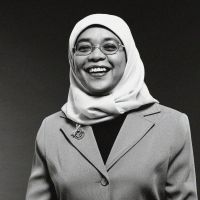
Congratulations to our first Woman Speaker!

It is with a sense of pride and loss at once that we welcome Madam Halimah Yacob’s appointment as Speaker of Parliament. While this is a refreshingly positive step for women leadership and political representation in Singapore, we are sad to see her leave her post as Minister of State for Social and Family Development, as she has been a stellar Minister, deeply committed to promoting the rights and status of women.

AWARE has enjoyed a very good working relationship with Madam Halimah while she was in Cabinet and hopes to sustain our connection with her despite her leaving political office. A vocal advocate of gender equality, she has been approachable and open to new ideas. We are delighted that she has expressed interest to pursue her work in social causes, as the different communities she serves look forward to her empathetic and sincere approach.

With her strong background in law, grassroots work and politics, as well as her international credentials, she is a highly qualified candidate to take on the responsibilities of the Speaker of Parliament. The prospects of her new position are exciting, and we wish her the very best in this well-suited role. We hope her appointment is the harbinger of a louder political voice for women in Singapore, and on behalf of Singaporean women, we applaud the Prime Minister’s decision to appoint her.

Saying ‘no’ to seemingly harmless sexist views

Few Singaporeans may intend to be sexist or think of themselves as such. But some instances show that sexism and violence against women have become so normalised that when people joke about rape, others accept it as funny.ism-w580

By Corinna Lim, Vivienne Wee and Kokila Annamalai

THE brutal gang rape on a bus in Delhi of the young Indian woman who later died in Singapore matters to each of us, wherever we are, as violence against women is a worldwide issue.

Though most countries have laws to address this, violence against women remains a problem so long as social prejudice against women persists. As the Delhi case shows, cultural attitudes are the root of the problem, rendering even good laws ineffective.

At first glance, Singapore appears safe, a city where women have the freedom to walk down the street without fear of being assaulted.

Yet, the National Crime Prevention Council is running a campaign that tells women to “avoid walking through dimly lit and secluded areas alone” and to “have someone escort you home when it’s late”. Are we to infer that Singapore streets are not that safe for women after all?

Look closer, and a more nuanced picture emerges. Even in Singapore, women are vulnerable to physical and sexual violence.

The 2011 International Violence Against Women Survey showed that one in 10 women in Singapore has been a victim of male violence. The number of reported rapes a year rose from 118 in 2006 to 202 in 2009, although they dipped to 164 and 150 in the following two years.

But a rapist isn’t always a masked stranger hiding in the bushes. It is well documented by international research institutes that in seven out of 10 cases, perpetrators of sexual assault are known to the victim. Acquaintance-rape is heavily under-reported, and rape victims often experience greater humiliation and violation of trust after their ordeals.

The Straits Times ran several articles yesterday on the rape situation in neighbouring countries. It was reported that in Malaysia, rape rates had doubled; in Indonesia officials blame victims; and in Thailand, a similar culture of blaming victims still persists.

What about Singapore?

The fact is that Singapore, while progressive in its treatment of women in many ways, is not immune to sex crimes or sexist attitudes.

Gang rape exists here too.

In 2010, five young men in Singapore raped a 17-year-old woman. One of them was known to her. They tricked her into meeting them and got her drunk. According to media reports, they took their turn to hold her down and rape her, including orally, and left her bleeding from the trauma.

The men were arrested and the judge declared the crime “a gang sexual assault of a grave nature which the accused persons had perpetrated without her consent”. Yet, for reasons not disclosed to the public, the charges were reduced and the accused were found guilty of “aggravated outrage of modesty” rather than rape. There was little public reaction to this case.

The New Paper also reported in a 2011 article that gangs in Singapore routinely engage in gang rape as a male bonding ritual.

A local, former gang member who frequented parties where such rapes took place spoke to the media, saying: “We call some of them ‘lor kway’ (Hokkien for streetwalker) and some of them ‘ah dai’ (fools).”

“Lor kway” are girls who are considered to have loose morals, he said, while “ah dai” refers to a newbie who attends the chalet parties with no inkling that drugs and sex are involved. Another former gang member said that the victim is often a gang member’s girlfriend. “After everyone gets high, the boyfriend offers her to the rest of the guys.”

George Mason University’s Sexual Assault Services webpage says that in multi-perpetrator rape, men experience a “unity of purpose that comes from the pride they feel in reducing their victim to nothing”.

When men define their masculinity through sexual violence against women, the cost is dysfunctional gender relations that result in family violence and unsafe societies.

Few Singaporeans may intend to be sexist or think of themselves as such. But some instances show that sexism and violence against women have become so normalised that when people joke about rape, others accept it as funny.

Take this recent Facebook exchange between two male National University of Singapore students:

X (in Holland on holiday): “If I had a way, I’d stay in Europe forever…”

A: “Find a rich family girl. Rape her. Get to be his (sic) husband. Problem solved.”

X: “This is Amsterdam. They probably offer themselves up to u. Hard to rape the willing…”

A: “Oh my. Try to get someone that is innocent and pure.”

This exchange did not provoke the kind of outrage elicited by some recent racist posts, such as Ms Amy Cheong’s.
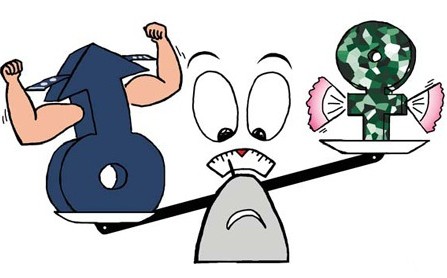
Singaporeans are surrounded by images, language and music that make violence against women seem normal. From Eminem rap songs to glossy advertisements, the media sexualises and objectifies women while glorifying male aggression. The belief that to be male is to be sexually aggressive must be rejected.

Many sexual assault survivors who call the Aware helpline report that their moral character, behaviour and dressing are questioned by their family, friends and the police. Aware estimates that as many as 90 per cent of sexual assault cases are not reported to the authorities.

Singaporeans must challenge sexist attitudes which underlie everyday practices that appear harmless. It’s time for us, as a society, to say “no” to all forms of violence against women and to stop blaming women for the violence inflicted on them.

Corinna Lim is the Executive Director at AWARE, Dr Vivienne Wee is the Research & Advocacy Director at AWARE and Kokila Annamalai is the Communications Executive at AWARE. This piece was first published in The Straits Times on 08 Jan 2013.

AWARE’s Open Letter to Indian PM on Violence Against Women in India

Your Excellency

The Association of Women for Action and Research (AWARE) of Singapore is horrified by the brutal gang rape of the young Indian woman who died in Singapore on 29 December 2012. We add our voice to the many calling for urgent and decisive action by your Government to tackle the enormous problem of violence against women in India.

The statistics are shocking: in 2011 almost 90 per cent of violent crimes in India were committed against women, or 228,650 out of the 256,329 cases logged by the police. No one knows how many more went unreported.

Violence against women is a global problem. AWARE has, in Singapore, been addressing this problem for almost 30 years. We know that for any country it is a complex issue that needs to be tackled at many levels, and that for India it is an even more complicated matter. But a start must be made, and the time is now.

India ratified the Convention on the Elimination of all forms of Discrimination Against Women (CEDAW) 20 years ago, in 1993. India’s report to CEDAW in 2007 states: “the Government acknowledges that the ever increasing violence against women is yet another manifestation of low and unequal status of women”. Steps taken to address this are clearly inadequate since violence against women continues to be perpetrated with impunity.

We urge you to heed UN Women’s call to your Government “to take up radical reforms, ensure justice and reach out with robust public services to make women’s lives more safe and secure.” We also support the public statement “Condemn sexual violence, oppose death penalty” made by at least 649 women’s and progressive groups and individuals in India. We hope that implementation of the actions recommended in this statement would significantly reduce violence against women in India.

India is the world’s largest democracy and one of the world’s largest economies. Its female citizens – half the population – should not be living in constant fear.

Yours sincerely,

Winifred Loh, President
on behalf of the Association of Women for Action and Research (AWARE)

Let’s Not Forget That Most Of Us Are Descendants Of Migrant Workers!

 Should we ignore the conditions of foreign domestic workers who work behind the closed doors of family homes, and have even fewer opportunities than male migrant workers to voice their concerns, much less organise an “illegal strike”?

By Vivienne Wee

18th December was proclaimed as International Migrants Day by the UN General Assembly in 2000, recognising the large and increasing number of migrants in the world. The International Labour Organisation estimates that there about 175 million migrants world-wide, with about half being workers.

Women comprise almost half of all migrants. It is widely acknowledged that migrant workers contribute to both the economies of their host countries and their countries of origin. However, many migrant workers are exploited and inadequately protected.

International Migrants Day is significant to Singaporeans: most of us are descendants of migrants, many of whom were labourers working long hours for low pay. Some were rickshaw coolies who pulled the ‘jinriksha’ (rénlìchē – i.e. human-powered carriages) – a common mode of public transport used from 1880 until 1947.

In 1903 a Jinriksha Station was built at the junction of Neil Road and Tanjong Pagar Road for the government department set up to register and inspect the growing number of these vehicles. A plaque at this Station states: “For three cents, one could go half a mile (0.8 km), or for 20 cents, have the rickshaw at one’s disposal for an hour. Most rickshaw pullers were coolies, who laboured in the hope of saving enough money to return to China after their sojourn.”

We no longer use human-powered carriages, but are migrant workers in modern Singapore any better off than those who laboured a century ago? What do we learn from the recent case of some 171 SMRT bus drivers from the People’s Republic of China, who did not report for work to “protest inequitable pay as well as poor work and living conditions” (Today 8 Dec 2012), including bedbug-infested dormitory rooms (Radio Netherlands Worldwide 18 Dec 2012)?

This protest has been defined as an “illegal strike”, with four of the drivers arrested, another sentenced to six weeks’ jail after he pleaded guilty, and 29 others deported.

The event has triggered intense debate about migrant workers’ wages, working conditions and living conditions, as well as employers’ accountability. Transport Minister Lui Tuck Yew has called for the employment terms and conditions of bus drivers to be improved, who are among the lowest-paid workers in Singapore.

Worldwide and in Singapore, women and children are particularly dependent on public transport for everyday needs. Would their safety not be compromised if migrant bus drivers who transport them are underpaid, overworked, poorly housed and disgruntled over such conditions of employment?


In this year’s message on International Migrants Day, the UN Secretary-General, Ban Ki-moon, urged member states to remember that “whole sectors of the economy depend on migrant workers” and that “when migration policies are developed without attention to vulnerability, marginalization and discrimination, millions of migrants become cheap, disposable labour.”

The Ministry of Manpower estimates that our total foreign workforce (excluding foreign domestic workers) stands at 1,025,700 (as of June 2012). Just today, the eight companies providing most of the dormitories for foreign workers issued benchmarks for decent housing. Perhaps it is also time for the employers of foreign workers to set benchmarks for fair wages and decent conditions of employment.

There are about 200,000 female foreign domestic workers in Singapore who are not covered by the Employment Act. AWARE commends the Government for mandating one day off per week for foreign domestic workers, starting from 1 Jan 2013. However, no benchmark exists for their wages, working hours or housing. The oft cited reason is that it is difficult to check on the conditions of foreign domestic workers as live in their employers’ homes – but in fact, this points to the particular vulnerability experienced by these women.

Many governments, including Hong Kong and Saudi Arabia, do set minimum wages for foreign domestic workers. In Hong Kong, they are covered by the Employment Ordinance, with a standard employment contract stipulating rights and entitlements, including rest days, statutory holidays and conditions of housing.

The Singapore Government does prosecute employers and recruiters who commit criminal acts against foreign domestic workers. But how many more abuses go unreported, including abuses that fall short of being crimes? Should we ignore the conditions of foreign domestic workers who work behind the closed doors of family homes and have even fewer opportunities than male migrant workers to voice their concerns, much less organise an “illegal strike”?

While male migrant workers can, in principle, join labour unions, foreign domestic workers are not allowed to do so. What channels of redress are open to female migrant workers? They are potentially the most vulnerable migrant workers, who are nevertheless entrusted with the “essential service” of caring for us and our dependents.

Proceed with caution on social egg freezing

Reproductive technologies tend to have class biases. We should ensure that our policies do not encourage and enable only a narrow category of women to reproduce, and thereby deepen inequalities among women.

By Dr Kanwaljit Soin and Dr Vivienne Wee

AWARE upholds women’s right to choose how and when they will bear children based on informed choices (Career women seek to freeze eggs, ST, Nov 19). The egg-freezing technology offers options for women who would like the option of having children later in their lives. However, as a relatively new technology, egg freezing is not without health risks. Given the experimental state of this technology, AWARE recommends that more evidence-based studies be undertaken of potential risks and benefits, including medical, social and ethical issues, before taking any steps to make this option accessible on a national scale.

Further, AWARE would urge the Ministry of Health in its review of its policy on egg freezing to take into account the potential for abuse by businesses who offer this service.  Such businesses may be tempted to unfairly pressure or persuade a woman to freeze her eggs by not giving her full information of the risks entailed. Any policy change that makes “social egg freezing” more accessible should be accompanied by regulatory measures that prevent abuse by egg freezing service providers.

Women who seek to undergo social egg freezing must be given full and accurate information of all relevant risk factors that can affect her and the child. This is to enable her to make responsible and informed decisions about her reproductive future.

In the wider social context, if this option were to be made available, it should be made available and accessible to all women who wish to pursue this option, regardless of their marital status, financial capacity and educational status. Reproductive technologies tend to have class biases. We should ensure that our policies do not encourage and enable only a narrow category of women to reproduce, and thereby deepen inequalities among women.

If MOH’s evaluation of its policies towards “social egg freezing” is motivated by the aim of boostingSingapore’s TFR,  this aim would be more effectively realised by addressing the causes for the declining TFR. Without addressing these causes, especially the lack of support for care-givers,  the personal costs of having children would continue to be prohibitive. Any policy change to make “social egg freezing” accessible as choice should not be an excuse for drawing public attention away from other policy changes needed to address the root causes that inhibit women from having children, or result in blaming women for the declining TFR.


Dr Kanwaljit Soin is a past president of AWARE and Dr Vivienne Wee is the Research and Advocacy Director at AWARE. This piece was first published in The Straits Times on Nov 21, 2012. Read the published version here.

Gender equality must take centrestage in shaping population policies

It is not short-term materialism that discourages Singaporeans from having children, but realistic evaluations of how much they need to bear in terms of costs for care for elderly parents, the healthcare needs of their families, and their own retirement needs in an expensive city.

Make gender equality a guiding principle in shaping population policies – This was the key thrust of AWARE’s recommendations to the National Population and Talent Division (NPTD), in response to their efforts to engage the public on Singapore’s population challenges.

In our submission to the NPTD in October, AWARE reaffirmed our stance that gender equality should be the core value in the formation and execution of all population policies.

The perpetuation of obsolete gender norms, which have cast men as breadwinners and women as caregivers, are neither realistic nor fair for women and men living in today’s world. These rigid roles instead deprive couples of the ability to share parental duties effectively, and also neglect the needs of women in the Singaporean workforce.

The ineffectiveness of existing policies to promote marriage and parenthood has made it apparent that more needs to be to combat sinking birthrates and an ageing population in Singapore.

One of the key questions posed by the NPTD acknowleges this issue, asking how Singapore can provide a more supportive environment for marriage and parenthood.

To this end, AWARE recommends that the government provide 2 weeks of paid paternity leave, and convert 4 weeks of the 16-week maternity leave to parental leave, which could be taken by either parent. In addition to these measures, AWARE also advocates for heightened efforts to prevent discrimination against pregnant employees, and those intending to take paternity leave.

Late marriages were also identified as a factor contributing to the declining birth rates, and the NPTD sought suggestions on how to encourage couples to marry and have children at a younger age.

In our submission, AWARE clarified that there is no causal relationship between early marriage and having more children. In any case, given the high cost of living, the emphasis on education and work, and the national ethos to be self-reliant, it may not be possible or cost-effective to try to reverse the trend of later marriage.


Instead, AWARE proposes that the government provide support for alternative modes of parenting, such as adoption, and promote the use of technologies that enable older women to have babies later in life.

Additionally, AWARE would like to underline the need to recognise that Singaporeans are making childbearing decisions in a holistic and responsible manner, taking into account the responsibilities involved in raising a child and the capacities required to build long-term stable homes.

It is not short-term materialism that discourages Singaporeans from having children, but realistic evaluations of how much they need to bear in terms of costs for care for elderly parents, the healthcare needs of their families, and their own retirement needs in an expensive city.

Efforts to ensure that population growth increases cannot therefore focus on ineffective immediate cash payouts and bonuses, and must shift to addressing the wider concerns of couples considering having children.

Policies must take into account these concerns. In particular, steps should be taken to reform the education system to reduce pressure on children, lower the cost of public housing, and expand support for caregivers as well as the disabled and the elderly.

AWARE believes that adopting a more comprehensive approach is also the solution to raising productivity and improving the participation of our labour force.

In particular, providing support for women is critical to building a sustainable Singaporean core in our workforce. Creating opportunities and offering subsidies for stay-at-home caregivers to upgrade their skills and remain relevant will allow them to ensure employability.

In our submission, AWARE also highlighted the numerous impediments faced by women intending to join the workforce. These include the lack of flexible work, long hours, lack of access to childcare, and discrimination faced by pregnant women.

The government has to address these concerns if it intends to encourage women saddled with the dual burden of providing care for their families and working to remain in or re-enter the workforce.

Read AWARE’s submission in full here.

Let’s stop conflating wealth with worth

The Amy Cheong episode presents Singaporeans with an opportunity to openly debate the ethics of living in a generally affluent society that has widening inequality. How do we make sure citizens’ rights to fulfilling and meaningful lives are not heavily dependent on their abilities to generate wealth? What are the social responsibilities of the haves towards the have-nots?

by Teo You Yenn and Kamaludeen Mohamad Nasir
We can tell a lot about what people regard as right or wrong by their responses to transgressions. In the case of the Amy Cheong incident, it is interesting to note that the primary focus has been on her racial prejudices – while almost nothing has been said about her presumptions about class.

Her presumption that one’s right to marry depends on the amount of money one has is as troubling – if not more so – than her narrow presumptions and negative feelings toward Malays. The relative silence about the relationship she draws between money and marriage reveals our deeper common sense: One where wealth, worth and deservedness are tightly tethered.

In The Protestant Ethic and the Spirit of Capitalism, Max Weber argues that people born into modern capitalism are trapped in an “iron cage” – unable to decide their paths, and compelled to work hard, be frugal and accumulate wealth for its own sake rather than as a means to larger goals.

He perhaps underestimated the degree to which the pursuit and accumulation of wealth can take on tremendous meaning and normative value, with disturbing consequences for human beings’ sense of themselves and their regard for each other.

In Singapore, the recent debates over social spending, education and meritocracy, and population and immigration have brought to the fore the need to narrow the gaps between the rich and the poor and to ensure social mobility. This seems to be the consensus, even if there is disagreement as to how these goals are to be achieved.

What is less explicit, and where there might be lower degrees of consensus, pertains to how the state and society perceive the value of being wealthy. That discussion has not found a big place at the table of national conversations.

We seem to have accepted too easily that what people can and cannot do in life – including when they can marry or how many children they can have – depends on whether they can afford it.

It is apt for society to place this worldview under scrutiny. Two recent pieces of news add to the urgency of this.

First, in the Wealth Report 2012, Singapore sits prettily at the top with the highest gross domestic product per capita – a situation that is expected to remain until 2050.

Second, the Prime Minister revealed in his National Day Rally Speech that, by 2020, 40 per cent of every Singaporean cohort will comprise of graduates, a significant increase from the 27 per cent today.

These achievements and targets come at a time when the Singapore Government acknowledges that we are experiencing a widening income gap. This intensifies the unequal starting point among the haves and the have-nots, harming the meritocratic ideals of our system.

With increasing affluence and educational attainment among a significant proportion of society, what is traditionally considered status goods, such as the often talked about 5Cs in Singapore, is constantly being redefined.

The bar for “success” is increasingly high and, yet, also dangerously narrow. We seem to have a situation where certain sections of society feel a sense of entitlement to various status goods.

Significantly, their practices and values shape social norms that presume certain acts – whether spending on weddings or luxury goods – mark people as superior and of higher (human) worth (it is telling and problematic that rich people are now referred to as “high net worth individuals”).

Ms Amy Cheong’s remarks should be read as being as much class snobbery as racial prejudice. Class snobbery concerns are not unique to Singapore: England’s Deputy Prime Minister Nick Clegg recently warned that “class snobbery is holding Britain back by creating a society divided between those born with a sense of entitlement to succeed and others who are ‘permanently excluded’.”

It is heartening to witness Singaporeans being comfortable enough to air difficult issues on race, but it would be unfortunate if important observations on social class divisions take a backseat.

The Amy Cheong episode presents Singaporeans with an opportunity to openly debate the ethics of living in a generally affluent society that has widening inequality.

How should we value wealth? How do we make sure citizens’ rights to fulfilling and meaningful lives are not heavily dependent on their abilities to generate wealth? Given that no individual can become rich independent of what society provides, what are the social responsibilities of the haves towards the have-nots?

In a quote attributed to Karl Marx, he mentioned that in examining social inequality, “the least advantaged are the eyes that matter when it comes to looking at justice”. A truly national conversation will have to examine the category of “least advantaged” through multifarious lenses – whether race, age, gender or social class.

It is time to talk about whether the positions and worldviews of the privileged should be a standard for the rest.

The writers are both assistant professors in the Division of Sociology at the Nanyang Technological University. This piece was first published in Today and is re-posted here with the authors’ kind permission.

AWARE supports men’s rights as fathers

This letter was written in response to the news that the National Trades Union Congress is calling for fathers to get two weeks’ paid paternity leave.

AWARE agrees with the National Trades Union Congress’ (NTUC) call for fathers to get two weeks’ paid paternity leave.

In AWARE’s 2011 survey of 1001 parents, 91 per cent of the respondents agreed that paid paternity leave should be mandated, with 80 per cent saying that paternity leave should be more than 6 days and 44% opting for paternity leave of more than 11 days.

In the survey, the majority of respondents agreed that four weeks of the 16-week maternity leave should be converted to parental leave to be taken by either spouse.

As with maternity leave, the State and employers should share equally the cost of paternity leave. In addition, the State should grant incentives for fathers to take up the parental leave. In the Scandinavian countries, fathers only started to consume their parental leave when the policies were revised to provide these incentives.

The current state policies only ‘recommends’ three days of paternity leave. This is insufficient, and fathers are not even guaranteed this.

The lack of paternity leave places issues of fertility firmly in the realm of women’s domain. It also leads to the misconception that parenting is synonymous with mothering. Instead, family management and parenting should be seen as a collective responsibility.

Legislating paternity leave expands men’s opportunities to be involved in the most valuable aspects of parenting and respects men’s right to family life beyond just being breadwinners. Active parenting by men should be promoted and misinformed stereotypes
of fatherhood and manhood should be dispelled.

AWARE also supports NTUC’s call for flexi-work arrangements to become ‘a right’ to all working parents, with priority for those with special needs or very young children.

Singapore currently has the longest work hours in the world and employers are still reluctant to introduce measures at the workplace to help employees achieve a balance between work and family life. In 2010, only 35 percent of private-sector employees were offered at least one form of flexible work schedule.

Employers must be incentivised to adopt flexible working arrangement, reduce working hours in their organization and provide childcare facilities at the workplace.

We hope that that State will implement more policies that support the parenting responsibilities of both men and women.

Corinna Lim, Executive Director, AWARE
Nadzirah Samsudin, Research and Advocacy Executive, AWARE

Including the poor in an inclusive society

A more comprehensive approach is needed to improve social mobility across generations and to de-feminise poverty.

By Vivienne Wee &Nadzirah Samsudin

The International day for the Eradication of Poverty is observed every year on October 17. It serves as reminder of the need to eradicate poverty in all countries. This year, the theme is “working together out of poverty”, representing a call for a global anti-poverty alliance.

In Singapore, beggars are kept off the streets, yet poverty still exists, though not always in public view. At least 20 per cent of households, earning less than the median income of $3,070, struggle to make ends meet.

Since 2001, the bottom 10 per cent of the population have experienced only a 9 per cent increase in their income. In the same period, the top 10 per cent of the population have enjoyed an increase of 32 per cent in income.

During an interview at the 2012 World Economic Forum, Prime Minister Lee Hsien Loong said that although it is “no fun” being poor in Singapore, people are still “less badly off” than the poor in other countries, as the government ensures that “everybody starts with some chips”, not at zero, through education, health care and public housing.

But are these ‘chips’ enough? The Ministry of Community Development, Youth and Sports (MCYS) reports an increase in public assistance cases from 2,929 in 2010 to 3,034 in 2011. The number of female-headed households on this scheme has also increased from 895 in 2004 to 1,002 in 2009. This is likely to increase further with the growing number of single women.

The Gini coefficient in Singapore has risen to 0.452 in 2010 (1 indicates maximum inequality between rich and poor). Singapore’s Many Helping Hands approach identifies the family as the most important welfare provider, with government support coming in only to fill discernible cracks.

This means that poorer families, including those with members employed in low-wage work, are likely to be trapped in a vicious cycle. When low-wage workers have to support retired family members without adequate savings, they are unable to accumulate savings for themselves or to invest in their children’s futures.

Poverty in Singapore thus tends to be transferred across generations, with younger family members unable to escape the poverty endured by parents and grandparents. A Straits Times article (‘A fair starting line’, July 16, 2011) cites research that shows that 58 per cent of the economic advantage gained by higher-income families are inherited by the children.

This gives Singapore an intergenerational income elasticity of 0.58, indicating less social mobility than Hong Kong with an index of 0.4 and the Scandinavian countries with indices lower than 0.3.

A key factor is inadequate social spending. This has not kept pace with widening income inequality. Social spending has even decreased from 25 per cent of GDP in the 1980s to about 16 per cent in 2011. Compared to Hong Kong, South Korea and Taiwan,  Singapore spends the smallest amount on social programmes, with uneven consequences for rich and poor.

Medical bills are a growing problem for the poor. In 2000, the World Health Organisation ranked Singapore a dismal 101st – 102nd for fairness of healthcare financing. The Government-mandated healthcare financing system (Medisave, MediShield and Medifund) is not a major source of payment for healthcare. Patients in Singapore pay about 55 per cent out of pocket, compared to 30 per cent in other advanced Asian economies.

Even though women have a higher life expectancy, high medical costs may prevent poorer elderly women from receiving needed medical attention. The feminization of poverty – a situation where most of the poor are women – is an increasing phenomenon. MCYS data from 2005 show that for women aged 55 and above, less than half had their own income, as compared to three-quarters of men in the same age group.

Prevailing gender norms relegate care-giving as the responsibility of women. This pressures women to make the rational choice of leaving the workforce to care for dependents. They thus have lower incomes, less CPF and less Medisave, as well as reduced access to employment health benefits or private insurance, compared to what men have.

Feminised poverty is transferred across generations. Girls in poor families tend to be more disadvantaged than boys are. They too grow up to become the main care-givers of the generation above and the generation below. As they themselves grow older, they also tend to have lower incomes, hence also more dependent on their adult children.

Although various government schemes has been made more accessible by the revamped ComCare portal and better information dissemination, a more comprehensive approach is needed to address the two key issues: Increasing social mobility across generations and de-feminising poverty.

These patterns of poverty are systematically reproduced by structures that favour the haves against the have-nots, as well as foist the burden of social reproduction on women. These biased structures need to be changed if the poor are to be included in a truly inclusive society.

Dr Vivienne Wee is AWARE’s Research & Advocacy Director. Nadzirah Samsudin is AWARE’s Research and Advocacy Executive. This piece was first published on The Online Citizen on Oct 17, 2012. Read the published version here.