Author: AWARE Media

Not just sugar and spice and everything nice

Do girls in Singapore grow up as the equals of boys? Current discrepancies in cultural attitudes suggest that they do not.

By Vivienne Wee and Evon Too

October 11 inaugurates the International Day of the Girl Child. Declared by a United Nations General Assembly resolution on 19 December 2011, the Day commemorates girls’ rights and seeks to create awareness about the challenges girls face all over the world.

The theme this year is ‘ending child marriage’. According to the International Centre for Research on Women, 51 million girls between the ages of 15 and19 are married. Within the next decade, 100 million girls will be married before 18.

UNICEF notes: “Marrying girls under 18 years old is rooted in gender discrimination, encouraging premature and continuous child bearing and giving preference to boys’ education.”

While the issue of child marriage may seem irrelevant to Singapore, we should be aware that our laws currently do allow non-Muslims below 18 to marry if they obtain parental consent and a Special Marriage License, while Muslims below 18 can marry with a special licence from a Kadi who solemnizes Muslim marriages.

While such marriages are relatively rare in Singapore, they nevertheless can and do occur, with at least about 100 such marriages every year. Singapore is thus one of the countries described by the United Nations as allowing “early marriage with parental consent”.

For society at large, a more significant question is: do girls in Singapore grow up as the equals of boys? There is some evidence that daughters are subject to more abuse than sons are.

A 2005 study by the Ministry of Community Development, Youth and Sports (MCYS), Protecting Children in Singapore, shows that over five years, more girls (57 per cent) were abused than boys were (43 per cent). Is this the tip of an iceberg that requires more attention?

But the education of girls has greatly improved in the past four decades, with the female literacy rate increased from 54.3 per cent in 1970 to 94.1 per cent in 2011. Currently, among females aged 15 to 24, 85.8 per cent have at least secondary education, more than the 83.7 per cent of males in that age group, although not the girls who acquire secondary education continue with further studies.

However, despite the impressive educational achievements, the female employment lags far behind. The employment rate of females in 2011 was 46.3 per cent, compared to the male rate of 76.4 per cent. This is because the female employment rate peaks at the age of 25, but declines thereafter, because many withdraw from the workforce after childbirth to look after children.

The employment rate of tertiary-educated females is higher than those without tertiary qualifications. But this may be because those with higher paying jobs can hire domestic workers as care-giving proxies.

Perhaps the most important factor causing the gap between female education and female employment is the relegation of childcare as the mother’s sole responsibility.

Although gender discrimination here is less marked than in societies with child marriage, it nevertheless persists in the socialisation of boys as breadwinners-to-be and girls as mothers-to-be (albeit mothers with at least secondary education). To this end, little girls are brought up to be “sugar and spice and everything nice”, with their aspirations and opportunities distorted to fit this stereotype.

Gender discrimination runs counter to a society seeking to maximise its human resources. It wastes national investments and leads to imbalance between a male-dominated workplace and a female-dominated home (with the falling fertility rate as a symptom of such imbalance).

In an inclusive society, girls and boys should be growing up as persons equally able to develop their full human potential. That, ultimately, is the key message of the International Day of the Girl Child.

Dr Vivienne Wee is AWARE’s Research & Advocacy Director and an anthropologist. Evon Too is an AWARE volunteer. This piece was first published in Today on Oct 11, 2012. Read the published version here.


Baby Talk: Let’s get this straight…

By Kirsten Han

“Our educated men and women must decide whether to replace themselves in the next generation. At the moment, 31 per cent of women and 44 per cent of men are opting out. Not leaving a next generation. So, just ponder over it and you will know the solution is not simple. But we’ve got to persuade people to understand that getting married is important, having children is important. Do we want to replace ourselves or do we want to shrink and get older and be replaced by migrants and work permit holders? That’s the simple question.”

– Former Minister Mentor Lee Kuan Yew

He said it, and a nation sprang into action. Everyone’s talking about babies (or lack thereof) these days. How can we increase the birth rate?  Why aren’t couples having kids? How can we get them married, settled and punching out the wee bairns ASAP? What can be done to persuade women to have babies, or have them younger?


There have been roadshows where ladies have been encouraged to “know their eggs”. A forum letter-writer wondered if Malay men are more “persuasive” when it comes to convincing their wives to have children. Another suggested that it is because women are becoming too individualistic and that Singaporeans have become too “selfish and stubborn” to “sacrifice for the nation”. Some people feel that there should be “lucky draws with prizes such as landed homes and scholarships to entice parents.” On the I Love Children website, a contest has been launched:

So, you pledge that you’re going to have a baby. And if you are among the first 100 couples to fall pregnant, you get to redeem a gift of milk powder! Oh WOW!

But before we get all carried away and trample each other in our haste to promise we’ll start making babies, there are some things that we need to look at…

WHAT’S INVOLVED IN HAVING A BABY?

Having a baby is A Big Deal. It’s not a weekend holiday in Malacca. It’s a responsibility for another human being. Your financial obligation to this human being may stretch for about two decades or more, but the sense of responsibility is lifelong. Parents don’t stop being parents – caring, worrying, fretting – when their children move out of the house.

Having a baby is really expensive these days. The Asian Parent estimates that the cost of raising a child from birth to 21 years of age is about S$340,000, not taking into account “domestic help, rent, furniture and medical treatment for your children”. This amount of money is made even more scary when you consider anxieties over job security, property prices, interest rates, global economic instability, etc.

Having a baby also takes a lot of time. When my friends first have kids, they tend to drop off the radar for some time. Life becomes about waking up every two hours, feeding the baby, changing the baby. And then it becomes about shuttling the kid to school, homework, studying for exams, etc. You don’t just feed a kid and then leave them alone. Children need attention, and time, and care. Add to that the fact that in 2010 Singapore had the longest work hours in the world.

If we can understand what goes into having a child – i.e. it’s no picnic – then it really isn’t that hard to figure out that no one is going to have a baby just “for the nation”. No one is going to go, “Lee Kuan Yew is worried about the birth rate! Let’s have a baby now so he’ll feel better!” It would be incredibly worrying if people did that, because it would indicate that they’ve not actually thought about the gravity of having to care for another human being.

I mean, wouldn’t you be worried if the promise of some free milk powder was all it took to convince a couple to have kids?

WE’RE NOT ALONE IN THIS

Yes, Singapore has an incredibly low birth rate. But no, we’re not the only ones in the world facing this problem. Many other countries have encountered this. Just recently I was watching a segment on HuffPost Live discussing the falling birth rate in the USA. An economic professor at Tohoku University was quoted as saying that there would only be one Japanese child left in 3011 if the birth rate in Japan continues declining in this way. (Seems pretty extreme, but okay.) Fertility has also declined in countries like Oman, Morocco, Syria, Saudi Arabia, Iran, Russia and China.

This whole situation has been summed up as a demographic-economic paradox, where “the higher the degree of education and GDP per capita of a human population, subpopulation or social stratum, the fewer children are born in any industrialised country.”

As countries develop and people gain education, wealth and choice, people tend to choose to have fewer children. They no longer see a need for huge families; people often come to realise that the fewer children they have, the more resources they can spend on each child. Or they just decide that they don’t want kids.

So, this isn’t a new problem to the world. But no one’s actually imploded yet. We’re not going to run out of people in the world any time soon. If you haven’t heard, we hit seven billion last year.

OF “THREATS” THAT DON’T MAKE SENSE

In the quote above Former MM Lee said, “Do we want to replace ourselves or do we want to shrink and get older and be replaced by migrants and work permit holders?” He also warns that we “cannot have new citizens, new PRs to settle our social ethos, our social spirit, our social norms.”

What an interesting stick-and-carrot situation. Have more babies, or we’re going to keep bringing in foreigners who cannot “settle”! What a way to play on the anti-foreigner sentiment in Singapore. But once again, it misses the point. Honestly, do we really think that we’re going to find a couple who will say, “Oh, we started having kids because we just didn’t want any more foreigners to come into Singapore!”

Not to mention the fact that the stick-that-should-not-have-been-used-as-a-stick is not even a real stick. It is the way we have imported foreigners – without ramping up infrastructure at a similar rate – that is causing unhappiness, and not necessarily the foreigners themselves. Singapore, like all other developing, globalising cities, needs foreigners. We need the movement, the confluence of cultures, languages, ideas, skills, experiences. Having foreigners here is not actually a bad thing at all.

Also, the claim that new citizens and PRs cannot adjust to our “ethos, spirit, norms” is disingenuous. It assumes that the “ethos, spirit, norms” that we have in Singapore are set in stone and can never change. But the truth is that social norms and values are ever-evolving; the ethos, spirit and norms of the Singapore in our grandparents’ time is very different from us, and I’ll venture to say that they will be different again in 10 to 20 years’ time.

The idea of foreigners trying to “fit” into our social ethos is silly, because the very existence of foreigners in our society changes the ethos. Just as we are now trying to define for ourselves what it means to be Singaporean or living in Singapore, future generations will do the same. If Singaporeans stop replacing ourselves and the solution is to have foreigners and new citizens, then people will simply redefine once again what it means to belong to this country. It’s not new; the history of migration is full of stories about redefining belonging and identity.

AND, surely it’s time to find alternative ways to sustain growth and development? We can’t be growing our population forever. Singapore already has one of the highest population densities in the world. Are we sure constant population growth is the answer?

SOME BABIES MORE BABY THAN OTHERS?

While we’re doing all we can to get certain Singaporeans to hook up, get it on and push kids out, we’re handing out cash incentives to others to get vasectomies and ligation procedures done. Am I the only one who thinks this doesn’t make sense? If we’re really so desperate for babies that we would set up a roadshow in Raffles Place at lunchtime to beg women to “know their eggs” and “strike while the iron is hot”, why are we handing out money to other Singaporeans to stop having children?

We really really really want babies, but are some babies somehow more “baby” than others?

If we really want to have more Singaporean babies, perhaps we should look at way we can help and support children from low-income families, rather than giving their parents money to not have them. With the proper support structures in place, there is no reason why these children cannot go on to achieve as much as the children of the Raffles Place white-collar crowd we are begging to procreate. It makes no sense. In fact, it’s downright disgusting.

CONFESSIONS 

I’m Chinese. I’m young. I’m educated. I’m also unmarried (without a boyfriend). I like kids, but I don’t really want any right now. Even if I were happily married I’m not sure I would want any yet.

The thing is, I really enjoy my life as it is. I enjoy the relative freedom: I don’t have to worry about a tiny person, I don’t have to wake up in the middle of the night to feed or change diapers or soothe cries. I enjoy the choices and options: I can travel wherever and whenever I want, I can go on crazy adventures, I can stay out as late as I want/need to. I enjoy being able to go out with my friends and eat where we like, go to shows or go shopping if we want to, because our money is ours to spend. I enjoy not having to worry about mortgages, or the price of milk powder, or kindergarten fees.

I love kids. I just don’t really want one of my own yet. I couldn’t even trust myself to commit to cat-sit for my friend.

Of course, I’m sure having a child is a wonderful experience. I’m sure it’s extremely rewarding and life-changing. I’m sure it is a great thing that gives new parents many epiphanies and revelations about the meaning of life each and every day. I’m not saying it’s not a desirable experience. It’s just not desirable to me right now. And I’m not sorry.

For those who may paint my decision as stubborn or selfish (like that TODAY letter-writer may do), I simply don’t see why that’s so. Saying that it’s selfish implies that I am somehow letting someone/something down by prioritising my own wishes. Who am I letting down, then? I can’t let down a baby who hasn’t even been conceived, much less born. And I certainly don’t oweanyone a baby.

The choice to have a child is a deeply personal one. Whether I “know my eggs” or not is really no one’s concern. This is true for all other women out there, which is why it is so misguided to keep hammering on the women to have babies, have babies, have babies. Or to try to “bribe” couples with lucky draws and milk powder redemption.

If we really want to address this issue it’s time to look for different answers. What needs to change so that couples who want kids feel like they can do so? And if they don’t want to have kids, how else can we sustain our country?

We got many problems in this country, but my empty uterus ain’t one.

The writer is a journalist, blogger, and activist who has written for The Huffington Post, Asian Correspondent, and The Online Citizen. This piece was first published on her blog and is re-posted here with her kind permission. 

Parliament Primer: The silver tsunami

The following are excerpts of debates on caring for an ageing population. These took place during the Aug 13 & Sept 11 sittings of Parliament.

MEDISHIELD COVERAGE BEYOND MAXIMUM AGE

Health Minister Gan Kim Yong:

The number of MediShield policyholders who exceeded the current lifetime limit of $200,000 was 11 in 2010 and 43 in 2011. We expect the number to continue to increase as policyholders age and accumulate more claims over time.

Hence, to provide more assurance to MediShield members, we intend to extend the MediShield lifetime limit from $200,000 to $300,000, as well as the policy year limit, from $50,000 to $70,000. We will also raise the MediShield maximum coverage age from 85 to 90 years to benefit older Singaporeans.

Based on the current life expectancy profile of our population, a relatively small proportion of Singaporeans live beyond age 90. As such, risk-pooling through insurance may not be the most effective way to help the very old defray their healthcare costs.

Help is currently available through other means, like Medifund Silver, which is dedicated to our elderly, and annual Medisave top-ups under the GST Voucher scheme. The Government has also enhanced subsidies in the primary care and intermediate and long-term care sector to further improve the affordability of such services.

We understand that Singaporeans are concerned about coverage beyond age 90, and will continue to study possible options to address this.

TRAINING EMPLOYEES FOR THE SILVER INDUSTRY

Acting Minister for Manpower Tan Chuan-Jin:

By 2030, we expect that the number of seniors above 65 years old will nearly triple to reach over 900,000. By then, one in five residents will be over 65 years old, compared to fewer than one in ten today.

Correspondingly, the needs of seniors in terms of healthcare and aged care, will increase significantly. It is therefore critical that all of us continue to stay ahead of the curve so that we can better look after our older Singaporeans.

The Ministerial Committee on Ageing (MCA) is leading the Government’s efforts to facilitate ageing-in-place, which covers many aspects such as making our physical environment more “age-friendly”, ramping up aged care services and infrastructure, and promoting active ageing.

On the recruitment front, we are working with relevant stakeholders in the intermediate and long-term care (ILTC) sector to make careers in the sector more attractive. In particular, MOH has set aside up to $12 million in FY2012 to assist VWO ILTC providers to support pay increases for doctors, nurses and allied health professionals in a bid to attract and retain staff in the sector.

MOH is also reviewing the pay of healthcare support workers, in tandem with a review of their job scopes to make their work more challenging and meaningful. We have also put in place a framework to train people for jobs in the silver industry, across the Community & Social Services and Healthcare sectors, as well as put in place programmes to help those who are keen to make a mid-career switch to jobs in the industry.

In addition, we have many courses to up-skill the manpower within the industry. First, we have put in place a holistic academic and vocational training framework to equip people for jobs in the silver industry. As the demands and needs of the silver industry changes, our training framework will have to continue to evolve in tandem in order to respond to these needs.

Our post-secondary education institutions offer courses in gerontology or gerontology-focused areas, catering to both young people and working adults. For example, Temasek Polytechnic offers a full-time diploma in Gerontological Management and Nanyang Polytechnic offers an Advanced Diploma in Nursing with specialisation in Gerontology.

Additionally, courses are also offered in healthcare, health promotion and social work, which cover the key services commonly tapped on by the elderly. In the course of their studies, students undertake assignments or attachments with hospitals and elderly care centres to gain first-hand experience in working with the elderly.

The number of full-time and part-time courses in gerontology, healthcare and social services areas has increased from around 30 in 2008 to more than 40 in 2011, while intake for these courses have increased from around 2,000 to close to 3,000 yearly over the same period.

We will also train more healthcare professionals locally by expanding the intakes in our schools. For example, the Lee Kong Chian School of Medicine will open next year. With the third medical school, we expect to boost our locally-trained supply of doctors to 500 across the three medical schools, a significant increase from the intake of 330 last year. We will also be training more nurses and pharmacists, by expanding the annual intake for nursing from 1,700 to 2,700, as well as for pharmacy from 160 to 240.

Second, we have put in place Professional Conversion Programmes (PCPs) to help Professionals, Managers and Executives (PMEs) who are keen to make a mid-career switch to jobs in the silver industry. These PCPs allow them to pick up the relevant skills and transit smoothly into the new sectors. For the silver industry, we have six PCPs in place. WDA launched the PCP for registered nurses in 2003. Since then, we have progressively introduced other PCPs relevant to the silver industry, such as PCPs for social workers and eldercare professionals.

Third, we are also building up skilled manpower for the silver industry through our Continuing Education and Training (CET) programmes. Under the Singapore Workforce Skills Qualifications (WSQ) system developed by WDA in close collaboration with industries, we offer a total of more than 300 courses for the Community and Social Services sector and 100 over courses for the Healthcare sector. Examples of these courses include the WSQ Professional Diploma in Community and Social Services (Seniors Services) and the WSQ Advanced Certificate in Therapy Services.

While we continue to improve on the numbers and quality of our training courses and conversion programmes, we are aware that the success of our efforts ultimately hinge on the take-up of these courses. In this regard, WDA works closely with industry partners to extend awareness and outreach and to promote training and career opportunities in these sectors.

For example, in February 2012, two career previews for the PCP for Social Workers were organised by WDA, the National Council of Social Services (NCSS) and SIM University. The event drew about 400 attendees and led to the successful enrolment of about 50 candidates. The Agency for Integrated Care (AIC) has also been showcasing the training and career opportunities in the ILTC sector at job fairs, and is working with the sector to create a portal on the ILTC sector so that potential recruits can easily access information on career opportunities in this growing sector.

I am heartened to note that an encouraging number have come forward to go for these courses and successfully completed them. In 2011, over 3,000 trainees were trained in WSQ courses for the Healthcare, Community and Social Services sectors, a sizeable increase from about 600 in 2008.

But we must do more. We will continue to consult and work with relevant stakeholders such as industry players, social organisations and workers alike to strengthen our suite of course offerings and improve on the awareness and outreach programmes. We continue to welcome feedback and suggestions as we seek to improve our efforts on this front. MOM and WDA will also continue to work closely with other relevant Ministries and agencies such as MCYS and MOH in a Whole-of-Government approach under the Ministerial Committee for Ageing, as we seek to enable our seniors to age in place.

SPECIAL EMPLOYMENT CREDIT SCHEME

Tan Chuan-Jin:

The Special Employment Credit (SEC) was introduced in 2011 to support employers and to raise the employability of older low-wage Singaporean employees. To date, $35.9 million has been paid out to 58,000 employers for employing 189,000 eligible older Singaporeans in 2011.

In 2012, the SEC was significantly enhanced to provide greater incentive to help employers attract and retain older Singaporeans. The age criterion was lowered to age 50, when it was previously age 55. The income cut-off was raised to $4,000 per month, when it was previously $1,700 per month. The SEC payout was also raised to 8% of the monthly wage, which means that the maximum payout (of $240 per worker per month) has been increased by about seven-fold.

The first payment of the enhanced SEC, for eligible workers hired in the period January to June 2012, will be made to employers in September 2012. Eighty-five thousand employers (a 50 per cent increase) will receive about $230 million (more than a six-fold increase) for employing 383,000 eligible Singaporeans (a two-fold increase) in the first half of 2012.

Among Singaporean workers aged 50 and above, about 85 per cent were eligible for the SEC. The Government encourages employers to take advantage of the SEC by hiring older workers. We should learn to appreciate and value older workers for their valuable experience and expertise. As our population ages and our labour market remains tight, organisations will position themselves well for the future when they embrace older workers as part of their workforce.

COMMUNITY SILVER TRUST FUNDS

Gan Kim Yong :

The Community Silver Trust, or CST, was set up by the Government to provide a dollar-for-dollar matching grant to encourage donations into the intermediate and long-term care sector in Singapore. The Trust is managed jointly by the Ministry of Health (MOH) and the Ministry of Community Development, Youth and Sports (MCYS).

We have disbursed $20.13 million to 27 Voluntary Welfare Organisations in the health and social services sectors for donations received in the first three quarters of FY2011. This will enable them to build up their capabilities and programmes in intermediate and long-term care.

About 12,000 clients currently served by these VWOs stand to benefit from this additional funding. We have also received the applications for CST matching grant for donations received in the fourth quarter of FY2011 and are processing them for disbursement in batches from September onwards.

ESTIMATED EXPENDITURE ON HEALTHCARE AND LONG-TERM CARE FOR THE ELDERLY

Gan Kim Yong:

The Ministry of Health’s budget in FY2012 is an estimated $4.7 billion, about 20 per cent higher than last year’s expenditure. The bulk of this goes to patient subsidies, building infrastructure and developing new services, programmes and manpower capabilities.

As a significant part of healthcare expenditure, like infrastructure and manpower, is shared across the entire user base, it is not possible to provide a precise breakdown on the amount that is spent specifically on the elderly only.

Under the Ministry’s Healthcare 2020 plan to ensure accessible, affordable and quality healthcare for all Singaporeans, we had earlier announced initiatives to increase subsidies, expand capacity, increase salaries and invest in the training of healthcare staff, better integrate care, and step up health promotion programmes.

Taking these efforts into consideration, we project that the Government’s overall expenditure on health will double over five years, and may reach up to 3.5 per cent of GDP by 2030, from the current 1.6 per cent.

These projections are sensitive to factors such as economic growth, population growth, changing medical technology, healthcare consumption patterns, as well as changes to healthcare services delivery models, among others.

We expect the rising proportion of elderly in our population to be one key factor driving this growth, given the greater need for healthcare services among the elderly and the generally longer period of care needed. Currently, the Government’s tax revenues are between 13 to 14 per cent of GDP. We expect it to remain at around this level if we hold tax rates constant.

SUPPORT FOR FRAIL ELDERLY AND THEIR CAREGIVERS

Acting Minister for Community Development, Youth and Sports Chan Chun Sing:

In March this year, my Ministry announced a series of initiatives to build up community- and home-based eldercare services to better support ageing-in-place. We are on track to roll out the measures progressively over the next few months.

Last month, MCYS unveiled the “3-in-1” concept for Integrated Day Facilities or IDF for short. First, the IDFs will offer integrated care services for the frail elderly, combining social day care, centre-based nursing, community rehabilitation and dementia care.

Second, IDFs will provide information, coordination and referral services to better support families and caregivers. Third, the larger IDFs will provide gym and social space for community use.

By second quarter of next year, we should complete the building of two new IDFs – one in Tampines and the other in Toa Payoh, and the upgrading of six existing day care centres to IDFs. Another new IDF at Serangoon will be completed in the second half of 2013. By 2016, there will be about 40 IDFs serving up to 6,000 elderly. Details on the location of the remaining IDFs will be announced in the next two to three months.

My Ministry is also introducing social home-based care where the elderly at home can receive care services such as personal hygiene, housekeeping and laundry from a single care worker. We are working closely with our partners to recruit and train these care workers so as to launch this service in the fourth quarter of this year. By 2016, we will scale this service to benefit up to 4,000 elderly.
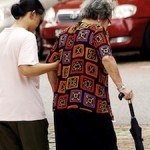
I am also happy to share that the Foreign Domestic Worker (FDW) Grant of $120 per month will come into effect from October this year. Applications have opened since 6 August this year. Households which employ a Foreign Domestic Worker to look after an elderly or person with disabilities and meet the eligibility criteria can apply for the grant.

To provide greater support for the vulnerable elderly in the community, my Ministry will organise the existing Seniors Activity Centres (SACs) into a hub and spoke concept, where Anchor SACs will support clusters of SACs to strengthen and expand their reach.

Anchor SACs will perform additional roles, such as closer monitoring through home visits, case management and counselling services for vulnerable elderly in the community. We expect the first six Anchor SACs to start operations by December this year. By 2016, we will have 16 Anchor SACs supporting some 39,000 elderly Singaporeans.

In planning the number and distribution of eldercare facilities, we take into consideration the demographic profile of each region, the adequacy of existing services and the availability of suitable premises. I am confident that most Singaporeans support the vision of ageing-in-place and understand the need for eldercare services to be developed within our communities.

We will continue to engage the local communities, refine the implementation strategies as well as review our services from time to time to ensure that they remain relevant and adequate.

As the life expectancy of our Singaporeans go into the 80s and 90s, there will be people in the 50s and 60s who are required, not only to take care of their elderly parents in their 80s and 90s, but also at the same time, take care of their children who might be in the early 20s or some in the 30s.

Indeed this is one of the big challenges for our society as we face an ageing population. MCYS will continue to look at how we can better support this group of people because some of them may be near retirement and they might need some other specific help.

On top of the current schemes, we are also going to look at what other new schemes we may be required to implement to cater to this specific group of people that the Member has highlighted, who are in the 50s or 60s. They are near retirement or just past retirement but perhaps still with the need to take care of their elder parents. In the next few months, as we re-organise ourselves and focus on the potential gaps in our social safety nets in the future, this will be one area that we will be looking at.

Read the the full transcripts here and here.

Parliament Primer: Family matters

The following are excerpts of debates on unwed mothers, sex education, pregnant employees, paternity leave, domestic violence, and the role of the new Ministry of Social & Family Development. These took place during the Aug 13, Sept 10 & 11 sittings of Parliament.

UNWED MOTHERS

Acting Minister for Community Development, Youth and Sports Chan Chun Sing:

From 2007 to 2011, the average number of single parent births registered without the father’s name was about 550 each year. About 60 per cent of these births were by mothers between the ages of 15 and 24 years old. 80 per cent of the mothers had secondary and below education. Data on their income levels is not available. In the last five years, there was an average of 7 cases a year, where the mother’s age was below 15 years.

SEX EDUCATION 

Minister for Education Heng Swee Keat:

As Sexuality Education (SEd) deals with growing-up issues and societal norms, thoughtful and mature handling is required. The two staple SEd programmes are the Growing Years Programme and the classroom-based segment of the ETeens. Teachers delivering the programmes should: (i) Believe in the importance of sexuality education;(ii) Be comfortable teaching the subject; (iii) Possess good facilitation skills and able to establish good rapport with their students; and (iv) Hold values aligned to those underlying MOE’s sexuality education programme.

Regardless of whether teachers are teaching sexuality education or other subjects, all of them would play a key role in values inculcation. All teachers are guided by the Ethos of the Teaching Profession (‘Ethos’) which encapsulates the values, beliefs and practices of our profession.

The Ethos serves as a compass for all our teachers and sets the foundation for their professional practice. It ensures that congruent values are upheld and transmitted across the entire teaching service. For example, our teachers place the child at the centre of what they do and believe that every child can learn and achieve.

Teachers are also committed to nurturing the whole child holistically, shaping their character and honing in them an instinct of right and wrong. Continual professional conversations and guidance from mentors and school leaders, further serve to remind teachers of the ethos and values to be upheld by the teaching fraternity.

PREGNANCY AND MATERNITY-RELATED COMPLAINTS BY EMPLOYEES

Acting Minister for Manpower Tan Chuan-Jin:

Our female employees must be protected against unfair dismissal during their pregnancy or when they are on maternity leave. Our laws also ensure that they are entitled to paid maternity leave. Female employees who feel that they have been unfairly dismissed due to their pregnancy may appeal to the Minister for Manpower. If the Minister finds that the employee has been dismissed without sufficient cause, he may reinstate the employee or order compensation to be paid to her.

Since the Marriage and Parenthood Package was enhanced in 2008, the Ministry of Manpower (MOM) has received an average of about 100 pregnancy- and maternity-related cases each year. Most cases involved disputes over the dismissal of the pregnant employee.

Others relate to the denial of maternity leave entitlements. Of the cases lodged at MOM, about one in four were withdrawn by the employees after they have had the opportunity to assess the merits of their case. Cases where the female employee is denied her statutory maternity leave benefits, either in full or partially, are referred to the Labour Court for adjudication. These form less than 7 per cent of the total number of pregnancy- and maternity-related cases referred to MOM.

Enforcement action will, and has also been taken against employers in egregious cases involving a clear breach of the law. In the last four and a half years we have taken action against 17 such employers. However, the majority of dismissal disputes referred to MOM are not clear-cut cases in that both the employee and employer are unable to clearly substantiate whether the dismissal was with or without sufficient cause.

In such cases, MOM provides mediation services to help the parties settle their disputes expeditiously and cordially. Mediation is often the best way to resolve such employment disputes. Some 90% of such cases were amicably resolved through mediation.

Where mediation fails, the employee has the option to appeal to the Minister for Manpower to ask for reinstatement. On average, there are about three such cases each year. The Minister will personally look at each case on its own merits. Employers are reminded to comply with the law in the provision of maternity leave benefits and treat their pregnant employees fairly. MOM will not hesitate to take action against employers who violate the law.

PATERNITY LEAVE

Deputy Prime Minister Teo Chee Hean:

Based on the latest Conditions of Employment Survey by the Ministry of Manpower (MOM), about 48 per cent of companies with at least 25 employees offered paternity leave in 2010. This figure has been gradually increasing, from 40 per cent in 2004, to 43 per cent in 2006 and to 47 per cent in 2008.

MOM does not collect data on the median length of paternity leave offered. The Government is currently reviewing policies and measures to support marriage and parenthood. As part of the review, we have been engaging various stakeholders to discuss new ideas and enhancements to existing measures. We will take all suggestions into consideration, including the introduction of paternity leave.

DOMESTIC VIOLENCE

Teo Chee Hean:

The number of reports of domestic violence perpetrated against women by their unmarried live-in partners is a very specific statistic. As the Police does not track such cases as a distinct category, I am unable to provide the statistics requested.

The Government does not condone acts of domestic violence, regardless of the marital circumstances. The Penal Code criminalises acts of violence, ranging from criminal intimidation and voluntarily causing hurt, to rape. This applies equally to perpetrators of domestic violence who might commit such acts against their unmarried live-in partners.

Protection Orders (POs) were created under the Women’s Charter to send a strong signal that domestic violence within the context of the family would not be tolerated, while creating opportunities for families, victims and perpetrators to heal these relationships. The Government has adopted this approach in recognition that family ties are life-long and rehabilitation plays a crucial role in preserving these relationships.

Hence, although Domestic Exclusion Orders are a possible condition within the POs, the PO may also require other measures, such as counselling for all parties involved. In addition to legal recourse available to all victims of domestic violence, non-legal interventions are of equal, if not greater, importance in meeting the needs of victims of domestic violence.

The National Family Violence Networking System, jointly administered by MCYS and SPF, coordinates interventions for both the victims and the perpetrators of family violence, regardless of marital status, in a holistic manner. A wide range of services is available through this system, including counselling, medical services and temporary crisis shelters.

Any victim of domestic violence in Singapore, including women facing violence from unmarried live-in partners, can seek assistance from this system by approaching the Police or a Family Service Centre, or by calling the Comcare Helpline. While a range of legal and non-legal interventions already exist to help victims of domestic violence, the Government will monitor the situation to determine if additional measures are necessary.

NEW MINISTRY OF SOCIAL AND FAMILY DEVELOPMENT

Chan Chun Sing:

Given the emerging demographic, economic and societal challenges Singapore faces, the formation of the new Ministry of Social and Family Development (MSF) will bring a sharper focus to the Government’s work in the development of families, social services and social safety nets.

At this point, our immediate priority is to ensure continuity in our current areas of coverage from family and social services to community development, youth and sports, even as we work towards a successful transition to the new Ministry.

Looking forward, MSF will focus on three key areas following the transition. First, we will enhance social safety nets for low-income and needy individuals and families. Some amongst these groups have complex needs beyond financial assistance. They may need help in areas such as housing, education and employment, counselling, caring for an elderly or rehabilitation. We will develop more effective initiatives to reach out to them and render help and support to enable them to improve their circumstances.

Second, we will improve the delivery of social services by working closely with the people and private sectors. These include services for the elderly, families, persons with disabilities and caregivers. We will work on accessibility, affordability and standards, and ensuring more responsive and citizen-centric delivery of services.

Third, we will further strengthen families. The family unit is the bedrock of our society, but it is coming under increasing strain with our changing demographics. We will create a more conducive environment for family formation and the strengthening of family bonds and resilience. We will also review our policies to meet family needs such as childcare and eldercare more effectively.

A strong social service sector is critical to support each of these three focus areas. The Ministry will therefore invest more resources to develop the sector. We will do more in working with the sector to attract, develop and retain social service professionals, raise sector capability and productivity, and improve service co-ordination. Through these efforts, we hope to bring about more resilient individuals and families, and play a part in helping our citizens achieve their hopes and aspirations for themselves and their families.

Read the the full transcripts here, here and here.

Sterilization Bill: They heard us

One of AWARE’s key recommendations has been incorporated into the Voluntary Sterilisation (Amendment) Bill, as read in Parliament on September 10: an order from the High Court will now be required before the sterilisation of persons who lack mental capacity to decide on such matters can be carried out.

This need for a Court Order was one of the recommendations made in AWARE’s submission to the Ministry of Health (MOH) during a public consultation held earlier this year.

Specifically, we recommended that except in the case of emergency situations (where the procedure is necessary to save the individual’s life or to prevent serious deterioration of his or her health), the sterilisation of persons lacking in capacity to decide should always be decided by a court or an independent committee.

Sterilisation is a major, irreversible and invasive procedure that has profound life-long physical and psychological effects. A Court Order should therefore be a pre-requisite in cases where a person is deemed incapable of consenting to sterilisation herself.

AWARE applauds this change. The bodies and reproductive rights of women and girls with intellectual and developmental disabilities should be protected on an equal basis with others. We believe that by imposing more stringent requirements for the sterilisation of persons who lack mental capacity, the State is taking steps to protect these fundamental rights.

This is an encouraging sign that the State is serious about fulfilling its obligations under the UN Convention on the Rights of Persons with Disabilities (CRPD), which Singapore will be signing later this year.

However, we are disappointed that MOH and the Ministry of Community Development, Youth and Sports (MCYS) did not take up AWARE’s recommendations on minors. The proposed amendments currently allow persons under 21 to consent to sterilisation for non-medical reasons, provided a parent, guardian or spouse also consents.

It is odd for the Bill to provide that a Court Order is necessary to authorise the sterilisation of persons lacking in mental capacity but not require this for the sterilisation of very young minors, who may also not be in a position to give informed consent to sterilisation.

More importantly, we believe that the Bill in its present form contravenes the State’s obligations under the United Nations Convention of the Rights of the Child (CRC) as it does not provide for any requirement or mechanism to ensure that the decision is made in the best interest of the child. This is especially necessary where the child is very young. Click here for more details.

We have written to MOH and MCYS urging further consideration of our recommendations that a minimum age be set at which minors are deemed capable of giving consent for sexual sterilisation (together with her parent(s)/guardian), and that a Court Order or at least an independent committee decision should be required for minors below this age.

We also reiterated our recommendation that the Bill adopt the parental consent scheme set out in the Women’s Charter, rather than requiring that only one parent need consent to sterilisation. As well, we are writing to various Members of Parliament with our recommendations for the Bill.

AWARE is encouraged by the changes that have been made to the Bill, but believes that better protections have to be provided for minors in order for it to comply with the international conventions to which Singapore is a signatory. We hope to continue working with the State to promote and protect the rights of all women and girls.

Elderly suicides: An absence of hope and heart

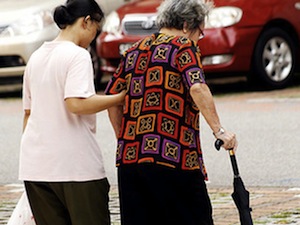
As Singapore becomes increasingly affluent, we should not forget the individuals with a different kind of “high net worth” – our senior citizens, who have worked and built this country. Do they have a home with hope and heart in what is supposed to be their golden years?

By Vivienne Wee, Nadzirah Samsudin & Priyanka Bhandari

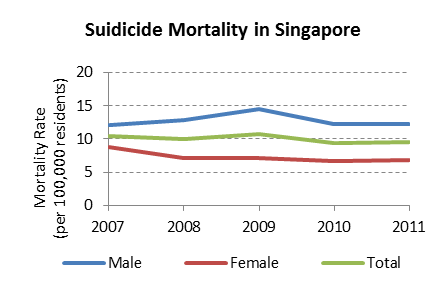
10 September marked the 10th annual World Suicide Prevention Day. According to the World Health Organization (WHO), approximately one million lives are lost to suicide every year worldwide; this is more than lives lost to homicide and war. About 5 per cent of people attempt suicide once in their lives, although the global mortality rate is only a fraction of that at 0.016 per cent (or 16 per 100,000).

However, a suicide attempt rate of 5 per cent is still too high, as it signals widespread depression and hopelessness. Suicide attempts are often a cry for help and it is tragic that people have to resort to this to obtain help.

World Suicide Prevention Day is an initiative of the International Association for Suicide Prevention (IASP), in collaboration with WHO. The theme they have chosen this year is “Suicide Prevention Across The Globe: Strengthening Protective Factors And Instilling Hope.”

This comes close to our very own message of “Hope, Heart and Home” in this year’s National Day Rally Speech.

As Singapore becomes increasingly affluent, we should not forget the individuals with a different kind of ‘high net worth’ – our senior citizens, who have worked and built this country. Do they have a home with hope and heart in what is supposed to be their golden years?

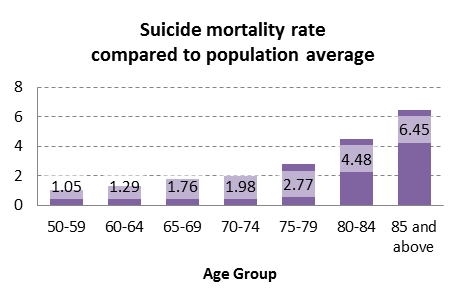
A worrying trend in Singapore is the higher prevalence of suicide mortality among the elderly, as compared to the rest of the population. The suicide mortality rate among those aged 50 years and above is about 6.45 times higher than that seen in the rest of the population.

The unacceptably high suicide rates among the elderly may worsen when citizens aged 80 and above number some 180,000 by 2030, more than double the current 73,000.

There are many risk factors associated with suicide, such as a history of self-harm, previous suicide attempts, psychological conditions, and stressful life experiences. Such factors are aggravated for the elderly in Singapore, who are rendered even more vulnerable by the lack of socio-economic support and social inclusion.

While policy emphasis on the family as the first line of support may work for those with families with adequate capacities, what happens to the elderly without such families?

It has been estimated that by 2030, only 45 per cent of persons over the age of 65 in Singapore will be living with families, compared to 70 per cent in 2005. Thus, it is unrealistic to expect older persons to rely on families as their main source of care and support. It would also be socially irresponsible to neglect older members of our society who cannot rely on familial care.

Depression is not confined to the elderly who live alone. Those who live with family or friends may be affected by the death of a spouse, by social and economic changes, or by sheer loneliness. Family members and physicians often fail to detect symptoms of depression or suicidal intent.

The Samaritans of Singapore (SOS) has seen a steady rise in the number of older persons who attempt suicide. Generally, more females than males attempt suicide (except those aged 50 and above). Significantly, suicide mortality by older women (aged 65-69 and 70-74) in 2011 has doubled, as compared to 2010.

These trends in elderly suicides call for urgent redress. Immediate measures can include educating physicians, care-givers and family members to spot signs of depression or suicidal intent among the elderly. Longer term steps, some of which have been mentioned in Parliament, include:

  • Provision of adequate economic support to the elderly
  • More efforts to diagnose and treat depression among the poor, the elderly and other
    vulnerable groups
  • Bridge systemic gaps in the mental health system
  • Invest in comprehensive care services for the elderly
  • Expand outreach efforts to create community spaces and activities for the elderly

Most crucially, the elderly must have adequate financial resources of their own. Research shows that 75 per cent of elderly people currently depend on their children for their expenses, while receiving only 12 per cent from CPF. Anecdotally, some suicides were committed by elderly parents who did not want to be a burden on their children when they became sick.

A truly inclusive Singapore must include older citizens, because ageing is an inevitable part of life. Elderly suicide rates are a telling indicator of how well Singapore fares as a home with hope and heart. It should be included as one of the indicators to measure our success in achieving this vision.

Vivienne Wee is an anthropologist and Research & Advocacy Director at AWARE. Nadzirah Samsudin is the Research and Advocacy Executive at AWARE. Priyanka Bhandari is a volunteer at AWARE. This commentary was first published on publichouse.sg.

Beyond 377A

Sexual orientation and gender identity remain one of the most taboo subjects in Singapore. Recent developments both at home and in the region, however, are slowly but surely making gay rights an increasingly visible issue, and a crucial litmus test for a society’s respect for human rights.

In August this year, a Buddhist same-sex wedding ceremony was performed in Taiwan for the first time, garnering much international attention. A bill to legalize same-sex marriage is currently pending in the government of Taiwan.

Vietnam is also considering legalizing gay marriage, and hosted its first gay pride parade this year, as did Myanmar and Laos. In August, gays, lesbians, transgender people and their supporters in Nepal marched to demand recognition as a third gender in citizen certificates, to allow same-sex marriage and to criminalize discrimination based on sexual preference.

In Singapore, change is also afoot. In a Channel News Asia programme about sex education for students that aired on July 11, Liew Wei Li, Director of Student Development Curriculum for the Ministry of Education, said: “We do teach that they should respect everyone regardless of their sexual orientation, because we want relationships, then, to form, good sound relationships, based on friendships, based on love, based on respect.”

This would seem to be a significant shift from MOE’s previous position on its sex education programme, which, as described in a 2009 statement, “does not promote homosexuality” and “reflects the mainstream views and values of Singapore society, where the majority of Singaporeans hold conservative views on sexuality”.

Singapore’s Court of Appeal also recently reversed a High Court decision about a constitutional challenge against Section 377A of the Penal Code, which criminalises sex between men. In its judgment, released on Aug 20, the Court of Appeal stated that the existence of Section 377A carried a credible threat of prosecution, and “affects the lives of a not insignificant portion of our community in a very real and intimate way”.

Writing for the Sayoni website, lawyer Indulekshmi Rajeswari described this judgment as “nothing less than earth-shattering for the LGBT community. For the first time, the Courts have acknowledged the existence of the gay person, and the gay community, and their interests”. Indeed, Section 377A has long been a catalyst for galvanizing the LGBT community here, having inspired repeal campaigns in 2007.

Beyond this piece of legislation, however, there remain numerous areas of discrimination that affect the LGBT community in Singapore. At the AWARE Roundtable Discussion held on Aug 16, speakers Jean Chong and Kelly Then touched on some of these issues. Jean and Kelly are members of Sayoni, a community that works to empower queer women, and People Like Us, the pioneer gay and lesbian advocacy group in Singapore.

“A lot of social institutions are built around the idea that one is attracted to someone else, and wants to be with that person,” said Kelly. When same-sex relationships are not recognized under the law, this means that the people in these relationships are barred from basic rights and social support networks that those in heterosexual relationships may take for granted.

As same-sex marriages are not recognized in Singapore, women in such relationships are not allowed to undergo in-vitro fertilization (IVF) or any other form of assisted reproduction. (This prohibition applies to single women in Singapore as well.) Jean noted that this led to the emergence of ‘lesbian flights’ to Bangkok for IVF.

A member of the audience at the Roundtable also mentioned that children of couples in heterosexual relationships are granted more than 200 types of legal protection that are not available to children of couples in same-sex relationships. This includes rights of access in parenting.

Individuals who are in same-sex relationships cannot be recognised as related by marriage. For example, if a person’s parents reject their same-sex relationship, they can legally prevent their partner from visiting them in the hospital.

Those in LGBT relationships may not enjoy spousal benefits, as most companies do not recognize such relationships (although a number of MNCs do). They also cannot access state-sponsored social support schemes like Medisave and get less in housing grants, and are not entitled to jointly purchase property using their CPF.

Pressure from prevailing social attitudes are not countered by any significant State support. While there is no data for Singapore, the worldwide rates of depression, substance abuse and suicide are higher for LGBT youths; they are often teased and bullied in school because of their perceived sexual orientation and gender identity. There is no information on safe sex for gay teens in the current sex education syllabus, and no state-sponsored institutions that have expertise in providing counselling for those grappling with LGBT issues.

Jean also mentioned that a study that has shown that many gay people go back into the closet when they grow old, because old folks’ homes are not open to the idea of same-sex relationships.

In the absence of decriminalization and State recognition, it is therefore crucial to include LGBT perspectives in areas such as research, advocacy, and social services, said Kelly. These include the Convention On The Elimination Of All Forms Of Discrimination Against Women (CEDAW), sex education, maternal and paternal leave, violence in relationships, singles, de facto relationships (where couples may cohabit for extended periods but not marry), ageing, poverty, and sexual harassment – all issues that impact the LGBT community.

For example, in the case of de facto relationships, which are becoming increasingly common for both straight and gay persons, Kelly mentioned that the law will have to deal with issues that arise.

One of the areas where progress is not being made is in the media. Positive portrayals of homosexuals or homosexual relationships are still subject to censorship in the local media, and outlets are penalized if they are seen to be ‘promoting’ homosexuality.

However, censorship is no longer as great a hurdle as it was in the past due to the arrival of new media. For example, TV shows or movies that are censored either in whole or in part by governmental bodies can now be easily downloaded or streamed online through the Internet. With greater access to information and perspectives, younger generations are more open and less discriminatory toward LGBT persons.

Dreaming of a truly inclusive Singapore

The national conversation should not be dominated by fertility rate. Focus instead on the kind of Singapore we want.

By Corinna Lim & Vivienne Wee

In his National Day Rally speech, Prime Minister Lee Hsien Loong envisioned Singapore as ‘a home with hope and heart’.

As members of the Association of Women for Action and Research (AWARE), we are encouraged that the rally focused on social priorities and values of mutual respect and inclusiveness. We agree that all Singaporeans should participate in the national conversation to create an inclusive Singapore, with that national conversation encompassing issues of concern to different citizens – rich and poor, young and old, male and female, majority and minority, and so on.

We are glad that Singapore is moving towards greater equality between mothers and fathers by introducing paternity leave. Paternity leave would recognize men’s role as co-parents with the right to be part of family life beyond just being breadwinners. However, we must ensure proper implementation, not mere tokenism. Paternity or shared parental leave must genuinely encourage men to participate in the care of their children. An idea worth looking into is to deduct from a man’s reservist duties the days of parenting leave he takes.

While this proposed move has provoked some negative comments from those who have benefitted from gender disparity, we welcome the positive responses also expressed. We agree with the Chair of the Centre for Fathering and National Family Council that reservist training is a good precedent to follow, as employers now take this into account in their planning. Employers who do not support the parenting leave of male and female employees actively contribute to the anti-family ethos of the Singaporean workplace.

We are also glad that the Government is looking into whether singles will be eligible to buy flats directly from HDB. We strongly recommend this policy change so that singles are given parity of treatment, and are no longer discriminated against on the basis of marital status. Affordable housing for all Singaporeans is necessary. The inclusive national conversation must also include single parents who cannot afford preschool education for their children who are citizens of the future.

Although the National Day Rally did not focus on Singapore’s rising inequality between rich and poor, this is nevertheless the context for the falling Total Fertility Rate (TFR) issue. According to the UN, Singapore’s Gini coefficient of 0.473 in 2011 is second highest among 38 countries with very high human development. Thirty percent of Singapore’s working households struggle to make ends meet, with hardly any discretionary savings. It would be unconscionable to ask such households to increase their fertility rate.

In Parliament in October 2011, the PM admitted that “income inequality is starker than before” and that “at the lower end, incomes have risen too slowly, far too slowly”.

Middle-class families in Singapore are also stressed by the high cost of healthcare and caregiving. Singaporeans are paying 55% – 64% of healthcare expenditure as out of pocket costs, compared to only 30% in Japan, Hong Kong, Korea and Taiwan. It is unsurprising that they should make a rational choice by not burdening themselves with more dependents than they have already. Research shows that retirees currently depend on their children for most of their living expenses – as much as 75%, while receiving only 12% from CPF.

Can policies to increase the TFR address these everyday problems? Singaporeans trying to meet their immediate needs are unlikely to want more children to solve projected problems of future society.

The emphasis on TFR seems misplaced. A demographic study by the Institute of Policy Studies (IPS) in 2011 showed that even if TFR were to increase to 1.85, a highly ambitious target, from the current 1.24, this by itself would not significantly reduce the dependency ratio or increase the support ratio significantly. In other words, this is not the solution to a shrinking or ageing workforce.

AWARE suggests the national conversation should not be dominated by TFR. Focus instead on questions about the kind of Singapore we want. For example, how many people can live sustainably on our small island with a desirable quality of life?  Comparison with other developed countries suggests we should aim for sustainable labour growth with high productivity growth, rather than just focusing on increasing population and TFR.  Economists have argued that if we keep population increases to the minimum to compensate for a shrinking population, we can nevertheless enjoy a growth rate of 3 – 4%.

We dream of a Singapore where all are able to maximize their potential; where people don’t have to work 18 hours or more a day to the point of total exhaustion just to cope with family needs, where productivity increases because people are doing what they care about, where people are treated fairly as equal citizens regardless of race, language, religion or marital status, where they can enjoy a quality of life that makes life itself meaningful to them. Only then would we have a home where children are welcome, not just to be workers providing for the old, but as citizens who will inherit that home.

Corinna Lim is the Executive Director of AWARE and Dr Vivienne Wee is an anthropologist and Research & Advocacy Director at AWARE.

This article was first published in The Straits Times on Sept 4, 2012.

Make income tax relief and MediShield more inclusive

In response to calls for public consultation on proposed changes to the Income Tax (Amendment) Bill and MediShield, AWARE submitted the following recommendations

Give caregivers income tax relief

The Ministry of Finance recently sought public feedback on 30 proposed legislative amendments under the draft Income Tax (Amendment) Bill 2012.

One of the key changes in this Bill is Enhancements to the Earned Income Relief (EIR). As an incentive for the elderly and handicapped persons to stay employed, they will be eligible for up to $8,000 and $12,000 of EIR respectively.

EIR refers to the sum that is deducted from an individual’s taxable income, thus resulting in lower tax payments.

AWARE suggests that the Enhancements to the Earned Income Relief be expanded to include caregivers who return to the workforce after leaving to care for dependents.

WHY?

1. Leveling the playing field for female caregivers

Caregiving in Singapore is significantly gendered. A recent study found that caregiving at home is carried out mainly by female family members (excluding domestic help): 43% by daughters, compared to 17% by sons; and 12% by wives, compared to 3% by husbands.

Dropping out of paid employment affects women adversely. Although year-on-year growth of women’s average net CPF balance has been increasing, the CPF balance of females has been consistently lower than that of males over the last 15 years.

The significant difference in CPF between men and women, greater in the age groups of 46 – 50 and 51 – 54, is probably due to women dropping out of the workforce. 2011 labour statistics show that women make up nearly two-thirds of economically inactive residents in Singapore.

Women are also earning less than men, and at retirement have less than half of the CPF that men have. This means women also have less Medisave, which may be insufficient for their medical bills. Singapore women are living longer than men. The combination of insufficient Medisave and increasing health needs of the elderly impacts drastically on older women.

Expanding the scope of the Enhancement to the Earned Income Relief to caregivers will thus help compensate women for the income and CPF they would have lost by leaving the workforce to care for their dependents.

2. An incentive for caregivers to return to the workforce

Extending EIR to caregivers will align with other policies that seek to attract caregivers, especially women, to return to the workforce after leaving it. This will tap our latent pool of local manpower.

To ensure affordability and sustainability, we suggest that caregivers returning to the workforce receive EIR for the same number of years that he or she has been out of the workforce.

For EIR to work effectively as an employment incentive for caregivers, we believe that the current allocation of EIR according to age group should be re-examined.

Under the current Enhancements, the elderly and handicapped are eligible for a larger sum of EIR if they are older. In the case of the elderly, for example, those below 55 can receive up to $1,000, while those aged 55-59 can receive up to $6,000, and those aged 60 and above can receive up to $8,000.

AWARE suggests that in the case of caregivers returning to the workforce, the same amount of EIR should be given uniformly to the three different age groups of below 55, 55 – 59, and 60 and above.

Most women who drop out of the workforce to care for dependents are in the below 55 group. To encourage these women to return to the workforce as soon as possible, substantial EIR should be given to them at an earlier age.

Extend MediShield coverage by risk-pooling across the population

The Ministry of Health also recently sought public feedback on proposed changes to the MediShield scheme. These include considering an extension of MediShield to cover congenital and neonatal conditions.

AWARE applauds this proposed extension. Singapore’s healthcare system is internationally acclaimed, but the current exclusion of neonatal and congenital defects is in stark contrast to other Commonwealth countries. In the UK, Canada and Australia, health care of children with neonatal and congenital defects is covered by the National Health Service and Medicare respectively after registration of the baby.


Increasing access to treatment for crucial birth defects would further improve Singapore’s already very low infant mortality rate, indeed the lowest in the world. It would also improve the quality of life for children in need.

Neonatal and congenital defects occur through chance, happening to only two out of the 110 babies born daily. As calculated by the CPF Board, the extension of coverage to children with neonatal and congenital defects would mean an increase in premium for those aged 1-20 years of not more than $12 a year or less than $1 a month.

But there may be poor families who cannot afford even this slightly increased premium and who may thus opt out from the scheme. AWARE suggests that the increase in premium for the extended coverage be further decreased through sharing by the general population, instead of limiting it only to those 20 years old and below. The increase in premium will thus be negligible for everyone, but will bring Singapore a step closer to being a truly inclusive society, supported by a universal health care system.

Risk pooling across the whole population is a necessary evolution to include all citizens, with no exclusion of those born with neonatal and congenital illness or those who live over the age of 90. Risk pooling across the whole population would also make Medishield more affordable to ageing citizens, as their premiums will not become unaffordable as they age, even if they are covered by Medishield in principle.

As Singapore continues to build trust and harmony among citizens, as stated by PM Lee on National Day, it is only fitting that all citizens should share the responsibility of taking care of young and old. Worries over an increase in premium therefore do not constitute grounds for rejecting this extension of coverage. 

Without MediShield coverage, families who would otherwise be celebrating the birth of a baby find themselves saddled by an immense financial burden, which can reach six-digit figures on average. Many families cannot afford the hefty sums needed to save or ameliorate the life-chances of their children. Even private insurance schemes may not be available to them as many insurance companies reject coverage of those with pre-existing health defects.

Therefore, the extension of MediShield to help such families is necessary as Singapore evolves into an inclusive society that leaves no one behind.

Read our full submissions here and here.