
Author: Media Intern

Gender Equality Manifesto: The Time For Gender Equality Is Now

The most recent Global Gender Gap Report estimates that gender parity will not be obtained for more than a century. Yet the government has the power and the responsibility to create meaningful change and achieve substantive gender equality at home and work. 

We have outlined six principles and accompanying policy ideas that we believe will bring us closer to an equal, fair and just world. 

We urge all policy-makers and politicians to commit to the following actions:

1. Eradicate discrimination
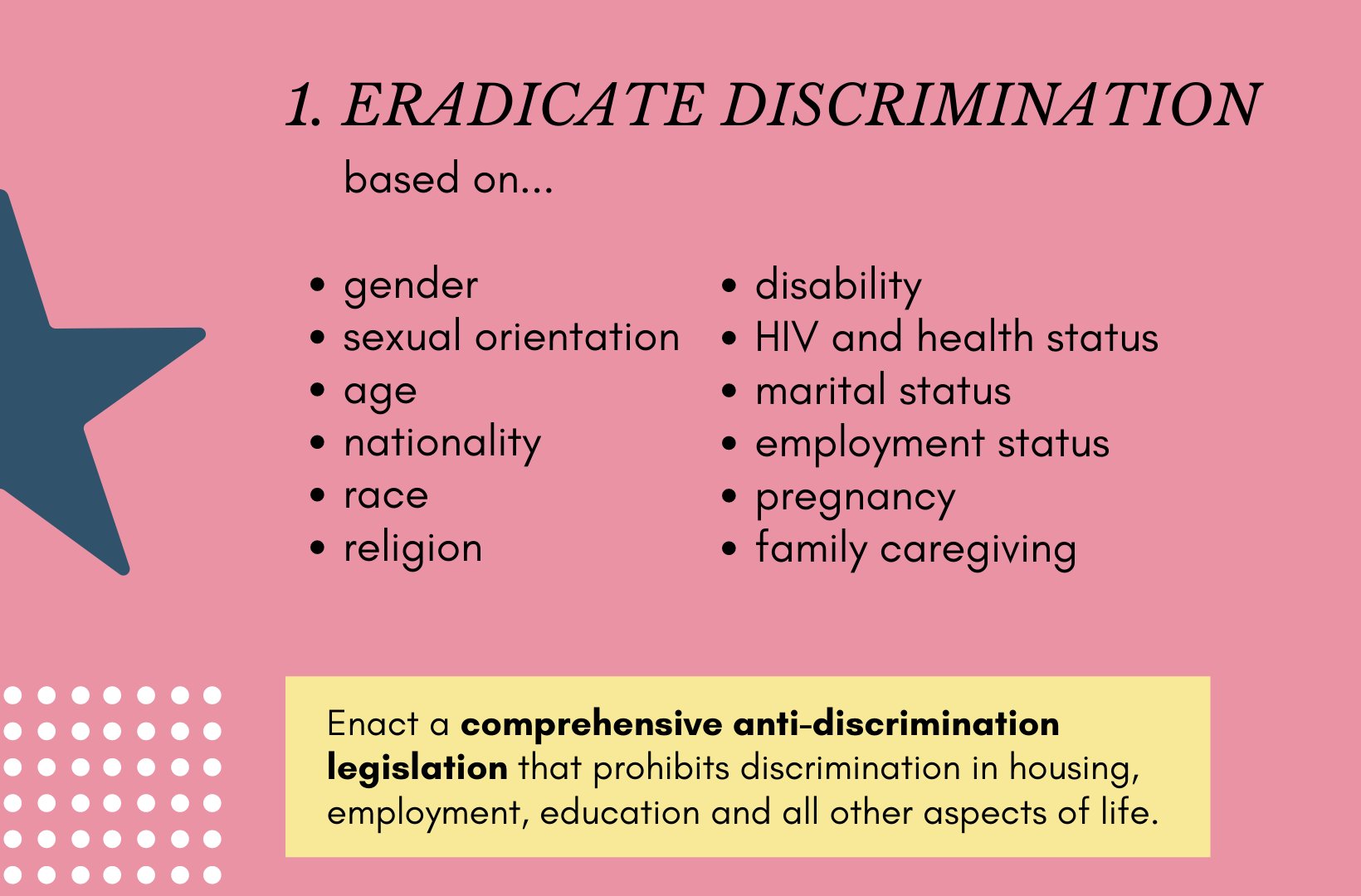
End all forms of discrimination based on gender, sexual orientation, age, nationality, disability, race, religion, HIV and health status, marital status, employment status, pregnancy and family caregiving. 

Policy: 

  • Enact a comprehensive anti-discrimination legislation that prohibits discrimination in housing, employment, education and all other aspects of life.

2. Ensure decent work for all
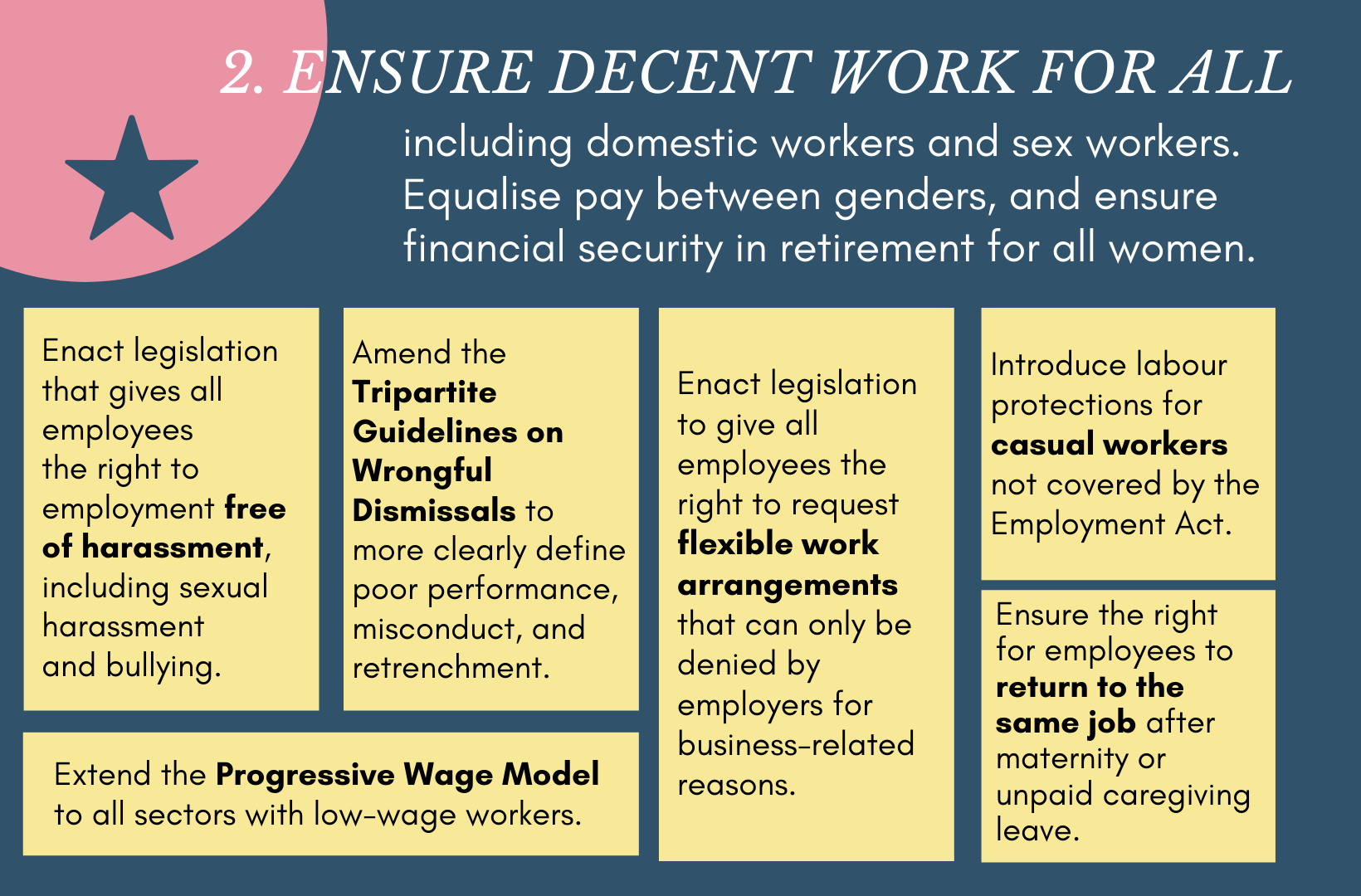
Ensure all women, including domestic workers and sex workers, have access to decent work. Equalise pay between genders, and ensure financial security in retirement for all women.

Policies: 

  • Enact a legislation that gives every employee the right to employment free of harassment, including sexual harassment and bullying 
  • Introduce substantive labour protections for all casual workers not covered by the Employment Act
  • Enact legislation to give all employees the right to request flexible work arrangements that can only be denied by employers for business-related reasons
  • Amend the Tripartite Guidelines on Wrongful Dismissals to more clearly define poor performance, misconduct, and retrenchment
  • Ensure the right for employees to return to the same job after maternity or unpaid caregiving leave
  • Extend the Progressive Wage Model to all sectors with low-wage workers

3. End violence against women
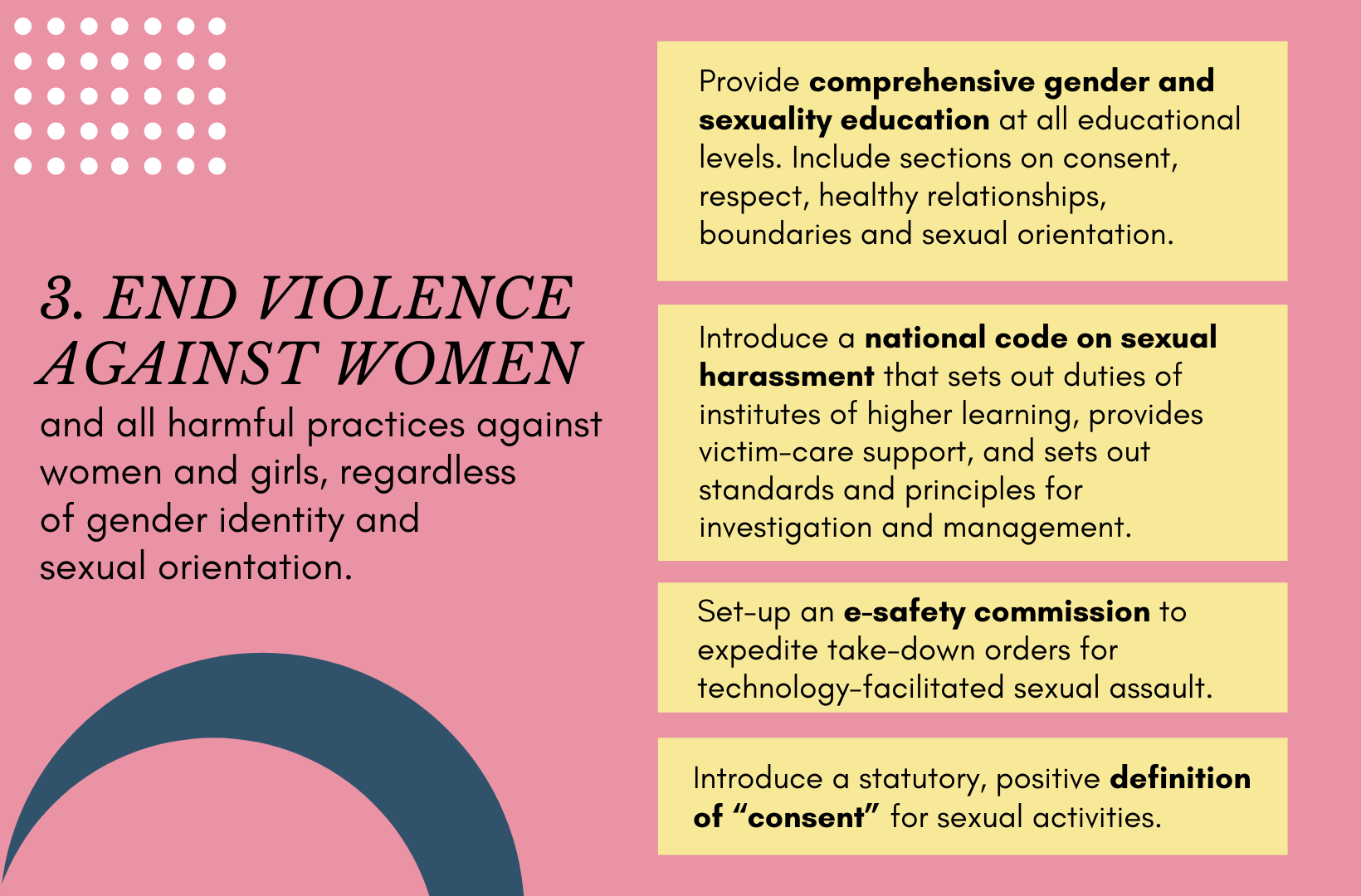
End all forms of violence and harmful practices against women and girls, regardless of gender identity and sexual orientation. 

Policies: 

  • Provide comprehensive gender and sexuality education at all educational levels. Include sections on consent, respect, healthy relationships, boundaries and sexual orientation. 
  • Introduce a national code on sexual harassment that sets out duties of institutes of higher learning, provides victim-care support, and sets out standards and principles for investigation and management
  • Set-up an e-safety commission to expedite take-down orders for technology facilitated sexual assault
  • Introduce a statutory, positive definition of “consent” for sexual activities

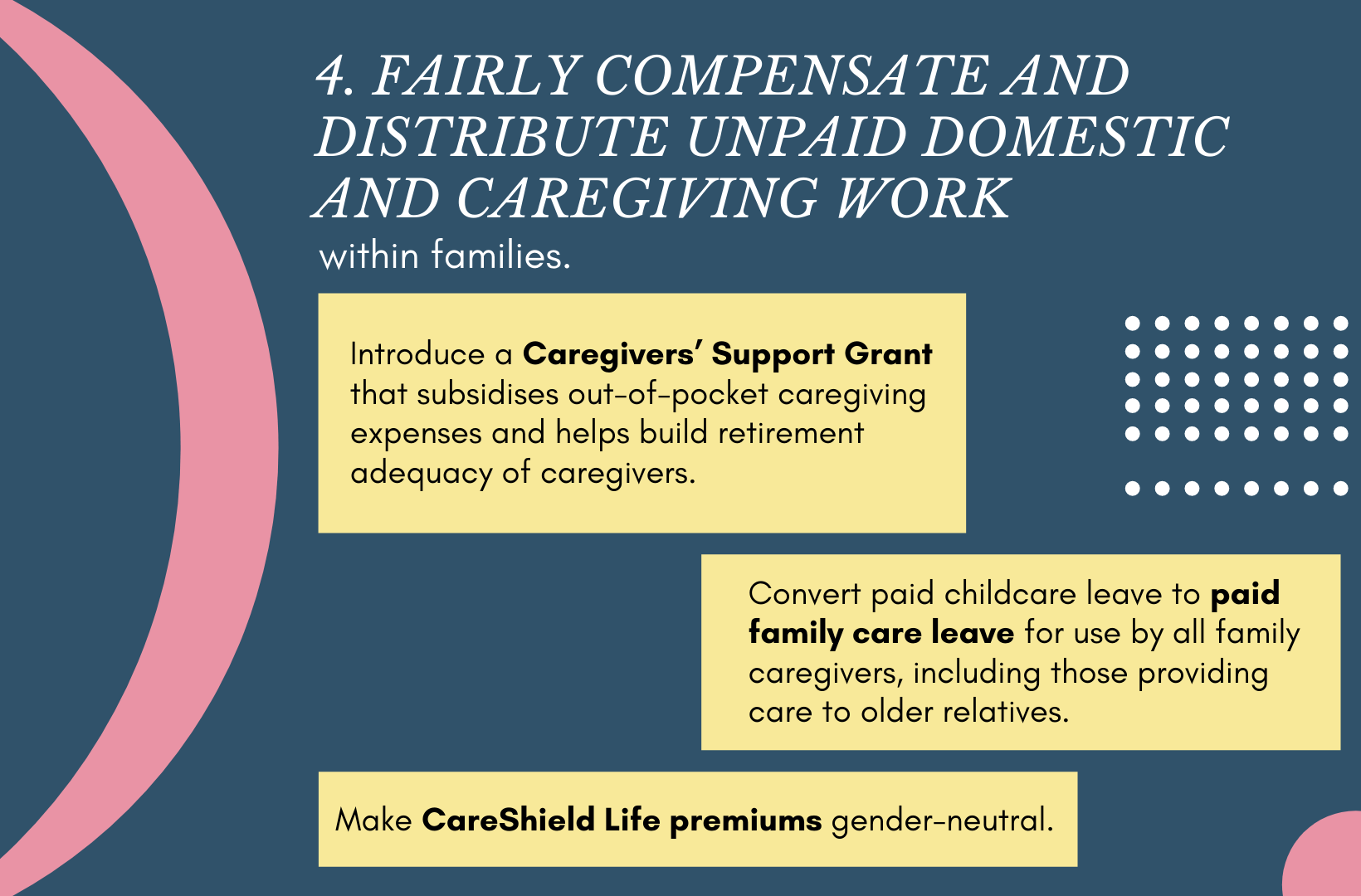
4. Financially compensate and equally distribute unpaid domestic and caregiving work within families
Policies: 

  • Introduce a Caregivers’ Support Grant that subsidises out-of-pocket caregiving expenses and helps build retirement adequacy of caregivers
  • Introduce paid family care leave for caregivers providing care to older relatives, similar to paid childcare leave
  • Make CareShield Life premiums gender-neutral 

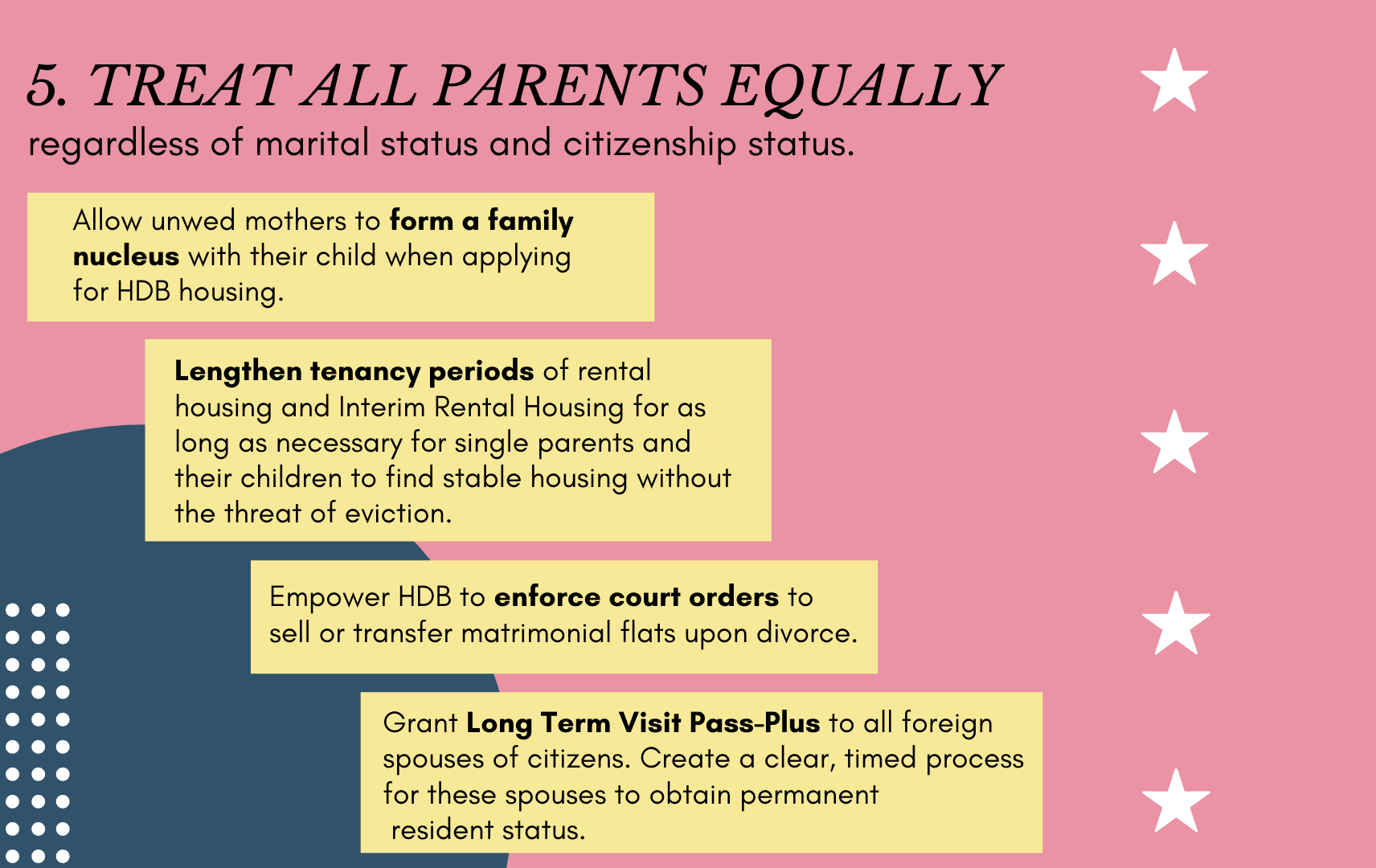
5. Treat all parents equally regardless of marital status and citizenship status
Policies: 

  • Allow unwed mothers to form a family nucleus with their child when applying for HDB housing, instead of approving grant applications on a case-by-case basis 
  • Lower the age of eligibility for public rental housing to 18 years, from 21
  • Lengthen tenancy periods of rental housing and Interim Rental Housing for as long as necessary for single parents and their children to find stable housing without the threat of eviction
  • Empower HDB to enforce court orders to sell or transfer matrimonial flats upon divorce
  • Grant Long Term Visit Pass-Plus to all foreign spouses of citizens. Create a clear, timed process for these foreign spouses to obtain permanent resident status

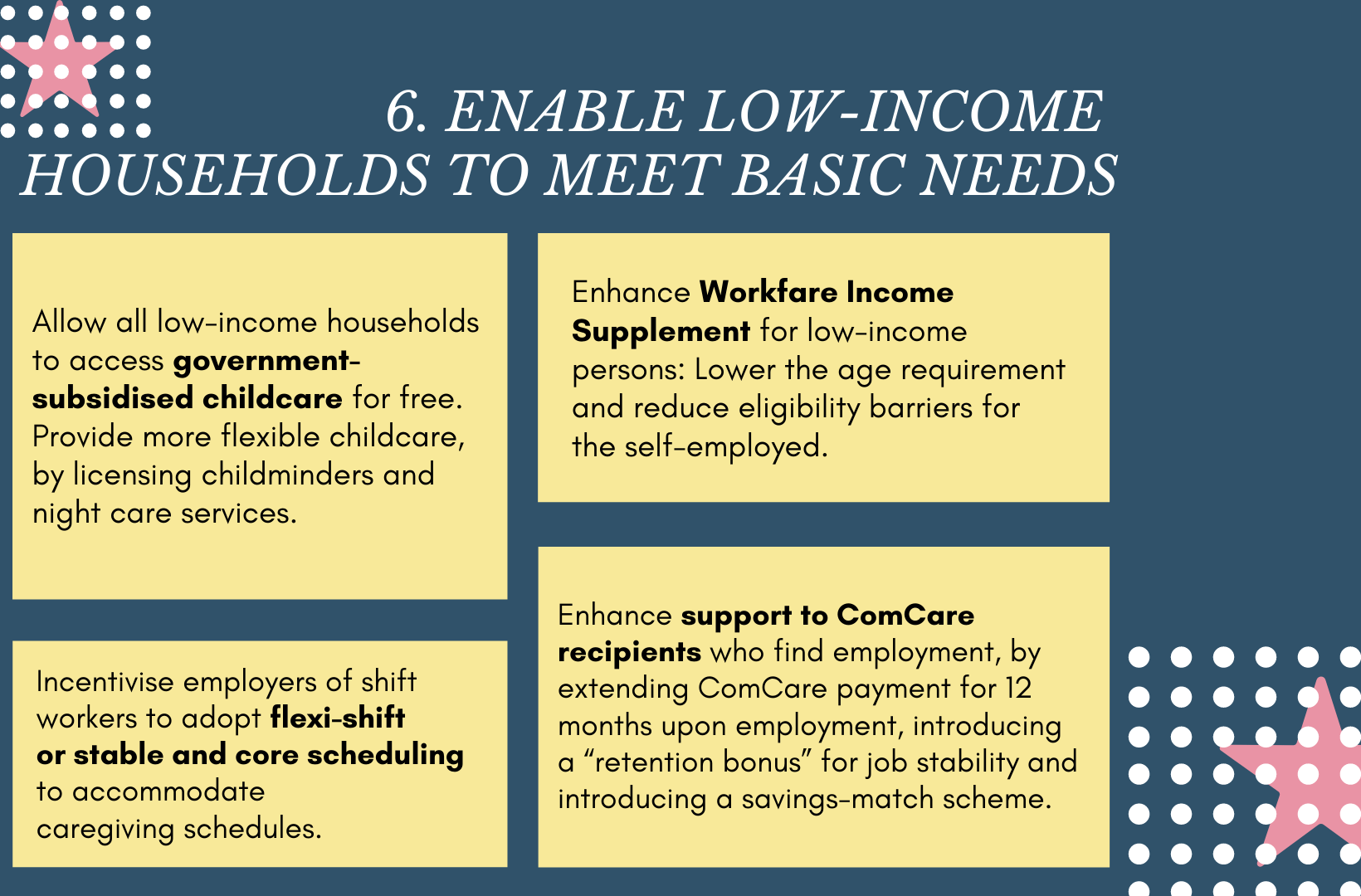
6. Better support low-income households to meet basic needs
Policies:

  • Allow all lower-income households to access government-subsidised childcare for free
  • Enhance support to ComCare recipients who find employment, by (i) extending ComCare payment for 12 months upon employment, (ii) introducing a “retention bonus” for job stability, and (iii) introducing a savings-match scheme to help build cash savings and incentivise saving
  • Enhance Workfare Income Supplement (WIS) for low-income persons by: (i) reducing the WIS age requirement, and (ii) reducing the barriers for SEPs to be eligible for WIS
  • Incentivise employers of shift workers to adopt flexi-shift or stable and core scheduling to accommodate caregiving schedules.


Download the Gender Manifesto as a PDF here.

24 June, 1 July, 8 July 2020: Birds & Bees, A Workshop for Parents About Sex Education

Important: This workshop will now be held online via Zoom. It will be a set of three sessions. Participants are required to attend all three sessions.

“This was valuable… it made me reflect on my own values regarding sex and what I may project onto my children.”

“It opens up our inhibitions and gives us real opportunities to put [our thoughts into] words.”

“Often boys are let off the hook, but I think they should be mindful and learn about boundaries, especially in this day and age when lines are blurred and there’s so much to access online.”

“Can they do this in school for our children?”

– Previous Birds & Bees workshop attendees

Most parents believe that it is important to talk to their children about sex, but many are uncertain how to do it. But what happens when you keep putting it off until the children are “older”? Where do your children get answers to questions they can’t ask you? (The internet is one such place, and young people say they are most likely to ask peers and romantic partners.)

Birds & Bees is an experiential workshop for parents, developed by parents, to explore what works for you when talking to your child about romantic relationships and sex. A variety of formats will be used, including opportunities for dialogue, discussion and reflection

Most parents want to be an “ask-able” parent: to be the approachable adult who is open to questions and who their child turns to for answers. Attend this workshop to explore how you can work on developing your own strategies to enhance the trust and bond with your child!

All parents would find the content useful and applicable. For this online workshop, we are giving priority to parents of children aged 10-15 so that the discussions can be more age targeted.

Places are limited so do sign up quickly!

Date: Wednesdays – 24 June, 1 July, 8 July

Time: 8.00-9.30pm (1.5 hours)

Workshop Fee: $15 (in total, covering all three sessions)

Survey: After you sign up, you will be asked to complete a short pre-workshop survey about the age(s) and number of your children. This is very important so that parents with children of similar ages can be grouped together to that you will get the most out of the workshop.

Special instructions for online workshop: As small-group discussions will be a big part of the workshop, participants are expected to switch on their video as well as audio whenever possible, and to join in the discussions for maximum benefit.

Refunds and cancellations: Unfortunately we will not be offering refunds. You are expected to attend all three session of the online workshop. In exceptional circumstances, if you are unable to attend the subsequent sessions, you will be able to join the next set of workshops if you write in to publiceducation@aware.org.sg in advance giving your reasons.

Register here.

Why would anyone steal underwear – and flout circuit breaker restrictions to do that?

This commentary was originally published in Channel NewsAsia on 14 June 2020

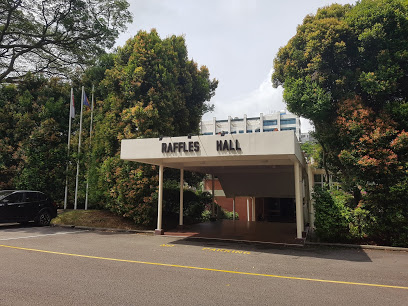
SINGAPORE: One morning in January 1972, early risers at Raffles Hall, the all-male dormitory at the University of Singapore campus at Bukit Timah, found the flagpole at the front of their building festooned with panties and bras.

The Straits Times published a picture of the lingeried flagpole. There was a flurry of follow-up news reports and commentaries, investigations were done, and action was taken against some students.

It was, as far as I know, the last time there was a panty raid on a Singapore campus.

I was then a student at the university and a resident at Eusoff College, the all-female dormitory a 5-minute walk away from Raffles Hall. The underwear strung up on that flagpole belonged to Eusoff women.

WHEN THINGS STARTED TO CHANGE

Panty raids were a thing then, one of several Eusoff-Raffles annual traditions. The women who had their underwear stolen wouldn’t have been too pleased, but generally it was regarded as part of the fun of campus life.

We did not then see those raids as an intrusion into our personal space, as a demonstration of toxic masculinity. We didn’t have the concepts, the language to see it that way.

This was the early 1970s. The women’s movement was well under way in America and Europe, but it would be at least another decade before women in Singapore began to see that these troubling incidents belied a larger problem they needed to do something about.

Screengrab from Google Maps

While the one or two panty raids that took place when I was at Eusoff College may indeed have been just good fun, the sexual underpinnings of the practice showed themselves in a raid in 1967 when some 70 male students stormed the Eusoff corridors. They didn’t just steal underwear; they broke windows and doors and painted pornographic images and words on walls.

I’d forgotten about these panty raids until someone pointed to the recent report about a man with an underwear fetish who, who over a two-year period, had stolen more than 100 bras and 41 panties, and was sentenced to 23 weeks of jail time. It got me thinking about those panty raids of 50 years ago, so I did a little checking.

THE LADDER OF ESCALATION

In January 1972, a Raffles Hall resident wrote to The Straits Times to protest against their coverage of the panty raid.  It was harmless, he said, “merely an outlet for pent-up emotions and feelings of depression” of the students who had been studying hard for examinations.

Similar explanations, or excuses, were, I believe, initially offered in some of the recent cases of voyeurism on our campuses.

There is no excuse for acts, whether they are driven by pent-up emotions or depression or a fetish that impinge on the privacy and safety of anyone.

We have every right to possess and practise harmless fetishes, but not fetishes that inflict physical or psychological violence upon others – whether that involves stealing underwear or filming people without their permission in the shower, bedroom or MRT.

We may laugh at the idea of someone climbing over the back gates of homes and sneaking into the laundry area to get to the bras and panties, but the needs that drive this person to such acts can, if unchecked, lead to much more serious sexual crimes.

This is why the last year was so important – it forced our universities to take clear and firm action against voyeurism and other behaviour they had tended to treat too lightly.

But having, and being ready to apply, clear laws and rules is just part of what’s needed to deal with the problem. How do we get these people to change their behaviour? Counselling, behavioural therapy and other treatments are needed.

When your obsession with women’s underwear drives you to go out and steal bras and panties, the fetish becomes a disorder.

Psychiatrists say the disorder often begins in early puberty. As a boy’s sexual urges grow, if he somehow get aroused by underwear and develops an association around the object with sexual pleasure, he may in time develop an overwhelming need for this object and possibly to stealing it, or worse.

SEEKING HELP

Singapore psychiatrist Dr Lim Boon Leng believes early intervention can help.

In an interview last year, he said:

“I feel that sex is such a taboo subject that we sometimes underestimate the fact that we need to learn proper sexual practices. Because of that, children and youth may start learning the wrong things maybe from TV, Internet and somehow associate sexual gratification with objects. Having open dialogues about healthy sexual practices may be useful.”

Sexuality education in Singapore schools has had a rather chequered history. Schools have over the years sometimes used external vendors to conduct sexuality education programmes, but since 2017 they have relied on the Education Ministry’s programme.

This syllabus is centered on abstinence and notably light on discussion of actual sexual activity (whether intercourse or fetishes). But a responsible and comprehensive sexuality education programme should not be silent on these matters.

Parents could be more proactive too in the realm of sexuality education. Indeed, MOE’s website states that: “Parents play the primary role in educating their children and are responsible for teaching and transmitting values on sex and sexuality.”

Yet AWARE’s experience, from workshops conducted with around 80 parents in 2019, is that many don’t know that they are expected to play this primary role. They feel ill-equipped both in terms of knowledge as well as the necessary communication skills required to talk to their kids about sensitive issues such as sex and consent.

Both our Government and our families need to take more responsibility for our children’s healthy development. Everybody in Singapore deserves non-judgmental and helpful discussions about sexual practices, including fetishes.

We are now well into the 21st century. We can’t keep clinging to the excuse that Singapore is still largely a conservative society. We need to talk openly about sex, sexuality and sexual practices.

By Margaret Thomas, President of AWARE 

Virtual Annual General Meeting held by AWARE amidst COVID-19; new 2020-2022 board elected

This post was originally published as a press release on 10 June 2020.

10 June 2020 – On Saturday, 30 May 2020, gender equality organisation AWARE held its first-ever virtual Annual General Meeting (AGM) in 35 years. 

The meeting was held over video-conferencing platform Zoom and attended by 101 AWARE members, including both ordinary members (Singaporean women) and associate members (men, gender-nonconforming individuals and non-Singaporeans). 

Although AWARE had originally scheduled an in-person AGM for 27 April 2020, the COVID-19 outbreak and circuit-breaker measures in Singapore necessitated that the event move online. As 2020 was an election year for the AWARE Board, the organisation also held a virtual “Meet the Candidates” session on 13 May, where 10 candidates introduced themselves to the wider membership and took questions.

“We were initially worried that holding the AGM online would hurt the turnout, but we ended up quite thrilled at the attendance,” said AWARE Executive Director Corinna Lim. “Although AWARE members range in age from teenagers to nonagenarians, it’s clear there is no technology ceiling when it comes to engagement with feminist issues and civil society. This reassures us that holding events and services online, as we began doing in April, not only does not deter our community, it allows us to include some who otherwise face barriers to access.”

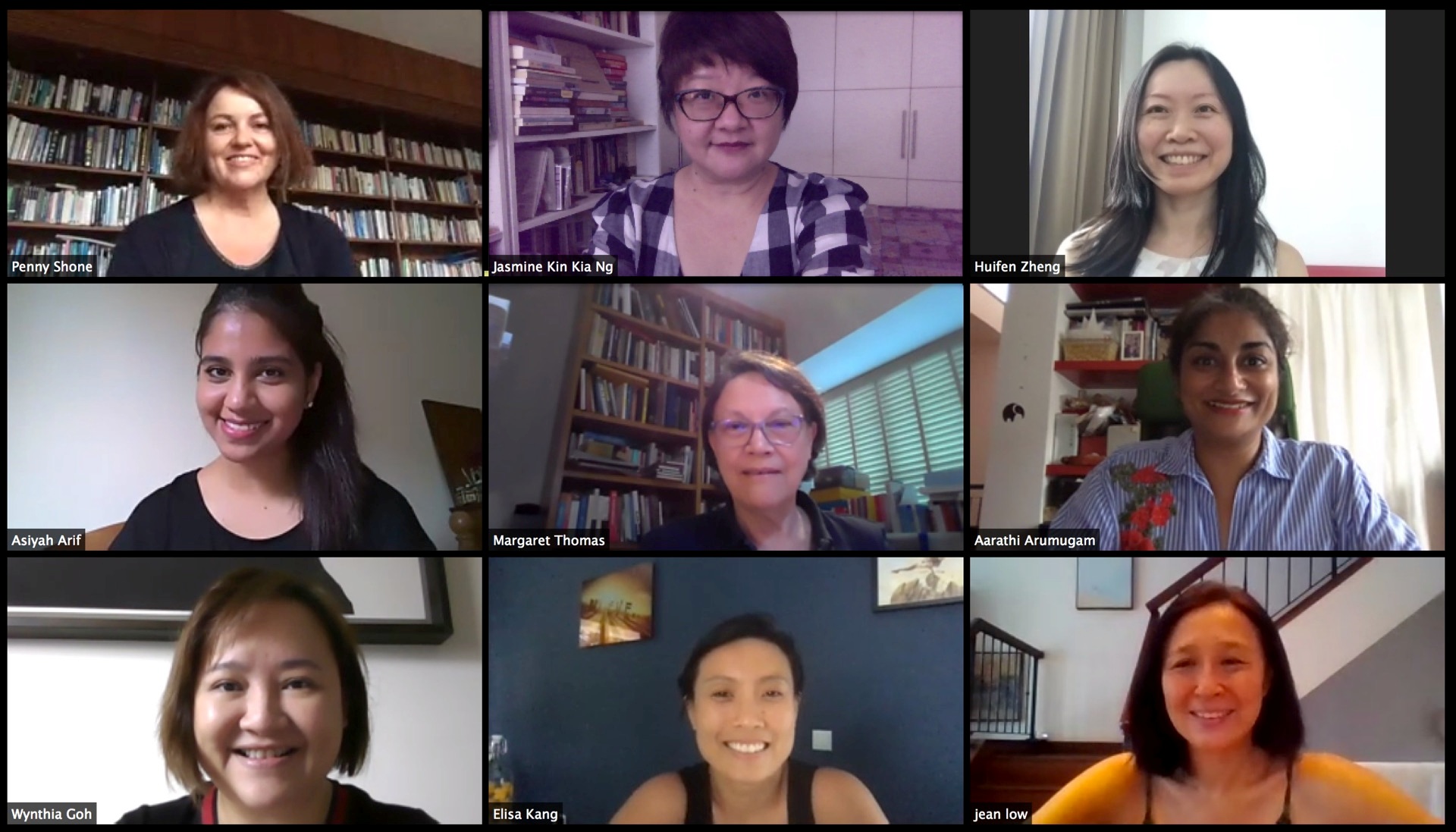
Founding member, former journalist and incumbent Margaret Thomas was unopposed running for her second term as President of AWARE. The eight other positions on the Board were contested. The successful candidates are Asiyah Arif, Aarathi Arumugam, Wynthia Goh, Elisa Kang, Jean Low, Jasmine Ng, Penelope Shone and Zheng Huifen. 

Ms Lim said, “AWARE looks to its Board for vision, progressive ideas and empathetic leadership. This new line-up, including three first-timers, brings so much energy, talent and diverse life experience to the table. They are incredibly impressive as individualswe have already benefited from their committed volunteering for yearsbut I am especially excited to see what they achieve together as a team.” 

“2020 marks AWARE’s 35 birthday,” said Ms Thomas, “and we hope to be just as vibrant and strong 35 years from now. To make that happen, AWARE must continue to engage productively with policymakers, donors, volunteers and supporters, the media and other civil society organisations, so that our message of equality and justice continues to connect. We must also focus, in the short term, on the pressing needs of fundraising and talent development, as demand for our services expands. 

“The year ahead will test AWARE’s mettle, but likely also prove how vital the organisation is. COVID-19, as many have pointed out, does not discriminate. It infects rich and poor, powerful and powerless alike—yet it is the powerless and the poor who suffer its consequences the most. With experts calling this pandemic a step backwards for gender equality, we are all the more determined to keep championing the rights of female workers, mothers, caregivers, migrant wives, minority race women, LBTQ persons and all other vulnerable and marginalised people in Singapore.”


ANNEX

AWARE Board 2020-2022: Positions and Biographies

President: Margaret Thomas has held senior editing positions at The Business Times, The Singapore Monitor and TODAY, and was in the founding team of AsiaOne. In 1984/85, Margaret was a founder member of AWARE. Over the last three decades, she has served on many of its committees, and has been a member of its board since 2009. In 2003 she was a founder member of Transient Workers Count Too (TWC2).

1st Vice President: Penelope Shone was born in New Zealand. She has been a resident of Singapore since 1985, and an AWARE member for 20 years. Her career has unfolded in both the public and private sectors. Most recently, she led international communications for General Electric across 150 countries. Prior to that, she was a managing director at Citigroup for 12 years, leading the company’s public affairs, communications and citizenship strategies across Asia Pacific. This included the supervision of 20,000 volunteers and $18 million in annual grants to NGOs.

2nd Vice President: Jean Low is currently CEO of 1880, a private club focused on building community. Previously, she was Director of Finance at United World College of South East Asia, CFO at Mapletree Greater China Commercial Trust and Head of Risk Management at Mapletree Investments. She is a Fellow of the Institute of Chartered Accountants in England and Wales. An AWARE member since 2009 and board member since 2016, she cares deeply about education, social justice and gender equality.

Secretary: Elisa Kang has 13 years of international experience in the wealth management industry and has been an advisor and counsellor to individuals, families and family offices, on strategic asset allocation, family business dynamics and legacy issues. Elisa was a part-time counsellor at the SMU Mrs Wong Kwok Leung Student Counselling Centre, and a part-time trainer for Catalyse Consulting. Elisa has been volunteering and working with AWARE since 2016, and project-managed the Women’s Helpline expansion in 2018.

Treasurer: Aarathi Arumugam is an entrepreneur who is passionate about connecting communities through causes close to her heart. Her career trajectory has taken her along different paths, from corporations to volunteer organisations to start-ups—experiences that she considers her personal MBA. Since becoming a member in 2009, Aarathi has volunteered with AWARE as a trainer, educating and raising awareness about workplace sexual harassment and comprehensive sexuality education. In 2019, she also conceptualised and executed a series of events called Kitchen Movements, to raise awareness and funds for Daughters of Tomorrow.

Assistant Treasurer: Zheng Huifen has been an AWARE member since 2009 and is now a life member. She has volunteered with AWARE in various capacities, including the legal clinic, Helpliner training in Mandarin and updates to AWARE’s Constitution. Apart from AWARE, Huifen was a committee member of the Humanist Society (Singapore) between 2012 and 2017. At HSS, she helped to create a safe space for people identifying as atheist, agnostic, freethinking or secular. A corporate lawyer with a technology and payments focus, Huifen is also a founding member of the pro bono arm of the Association of Corporate Counsel in Singapore.

Board Member: Asiyah Arif is a specialist dispute resolution lawyer who acts for clients in sensitive high-value commercial disputes and advises on employment matters. Asiyah led AWARE’s SHOut! Campaign to lobby for greater protection against workplace sexual harassment, and its We Can! Campaign to change social attitudes towards violence against women. Asiyah is committed to elevating the voices and stories of minority women in Singapore, and uplifting women from all backgrounds and walks of life.

Board Member: Jasmine Ng is a filmmaker and educator who has executive-produced and directed award-winning shorts, feature films and international broadcast work. She is President of SAMPP, the Singapore Association for Motion Picture Professionals. Jasmine has also conceptualised many cross-disciplinary works for social causes, including civic awareness projects such as IPS PRISM for the Institute of Policy Studies, and the BOTH SIDES, NOW installation project, which explored death and dying with the support of Lien Foundation.

Board Member: Wynthia Goh is Head of NEXT Digital at NCS. Previously, she was Head of Omnichannel at NTUC Enterprise, and before that led regional digital teams for Nokia, eBay, Avaya, SAP and Aviva, with roles in product management, business development, venture investment, digital strategy and marketing. Wynthia has a master’s in Public Policy from the State University of New York and is a Fulbright Scholar. An AWARE member since 2009, Wynthia is also on the Women in Fintech subcommittee of the Singapore Fintech Association.

A Recap: Hostile Homes—Domestic Violence, the Virus and the Vulnerable

written by Saraniyah D/O V Saravanan

What are some common myths about domestic violence?

“We tend to think of domestic violence as spousal violence, but that’s not really true,” said Shailey Hingorani, Head of Research and Advocacy at AWARE, whereas domestic violence can be committed at the hands of intimate partners, parents or other relatives in a household.

“Most Singaporeans perceive [domestic violence] to be physical, and do not note the nuances of it,” Shailey added. She referenced a 2019 study by global market agency Ipsos and United Women Singapore on the perceptions of Singaporeans on domestic abuse: The results revealed that about half of Singaporeans did not take into account the non-physical aspects of domestic violence, such as emotional/psychological abuse and controlling behaviors that damage an individual’s self-esteem and restrict her access to social support, financial freedom and other important areas of life.

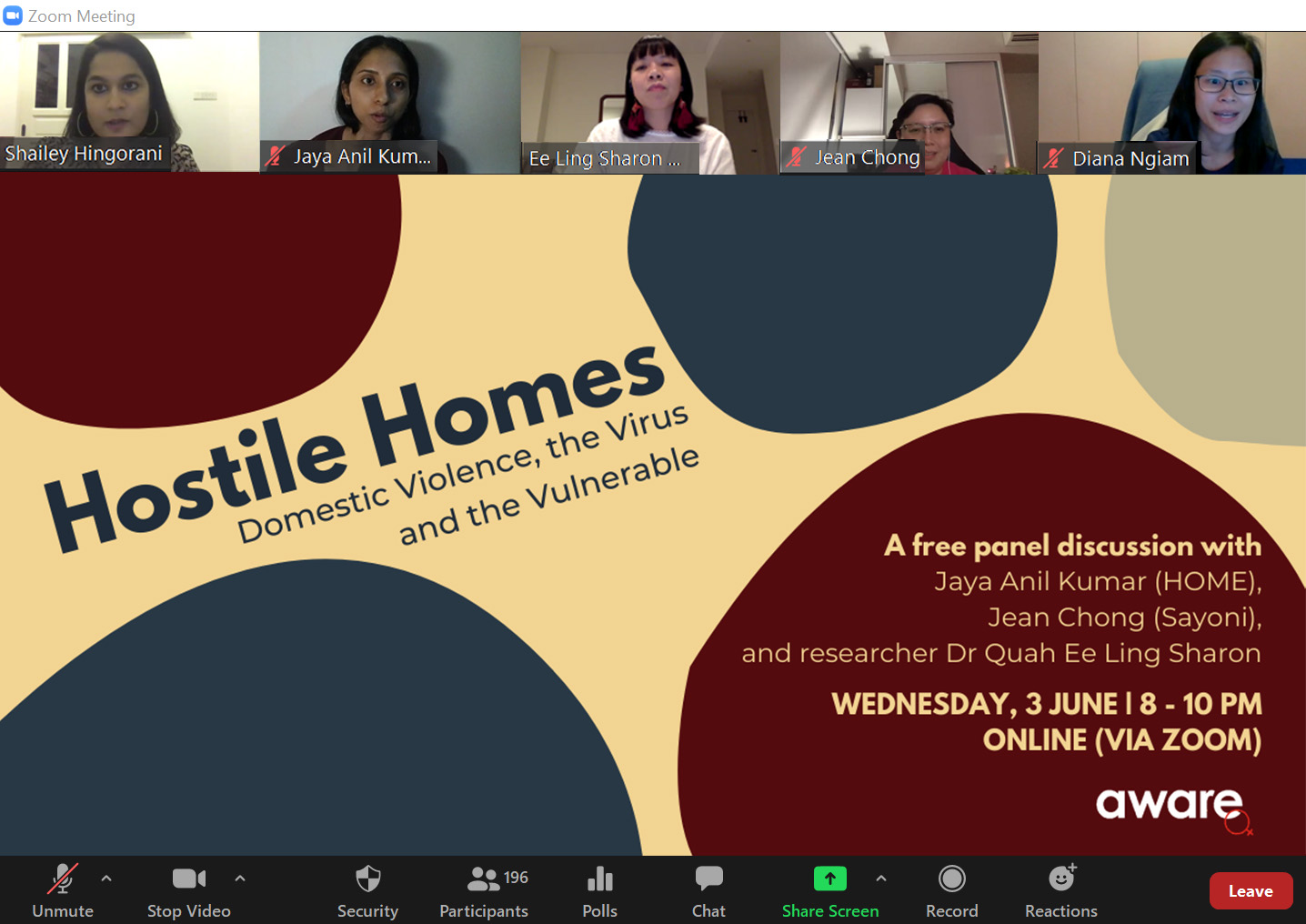
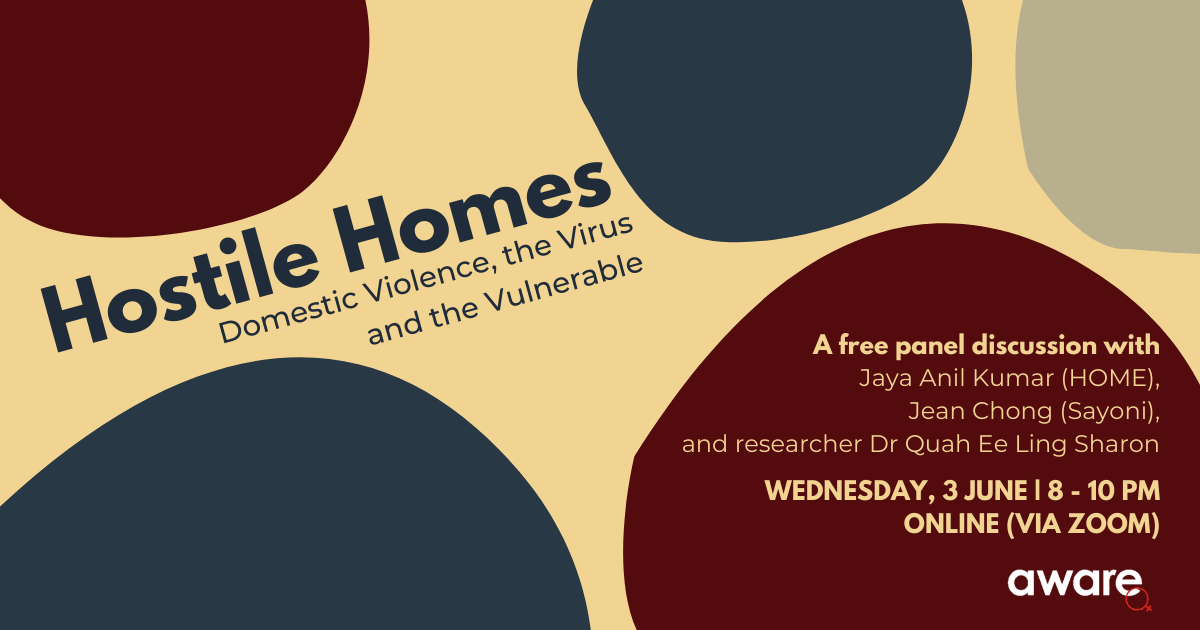
Shailey was speaking as the moderator for the online panel discussion Hostile Homes: Domestic Violence, the Virus and the Vulnerable, hosted by AWARE on 3 June 2020. More than 200 attendees turned out on Zoom to watch the event, which invited three experts to explain how domestic violence manifests across different vulnerable communities in Singapore.

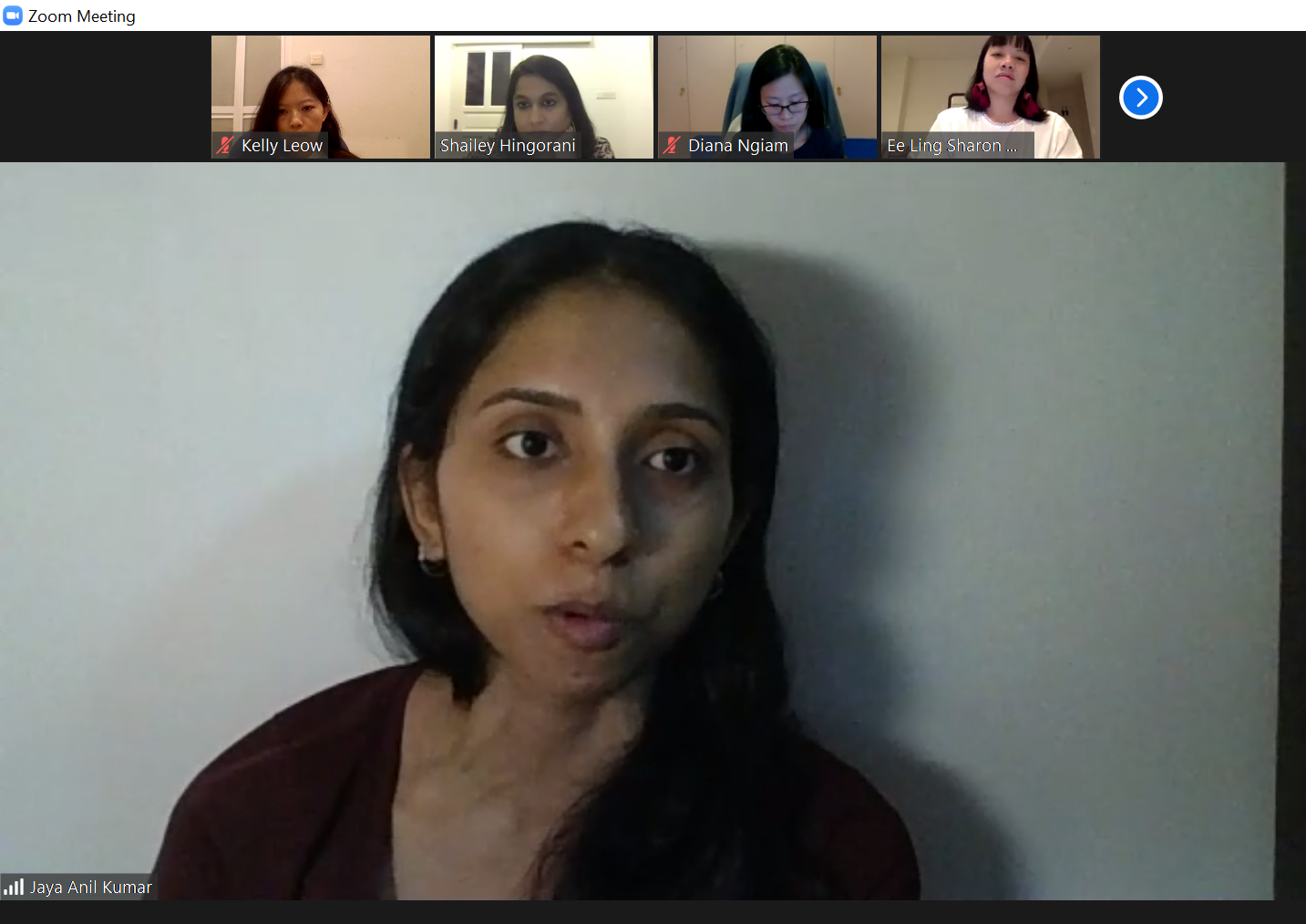
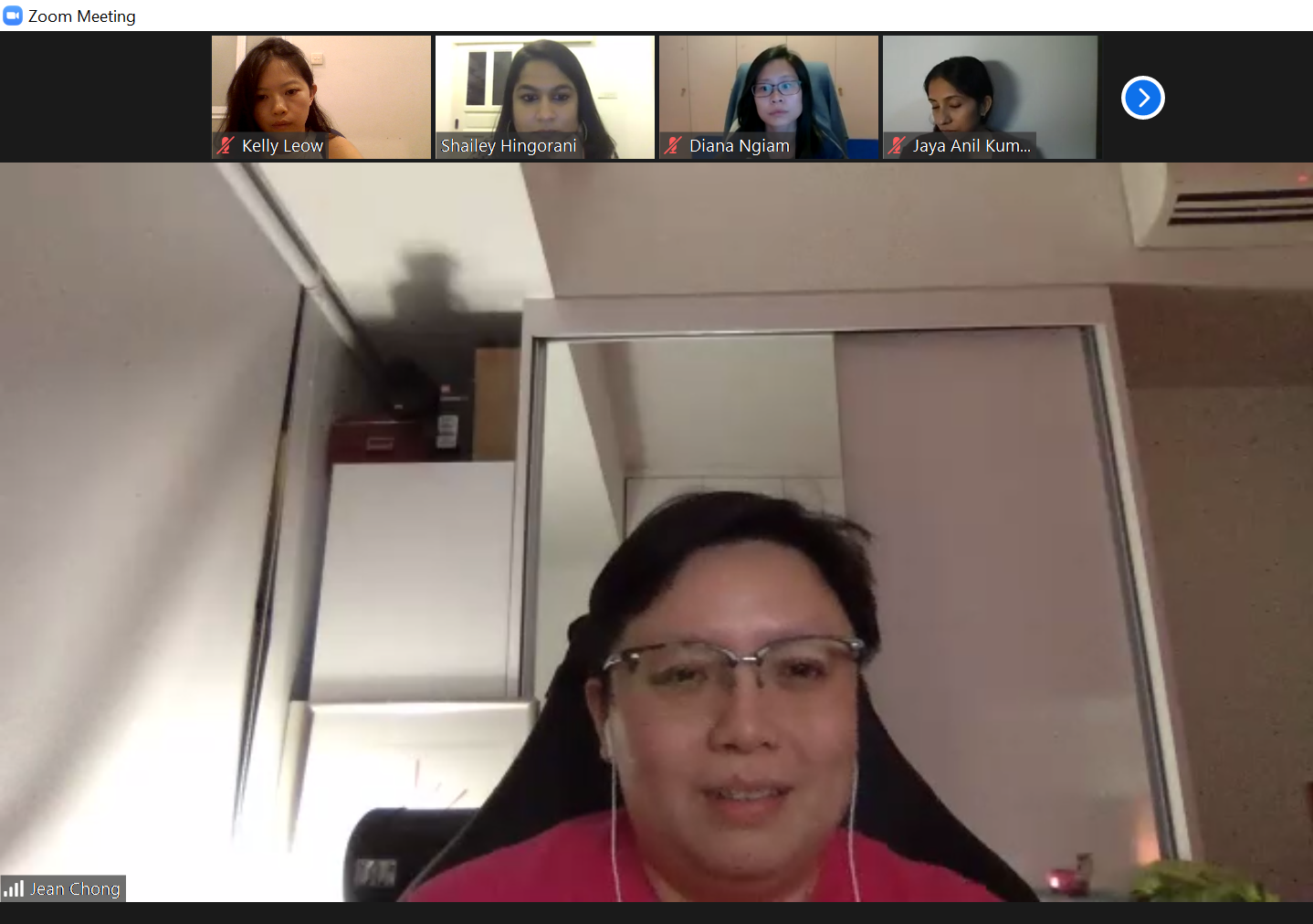
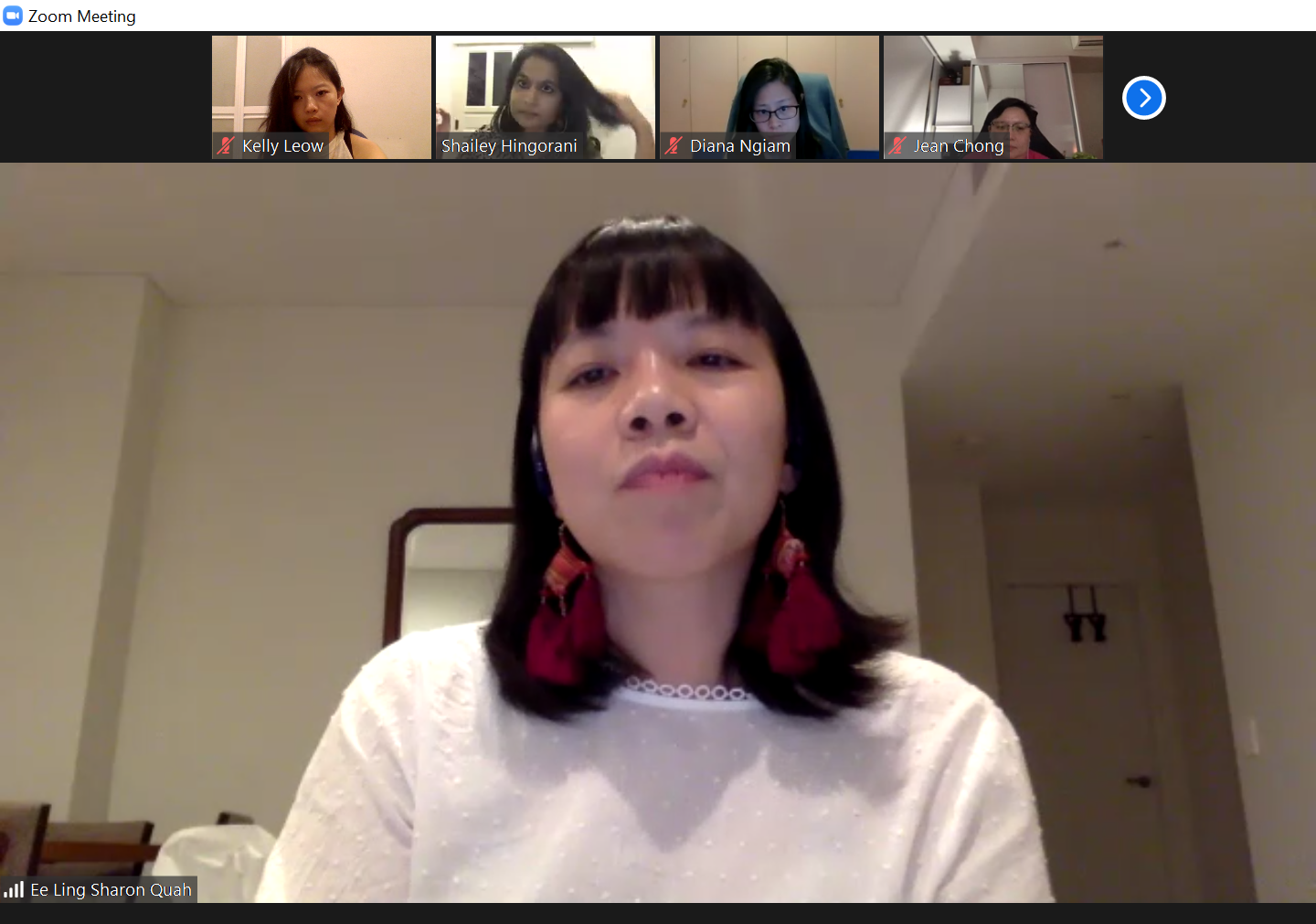
Two of the panellists spoke about different migrant communities: Case manager Jaya Anil Kumar from the Humanitarian Organisation for Migration Economics (HOME) elaborated on the types of domestic violence that migrant domestic workers (MDWs) face, while intersectional feminist sociologist Dr Quah Ee Ling Sharon drew upon her research of migrant wives in Singapore. They were joined by Sayoni co-founder Jean Chong, who delved into the lesser-heard experiences of queer women.

Power imbalance

Power imbalance was the common thread uniting all the issues covered by the panelists. In the case of MDWs, HOME’s Jaya expressed that they are vulnerable to domestic violence due to the excessive surveillance and unregulated control by employers. This is a byproduct of the lack of labour protections for MDWs in Singapore, and it places much of their well-being in their employers’ hands. Mandatory social isolation as a result of Singapore’s coronavirus-necessitated circuit breaker has spurred more opportunities for abuse of MDWs.

Jaya Anil Kumar, case manager at HOME

“If you go out, the police might catch you because of the circuit breaker.” Jaya cited that as an example of the scare tactics sometimes used on MDWs by their employers, and argued that the tactic of restricting movement was a form of domestic violence. Other examples include overwork, disallowing the usage of mobile phones, economic abuse (i.e. withholding and/or shortchanging wages), threats of repatriation and verbal/physical abuse.

The situation is similar for migrant wives, Ee Ling noted, whose somewhat “transactional” marriage contracts put them in precarious positions. A similar notion of control echoes through the expectations placed on these women by their Singaporean husbands and in-laws: that they will be “good wives” in exchange for citizenship, housing and financial support. Ee Ling reported seeing cases in which a migrant wife is “disposed of” by her Singaporean family, and by society, when she is deemed to have lost her productive and reproductive value and a divorce takes place. Migrant wives’ situations are even more fraught when the prospect of separation from their Singaporean children comes into the picture.

As for Sayoni’s Jean, she finds that many in Singapore believe that the violence faced by LGBTQ persons is the same as that of heterosexual individuals. However, a recent survey by Sayoni on LGBTQ persons in Singapore found that more than half of interviewees had experienced domestic violence—far more than the heterosexual population.

“A lot of LBTQ people are not married in the eyes of the law,” said Jean, “hence it’s harder to seek help, especially if it’s help from the authorities.”

Jean Chong, co-founder of LBTQ organisation Sayoni

Barriers to seeking help

The challenges faced when a victim of violence tries to seek help—e.g. inefficient or ineffective administrative processes—can themselves become a form of traumatising violence.

For migrant wives, this “administrative violence” (a concept discussed by trans scholar Dean Spade and cited by Ee Ling) looks like a population classification system, under which non-Singaporeans have limited access to resources and are therefore debilitated.

Dr Quah Ee Ling Sharon, senior lecturer in Sociology at University of Wollongong

Building upon this, Jaya added that it is common for MDWs to be met with disbelief when they seek help from Singapore’s authorities.

According to Jean, societal and familial hostility towards LGBTQ people, as exemplified by Section 377A of the Penal Code, leads to a tone-deaf official approach to serving them. She also mentioned the jarring lack of trained individuals staffing the already limited local support networks for the LGBTQ community.

In short, administrative violence can cause survivors of abuse to internalise their experiences, rather than identifying them as unjust and seeking help. It’s all the more difficult, therefore, to escape dangerous situations.

Shifting the framework

What can be done to better help these vulnerable populations?

Panellists agreed that people involved in administrative processes should undergo better sensitisation training to ensure they adequately serve all demographics. There is a need for more resources to educate the public on the nuances of domestic violence, and for a bigger pool of relief and resilience funds to address the gaps that many fall into. Increased access to legal assistance is essential as well.

Ee Ling also called for a shift in mindset: Instead of only thinking about perpetrators as individual abusers and providing remedies to “fix” individuals, we should consider perpetrators as systems and structures—such as the global hierarchy of nations, and what she called “global gender (dis)order”, patriarchy, class, race and heteronormativity.

Lawyer Diana Ngiam (Associate Director of Quahe Woo and Palmer LLC) was present at the panel. She spoke up at this point about some possible legal avenues for survivors of domestic violence to seek redress. These included the Protection from Harassment Act (under which an individual does not have to be in the same household, or carrying out a sexual relationship, to be considered in an intimate relationship and eligible for protection) and Section 73 of the Penal Code, which covers abuse of domestic workers.

The panelists concluded by emphasising that these efforts can only be realised when public discourse acknowledges and empathises with these communities, affording them their rightful dignity and respect.

“As a society,” said Ee Ling, “we need to step back and reflect on how we treat people who do not fit into the model citizenship that the state expects us to embody.”

Situation for female family caregivers has grown more dire during COVID-19, survey finds

This post was originally published as a press release on 8 June 2020.

8 June 2020 – Family caregivers in Singapore shoulder a heavier care burden during COVID-19, while their incomes decrease and out-of-pocket expenditures rise. 

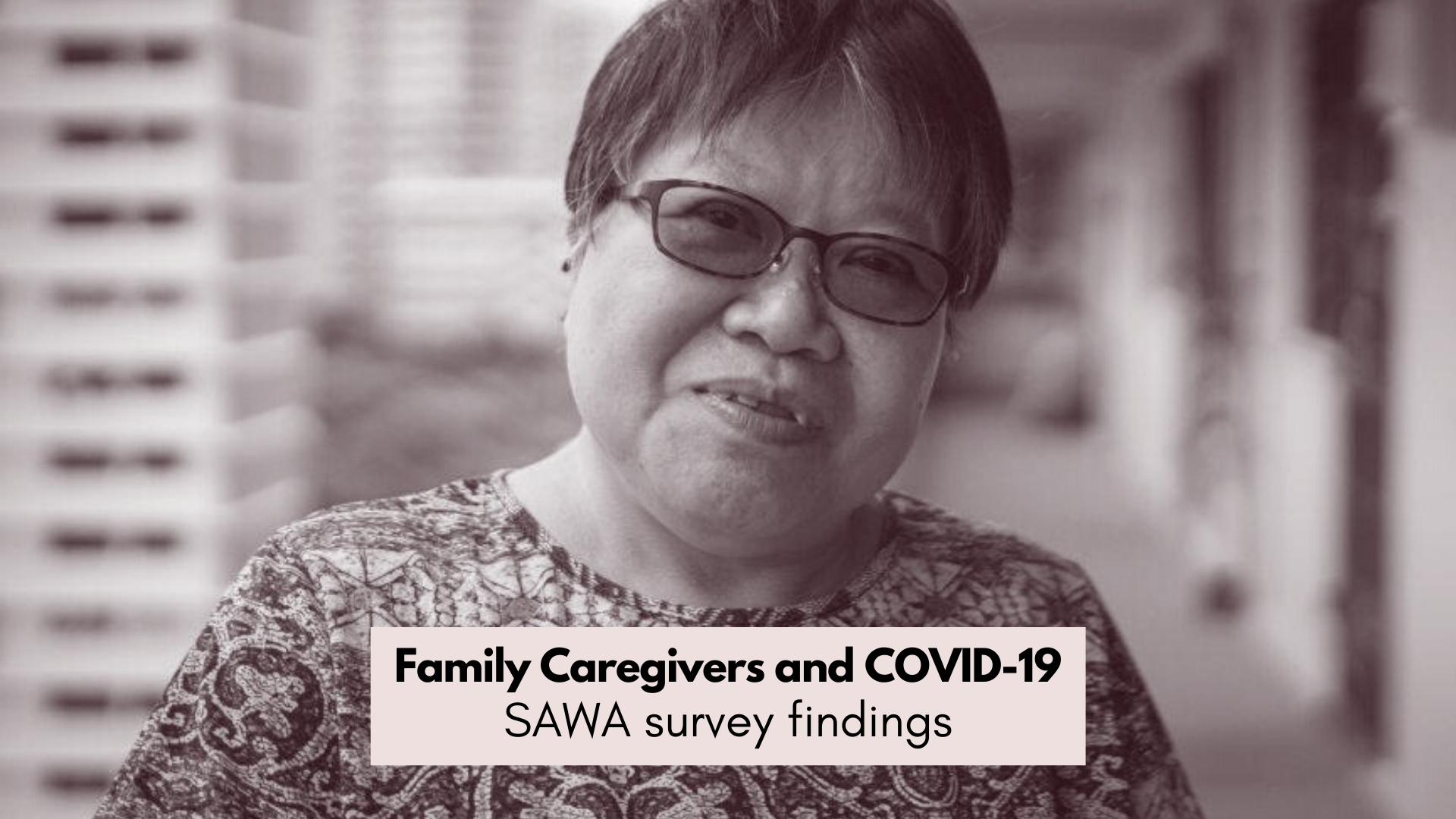
These are the findings of a survey carried out in May by the Singapore Alliance for Women in Ageing (SAWA), which comprises four organisations: AWARE, Persatuan Pemudi Islam Singapura (PPIS), Singapore Council of Women’s Organisations (SCWO) and the Tsao Foundation. The alliance, which focuses on the gendered nature of eldercare, has called the survey results “highly troubling”.

“Ink was spilled before COVID-19 about the psychological and financial pressures of family caregiving, such as their propensity for burnout and—in the case of women—their difficulty achieving retirement adequacy,” noted AWARE President Margaret Thomas, on behalf of SAWA. “With the pandemic, it seems the situation has gone from bad to worse for many.”

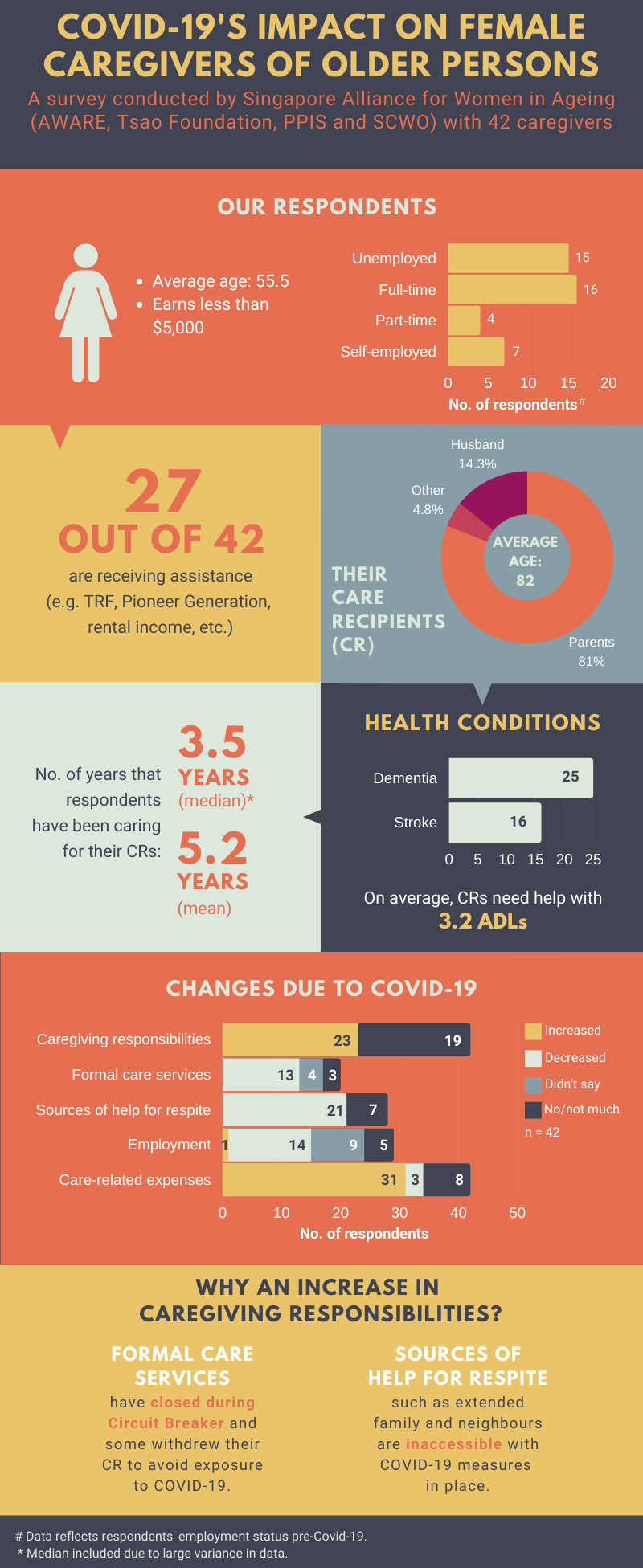
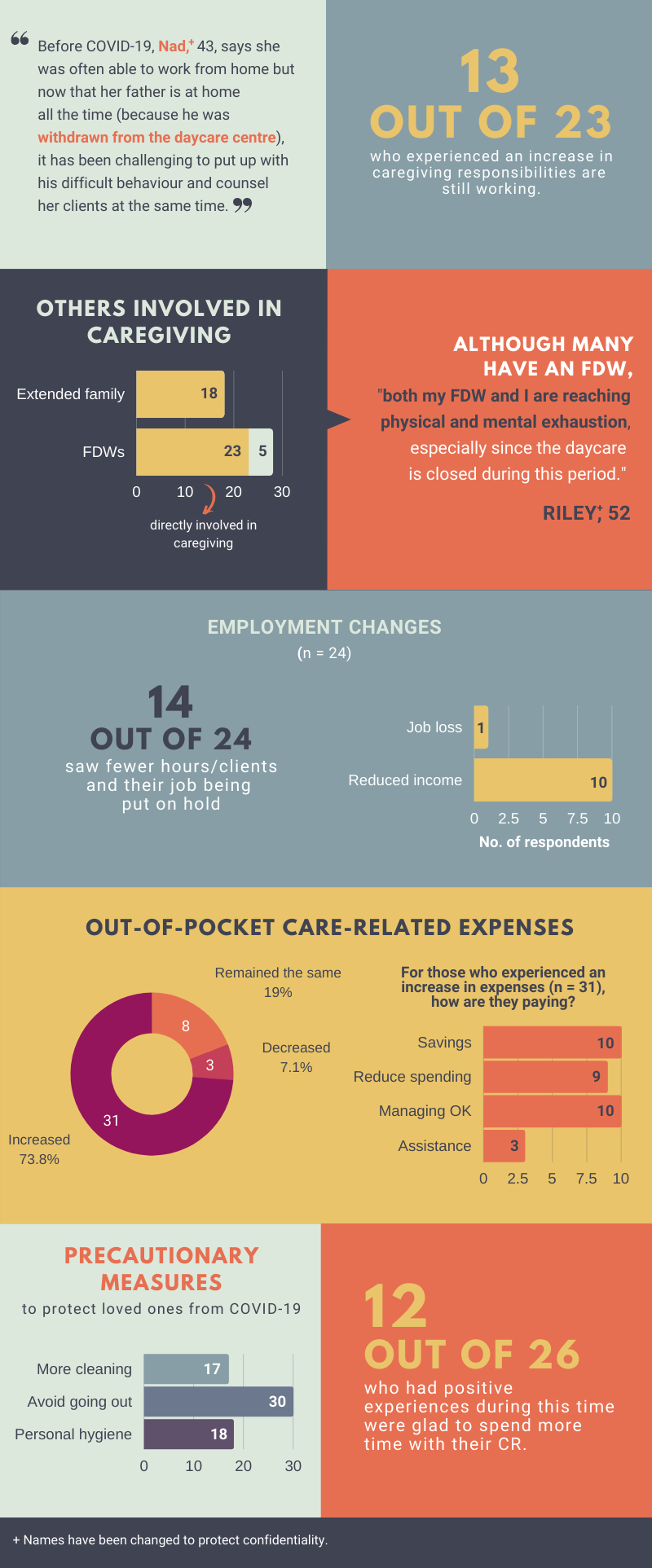
SAWA interviewed a total of 42 female family caregivers for the elderly to study their experiences during COVID-19. The average age of the women surveyed was 55.5 years. All except two lived with their care recipients; four in five were caring for their parents and/or parents-in-law. At the time of the survey, 64% of respondents (27 of 42) were employed; all of these were making less than $5,000 a month from work. More than half (23) employed domestic workers. 

As for the care recipients, their average age was 82 years, and they needed help with an average of 3.2 Activities of Daily Living (i.e. eating, bathing, getting dressed, toileting, transferring and continence). Almost half were suffering from dementia.

The SAWA survey found that with the COVID-19 outbreak, there was a marked increase in caregiving responsibilities for more than half of the respondents. With formal eldercare services closed, the onus was on caregivers to keep care recipients meaningfully engaged throughout the day, in addition to assisting them with physiotherapy and ensuring that their medical needs were met. One respondent was in the process of employing a new foreign domestic worker, but due to COVID-19, the worker was unable to start.

Caregivers’ informal respite options were also greatly diminished. While relatives used to be able to visit regularly to take over some care duties, the circuit breaker made that impossible. 

Work was another major source of stress for caregivers, with work-from-home arrangements proving incompatible with caregiving. One respondent, a counsellor, reported trying to conduct counselling sessions from home, but with her father unable to go to daycare, having to deal with his difficult behaviour all day was extremely disruptive for her.

Of the 27 working respondents, 52% (14) experienced a change in employment, such as fewer clients, fewer working hours or having their projects put on hold. Many have seen a decrease in income. One respondent said, “Aside from tutoring, I used to do some training in schools, but with school closures, that’s no longer available for me, resulting in tight expenses now.”

On the other hand, 3 in 4 respondents saw an increase in out-of-pocket expenses during COVID-19. Their weekly expenditure rose: family members required meals throughout the day, utility bills were up and cleaning supplies needed to be regularly stocked. Multiple respondents were concerned about exposing care recipients to the virus on public transportation, so they had to opt for taxis instead. Only 1 in 10 were receiving any financial assistance, and only 1 in 3 felt that they were “managing OK for the time-being” with finances. 

Despite the challenges, 3 in 5 respondents were able to see some positives in their COVID-19 situation. Of these, nearly half reported that in spite of the additional work, they appreciated having more time to spend with their care recipients. And around a quarter reported that the experience had given them new conflict management skills.

“During the pandemic, there has been a lot of discussion about the challenges of childcare—and rightly so,” said Ms Thomas. “But we haven’t spared as much thought to the other major group of caregivers in this country. And with the elderly at greatest risk of succumbing to COVID-19, what eldercarers do to protect their wards is more important than ever. 

“We don’t think of family caregiving as ‘essential work’, because it is so invisible. That is why those who perform it remain sadly uncompensated. But the pandemic has thrown into relief all the ‘pain points’ of caregiving, highlighting what many of us have been advocating all along. Our caregivers deserve better, especially now.”


About SAWA

The Singapore Alliance for Women in Ageing is an alliance of organisations that promote the independence, care, participation, dignity and self-fulfillment of older women. SAWA was established in 2018 to bring public attention to the gendered nature of ageing. The four member organisations are:

AWARE

AWARE is Singapore’s leading women’s rights and gender-equality advocacy group. It was founded in 1985 and works to identify and eliminate gender-based barriers through research, advocacy, education, training and support services. AWARE embraces diversity, respects the individual and the choices she makes in life, and supports her when needed. aware.org.sg

PPIS

Founded in 1952, PPIS (Persatuan Pemudi Islam Singapura or Singapore Muslim Women’s Association) is a non-profit organisation focused on services for women, family and children. Our focus is on working with women of all ages in carrying out their multiple roles in society. PPIS runs three core community services, namely: Family Services, Student Care and Early Childhood Education (ECE). With 16 centres islandwide, the services work together to provide quality and holistic support as well as developmental programmes for women and their families across the different phases of their lives. ppis.sg

SCWO

The Singapore Council of Women’s Organisations (SCWO) was established in 1980 as the national coordinating body of women’s organisations in Singapore. SCWO has more than 50 member organisations, which represent over 500,000 women, and it serves to unite them to work toward the ideals of ‘Equal Space, Equal Voice and Equal Worth’ for women in Singapore. scwo.org.sg

TSAO FOUNDATION

Tsao Foundation’s vision is of an inclusive society for all ages that optimises opportunities in longevity. Established in Singapore in 1993, the goals of the non-profit family foundation are aligned to the MIPAA and WHO healthy ageing frameworks. Through four major initiatives—the Hua Mei Centre for Successful Ageing, Hua Mei Training Academy, International Longevity Centre Singapore and Community for Successful Ageing (ComSA)—the Tsao Foundation pioneers and provides community-based, person-centred primary healthcare for adults aged 40 and above; builds capacity in professional and informal age care and self-care; fosters elder empowerment and community development; and initiates policy-relevant research and cross-sector partnerships in its advocacy for mindset and systemic change to actualise health, wellness and participation over the life course. tsaofoundation.org


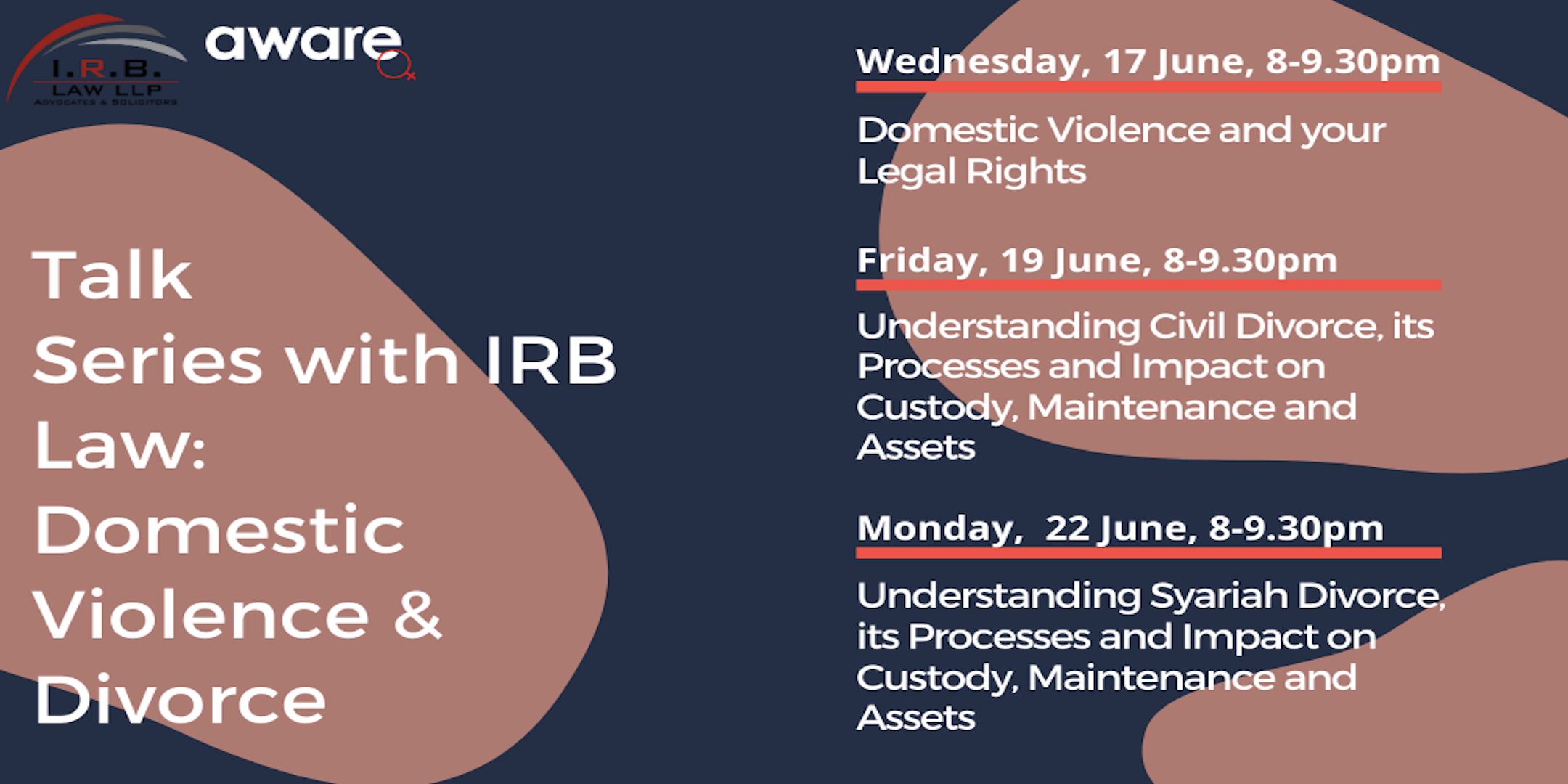
17,19 and 22 June 2020: Talk series with IRB Law on domestic violence and divorce

How can we legally protect ourselves and loved ones when faced with domestic violence? What are the laws surrounding civil and Syariah divorce in Singapore?

Join us for this free series of talks, where representatives from IRB Law will discuss domestic violence and both civil and Syariah divorce in Singapore.


1. Wednesday, 17 June, 8-9.30pm

Domestic Violence and Your Legal Rights

Speakers: Muntaz Zainuddin and Nur Izyan

What are your legal rights when you or your loved ones are faced with domestic violence? At this talk, you’ll learn more about:

  • What you can do if you are experiencing domestic violence that does not involve physical violence – such as emotional, psychological or financial abuse
  • How to apply for protection orders, such as PPO, EO, DEO, NPO and POHA
  • What you can do if your abuser breaks a protection order
  • Learn what you can do if you are experiencing domestic violence outside of marriage or family relationships (i.e. for unmarried couples living together, LGBT couples, abusive housemates, etc.)
  • If you are a migrant spouse on a Long-Term Visit Pass, or on a pass that is dependent on your Singaporean spouse, learn how you can get out of violent situations safely


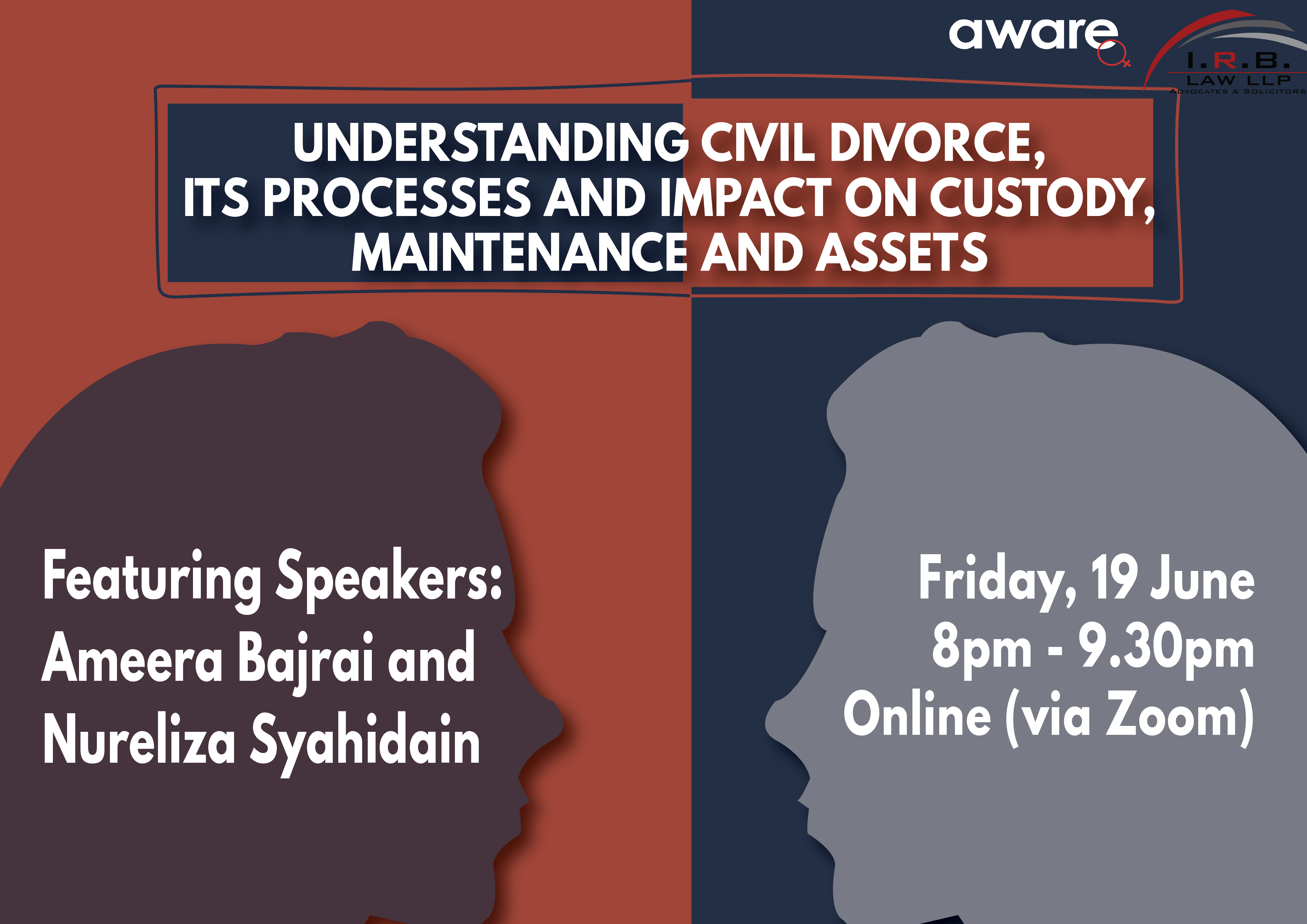
2. Friday, 19 June, 8-9.30pm

Understanding Civil Divorce, its Processes and Impact on Custody, Maintenance and Assets

Speakers: Ameera Bajrai and Nureliza Syahidain

Are you going through a civil divorce, or contemplating one? This talk is important for anyone contemplating a separation or divorce, or simply wants to know more about civil divorce in Singapore. It will cover:

  • Understanding family disputes
  • Understanding the divorce procedures and grounds of divorce
  • Understanding your right and obligations on ancillary matters such as:
  • custody and care & control of children; and
  • Division of matrimonial assets


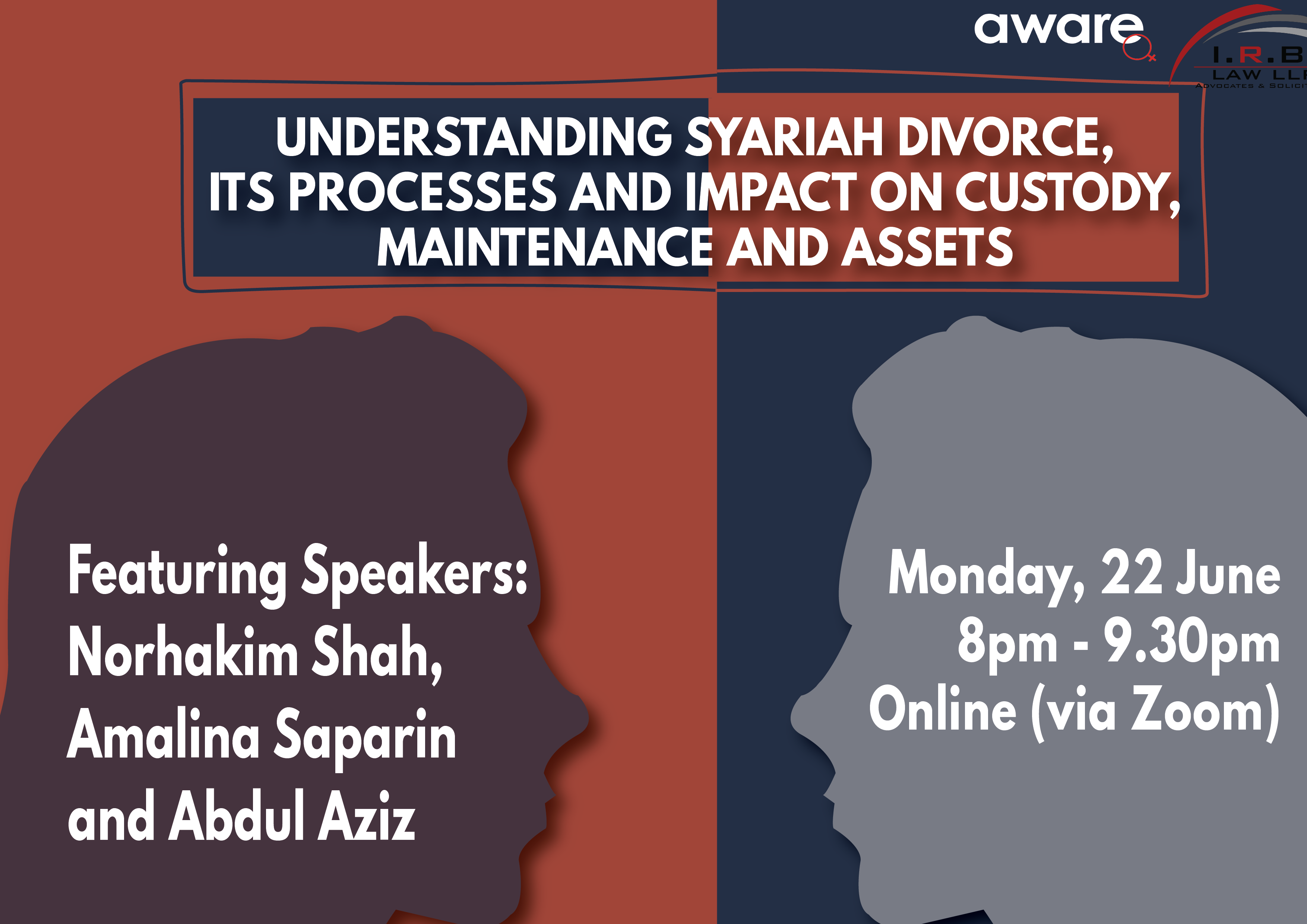
3. Monday, 22 June, 8-9.30pm

Understanding Syariah Divorce, its Processes and Impact on Custody, Maintenance and Assets

Speakers: Norhakim ShahAmalina Saparin and Abdul Aziz

Are you going through a Syariah divorce or contemplating one? This talk is important for anyone contemplating a separation or divorce or simple wants to know more about Syariah divorce in Singapore. It will cover:

  • Understanding family disputes
  • Understand the divorce procedures and grounds of divorce
  • Understand your rights and obligations on the ancillary matters such as:
  • custody and care & control of children; and
  • Division of matrimonial assets

How to attend

Please sign up to attend any of the talks on Eventbrite. In the days leading up to the talk, you will receive some emails from AWARE/Eventbrite with a link that will take you to a Zoom meeting. The Zoom meeting will start promptly at the designated time.

Register here!

Immigration policies disadvantage migrant wives in the areas of family violence, divorce and housing: AWARE study

This post was originally published as a press release on 1 June 2020.

1 June 2020 – Migrant wives are more vulnerable than Singaporean women to family violence, and face disadvantages in divorce, as they lack the independent right to reside in Singapore.

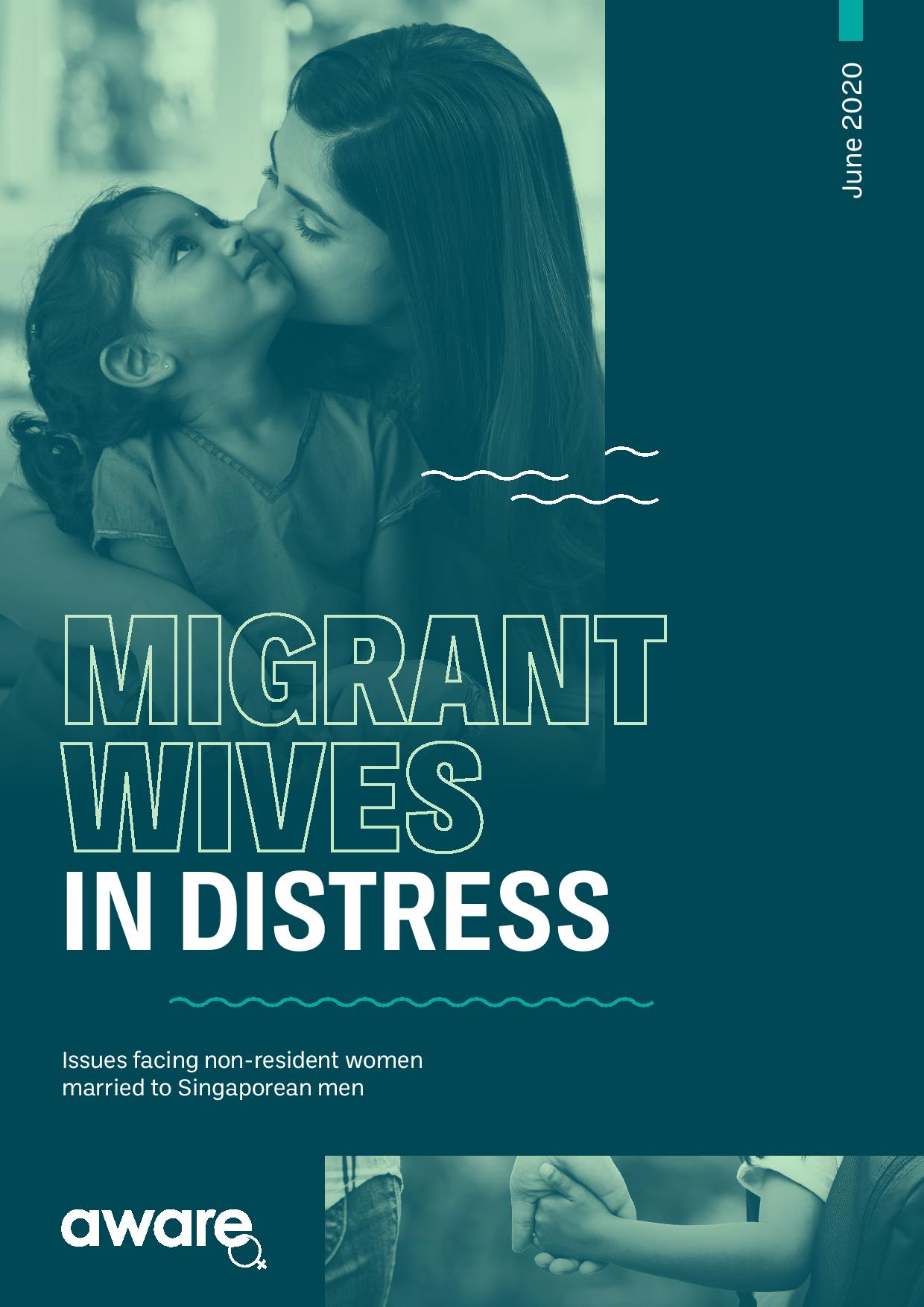
Those are the findings of gender-equality organisation AWARE’s new report, “Migrant Wives in Distress: issues facing non-resident women married to Singaporean men”. The report was compiled through analysis of AWARE’s Women’s Helpline calls between 2016 and 2018, as well as legal clinic sessions and local research on migrant wives of citizens in Singapore.

Women make up 70% of all migrant spouses in Singapore. Unless they have a work visa, these non-residents depend entirely on their citizen spouses for the right to reside in the country. The power imbalance that arises can lead to abuse and violence on the citizen spouses’ part. AWARE found that migrant spouses called the Helpline about family violence at twice the rate of local women (27.5% vs 13%). Since January this year, at least 20 migrant wives have called AWARE because of family violence or abuse. 

Migrant wives meet additional obstacles in the areas of housing (e.g. ownership of public housing flats after the citizen spouse passes away) and divorce (e.g. contesting claims and obtaining custody). Migrant mothers who undergo divorce often face the painful prospect of separation from their children.

“Our hidebound immigration policies inadvertently compound the challenges of migrant wives,” said Ms Shailey Hingorani, AWARE’s head of Research and Advocacy. “These women are integral parts of Singapore communities and families, yet too often they are treated as visitors.”

“What’s more, COVID-19 is worsening their situations. Non-residents are not eligible for the same relief schemes as Singaporeans, and their chances of employment are diminished,” Ms Hingorani added. “When it comes to abuse, we know that it’s already hard for Singaporean women to seek support. All the more so for migrant wives: Being isolated from their local networks makes it especially difficult for them to overcome language barriers, financial dependency and confusion about their own rights.”

To provide greater protection, AWARE recommends that the government allow abused migrant spouses to renew their Long-Term Visit Passes independently of their citizen spouses. 

“I applaud AWARE’s outstanding efforts in reaching out to one of the most vulnerable populations in Singapore,” said Dr Quah Ee Ling Sharon, author of Transnational Divorce and Perspectives on Marital Dissolution. “They recommend important and urgent interventions to support these women from imminent disposability and debilitating outcomes. I hope their proposals will be considered seriously. As a nation, taking care of your population, whether they are residents or not, is the right thing to do.”

Read the full “Migrant Wives in Distress” report here.

ANNEX

AWARE Helpline Caller: Ana*

Ana* is a Filipina woman on a Long-Term Visit Pass. Her husband has been physically abusive with her for a few years, since she found out about his infidelity and confronted him about it. When she took out a Personal Protection Order (PPO) against him in 2014, he was shocked that “foreigners have that power”. Her husband has threatened to cancel her LTVP and make new passports for her children. (She holds their current passports.) Ana withdrew the PPO after her husband repented and begged her to do so. However, the abuse soon resumed. At the time she called AWARE’s Helpline, Ana had moved out; her husband had just punched and kicked her.

*Name changed to protect her identity

3 June 2020: Hostile Homes – Domestic Violence, the Virus and the Vulnerable

One of the most quietly devastating consequences of COVID-19 has been the global surge in domestic violence, as people everywhere are trapped at home with their abusers.

In Singapore, circuit breaker measures in place since the beginning of April have led to a spike of calls to AWARE’s Women’s Helpline. While AWARE received a total of 596 calls in April 2020 (a 20% increase in calls over April 2019), 125 of those calls pertained to domestic violence—a startling 112% increase from the previous year.

Domestic violence—which encompasses a broad range of actions, from breaking objects and hitting to threats, controlling behaviours and even self-harm—can happen to anyone. At the same time, though, certain groups are particularly vulnerable to violence at home and have fewer avenues to seek help. In Singapore, these vulnerable groups include the elderly, foreign domestic workers, migrant spouses and queer-identifying persons. Under the government’s cautious, multi-phase approach to lifting social distancing measures, it seems that these individuals will remain at risk for some time to come.

How do we identify domestic violence when it occurs? What are some myths around violence in Singapore? And what can we do as a community to support those at risk?

Join us on Wednesday, 3 June on Zoom for a panel discussion on domestic violence and the coronavirus in Singapore, moderated by AWARE Head of Research and Advocacy Shailey Hingorani. Focusing on the aforementioned vulnerable groups, this panel will address the factors, both structural and localised, that lead to violence at home. We’ll explore lessons learned from the circuit breaker, and list actions we can take collectively to mitigate domestic violence in the upcoming months.

Everybody deserves to be safe at home.

Our Panellists

Jean Chong

Co-founder of feminist queer women’s organisation Sayoni, Jean Chong has been an LGBTQ activist for 20 years. She was the first female vice-chairperson for gay Christian support network Safehaven, the first chairperson of Free Community Church and a core member of the group People Like Us. Jean is currently the chairperson of the ASEAN SOGIE Caucus, a regional network of South East Asia LGBTIQ groups, and a co-founder of the South East Asia feminist LBQ Womxn Network.

Jaya Anil Kumar

Jaya Anil Kumar is the Case Manager at the Humanitarian Organization for Migration Economics (HOME), an NGO in Singapore that provides services for thousands of migrant workers in need. At HOME, Jaya oversees the casework relating to migrant domestic workers, and provides them advice and guidance on their rights.

Dr Quah Ee Ling Sharon

Dr Quah has done extensive research into migrant spouses and the challenges they face. A senior lecturer in Sociology at University of Wollongong, she is the author of Transnational Divorce: Understanding Intimacies and Inequalities from Singapore (Routledge, 2020) and Perspectives on Marital Dissolution: Divorce Biographies in Singapore (Springer, 2015).

How to watch:

1. There is a double registration process for this panel. After registering on Eventbrite, you will receive an email from AWARE/Eventbrite with instructions on how to register on Zoom (scroll to the bottom of the email for this!). Do check your email (including spam) to ensure that you have received this link.

2. Once you register, you will be led to a Zoom link to join the meeting. Click this link to enter the panel on the day.

This event has sold out