Yes, false allegations of violence have a damaging impact on the person wrongfully accused.
However, 2018 data from Parliament shows that only 6 per cent of applications for PPOs were dismissed after a Family Justice Court hearing. The figures have remained nearly constant from 2016 to 2018.
Moreover, false reports are one of many grounds on which an application can be dismissed.
Some other reasons include: a court’s assessment that a PPO is not necessary for the protection of the applicant, or that the force used was in self-defence.
The overwhelming majority of these PPO applications are found to be valid. So Mr Oh’s claim that false reports are increasing is unclear.
There are robust legal protections in place to take care of that.
In recent years, even as the total number of PPO applications has gone down, victims are reporting more acts of violence in their applications.
With an eye to proactively tackling the problem of family violence, the Government has announced many new initiatives, such as an inter-agency task force, which plans to launch a dedicated national hotline for victims of family violence.
Yet more work remains to be done, including improving the level of protection PPOs provide in practice, and the ease with which one is able to apply for them.
The Association of Women for Action and Research (Aware) works with single mothers through our Support, Housing and Enablement project. Of these mothers, all those who have experienced spousal violence have chosen not to file for PPOs. This is for two reasons.
First: They believe a PPO would be ineffective.
In our experience, women do not file for PPOs lightly. Often violence occurs multiple times before an application is filed.
Second: The application process is traumatic. It is often painful and difficult when the complainants have to come face to face with their abusers.
Let’s concentrate on addressing violence against women, and trust the criminal justice system to deal with false reporting.
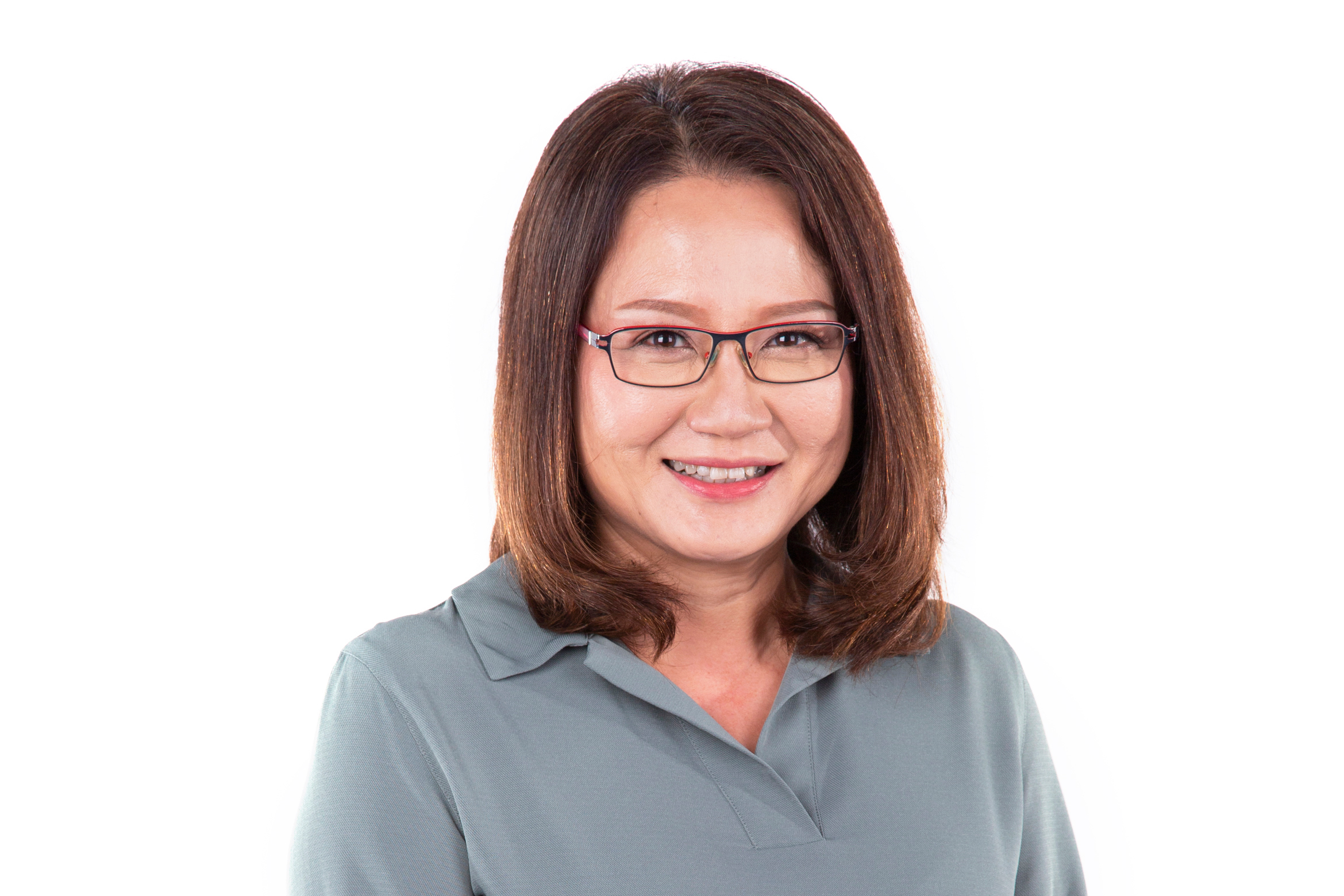
Elizabeth Quek
Programme Manager, Support, Housing and Enablement (S.H.E.) Project
This letter was originally published inTODAY on 8 March 2020.
By Margaret Thomas, President, Association of Women for Action and Research
Every International Women’s Day we try to find something that we can celebrate. But the reality of our progress on gender equality disappoints year after year.
A recently released United Nations study looked at gender inequality and attitudes towards women. It found that nearly 90 per cent of all people are biased against women. Singapore’s figure, at 92 per cent, is higher than the global average.
Ninety per cent of women in Singapore, and 94 per cent of men, held these biases — indicating that biases against women are not in fact the exclusive domain of men.
The study, which measures how social beliefs obstruct gender equality in politics, work, physical integrity and education, contains data from 75 countries, covering over 80 per cent of the world’s population.
Singapore performed worse than the global average in beliefs relating to politics and education. Whereas half of the world believed that men make better political leaders, in Singapore, 76 per cent held that view. On education, 26 per cent of people in Singapore believed that going to university is more important for men than women — slightly higher than the global average of 25 per cent.
On economic-based dimensions, which measured the number of people who believe that “men should have more right to a job than women” and “men make better business executives than women do”, Singapore did better, at 52 per cent compared to the overall average of 56 per cent.
Of course, “better” is relative — the sad fact is, more than half of men and women in Singapore believe that men’s right to a job trumps that of women.
As if all this was not sobering enough, a greater punch to the gut is that overall biases against gender equality have become worse over time. Further, between 2004-2009 and 2010-2014, the proportion of women who held some bias against women saw a greater increase (from 83.4 to 84.6 per cent) than the proportion of men who held some bias against women (from 89.4 to 89.9 per cent).
It’s tempting to dismiss biases as just theoretical beliefs that don’t have the capacity to do harm. However, these biases manifest in real-world disadvantages to women. The study found that where biases against women were stronger, inequality between genders tended to be higher.
We have to pay attention to biases. Families and schools set gender norms from a young age. They have the capacity to determine men and women’s educational and occupational choices, whether women believe themselves worthy of being in politics, and whether women accept physical violence from their partners as normal and reasonable.
We should introduce comprehensive education on equal gender roles in schools, and convince parents to practise these norms at home. These might be good first steps in our long road to gender equality.
This commentary was originally published in Channel NewsAsia on 8 March 2020.
by Shailey Hingorani, Head of Research and Advocacy
SINGAPORE: International Women’s Day offers an opportunity to evaluate the extent to which socio-economic and other gaps between men and women have narrowed.
But any true vision of gender equality must also consider differences between women – including the difference between married and unmarried mothers.
Unwed mothers face a double disadvantage: They single-handedly bear not only the typical burden of motherhood, but also the stigma and tribulations of being unmarried in a society that encourages a mainstream definition of parenthood (i.e. within marriage).
Single parenthood also sees one person take on an incredibly heavy responsibility meant for two.
Some changes are afoot. The Ministry of National Development has announced on Wednesday (Mar 4) that single, unwed parents over the age of 21 can now also buy a 3-room flat in a non-mature estate from HDB, compared to a 2-room flat previously.
These moves are encouraging. Yet more can and should be done to improve housing access, arguably the most fundamental practical issue that unwed mothers and their children face.
As the Government has expressed, it’s a national imperative to give every child a headstart in life, whether with affordable quality childcare, education or otherwise. Stable housing should surely be part of that social compact.
THERE HAS BEEN PROGRESS
MPs, activists, social workers and single parents themselves have been instrumental in moving Singapore toward greater compassion for unwed mothers.
Whereas in the early 1990s, the Government argued that a conservative society like Singapore did not “accept” unwed motherhood, in 2019, the Ministry of National Development indicated that all mothers are equal, and that all unwed mothers, regardless of age, were welcome to apply for HDB housing.
“Single unwed parents and their children are our valued citizens. We are committed to do better,” Senior Parliament Secretary for National Development Sun Xueling said in September 2019, in response to MP Louis Ng’s adjournment motion, in which he called for more to be done for single unwed parents.
“I want single unwed parents to know that we share their desire to ensure the well-being of their child, and we will try our best to support them.”
Several other notable policy changes have resulted in unwed mothers being treated on par with their married counterparts. For example, in 2013, paid childcare leave was extended to unwed mothers. In 2016, Child Development Accounts – special savings accounts for education and medical expenses – were made accessible to children born out of wedlock.
The same year also saw paid maternity leave for unwed mothers increase from eight to 16 weeks, which is now equal to the entitlement provided to married mothers.
We should celebrate these changes, which provide very real material benefits to mothers in caring for their children.
That said, some public policies still show bias towards parenthood outside of marriage – such as tax rebates for childbirth, Working Mother’s Child Relief and the enhanced Baby Bonus cash gift.
ACCESS TO GRANTS STILL IMPEDED
Housing is not just about a roof over your head. Unreliable housing seriously undermines a mother’s ability to stay employed, to protect her children from abuse, and to have the time and space to plan for her family’s future.
Wednesday’s announcement – that HDB would accept applications from all unwed parents for up to a 3-room flat, in addition to resale flats – will certainly ameliorate the situation for those who can afford such flats.
However, Parliament had previously revealed, in response to a question from Mr Ng, that the median monthly employment income for unwed mothers below the age of 35 is S$600. Most, therefore, are likely to need subsidies, so their choice of housing will still be limited despite this change.
HDB policy also does not allow unwed, single parents and their children to count as a “family nucleus”, which would make them eligible for flats and housing grants under the Families Grant scheme.
ACCESS TO HOUSING REMAINS UNCERTAIN
More broadly, although the changes now provide more options and have lowered the age of eligibility, single mothers will still need to make these requests through HDB where their needs will be assessed, or through their MPs, rather than through the usual sales channels.
Requests for rental housing also remains on a case-by-case basis. Mr Ng’s appeal for MND to define objective criteria on how housing applications get evaluated was also rejected on grounds that each case is unique, and that the Government needs to exercise maximum flexibility.
Our experience tells us that such an approach has historically failed to meet the housing needs of unwed mothers.
National-level data shared in Parliament reveals that when it comes to rental housing applications from single unwed parents, rejections outnumber approvals. From 2014 to May 2019, MND has only approved 380 rental applications out of the 1,014 requests received.
Similarly, from 2014 to 2016, only about 20 per cent of the 100 single, unwed mothers under 35 who appealed to buy a flat had their applications approved.
SUPPORT, HOUSING AND ENABLEMENT
Since 2018, AWARE has run the Support, Housing and Enablement (S.H.E.) Project, which currently provides free housing for two years to single-mother families. Of these mothers, one-third are unmarried mothers under the age of 35.
They all come from unstable housing backgrounds, either living in transitional shelters or moving house to house because no family member was willing to provide shelter for long enough. They have little or no family support, and often put up with familial abuse in order to continue living with family.
One of the mothers, Nurul*, told us that her prior living arrangement with her brother was untenable because he was easily angered and frequently resorted to physical abuse. Once, he hit her daughter while she was sleeping and caused her nose to bleed. Another time, he threatened to beat her for staring at him.
Staying at S.H.E. has allowed Nurul to concentrate on finding full-time employment. Her relationship with her family has improved because they are not crowded into the same small space anymore. Her child is growing up in an emotionally stable environment, free from abuse.
After MND openly invited unwed parents to apply for housing last year, one of the S.H.E. mothers managed to secure rental housing; she now plans to move out of S.H.E. The others are still struggling because of their unmarried status.
WHY NOT EQUALISE BENEFITS?
A roadmap towards housing equality for all mothers could look like this: An unwed mother and her children would count as a family nucleus, enabling them to apply for public housing under the Families Scheme.
And overall, unwed parents, whether the children end up with the father or mother, would have access to housing as a matter of policy and not on a case-by-case basis. There would be a separate scheme for those under the age of 35 to apply for 2- or 3-room flats (similar to the existing Orphans or Joint Singles Scheme).
The struggle for a life free from discrimination and social stigma is far from over for these mothers. As a caring and inclusive society, this International Women’s Day, let us pledge to extend the same benefits to all mothers regardless of their marital status.
Shailey Hingorani is Head of Research and Advocacy at AWARE.
This letter was originally published in The Straits Times on 5 March 2020.
Employment agencies of foreign domestic workers (FDWs) should provide more clarity and transparency on the services they provide, accompanied by a fee breakdown.
Preliminary findings from a study by the Association of Women for Action and Research (Aware) show that FDWs pay an average of three months’ salary in agency fees, although there seems to be no industry standard for what services agencies provide.
In fact, agencies vary wildly in the amount of matching they carry out (between FDWs’ caregiving abilities and prospective care recipients’ needs), in the kind of eldercare-specific training they provide FDWs and in the kind of post-placement support they offer.
The services rendered to both employers and FDWs are even more opaque when it comes to transfer FDWs.
It can take an FDW between a day and a week to move from her former place of work into her new employer’s home, according to our findings.
Yet it is unclear what services agencies are providing to FDWs during this short period in terms of training or accommodation. If there are administrative costs associated with facilitating the transfer, surely this could be standardised, perhaps by the number of days the FDW is with the agency.
Some employment agencies do not charge transfer FDWs any fees at all, raising questions about the necessity of such fees.
Employment agencies play a crucial role in meeting local caregiving needs, and ensuring that the women who come here to provide such care are adequately supported.
To secure the best care outcomes for our elderly and peace of mind for FDW employers, and minimise FDWs’ debts in agency fees, more transparency is needed on the services provided by employment agencies.
This letter was originally published in The Straits Times on 28 February 2020.
I welcome the latest efforts in addressing family violence and urge for particular attention to be paid to the vulnerabilities of foreign spouses.
Out of the 2,811 personal protection order applications received by the Family Justice Courts in 2016, 203 applications, or 7 per cent, were filed by foreign wives against their husbands. Half of these orders were issued.
There is no comprehensive public data on the rate of spousal violence experienced by women, so comparison across citizenship status is not possible.
Still, we can reasonably expect foreign spouses to be in a particularly vulnerable situation. Many experience violence at the hands of the very people they depend on for the right to stay in the country.
The Association of Women for Action and Research (Aware) regularly receives calls from foreign wives through the Women’s Helpline.
About a quarter of these callers said they had experienced some form of family violence, including having their spouses threaten to cancel their visas to prevent them from seeking help or reporting them to the police.
Fear of losing their right to remain in Singapore, among other factors, forces these women to stay in abusive marriages.
Foreign spouses whose Long Term Visit Pass (LTVP) get cancelled or not renewed by their citizen spouse cannot be sponsored by any other party as long as they remain married.
As a result, they may be forced to make a decision between staying in Singapore or escaping an abusive relationship.
In situations where their passes expire or get cancelled, the non-resident spouse will usually be put on a Social Visit Pass (SVP), which has to be renewed every month at the Immigration and Checkpoints Authority (ICA).
However, renewal is completely at the ICA’s discretion. This can be stressful for the foreign spouse as there is no guarantee of her right to remain.
The stress is compounded if she has Singaporean children, as there is a risk of separation. At any rate, the SVP does not accord a right to work or entitlement to any public benefits.
The Government should consider making special accommodation for abused foreign spouses to renew their LTVP independently of the abusive citizen spouse.
This protects their access to work and benefits, and provides them with more resources to leave an abusive relationship.
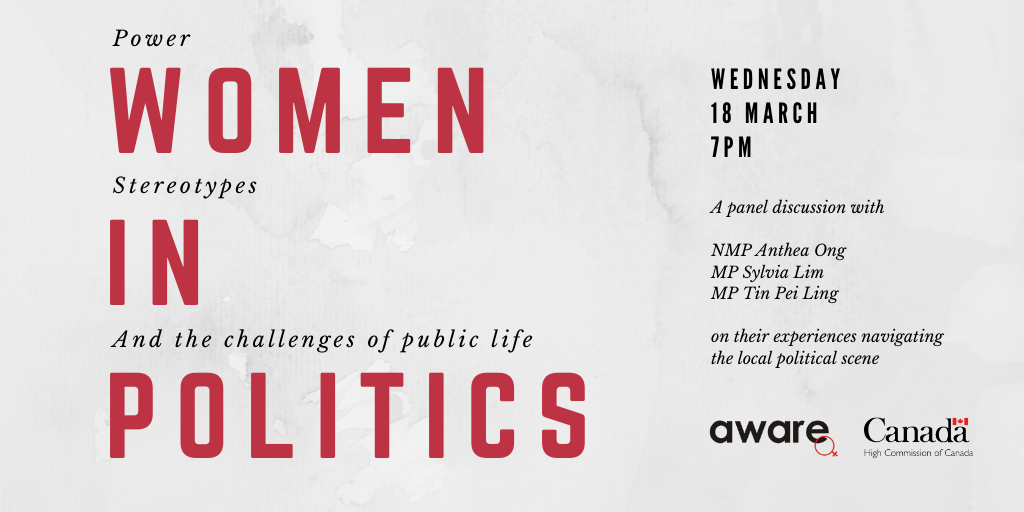
In Singapore, only 24% (24 of 100) of current Members of Parliament are women. This is below the 30% benchmark often identified as the necessary level of representation to achieve a “critical minority”, rather than a token few individuals. It goes without saying that this figure also fails to proportionately represent women in Singapore, who make up half of the nation’s population.
In her speech on International Women’s Day last year, Manpower Minister Josephine Teo called for a “concerted effort” to encourage women to enter politics. Yet women politicians still face higher barriers and more gendered social expectations than men do – as made clear by the recent case of a female MP’s photograph being doctored in a sexual manner.
Can there be a level playing field for women in politics? How can we address underlying gender inequalities and the sexism that women politicians have to deal with on an everyday basis? Join AWARE for this panel event, where we speak to NMP Anthea Ong, MP Sylvia Lim and MP Tin Pei Ling about their experiences navigating the local political scene.
Moderator: Anita Kapoor
Speakers (bios below):
NMP Anthea Ong
MP Sylvia Lim, Workers’ Party
MP Tin Pei Ling, People’s Action Party
When: 18 March 2020, 7-9pm Where: The Projector, Blue Room, 6001 Beach Road, #05-00, Golden Mile Tower, Singapore 199589 Cost: $5 (Light refreshments will be provided)
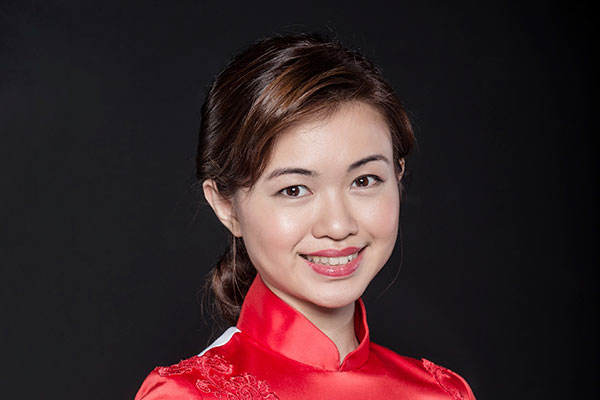
Anthea Ong is a Nominated Member of Parliament, impact entrepreneur and investor, and life and executive coach. She has founded several ground-up initiatives/impact businesses, including A Good Space and the silent teabar Hush TeaBar. She has served on the boards of organisations such as Unifem (now UN Women) and Daughters of Tomorrow, and is Immediate Past President of Society for WINGS. Her book 50 Shades of Love was published in December 2018. She has also traveled to all seven continents and over 75 countries, including Antarctica and Mt Everest Base Camp.
MP Sylvia Lim
Sylvia Lim spent her adult working years in law enforcement, legal practice and teaching at a polytechnic, and joined the Workers’ Party in 2001. She currently serves as Member of Parliament, Aljunied GRC and has been Chair of the Workers’ Party since 2003. Her various roles have enabled her to see society through a wide lens and to contribute towards society-building. She firmly believes in the ethos of public service and that political participation is essential in a democracy. She is also a lifelong learner, and in the last few years has obtained qualifications in criminal justice, international relations and wine.
MP Tin Pei Ling
Tin Pei Ling is currently the Member of Parliament for MacPherson SMC and Chief Executive Officer of Business China, a non-profit organisation that harnesses the support of the public sector and private enterprises to strengthen the ties between Singapore and China. Pei Ling has been an elected Member of Parliament since 2011 and has served as a member or vice chairperson of multiple committees, including the Public Accounts Committee, the Home Affairs and Law Committee, the Social and Family Development Committee, the Health Committee, and the Communications and Press Committee. She is also a member of the Executive Committee of PAP’s Women’s Wing.
Anita Kapoor Anita Kapoor is a presenter, sacred leadership advocate and transformation coach, and an intuitive. Her career began in publishing, led her to television, emcee and voiceover work and today she facilitates events, conversations, panels, and healing circles. She has spoken at TEDx in Singapore twice and is a grateful to be able to use her voice for equality, self awareness and healing. She was born in Mumbai, and has lived in Singapore since she was 7.
Important: We had originally scheduled this event for 27 March, at the AWARE Centre. However, due to new regulations about gatherings during the COVID-19 outbreak, “Not Just Snowflakes” will be held as an online panel via Zoom. Please register on Eventbrite, and the Zoom link will be emailed to you. Thank you!
“Am I a keyboard warrior?”
“Is it enough to just like and repost?”
“What do I have to do to be considered a legit activist?”
“What platforms do I have and how can I use them for advocacy?”
The past year was fraught with environmental, social and political change around the world. Issues such as sexual voyeurism, climate change, “dissident” education and POFMA have made headlines in our local news. Nevertheless, young people have been taking matters into their own hands, passionately speaking up about injustice in the hope of righting the wrongs of previous generations. Young activists are more important now than ever before.
In Singapore, where typical activist activities such as protests and public criticism can be considered illegal, it may be intimidating getting involved in civil society. But we can help you get started.
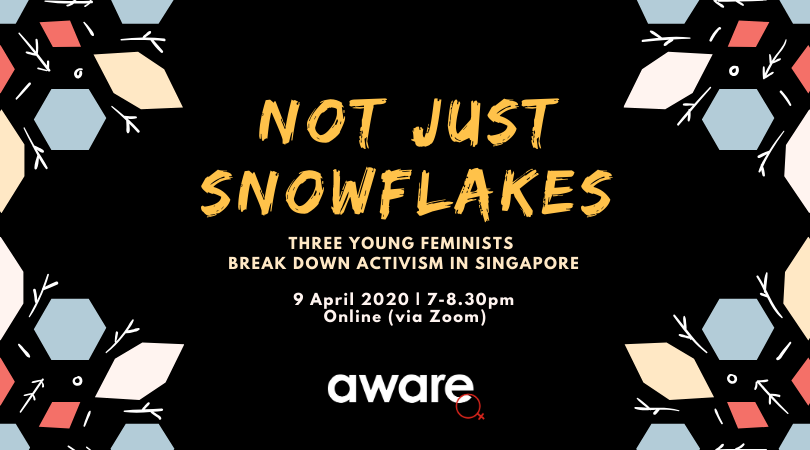
This International Women’s Day, join us for an honest conversation with three young feminists doing activism work. Whether through storytelling, community building, or art and writing, these women challenge conventional notions of what activism looks like. Spend the evening in invigorating conversation about what it means to be an activist in Singapore.
Moderator: Chong Ning Qian, AWARE
Speakers:
Reetaza Chatterjee, Your Head Lah!
Filzah Sumartono, AWARE
Aarti Olivia Dubey, writer and body positivity activist
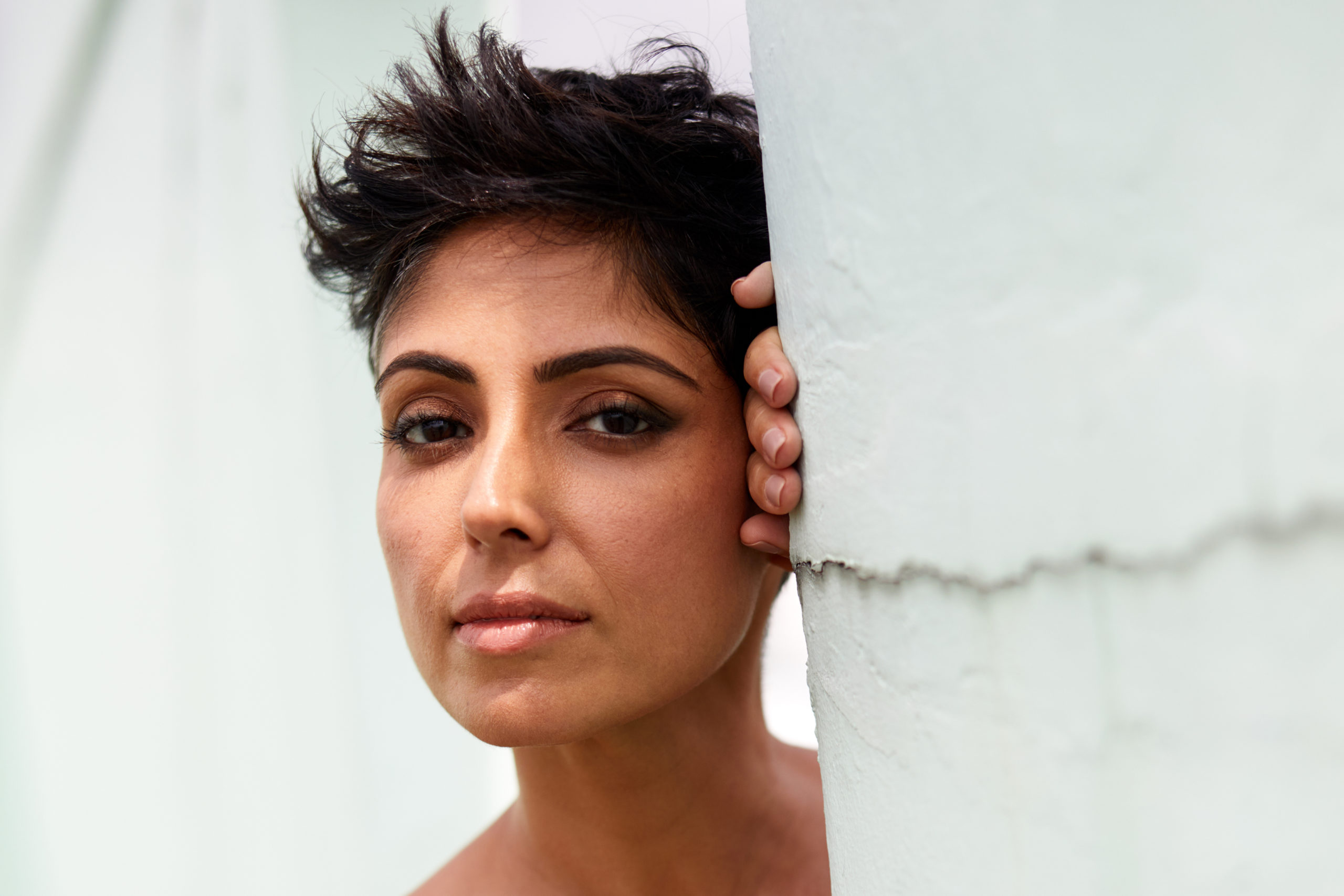
Reetaza Chatterjee (“Reetz”, she/her) is the founder of Your Head Lah!, a mental health collective that aims to amplify marginalised voices in Singapore. A firm believer in the power of storytelling, she sees community and collective healing as central to liberation work. In the past, she has worked in a range of social justice issues, including providing support to survivors of sexual violence, doing crisis counselling, as well as disability justice and anti-racist campaigning. She sees herself as a chapalang activist because isn’t all oppression connected? Her hobbies include dancing to Beyoncé songs in her undies, crying at photos of dogs, and trying to find more ways to love the people she loves.
Filzah Sumartono (she/her) currently works at AWARE. She is co-editor of the books Perempuan: Muslim Women in Singapore Speak Out and Growing Up Perempuan, which are anthology collections of essays and poems written by women about their lived experiences. She is also a strong advocate against the practice of female genital cutting (FGC) and has been featured in Reuters and other media outlets.
Aarti Olivia Dubey (she/her) is a former psychotherapist turned activist. She advocates for human rights – fat body positivity, disability justice, LGBTQ rights – and advocates the importance of mental health care. As someone who struggled with eating disorders, depression and anxiety most of her life, she hopes to educate with her expertise and personal experiences. Aarti is an ardent animal lover who enjoys being a homebody around her husband and pets. She doesn’t take herself too seriously and spends her free time watching Tik Tok videos, meditating or being in the pool.
Note: Thanks to everyone who has signed up for this Sexual Assault First Responder Training! Hopefully you have received our notification that the training will be held ONLINE-ONLY this month (and for the foreseeable future). More details will be emailed out shortly. This month’s session is at full capacity but we will be running again in April.
“Are you sure that happened? Why didn’t you fight back? You should have known better.” These are some common responses survivors of sexual assault have heard, which may further their feelings of doubt, guilt and shame.
First response that is sensitive to the survivor’s needs and choices is necessary in preventing re-victimisation. We may not always know the right words to say, but we can all agree that sexual assault should never happen to anyone.
One way to show zero tolerance for sexual assault is through our own words and actions. It is not always easy for survivors to tell someone about what happened. In fact, for some survivors, it can be especially daunting.
As an individual that they put their trust in, our response becomes pivotal in their journey of recovery. SACC’s First Responder Training helps familiarize participants with trauma reactions and symptoms to better contribute to a survivor’s well-being. In this workshop, SACC will share more on the following:
1. Definition of sexual assault and harassment
2. Recognising Singapore’s legal framework
3. Understanding consent
4. Understanding the impact of sexual assault and trauma on survivors
5. Role of a first responder
6. Providing support to survivors of sexual assault
7. Resources available for help
8. Key skills such as ensuring safety, active listening and empathy
When: 28 March 2020, 9am – 1.30pm [4.5 hours] Where: International Plaza, #34-08, 10 Anson Road Cost: Suggested donation $10 (Light refreshments will be provided)
Under AWARE’s #AimForZeroSG campaign, this popular workshop has been made affordable to all. While you are welcome to pay what you can, we suggest a sum of $10 per workshop attendee. Please note that all proceeds to towards SACC and that the donation made towards the workshop is non-refundable.
Persons of all genders and nationalities are more than welcome to attend.
We strongly request that all participants commit to the full duration of the 4.5-hour workshop to ensure that everyone will get the opportunity to engage in interactive discussions and learn useful skills.
Note: Thanks to everyone who has signed up for this Sexual Assault First Responder Training! Hopefully you have received our notification that the training will be held ONLINE-ONLY this month (and for the foreseeable future). More details will be emailed out shortly. This month’s session is at full capacity but we will be running again in April.
This session has a special focus on school and campus sexual violence. It is open to anyone aged 16-35 interested in learning about those situations.Find our regular Sexual Assault First Responder Training here.
“Are you sure that happened? Why didn’t you fight back? You should have known better.” These are some common responses survivors of sexual assault have heard, which may further their feelings of doubt, guilt and shame.
First response that is sensitive to the survivor’s needs and choices is necessary in preventing re-victimisation. We may not always know the right words to say, but we can all agree that sexual assault should never happen to anyone.
One way to show zero tolerance for sexual assault is through our own words and actions. It is not always easy for survivors to tell someone about what happened. In fact, for some survivors, it can be especially daunting.
As an individual that they put their trust in, our response becomes pivotal in their journey of recovery. SACC’s First Responder Training helps familiarize participants with trauma reactions and symptoms to better contribute to a survivor’s well-being. In this workshop, SACC will share more on the following:
1. Definition of sexual assault and harassment
2. Recognising Singapore’s legal framework
3. Understanding consent
4. Understanding the impact of sexual assault and trauma on survivors
5. Role of a first responder
6. Providing support to survivors of sexual assault
7. Resources available for help
8. Key skills such as ensuring safety, active listening and empathy
When: 28 March 2020, 2.30 – 7pm [4.5 hours] Where: International Plaza, #34-08, 10 Anson Road Cost: Suggested donation $10 (Light refreshments will be provided)
Under AWARE’s #AimForZeroSG campaign, this popular workshop has been made affordable to all. While you are welcome to pay what you can, we suggest a sum of $10 per workshop attendee. Please note that all proceeds to towards SACC and that the donation made towards the workshop is non-refundable.
Persons of all genders and nationalities are more than welcome to attend.
We strongly request that all participants commit to the full duration of the 4.5-hour workshop to ensure that everyone will get the opportunity to engage in interactive discussions and learn useful skills.