
Author: Media Intern

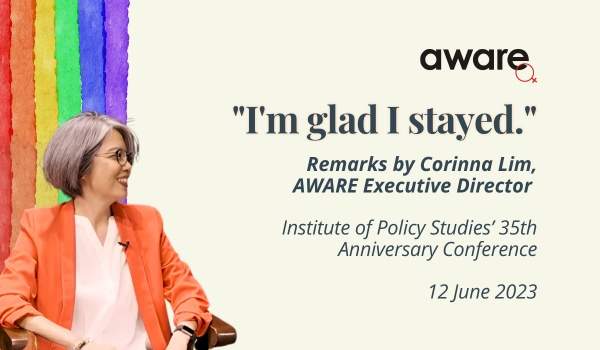
“I’m glad I stayed”: Remarks by Corinna Lim at Institute of Policy Studies’ 35th Anniversary Conference

AWARE Executive Director Corinna Lim spoke yesterday at the Institute of Policy Studies’ 35th Anniversary Conference, as part of the panel “Revisiting Pluralism”. Corinna’s remarks were made in her personal capacity, but we are reprinting the transcript of her comments below, with additional edits for clarity. We applaud Corinna for taking the brave step to come out in public ❤️🏳️‍🌈


Good afternoon, Minister Shanmugam, Professor Chan, everyone. I am grateful for this chance to speak on a topic that is close to my heart. I speak from the vantage point of someone who is both privileged and marginalised, and as someone who has worked in the social justice space for more than 30 years.

You can read about my privileged position in my profile. My marginalisation is my experience as a gay person in Singapore—covering up my sexuality from my family, colleagues and, until now, the public sphere.

When I was younger, there were no acceptable words to speak about this. The term LGBT only made it into the Singapore lexicon in the 2000s. Being a stigmatised minority is difficult, and even more so when this marginalisation is hidden and invisible. It is no fun in the closet. In fact, it is pretty painful and lonely. So, as a young lawyer, my main aim was to migrate to a more gay-friendly country, with lots of nature. That was 30 years ago. Thankfully, I found the women’s cause—or it found me.

And I am still here.

My work as a gender equality activist has been an important part of my identity. If I could not speak up for myself safely, I could at least do so for the women who had it a lot worse than me. The women who were victims of family violence, sexual assault, workplace discrimination and harassment.

WHY NOW?

This is the first time that I am sharing about my own personal situation in a public setting. I think it is partly to do with the repeal of Section 377A. It somehow seems it is safer to talk about this.

If we are to take the “pluralism” journey forward in Singapore, it’s important to create brave spaces for the marginalised to share their experiences. Only then can we start talking more deeply and sensitively about these topics without causing antagonism and polarisation.

And so I chose to speak about this today, even though it is still a bit scary, to ground this discussion in the lived experiences of a marginalised person, and to emphasise why it is so important for Singapore to get this right.

First, we want people in Singapore to feel like this is their home, where they can be fully appreciated and accepted for who they are. A place where they can show up fully at work or in the community and where they do not have to hide or be ashamed of any aspect of themselves. I know of too many LGBT persons who left Singapore as they did not feel that they could thrive here. I came close to being part of that statistic of people who left, but I’m glad I stayed.

THE PACE OF CHANGE IN SINGAPORE

The recent repeal of Section 377A shows that Singapore is constantly evolving. Change always feels too slow for any activist; by definition, we cannot be satisfied with the status quo. But in the past 30 years, I have seen changes in almost all areas of work that AWARE is involved in: housing for single parents; protection against workplace harassment; the recent changes to the Women’s Charter strengthening protection against non-physical violence; the White Paper on Singapore Women’s Development affirming gender equality as a top national priority; the forthcoming Workplace Fairness Act. All these changes are of critical importance to the lives of single mothers, LGBT persons and people experiencing abuse and violence, workplace harassment and discrimination.

In Singapore, change is sometimes too gradual. It took a long time for the Government to repeal Section 377A. But once it did, the Government did a fantastic job in consulting the various stakeholders and doing a “national mediation” on this issue. I know from my friends in the LGBT community that they have had many discussions with policy-makers.

Minister Shanmugam said that pluralism is essentially about social cohesion. I see pluralism as being about embracing diversity and promoting equal, active participation in society. There must be a welcoming of different views and perspectives.

As a civil society organisation that fights for gender equality, AWARE approaches advocacy in the following ways:

  • Advocacy must be data-driven, backed up by research.
  • We always try to assume good faith.
  • We believe in engagement. It is important to consider the positions of all stakeholders closely.
  • We have back-door meetings while also engaging the public to create awareness, educate and influence public opinion.
  • We understand that we are playing the long game.
  • Dialogue and understanding is key. So are reasonableness and dogged persistence.

The above approach is not possible for many groups that do not have access to policy-makers. It is therefore critical to create this access. Since 2011, I have seen the Government become a lot more approachable to groups with causes. And this is a very good thing.

TRUE PLURALISM

A precondition for pluralism is this: The Government must protect minorities. If we are to embrace diversity, we must ensure that minority groups are not bullied by the majority. So, things like the Workplace Fairness Act are critical.

I am very disappointed that, at this point, it looks like the Workplace Fairness Act will not protect against discrimination on the grounds of sexual orientation and gender identity and expression. With S377A repealed, there is no reason not to extend protection against workplace discrimination to everyone, including LGBT persons. It would be ironic for our first workplace anti-discrimination legislation to be itself discriminatory by excluding LGBT persons.

Going forward, this issue can only get more complex. How we deal with pluralism has a deep impact on people’s lives.

It’s important that we get this right.
A Recap: AWARE’s 38th Annual General Meeting

Written by Kane Chang, AWARE Fundraising Consultant

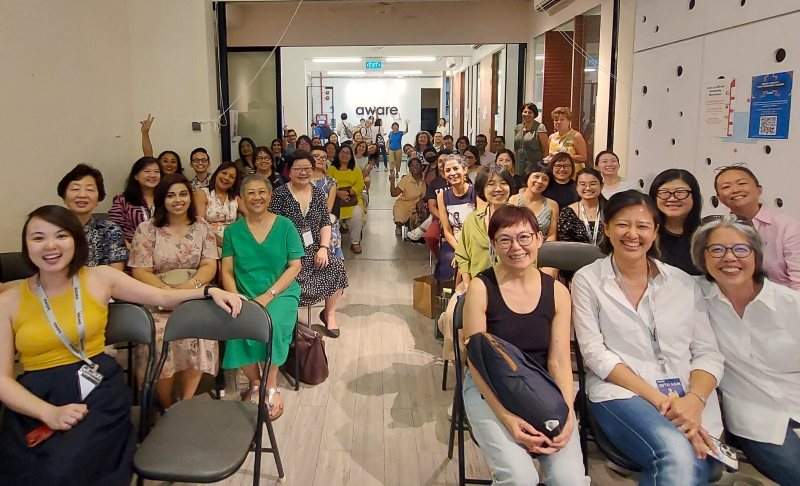
Saturday, 6 May 2023 saw AWARE’s first in-person general meeting in three years. Seventy-four members attended AWARE’s 38th Annual General Meeting, which was chaired by AWARE President Ong Soh Chin and held at the AWARE Centre in Dover Crescent. 

In her opening remarks, the president highlighted two key challenges that AWARE faces in the months ahead – people and funding. She noted the departure of two department heads, Amy Daga (Catalyse) and Shailey Hingorani (Advocacy, Research and Communications), and the cessation of Tote Board funding for the Women’s Care Center (WCC) and Sexual Assault Care Center (SACC). Moving forward, fundraising, as well as revenue from Catalyse, AWARE’s corporate training and consulting arm, will be even more crucial. So too will be the need to sustain a strong pipeline of talented staff, like new joiners  Sugidha Nithi, who takes over from Shailey as Director of Advocacy and Research, and Yasmine Tan, our new Head of Operations.

After Soh Chin’s introduction, AWARE department representatives gave updates on each department’s key work during 2022. The full details of this work is in the Annual Report 2022, but below is a summary.

The CARE Department, represented by Ashley Chua, Assistant Manager at the Sexual Assault Care Centre, together with Jessica Nagulendran, Senior Programme Executive at the Women’s Care Centre, described 2022 as a landmark year for governmental support for survivors of sexual assault, with the advent of new services. The evolving landscape has informed CARE’s strategy of providing effective support services, conducting more advocacy for systemic change, building support ecosystems, investing in staff and improving data management. In 2022, the Women’s Helpline received over 5,000 calls, with 2 in 5 related to emotional distress and 1 in 4 to abuse and violence. The Women’s Care Centre provided 2,000+ counselling and legal clinic sessions to 500+ clients, with 8 in 10 surveyed recounting that they felt well-supported. 

Meanwhile, the Sexual Assault Care Centre received 947 cases in 2022, the majority of which involved physical sexual violence. Across services, more than 9 in 10 clients felt well-supported through counselling, case management, legal support and befriending services. Three highlights of the year for SACC were: training case workers on sexual assault support, introducing a trauma-informed programme for staff and setting up a new operations and programme horizontal for improved efficiency and data management.

Caroline Callow, Senior OD Consultant at Catalyse, reported that in 2022, Catalyse increased its team size, diversified partnerships and generated over $1 million in contracts, resulting in a profit of $163,732. A significant 2022 project was the #IAmAMaleAlly programme developed in partnership with Dr. Michael Kaufman, co-founder of the White Ribbon Campaign in 1991. This programme saw almost 100 male ally participants and 49 trainers (who go on to train others in allyship) over the course of the year. Looking ahead to 2023, Catalyse aims to strengthen its position as anti-discrimination and anti-harassment experts in Singapore, to adopt a more trauma-informed approach and to establish an “inclusion lab”.

Lee Yoke Mun, Senior Project Executive at ARC, provided a comprehensive overview of the department’s 2022 achievements, including the launch of the anthology What We Inherit: Growing Up Indian, which sold nearly 1,800 copies by year-end, and the report “Why Stable Housing Matters” following the end of the S.H.E. Project. AWARE conducted Singapore’s first comprehensive workplace discrimination survey with Milieu Insight and discovered that 55% of the respondents had experienced discrimination. Our comprehensive sexuality education programmes reached around 800 students and 100 parents, and the Sexual Assault First Responder Training programme saw almost all 305 participants feeling more confident in their ability to assist survivors of sexual violence. AWARE’s Saga podcast won more awards in 2022 and crossed the 100,000 mark in all-time plays. Finally, ARC kicked off a new research project on coercive control, with a digital comic series that garnered more than 165,000 impressions and 17,500 engagements in three months.

Shamima Rafi, Community Engagement Manager from Secretariat, highlighted that AWARE had a fantastic fundraising year in 2022, raising a total of $2,850,969. It was our first year implementing both online and in-person (i.e. the AWARE Ball) fundraising campaigns, successfully segmenting donors to maximise engagement. The Ball made its triumphant return, attracting an overwhelming demand for seats (with 600 attendees). A new community engagement department, S.P.A.C.E, was launched at the event, with the support of over 100 sponsors and partners.

Following the departmental presentations, the AGM also passed two important resolutions via voting by a show of hands. These were: i) proposed Constitutional changes, which included revisions that would enable AWARE to hold virtual and hybrid Annual General Meetings, and ii) provisions to allow AWARE to spin off Catalyse as a separate company. Hybrid meetings enable AWARE to adapt to the post-COVID era, enhancing accessibility and attendance. As for Catalyse, by spinning off as an independent entity, it can effectively pursue international clients and enhance AWARE’s cash flow diversification, in line with Commissioner of Charities’ (COC) recommendations. A volley of questions and comments from members about these resolutions made for a very robust discussion before voting. 

As the meeting adjourned for tea, President Soh Chin thanked the staff and volunteers of AWARE for their dedication and hardwork, and the members for participating at the AGM. 

Sickening crime by husbands isn’t wife-sharing, it’s rape arising from toxic masculinity

This op-ed was originally published in The Straits Times on 12 May 2023. 

News of last Friday’s sentencing of J, the leader of an abhorrent sexual violence ring involving at least six perpetrators and four survivors, dredged up the revulsion I felt when I first read about the case in 2022.

J and a group of other men conspired over eight years to methodically drug, rape and record their assault of the women in their lives, even distributing the footage online.

The complicated chronology of J and company’s machinations, charted elsewhere, has emphasised both the sickening degree of planning in this web of deception and the extensive sexual violence to which these women were subjected.

Yet while we would be right to feel outrage, it may be a more constructive and worthwhile exercise to reflect on what lessons these acts hold for a Singapore pledging to support women and protect them from sexual harm, after the Government accepted 25 recommendations in a White Paper on Women’s Development in 2022.

Lesson 1: Toxic masculinity is the bedrock for this house of horrors

First, this particular case provides a textbook example of toxic masculinity, in terms of both the perpetrators’ urge to assert power and control over their wives, and their related desire to flaunt said power and control to other men.

Research has closely associated sexual violence with toxic masculinity – a term describing how society often unhealthily equates manhood and male-ness with traits like dominance, strength, stoicism and aggression, and socialises young men and boys to embrace behaviours that demonstrate power.

Sometimes this can take the form of the dehumanisation of women, where women are treated as sexual objects or commodities to which men are entitled, rather than as equal partners in relationships or as individuals with their own desires and agency.

By drugging and assaulting their wives, as well as photographing these acts and distributing them online, the perpetrators also cultivated what Aware has called “a fantasy of female ignorance, helplessness and indignity”. Consider, for example, that in 2015 J wrote the following to a co-conspirator about their respective spouses: “Bet both of them still thinking they are their husband’s chaste and loyal wife”.

Putting aside the fact that chastity is an imaginary metric devised to legitimise the policing of women’s bodies, what seems to spark cruel delight in J is the victims’ illusion that their bodies were their own. This only excites a person whose own sense of self hinges greatly upon the relative lack of selfhood of those around him.

The perpetrators essentially see their wives as chattel: Another man, K, told J that K’s wife was “always yours”, as though she was his property to give.

Yet toxic masculinity doesn’t just provide a script for how men should behave with women. It also dictates how men relate to other men.

The camaraderie formed between the perpetrators was based on horrific acts of seeking out like-minded men on online forums, colluding to rape, disseminating their “spoils” to each other in the form of intimate images and the sharing of fantasies of further violence, including impregnating each others’ wives without their consent or knowledge.

In short, it was insufficient for each of them to violate women. Puffed up on self-perceived power, they needed an audience who would “get it” – a group of other men with the same toxic worldview, who would read their behaviour not as horrifyingly vicious acts of violence, but as statements of virility and manhood.

Here is also where a critical clarification is needed: When we say “masculinity”, we do not literally mean “men”. “Masculinity” refers not to physical persons but to a set of ideologically inflected norms which can be internalised and enforced by anyone regardless of gender identity, even if they have traditionally been associated with men.

Lesson 2: The ‘manosphere’ deserves our full concern

Second, for far too long have we ignored the paltry state of discourse among the various online communities centred on misogyny and the degradation of women on places like Sammyboy. These are the same online platforms on which J and his accomplices connected as early as 2010, when such aspects of the “manosphere” were in a relatively fledgling state.

Back then, one might have been forgiven for brushing such discourse off as mere online trolling – unsavoury but ultimately harmless.

But our lives have increasingly moved online, creating a greater propensity for technology-facilitated violence including deepfakes and digital voyeurism.

High-profile incidents like the murderous rampage by incel hero Elliot Rodger in 2014 also showcase the heightened propensity for online misogyny to spill over into physical violence. More recently, the rabid popularity of misogynist influencer Andrew Tate suggests more young men are being radicalised into toxic masculinity on TikTok and other social media platforms.

Aware’s research, with technology firm Quilt.AI, tells us that misogynist narratives are alive and well in the Singapore context, as victim blaming, confusion around consent, and misinformation about sexual violence continue to perpetuate in these forums.

The recently passed Online Safety (Miscellaneous Amendments) Act aims to target, among other types of harms, content that advocates or instructs on sexual violence or coercion, which would presumably include at least some of J and company’s posts on various platforms. That said, given that the Act’s scope does not encompass direct messaging functions such as SMS, MMS and DMs, it’s unclear exactly how many of their posts and messages would have been liable.

More importantly, while stronger moderation and regulation of online harms can stem violence propagated on the Internet, shutting down a forum like Sammyboy will not end misogyny for good, since users can gather elsewhere.

To undo the pernicious reach of the manosphere, we should also introduce to Singapore schools comprehensive sexuality education that actively debunks gender stereotypes, decries toxic masculinity and critically examines pornography.

Lesson 3: Don’t call it the ‘wife-sharing case’

Third, the way that this case has been popularly referred to as the “wife-sharing case” leaves something to be desired.

I am sympathetic to the usefulness of a snappy shorthand from court documents and the restrictions of headline-writing to make sure we’re all on the same page. After all, “inter-marital rape, voyeurism and non-consensual distribution of intimate images” can be a mouthful.

Yet the convenience of that tag belies the violence in this case of rape, and obscures the focus on the lack of consent. This was not some swinging, open marriage arrangement (which, to be clear, would be entirely non-violent as long as all parties consented), but rape of unconscious, unwitting women.

The public has heard only briefly from the survivors of this case, via their victim impact statements and what we do know is heartbreaking: The wives of J and K both described intense feelings of betrayal, and suicidal thoughts as well as the experience of feeling numb as a coping mechanism. These psychological responses frequently arise after an experience of profound trauma, and can persist for a very long time.

I hope that, however they choose to proceed from here, these women – and other survivors across Singapore – know that help is available, not least at Aware’s Sexual Assault Care Centre.

As soul-crushing as sexual violence can be, there is hope at the end of the tunnel, not just for individual survivors but for society at large – if we can identify it, call it out and fight it together.

Corinna Lim is the Executive Director of gender equality advocacy group AWARE.

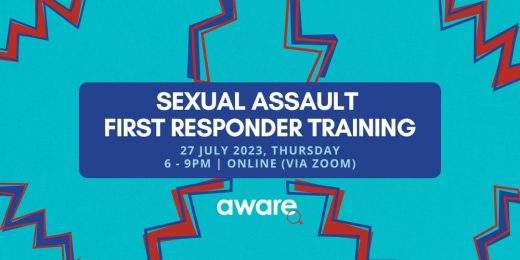
27 July 2023: Sexual Assault First Responder Training (Online Session)

“Are you sure that happened? Why didn’t you fight back? You should have known better.” These are some common responses survivors of sexual assault have heard, which may further their feelings of doubt, guilt and shame.

It is not always easy for survivors to tell someone about what happened; in fact, for some survivors, it can be especially daunting. So the way their loved ones respond becomes pivotal in their journey of recovery. First response that is sensitive to a survivor’s needs and choices is necessary in preventing re-victimisation.

This Sexual Assault First Responder Training helps familiarise participants with trauma reactions and symptoms to better contribute to a survivor’s well-being. In this workshop, we will share more on the following:

  • Definition of sexual assault and harassment
  • Recognising Singapore’s legal framework
  • Understanding consent
  • Understanding the impact of sexual assault and trauma on survivors
  • Role of a first responder
  • Providing support to survivors of sexual assault
  • Resources available for help
  • Key skills such as ensuring safety, active listening and empathy

We want this workshop to be accessible to everyone, and require your generous contribution to keep it running. While you are welcome to give any amount you wish, we suggest a minimum of $30 per person. No tax deduction will be provided. Note that Eventbrite requires a minimum contribution of $1. If for financial reasons you require a waiver of this minimum contribution, please email gec@aware.org.sg.

Note as well that we are unable to accommodate transfers and cancellations if participants are unable to attend after payment has been made.

Persons of all genders and nationalities are more than welcome to attend.

We strongly request that all participants commit to the full duration of the 3-hour workshop (there are breaks!) to ensure that everyone will get the opportunity to engage in interactive discussions and learn useful skills.

Date: Thursday, 27 July 2023

Time: 6 – 9PM

Venue: Online (Via Zoom). Please note this workshop will be online only (Singapore time). Participants will be emailed the Zoom link shortly before the session date. As a commitment to this training we will be asking all participants to turn on their video throughout the session.

Entry Fee: This event is contribute-what-you-can. Suggested contribution of $30 per person.

Register Here! 

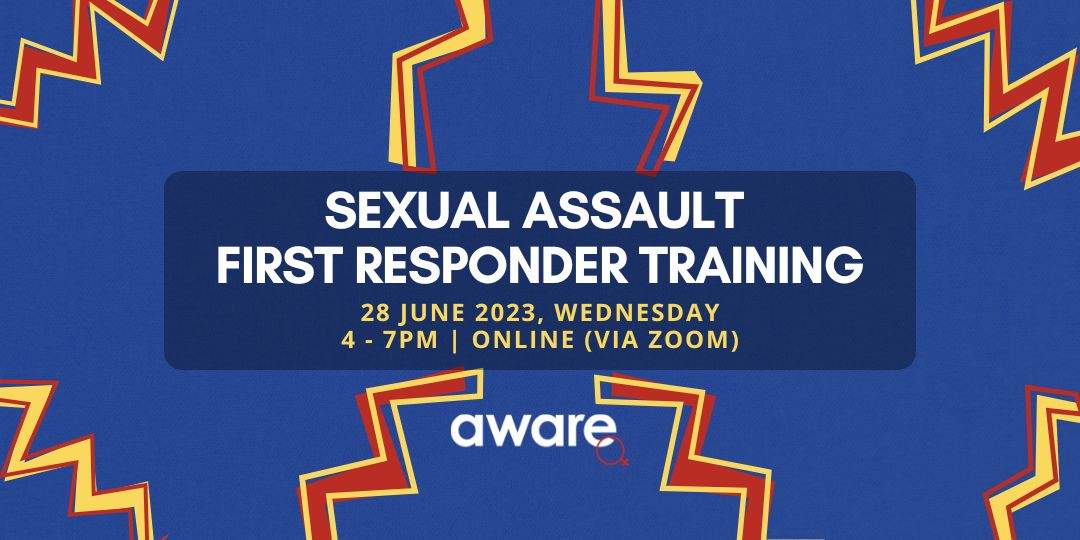
28 June 2023: Sexual Assault First Responder Training (Online Session)

“Are you sure that happened? Why didn’t you fight back? You should have known better.” These are some common responses survivors of sexual assault have heard, which may further their feelings of doubt, guilt and shame.

It is not always easy for survivors to tell someone about what happened; in fact, for some survivors, it can be especially daunting. So the way their loved ones respond becomes pivotal in their journey of recovery. First response that is sensitive to a survivor’s needs and choices is necessary in preventing re-victimisation.

This Sexual Assault First Responder Training helps familiarise participants with trauma reactions and symptoms to better contribute to a survivor’s well-being. In this workshop, we will share more on the following:

  • Definition of sexual assault and harassment
  • Recognising Singapore’s legal framework
  • Understanding consent
  • Understanding the impact of sexual assault and trauma on survivors
  • Role of a first responder
  • Providing support to survivors of sexual assault
  • Resources available for help
  • Key skills such as ensuring safety, active listening and empathy

We want this workshop to be accessible to everyone, and require your generous contribution to keep it running. While you are welcome to give any amount you wish, we suggest a minimum of $30 per person. No tax deduction will be provided. Note that Eventbrite requires a minimum contribution of $1. If for financial reasons you require a waiver of this minimum contribution, please email gec@aware.org.sg.

Note as well that we are unable to accommodate transfers and cancellations if participants are unable to attend after payment has been made.

Persons of all genders and nationalities are more than welcome to attend.

We strongly request that all participants commit to the full duration of the 3-hour workshop (there are breaks!) to ensure that everyone will get the opportunity to engage in interactive discussions and learn useful skills.

Date: Wednesday, 28 June 2023

Time: 4 – 7PM

Venue: Online (Via Zoom). Please note this workshop will be online only (Singapore time). Participants will be emailed the Zoom link shortly before the session date. As a commitment to this training we will be asking all participants to turn on their video throughout the session.

Entry Fee: This event is contribute-what-you-can. Suggested contribution of $30 per person.

Register here!

A Recap: Living in Limbo – Gender and housing insecurity in Singapore

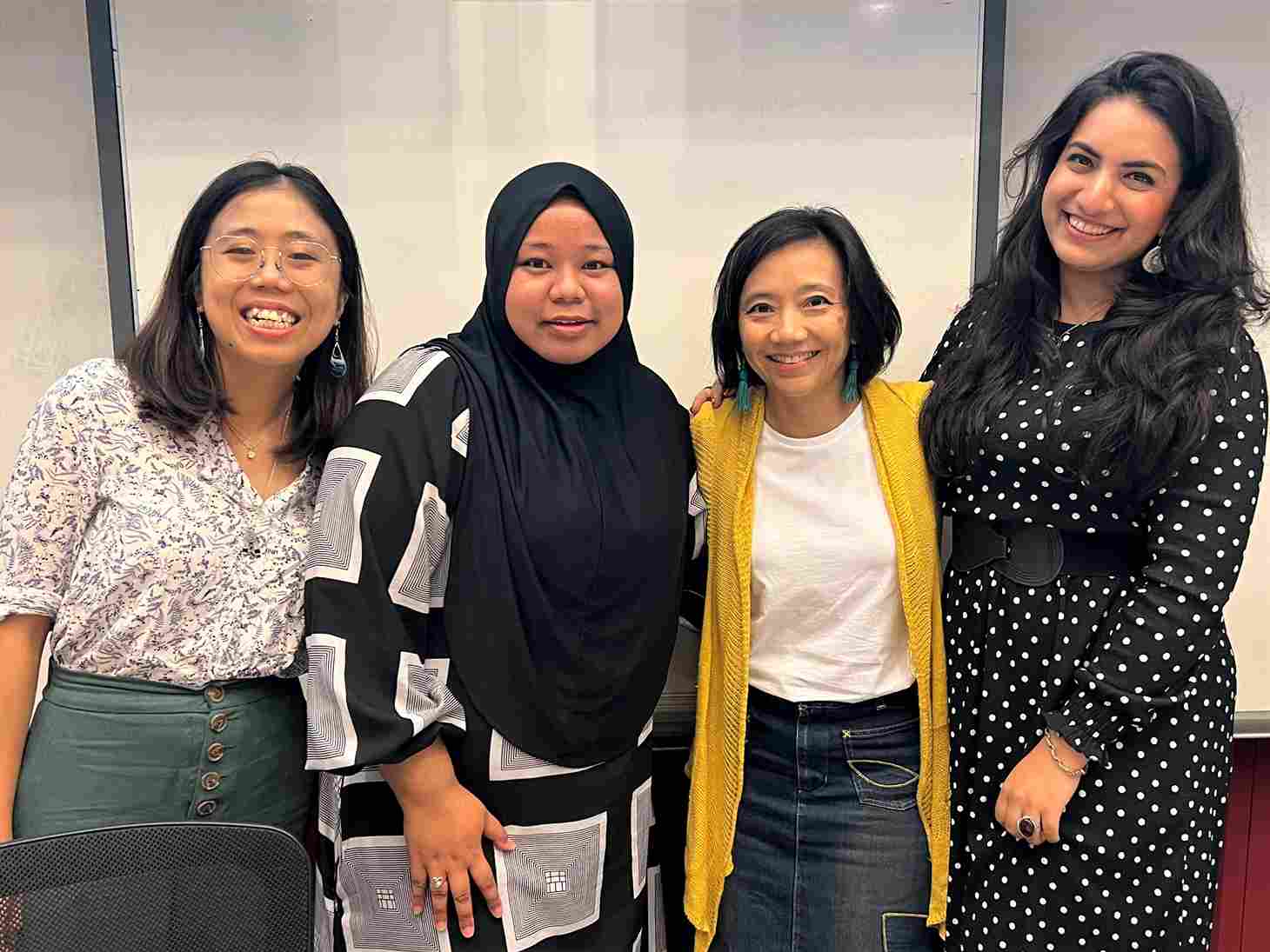
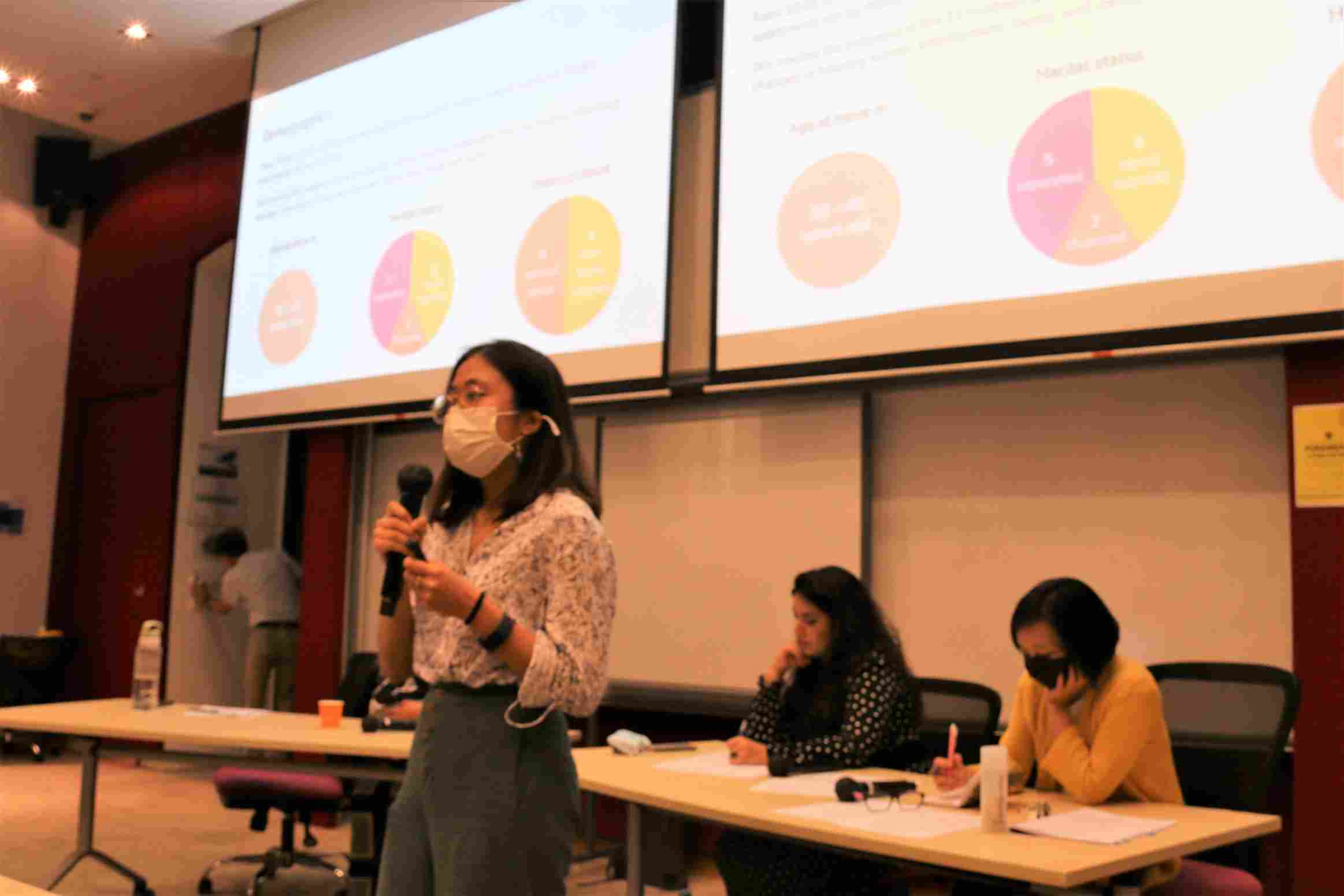
(L-R) Speakers Lee Yoke Mun, Liyana Dhamirah, Dr Stephanie Chok and Jeyda Simren Sekhon Atac at “Living in Limbo” on 19 October 2022

written by Kimberly Wong, Research Executive, AWARE

Why is it that in Singapore—a nation widely recognised for its comprehensive public housing programme—many people still encounter housing barriers?

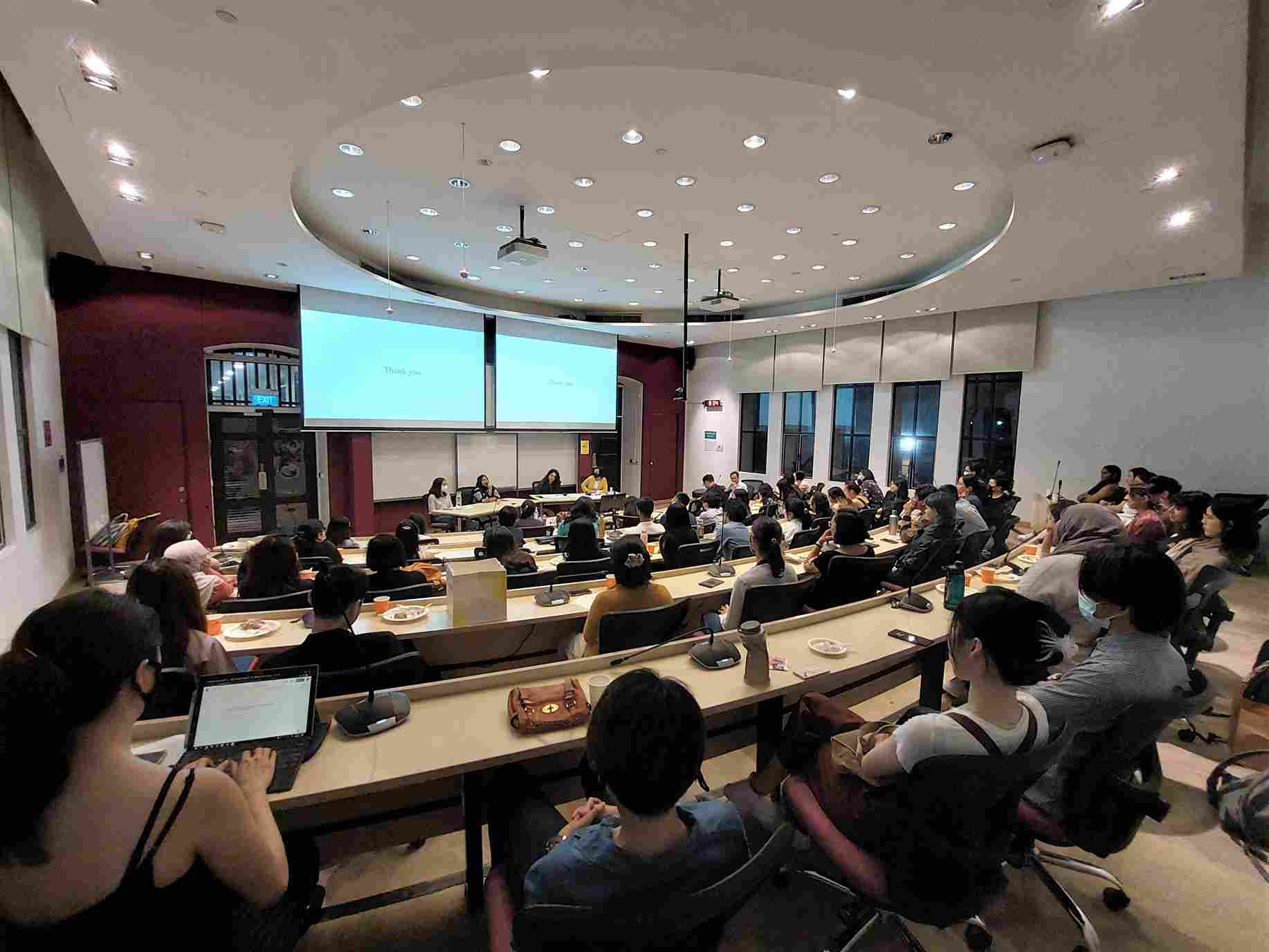
On 19 October 2022, two days after the United Nations International Day for the Eradication of Poverty, around 60 attendees gathered at the Lee Kuan Yew School of Public Policy (LKYSPP) to hear from a range of experts about this issue.

Titled Living In Limbo: Gender and housing insecurity in Singapore, the panel featured Jeyda Simren Sekhon Atac, research assistant in the Social Inclusion Project (SIP) at LKYSPP; Liyana Dhamirah, author of Homeless: The Untold Story of a Mother’s Struggle in Crazy Rich Singapore; and AWARE Project Executive Lee Yoke Mun. The panel was moderated by researcher Dr Stephanie Chok.

The conversation drew upon a growing body of local research about the gendered realities of housing insecurity in Singapore. This includes AWARE’s evaluation of the Support, Housing and Enablement (S.H.E.) Project, a research-based service that provided stable and decent housing, alongside transformational support programmes, for 18 low-income single-mother families; AWARE’s earlier work on single mothers’ access to public housing; SIP’s nationwide street counts of homelessness; and the Minimum Income Standard studies on the costs of a basic standard of living in Singapore.

To set the context, Simren first defined homelessness as the experience of living in inadequate housing situations. She highlighted three dimensions through which this adequacy can be perceived: security (e.g. tenure, exclusive occupation and affordability), physical adequacy (e.g. hygiene, safety, space), and social adequacy (e.g. privacy).

The forms of homelessness include:

  • Primary homelessness, where people do not have accommodation and sleep in public spaces not intended for human habitation;
  • Secondary homelessness, where people live in temporary accommodation (e.g. shelters and hostels), or move frequently due to unavailability of permanent housing;
  • Tertiary homelessness, where people live in inadequate accommodation (e.g. overcrowded housing), or may imminently lose their housing due to eviction, violence or lack of social support.

Homelessness thus does not solely exist as rough sleeping, but also manifests in many different ways.

“Living in Limbo” at the Lee Kuan Yew School of Public Policy

Below are three key takeaways from the discussion:

1. Housing insecurity and homelessness exist on a continuum

An earlier study in 2019 found that the street homeless population in Singapore was somewhere between 920 and 1,050 persons. Comparing the 2019 and 2021 iterations of the street count, Simren pointed out that the form—rather than scale—of homelessness in Singapore had changed over the years: In 2021, it was observed that street homelessness had fallen by 41%, while temporary shelter occupancy exponentially grew by more than six times. This difference may be chalked up to greater visibility of the homeless population, due to wider outreach and increased shelter capacity during the COVID-19 pandemic.

Importantly, Simren argued that the pandemic did not cause the housing insecurity that these people experienced—it only exacerbated the challenges they had already been facing pre-pandemic.

Apart from organising street counts, SIP also conducted interviews with 51 shelter residents to better understand the common underlying factors contributing to housing insecurity, one being family conflict and divorce. Due to the complex nature of these family issues, leaving their homes felt almost irreversible to these individuals. Additionally, insecure work and income meant that they simply could not afford housing and other basic needs. Some also faced barriers relating to public rental housing, in terms of cost and conflicts with landlords and roommates. Finally, physical and mental health conditions impeded some residents’ abilities to earn stable wages, thus affecting their access to housing.

Looking at the gendered patterns of homelessness, Simren highlighted that women accounted for an average 11% of the street homeless population in 2019 and 2021. This relatively low percentage could be due to women’s concerns over their safety when sleeping rough, which might lead them to rely more on social support networks for shelter. Women were therefore more likely to experience secondary and tertiary homelessness as compared to men, who constitute the majority of the street homeless population. Such informal social support, however, was often short-lived. Many women found themselves in limbo again once the goodwill of their friends and family ran out.

That said, research on homelessness in Singapore remains in its nascent stages. At the end of her presentation, Simren highlighted the need to pay more attention to tertiary homelessness and the groups that are disproportionately vulnerable to it, such as women experiencing domestic violence, low-income migrants and the LGBTQ community. Others who may face tertiary homelessness include those living in substandard, over-crowded conditions and struggling with high housing costs.

2. People may “hide” homelessness in a variety of ways

Liyana’s presentation was based on both her own previous experience as a mother facing homelessness in Singapore, and on conversations she has had with other people in similar housing-insecure situations.

To Simren’s point about the hidden facets of homelessness, she posited that some intentionally seek night or shift work to stay accommodated. For instance, a hospital attendant she met would choose to work the night shift so that they could sleep in the hospital during the day. Others felt that they drew less attention from the authorities when they slept in public spaces after their night shifts, due to the time of day.

Women experiencing domestic violence constitute another “invisible” group of homeless persons: Yoke Mun added that in particular, domestic violence victim-survivors like the S.H.E. residents face certain economic and social constraints—such as leaving or reducing paid employment to provide care—that limit their access to housing. In the event that they do escape from abusive situations, they are more likely to rely on their connections for a place to stay and only turn to shelters and other services when all other options are exhausted.

AWARE’s Lee Yoke Mun presenting at “Living in Limbo”

Other groups of women who face “hidden” forms of housing insecurity, Liyana said, include low-income single mothers, women in caregiving roles and women with medical care needs and mental health conditions. Although Singapore tends to view family as the first line of support, these individuals may not be able to rely on family due to violence and conflict. For those who lack other options, being forced to live with their family can lead to the loss of their autonomy.

3. Stable housing matters

Interviews with residents of the S.H.E. Project revealed that stable housing positively impacted their employment situation and well-being.

Nine of the 12 residents, Yoke Mun said, had full-time, part-time or casual employment at the end of their stay at S.H.E., while eight saw improvements in their employment situation, such as finding better-paying jobs. The median income also rose from $500 before S.H.E. to $1,150 after S.H.E.

With regards to their well-being, both the mothers and their children expressed feeling safer and happier as they were able to live in an environment free from violence. The mothers also enjoyed a better relationship with their families of origin and their children saw improvements in their temperaments and academic performances.

In line with the theme of this year’s International Day for the Eradication of Poverty, “Dignity for all in practice”, she then shared AWARE’s recommendation for the scaling up of the S.H.E. Project, to provide stable housing (alongside support services) for at least two years to more unwed mothers and domestic violence victim-survivors with no alternative living arrangements. This would provide these women with the stability to address other challenges that they are facing, such as unemployment, without having to worry about housing.

Overall, the event saw an engaged audience, with several attendees sharing their experiences working with individuals facing housing insecurity in the social services sector. Others indicated their interest in engaging in research and advocacy around the issue.

When asked how the public may contribute to efforts around supporting vulnerable groups, Liyana suggested speaking to more people who are directly experiencing this issue but may not have been included in previous studies, though the panel and Kok Hoe also reminded attendees of the weighty ethical considerations involved in conducting research with vulnerable persons. Drawing on her personal experiences, Liyana also suggested writing to Members of Parliament to help connect those facing housing insecurity with the resources that they need, provided that those individuals first grant consent. Simren also proposed volunteering for relevant research projects, such as SIP, on top of writing to Members of Parliament to advocate on matters that resonate with them. Lastly, Yoke Mun suggested that writing letters to local media outlets would help keep the issue in the spotlight.

Time to retire age discrimination at work

This op-ed was originally published in The Straits Times on 24 October 2022.

One in two workers in Singapore said he or she has experienced workplace discrimination in the past five years, according to a survey of 1,000 workers by gender advocacy group the Association of Women for Action and Research (Aware) and consumer research company Milieu Insight.

Of this group, 35 per cent said they had been discriminated against on the basis of age – the second-most common reason cited, after race (41 per cent).

In view of Singapore’s ageing population, rising life expectancy and low fertility rate, how we address age discrimination in the workforce will have an impact in the coming decades.

How young is too old?

Who is considered “old” in the workplace? Both international and local research suggests that workers begin to experience age-based discrimination in their 40s, when they find themselves being offered fewer training opportunities, overlooked for promotions and targeted for redundancy.

Experiencing age-based discrimination in one’s 40s is remarkably early, given that the retirement age in Singapore is 63, and workers can be offered re-employment until they turn 67. It is even more concerning when we consider that Singapore’s retirement and re-employment ages are set to be raised to 65 and 70, respectively, by 2030.

If workplace ageism is not adequately tackled, older workers may be at risk of discrimination for nearly half their working lives. This should not sit well with a country that is trying to promote active ageing.

Negative stereotypes

Tackling it will require addressing mindsets, with a view to fairness and compassion, and recognising that older workers, with their institutional knowledge and experience, are invaluable to the workplace.

Indeed, ageism is largely driven by prejudices that employers and colleagues have against older workers being stubborn and less adaptable, as well as lacking physical capabilities and technological competence. Whether consciously or unconsciously, employers and colleagues use these stereotypes to justify discriminatory behaviour.

The economic losses of such behaviour can be substantial: A study in the United States found that economic activity lost by older Americans’ inability to find work, change careers or earn promotions due to ageism cost the economy US$850 billion (S$1.2 trillion) in lost gross domestic product in 2018.

According to the Aware-Milieu survey, the most common discrimination scenarios faced by workers aged 45 and above involved them being disadvantaged by company policies or practices due to their age and other characteristics; being subjected to discriminatory employment practices in relation to performance appraisal and promotion; and experiencing workplace harassment.

One woman who sought help at Aware’s Workplace Harassment and Discrimination Advisory was given a poor performance appraisal at work just before she reached the eligible age for re-employment. Although she had performed well during her time at the company prior to this, her service was terminated shortly after the appraisal without feedback or discussion regarding her performance.

At a focus group discussion organised by the Singapore Alliance for Women in Ageing in June this year, one participant spoke about younger colleagues telling her she should retire as she is already above 60, even though she is still able and willing to work.

Other participants said they were made to feel guilty for standing in the way of younger colleagues who could not move up to more senior job positions.

These tensions can create an unconducive and sometimes hostile work environment for older workers.Notably, the Aware-Milieu survey found that the top reason cited by those aged 55 and above for not reporting their experience was fear of professional retaliation, such as sustaining damage to their reputation or receiving negative testimonials.

While this is a common fear that victim-survivors of workplace discrimination have, retaliation from employers can be particularly detrimental to older workers, as their chances of securing a new job are often already slimmer compared with younger workers.

How to tackle the issue

The survey also asked discrimination victims who did not file official reports to describe their ideal hypothetical outcome of reporting. Nearly 30 per cent said they hoped to see the “enactment of a clear anti-discrimination and grievance handling policy within the company” – which suggests an absence of such policies or lack of effective policy communication in companies at present.

This can be easily rectified if companies implement well-defined anti-discrimination policies that cover ageism.

Employees should also be trained to recognise and report discrimination, as well as support colleagues who might be experiencing discrimination.

There are hopeful signs. At last year’s National Day Rally, Prime Minister Lee Hsien Loong announced that the Tripartite Guidelines on Fair Employment Practices would soon be enshrined in law. We hope that this law will also clearly define direct and indirect forms of discrimination, as well as discrimination-based harassment.

The list of protected characteristics should include age and gender, and workers should be protected against discrimination throughout the full employment cycle. This way, we hope ageism at work can reach its long overdue expiry date, sooner rather than later.

Ong Soh Chin

Ong Soh Chin is president of Aware, which is a member of the Singapore Alliance for Women in Ageing.

Forum: Upcoming workplace discrimination legislation must combat under-reporting

This letter was originally published in The Straits Times on 15 October 2022 

One in two individuals, or 54 per cent, who experienced workplace discrimination in Singapore in the past five years did not report it to any authorities.

This was one of many sobering findings from the recent Aware-Milieu anti-discrimination survey of 1,000 respondents.

Top reasons for not reporting included perceiving the discrimination to not be “severe” enough (36 per cent), not trusting internal/external authorities to act on the report (30 per cent) and having insufficient evidence (29 per cent).

Cases seen by the Association of Women for Action and Research’s Workplace Harassment and Discrimination Advisory (WHDA) show that institutional barriers, such as the absence of an anti-discrimination policy and dedicated human resources personnel, often drive these fears.

Discrimination in Singapore is neither defined by law nor defined by the Tripartite Alliance for Fair and Progressive Employment Practices (Tafep).

Unsurprisingly, therefore, clients often call WHDA to understand whether their experience even constitutes discrimination. These clients often work at small and medium-sized enterprises that have no workplace discrimination policy, or standards against which to evaluate a discriminatory experience.

It is only natural that employees would not report discrimination if they do not know how to interpret it.

Discrimination often occurs subtly, such as in the form of verbal harassment, where gathering black-and-white evidence is difficult.

Occasionally, there are witnesses to this harassment, but speaking up poses the risk of negative career impacts.

One pregnant WHDA client was repeatedly scolded for “taking too much leave” in front of colleagues, but these colleagues were afraid to speak up as witnesses.

Additionally, employees often hesitate to file reports if their company has a history of inaction against workplace discrimination. Many therefore wish to report their experiences only after they have resigned or had employment terminated. In 2022, three in four clients referred to Tafep by WHDA chose to do so after resigning due to their hostile work environments, or after employment was terminated.

Upcoming legislation must include a comprehensive definition of workplace discrimination to inform and encourage individuals to report. Legislation must protect employees from retaliation, so they do not feel the need to quit before seeking recourse, as well as witnesses.

Furthermore, legislation must allow for a wide variety of evidence, such as text messages, eyewitness accounts, video and audio recordings and surveillance camera footage.

Beyond legislation, a shift is ultimately needed within workplaces themselves. Mandatory sensitivity training, strong internal policies and a supportive environment can encourage employees to come forward rather than suffer in silence.

Apoorva Shukla

Executive, Workplace Harassment and Discrimination Advisory

AWARE’s Response to the Online Safety (Miscellaneous Amendments) Bill

AWARE welcomes the Online Safety (Miscellaneous Amendments) Bill that was tabled in Parliament last Monday. The announcement is timely, as the recent Sunlight AfA poll on online harms found that 31% of respondents have experienced and/or witnessed gender-based online harms in Singapore.

We are glad to see various provisions put forth, aimed at closing the digital safety gap, i.e. the gap between advances in technology and existing capabilities to ensure user safety. For one, action can be taken against online communication service providers for non-compliance with the relevant Code of Practice, regardless of where they’re located. Also, online communication service and internet access providers may also face heavy penalties (of up to $1 million and $500,000 respectively) for not stopping Singapore-based users’ access to egregious content.

Even so, we have identified areas that this bill does not address.

1. Children’s online safety

The vulnerability of children to online harms, and the need to ensure their safety, are some of the main concerns driving the introduction of this Bill.

Age verification technology has been identified by parent groups and digital rights activists as an effective strategy to reduce children’s risk of online harms. However, whether the Singapore government will mandate the use of such technology remains to be seen.

In response to MP Melvin Yong’s parliamentary question, the Ministry of Communications and Information (MCI) rightly pointed out that age verification can be tricky and involves some data protection risks. But this difficulty should not deter us from implementing the best measures we can to protect children from premature exposure to online harms via social media services or pornographic websites.

We also reiterate our recommendation to introduce a mandatory onboarding programme, and require social media services to set up a resource centre for young users. This will equip them with the necessary knowledge to stay safe online, including information on how one may report certain content or change privacy settings.

Further, the Government’s consultation paper released in July stated that social media services would be required to proactively detect and remove content containing child exploitation and abuse under the Code of Practice (in line with the UK’s Online Safety Bill and Australia’s Online Safety Act 2021). We look forward to more details in the draft Code on the mechanisms that providers will be required to implement.

2. Definition of “egregious content”

In terms of online sexual harms, the Bill includes, under the definition of “egregious content”, “content that advocates or instructs on sexual violence or [sexual] coercion” and materials depicting child sexual abuse or exploitation.

Yet it is unclear what it means to “advocate” or “instruct on” sexual violence and/or coercion. By extension, it’s also unclear whether “egregious content” will encompass all forms of technology-facilitated sexual violence (e.g. non-consensually obtained and/or distributed sexual images).

We seek greater clarity on the kinds of content that this category covers, and hope that illustrative examples of each type of “egregious content” will be provided.

3. Modes of communication covered

As it stands, the Bill regulates online communication, but electronic services including SMS and  MMS services as well as direct messages (DMs) are explicitly excluded from its scope. This means that members of private chat groups in which sexual images and videos are shared non-consensually, such as the SG Nasi Lemak Telegram group, will not be held accountable under this Bill.

Recent reports on online harms have highlighted the pervasiveness of abuse perpetrated through DMs: A 2021 UNESCO study on online violence against women journalists found that of the online threats they experienced, almost half came in the form of harassing DMs. In another study by the Centre for Countering Digital Harm, researchers observed that 1 in 15 DMs sent by strangers to high-profile women violated Instagram’s Community Standards. Around 1 in 4 abusive images and videos sent were considered image-based sexual abuse.

We strongly encourage the Bill’s scope of coverage to be expanded to include SMS services, MMS services and DMs, to strengthen protection from online harms in all user-to-user interactions.

4. Duties of providers 

Although providers face penalties for failing to stop access to egregious content, the Bill does not mention what the take-down process will look like, e.g. how quickly users can expect reported content to be taken down. In cases of non-consensual distribution of intimate images or videos, rapid take-down is crucial to containing spread and minimising further harm on victim-survivors.

In Australia, providers must remove non-consensually distributed content within 24 hours of the eSafety Commissioner issuing a removal notice. Singapore should similarly stipulate a timeframe within which providers must comply with a take-down notice.

Additionally, we hope that the Government will clarify how providers will be assessed to have taken “all reasonably practicable steps” to comply with directions issued by the Info-communications Media Development Authority (IMDA).

5. Trauma-informed and gender-responsive approach

Trauma-informed and gender-responsive training should be provided to any IMDA staff handling complaints and take-down requests from end-users. This will enable the staff to provide non-judgmental support to victim-survivors and reduce their risk of re-traumatisation during investigations.

We look forward to these clarifications being made in the second reading of the Bill and in the draft Code of Practice.

Refer to our submission to the public consultation on Enhancing Online Safety For Users in Singapore, made to MCI in August 2022, here.