Author: Media Intern

Ensure pregnant women are considered fairly in job recruitment

This letter was originally published in The Straits Times on 3 June 2022.

Anti-discrimination legislation is a highlight of the recent White Paper on Singapore Women’s Development. This legislation will enshrine existing Tripartite Alliance for Fair and Progressive Employment Practices (Tafep) guidelines in law, and is a commendable step towards equality in Singapore.

Tafep guidelines state that candidates should be considered fairly, based on their merit, regardless of criteria such as marital status and family responsibilities.

Despite this, the Association of Women for Action and Research’s Workplace Harassment and Discrimination Advisory has seen more cases of maternity discrimination at the recruitment stage over the last few months.

Although those facing maternity discrimination can report it to organisations like Tafep and the Tripartite Alliance for Dispute Management, there is no current legislation that explicitly forbids it at recruitment.

These women’s stories display disturbingly familiar patterns. Many of our clients want to be transparent about their pregnancy during recruitment, so that they may work out their maternity leave arrangements in a way that is convenient for themselves and the employer. However, they find their job offers are rescinded after informing their prospective employers of their pregnancy.

The employer often disguises what appears to be discrimination as concern for the pregnant candidate’s health. For instance, they may insist on cutting down the number of working hours despite the candidate being able to work full-time, which would reduce her job scope and salary.

Employers may also ask the candidate to start working only after their due date so as to render them ineligible for maternity benefits.

Under-reporting remains a major issue when it comes to workplace discrimination and harassment. Women affected by discrimination may fear reputational damage and the resulting impact on their career.

Legislation should lay out examples of what constitutes discrimination during recruitment, and send a clear signal that candidates must be judged purely on merit.

Fair consideration of pregnant candidates for a role provides much-needed employment opportunities for them, and also capitalises on their contributions to the economy.

Apoorva Shukla
Executive, Workplace Harassment and Discrimination Advisory
AWARE

The workplace should be the driving force of gender equality

This op-ed was originally published to The Business Times on 5 April 2022.

ARE Singapore’s workplaces doing enough to address gender inequality?

On Mar 28, the government unveiled its long-awaited White Paper on Singapore Women’s Development: a 25-point action plan, 18 months in the making. The first action on the list? Introduce new workplace fairness legislation – specifically, by enshrining the Tripartite Guidelines on Fair Employment Practices in law to ban discrimination on the basis of gender, age, ethnicity and other grounds.

This legislation, first raised by Prime Minister Lee Hsien Loong at last year’s National Day Rally, has been met with widespread approval. Yet while the law will surely make for a strong deterrent and signal to society that discrimination is unacceptable, the White Paper also points out that “legislation is not a panacea”. If so, what else will it take to bring the working world up to speed?

There has been, traditionally, a vein of scepticism regarding the effectiveness of championing gender equality in corporate spaces, governed as they often are by the capitalistic emphasis on profit and productivity over well-being and inclusion. Yet at AWARE’s training arm, Catalyse, we are truly optimistic about reimagining work for the better.

Many companies and business groups today are stepping up to champion gender equality and other forms of diversity and inclusion. Spurred in part by the pandemic, these companies know that today’s investors expect them to help make the world a better place. ESG (environment, social and governance) criteria and stakeholder capitalism are more than trendy buzzwords – investors want to see women and other minorities represented on boards and senior management teams.

More than that, companies are also cognisant that gender equity is a talent and leadership issue, and that they cannot afford not to attract, retain and promote female talent. Singapore’s female talent pool is under-utilised, considering that for more than 10 years, our female graduates have outnumbered male graduates. If women worked at the same rate as men, our workforce would boast at least 225,000 more workers – about 25 per cent more women than we have today. This war for talent has only been intensified by the Great Resignation of the past couple of years.

So how exactly can we reclaim our workplaces from the patriarchy’s clutches?

The problem with male-dominated industries

A question we get often at Catalyse is how women can break into male-dominated industries or companies.

We recently came across an industry where female representation in most key functions was below 5 per cent. The 2 major reasons for this, as cited by the workers, were that:

1) women lacked the aptitude to be creative leaders in that field, and

2) the demands of the work were simply not possible to balance with care responsibilities.

The first point is unscientific and largely unacceptable in many spaces. Yet perhaps it should not be surprising: After all, a recent survey by the Ministry of Manpower found that around 4 per cent of job applicants in Singapore face discrimination due to their pregnancy status. Another 7 per cent of female job applicants face discrimination on the basis of having children, while 4 per cent of all applicants face gender discrimination in general.

While these numbers are down from the survey’s previous edition in 2018, they point to a strain of unconscious biases that survives – and even thrives – in certain industries: that men are, for instance, better at problem-solving, or that women are more nurturing by nature and thus best suited for care work.

The second point, about work-care incompatibility, is probably true, and is also a function of bias – albeit a different, more structural sort of bias. These barriers to women are not so much expressed by individuals making individual decisions, but are baked into the very design of many workplaces. They take the form of work cultures that privilege the people who, for example, show up in person at the office (rather than virtually), and do not have to take leave at short notice or for extended periods of time, and have regular work hours that are not friendly to parents (for example, scheduling meetings for when school lets out). In this particular industry, for instance, it was common for people to work long 18-hour days (an extreme example, to be sure).

To the unquestioning, these work conventions may seem immutable. Yet they are just that – conventions – and based on implicit assumptions that penalise women, for example, “commitment to work should always trump commitment to family care”.

Worryingly, though, these are self-perpetuating systems. Women may feel uncomfortable and marginalised when their representation in a given space is less than the critical mass of 30 per cent. Such a space may indeed only attract the women who are willing and able to assimilate into patriarchal systems to thrive, for example, those who can refrain from showing much emotion in a bid to appear “tough”, or who lack (or give up) a desire to have children.

Some of these women may even deny the presence of gender bias or barriers, based on their own success. They may tell other women “if I can do it, so should everybody”, a perspective that fails to take into account the countless differences between people of the same gender. This makes it more difficult for women who do face obstacles to speak up for fear of seeming “weak”. So where should large-scale change come from?

Work can change, for women and men both

The White Paper proposes developing career mentorship, networking opportunities and training programmes for women at work – for example, focusing on women re-entering the workforce after an absence, for example, due to having children. These and other promising measures, such as the new Tripartite Guidelines on Flexible Work Arrangements, will hopefully usher in a new era for working mothers – one that isn’t characterised by stress, exhaustion and onerous mental load.

Of course, we have already seen companies embarking on similar initiatives: from the establishment of women’s sponsorship and leadership programmes, to Unconscious Bias training and the introduction of specialised roles such as Diversity and Wellness Officers. Cynics may write off these interventions as “virtue-signalling” wastes of time, but they do make an impact, according to many women we have spoken to.

Catalyse has also been engaged as an external consultant to conduct employee focus groups, obtaining honest feedback in order to identify a company’s gaps in inclusion. Even male-dominated companies have embarked on robust investigations to take stock of, for example, their gender pay gaps and the gender breakdowns in hiring, promotion and retention. With this information, they can put new internal policies, practices and goals in place. For instance, they may mandate that executive search firms present a slate with at least 30 per cent female candidates, if not 50; de-identify candidates’ identities at the stage of filtering CVs; and stick to structured interviews in which every candidate is asked the same questions.

And while the White Paper did not herald an increase in mandatory paternity leave entitlements, we are nonetheless encouraged by the growing trend of companies proactively including men in the fight for gender equality. Under the #DoubleUp pledge by the Swedish Chamber of Commerce, for example, 9 Swedish multinational companies in Singapore doubled their paid paternity leave benefits from the government-mandated 2 weeks to 4. We’re hoping that more companies step up and equalise parental leave for all genders – a surefire way to reduce the “motherhood penalty” suffered when working mums shoulder most of childcare, and improve working dads’ well-being, too.

These initiatives and others – for example, corporate male allyship programmes – may offer the buy-in that so often makes the difference between failure and success for gender equality efforts.

It’s about more than just work

It comes down to this: Corporate workplaces can, and therefore must, be a major driver of gender equality. Equality at the workplace has a ripple effect into other areas of life, from our relationships to our recreation, politics and culture. People who are better aware of biases, and how these biases result in microaggressions and discrimination, are more responsible – and probably more pleasant – people. Women empowered as leaders at work will also lead in other areas of life.

Gender inequality is a problem that calls for sustained effort, and we should be clear-eyed about what that will take: far more than we can achieve in one solitary Women’s month, or even one White Paper. But if a multi-pronged strategy is carried out consistently, companies can work in tandem with both government and community to build a world that is inclusive and fair to all.

Corinna Lim, Executive Director, AWARE
Amy Amrita Daga, Managing Director & Consulting Principal, AWARE

21 April 2022: Trolls In Your Backyard: Helping your children stay safe from cyberbullying

Trolling. Shaming. Impersonation. Altered videos and images. Bullying has entered the virtual sphere—and it’s grown exponentially in variety and volume. If you’re a parent, there’s a high chance you’ve asked yourself some of the following questions: How can I help my child if they’re being cyberbullied? What if the cyberbullies are anonymous? Who can I turn to for advice with this?

As we enter the third year of the COVID-19 pandemic, we’re living online more than ever: work from home, home-based learning, Zoom calls to catch up with loved ones, you name it. And that doesn’t just apply to adults—kids are spending a significant amount of time on their devices playing games, watching videos and interacting with friends.

Yet the internet brings the risk of cyberbullying to young people’s doorsteps, and it is more vicious than ever. The inaugural 2020 Child Online Safety Index report found that 60% of kids aged 8-12 across 30 countries are exposed to cyber risks, of which 45% experienced cyberbullying, either as bullies or as victims. In the context of Singapore, 40% of those aged 8-12 and 52% of those aged 13-19 are at risk of cyberbullying. Leaving a disparaging comment or two on someone’s post “for fun” may seem relatively harmless, but it has very real consequences: Victims of bullying are more likely to develop anxiety, fear, depression, low self-esteem and academic difficulties. And too many parents are at a loss when their children become victims of cyberbullying—or perpetrators.

We know we can’t protect our children from the perils of the internet forever. But we can try to set them up to process and unpack our rapidly changing online culture.

Join Tan Joo Hymn, Project Director for AWARE’s Birds & Bees programme, Dr Anuradha Rao, a cybersafety expert, Joanne Wong, head of TOUCH Cyber Wellness, and Kevin Teo, a parent, on Thursday, 21 April 2022, for a panel discussion on cyberbullying and cultivating cyber-wellness at home.

This event is pay-what-you-can. Suggested contribution of $5 per head. Note that Eventbrite requires a minimum contribution of $1. If you require a waiver of this minimum contribution, please email gec@aware.org.sg.

Date: Thursday, 21 April 2022

Time: 8-9.30pm

Our panellists:

Dr Anuradha Rao

Dr. Anuradha Rao is a Singapore-based academic-turned-cyber safety awareness entrepreneur, who is passionate about making cyberspace a safer and happier place for individuals, families and organisations. She founded CyberCognizanz to equip internet users with skills, knowledge and best practices to safeguard themselves from a range of online harms, including cyber-bullying, harassment, disinformation and online scams. Her cyber-parenting programme focuses on engaging parents and guardians to keep their children and teenagers safer online. She also conducts workshops and gives talks on cyber-wellbeing, cyber-ethics, building trust and enhancing communication in cyberspace.

Tan Joo Hymn

Tan Joo Hymn is the project director of Birds & Bees and AWARE’s sexuality education programmes. She has been a volunteer at AWARE for over 20 years, which includes a term as AWARE president. She is also a facilitator, storyteller, trained lawyer and early childhood educator. She is the proud mother of three wonderful human beings.

Joanne Wong

Joanne Wong is the Head of TOUCH Cyber Wellness (TCW), a service of TOUCH Integrated Family Group. Over the years, she has conducted numerous workshops for a wide range of audience, including children, teenagers, educators, social work practitioners, counsellors and seniors. Beyond education work, she oversees the centre work in TCW, focusing on customising and conducting prevention and intervention programmes for cyber addiction issues. With a decade of experience at TCW, Joanne is a passionate and dynamic trainer who believes in partnering with parents and the community to support and empower the next generation in navigating the digital space.

Kevin Teo

Kevin Teo is the Chief Operating Officer at the Asian Venture Philanthropy Network, where he oversees the markets and digital transformation teams. Prior to that, he was a founding partner of Volans, a social innovation company with offices in London and Singapore. Kevin was previously Head of East and Southeast Asia at the Schwab Foundation of Social Entrepreneurship and Global Leadership Fellow at the World Economic Forum. Kevin is also a Trustee of the Southeast Asian Service Leadership Network (SEALNet), a non-profit he co-founded in 2004. At home, he is a father to two teenage sons.

Faeza Sirajudin (moderator)

Faeza “Fuzzie” Sirajudin is CEO and co-founder of Face The Future, a company that equips young people with the human skills they need to thrive in an unpredictable world. Before that, she was an educator in the public, private and international education environment for over 20 years. She has spent the last 10 years designing physical and virtual games and experiences to help young people activate their abilities to solve problems, interact with others, continually learn, be resilient and have impact.

Register here!

20 April 2022: Sexual Assault First Responder Training (Online Session)

“Are you sure that happened? Why didn’t you fight back? You should have known better.” These are some common responses survivors of sexual assault have heard, which may further their feelings of doubt, guilt and shame.

It is not always easy for survivors to tell someone about what happened; in fact, for some survivors, it can be especially daunting. So the way their loved ones respond becomes pivotal in their journey of recovery. First response that is sensitive to a survivor’s needs and choices is necessary in preventing re-victimisation.

This Sexual Assault First Responder Training helps familiarise participants with trauma reactions and symptoms to better contribute to a survivor’s well-being. In this workshop, we will share more on the following:

  1. Definition of sexual assault and harassment
  2. Recognising Singapore’s legal framework
  3. Understanding consent
  4. Understanding the impact of sexual assault and trauma on survivors
  5. Role of a first responder
  6. Providing support to survivors of sexual assault
  7. Resources available for help
  8. Key skills such as ensuring safety, active listening and empathy

Date: Wednesday, 20 April 2022

Time: 6.30-9.30pm

Venue: Please note this workshop will be online only. Participants will be emailed the Zoom link shortly before the session date. As a commitment to this training we will be asking all participants to turn on their video throughout the session.

We want this workshop to be accessible to everyone, and require your generous contribution to keep it running. While you are welcome to give any amount you wish, we suggest a minimum of $30 per person. No tax deduction will be provided. Note that Eventbrite requires a minimum contribution of $1. If you require a waiver of this minimum contribution, please email gec@aware.org.sg.

Note as well that we are unable to accommodate transfers and cancellations if participants are unable to attend after payment has been made.

Persons of all genders and nationalities are more than welcome to attend.

We strongly request that all participants commit to the full duration of the 3-hour workshop (there are breaks!) to ensure that everyone will get the opportunity to engage in interactive discussions and learn useful skills. This includes keeping your video ON and utilising the audio to participate.

Register here

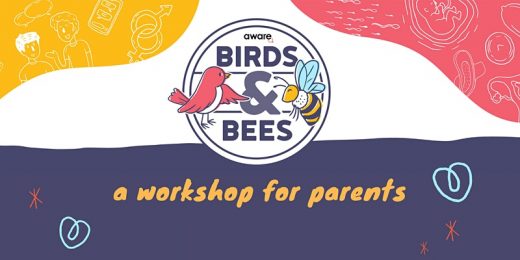
12, 19 & 26 April 2022: Birds & Bees, A Workshop for Parents

Most parents believe that it is important to talk to their children about sex, but many are unsure how to do it. Or, when to start having these conversations and about what. Where do children get answers to the questions they can’t ask their parents? The internet is one source, and young people themselves say they are most likely to ask peers and romantic partners. Wouldn’t you rather they turn towards you? The “ask-able” parent who is open to questions, ready to make an effort to listen without judgement and engage in a dialogue?

Who should attend:

Parents with children of all ages will benefit, although parents with tweens and teens are more likely to find the case studies and discussions in groups immediately relevant.

Date: Consecutive Tuesdays – 12, 19 & 26 April 2022 (Participants are expected to attend all three sessions)

Time: 8PM – 930pm

Workshop Fee: $20 (in total)

Survey: After you sign up, you will be asked to complete a short pre-workshop survey about the age(s) and number of your children. This is very important so that parents with children of similar ages can be grouped together to that you will get the most out of the workshop.

Special instructions for online workshop: As small-group discussions are a big part of the workshop, participants are expected to switch on their video as well as audio whenever possible, and to join in the discussions for maximum benefit.

Refunds and cancellations: Unfortunately we will not be offering refunds. In exceptional circumstances, if you are unable to attend the subsequent sessions, you will be able to join the next set of workshops if you write in to publiceducation@aware.org.sg in advance giving your reasons.

What the workshop will cover:

1. Communicating with your children

  • The importance of active listening
  • Tips on having constructive conversations

2. Consent

  • What is consent
  • The gold standard for consent
  • Consent in real life

3. Being an “ask-able” parent

  • Exploring own attitudes and value systems
  • Broaching awkward topics

4. Relationships

  • Signs of healthy and unhealthy relationships
  • Sexual Assault
  • Navigating the online world

Attend this workshop to explore how you can work on developing your own strategies to enhance the trust and bond with your child! Places are limited, so do sign up quickly!

**If you would like to join the workshop but cannot make it at this time, please fill in the indication of interest form.

Register here!

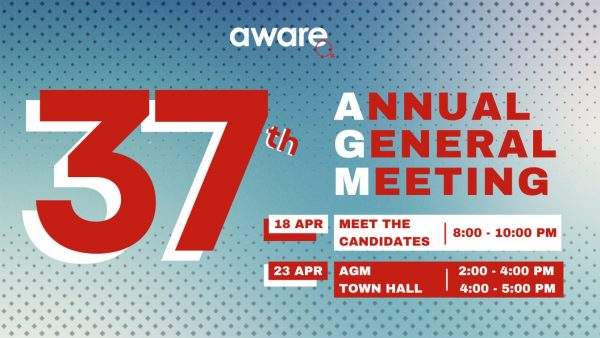
23 April 2022: Notice of AWARE’s 37th Annual General Meeting (Virtual)

Our 37th AWARE Annual General Meeting (AGM) will be held on Saturday, 23 April 2022. It will be virtual (via Zoom), because of the continuing restrictions on large gatherings. This is an election year, and members will be voting in the new Board.

 The Notice for the 37th AGM can be found here and will be sent to members on 11 March 2022. The Agenda and AGM documents, including candidate profiles, will be sent to members on 2 April 2022.

The AGM is a members-only event. If any AWARE member has not received an email with the Notice of the AGM, they should contact membership@aware.org.sg.

Pursuant to the COVID-19 (Temporary Measures) (Alternative Arrangements for Meetings for Registered Societies) Order 2020, the AGM will be held as follows: 

 a) Members may only attend the AGM by observing and listening to the proceedings via Zoom. Please register for the virtual AGM at tinyurl.com/awareagm2022registration by 5pm, 21 April. 

b) Members will not be able to submit questions live at the AGM. Instead, all questions must be submitted in advance by email or post or via the registration page by 5pm, 21 April.

c) Members may only vote BEFORE the AGM by submitting the Proxy Form online or by email or post by 5pm, 21 April. There will be no live voting during the AGM.

Please note that you may vote, using the Proxy Form, even if you are not able to attend the Virtual AGM. You may also choose to attend the Virtual AGM and not vote.

REMINDER: The AGM is open to AWARE members only, namely: current members, renewed members whose past membership lapsed not earlier than 23 April 2020, and new members who joined us as a member before 12 March 2022

If your membership has expired not more than two years before the General Meeting, or is close to expiry, it is time to renew it to ensure that you can attend the AGM. To check or renew your membership, login to our Membership Portal with your login name and password. You may contact membership@aware.org.sg if you have any questions.

International Women’s Month 2022: all AWARE partnerships and promotions


March is the busiest and most exciting time of the year for AWARE, with International Women’s Day on 8 March, and a veritable smorgasbord of collaborations, special discounts and events throughout the month. To help keep track of everything on offer, we’ve compiled the following page, which we’ll be updating periodically in the weeks to come. Browse away, and let’s #BreakTheBias together!

Follow us on FacebookInstagram and Twitter to stay in the loop.

Banner illustration by @sleepysoymilk


Promotions

Jump to:

AKOSÉE

Akosee IWD Promotion

Clothing label AKOSÉE is a 100% female-owned business. They are honoured to support AWARE this International Women’s Day by donating 2% of their March revenue to assist in our work in forging equality for all. Shop now!


BEDANDBASICS
BEDANDBASICS IWD Promotion

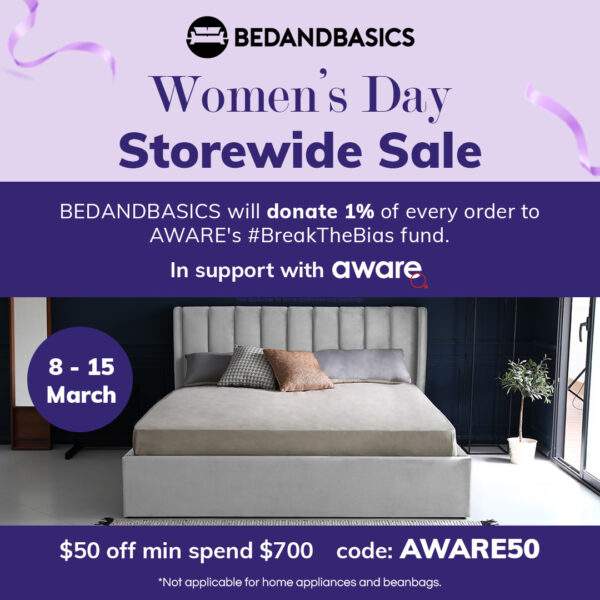
BEDANDBASICS is an e-commerce furniture and home goods retailer. They specialise in affordable and innovative furniture and feature exclusive designs at the lowest prices. Shop at BEDANDBASICS from 8-31 March and a percentage of each order will be donated to AWARE’s #BreakTheBias fund. Use code AWARE50 to get $50 off (min spend $700). With their 100-day return policy and lowest price guarantee, you can shop stress-free!


The Body Within x Localalla
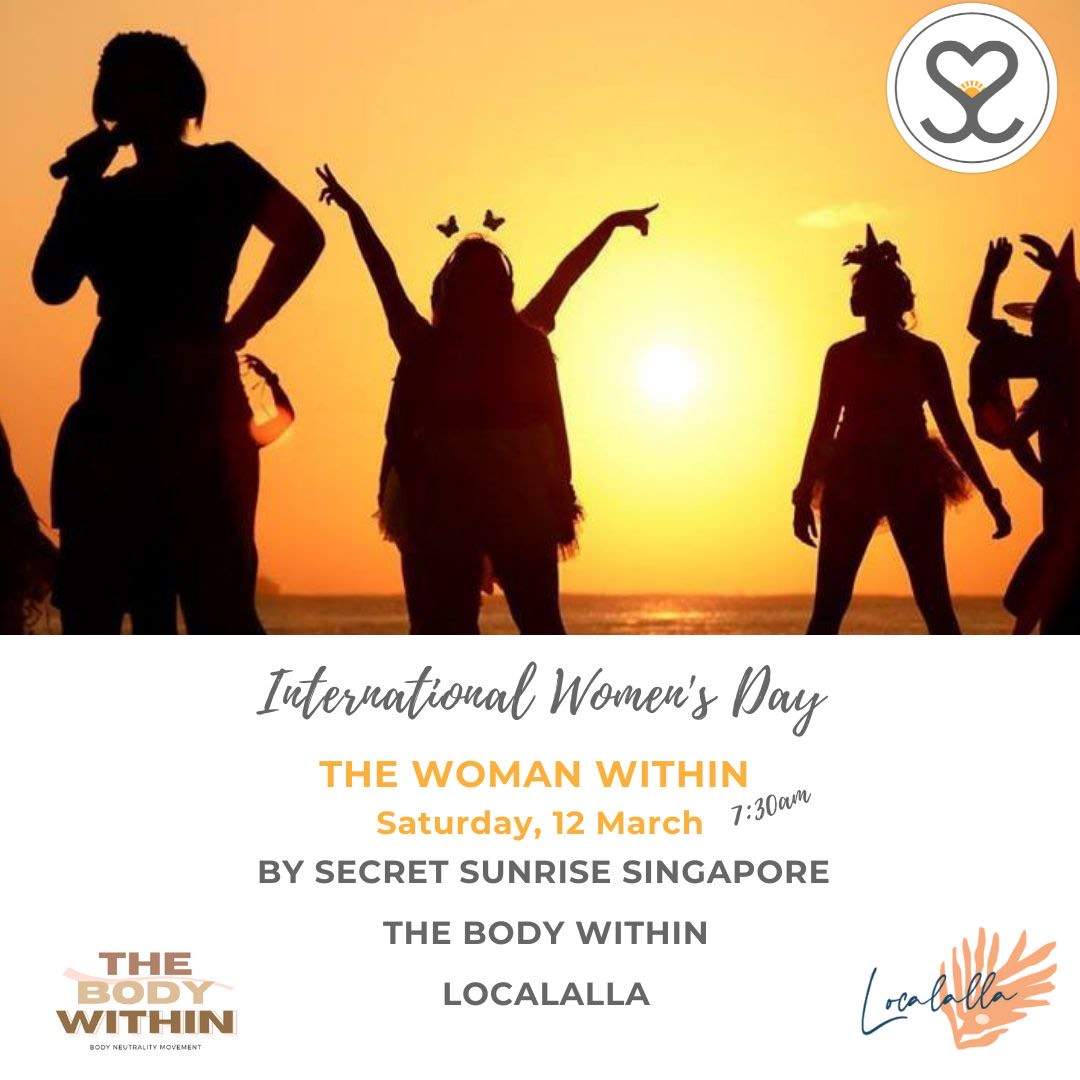
The Body Within and Localalla bring you a unique, enchanting, uplifting and empowering Secret Sunrise session on Sentosa. With “the woman within” for a theme, join them on Saturday, 12 March, 7.30-8.45 a.m.! Organisers have also partnered with two women-led businesses, The Breakfast Club SG and Le Petit Croissant, to provide attendees some delicious breakfast add-ons to enjoy after the session. Sign up now!


Buoy.swim

Buoy Swim IWD promotion

Buoy.swim aims to empower women with confidence and freedom. As a tribute to International Women’s Day, Buoy.swim has created a limited-edition lilac capsule collection of swimwear. Up until 31 March, Buoy.swim will be dedicating $5 from every purchase that includes an item from the lilac capsule to AWARE’s Hope in the Dark fund. Visit buoy.swim to check this collection out!


Botanico
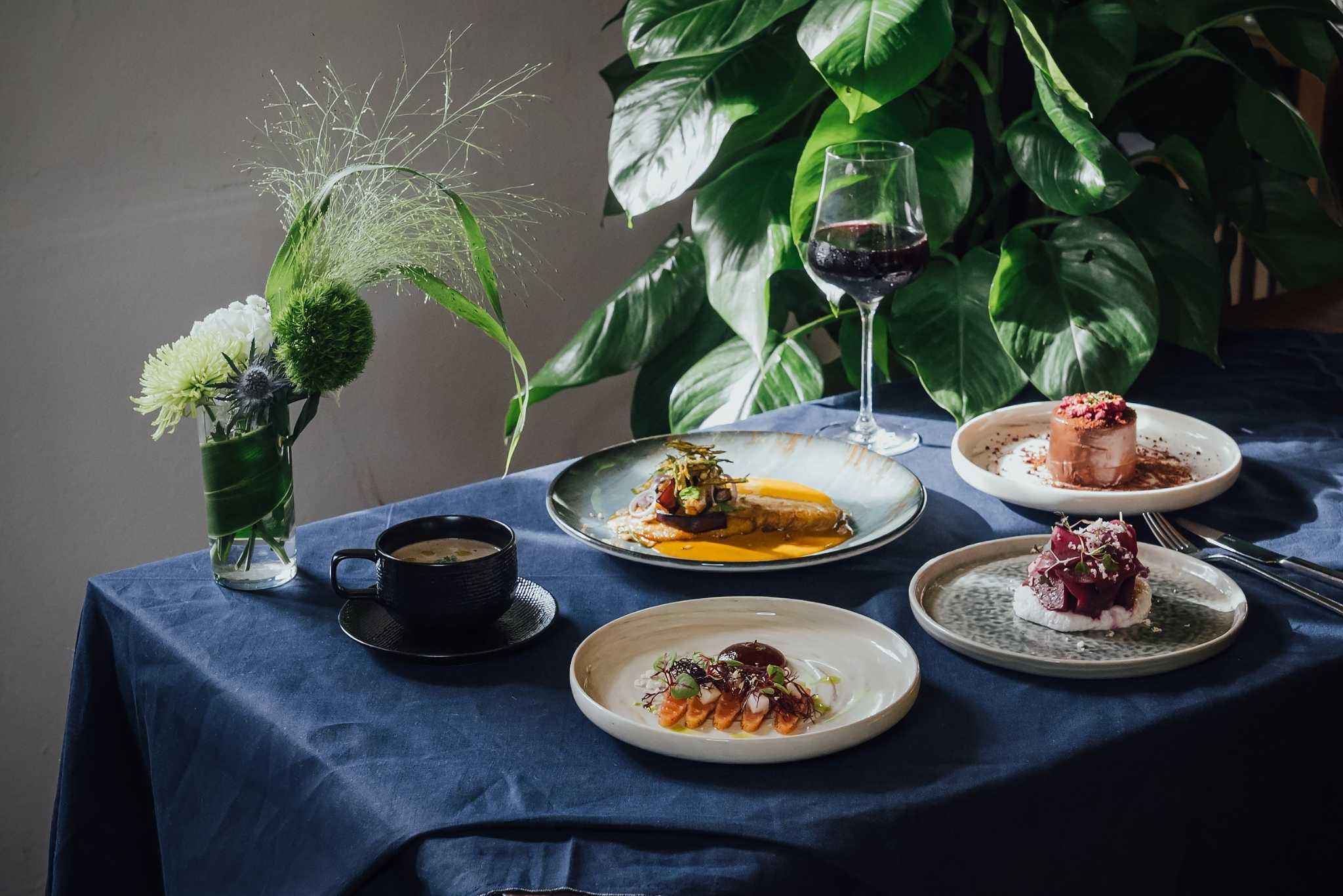
From 8-10 March, grab your female tribe for a night of dinner and drinks at Botanico at The Garage, with 5% proceeds going to support AWARE’s work. Choose between a three-course and five-course dinner of contemporary European cuisine with Asian inflections. Find out more and make your reservations here!


ByAlyMo

Alyshea Mo is a local freelance artist passionate about women’s rights and gender equality. Her brand, @byalymo, will be donating 10% of all proceeds to AWARE from 8-31 March for International Women’s Day. This is Alyshea’s second AWARE campaign since 2020 and she hopes that this year will be a similar success! Make purchases on her website.


Carrie K.
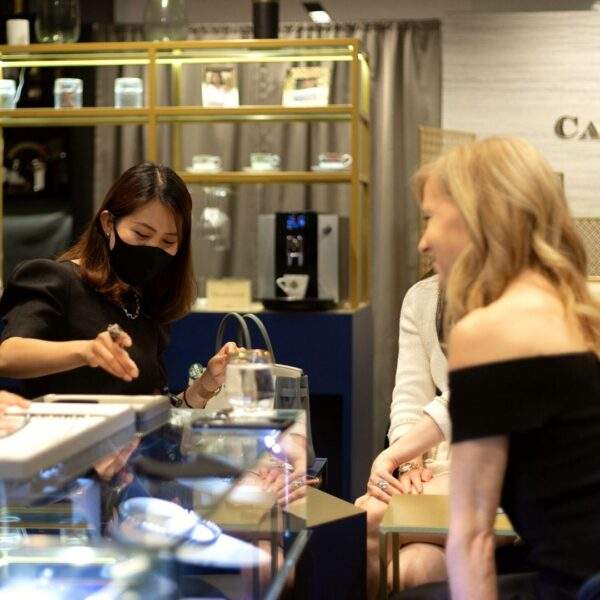
Carrie K. IWD promotion.
Host an afternoon tea with four friends at Carrie K.’s Pearl Bar Workshop. You’ll learn how to discern quality pearls, and jazz them up in your style. This is a 90-minute experience that you’ll enjoy in the great company of friends! One hundred per cent of ticket proceeds ($128/pax.) will be donated to AWARE. Email contact@carriekrocks.com for more details.


Chumma Dance x TwerkFitSG

With weekly sessions that feature a variety of styles and genres, Chumma Dance runs beginner-level dance classes focused on celebrating the South Asian identity. Their aim is to create and sustain a fun and safe community that allows for dancers to explore their personal connection to the art form. 45% of revenues from a special IWD session on 27 March will be donated to AWARE. Book your slot here!


Epigram
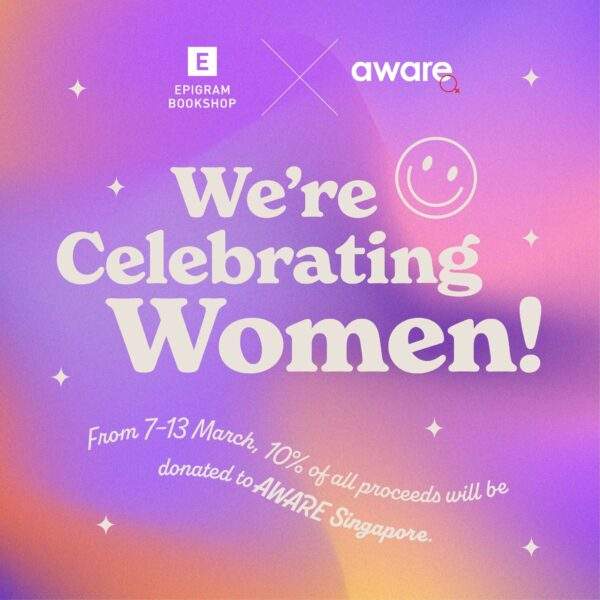

Epigram Books is a local publisher that champions Singapore literature. From 7-13 March, 10% of all proceeds online and at Epigram Bookshop’s pop-up at SAM @ Tanjong Pagar Distripark will be donated to AWARE Singapore. Shop now!


Esse

ESSE IWD Promotion

Esse has been paving the way for the slow and sustainable fashion movement since 2017. It was born out of a desire to redefine the way we approach fashion, inspiring us to consider our garment’s purpose and lifecycle. Esse merges elevated classics and timeless designs with environmental and social responsibility to create investment pieces that are thoughtfully made, whilst building a progressive supply chain and business model that encourages longevity, reduces waste and champions transparency. From 8 March to 31 March 2022, 10% of the proceeds from Esse’s IWD collection goes to AWARE’s IWD Fund.


Fat Prince
Fat Prince IWD promotion
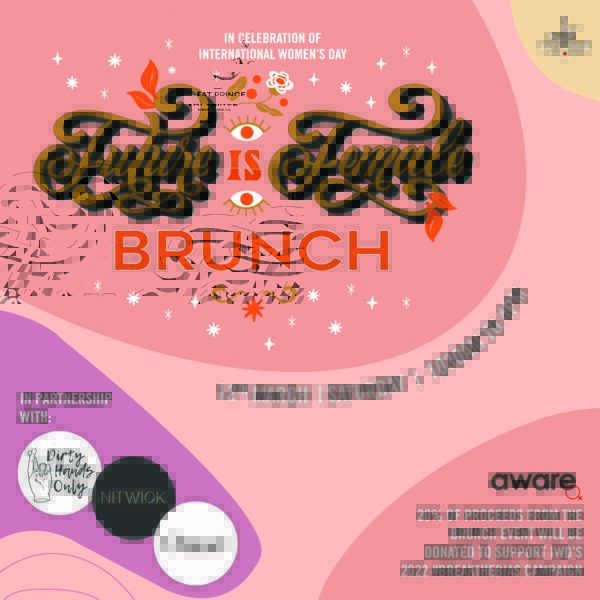
On Saturday, 12 March, Fat Prince is hosting a brunch to raise funds for AWARE’s #BreakTheBias Campaign, which imagines a world free of bias, stereotypes, and discrimination. Chef Simon, Bar Manager Agnes, and the Fat Prince team have some specials for one day only. Out of the kitchen, enjoy their Challah French Toast with lavender ice cream and applewood smoked honey. Over at the bar, look forward to brunch-themed “koktails” such as The Tale of the Tiki, with white rum, raspberry cordial, lime juice, pineapple juice; Stories of the Turkish Spritz with Turkish tea syrup, Aperol, grapefruit juice, sparkling wine; or The Cabbage Less Travelled with purple cabbage, rose cordial, citrus and soda. Those opting for the boozy free-flow will also get to participate in their raffle with gifts contributed by amazing partners @nitwick.sg, @dirtyhandsonly, and @omno.store. Twenty per cent of brunch proceeds will be donated to AWARE.

SATURDAY | 12 March
10.30am to 1pm
1.30pm to 4pm
Check out the brunch menu here.

Book here.


Ferne Health
Ferne health IWD promotion

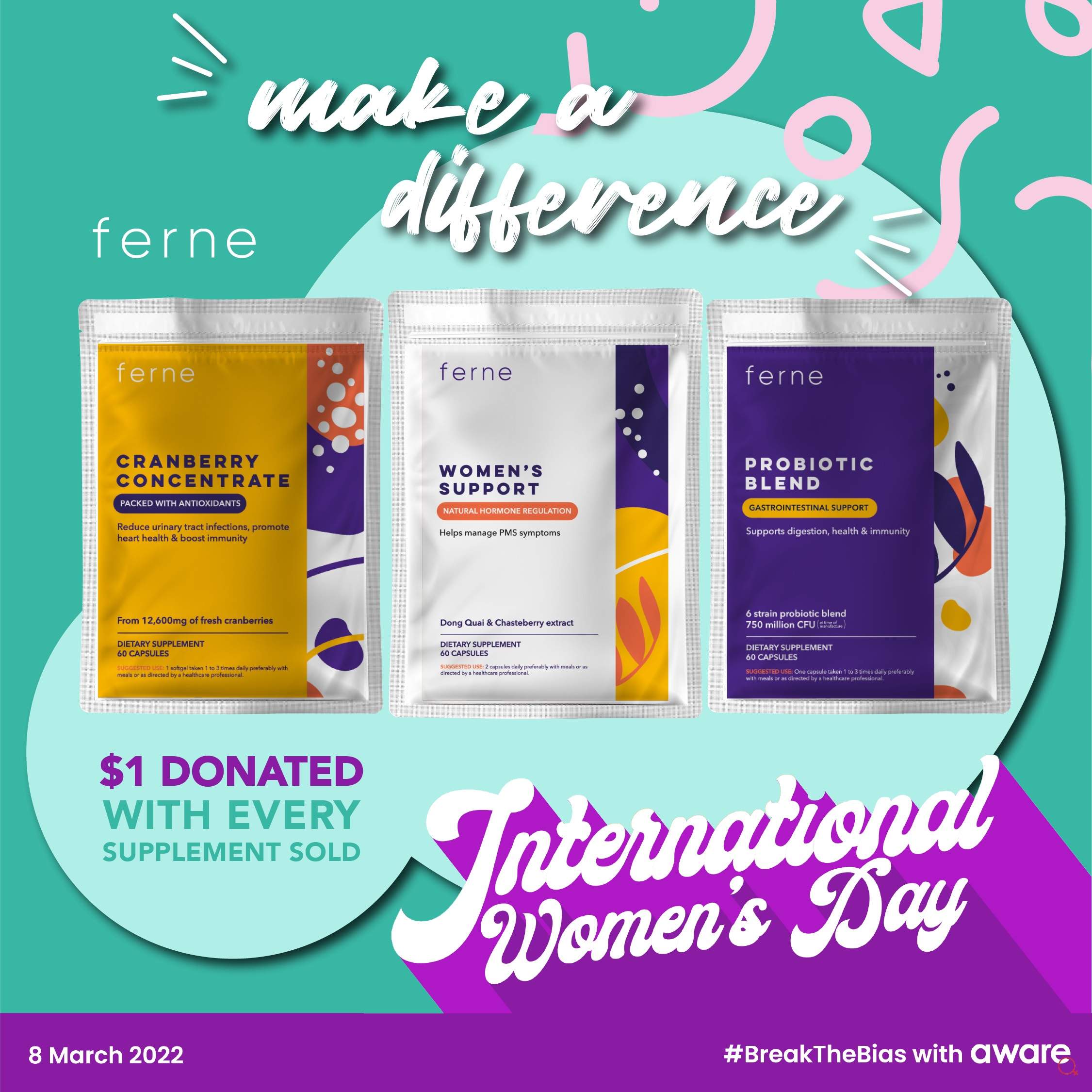
Ferne Health is a digital health platform that delivers accessible solutions for sexual health. It provides tele-consultations, self-testing kits or home visit tests, birth control and supplements. Ferne also actively advocates for body positivity, mental wellness and actively engages with like-minded brands to raise awareness on topics that promote self-care. Throughout the month of March, Ferne is pledging $1 for every supplement sold to AWARE’s IWD fund.


Firangi Superstar
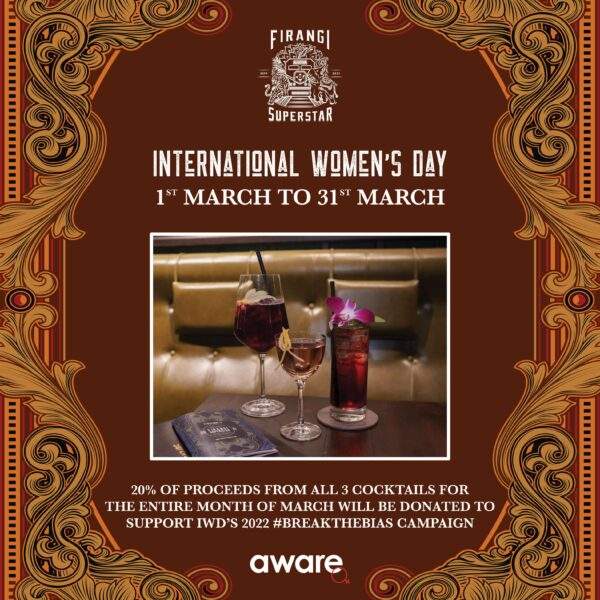

Throughout the whole month of March, modern Indian restaurant and bar Firangi Superstar will put forth three special drinks by Bar Manager, Benedict Poh: Zero Proof #4 (Shirley Temple), Cocktail #20 (Chai Wine Spritzer), and Cocktail #21: (Indian Manhattan) will be available from 1-31 March. Twenty per cent of proceeds from all three cocktails will be donated to AWARE’s #BreakTheBias Campaign.

Book here.


GRAYE
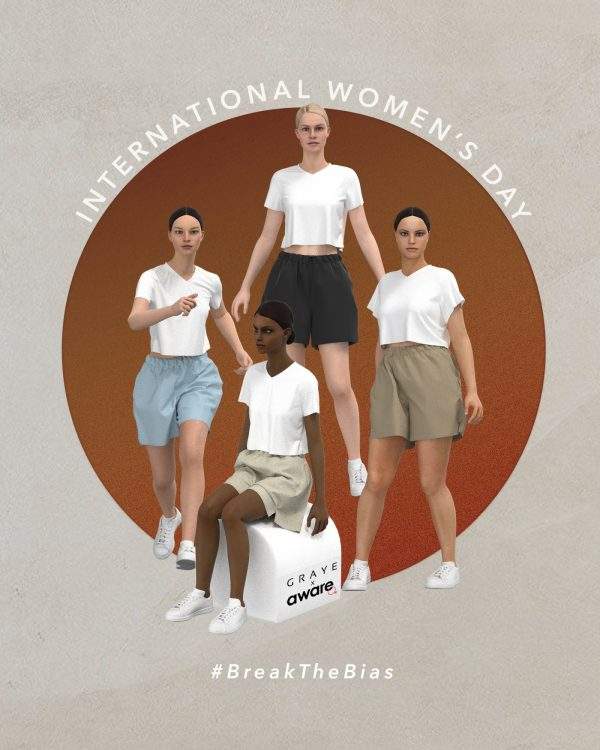
Embracing diversity and building a gender-equal community have always been key values to the team at GRAYE, as a fashion brand that caters to all genders. In March, GRAYE is contributing 10% of proceeds from the sale of their Unisex Boxer Collection to AWARE, in the hopes that the donation can be a small stepping stone to gender equality in Singapore.


Gryphon TeaGryphon Tea IWD promotio

Celebrate diversity this International Women’s Day with Gryphon Tea x Zee & Elle’s IWD exclusive sets: Morning Pick-Me-Up and Afternoon Indulgence, crafted to enliven your mornings and help build an inclusive world. Ten per cent of the proceeds from each set goes to supporting AWARE. Plus, receive a Gryphon Tea Eco Tote Bag (worth $5) with your purchase!


The Gym Pod
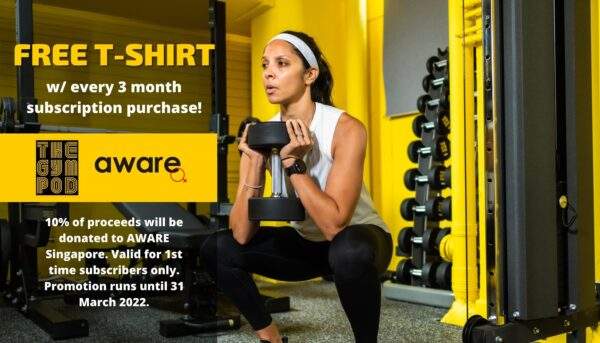
The Gym Pod IWD Promo

The Gym Pod is hosting a series of fitness classes for IWD! Come and join one of their many classes, ranging from Muay Thai to Dance. One hundred per cent of proceeds from these classes will be donated to AWARE. Each class fee includes a free exclusive Gym Pod shirt (colour of your choice). Once you have registered via the Gym Pod App, do look out for the email receipt to confirm your shirt sizing and other class details.

Also during the month of March, purchase a three-month subscription plan from the Gym Pod and receive an exclusive free shirt! The Gym Pod will be donating 10% of proceeds from these subscriptions to AWARE. In order to purchase, download the Gym Pod App and tap on the menu icon in the top left-hand corner. Tap on “Subscription” and select the “3 Month” option. Upon completing your purchase, you’ll receive an email receipt with a special link for you to fill out the relevant details to claim your T-shirt.


The Nail Social
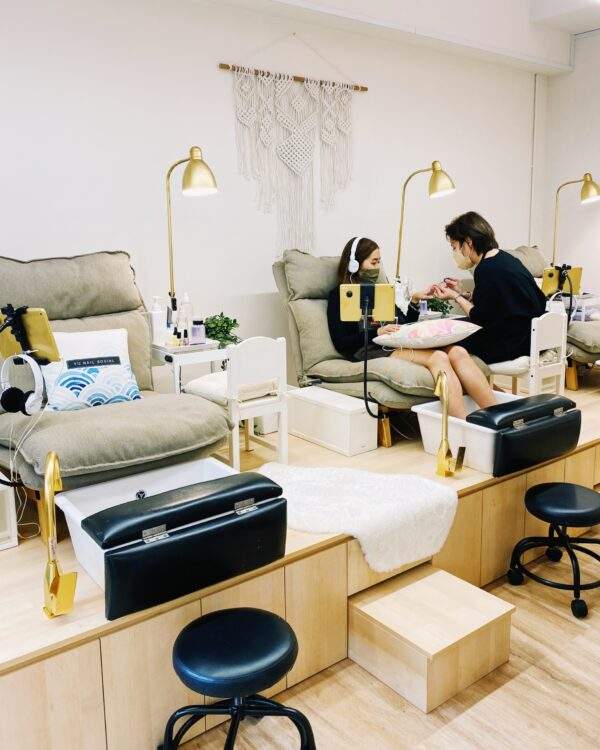
The Nail Social IWD Promo

In honour of International Women’s Day, Singapore’s first socially conscious nail salon, The Nail Social, is pledging $5 from every transaction’s total bill to AWARE’s IWD Fund from 1-31 March 2022. Pick a purple polish for your manicure or pedicure, and The Nail Social bumps the donation to $10! The fundraiser runs at both their Kreta Ayer and Haji Lane outlets. Head over to their website to book an appointment today.


Neon Pigeon
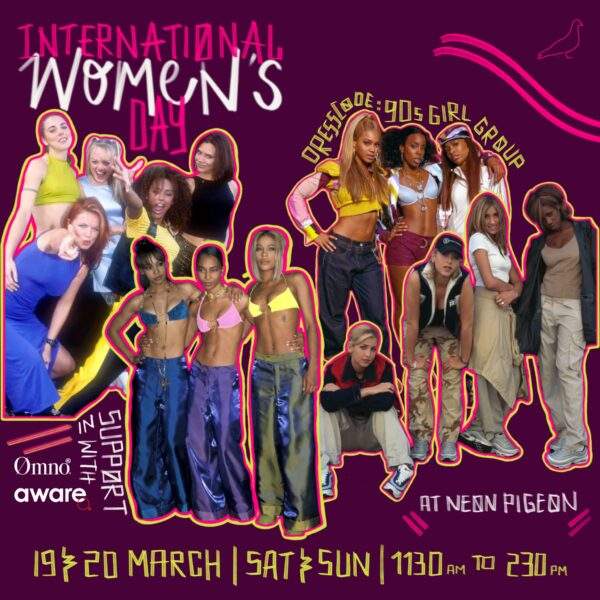
Neon Pigeon IWD promotion
It’s that time of the year again: time to get the gal gang and channel your inner Spice Girls, All Saints and TLC for an International Women’s Day Brunch on 19 and 20 March. Twenty per cent of proceeds from brunch on both days will be donated to support AWARE’s #BreakTheBias Campaign, imagining a world free of bias, stereotypes and discrimination. P.S.: The top three groups dressed as their fave ’90s band get a prize! Say you’ll be there.

SATURDAY and SUNDAY | 19 and 20 March
11.30am to 2.30pm
Check out the Brunch menu here.

Book here.


OliveAnkara

OliveAnkara IWD promotion

Slow fashion brand OliveAnkara’s IWD campaign is all about celebrating AWARE’s achievements, in the hopes of forging positive visibility for women all over. Their goal is to fundraise for AWARE by contributing 10% of profits made from the sales of the AJO AYE Collection in the month of March. Shop now!


Perk Coffee

Perk Coffee is the largest online coffee subscription in South East Asia. Born out of a passion for amazing coffee, they source high-quality specialty coffee and deliver it to your doorstep within 48 hours of roasting. During the month of March, in the spirit of looking beyond themselves, they are collaborating with Sttoke—the world’s first shatter-proof ceramic reusable cup—and give 10% of proceeds from every Sttoke Classic Cup sold from 1-31 March to AWARE. Even if you’re not a coffee person, Sttoke is great for any beverage as it keeps temperatures good for up to six hours. Buy one now!


Quantum
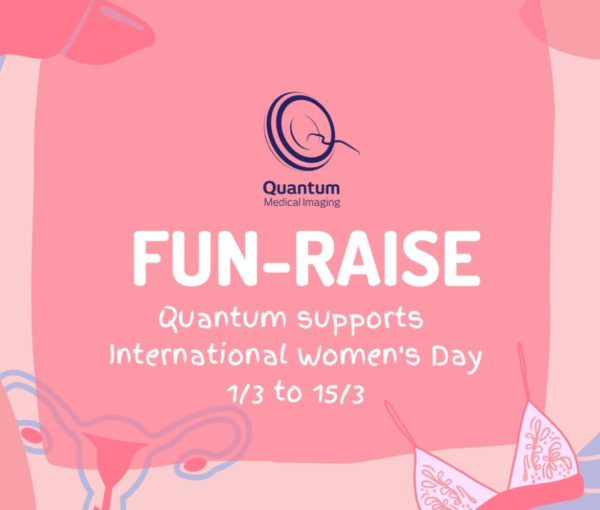

In support of inspirational women around the world, Quantum (a one-stop centre for diagnostic imaging and health screening services) is launching FUN-RAISE this IWD. From 1-15 March, they will donate $10 from every health screening or ultrasound package purchased to AWARE. To add on, local enterprise wan2tree will be at #QMIconnect—the first and only insta-corner in a medical centre—to conduct complimentary terrarium workshops on 8 March 2022. Be ready to work those creative juices and create your very own masterpiece. Who says that you can’t care for yourself and others at the same time, and still have a dose of fun? Book an appointment on their official landing page.


Revered Artistry
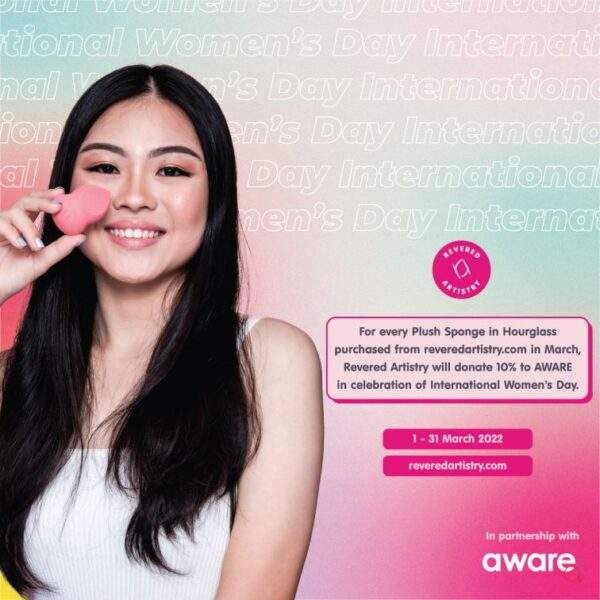
Revered Artistry IWD promotion.
In celebration of International Women’s Day, Revered Artistry is partnering with AWARE to continue to give voices and action to women, to strive for a gender equal world, a world free of bias, stereotypes, and discrimination. Throughout the month of March, Revered Artistry will donate 10% of the proceeds from the sale of their Plush Sponge in Hourglass to AWARE. Plush Sponge is a super soft and gentle makeup sponge that is latex-free and comes in a variety of colours. It’s the perfect sponge for someone who wants to achieve a flawless and airbrushed look. Shop now!


r y e
r y e is a Singapore-based womenswear label that aims to take fashion at a slower pace through considered designs. From 8–31 March, contribute to r y e’s fundraiser by purchasing a donation card here—100% of the proceeds raised will be directed towards AWARE’s Sexual Assault Care Centre.


SABRINAGOH
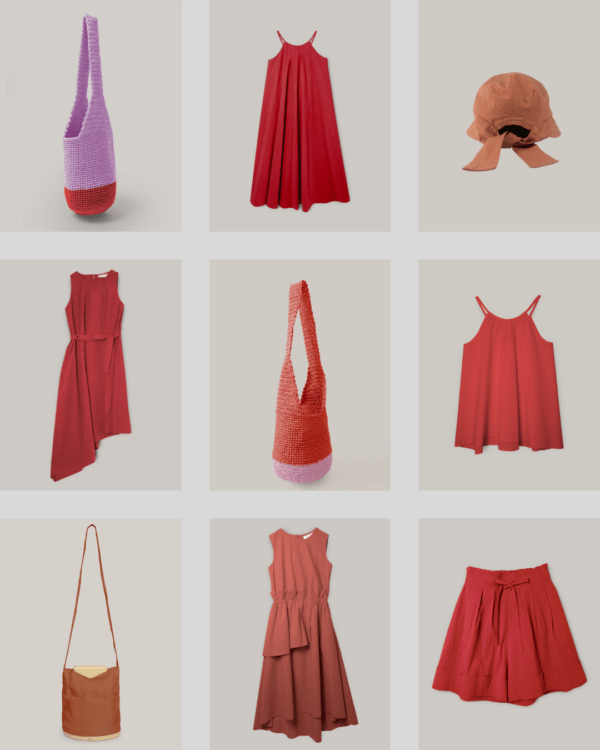
SABRINAGOH IWD Promotion

Enjoy 10% off for all red-colour products under the #BreakTheBias Collection online. SABRINAGOH is donating 10% of the proceeds from this collection to AWARE for the whole month of March 2022. Shop now!


Salient Label

Salient Label is a minimalist womenswear brand based in Singapore, offering thoughtful designs that are timeless and versatile in styling, brought together to invoke inspiration, confidence and joy. For the whole of March, Salient Label will be contributing 10% of sales from salientlabel.com to AWARE. Shop now!


Sol Luminaire
From 8 to 15 March, Sol Luminaire will donate up to 5% of nett sales per invoice to AWARE. At this local lighting house, discover a curated selection of luminaires (at up to 15% off), including designer products and homeware from the LAB2.1 and Galerie 5. Book an appointment to the galleries at +65 9106 2210, or visit their website.

[Postponed] Birds & Bees, A Workshop For Parents

Most parents believe that it is important to talk to their children about sex, but many are unsure how to do it. Or, when to start having these conversations and about what. Where do children get answers to the questions they can’t ask their parents? The internet is one source, and young people themselves say they are most likely to ask peers and romantic partners. Wouldn’t you rather they turn towards you? The “ask-able” parent who is open to questions, ready to make an effort to listen without judgement and engage in a dialogue?

Who should attend:

Parents with children of all ages will benefit, although parents with tweens and teens are more likely to find the case studies and discussions in groups immediately relevant.

Date: This edition of Birds & Bees has been postponed to April 2022

Workshop Fee: $20 (in total)

Survey: After you sign up, you will be asked to complete a short pre-workshop survey about the age(s) and number of your children. This is very important so that parents with children of similar ages can be grouped together to that you will get the most out of the workshop.

Special instructions for online workshop: As small-group discussions are a big part of the workshop, participants are expected to switch on their video as well as audio whenever possible, and to join in the discussions for maximum benefit.

Refunds and cancellations: Unfortunately we will not be offering refunds. In exceptional circumstances, if you are unable to attend the subsequent sessions, you will be able to join the next set of workshops if you write in to publiceducation@aware.org.sg in advance giving your reasons.

What the workshop will cover:

1. Communicating with your children

  • The importance of active listening
  • Tips on having constructive conversations

2. Consent

  • What is consent
  • The gold standard for consent
  • Consent in real life

3. Being an “ask-able” parent

  • Exploring own attitudes and value systems
  • Broaching awkward topics

4. Relationships

  • Signs of healthy and unhealthy relationships
  • Sexual Assault
  • Navigating the online world

Attend this workshop to explore how you can work on developing your own strategies to enhance the trust and bond with your child! Places are limited, so do sign up quickly!

**If you would like to join the workshop but cannot make it at this time, please fill in the indication of interest form.

This edition of Birds & Bees has been postponed to April 2022.

Email publiceducation@aware.org.sg with any inquiries.

Reporting workplace sexual harassment: Dealing with retaliation

This op-ed was originally published in The Straits Times on December 24 2021.

For three in 10 victims of workplace sexual harassment who report their experiences, instead of setting them on a path to justice and recourse, it ends up triggering some form of retaliation – from perpetrators, employers and/or peers.

That was a disconcerting new finding from a study, I Quit, by gender advocacy group Association of Women for Action and Research (Aware) released earlier this month. I Quit is a qualitative research report on the career and financial impact of workplace sexual harassment on women in Singapore.

Whether done to protect an organisation’s image, send a message that complaints are unwelcome or ensure that employees’ attention remains on their work, retaliation makes an already difficult situation even more deplorable for harassment victims. It compounds the trauma already suffered from the harassment itself and contributes to feelings of isolation, helplessness and distrust.

For this reason, when thinking about how to protect workers in Singapore from workplace sexual harassment, an essential part of the equation involves protection from retaliation. Without that, it’s hard to imagine workplaces being truly safe, transparent and fair in their functioning. So, what more can be done to protect them?

Work-related retaliation

What does retaliation look like? Clear-cut scenarios might involve a survivor being fired for not being “a good fit” two weeks after reporting that her manager sexually harassed her. In reality, however, employers tend to use more subtle tactics to escape detection.

Reena (not her real name), who worked in finance, was verbally harassed by a key stakeholder at her company. On reporting this, her manager started unrealistically shortening her work deadlines. Tasks ordinarily requiring two weeks to complete were expected to be done within three days, and she could not discern any justification for this change.

Other forms of retaliation that women experience include denial of benefits or promotions, unfair performance reviews, dismissal and sudden disciplinary action.

Another I Quit respondent, Mei Ling (not her real name), who worked in a school, experienced verbal sexual harassment by a colleague and filed a report with the help of her supervisor. However, instead of treating the report with seriousness and investigating her complaint, the school principal made allegations that surprised her. “Teachers are ranked and, at that point, I was being ranked unfairly,” she said. “There were accusations made about my professionalism… The principal insisted that I didn’t go into class when I didn’t feel like it, which was not true.”

As one might expect, retaliation in the form of adverse work-related actions is typically perpetrated by those with more power than the victim in the organisational hierarchy. A study which surveyed 1,167 United States federal employees found that employees with lower status within their organisations experienced higher rates of retaliation for reporting harassment.

Social retaliation

In addition to these work-related actions, I Quit found another set of retaliatory behaviours: ostracism, name-calling and blame. These are less tangible than direct work-related actions and typically originate from peers or subordinates.

In some cases, retaliation is experienced in the form of ostracism alone. One respondent, a non-profit employee who was subject to multiple inappropriate sexual comments from colleagues, said that after disclosing her experience, “a lot of the middle management who were on the same level as me didn’t really speak to me as much any more… I wasn’t involved in a lot of important things”.

For others, such as Sada (not her real name), a tech employee who experienced verbal and online sexual harassment, social retaliation took on a combination of ostracism and name-calling: “I could hear people, murmuring and echoing around me, ‘This is a troublemaker’… No one wanted to speak with me any more.” The few co-workers who did speak with her told her that she “shouldn’t have reported the harassment at all”, expressing a commonly held assumption that non-physical sexual harassment isn’t really serious – “(the perpetrator) did not even touch you, so why did you report it?”

Experts suggest that social retaliation may be more pervasive because of its relative social acceptability. After all, there’s nothing overtly threatening about ostracism – it may be dismissed as personal preference (“not everyone in the workplace gets along”) or even unintentional omission (“I forgot to invite them for a work meeting”).

However, such retaliation strikes at the heart of the human need to belong. While work-related actions alter material aspects of a victim’s job, social retaliation alters her interpersonal relations at work, which can affect her productivity, job satisfaction and ultimately her desire to continue in her role.

Effect on sexual harassment reporting

Retaliatory action silences and isolates victims by discouraging them from filing formal reports, confiding in their colleagues and, often, seeking any help at all. In fact, research suggests that employers do not even need to perform retaliation to deter reports – the mere threat of retaliation is enough. I Quit found that the fear of retaliation alone discouraged another two in five harassment victims from making reports.

Although there is not much Singapore-specific data on retaliation, studies in other countries show that these fears are not unfounded. A US-based research study that analysed all sexual harassment complaints filed with the US Equal Employment Opportunity Commission and state Fair Employment Practices Agencies between 2012 and 2016 found that about two-thirds of people who reported workplace sexual harassment to a state or federal agency experienced negative consequences at work.

In fact, a strong correlation exists between instances of sexual harassment and negative consequences at work: Research has shown that the more frequently mistreatment occurs in a given workplace, the more frequently victims encounter retaliation, both professional and social, for speaking out.

What does this mean for Singapore’s workplaces and workers? Obviously, harassment in the workplace can’t be properly addressed when an abundance of incidents go unreported. Beyond that, though, not reporting one’s harassment is also associated with health-related costs such as increased risk of anxiety, depression and diminished psychological well-being. Under-reporting also prevents employers from taking early action against workplace harassment.

Taking action

The Tripartite Advisory on Managing Workplace Harassment helpfully lays out the principle of non-retaliation in its guiding principles for employers: “The reporting informant must not be victimised by the employer following the making of such a report.”

Employers can certainly build on this principle to draft a robust anti-retaliation policy, but since the number of employers in Singapore who have adopted the Tripartite Advisory is not tracked, it is impossible to estimate how many offer protection from retaliation.

Employers and employees alike need more information on retaliation, particularly the different forms it can take, its consequences and how best to tackle it. For example, the advisory should clarify whether a victim who has already filed a sexual harassment complaint can also file a separate complaint for retaliation. Similarly, what consequences are borne by employers found culpable of retaliating or encouraging retaliation, intentionally or otherwise? This should also be clarified.

The Tripartite Standard on Grievance Handling, which provides guidance on the management of employee dissatisfaction or complaints, including workplace harassment, had been adopted by only 1,200 employers, or 0.4 per cent of all business entities in Singapore, in 2019.

Meanwhile, the Tripartite Guidelines on Wrongful Dismissals protects against retaliation when an employer dismisses an employee to punish the employee for exercising his or her employment right – such as filing a mediation request, or declining a request to work overtime.

However, it doesn’t provide protection from types of retaliation that do not end up in dismissal but are nevertheless professionally, psychologically and physically insidious.

The Government should introduce national legislation that explicitly protects against retaliation, to deal with workplace sexual harassment and mandate that employers implement well-defined sexual harassment policies and gender-sensitive training.

The oft-cited concern that decisive action against harassment or retaliation will lead to heightened litigiousness in the workplace needs to be put aside – it does not justify turning a blind eye to harassment victims’ protracted punishment.

Shailey Hingorani, Head of Research and Advocacy, AWARE