
Year: 2011

AWARE’s fruitful week at the United Nations

After years of preparation, the AWARE’s CEDAW team saw our hard work pay off with our successful lobbying efforts at the United Nations.

By Nadzirah Samsudin
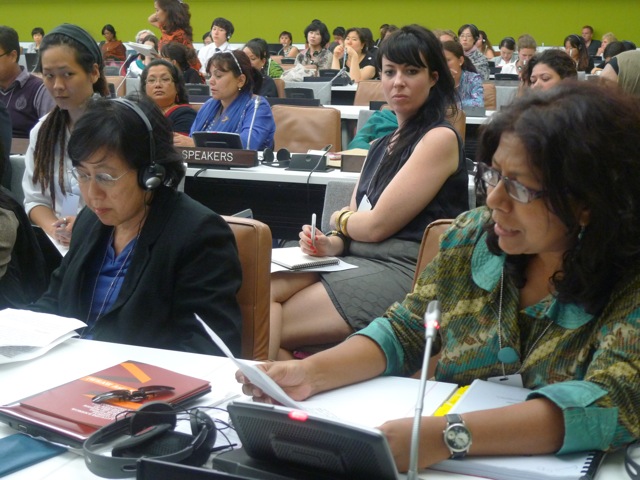
After 10 intense days in New York, AWARE’s CEDAW team is back home and geared up for the next phase of making CEDAW real in Singapore. Here’s a short recap of what happened during our trip:

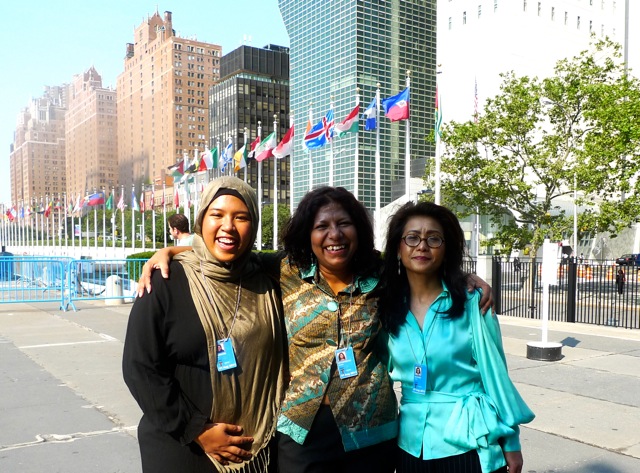
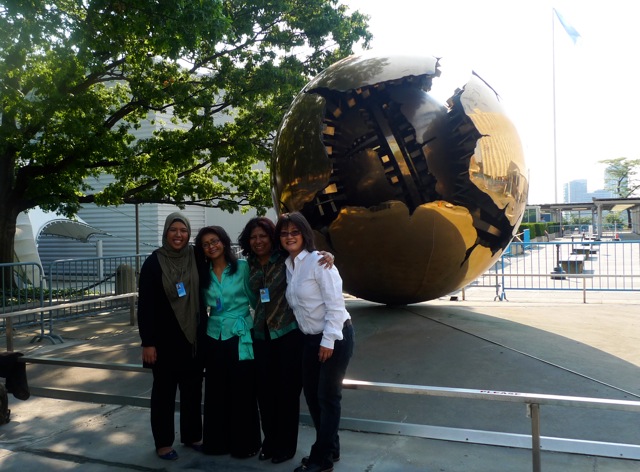
Our CEDAW team at the UN comprised: team leader Braema Mathi, Chair of AWARE’s CEDAW Committee; Halijah Mohammad, AWARE Vice-President and CEDAW Committee member; Dana Lam, AWARE’s immediate Past President; and myself, AWARE’s Research & Advocacy Executive.

We arrived in New York on July 14, jet-lagged after a long haul flight. We grabbed as much sleep as we could, as training was due to start the next day at 9am. This three-day training was conducted by International Women’s Right Action Watch (IWRAW) Asia Pacific, to prepare us for the week ahead. It included practice sessions for our 10-minute oral presentation to the United Nations’ CEDAW Committee, how to prepare for our one-hour lunch briefing with the UN experts, tips for effective lobbying and how to ground the CEDAW framework in national realities.

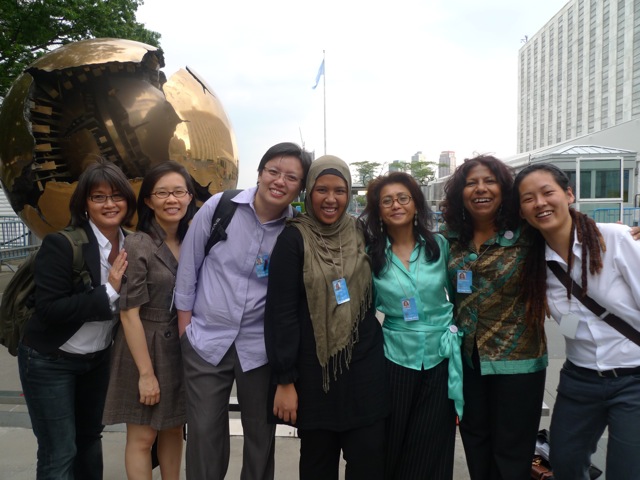
There were 10 representatives from Singapore NGOs at this training session: The 4 of us from AWARE; Jean Chong, Kelly Then and Vanessa Ho from Sayoni, a group representing LGBT rights; Bridget Tan from the Humanitarian Organisation for Migration Economics (HOME), a group representing migrant workers’ rights; and Laura Hwang and Malathi Das from the Singapore Council of Women’s Organisation (SCWO), the national co-ordinating body of women’s organisations in Singapore.

The first big event for all NGOs at the UN happened on July 18 – the day of our oral presentations. Singapore’s NGOs got a total of 10 minutes for our presentations, and this time was divided equally among AWARE, HOME, Sayoni and SCWO.

It was decided that our line-up would be strategic, with the groups representing more marginalised women going first. So the oral presentation was started by Sayoni, followed by HOME, and then AWARE and SCWO. AWARE lobbied for the removal of reservations, the importance of national machineries, issues relating to women’s employment and the discrimination of vulnerable groups. SCWO lobbied for healthcare for ageing women and economic and social benefits for women.

Each group had only 2.5 minutes to speak and we tried our very best to fit in all the issues we wanted to highlight. After the presentation, the UN’s CEDAW experts asked questions to clarify the issues that they needed more information on. Questions posed to the Singapore NGOs included:

  • Does the electoral process protect women?
  • Do female candidates running for elections suffer from sexual and physical violence?
  • Is the law gender-neutral when it comes to regulating the status of foreign spouses?
  • What is the process for a foreign spouse to become a citizen?

As the Singapore government was due to report to the UN CEDAW Committee on July 22, the AWARE team had a bit of a breather after our oral presentation. We decided to spend some time observing how the NGOs from South Korea and Nepal lobbied the UN experts in order to influence the UN CEDAW Committee’s questions and recommendations for their respective governments.

The AWARE team also did some lobbying of our own. We introduced ourselves to the UN CEDAW Committee members, and passed them updated information on issues like sex trafficking. We also lobbied for the following issues:

  • The need for constitutional amendments to include sex and marital status
  • The importance of making the Office For Women’s Development an independent body. (Formerly known as the Women’s Desk, this unit is currently part of the Ministry of Community Development, Youth and Sports’ (MCYS) Family Division Unit
  • The process of citizenship for foreign women married to Singapore men
  • The vertical and horizontal segregation of women at the workplace

Days passed quickly and everyone was eagerly anticipating July 21, the day when the Singapore NGOs would host a lunch briefing for the UN experts. The Singapore NGOs collectively agreed to spend a total of 11 minutes during this session talking about issues like the removal of reservations, sexual orientation and gender identity, trafficking and female leadership (this worked out to 1 minute per issue) .

The remaining time was used for a discussion. We encouraged the UN CEDAW Committee members to ask us questions – and boy, did they ever! One of the experts, Victoria Popescu, wanted more information on violence against women, particularly with respect to disadvantaged groups; Niklas Brun wanted to know more about sexual harassment in the workplace and how it was dealt with. Patricia Schulz asked if the Singapore NGOs present had done any lobbying for other treaties. All these questions, and more, were deftly answered by members from the Singapore NGOs.

D-Day arrived on July 22. After a week’s worth of lobbying, it was time for the constructive dialogue between the UN CEDAW Committee and the delegation from the Singapore government. Led by Madam Halimah Yacob, the Minister of State for MCYS, the government delegation of 15 people were well-prepared and very co-ordinated in their responses to the questions raised by the CEDAW experts.

This five-hour session saw the UN CEDAW Committee asking the Singapore government delegation 116 questions on the measures taken to ensure the non-discrimination of women in Singapore.

The AWARE team is proud to note that our lobbying efforts were successful – the UN CEDAW Committee members took heed of the issues raised by the Singapore NGOs during our oral presentation and lunch briefing. Some experts gave great comments about AWARE’s 2011 CEDAW Shadow Report, and how we took pains to make it more user-friendly. One expert described it as one of the best Shadow Reports she had read in her 5 years on the UN CEDAW Committee. We also hear that IWRAW trainers will be sharing AWARE’s lobbying approaches and briefing documents with NGOs from other countries.

At the end of the week, there was one more IWRAW training session to attend. It was a discussion on what we should do next: How are we going to make CEDAW more palatable? How are we going to spread the word? How are we going to use it to fight discrimination against women? This is only the beginning of a very exciting journey!

The UN CEDAW Committee members are now in closed-door meetings to discuss the constructive dialogue they had with the Singapore government delegation. In three weeks time, they will issue a Concluding Observation – recomendations to the Singapore government on how it can further improve its efforts to prevent discrimination against women in Singapore.

If you would like to join us in our efforts to make CEDAW real in Singapore, come for the CEDAW 101 Workshop on August 16. Sign up for this event here.

The AWARE CEDAW team is grateful to AWARE for supporting our work at the UN and for helping to sponsor our attendance at the UN’s 49th CEDAW Session. We are also grateful to IWRAW for sponsoring Braema Mathi’s trip and for off-setting the training cost for Halijah Mohammad.

Singapore government’s CEDAW delegation reports to the UN

The following are some highlights from the Singapore government’s responses to questions posed by the United Nations’ CEDAW Committee on July 22

On anti-discrimination legislation

  • While Singapore lacks specific legislation prohibiting discrimination based on gender, article XII of its Constitution guarantees the equal protection of all people under the law, and therefore prevents discrimination based on gender, marital status, age, disability, or other such grounds.
  • The government has decided against acceding to the CEDAW’s Optional Protocol, which allows the UN CEDAW Committee to receive complaints from individuals or groups.

On the position of CEDAW in Singapore’s domestic law

  • The intent and purpose of Singapore’s domestic laws are aligned with CEDAW, if not with all of CEDAW’s exact language.
  • CEDAW’s provisions do not automatically become part of the law. But a woman facing discrimination can invoke the principle of equality under Singapore’s national law.

On other human rights treaties

  • The Singapore government does not want ratification for the sake of ratification. The fact that it has not ratified these treaties does not mean that the principles of these treaties are not applied. It simply means that the government does not agree with certain provisions in these treaties.

On the lack of a national human rights commission

  • This is not necessary, as the aim of achieving gender equality can be achieved through existing mechanisms.
  • The Office of Women’s Development is also able to address new and emerging issues in a more targeted way.

On gender equality measures in workplace

  • Paternity leave, though not mandated, is offered by nearly half of employers.
  • Efforts to place more women on the boards of publicly traded companies are under way.
  • There are 50 continuing education and training centres available to all, regardless of gender. More than 270,000 workers were trained in 2010 alone, and half of these were women.

On discrimination in the workplace

  • National legislation offers avenues for both complaint and redress.
  • Further, the Tripartite Alliance For Fair Employment Practices (TAFEP) aims to change the mindsets of employers by drawing up guidelines for fair employment practices, which provide for equal hiring practices.
  • Only 0.2 per cent of women have cited discrimination as their reason for not working.

On discrimination of pregnant employees

  • Singapore is making progress through incentives to companies for instituting flexible work patterns.
  • Singapore Airlines is making changes to its policy on pregnant women.
  • Overall, complaints on pregnancy-related discrimination have decreased in recent years.

On sexual harassment in the workplace

  • Singapore has a tripartite approach. When the harassment is of a criminal nature, offenders can be prosecuted and face high fines, caning or prison time.

On sharia

  • Sharia makes an allowance for men to engage in polygamy under very exceptional circumstances. Only 0.08 per cent per cent of marriages are polygamous and this represents a significant decline.
  • Another sharia provision that prevents the full withdrawal of reservations is a rule that women who wish to get married must have a legal guardian, or a wali. However, the right of a woman to be heard is integrated into this wali requirement under Singapore’s national laws.
  • In 2006, a fatwa was enacted allowing women to sit on the appeals boards of sharia courts.
  • Women have also sat on the Islamic Religious Council, and 7 female religious scholars have been appointed to serve as advisers to the Council.
  • On reservations to article 16, some progress has been made, but it is important for Singapore to move at a pace acceptable to its community at large. The future focus will be on improving the status of women under Muslim law.

On marital rape

  • Marital rape has been addressed as far as it can be at this time, but it will be revisited in the future.

On the budget for women’s issues

  • It is difficult to state a figure as the ministries all work collectively. Through all those offices, a strong budget is available.

On sex-trafficking

  • While Singapore is not a party to the Palermo Protocol to Prevent, Suppress And Punish Trafficking In Persons, the language of that instrument has been adopted in addressing this issue.
  • There is a template for law enforcement officers to elicit information to determine whether or not a person is a victim, and they are trained to deal with trauma.
  • Victims are provided with shelter. At present, these facilities were only 80 per cent full.
  • Singapore is part of an initiative of the organisation Child Wise on child sex tourism.
  • Diligent border checks interrupt the supply of victims, and perpetrators are subjected to tough penalties.
  • In 2010 alone, 24 child sex tourism perpetrators were arrested.

On the rights of foreign domestic workers

  • Singapore’s strong regulatory framework has drawn many foreign domestic workers. 7 out of 10 workers surveyed said they intended to stay in Singapore beyond the length of their current contract, and almost 90 per cent were aware of their employment rights.
  • Employers who do not provide their foreign domestic workers with sufficient rest are liable to be punished.
  • The government is considering a legal weekly requirement for rest; however, the issue is a complex one and requires wide consultation.
  • Medical insurance for migrant workers has been raised from $5,000 to $15,000 annually.

On body image

  • Self-esteem and positive body images are used in schools.
  • Medical practitioners who do not follow national laws on aesthetic practices are liable to penalties.

On the definition of “head of household”

  • Efforts have been made in recent years to emphasise the importance of role-sharing in families.
  • Initiatives are under way in public schools to promote active fatherhood.
  • There is no legislation requiring the heads of household to be men; any other understanding of the matter is a misconception.

On national service

  • Currently, only male citizens have to serve mandatory military service. However, no rule exists to exclude women from serving if they so choose.
  • It is not true that men in national service earn more than women. In fact, in many occupations, the reverse is true.

On special temporary measures (i.e, affirmative action)

  • Government policies are, by and large, gender-neutral, and special temporary measures are not required.

On women in politics

  • There is a women’s wing in the ruling party structure, which pursues reforms to policies affecting women.
  • Women in Parliament have more impact than their numbers would suggest.

On discrimination of the LGBT community

  • There are no plans in place to repeal Section 377A of the Penal Code. The general approach is that the provision will not be enforced unless a complaint is filed.
  • There is no systemic discrimination against lesbian, gay, bisexual or transgender people. All movies, including those with such themes, are subjected to the same review by a board of censors.
  • Most of Singapore’s laws are gender-neutral and does not consider the sexual orientation of a person in their application. Therefore, all rights, services and mechanisms available are accessible by both hetero- and homosexual people alike.

On the welfare of foreign brides

  • Such wives are able to apply to stay in Singapore on their own merits, regardless of actions taken by a spouse or ex-spouse.
  • Divorced foreign wives can apply for special visas; other immigration laws are gender-neutral and a minimum residential period is applied before permanent residency is granted.
  • Divorced spouses retain their permanent residency or citizenship gained while they were married, and foreign wives receive equal protection under the law.
  • Approximately 9 out of 10 citizenship applications from foreign spouses received between 2006 and 2010 were granted.

The Singapore government’s CEDAW delegation was led by Halimah Yacob, Minister of State for Community Development, Youth and Sports (MCYS). It comprised representatives from the Inter-Ministry Committee on CEDAW, Singapore’s Permanent Mission to the United Nations, the Ministry of Manpower, the Ministry of Home Affairs, the Ministry of Health, the Attorney-General’s Chambers, and the Islamic Religious Council of Singapore.

More details about this session are available from the press releases issued by the UN and MCYS.


Battling over the moral meaning of gender equality

Socio-political commentator Alex Au reviews a new book that analyses the wider implications of the 2009 AWARE saga.

By Alex Au

As the Singapore government gradually retreats from social engineering in the face of a better educated, more assertive generation, the vacuum so produced may not be filled by any consensus of what Singapore society should be like, but instead become a theatre of conflict, with different civil society groups pushing forward their ideas.

The March 2009 takeover of AWARE by a group led by Thio Su-Mien and Josie Lau, and its takeback two months later, may be a harbinger of things to come. Understanding why and how it happened will go a long way towards being able to see these conflicts with a wider perspective.

As it is, the AWARE conflict was seen by many as a clash between conservative Christianity and homosexuality. Indeed, the actors involved – a “new guard” motivated by Evangelical Christian antipathy to homosexuality on the one side, and an “old guard” with its secular ethos, allied with liberal and gay groups on the other – made such a reading almost inescapable.

That it came only 18 months after the loud public debate about Section 377A of the Penal Code – which criminalises homosexual acts between men – in which the conservative side was also strongly identified with Evangelical Christianity, only led people to see the AWARE saga in the same light.

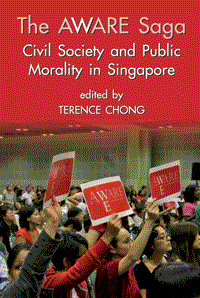
Yet, to read the event as merely a conflict between one religion and homosexuality would be to miss much of its significance. As the contributors to new book The AWARE Saga: Civil Society & Public Morality In Singapore (ed. Terence Chong, NUS Press, Singapore) take pains to explain, the fight has both deep roots and wider ramifications.

The AWARE conflict also raises many questions – about the influence of the US and a global Christian Right on religious thinking here, about the muscle power of hierarchical organisations versus that of flatter, more open structures – that need attention if one is to comprehend the more complex and variegated society that Singapore is becoming.

Chua Beng Huat’s and Terence Chong’s opening chapters situate the conflict in the context of Singapore’s social development and educational progress, arguing that as larger numbers of Singaporeans acquire higher education, a liberal-minded constituency inevitably grows. The government’s emphasis on economic progress, which entails an outward-looking, open economy, privileges this segment of the population.

As a result, cultural conservatives feel they are pushed to the margins. Moreover, whereas they could in the past rely on the government to protect moral conservatism, the government is increasingly giving this mere lip service while its actions contradict claims of conservatism – a trend that Chong describes as an abdication of its moral policing role. The decision to allow casinos comes to mind; the gradual retreat from penalising homosexuality too. Cultural conservatives will increasingly feel they need to take matters into their own hands to defend their interests. Seen in this light, the takeover of AWARE may not be the last of such moves.

Several chapters trace the events as they unfolded. Azhar Ghani and Gillian Koh detail the government’s hesitant and carefully calibrated response, in the process throwing light on their priorities and manner of working. Perhaps to the surprise of the coup-plotters, the government ended up showing itself to be more concerned about religious leaders wading into political and previously secular space, than about homosexuality. In the one instance when the government tapped on the brakes, it was the Thio group that lost out. A large number of its supporters were deterred from attending the Extraordinary General Meeting (EGM) that had been called to unseat the new guard.

Likewise, Loh Chee Kong’s analysis of newspaper coverage thorough the period – the Straits Times gave daily coverage to the contest – illuminates the thinking in the newsroom. Unfortunately, despite his allusions to the media straining at the leash of the government’s expressed desire not to dwell on sensitive issues, the opportunity to more exhaustively discuss how this tension might play out in the years ahead, come other civil society or public controversies, was not seized.

Curiously, the book does not include any chapter about the role played by the Internet in mobilising support for the old guard. Also lacking is a more in-depth portrayal of the new-guard actors. Throughout the book, they remain two-dimensional characters; one never quite gets to understand how they see a changing Singapore and why they chose to act in the way they did.

It is possible however that none of the authors could get access; if the record of the Thio group during the saga is any indication, they seem to be uncomfortable and reluctant to deal with the media and with intellectuals.

The EGM itself is brought alive, almost blow by blow, by Lai Ah Eng in her chapter. In doing so, she paints the incredible contrast in social cultures between the two camps. On the new guard side, there was orderliness and conformity to expected roles among its supporters in the audience, but also, after voting, a quick evaporation of interest.

Among its leaders, a shocking misjudgement of the mood, futile appeals to rank and quick calls on security guards to enforce their will wrecked their plans. Ultimately, they probably never understood that the difference between them and the old guard fighting to take back the organisation was not just a difference of opinion about homosexuality and morality, but a complete difference in culture. When rank and authority was discovered to mean little, the new guard was left with no other lever to engage and persuade.

Interestingly, the old guard itself misjudged its supporters. It had planned meticulously for who would speak and what to say at the EGM, but it didn’t take long for the rowdy passion and feckless spontaneity of their supporters to scramble their best-laid plans.

Through this recounting of the EGM, a significant bit of insight slips in. Here is a shift in the tenor of Singapore society that we would vastly underestimate if it is seen only within the confines of the AWARE conflict. It does not take much effort to see it again in the General Election of 2011; no doubt we will be witnessing more of such spontaneous, rebellious behaviour in other public issues to come.

Alex Tham throws more light on this phenomenon, from a different angle. In his chapter, he delineates the differences in organisation and social capital between the “new guard” and the “old”, arguing that while the “old guard” espoused an ethos of being open and inclusive, it in fact remained a small circle of women. This left it vulnerable to a takeover by a group modelled in contrasting ways.

Thio’s group was hierarchical, with enforceable trust, bringing to bear its greater social capital. The old guard, he writes, was saved not by its puny resources, but by the media defining this as a secularism versus religion debate, thus mobilising for the old guard the raw power of an incensed crowd.

However, Dominic Chua, James Koh and Jack Yong don’t even see it as a victory for liberals. Dissecting the language used, they show the links between Thio’s group and the Christian Right movement originating from the United States. Not only that, they show how the same language was adopted in other forums when discussing the AWARE conflict and homosexuality.

Since language shapes perception, in which direction has public opinion on homosexuality moved? As for the policy level, looking at the way the Ministry of Education scrapped the old guard’s Comprehensive Sexuality Programme right after the EGM, the conservatives might have won the bigger prize.

The chapters by Theresa W Devasahayam and Vivienne Wee try to look for meanings both in the conflict and after. Specifically, what did the new and old guards stand for? What models of feminism were in contest? Besides the issues of pluralism and secularism – which were an intrinsic part of the struggle, albeit played up by the media – there was a core difference in the understanding of gender equality.

Too often, the modern understanding of gender equality has one more value piggybacking on it: sexual autonomy. Proponents would argue that there can be no gender equality if sexual dis-autonomy, often framed by patriarchal rules, continues to operate.

The fight for AWARE reveals an intriguing idea brought by the Thio gang, albeit one that may be strongly shaped by their conservative Christian ethos: That there can be gender equality without rights to sexual autonomy, because, in conservative minds, nobody has rights to sexual autonomy, male or female, straight or gay.

Is this a viable proposition? Or is it so inherently problematic that such an idea can only be a smokescreen for the re-imposition of patriarchal systems?

The AWARE saga clearly provides much food for thought, and one good book, as this one is, may not be enough, only scratching the surface of the social trends and cultural questions the conflict represents.

The author is an activist and commentator on socio-political issues who blogs at Yawning Bread. The book The AWARE Saga: Civil Society & Public Morality In Singapore is available for $28 at the AWARE Centre (Dover Crescent Block 5 #01-22).

7 reasons you can’t retire

Do you look to your golden years with a sense of joy or fear? What kind of retirement do you see for yourself?

By R.Rheaume

Many people reach retirement age without enough money to maintain a comfortable lifestyle. The situation is often worse for women who, on average, have much less in the way of retirement savings.

So what are the pitfalls? Why do so many people in good financial health find themselves poor in old age?

  1. Starting too late
    Most people don’t start to think about retirement until they begin feeling their bones creak a bit. But in order to accumulate enough savings and investments to enjoy life for 20 to 30 years after retirement, you should really start planning 20 to 30 years before retirement! If you only start at age 45 or 50, you will not have much time to prepare for a retirement at age 55.
  2. Relying on CPF
    Most people’s CPF is tied up in property. What little is left upon reaching retirement age is often insufficient to meet much more than the most basic of needs. Worse off are the women who count on their husbands’ CPF and find out too late that his withdrawals leave her with little to live on.
  3. Interruption of career
    Many women leave their jobs on a temporary or permanent basis to take care of their children. But career interruption does not just afflict mothers – it is now increasingly common for men too. Competition from foreign and younger workers is forcing both men and women to either retire early or to find alternative employment before retirement age. A shortened career means less time to save for a long retirement.
  4. Health crisis of family member & lack of insurance
    When a loved one becomes ill, savings may be quickly depleted in an effort to meet medical costs. Insurance can sometimes relieve this burden. But more often than not, there is either no insurance or the insurance is insufficient.
  5. Giving to children
    Children are expensive. In addition to years of school fees and other child-rearing expenses, some children continue to require financial support as adults. These days, escalating costs of living have made it increasingly common for young adults just starting out in life to get a helping hand from mom and dad. Both parents are apt to help their adult children in need of financial assistance, though we have seen that women are more likely to do so to the point of threatening their own financial well-being.
  6. Exposure to financial risk
    From time to time, your investments will perform badly. Most of us can bounce back from these setbacks. But what if all your savings are put into a single investment that fails? What if you find your entire portfolio of investments crashing in value because of a global financial crisis just as you enter retirement? In these scenarios, you may not have the luxury of time to recover your nest egg. Many people are unaware that there are precautions that can be taken in order to protect their savings from these risks.
  7. Failure to consider inflation
    Of course the safest strategy is to keep your money in cash, in a bank. But inflation tends to outpace the measly interest rates offered by banks. At 2.5% annual inflation, the dollar you earn in 2011 will only be worth 61 cents in 2031 when you retire. So, unless you ensure that your savings grow in line with inflation, you are, in effect, losing money.

So, what is the solution?

OK here’s the secret! DON’T TELL ANYONE! Ready?


  1. Have a plan
  2. Follow the plan


There you have it! It’s simple really…!
OK perhaps it’s easier said than done.

Well here are a few things to keep in mind to help you come up with your retirement plan:

  • How much?
    Determine your how much money you will need for retirement. Try this little exercise to get you started.
  • How?
    Next work out how to get to that number. How much must you save each month? What kind of return do you need to earn on your investments?
  • Expect the unexpected
    The plan should include thoughts about insurance, the kids and emergencies.
  • Hope for the best but plan for the worst
    Married women without an independent source of income should also consider how their plans would be affected by their spouse’s premature death or in the event of divorce. AWARE receives many calls from women in their late 40s and 50s who are facing divorce or abandonment without a financial safety net. It is far better to prepare for the worst case and have a cushion if it happens, than to simply hope for the best and find yourself exposed.
  • Review
    Revise your plan regularly to make sure you are on track. And make sure that as you approach retirement age, you gradually move your investments from the relatively “high risk/high return” category to safer investments. This will help to keep your nest egg safe.

Ready to start planning? Yes? Great!

IF you need help with any of this – if you need guidance, information or even the chance to talk to others also starting out on the road to wealth, AWARE can help. AWARE offers a number of classes and workshops on financial management and investing.

Find out more about AWARE Financial Awareness & Confidence Training here.

Our latest course, Financial Awareness & Confidence Training 1: Money & Me, will cover everything you need to know about managing your personal finances. It starts on August 10. More information can be found here.

Was the gang rape charge reduced because of a blog post?

Should our online personality be the basis of a character assessment in the courtroom?

I have a confession: my rabbit has a Facebook account and she lied about her age to get it (she’s only 3). And while she spends a fair amount of time talking about world domination, I’m here to tell you that she’s not really like that. She talks a good game but she’s just not as tough as she makes out.

Post Secret

In fairness, neither am I. I try to keep my fears, angers, frustration and sadness under wraps. I try to be my better self. But don’t we all, in some small way, try to project the person we want to be – the person we want to be seen as – rather that the somewhat less polished truth? Don’t we Photoshop our personalities?

The law doesn’t seem to think so.

Increasingly, information pulled from social networks is being used as evidence in court cases. Fair enough – it can often provide useful information in disputes and criminal investigations. But how far should it go?

It is one thing to use an update or photo as evidence of tangible facts, such as:

  • Where you were
  • Who you were with
  • What you were doing

But is it a reliable indicator of your frame of mind?

Lawyer Chia Boon Teck used information from a blog to fight a woman’s claim of molestation against his client. She claimed the act occurred during a job interview and that she left the office quietly, reporting the matter only later. On her blog, she portrayed herself as a feisty woman and also wrote about how she had fought with a pimp in Geylang.

Mr Chia used this information to challenge why she had not raised any alarm or created a scene in the office there and then, considering her feisty character. ‘It is all too easy for a woman to act demure in court. Such social media evidence can at least give judges a different perspective of the witness,’ said Mr Chia, whose client was fined $5,000 on the molestation charge. – Straits Times, July 16, 2011

Quite frankly, this woman sounds a bit like my rabbit. Tall talk but maybe not as tough as she makes out.

Is it possible that people talk a bunch of bull on their blogs and status updates? That they misrepresent their bravery? That they are feisty with friends but less assertive at work?

Certainly the interpretation is debatable. But how about this case?

In Singapore, when lawyer Adrian Wee’s client was accused of rape, he dug deep – online. The plaintiff had claimed to be suffering from post-traumatic stress disorder but entries on her blog painted a different story. His client’s charge was subsequently reduced from rape to aggravated outrage of modesty – cutting the possible sentence of 20 years to half the length, at most. – ibid

Adrian Wee is the same lawyer who defended Rishi Mohan, one of the 5 men charged in the 5-on-1 gang rape case widely reported in 2010. In that case, Rishi was ultimately charged with outrage of modesty.

Is it possible a 17-year-old suffering from post-traumatic stress disorder would lie about her state of mind? Could she even try to lie to herself about what she went through? Should a blog post by the victim of a heinous crime be taken at face value? Is it even relevant if the facts of the case are already established?

These are troubling precedents. Social media is a new phenomenon. Do we really know enough about online psychology and internet culture to use the digital persona to divine someone’s frame of mind?

One thing is for sure: my bunny better stop talking crap. If anyone ever touches her, nobody will believe the “poor and defenceless creature” story, even if she does only weigh 2kg.


The author wrote our original report on the 2010 gang rape case. She also owns a rabbit.

Is a female President impossible?

Sparse female representation at the highest levels of Singapore’s public and private sectors effectively makes this a pipe dream.

By Grace Ke

The build-up to the Presidential elections in Singapore has prompted some optimistic speculation about the possibility of a woman occupying this office.

After all, strong female candidates featured prominently in the recent General Elections. In a year that has already seen remarkable political developments, why shouldn’t a female President be within the realm of possibility?

A blogger wrote that a female President would “bring a fresh perspective to the office of the President, serving as a softer mother figure of the nation, neutralising and possibly transforming the still prevalent harsher, for-your-own-good paternal style of the parliament”. A Straits Times Forum letter suggested that a female President “would be a momentous event, in my opinion, to recognise the importance of the role of Singaporean women in improving democracy”.

This chatter is all very well and good, but also somewhat beside the point. The issue at hand is not whether Singapore would benefit from having a female President, or if citizens are ready to cast their vote for a woman – at least not yet.

The plain truth is this: The professional credentials of an eligible Presidential candidate are held to such exacting standards that current levels of female representation in the highest echelons of the public and private sectors in Singapore are simply inadequate.

In other words, much more must be done to encourage and ensure the presence of more women at these levels of leadership, before a female President becomes a real prospect.

Let’s look at some of the professional criteria that a potential female President must meet. According to the Elections Department, a Presidential candidate must have “held office for a period of not less than 3 years in position of seniority and responsibility” in at least one of following ways:

1. As Minister, Chief Justice, Speaker, Attorney-General, Chairman of the Public Service Commission, Auditor-General, Accountant-General or Permanent Secretary

The current Accountant-General, Chua Geok Wah, is a woman, as are Permanent Secretaries Tan Ching Yee (Ministry of Education), Chan Lai Fung (Ministry of Finance), Yong Ying-I (Ministry of Health), and Lim Soo Hoo (Public Service Division).

But in 46 years of independence, Singapore has had only 1 female Minister – former Minister under the Prime Minister’s Office, Lim Hwee Hua, who held this post for only 2 years.

And we have never had a female Chief Justice, Speaker, Attorney-General, Public Service Commission chairman or Auditor-General.

2. As chairman or chief executive officer of a statutory board to which Article 22A of the Constitution of the Republic of Singapore applies

There are 64 statutory boards in Singapore. Of these, only 12 are currently headed by women:

  • Accounting & Corporate Regulatory Authority: Chan Lai Fung
  • Board Of Architects: Soh Siow Land, Rita
  • Civil Service College: Lim Soo Hoon
  • Energy Market Authority: Chan Lai Hong
  • Hotels Licensing Board: Hoo Sheau Peng
  • Infocomm Development Authority Of Singapore: Yong Ying-I
  • National Environment Agency: Chew Gek Khim
  • National Parks Board: Christina Ong
  • Singapore Examinations & Assessment Board: Ho Peng
  • Singapore Nursing Board: Nellie Tang
  • Singapore Tourism Board: Aw Kah Peng
  • National Library Board: Yeoh Chee Yan

3. As chairman of the board of directors or chief executive officer of a company incorporated or registered under the Companies Act (Cap. 50) with a paid-up capital of at least $100 million or its equivalent in foreign currency

For the purposes of this article, let’s just look at the companies on the Singapore Exchange Top 100 list. There are only 7 companies on this list that are currently headed by women:

  • SingTel: Chua Sock Koong
  • Capital Commercial Trust: Lynette Leong Chin Yee
  • SMRT Corp: Saw Phaik Hwa
  • M1 Ltd.: Karen Kooi Lee Wah
  • Hyflux Ltd.: Olivia Lum
  • K-Asia REIT: Ng Hsueh Ling
  • Mewah International: Michelle Cheo Hui Ning

4. In any other similar or comparable position of seniority and responsibility in any other organisation or department of equivalent size or complexity in the public or private sector which, in the opinion of the Presidential Elections Committee, has given him such experience and ability in administering and managing financial affairs as to enable him to carry out effectively the functions and duties of the office of President.

You might think that this last criterion offers more hope to aspiring female candidates who have not held top posts in the civil service, nor headed statutory and corporate boards.

But even if you look at female representation at a slightly lower level of leadership, the numbers don’t look very encouraging.

According to a 2011 NUS Business School and BoardAgender study, only 6.8 per cent of board members for publicly-listed companies in Singapore are women. That means a total of only 345 women, out of a total of 5,088 board members.

A whopping 61.9 per cent of all SGX-listed companies in Singapore do not have a female director. Only 31.7 per cent have 1 female director. A measly 4.5 per cent have 2 female directors and less than 1 per cent have more than 3 female directors on their boards.

Only 4 companies on the SGX Top 100 list have 3 or more female directors.

The public sector doesn’t fare very much better. Here’s a list of 10 major statutory boards and their current female board members (or lack thereof):

  • Agency For Science, Technology & Research: 0 female board members out of a total of 21 board members
  • Monetary Authority Of Singapore: 0 out of 9
  • People’s Association: 1 out of 14
  • Public Service Commission: 2 out of 13
  • Central Provident Fund Board: 2 out of 15
  • Economic Development Board: 2 out of 15
  • Defence Science & Technology Agency: 2 out of 15
  • Housing & Development Board: 3 out of 10
  • National Library Board: 5 out of 17
  • Public Transport Council: 6 out of 16

This current representation of women is not an accurate reflection of the size and capabilities of the female population in Singapore. Women currently form 51 per cent of Singapore’s population. About 44 per cent of the workforce is made up of women – 45 per cent of these are degree-holders, 28 per cent are professionals, managers and proprietors.

Yet, according to a 2011 report by global consulting firm McKinsey & Company, the proportion of female corporate board members in Singapore puts us closer to emerging economies than industrialised nations. In fact, among industrialised nations, Singapore’s female representation in this area only ranks better than Japan, Portugal and Italy.

There is far more at stake here than just the possibility of having a female President. Numerous studies have shown that companies with more female directors outperform those with fewer female directors. A 2007 report by research group Catalyst Inc, for instance, showed that “among Fortune 500 companies, those with the greatest number of women on their boards performed significantly better financially than companies with fewer female board members”.

Female leadership also results in a more efficient and ethical company culture. A 2007 report by McKinsey & Company found that companies with 3 or more women holding top management positions scored higher in areas such as workplace environment, values, and accountability, compared to companies with fewer or no women holding such positions.

As these benefits of gender diversity become clearer, more governments are introducing measures that aim to increase gender diversity on corporate boards.

In 2005, the Norwegian government passed legislation that pressured Norway’s biggest companies to achieve a quota of at least 40 per cent women on their boards by 2008. France and Spain have also passed similar gender quota legislation, as has Malaysia, which recently introduced a policy that aims to see 30 per cent of decision-making positions occupied by women by 2015.

The public and private sectors here need to seriously step up their efforts to nurture gender diversity before Singapore can boast of having more than a handful of women qualified to run for President.

In AWARE’s latest Shadow Report on the Convention On The Elimination Of All Forms Of Discrimination Against Women (CEDAW), the following measures were recommended:

  • Quotas established to place women at all levels of government, including setting aside 30 per cent of seats in Parliament for female politicians. The publicly elected Members of Parliament can appoint women to these seats. Such provisions can be created through a constitutional amendment or a special temporary measure for 5 to 10 years.
  • The Government should push for public-listed companies in Singapore to have a minimum percentage of women on their company boards.
  • The Government can introduce a management trainee programme for female graduates within the civil service to prepare women for upper management levels, as well as introduce mentoring programmes.
  • Targets can also be set for the participation of women in recruitment programmes and promotion exercises.

You might argue that the size of the recruiting pool doesn’t really matter. After all, it only takes one woman to make a female President a reality – a single high-flier with top-notch credentials, as well as the ability to connect with voters.

But why be content with one, when there are still so many other ‘firsts’ to conquer? Why not a female Prime Minister, a female Chief Justice, and more female CEOs? Why not set our sights on all the leadership roles that have not yet been filled by women?

The writer is an AWARE intern who is currently majoring in politics and public policy at Murdoch University.

Our CEDAW team speaks at the United Nations

This year marks the third time that AWARE is submitting a Shadow Report to the United Nations committee on the Convention On The Elimination Of All Forms Of Discrimination Against Women (CEDAW).

On July 18, our CEDAW team made their presentation to the UN CEDAW Committee at the UN headquarters in New York, highlighting areas where women’s rights in Singapore still need improvement.

The AWARE delegation comprises: AWARE CEDAW Sub-Committee chair Braema Mathi, who is also AWARE’s Research & Advocacy Director; AWARE Vice-President Halijah Mohamad; AWARE immediate past president Dana Lam; and AWARE research executive Nadzirah Samsudin.

The following is a transcript of AWARE’s oral presentation at the UN’s CEDAW Session For Non-Governmental Organisations (Singapore):

Thank you, Madam Chair, and a very good afternoon to all CEDAW Committee members.

I am Braema Mathi, Chair of the CEDAW Committee in AWARE, a 26-year-old women’s advocacy group who framed and coordinated AWARE’s second and now the third Shadow Report.

Supporting my NGO colleagues who spoke on marginalised issues, I am raising five areas of concerns from a national perspective.These are:

A. Reservations
B. National Machineries
C. Women & Employment
D. Discrimination: Vulnerable Groups
E. Body Image

A. RESERVATIONS
The Singapore government’s assertions for exclusion from compliance with certain CEDAW obligations

1. We welcome the Singapore government‘s decision to partially withdraw the reservations to Articles 2 and 16, which relate to national and international dimensions of state obligation and marriage and family life respectively (see paragraph 6 of the government’s response, May 18, 2011).

This is still not good enough, but we can see current limitations for a total withdrawal of the reservations to these Articles.

So, Madam Chair, we ask that the government give a clear timeline for the withdrawing of all reservations, and so work towards amending local laws and the Constitution to include ‘gender’ and ‘marital status’ (see AWARE’s Shadow Report, page 31, paragraphs 2.11 to 2.18).

2. We are appalled by the government’s rationale for maintaining the reservations on Article 11, which relates to employment (see paragraph 7 of government’s response, May 18, 2011).

Safety at the workplace is not a conserve for women. It is equally important to protect our men from hazardous materials and so ensure that their reproductive capabilities are not jeopardised in any way. Total Fertility Rate is boosted by both men and women!

We also say that many (see paragraph 30 of the government’s report, May 18, 2011) women are contributing to nation-building as volunteer-leaders in the community. Their service needs formal recognition through a broader definition of National Service that extends beyond the military.

We say that reservations on Article 11(1) and the Employment Act should be amended to offer protection to a wider group of female employees (AWARE’s Shadow Report, page 86, paragraph 11.21; and page 105, paragraph 11.74).

B. NATIONAL MACHINERIES
These relate to Articles 1 to 4, which cover the definition of discrimination, law, policy and measures to implement CEDAW

1. Singapore is changing today, Madam Chair. There is a stronger civil society, which has resulted in some dramatic changes at the recent elections. The Prime Minister, in his post-elections speech, has called for greater consultations with grassroots organisations, etc.

Thus, we find it unacceptable that the government wishes to confine its consultations and dialogues to three approved bodies on women’s issues: the Singapore Council of Women’s Organisations, the People’s Association Women’s Wing and the National Trades Union Congress (NTUC) Women’s Committee and Women’s Development Secretariat, as recently announced by the Ministry of Community Development, Youth and Sports (henceforth referred to as MCYS).

This particular approach ignores the good work and advocacy of many interest groups that work on diverse women’s issues, such as women with HIV, sexual orientation, migrant workers, lower-income women, foreign wives, and foreign domestic workers. Their independent voices are needed at the table of constructive dialogue.

2. MCYS has recently elevated the Women’s Desk to the Office of Women’s Development. This is a good move, though still limiting, as this office is placed in the Family Division unit of the Ministry.

Women of today can be married mothers, divorced mothers, single unwed mothers, foreign wives still struggling to become Singapore citizens, foreign domestic workers, and foreign women in the service industry. We exhort that this Office be made into an independent body, outside of this Family Division unit.

It can be housed under, say, the Gender Equality Division, functioning on its own Budget (see AWARE’s Shadow Report, page 21, paragraph 1.17), for all matters related to gender mainstreaming as a policy approach and for producing data that is sex-, age- and ethnicity- disaggregated. Currently, the budget allocation to gender matters remains opaque.

C. WOMEN & EMPLOYMENT

1. There are still no clearly defined measures to deal with getting more women to level-up in the work force beyond horizontal segregation (see AWARE’s Shadow Report, page 86, paragraphs 11.24 to 11.26).

Women, despite being well-educated, still hold the lower-end to middle-level jobs and earn less than men (see AWARE’s Shadow Report, page 45, paragraph 5.9; and page 90, paragraph 11.34; and page 110, paragraph 11.91).

Work-life balance practices such as flexible work arrangements are not consistently available. There are still inadequate support services (see AWARE’s Shadow Report, page 86, paragraphs 11.25, 11.50, 11.55 and 11.92) to alleviate care-giving responsibilities (paragraphs 11.59 and 11.94) and an over-reliance on employing foreign domestic workers as a measure to keep women in the workforce.

D. DISCRIMINATION: VULNERABLE GROUPS

1. Pregnant women, women who are sexually harassed, foreign domestic workers, foreign wives married to Singapore men, sexual minorities, casual and contract workers, are still inadequately protected. The improved Employment Act still excludes too many women at risk (see AWARE’s Shadow Report, page 104, paragraph 11.70).

2. Foreign women – foreign brides, foreign female workers (migrant labour) and foreign women in the sex industry, all have limited protection under the law, limited access to under-funded social services, are caught in cross-border issues and run the risk of being classified too often as immigration offenders. (see AWARE’s Shadow Report, page 53, paragraphs 5.34 to 5.35; and page 159, paragraphs 19.18 to 19.20). It is a State Obligation to remove these forms of discrimination.

E. BODY IMAGE

1. AWARE is distressed by the apparent lack of adequately enforced guidelines against medical practitioners, those in the beauty industry, and advertisers who blatantly flaunt their wares (see AWARE’s Shadow Report page 50, paragraphs 5.22 to 5.24; and page 46, paragraphs 5.11 to 5.12).

2. Foreign women – wives and migrant women – are particularly prone to stereotyping: as being ‘submissive’, ‘virgins’, obedient workers, etc. This only adds to the negative imaging of the women (see AWARE’s Shadow Report page 47, paragraph 5.15).

We thank the CEDAW committee for the time and appreciate the Concluding Observations of 2007. There are more details in our report that we hope will be useful to the work at hand. Thank you.

OTHER ISSUES

F. WOMEN IN POLITICAL & PUBLIC LIFE

1. We are aggrieved that after 46 years of independence, we still do not have a full-fledged female Minister. We state that we have good, capable women Members of Parliament (MPs) who have shown their mettle. Yet, after the recent elections, we have seen inexperienced male MPs being immediately given Ministerial positions. We state our disappointment that proven MPs such as Madam Halimah Yacob, Dr Amy Khor, Ms Grace Fu, who have already shown their capability and capacity, were made Ministers of State or Senior Ministers of State.

G. HEALTHCARE FINANCING

1. We are concerned about the proportion of healthcare financing that an individual has to bear and that over 25 per cent of bill has to be borne as ‘out-of-pocket’ expenses. This leaves an ageing population with low disposable incomes or savings vulnerable to steering clear of medical attention. Older women who succumb to life-long disabling illnesses, in particular, will be vulnerable (see AWARE’s Shadow Report, page 117, paragraphs 12.2 to 12.6).

H. FINANCIAL SECURITY

1. Women generally earn less, save less and enjoy less coverage under the Central Provident Fund Savings scheme. Yet, having access to housing or support for families is conditional on a slew of criteria that leaves a woman who is in need very vulnerable to falling through the social protection floor (see AWARE’s Shadow Report, page 135, paragraph 13.8).

I. VIOLENCE AGAINST WOMEN

1. We are concerned over the efficacy of how data is collected and mined within social service agencies when women ask for assistance after being abused (see government’s response, paragraph 36, May 18, 2011). A survey done by a local NGO shows discrepancies (see AWARE’s Shadow Report, page 153, paragraphs 19.3 to 19.6). It is also not possible for rape kits to be administered till the ‘victim’ files a report with the police, which can be take some time (see AWARE’s Shadow Report, page 162, paragraph 19.29).

On July 22, representatives from the Singapore government made a presentation to the UN CEDAW Committee, reporting on the progress the State has made with regards to compliance with CEDAW. Read highlights from this session here.

Based on the report from the State, as well as those from non-governmental organisations like AWARE, the UN CEDAW Committee will review Singapore’s progress with regards to eliminating discrimination against women, identifying areas of concern and making recommendations for progress.

Watch this space for more updates about Singapore’s compliance with CEDAW. In the meantime, check out AWARE’s full CEDAW Shadow Report here.

Support the Day Off campaign

Domestic workers, like all employees, are entitled to their rest, in accordance with human rights standards and acceptable working standards in Singapore.

AWARE welcomes the news that Minister of State for Community Development, Youth and Sports Halimah Yacob believes the State should consider legislation that makes employers give their domestic helpers a rest day every week.

It is not surprising that this issue has been keenly debated on the Internet and newspaper forum pages over the past week.

As stated in AWARE’s latest Shadow Report for the United Nations’ Convention On The Elimination Of All Forms Of Discrimination Against Women (CEDAW), there were around 190,000 migrant women working as foreign domestic workers in Singapore in 2010. That amounts to about one foreign domestic worker in every five households, and nearly 4% of Singapore’s total population.

Singapore NGOs estimate that almost half of these domestic workers do not get a regular day off. Some agencies advocate no days off at all and the practice of helping employers evade the necessity of giving workers a day off is widespread. There are many employers who cite their fear of losing their security bond, as well as their need for a helper seven days a week.

AWARE affirms that foreign domestic workers, like all employees, are entitled to their rest, in accordance with human rights standards and acceptable working standards in Singapore. The need for a day off and adequate rest time should not be dependent upon the needs and requirements of others, but should fall within her rights as a human being.

It is our view that foreign domestic workers here are inadequately protected by current legislation.

Paragraph 11.47 of the State’s Fourth Periodic Report to CEDAW states that foreign domestic workers are encouraged to enter into contracts with their employers and that this provides sufficient legal protection for these workers.

Singapore was among 63 countries which abstained from voting on the new International Labour Organisation convention that was approved last week in Geneva to grant domestic workers greater protection from exploitation. The Ministry of Manpower has said it would sign the treaty only when it was sure it could implement it here, and that it would continue to review the rights and responsibilities of employers and workers.

AWARE believes that foreign domestic workers do not have sufficient bargaining power to negotiate their own terms and conditions of employment and are in need of protection just like any other worker. By excluding them from the ambit of employment protection, the State is being discriminatory against foreign domestic workers and their work.

We fully support the Day Off Campaign jointly organised by the National Committee of UNIFEM Singapore, the Humanitarian Organization for Migration Economics, and Transient Workers Count Too.

Launched in 2008, this public education campaign encourages employers in Singapore to voluntarily give their domestic worker a day off.

The campaign stresses that giving foreign domestic workers a day off is important because:

  • It is a basic labour right.
  • It will improve the domestic worker’s morale and productivity, thus enhancing the employer-employee working relationship.
  • It will give foreign domestic workers the opportunity to learn new skills and empower them as individuals.
  • Foreign domestic workers are productive individuals who make an extremely valuable contribution to Singaporean society and like all other workers, they should be accorded a day off.

The campaign also points out that in the current standard contract, the number of days off vary in terms and conditions, with some guaranteeing one day off a week and others giving employers the option to choose only one day off a month.

Current provisions for rest days in these contracts are difficult to enforce because if there is a breach, a domestic worker will need to hire a lawyer to assist her in her claim. This option is not only costly, but daunting. Such contracts also allow employers to completely deny a domestic worker her day off in exchange for a sum of $15 to $20, which hardly leads to any real increase in the domestic worker’s salary. This is unfair to the worker.

Please check out http://dayoff.sg to find out more about this campaign, and how you can lend your support. The website also offers stories and tips on giving your domestic worker a day off and addresses many common concerns that employers have about giving a day off.

We welcome initiative to encourage prompt maintenance payments

A new service offered by a credit bureau will make maintenance payment records part of credit reports.

A failure to pay spousal or child support can now be recorded on an individual’s credit report. The DP SME Commercial Credit Bureau (the Bureau) has been designated by the Ministry of Community Development, Youth and Sports (MCYS) to be the first credit bureau for the purposes of receiving a report on unpaid maintenance arrears.

When MCYS consulted the public on proposed changes to the Women’s Charter in 2010, one of the central amendments suggested by AWARE was to set up a central body to collect maintenance payments. We believe that the services provided by the Bureau are a step in the right direction, as the risk of having a stain on your credit report will encourage more defaulters to meet their maintenance obligations on time.

A person who is owed a debt can approach the Bureau personally with the Court Order that states the maintenance arrears. The Bureau will record the debt and make the information available to members of the Bureau.

The Bureau’s membership consists of more than 700 companies, including leading banks, retailers, moneylenders and other credit providers.

The initiative is part of a suite of measures introduced by MCYS to improve the rate of compliance of maintenance orders. During the last four years, there were approximately 3,400 applications for enforcement of maintenance orders every year.

Ms Chen Yew Nah, managing director of the DP SME Commercial Credit Bureau, says the aim of the new reporting system is to encourage prompt payment of spousal and child support obligations.

“In Singapore most people place a great value on having a good credit standing. Knowing that a record of your matrimonial maintenance debts is kept by a credit bureau will motivate defaulters to keep up to date with their obligations.

“When an individual approaches a member of the Bureau seeking credit or to do business with them, a failure to honour a maintenance payment will show up as part of the credit check. It is up to each individual member of the Bureau to determine what they will do with the information.”

Separately, the Bureau will also be able to provide a range of optional services, which include providing mediation between the both parties to help settle disputes; issuing reminders on when and how to pay marital obligations; tracing the defaulter’s whereabouts if necessary; collecting payment and undertaking debt collection on behalf of maintenance recipients.

Each month, all the Bureau’s members provide details of the companies and individuals that owe them money, as well as which debts have been paid on time and which have not. This information is then fed into the DP SME Commercial Credit Bureau database so that a clearer picture of a debtor’s behaviour can be seen. Each of the Bureau’s 700-odd members can request a credit report on a company or an individual. Currently the DP SME Commercial Credit Bureau has more than 800,000 individual payment records of Singaporeans and Singapore businesses.

More information is available here.