Year: 2015

Most govt reports do not deal with policies’ budgetary impact

By Goh Li Sian, Research and Advocacy Coordinator, AWARE

budgetWe thank the Ministry of Finance (MOF) for its reply (“Government agencies regularly publish reports on their performance”; May 13) to our letter, and for informing us and the public of a number of reports published by government agencies.

While these reports provide some helpful information, they do not tend to address the impact of budgetary policies per se. The statistics referenced in most of these reports relate to the social phenomena within these ministries’ remit, such as the level of crime or number of workplace accidents, rather than the allocation of expenditure under specific initiatives and policies.

The ComCare Annual Report is a welcome exception, as it shows how much money is given out under the various ComCare schemes. However, these statistics could be more comprehensive, since figures on the number of applications received are not released. In fact, a question on the acceptance rate of ComCare applications was raised in Parliament in 2013, indicating that such figures are not released regularly.

Furthermore, the statistics in the reports mentioned by the ministry tend to be given at a high level of generality. There is little disaggregation by characteristics such as gender, age, and race or ethnicity, which are especially important variables when designing social policy.

In addition, while it was helpful to receive a list of reports in response to our query, to improve transparency and public access to information even further, perhaps the MOF or the Ministry of Culture, Community and Youth could also take on the tasks of maintaining a centralised list of reports. This list should be prominent and accessible to the public.

There is a precedent for this in some areas. The Ministry of Social and Family Development, for instance, maintains a webpage with links to all state reporting on the Convention of the Elimination of All Forms of Discrimination Against Women. This promotes transparency on the state’s progress on fulfilling its international commitments under this treaty.

The public should have ready access to a detailed breakdown of the programmes administrated by each ministry — both ongoing as well as newly-announced Budget initiatives. There should be specific allocations cited for each priority named in the Budget speech, as well as a breakdown of the different sub-programmes and projects under total expenditure by programme.

A more systematic distribution of information for all aspects of the Government’s performance would help improve the quality of citizen participation in policymaking.

This letter was first published in TODAY Voices on 21 May 2015.

Fixing the lopsided nature of parental leave

By Sumedha Jalote, Communications Executive, AWARE

man childThe findings from the 2013 Survey on Social Attitudes of Singaporeans confirm that all workers, regardless of gender, need work-life balance (“Work eating into S’poreans’ family time: Survey”; May 27).

It is clear that men want to play larger roles in caregiving and domestic life — 58 per cent of male survey respondents agreed that their jobs eat into family time more than they liked, a significant increase from 44 per cent in the previous survey in 2009.

There is much that employers and the Government can do to help everyone, regardless of gender, enjoy both economic well-being and a family life.

The introduction of the one-week paternity leave entitlement in 2013 was a good step. In addition, working fathers can also share one week of the 16 weeks of maternity leave.

But two weeks of paternity leave still give men little time to enjoy their newborn babies or become more confident caregivers.

The huge disparity between maternity leave and paternity leave compels women to play a disproportionately large role in childcare. This harms everyone: Men have very limited opportunities to spend time with their family, and women are given less support in fulfilling their parental responsibilities.

We call on the Government to consider further extending parental leave to give men a real opportunity to take on an equal role in childcare.

Parents in the United Kingdom, for example, can split up to 50 weeks of parental leave between them as they wish. In Sweden, 60 of the 480 days of shared parental leave must be taken by men.

Employers can also help all workers create balanced professional and personal lives.

Businesses must recognise that work-life issues affect all their employees, not only women. Many employers offer flexi-work arrangements such as part-time work or telecommuting. Access to these arrangements and accommodation for domestic responsibilities must be accepted as a normal, integral part of employment, not an exceptional concession, for women and for men.

It is critical for employers to be supportive of men taking parental leave. As Law and Foreign Affairs Minister K Shanmugam mentioned in a speech in March, employers in Norway expect male employees to take time off to care for children. Some even count it against men if they do not.

We would like to see employers go above and beyond legal requirements to create supportive working environments for all employees equally.

With support from their employers and national policy, all of us can achieve balanced, happier professional and personal lives.

This letter was first published in TODAY Voices on 1 June 2015.

Rohingya issue: Asean has duty to act

By Vivienne Wee, Director, Research and Advocacy, Association of Women for Action and Research

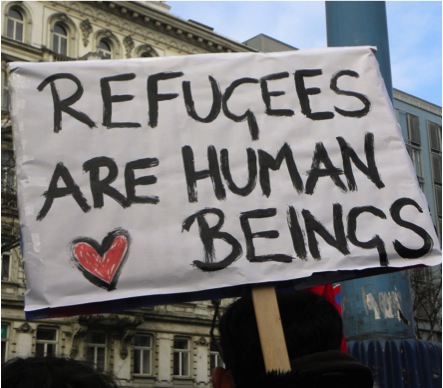
refugeesWe agree with Foreign Minister K. Shanmugam that the humanitarian crisis facing the Rohingya is due to conditions that render them vulnerable to traffickers (“Shanmugam: Asean must address roots of Rohingya issue”; Sunday).

The Asean Human Rights Declaration states that “every person has an inherent right to life which shall be protected by law” and that “no person shall be held in servitude or slavery in any of its forms, or be subject to human smuggling or trafficking in persons” (Articles 1 and 13).

All Asean states, including Singapore, should protect the human rights they have espoused, especially when stateless, homeless refugees turn up on their doorstep, seeking their right to life and freedom from servitude or slavery.

Callous indifference sends a signal that nobody cares what happens to these people, and that they can be trafficked with impunity, even if they end up in mass graves.

As United Nations Secretary-General Ban Ki Moon has said, although we need “a very clear addressing of the root causes of this issue, why people are fleeing”, the top priority now is saving the lives of those adrift at sea.

We are concerned that the contravention of the declaration by signatories means that all other articles can also be breached whenever governments choose.

Article 4 states: “The rights of women, children, the elderly, persons with disabilities, migrant workers, and vulnerable and marginalised groups are an inalienable, integral and indivisible part of human rights and fundamental freedoms.” Displaced women and girls are particularly at risk of violence and exploitation.

The rights of Rohingya women and children seem not to matter to some Asean member states. Certainly, the Rohingya are a vulnerable and marginalised people whose human rights are violated – they have been rendered without citizenship in their country of birth.

Ironically, ordinary citizens, such as fisherfolk in Aceh, better understand how to uphold human rights – by rescuing people so that they do not die. Sadly, they have been threatened by their government with revocation of fishing licences if they continue to rescue refugees.

Recent measures by some governments to rescue refugees may not adequately stem the crisis of credibility that has arisen for Asean, especially since these “rescues” reportedly allow traffickers to take victims off the boats.

If the human rights of the Rohingya can be dispensed with today, whose human rights can be violated tomorrow?

This letter was first published in the Straits Times Forum on 30 May 2015.

Garage sale this Saturday!

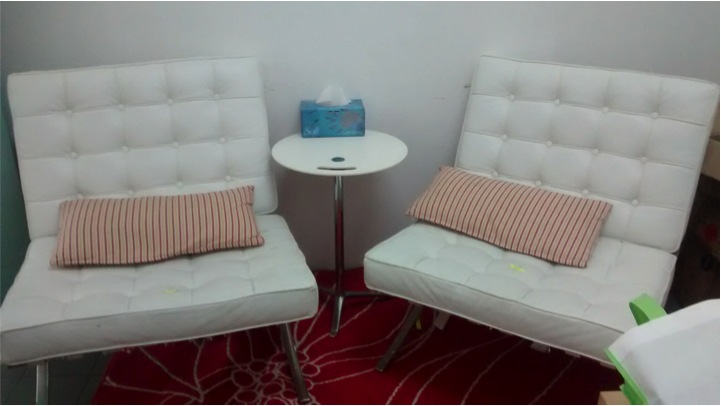
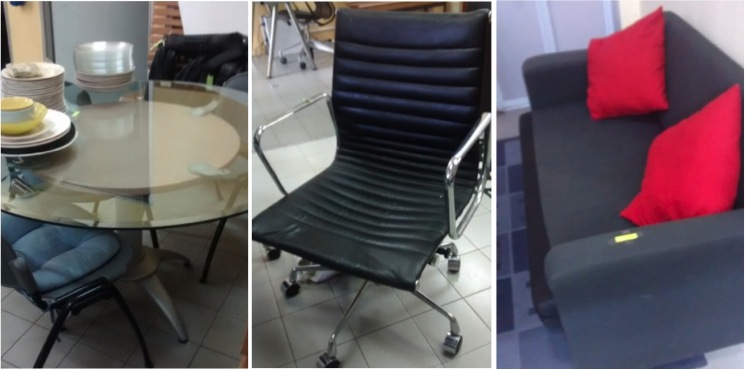
10610007865_0a1bd13ab8_oAs we prepare for renovation of the AWARE Centre, we have a lot of stuff to give away! Come by our centre at Dover this Saturday, to get bookshelves, office chairs, sofas, desks, kitchenware and so much more – all at super low prices (or even FREE!).

Details:
Date: Saturday, 16 May
Time: 10am – 4pm
Location: AWARE Centre, 5 Dover Crescent, #01-22

Sofa chairs

Furniture

AWARE’s 30th Annual General Meeting

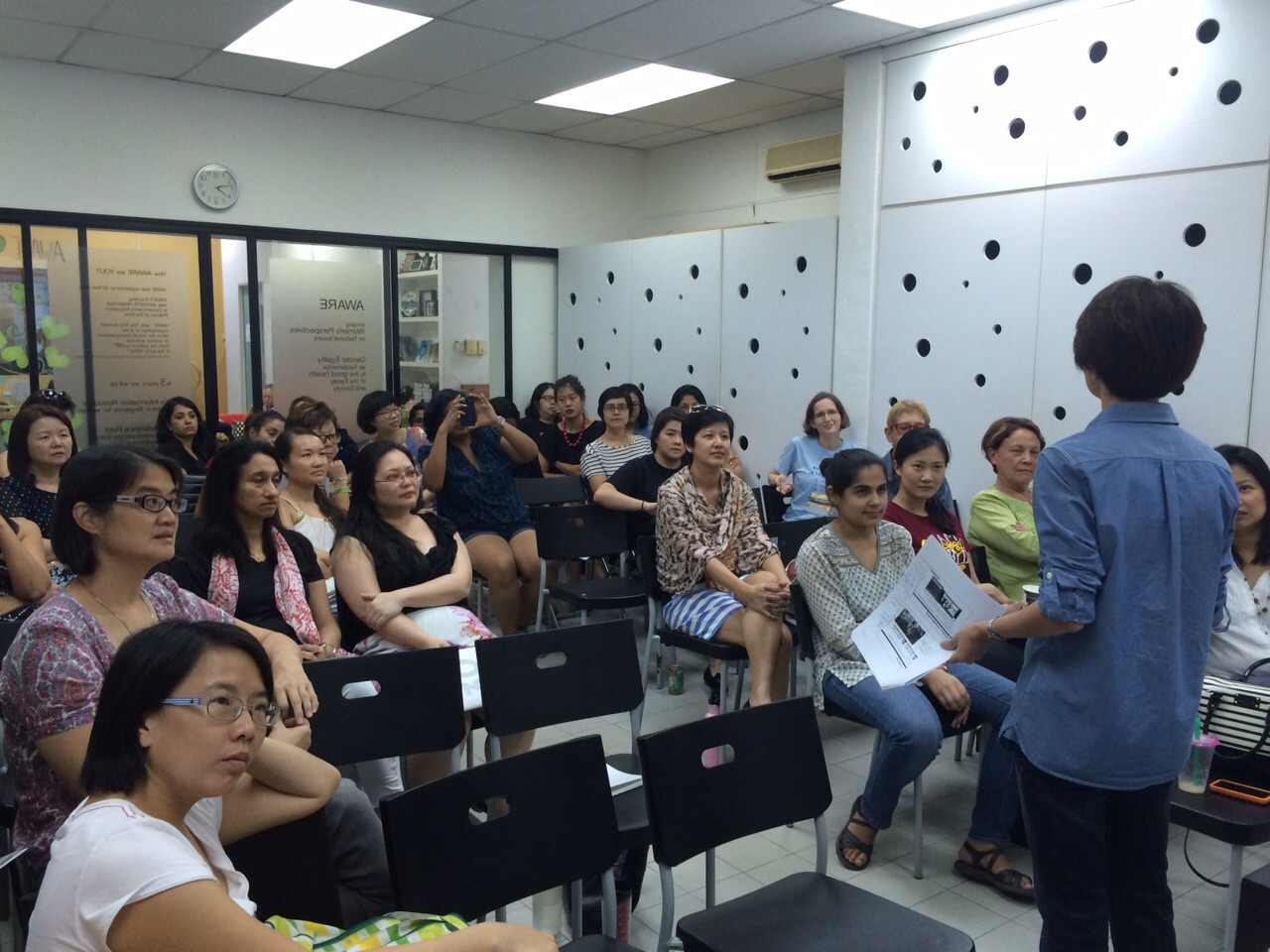
AGM5AWARE’s 30th Annual General Meeting (AGM) was held on Saturday, 25 April. Forty seven members of AWARE, old and new, attended the AGM, discussing AWARE’s work in 2014 and helping us make plans for 2015. Though this was not an election year, 2015 marks 30 years since the founding of AWARE, making this a very special year for us!

We kicked off the AGM by watching two striking videos released by AWARE last year – one highlighting how the stigma around HIV, marriage and sex can put women’s health at risk, and another of survivors of sexual assault sharing how support services helped their recovery.

AWARE President Winifred Loh shared some of AWARE’s major successes of 2014, including the passing of the Protection from Harassment Act and the launch of the Sexual Assault Care Centre. She also introduced AWARE’s Strategic Plan, which will guide our work over the next four years. Details about the Strategic Plan are available in our annual report.

Attendees also received updates from each department head about the highlights of their work in 2014. Vivienne Wee, Research and Advocacy Director, told members about StopTraffickingSG, a collaborative campaign for the rights of human trafficking victims; AWARE’s long-standing work on UN CEDAW (the Convention on the Elimination of All Forms of Discrimination Against Women); and Gender Equality IS Our Culture, a UN-funded project promoting gender equitable interpretations of culture.

Corinna
Corinna Lim, AWARE’s Executive Director

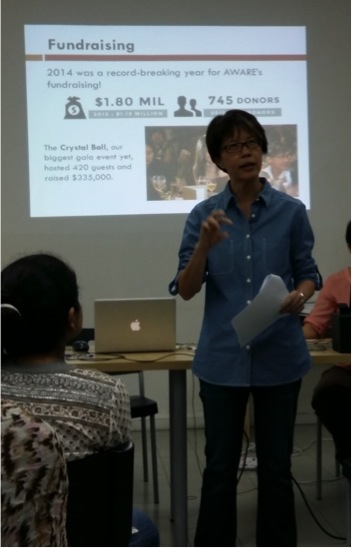
Corinna Lim, AWARE’s Executive Director, shared AWARE’s outstanding fundraising results in 2014 – we raised $1.8 million, and more than doubled the number of donors and supporters.

Jolene Tan, Programmes and Communications Senior Manager, discussed the workshops carried about by the AWARE Training Institute, and the success of the We Can! campaign in reaching more than 1900 people. Sheena Kanwar, Support Services Senior Manager, talked about the various services AWARE provides to women in need, including the AWARE helpline and SACC, and answered members’ questions about the kinds of cases that we handle.

Detailed department updates are available in the 2014 Annual Report, which, along with AWARE’s Financial Statements, was adopted at the AGM.

Staff and board members also shared AWARE’s plans for 2015. With the success of the first support groups AWARE offered in 2014, we will offer three more support groups to women in 2015. The AWARE Training Institute will be revamped to improve its programmes on diversity and inclusion and expand its reach. We are all excitedly looking forward to the annual fundraising ball, which will be bigger and better than ever to celebrate AWARE’s 30th birthday!

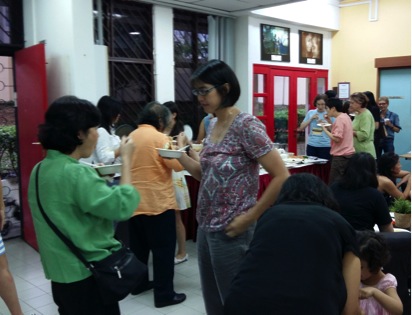
AGm tea


The AGM ended with a delicious tea, giving everyone a chance to catch up with old friends and meet new ones as we gear up for a productive and fun 2015.

AWARE Goes to New York: The CSW (Part 3) – Holding On to That Sense of Purpose

By Leigh Pasqual, Honorary Research Associate for AWARE

This is the third of a three-part series of posts about AWARE’s representation at the recent session of the Commission of the Status of Women (CSW) in New York. You can read the first two parts here: part 1 and part 2.
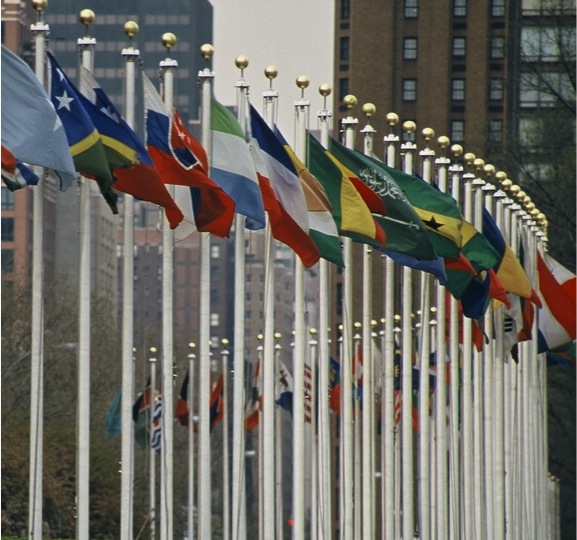
UN flagsThe 59th session of the Commission on the Status of Women (CSW59) was held from 9 – 20 March 2015 at the United Nations headquarters in New York. I was excited to attend – after attending as a UN staff member in the past, this time I would be going as an NGO advocate representing AWARE.

CSW59 was special for three reasons. First, it marked the 20th anniversary since the historic Fourth World Conference on Women held in Beijing, when world leaders from 189 countries promised a future where women would be treated equal to men. Second, the Millennium Development Goals expire this year and discussions are in full swing to shape a new global agenda to succeed them – the Sustainable Development Goals (SDGs). Women’s rights advocates are lobbying to ensure that gender equality is a priority issue in this new development framework.

Third, there aren’t any plans by the UN to hold a fifth world conference on women, despite the urging of gender advocates who feel that precisely because of the debate around the SDGs, a fifth world conference would be immensely important to galvanize thinking and action around women’s human rights. While a poor substitute, CSW59 at least offered a global convening platform for member states and advocates to connect on gender equality issues.

The sheer number of activists attending CSW59 – close to 10,000 – and the proliferation of events (more than 450 side and parallel events organised by governments, UN agencies and civil society groups) created a palpable buzz.

At the end of two weeks, I felt a mixture of pessimism and optimism.

The Same Old Story – Strong Rhetoric But Weak Political Will

On the whole, CSW59 was rather disappointing, not just for me, but also many other activists I spoke with. What we heard from governments was the same old rhetoric: e.g. women have made substantial progress in the last two decades in education and health and politics and employment, etc.

But the challenges remain. Progress is too slow. The same tired facts and figures were trotted out. Some statistics showed slight improvements – increases in girls’ enrolment in primary education, access to reproductive health care, participation in political life for instance – but far too many of the same problems remain: persistent and widespread violence against women and girls, high levels of maternal and child mortality, discrimination and exclusion from opportunities and resources (land, assets and livelihoods), etc.

To make matters worse, there appeared to be consensus that the ominous rise in conservatism over the last decade was pushing back gains for women’s human rights in many countries. The attacks on girls’ education, the constant challenges to women’s reproductive rights, the daily acts of violence in both conflict and non-conflict zones – what we are witnessing is no longer just ‘two steps forward, one step back’, but two steps forward, three steps back.

Sadly, as proof of the emptiness of promises made in Beijing and the bloated rhetoric being thrown about, the Political Declaration adopted at CSW59 was a weak, general statement, a stark contrast to the bold, progressive Declaration that came out of Beijing. It was negotiated prior to the meeting, with women’s rights groups completely shut out of the process. Meant to reaffirm the commitments made in Beijing, the watered down 2015 Declaration leaves out critical human rights language, and makes scant reference to countries’ international commitments to and accountability for achieving gender equality. Instead of a collective statement to strengthen action by member states, the document represents a potential loophole for governments to renege on their promises.

In response, almost 1000 women’s rights advocates and organisations signed on to a statement lambasting the Declaration calling it not just ‘bland’ but threatening “a major step backwards’.

My pessimism peaked when Phumzile Mlambo-Ngcuka, Executive Director of UN Women, announced a new campaign, urging all countries to ‘step it up’ for gender equality, to reach ‘Planet 50:50 by 2030’. While I applaud the effort, and the ‘clarion call’ as she put it, I don’t see how we can attain gender parity in just 15 years, given the current absence of political will.

Legacy of Beijing – A Sense of Purpose

Women who were in Beijing in 1995 will tell you that they left the conference with a fire in their bellies, inspired and energised. Twenty years later, despite achievements in many areas, not a single country has yet achieved gender equality. The challenge today is how to keep that hope going strong, with the same fervour and determination, in newer generations of feminists who are carrying on the fight for women’s rights.

This is another reason why activists want a fifth world conference. Just as important as the political outcomes from Beijing was the lobbying, the forming of coalitions and the movement building leading up to the conference that made the event a historic one. It cultivated learning and sharing of experiences, and promoted solidarity and a renewed sense of purpose among those working to end discrimination against women and girls.

This sense of purpose is easy to lose sight of, when progress is so plodding. Thankfully, while it appears to be lacking in our political leadership, it is vibrant in the men and women working to create change in their communities. As I listened to activists, especially younger ones, talk about their work, about how they stand up to discrimination and injustice, about how their lives and others are being improved, I recognised the power in their sense of purpose and their capacity to inspire, mobilise and renew hope.

Betty Lolgisoi, an eloquent young woman from Kenya, spoke about how she stood up to her community and refused to undergo female genital mutilation, causing outrage in her village and resulting in scorn and exclusion for her and her family. With their support, she stuck to her decision: “It was, it is, and it will forever continue to be wrong,” she said. Betty went on to earn a university degree and today is an outspoken advocate on the issue.

Momal Mushtaq from Pakistan, shared her fascinating story too. Growing up, she did not have the freedom that her brothers did; she could not leave the house without a male chaperone. She learned to ride a bike but only within the walls of her home, while her brothers were allowed to roam freely outside. When she got the chance to go to Germany on an internship, her life and outlook changed dramatically. The freedom was exhilarating – she took to riding her bicycle around Germany and even cycled all the way to Belgium. When she returned to Pakistan she started The Freedom Traveller to connect and empower female travellers, especially from countries where freedom of movement for women is restricted.

These two women, Betty and Momal, represented the reason why CSW59 ultimately ended on a positive note for me. They helped me to regain my optimism. As a feminist, listening to these other feminists, especially those that have struggled so much more than I have, and faced so much more discrimination than I have – this is what keeps me going, keeps my sense of purpose in check. I have adopted as my new motto what Momal said at the end of her speech: “I’m burdened with having to promote gender equality my whole life, but also blessed with a purpose.”
Leigh snow


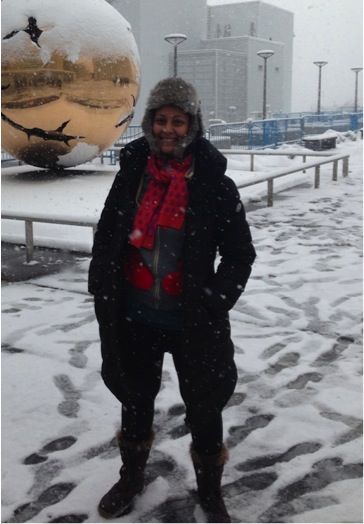
Leigh Pasqual is a writer, communications strategist, and women’s rights advocate. She has worked with the United Nations and with nonprofit organisations in the United States, Singapore and other countries.  She continues to consult with organisations on a broad range of development issues, and is the founder of a non-profit organisation – Good for Girls – dedicated to empowering girls and supporting their education.

Become an AWARE Angel

angel card smallBecome an AWARE Angel by pledging to be a monthly donor to AWARE, and invest in making our society a fairer, more equal and safer place for all women.

Why Become An AWARE Angel?

It’s a great investment

  • AWARE has proven itself as a high impact NGO that provides critical support services for women and has effectively championed gender equality in Singapore.
  • You get 250% tax deduction for donations that exceed $50 in one year

It helps AWARE greatly

  • You provide AWARE with a steady and reliable source of funds and allows us to plan ahead.
  • As your donations are ongoing, our processing costs are greatly reduced. This allows us to use your donations more efficiently.

It’s flexible

  • You can stop contributing any time you want. There is no minimum amount.
  • No amount is too small. It’s entirely up to you.
  • Your monthly donations are payable through your bank account (via GIRO or Paypal). Set it up once and you’re done.
  • You’ll also get just one tax receipt a year.

Get an exclusive AWARE FlashPay card! (50 pieces only)

AWARE Angels who donate a minimum of $20 a month will receive an exclusive AWARE Flash-Pay card. You get your card once you have effected the first transaction. Email Jes at fundraising@aware.org.sg if you have any questions.


Regional conference: Justice and equality in Muslim families in diverse contexts

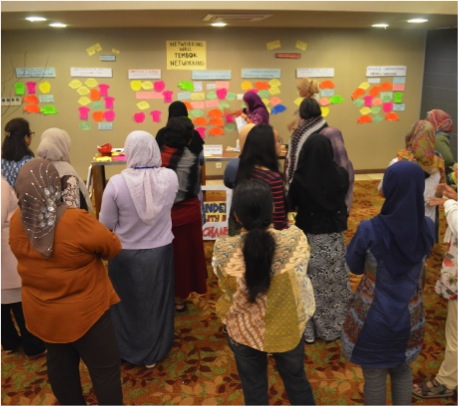
conferenceFrom 27 February to 1 March, AWARE co-organised a regional conference in Yogyakarta, Indonesia to discuss “Working towards Justice and Equality in Muslim Families in Diverse Contexts”.

This conference was a collaboration between AWARE, Solidaritas Perempuan (SP) in Indonesia and the regional women’s rights group The Institute for Women’s Empowerment (IWE), and supported by the UN Women Fund for Gender Equality and Funding Leadership and Opportunities for Women from Netherlands.

The conference featured participants from Indonesia, Singapore and Malaysia, aiming to share and develop strategies for achieving justice and equality in Muslim families in diverse contexts.

How can we promote justice and equality in the everyday reality of Muslim families in diverse contexts?

Muslim families are impacted by many factors, including interpretations of religion, customary rules, social and cultural traditions. These bring about changing realities, posing challenges for Muslim families in terms of relations within the family, as well as relations with the State and with society at large. Unfortunately, justice and equality for all family members are often overlooked, with negative consequences for girls and women.

The conference thus served as a safe space for advocates of justice and equality to share and develop strategies for promoting justice and equality for all members of Muslim families by equipping advocates to:

  1. Address differences of opinion about human rights in Muslim contexts
  2. Understand contestations and struggles between individuals, families and communities over issues of justice and equality
  3. Analyse the roots of injustice and inequality – factors, actors and disempowering actions
  4. Strategise effective ways and means for overcoming challenges to and maximising opportunities for promoting justice and equality for all members of Muslim families.

We also held a press conference with the Indonesian media in which we put forward the following recommendations to the Indonesian state and citizens:

  1. To spread and increase awareness of the values of justice and gender equality to stop violence against women
  2. To re-interpret religious texts that go against the values of justice and gender equality to bring about the realisation of human rights
  3. To ask the government and legislative to promote, protect and fulfil human rights based on the constitution
  4. To call on community leaders, religious leaders and academics to join and advance the cause of voicing values of justice and gender equality in both the public and private sphere
  5. To invite the entire community to ensure that religious interpretations are just and gender-equitable.

The full press statement in Bahasa Indonesia can be viewed here.

Alamak! 2015 nominations are open!

surpriseSeen a particularly excruciating example of sexism recently? A remark, advertisement, or policy that made you gnash your teeth and clench your fists?

Nominate it for the Alamak! Award 2015!

Every year, AWARE “honours” the most annoying, you-have-got-to-be-kidding-me instance of sexism in Singapore over the previous year with the Alamak! Award. Sadly, although we are well into the 21st century, there are still remarks, commercials and policies that perpetuate gender stereotypes and sexist attitudes.

Nominations for Alamak! are submitted by the public and shortlisted by AWARE. You can then vote for the most Alamak! moment of the year.

We’re collecting nominations throughout the year, so submit your nominee through our online form now. The “winner” will be announced at AWARE’s fundraising ball later this year.

Click here to submit your nomination!

You can see previous “winners” of Alamak! award here and here.