
Year: 2015

AWARE goes to New York: the CSW (Part 1)

By Leigh Pasqual, Honorary Research Associate for AWARE 
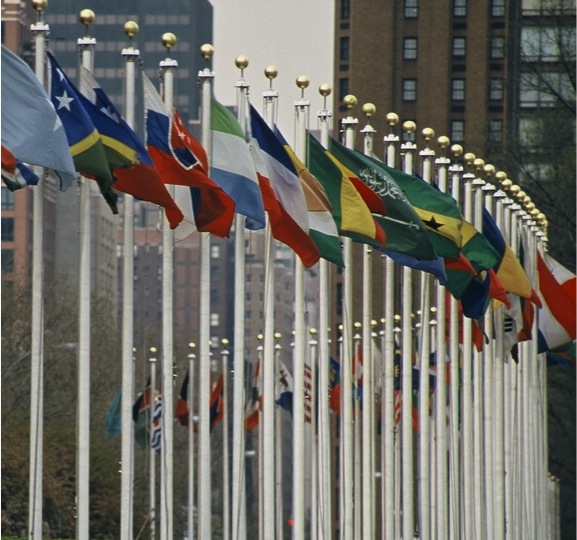
UN flagsThis is the first part of a three-part series of posts about AWARE’s representation at an upcoming session of the Commission of the Status of Women (CSW) in New York. First up: what is the CSW, and why does it matter to gender equality in Singapore?

What is the CSW?

The CSW is the main intergovernmental body dedicated to the promotion of gender equality and women’s empowerment. It was established in 1946 as a working commission of the United Nations (UN) Economic and Social Council.

Every year, the CSW holds a two-week session in March at UN Headquarters in New York, where representatives of member states, civil society groups and UN entities meet to discuss women’s rights around the world. They exchange experiences and best practices, and examine emerging issues.

The CSW focuses on one priority theme each year, based on the Beijing Declaration and Platform for Action (see below/or add link jump). In 2011, the theme was ‘access and participation of women and girls to education, training, science and technology’, while in 2013 the focus was on the ‘elimination and prevention of all forms of violence against women and girls’.

The CSW is a dynamic time for many advocates around the world who come to New York. We reconnect with colleagues and friends, expand knowledge, and form new partnerships. It is a time to celebrate and commemorate the important work of women’s movements to advance gender equality.

Read a brief history of the CSW – http://www.unwomen.org/en/csw/brief-history.

What is CSW 59?

From 9-20 March 2015, the CSW will hold its 59th session. It’s particularly important as it will review progress made in the implementation of the Beijing Declaration and Platform for Action, adopted 20 years ago at the Fourth World Conference on Women.

CSW 59 is also called Beijing +20, in recognition of this anniversary. There are no current plans for a Fifth World Conference.

At CSW 59, the UN Secretary-General will release an official report that presents the global review of progress on women’s empowerment, women’s rights and gender equality. The report includes inputs from 166 countries – including Singapore – and civil society.

Find out more about CSW 59 hereRead the Singapore Government’s report here

What is the Beijing Declaration and Platform for Action?

In 1995, the Fourth World Conference on Women in Beijing concluded with a landmark set of commitments by countries for achieving gender equality. These were spelled out in the Beijing Declaration and Platform for Action (BPfA).

The BPfA reaffirms the fundamental human rights of women and girls, and calls attention to ongoing violations of these rights in every part of the world. It puts forward an agenda to empower women and remove all obstacles to their active participation in all spheres of public and private life, through a full and equal share in economic, social, cultural and political decision-making. Twelve ‘critical areas of concern’ are spelled out, ranging from violence against women, unequal access to education and healthcare, the growing burden of poverty, to economic and political inequalities, and the impact of armed conflict on women and girls.

What is the connection between the CSW and CEDAW?

In 1963, efforts to consolidate standards on women’s rights led the UN General Assembly to request the CSW to draft a Declaration on the Elimination of Discrimination against Women.

The CSW was also translated the Declaration into a concrete framework to hold member states accountable for their actions to remove discrimination against women in their countries. This was the legally binding Convention on the Elimination of All Forms of Discrimination against Women (CEDAW), adopted in 1979. Singapore became a signatory in 1995.

Agreements and commitments made under the CSW are non-binding, but CEDAW legally obliges member states to take concrete steps to promote gender equality and women’s empowerment.

What is the UN Economic and Social Council?

The Economic and Social Council (ECOSOC) is one of the six main organs of the UN. It is the main body responsible for coordination, policy review, policy dialogue and recommendations on economic, social and environmental issues, as well as for implementation of the internationally agreed development goals.

ECOSOC also serves as the central mechanism for the activities of the United Nations system and its specialised agencies (such as UNICEF, UNDP and UN WOMEN), and supervises the subsidiary and expert bodies in the economic, social and environmental fields.

ECOSOC engages many stakeholders – policymakers, parliamentarians, academics, major groups, foundations, business sector representatives and registered non-governmental organisations. NGOs can participate in UN deliberations by obtaining ‘consultative status’ with ECOSOC, giving them access to many intergovernmental meetings of ECOSOC and its subsidiary bodies, and to the various human rights mechanisms of the UN.

What does AWARE have to do with ECOSOC and the CSW?

Singapore has signed CEDAW, the Convention on the Rights of the Child, and the Convention on the Rights of Persons with Disabilities.

In 2014, AWARE obtained ECOSOC consultative status. We applied for this because Singapore is expanding its international role, making it important for AWARE to contribute not only to national but also international discussions around women’s. With ECOSOC status, we are regularly invited to meetings at the UN, and can expand our role in these international dialogues, which also affect Singapore.

AWARE is already involved with CEDAW, primarily by submitting Shadow Reports (link) on the situation in Singapore. Participating at an international level helps us increase our knowledge of policies, laws and practices in other countries. The UN is an important hub for international standard-setting.

CSW 59 will be the first time that AWARE will participate at the CSW as an NGO with consultative status. This gives us the chance to attend official intergovernmental sessions. Although we did not succeed in securing a place to make an oral statement at the session itself, we will be publishing our planned oral statement on the AWARE website.

Stay tuned for Part 2: AWARE’s planned oral statement!
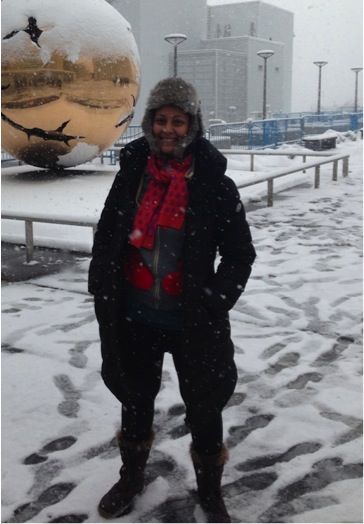
Leigh snow
Super kiasu me trudged through the snow storm to get my CSW pass and a ticket to the opening. (only 200 tix for over 6000 people!!)


Leigh Pasqual is a writer, communications strategist, and women’s rights advocate. She has worked with the United Nations and with nonprofit organisations in the United States, Singapore and other countries.  She continues to consult with organisations on a broad range of development issues, and is the founder of a non-profit organisation – Good for Girls – dedicated to empowering girls and supporting their education.

Strip-search powers are excessive

By Goh Li Sian, Research and Advocacy Coordinator, AWARE

police1We are troubled that the recently passed liquor control law has extended police powers to include discretionary strip searches for alcohol, with little public consultation in this regard (“New alcohol laws aimed at those who cause trouble”; Jan 31).

Even when conducted in good faith, strip searches are an extreme measure which substantially affects human dignity. They should be used only with especially compelling justification. Allowing police officers to deploy them so widely is a very significant step.

For a strip search to be legal, the Act requires only that the police officer has “reasonable suspicion”. This low threshold may authorise many unnecessary strip searches.

Moreover, these searches are not intended to locate dangerous items such as radioactive material or firearms, but alcohol, a substance which is not even illegal to possess.

This expansion of powers carries the danger of abuse.

The Association of Women for Action and Research (Aware) has already been contacted by a female member of the public who is distressed at the possibility of being sexually assaulted by a police officer exercising these powers discriminatorily or abusively, with alcohol as a mere pretext.

Others have already raised concerns about the wide-ranging stop and search powers.

These concerns have not been allayed by police assurances to take action based on the situation. Should such a radical measure as strip searching be available at such broad discretion?

In 2013 and last year, the Ministry of Home Affairs held a consultation on restricting the public consumption of liquor and shortening sale hours of liquor at retail outlets.

Most participants favoured a partial ban on the public consumption of alcohol. However, it does not appear that participants were asked about whether police powers should be increased to enforce such measures, let alone their views on the use of strip searches.

Aware has had significant positive experiences with public consultations in the past.

For example, many individuals and groups were consulted in detail at various stages in the development of the Protection from Harassment Act.

We urge the Government to ensure that public consultations for laws which import wide-ranging restrictions on civil liberties always include seeking feedback on the text of the draft legislation, and not just feedback on broad principles.

This letter was first published in the Straits Times Forum on 10 February 2014.

CPF flexibility good but women still at risk

By Goh Li Sian, Research and Advocacy Coordinator, AWARE

455-old-lady-yaanWe welcome the greater flexibility for Central Provident Fund (CPF) payouts proposed by the CPF advisory panel (“Proposed CPF changes give members more control”; Feb 5).

The proposed move to a lower Basic Retirement Sum is likely to improve Singaporeans’ access to their CPF monies.

However, it does not adequately resolve the underlying issue of financial insecurity of the elderly, especially women, because CPF is still pegged to employment and the level of wages earned by a person throughout his lifetime.

Women are more likely to leave the workforce to provide uncompensated domestic and care labour. As a result, they typically earn less than men, preventing them from accumulating CPF monies.

According to a 2013 Manpower Ministry report, women constitute 65 per cent of those outside the labour force. Forty-five per cent of these women, or 312,000 people, reported that they left the workforce due to family responsibilities, including caregiving. Such women are less likely to accumulate enough CPF savings to ensure their financial security in old age.

Last month, the Association of Women for Action and Research’s recommendations for the Budget supported Professor Chia Ngee Choon’s call for a basic pension scheme that is not reliant on employment. Women who have provided unwaged labour in the home by caring for children and elderly relatives would then at least be assured of financial security in their old age.

The panel has acknowledged that this is an area of concern. It noted that those who do not meet the Basic Retirement Sum should continue to get help from the Government through schemes outside the CPF, such as the Silver Support Scheme.

The complete details of the scheme are not yet known, but it promises to supplement payouts from needy elderly people’s CPF accounts, and will be introduced more fully in the Budget debate later this month.

We hope that the Silver Support Scheme will more fully provide for the financial needs of impoverished elderly men and women which are not currently met by the CPF.

This letter was first published in the Straits Times Forum on 14 February 2015.

Art installation: Bellies Speak at All Fired Up!

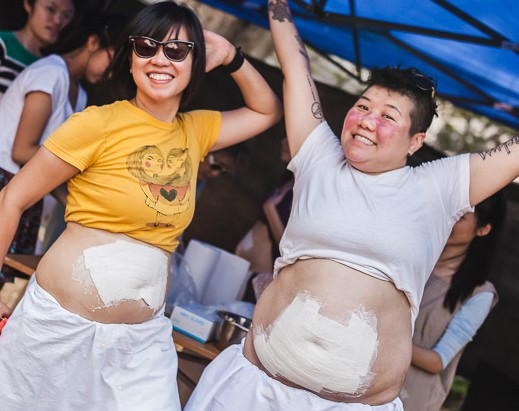
IWD_Fire_it_up_HongLimPark-030There is so much to do at AWARE’s International Women’s Day celebration, All Fired Up! Join us at Hong Lim Park on 8 March to participate in a unique art installation – When Bellies Speak.

When Bellies Speak, a community art project by artist and writer Dana Lam, will install plaster casts of bellies big and small of any age, colour and gender, in a circular pattern at Hong Lim Park. Participants are invited to participate by walking around the circle and ritually laying a plaster cast on one of the stands.

Come reconsider and reconnect with a part of the body that is the subject of constant abuse.

Details:

Event: Part of All Fired Up!, AWARE’s International Women’s Day party
Date: 8 March (Sunday)
Venue: Hong Lim Park
Time: 4pm – 9pm. When Bellies Speak will begin at 7:30pm.

If you have any questions or would like to participate in this art installation, please contact whenbelliesspeak@gmail.com

AWARE applauds breakthrough Budget speech

This press release was sent out on 23 February 2015.

budget 2015The Association of Women for Action and Research (AWARE) applauds the emphasis on redistributive policies in the breakthrough Budget speech delivered by Deputy Prime Minister and Finance Minister Tharman Shanmugaratnam today. The DPM’s statement included a welcome commitment to the government’s redistributive role ­ with increased assistance for low­income groups supported by taxation of the top 5% earners.

“We are heartened by this recognition of the principles of collective responsibility, fairness and our duties to support one another as fellow citizens,” said Dr Vivienne Wee, AWARE’s Research and Advocacy Director. “The government has done well to increase social spending as a percentage of GDP, and to recognise the obligation of those who have benefited the most from the economy to give more back.”

Silver Support Scheme

“It is groundbreaking that Silver Support is a form of social support based on the individual needs of the recipient and not reliant on employment,” said Dr Wee. “We also applaud the automatic implementation ­ avoiding application procedures that can hinder individuals. This is a good first step toward a universal basic pension.”

AWARE welcomes the DPM’s explicit recognition of the position of homemakers and the insufficiency of CPF in providing for their needs. Silver Support will also assist those who participate in the economy without formal employment, such as freelancers and contract workers. We look forward to further details of its implementation and urge the government to focus primarily on the criterion of lifetime earnings (rather than household situation or housing type) as the main indicator of an individual’s level of need for support.

Childcare and eldercare support

AWARE welcomes the government’s recognition that more support is needed for childcare and early childhood education, including reduction of the domestic worker levy.

“This will help more families meet childcare and eldercare needs,” said Dr Wee. “However, lower­income households may not benefit from the levy concession as they cannot afford domestic workers regardless. We hope the government will also consider supporting caregiving by family members, who are usually women.”

AWARE also welcomes the universal provision of credits under the SkillsFuture scheme, which can be accessed by any individual regardless of their current employment status.

“This may assist women who are looking to return to the workforce after a period of unpaid caregiving, and who cannot rely on employers to fund their training,” said Dr Wee.

We hope that the Government will build on the promising new directions expressed in this Budget speech, and eventually address issues of eldercare more comprehensively (including paid eldercare leave). We hope in future years to see fuller recognition and material support of women who leave the workforce to care for their families, at great personal cost. These issues were highlighted in AWARE’s B​udget recommendations from January​as requiring significant state planning and resource allocation.

Faith and Women’s Leadership in the Family: An Interfaith Dialogue

Celebrate International Women’s Day with EIF, Yale-NUS and AWARE on 15 March with an interfaith dialogue exploring women’s leadership in the family.

  • What does leadership look like in your family?

  • In what aspects of family life do women hold decision-making power?

  • How has your faith/belief system facilitated women’s leadership in your family?

  • How has your faith/belief system restricted women’s leadership in your family?

Venue: Yale-NUS
Date: 15 March 2015
Time: 2-5pm

Register here!

Schedule:

2pm – Intro and Forum Theatre Activity
2:45pm – Tea
3:00pm – Small Group discussions
4:30pm – Big Group discussions
5:00pm – Closing Remarks


Focus group: Faith and New Media

Muslim women and new media

With the development of new media, people are now able to access large amounts of knowledge easily. The search for gender equality in Islam has been greatly influenced by people’s dissemination of fundamental Islamic knowledge through new media sources.

On 8 April, join us for a focus group discussion seeking to address how new media acts as a platform to discuss gender equality in Islam.

Discussion questions
1. What are the differences between communicating faith and gender equality in online platforms and offline-conventional media?
2. How do you judge the credibility of religious information you acquire from the net?
3. How has the authority over Islamic discourses (including interpretations of Qur’an) changed with the Internet?

Event Details:
Title: Faith and New Media
Date: 8 April, Wednesday [The event was postponed from its original date of 17 March]
Time: 7:30 – 9:30pm
Venue: AWARE Centre

Register here!

Roundtable: Unmet social needs of elderly women

The Lien Centre for Social Innovation, in close collaboration with the Asian Women’s Welfare Association and faculty and students at SMU, has designed a research project to explore the physical, social, and emotional status of residents aged 60 years and above living in Ang Mo Kio. Data gathered from 102 respondents were analysed to explore and identify gender differences and roles.

Come to AWARE on 5 March for a roundtable to discuss the findings of this survey.

Event Details:
Date: Thursday, 5 March, 2015
Time: 7:30pm
Location: AWARE Centre (5 Dover Crescent, #01-22)

Click here to register.

About the speaker: 

Balambigai Balakrishnan received her PhD in Humanities and Social Sciences from the Department of Human Geography, University of Adelaide. Her thesis focused on circular migration of low-skilled workers from Indonesia to Malaysia. Balam also has a Masters in Applied Statistics from the University Malaya and an MBA from Leeds University.

Balam’s work for the Lien Centre focuses on primary data collection and analysis as part of our work identifying unmet social needs of the vulnerable groups in Singapore. Balam has more than 10 years teaching experience in higher learning institutions in Malaysia and Australia. As a volunteer, Balam has conducted research and case work assisting migrant workers in Singapore.

For enquiries, please contact Nabilah at nabilah@aware.org.sg.

Support for single parents will strengthen our society

motherBy Teo You Yenn

The differential treatment of parents based on their marital status has once more come under the spotlight. In response to parliamentary discussions, two Cabinet Ministers have recently reiterated that the state’s approach—of providing more benefits to married than unmarried parents—is justified by “societal norms”. But the negative impact of this discrimination on social belonging deserves more scrutiny.

Caregiving is tough work. People whose lives involve significant everyday childcare will understand that it is difficult to raise children in the best of circumstances. Those who have to do it alone—occasionally or for extended periods—know that though it is potentially rewarding, it is also work that can be immensely lonely and stressful.

Sociologists and psychologists have documented the multiple ways in which people with young children experience stress. Studies also illuminate the particular challenges of raising children as single parents.

It should be obvious that—in comparison to those who have the support of another adult in the household—single parents and their children are likely to require more of our support, rather than less.

Yet, puzzlingly, rather than receiving additional support to meet these challenges, single parents in Singapore face discrimination in ways that have significant negative impact on their ability to meet needs. Single mothers have access to significantly less paid maternity leave (and no access at all to public support of paid leave since employers alone bear the cost); no access to Baby Bonuses, including the co-savings component known as the Child Development Account; and less access to various tax reliefs.

While these differentiations are defended as necessary to support childraising in the context of marriage, it is unclear how excluding single parents and their children fosters a more positive environment for those in marriages.

This is not a narrow issue concerning just a minority. The differential and inferior level of public support for single parents is something everyone in Singapore should care about and speak up against. Two reasons stand out.

First, all children grow up to be members of our society. Their wellbeing or lack thereof has long-term consequences for us all. This is the rationale underlying social support for parents, and educational opportunities for all children. Absent of this principle, people who are not parents should revolt at this way of spending their tax dollars. In other words, what is at stake when we support children is the greater societal good, and not just individual interests and wellbeing.

A society that aspires to be inclusive and meritocratic should strive to ensure that all children begin with the same level of social support and opportunities. In the early years of a person’s life, this support is necessarily about supporting his or her parents and caregivers.

Precisely because we value all future members of society, regardless of the circumstances of their birth, we must ensure that children of single parents—raising them under more difficult conditions—are protected and enabled in ways that allow them to thrive in and eventually contribute to our society in ways no different from children of two-parent families.

This is sensible from the point of view of the future of Singapore society. Moreover, given our espousal of the principles of inclusivity, meritocracy and equal opportunity, this tangible support is an important example of walking the talk.

Second, public policies that differentiate and discriminate show us that our membership in this society, and the support we should expect from it, is not based on a recognition of our equal fundamental humanity, but rather conditional on our “good” behavior—and thus, ultimately, tenuous.

This is the sort of relationship we might expect to have with our employers—where we do certain jobs in return for specified pay. In the event that either side fails to do their part in the exchange, there is exit. Neither owes the other anything.

Countries are not corporations, and citizenship is not salary.

To build a society that lives up to the founding ideals of one united people—in the words of the pledge, a democratic society built on justice and equality—we need to cultivate relationships of mutual obligations between state and society, as well as among all members of society.

This requires policies that allow us to experience that we are all worthy of support and obligated to contribute—no matter our individual circumstances and how they may change over time, and despite diversity in our viewpoints and practices.

Everyone should feel valued and supported by society, in good times and bad. Public policies that differentiate and divide, that send the signal that our membership is conditional and can be revoked, hurt us all.

This year, as we celebrate 50 years of being a nation, we should strive to be a society that values all its members. We need to scrutinize our public policies and rethink how they can bring value not only to us as individuals, but how they might foster an environment in which we appreciate our mutual obligations to one another.


Teo You Yenn is a board member at the Association of Women for Action and Research (AWARE), Associate Professor in Sociology at the Nanyang Technological University, and author of the book Neoliberal Morality in Singapore: How family policies make state and society (Routledge, 2011).