Author: Comms Executive

Focus on alternative long-term care options for ageing population rather than rely on maids

This letter was originally published in The Straits Times on 29 December 2020. 

Singaporean employers hiring Indonesian migrant domestic workers (MDWs) will soon take on the $3,000 placement fee previously borne by MDWs themselves (Employers to pay up to $3k more for new maids from Indonesia, Dec 18; and Indonesia’s ‘no-fee’ plan aims to protect its workers overseas, Dec 27).

This commendable move by the Indonesian authorities alleviates the burden of debt for their new MDWs, who typically earn low starting salaries.

However, the increased cost of hiring Indonesian MDWs will at the same time limit the long-term care options available to Singaporeans.

All this signals a need to rethink our reliance on MDWs in caring for our ageing population.

MDWs are an attractive option for long-term, home-based care due to three factors, according to a 2019 study by the Association of Women for Action and Research (Aware) that examined the impact of eldercare on the retirement adequacy of female caregivers.

First, hiring an MDW is cheaper than engaging formal caregiving services.

Second, it is the preferred option for the elderly who wish to age at home rather than attend services at a centre.

Third, it allows many family caregivers to avoid having to navigate the complicated care services landscape.

However, Aware’s latest study on the caregiver burden of MDWs, done in collaboration with the Humanitarian Organisation for Migration Economics (Home), found that when the bulk of eldercare responsibilities are transferred to MDWs, they are often left overworked and given inadequate support in carrying out their caregiving duties.

This limits their ability to provide high-quality eldercare.

An unequal redistribution of caregiving responsibilities from family caregivers to MDWs also takes a mental and physical toll on them that the removal of placement fees alone will not solve.

This move by Indonesia should be looked upon as a chance for us to strengthen our legislative protection of MDWs.

While long-term care is a basic need that should be affordable for all, it should not come at the expense of the migrant women upon whom we rely disproportionately. Instead, Singapore should focus efforts on providing alternative long-term care options to lower- and middle-income family caregivers who are most likely to bear the brunt of the increased costs associated with MDWs.

This includes providing affordable respite care services and building a sustainable core of local professional caregivers.

Camillia Deborah Dass, Communications Executive, Aware

Minor Inconveniences: Transnational Families Comics by jhawnette

Singapore is home to more than two million migrants, including those who have married Singaporean citizens and who are parents to Singaporean children. In the last few years, around one in four of all citizen marriages has been between a migrant (excluding Permanent Residents) and a Singaporean citizen. Women make up more than 70% of these migrant spouses. 

Without Permanent Residence or citizenship, migrant spouses have limited rights and access to social benefits. 

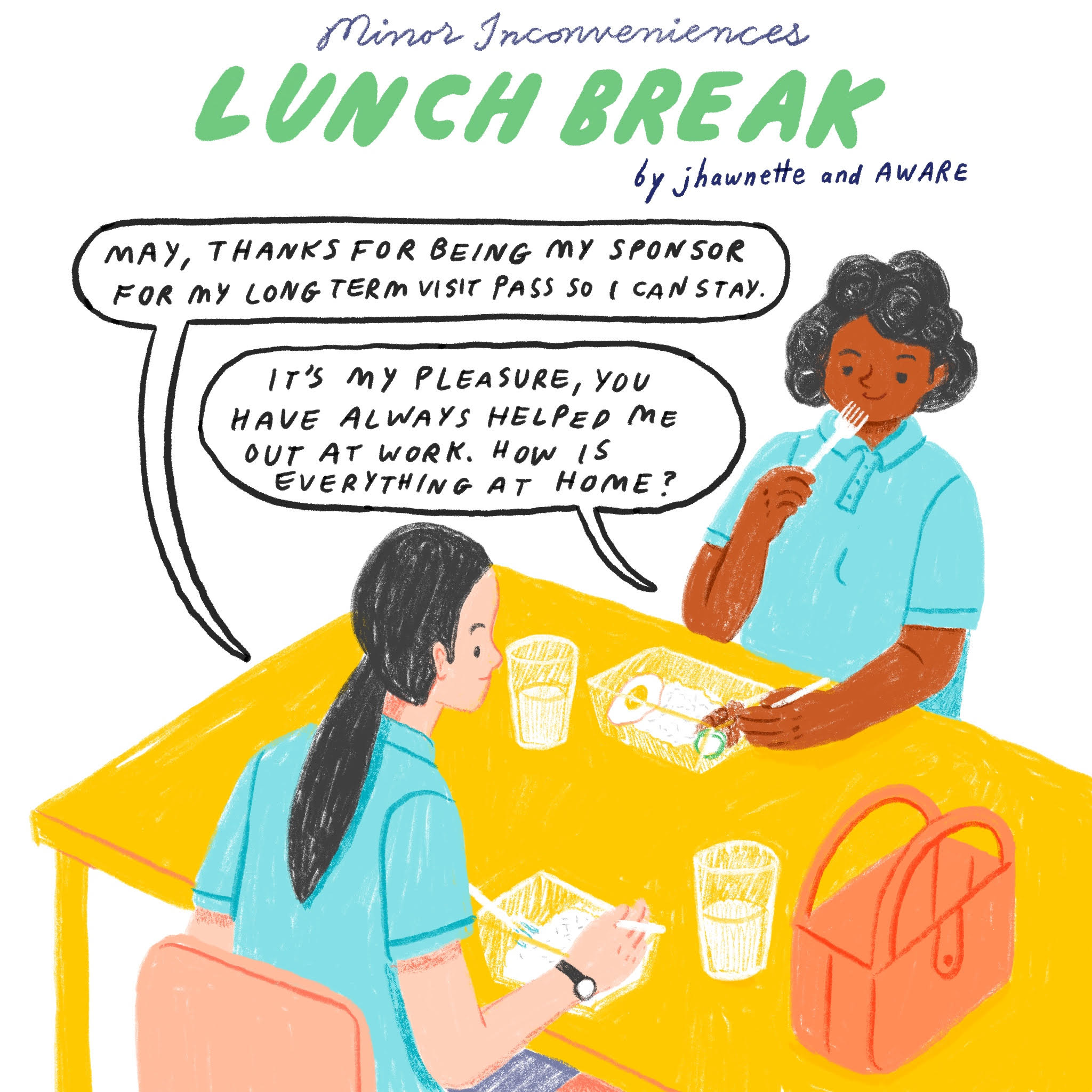
For International Migrants Day this year, we collaborated with artist jhawnette to create “Minor Inconveniences”, a series of three comics that depict the everyday dilemmas, anxieties and inconveniences that transnational families navigate. These stories are amalgamated from interviews AWARE conducted with close to 40 members of transnational families, including those with female migrant spouses, male migrant spouses and teenage children of migrant spouses. 

Through these comics, we shed light on the unique challenges that these migrant spouses and their families face in building their family lives in Singapore, with the hope of creating more understanding and empathy towards their situations. We also present policy recommendations to support the rights of migrant spouses. 


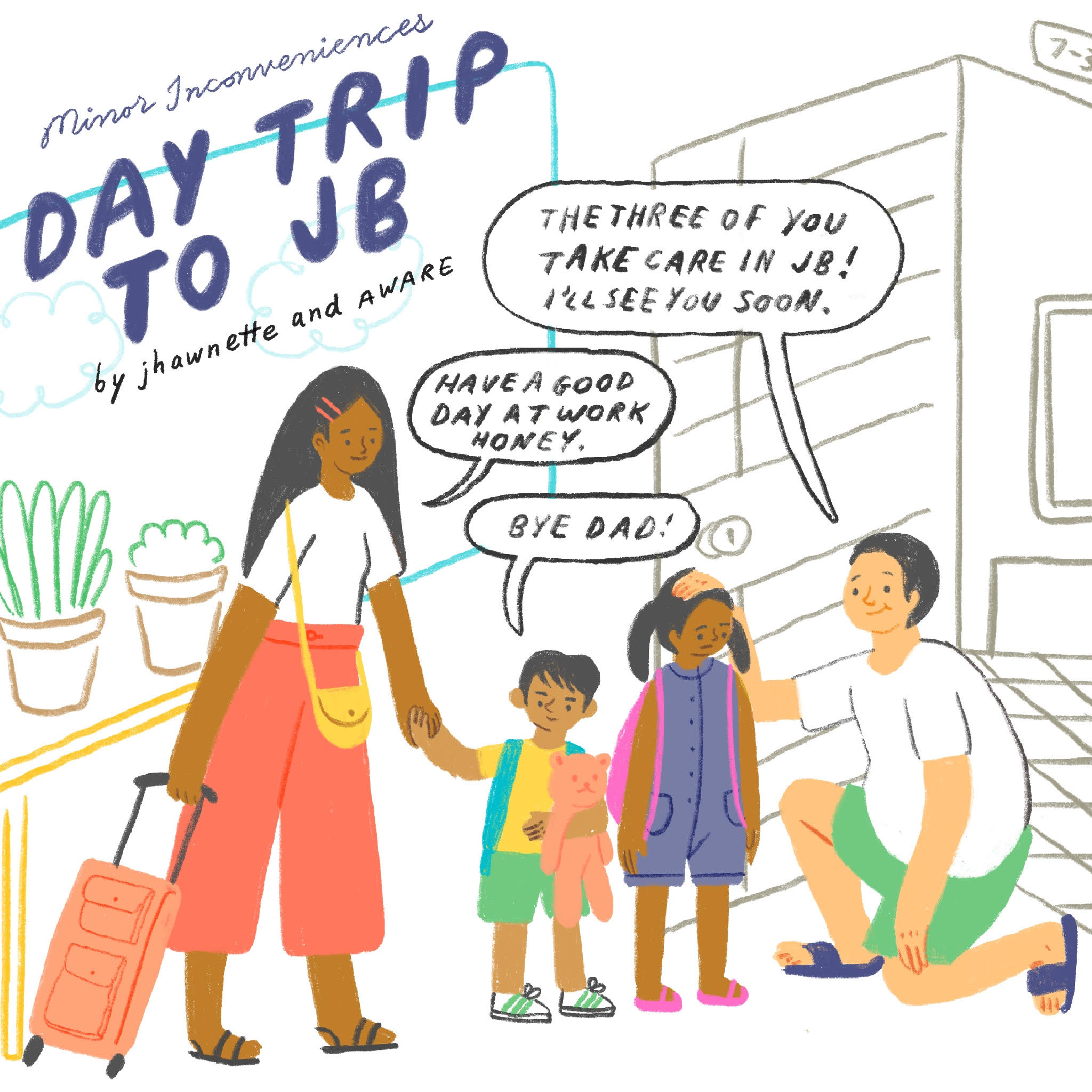
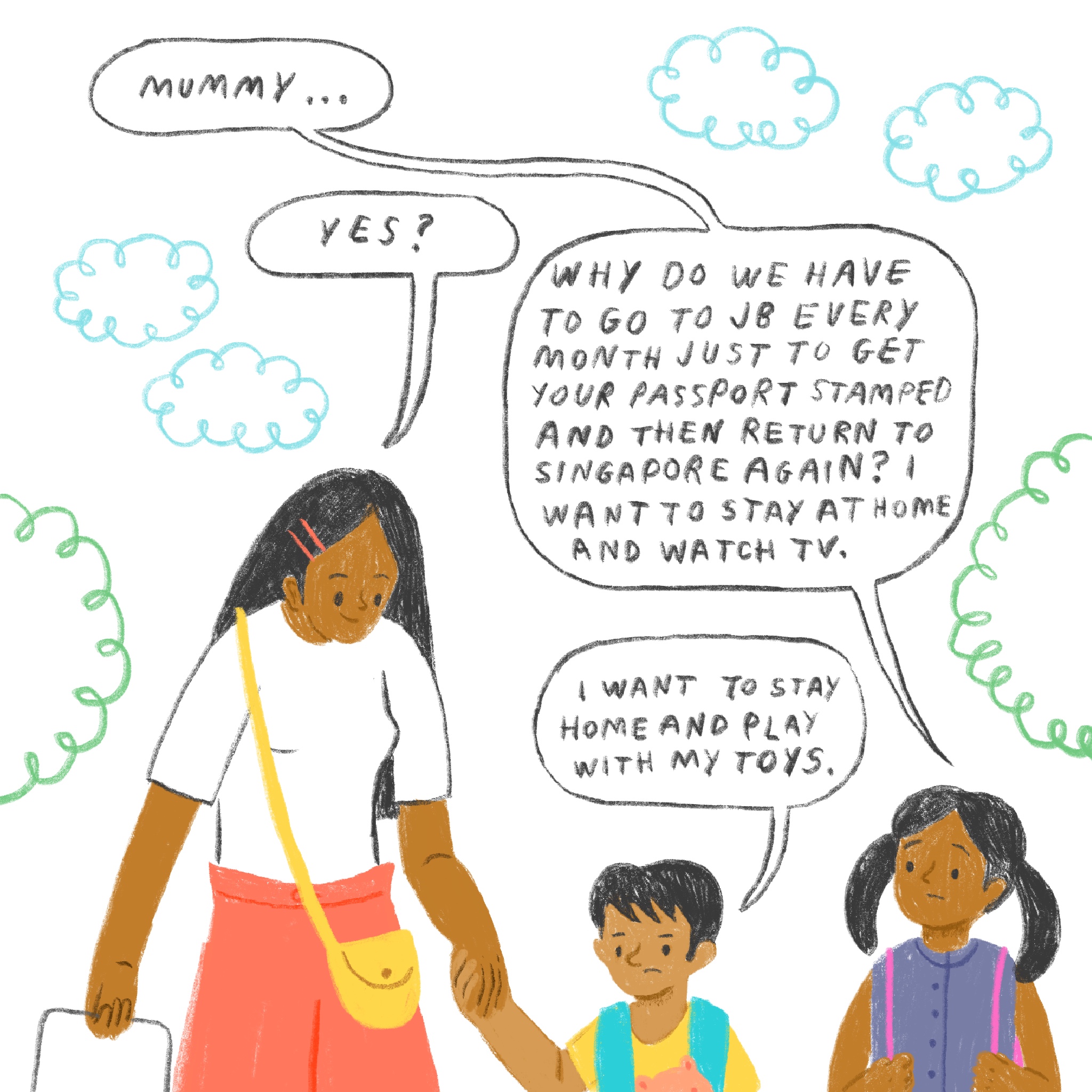
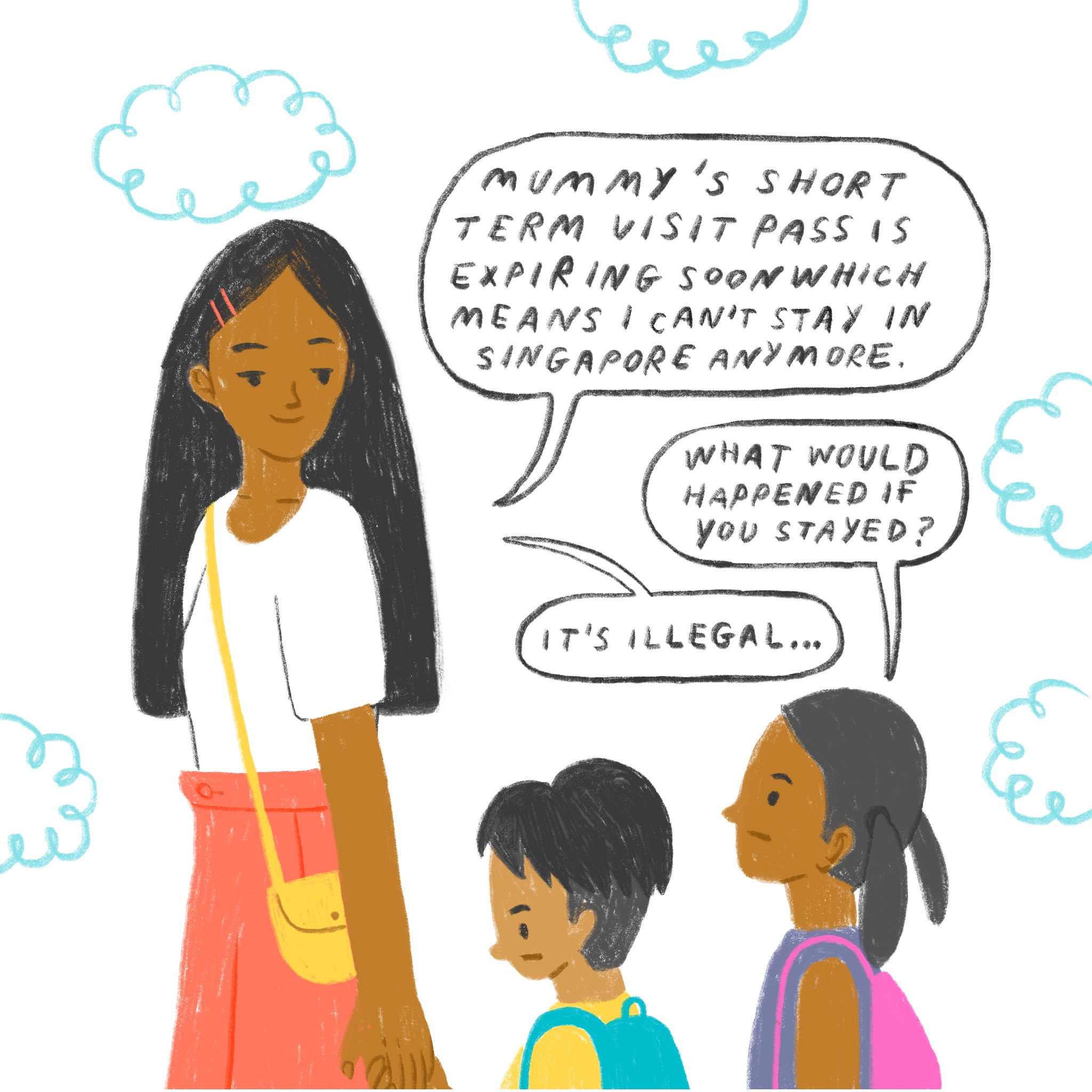
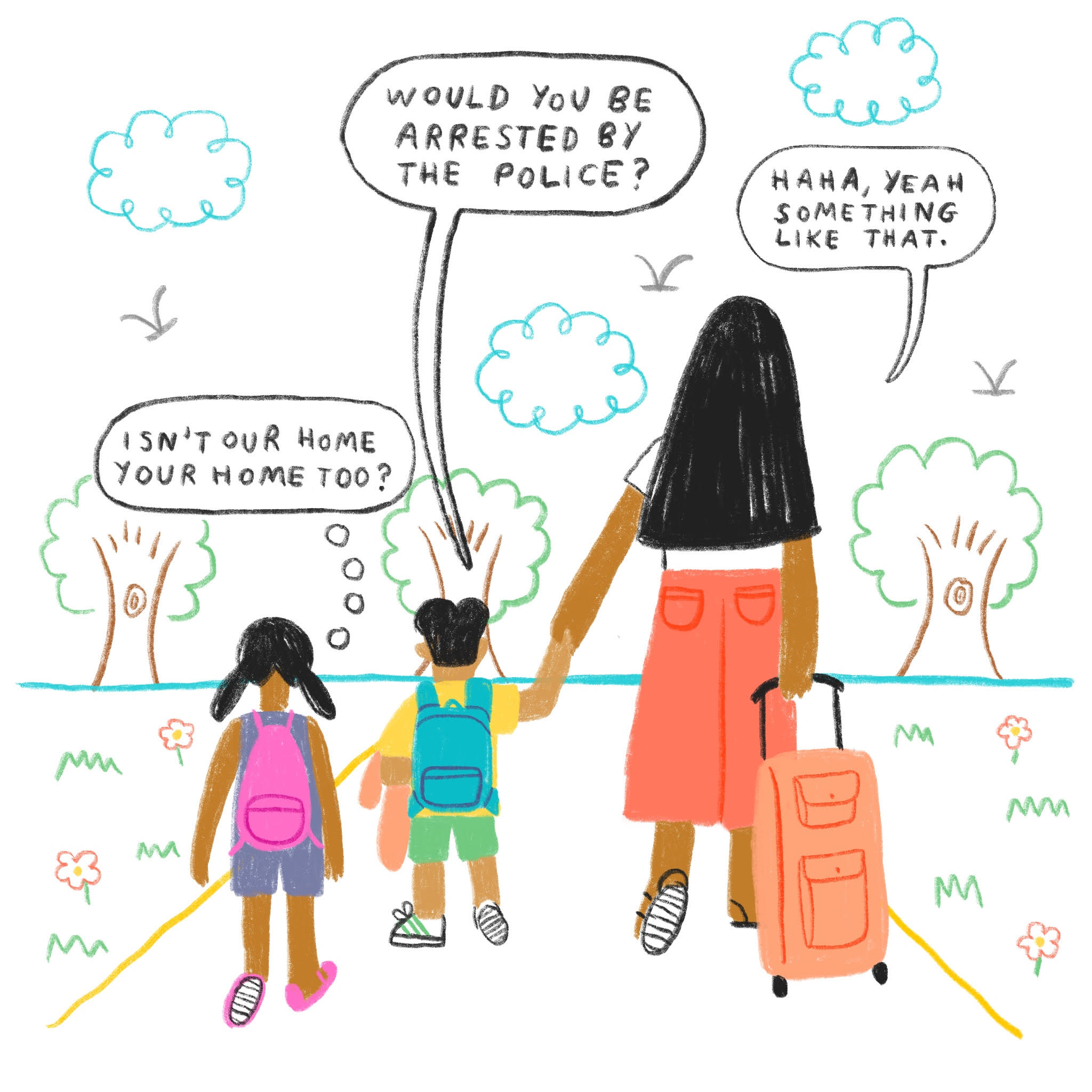
COMIC 1: Day trip to JB

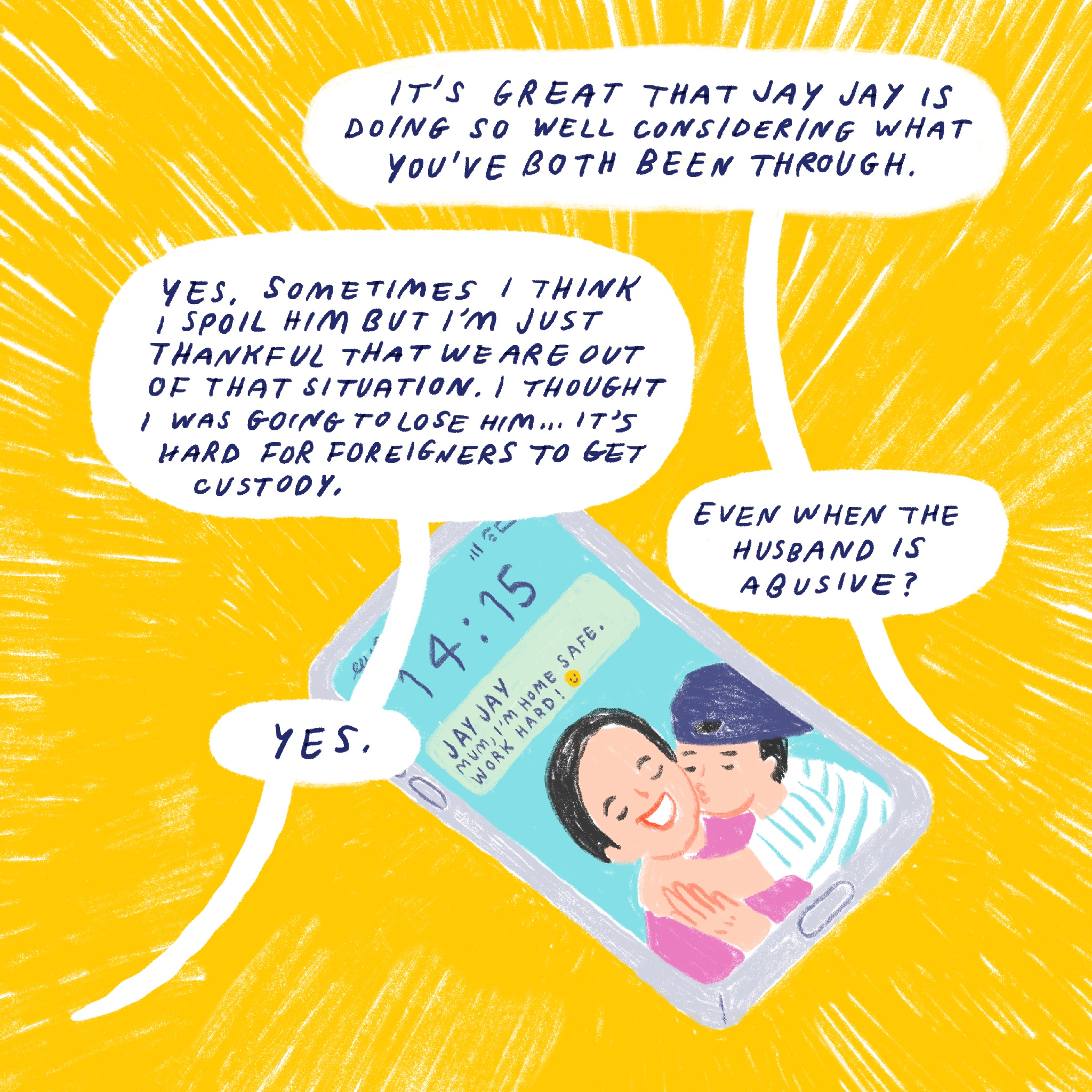
Uncertainty is a constant for many transnational families. Parents and children live in fear of separation, as the migrant family member has no guarantee of their right to reside in Singapore. 

Migrant spouses can apply for a Long-Term Visit Pass (LTVP), valid for 1-3 years, after they are married to a Singaporean citizen. However, the eligibility criteria is opaque and the successful renewal of the pass is not guaranteed. Reasons for failed applications are not usually made known to the applicant. Unless they qualify for an employment-based pass, the failure to secure an LTVP results in the migrant spouse having to be on a short-term visit pass (SVP). These are valid for 30 days (up to 89 days upon renewal). 

Uncertainty over immigration status causes a great deal of stress for migrant spouses, many of whom report feeling anxious, worried and frustrated when they run into trouble renewing their pass and dealing with ICA. The opacity of the eligibility criteria also leaves some feeling resentful and bitter towards the system – perceived to be arbitrarily rewarding some families over others. 

We recommend that:

  • Eligibility criteria for LTVP/+ and PR be made clear and transparent; OR
  • LTVP+ is granted to all migrant spouses of citizens; AND
  • PR status is granted to all migrant spouses upon the birth of their citizen child or the death of their citizen spouse, or (at latest) after three years on the LTVP+. Make citizenship available to all such PRs after a clearly defined and transparently published period.

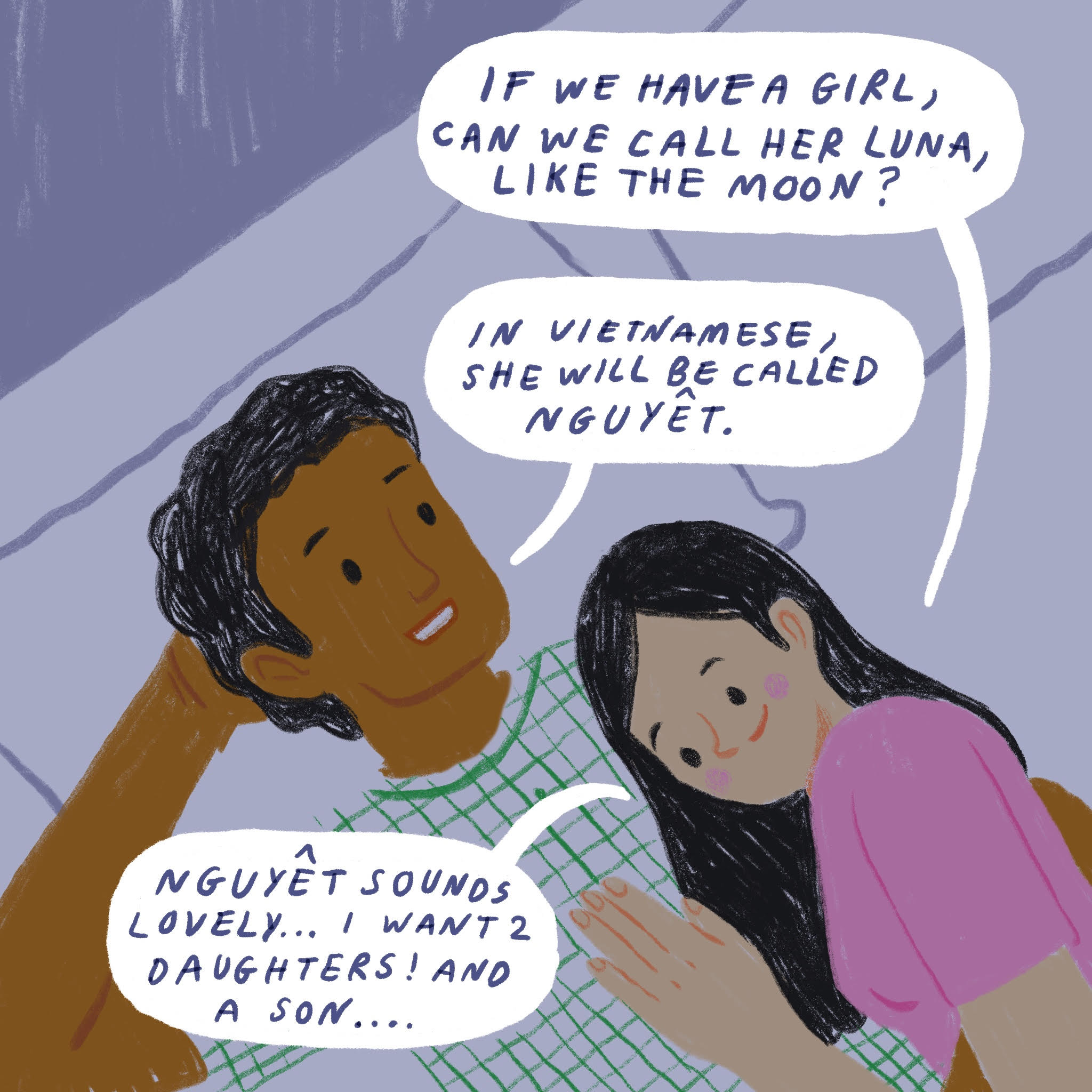
COMIC 2: Clara’s baby

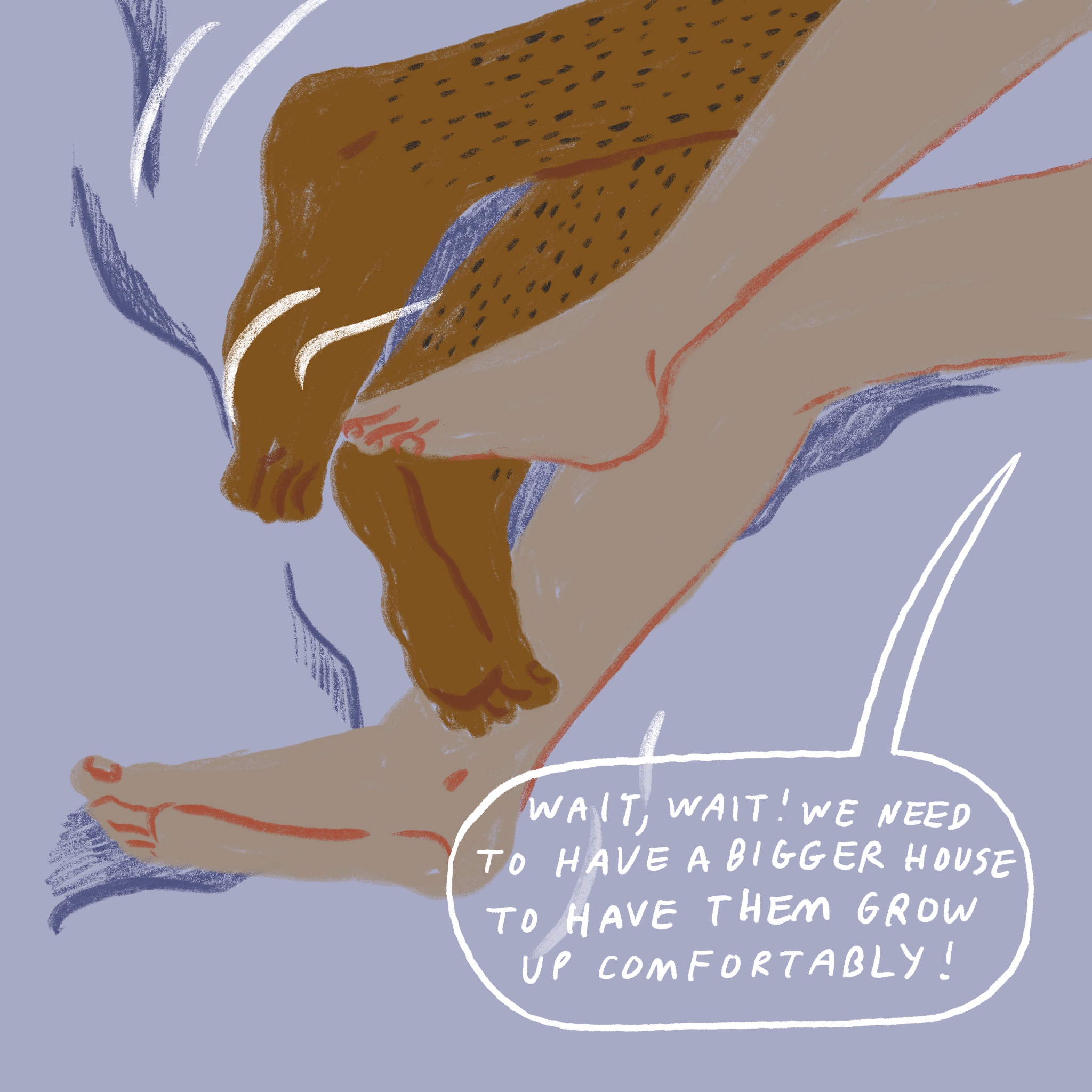
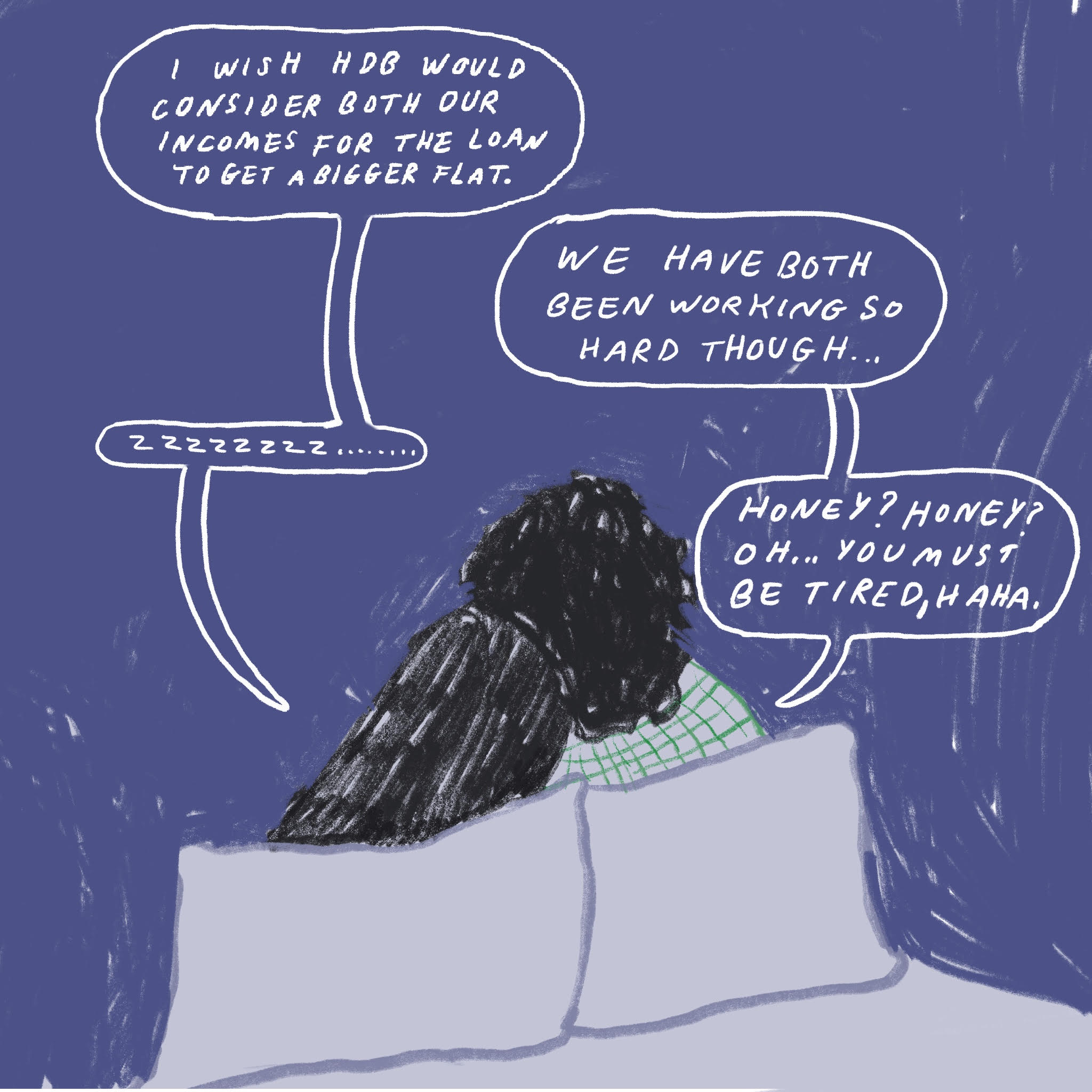
Housing is a fundamental right. Yet transnational families have limited options as they are barred from applying under most public housing schemes. Citizens married to non-PRs can purchase HDB flats, but they are treated as singles for the purposes of housing grants, and migrant spouses cannot be co-owners. This makes the purchase of housing more expensive.  

As shown in the story, HDB only takes the flat owner’s income into consideration when determining its loan quantum. The migrant spouse’s income will not be considered, since they cannot be co-owners. It is thus difficult for couples to purchase a bigger flat as they cannot secure a high enough HDB loan amount to finance it. HDB has said that it exercises flexibility and considers appeals to use the occupier’s income for computation of loan on a case-by-case basis.

Transnational couples also do not generally qualify for public rental housing, since applicants under the Family Scheme must include at least another Singaporean citizen or PR in their “basic family nucleus”.

We recommend that:

  • Housing access be eased, with clear, timed routes to PR.
  • Citizens married to LTVP/+ holders qualify for public rental housing under the Family Scheme. 

COMIC 3: Lunch break


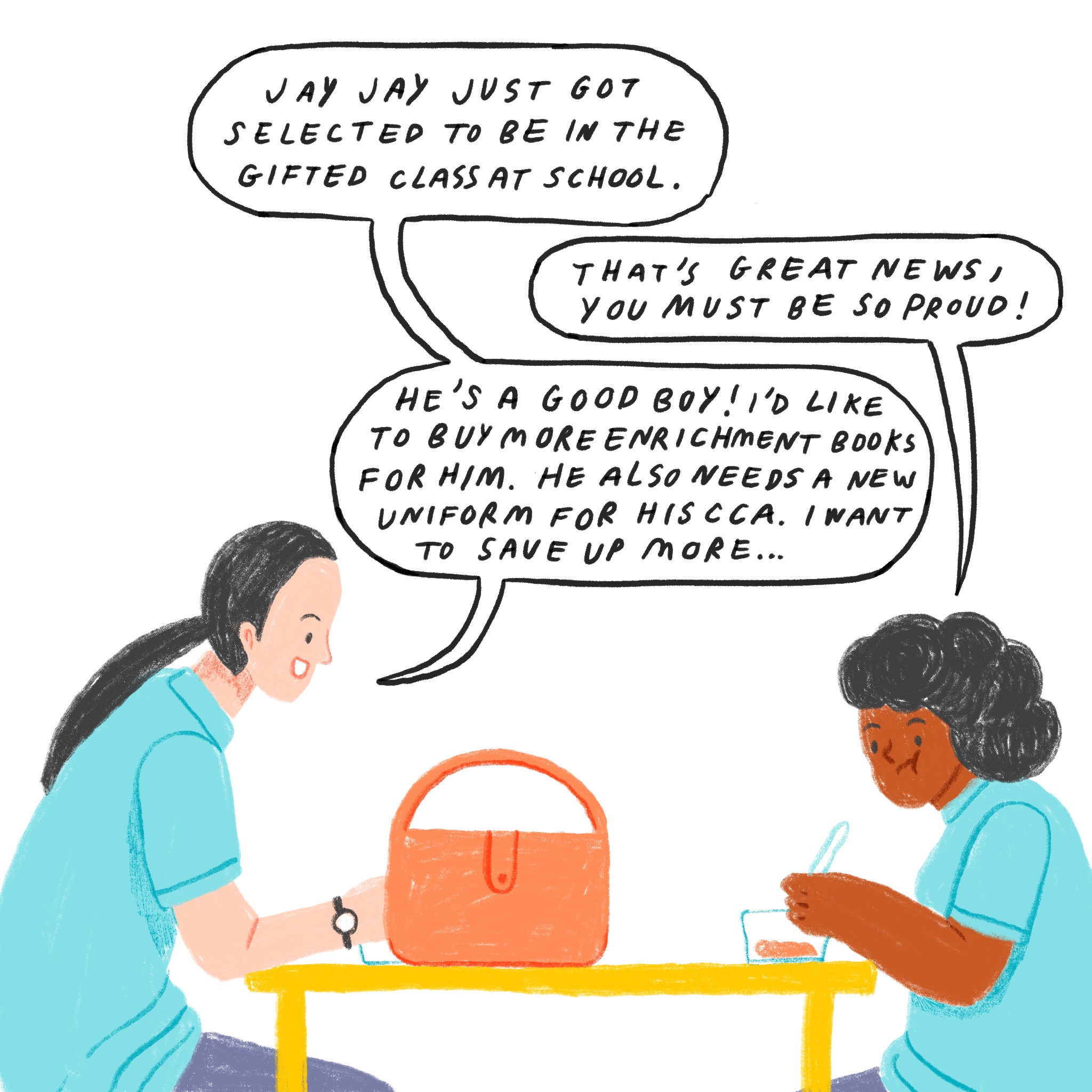
Migrant parents want to do the best for their children, but it can be difficult when access to paid work is limited. They have no automatic right to work. Those on LTVP/+ would have to first secure a Letter of Consent (LOC) or Pre-approved Letter of Consent from the Ministry of Manpower before they can start working. Those on short-term visit passes cannot work.

LTVP/+ holders can only have one employer at a time. They cannot, for example, take on two part-time jobs. They are also not allowed to be self-employed. This is especially challenging for mothers, who often need the versatility and flexibility of part-time jobs or self-employed work so they can juggle caregiving. The income from one part-time job may not be sufficient to support their families. 

The story here also alludes to the difficulties that migrant spouses face with divorce and securing care and control of their Singaporean children. To begin with, they may not even be in the country to contest divorce claims, if their divorcing husbands stopped renewing their LTVP/+ and they are forced to leave Singapore. Migrant spouses also have limited access to legal aid, since most schemes are limited to Singaporeans. 

Compared to Singaporean mothers, migrant mothers are less likely to obtain (1) joint custody or sole custody and (2) care and control of their Singaporean children. Nationality is one of the factors that the Court will consider in awarding care and control. It is usually awarded to Singaporean fathers if the migrant mothers are unable to retain residency in Singapore on their own merit (for example, through an employment-based pass) post-divorce. Many migrant mothers are aware of the risk of being separated from their children if they are divorced; some feel compelled to stay in abusive marriages as a result. 

We recommend that:

  • The right to work is granted automatically for all migrant spouses.
  • LTVP/+ holders are allowed to be self-employed, and to have more than one employer at a time.
  • Migrant spouses undergoing divorce proceedings are guaranteed of their LTVP+. Citizen sponsors should be prohibited from cancelling or not renewing their migrant spouse’s LTVP+ (without consent from the pass holder) once divorce proceedings begin, until at least the issuance of the Final Judgment of Divorce.
  • Migrant spouses are allowed to access existing pro bono or low-bono legal services available to citizens. Set up free helplines to specifically support preliminary and basic procedural issues surrounding family law.

AWARE launches Saga, a 12-episode podcast about the 2009 AWARE Saga

This post was originally published as a press release on 9 December 2020.

At 7pm this evening, gender-equality group AWARE launches Saga, a 12-episode podcast about the 2009 AWARE Saga. 

Saga is the first podcast produced by the association. It is also the first-ever long-form narrative podcast produced in Singapore. Saga is hosted by veteran journalist Bharati Jagdish and written and produced by Jasmine Ng and Kelly Leow, with an original score by Singapore band .gif. While the first two episodes of the podcast are available today on Spotify, Apple Podcasts and Google Podcasts, the next 10 episodes will be released over the following weeks in December 2020 and January 2021. 

The “AWARE Saga” was the name colloquially given to the events of March, April and May 2009, which were widely covered in local media and remain a major landmark in Singapore civil society history. At an Annual General Meeting on 28 March 2009, a group of new members were elected onto the executive committee of AWARE, effectively taking control of the then 24-year-old organisation. It was subsequently revealed that many of the new executive committee were members of the same church, and that they had taken over AWARE largely due to their objections to the organisation’s sexuality education programme. On 2 May 2009, around 3,000 women and men attended an Extraordinary General Meeting, during which a vote of no confidence was held. The new executive committee lost the vote and stepped down, returning AWARE to the leadership of long-time members. 

“As someone who was directly involved in the effort to requisition AWARE back in 2009, I was glad to be a part of this important project,” said Ms Margaret Thomas, AWARE founding member and current president. “We seldom put in the effort to document and reflect upon our local histories; this is especially true for the histories of women and other marginalised communities. If we do not record our history, we won’t be able to examine and discuss the lessons of the past, and this can hinder our progress as a culture. 

“With this podcast, the producers have found a way to capture a valuable oral history in intimate detail and texture, and present it accessibly to the public. I’m pleased that this incident—which was, for many of us, life-changing—has been explored in detail and with care and consideration for the various perspectives involved.” 

Saga was produced over the course of two years. Around 50 individuals were interviewed for the podcast. Notable voices include former AWARE presidents Constance Singam, Kanwaljit Soin and Dana Lam, celebrities Pam Oei and Irene Ang, and thought-leaders such as Tommy Koh, Teo You Yenn, Gillian Koh, Imran Taib, Siew Kum Hong and Tong Yee. 

The podcast’s creators said that their aims were to examine the impacts of the AWARE Saga on Singapore, and spark deep conversations about the issues at hand. They noted that, while the AWARE Saga took place over a decade ago, those issues have only grown in relevance. 

Saga was an extremely exciting and ambitious project,” said Ms Jasmine Ng, co-producer, “not just because of the relative newness of the podcasting medium in Singapore, but because of the richness of the issues evoked by the AWARE Saga. By exploring themes like feminism, LGBTQ rights, sex education and the role of religion in the public square, Saga covers subject matter that has historically been deemed ‘sensitive’. Yet shying away from those topics just because they are complex will only reinforce existing societal divides. 

“We believe that mature, open dialogue is the best way to bridge those divides and come to a place of mutual understanding. Our hope is that listeners of all stripes use Saga as an occasion to engage each other in meaningful, holistic conversations.” 


Series Synopsis: March 2009: When 100 strangers arrive at a run-of-the-mill meeting for Singapore gender-equality group AWARE, long-time members sense that something is wrong. Who are the mysterious women wresting control of this respected volunteer organisation? And what disturbing secret unites them? What happens next becomes the stuff of national legend: starting with an astonishing coup and culminating in an extraordinary declaration of equality and justice. Welcome to the AWARE Saga. aware.org.sg/saga 

AWARE’s Sexual Assault Care Centre saw 153 cases of technology-facilitated sexual violence in 2019, the most ever in one year

This post was originally published as a press release on 2 December 2020.

Correction notice, July 2023: When our analysis was performed, our system did not capture the full range of TFSV cases seen by SACC in 2019. We have since amended this post accordingly. We sincerely apologise for the error.

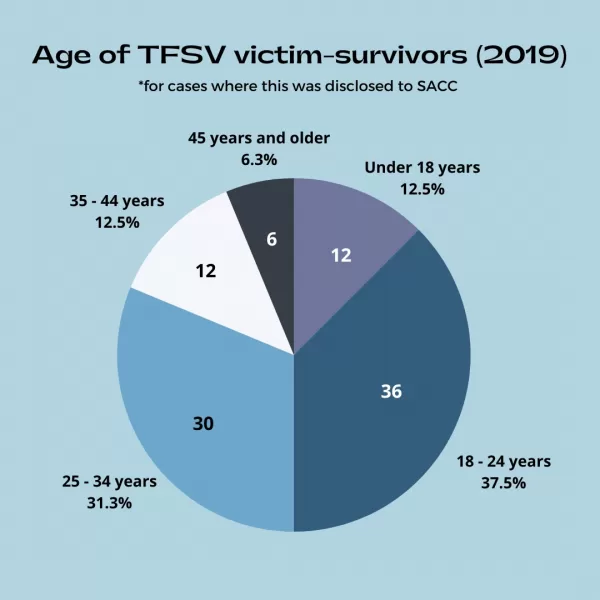
Gender-equality group AWARE’s Sexual Assault Care Centre (SACC) has seen the number of technology-facilitated sexual violence (TFSV) cases triple across four years. In 2019, SACC received 153 TFSV cases, out of a total of 777 cases (20%). In 2016, SACC received 47 TFSV cases (out of 338 total cases); in 2017, 88 (out of 515 total cases); and in 2018, 118 (out of 808 total cases).

AWARE defines technology-facilitated sexual violence as unwanted sexual behaviors carried out via digital technology, such as digital cameras, social media and messaging platforms, and dating and ride-hailing apps. These behaviors range from unwanted and explicit sexual messages and calls, and coercive sex-based communications, to image-based sexual abuse, which is the non-consensual creation, obtainment and/or distribution of sexual images or videos of another person. Image-based sexual abuse includes sexual voyeurism, the non-consensual distribution of sexual images (so-called “revenge porn”) and threats to do the above.

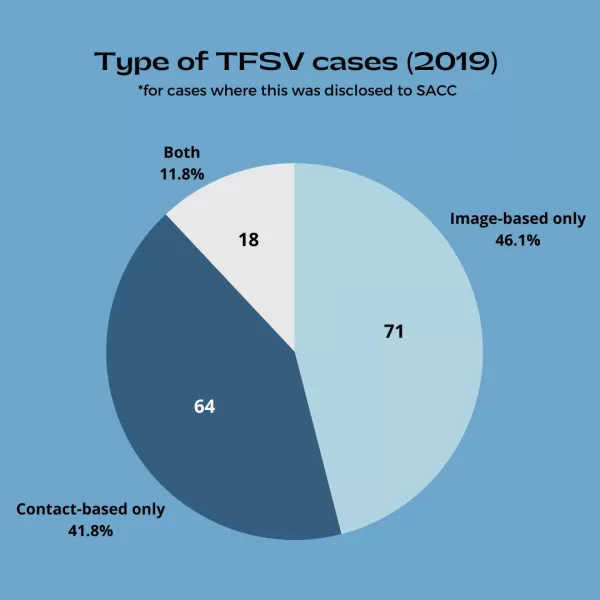
TFSV cases seen by SACC in 2019 included:
71 cases (46% of total) involving image-based sexual abuse
58 cases (38% of total) involving unwanted and explicit sexual messages and calls
18 cases (12% of total) involving multiple forms of abuse.

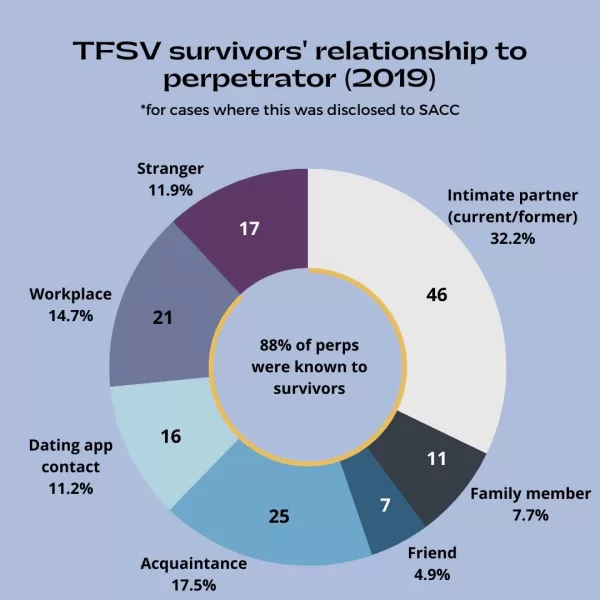
In most of the TFSV cases (8 in 10), the perpetrator was known to the survivor. Intimate partners (current and former), acquaintances and workplace colleagues formed the highest reported categories of perpetrators.*

While all TFSV cases involve an aspect of technology, the abuse sometimes occurs in offline spaces too, and can take the form of physical or verbal sexual harassment, rape, sexual assault (the three most common types of offline abuse), stalking, public humiliation or intimidation. In some cases, technology plays the role of connecting the perpetrator to the victim, i.e. via dating or ride-hailing apps. “Sextortion” is another emerging category, comprising 12% of cases, whereby the perpetrator obtains images of a victim without the latter’s consent, then blackmails the victim into having sex. The number of TFSV cases involving offline abuse remained high in 2019: Twenty-nine cases (19% of total) involved offline abuse facilitated by technology.

“The terms surrounding technology-facilitated sexual violence—from ‘upskirting’ to ‘SG Nasi Lemak’—have become depressingly common parlance in Singapore of late, given how often such cases are reported in the news,” said AWARE Head of Advocacy and Research Shailey Hingorani. “For many, the incidents no longer shock. When it comes image-based sexual abuse, we even know that men explicitly encourage each other to commit these acts over and over. So it is entirely unsurprising to see our case numbers going up. The trend is likely to continue.”

In SACC’s experience supporting TFSV survivors, staff have observed an emotional, mental and physical toll on clients, linked to their loss of dignity, privacy and sexual autonomy. This is exacerbated by the survivors’ limited ability to contain the spread of images and videos once they are uploaded and shared, and difficulty establishing contact with platforms to facilitate the take-down of these materials. As a result, perpetrators are seldom held accountable.

“For the sake of a perpetrator’s momentary pleasure or spite, a survivor may live with anxiety for the rest of her life, knowing that her images are being disseminated online to countless strangers,” added Ms Hingorani. “We hope that more education is provided to youth in Singapore to cultivate their empathy and respect, and counter the negative influence that they may receive on social media or other parts of the internet.”

AWARE has taken steps to expand its research and advocacy on technology-facilitated sexual violence. Earlier this year, the organisation held a contest to crowdsource initiatives against image-based sexual abuse in Singapore. One winning team is creating a centralised website with practical and up-to-date guidelines for image-based sexual abuse survivors to take action or seek support. The other winner is carrying out research into the various recourse options available to image-based sexual abuse survivors, evaluating their effectiveness, impact and limitations. Through these collaborations, AWARE aims to strengthen its recommendations regarding these types of sexual abuse.

Infographics
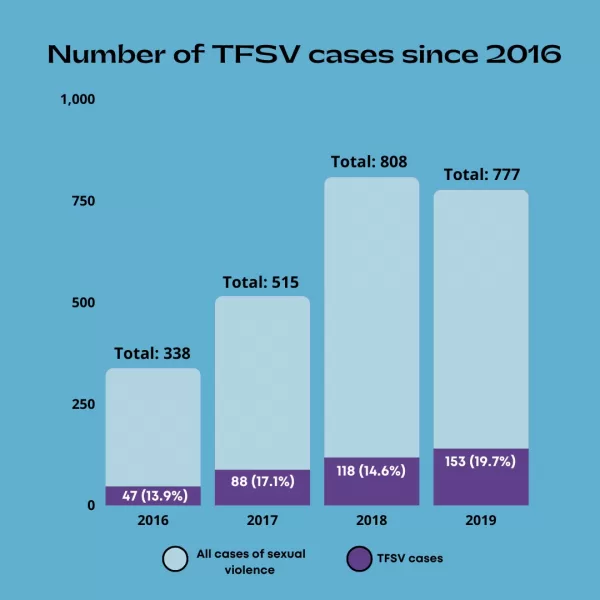


See previous information on TFSV at SACC here.

*This post was updated in 2021 to reflect more consistent categorisation of perpetrator type.

Annex

Technology-Facilitated Sexual Violence: Selected SACC Cases from 2019

Case A: The client received harassing and explicit messages and calls from her ex-partner shortly after she ended the relationship. The partner had non-consensually filmed the both of them having sex, as well as the client taking a shower and using the toilet. These videos were circulated online and to her family members. The harassment escalated to stalking and threats after the client blocked her ex-partner on social media. The client felt distressed and unable to focus on her work after the incidents took place.

Case B: The client was sexually harassed by her boss, who sent her lewd messages over WhatsApp, to which she did not respond. On several occasions, the boss made inappropriate comments about the client’s physical appearance. The case involved offline assault as well: On a business trip, the boss kissed the client without her consent. 

Case C: The client was harassed by a ride-hailing driver on her way to work. The driver made explicit remarks, including how he liked to touch girls on the train. He also talked about women’s underwear as well as naked spa sessions. In shock, the client remained quiet throughout the ride and messaged a confidante. Eventually, with the support of her confidante, she reported it to the ride-hailing service company and is awaiting a response.

Case D: Sexual videos of the client were circulated on the internet. She had previously shared these videos with an intimate partner, whom she was no longer seeing. This former partner sent her friends screenshots of the videos with disturbing and explicit captions.

Case E: The client exchanged messages with a man on a dating app and the two decided to meet. Before they met, she communicated her desire not to have sex. The perpetrator agreed, assuring her he too was seeking a serious romantic relationship. However, when they met, he took her to a private space and raped her.

AWARE raised $500,000*, handed out annual Alamak! Awards at its first-ever virtual charity ball, the AWAREHouse Party

This post was originally published as a press release on 30 November 2020.

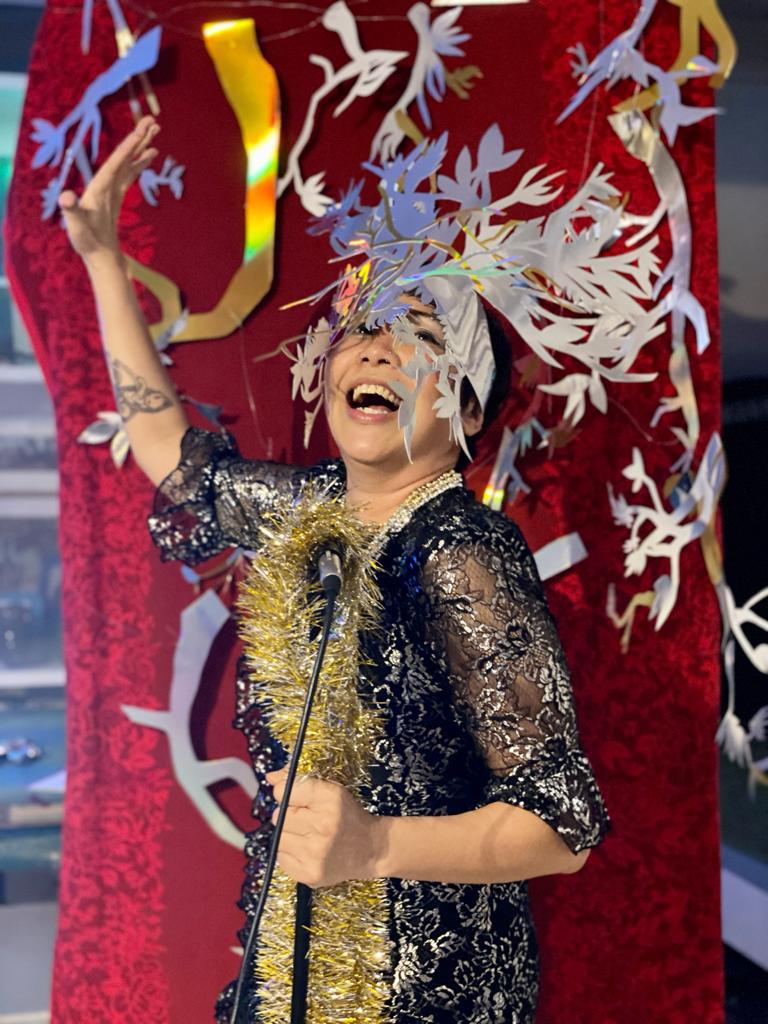
In celebration of its 35th birthday, gender-equality group AWARE held a virtual fundraising gala, the AWAREHouse Party, on the evening of Saturday, 28 November. 

With official measures for COVID-19 limiting social gatherings to five guests, this year AWARE eschewed the hotel ballroom venue typical of its nine previous balls. The organisation instead arranged simultaneous parties at supporters’ houses across the island, united by a three-hour live-streamed programme and a multi-course feast catered by Grand Hyatt Singapore. A total of 300 guests attended these intimate affairs, dressing up in colourful outfits for the theme of “OutRAGEous”.

By the end of the night, donations totalled $500,000.* This amount was raised through direct donations, a silent auction and raffle, as well as ticket sales for the AWAREHouse Party. The funds go to AWARE’s NextGen campaign, dedicated to nurturing a new cohort of change-makers and ensuring that women and girls continue to receive essential assistance and support. NextGen will enable the maintenance and expansion of AWARE’s services, and sustain AWARE’s research on caregiving, workplace harassment, migrant rights and many other issues.

“It was such a privilege to celebrate this landmark anniversary with so many beloved guests, volunteers and members of the AWARE community,” said AWARE Executive Director, Ms Corinna Lim. “Even though we were unable to get together in person, the enthusiasm from our supporters was palpable. During a difficult year, these moments of camaraderie and love give us an extra jolt of energy to keep going with AWARE’s advocacy and services—especially as we gear up for the upcoming landmark gender equality review.”

Much of the AWAREHouse Party programme centred on AWARE’s historical successes in advocating for gender equality. Guests watched a “Herstory” retrospective video with heartfelt testimonials from women and men whose lives had been touched by AWARE’s efforts over the years. They also watched a montage of “happy birthday” wishes to AWARE, sent in by notable local names: from esteemed social scientist Noeleen Heyzer, influencer Preetipls and sexual assault survivor Monica Baey to Emeritus Senior Minister Goh Chok Tong and Minister of Law and Home Affairs K. Shanmugam.

A major highlight of the night was the Alamak! Awards, AWARE’s annual tongue-in-cheek “tribute” to the year’s most sexist incidents. As per tradition, musical satire group Chestnuts presented each of the four nominees in the form of hilarious song parodies. This year’s nominees were the Telegram group SG Nasi Lemak, the podcast OKLETSGO, the gender pay gap and the “potential” that is commonly believed to justify light sentences for perpetrators of violence against women. As voted by Party guests and members of the public, the winner of this dubious honour was the “potential”. Ms Lim added that she was pleased that the government had recently announced a review of the sentencing framework for such offenders.

Other entertainment was delivered by hosts Pam Oei and Becca D’Bus; actresses Janice Koh and Petrina Koh, who regaled viewers with outrageous stories; as well as performers Nathan Hartono, Andrew Marko and Oliver Ow, who improvised comedic musical numbers based on suggestions from guests. As the night drew to a close, a dance set by DJ Aldrin Quek kept guests on their feet.

Sponsors for the AWAREHouse Party included Bar @ Lorong 13, Grand Hyatt Singapore, Martell, Playground Studio, PPURPOSE, Shooting Gallery Asia, World Scientific, Kah Motor, KOP Limited, MUFG Investor Services and Tan Ean Kiam Foundation.

*At the time this press release was issued, the figure was $480,000. Since then, one more donor has made a contribution. This post has been updated accordingly on 2 December 2020.

The Mind the Gap COVID-19 relief fund: September 2020 updates

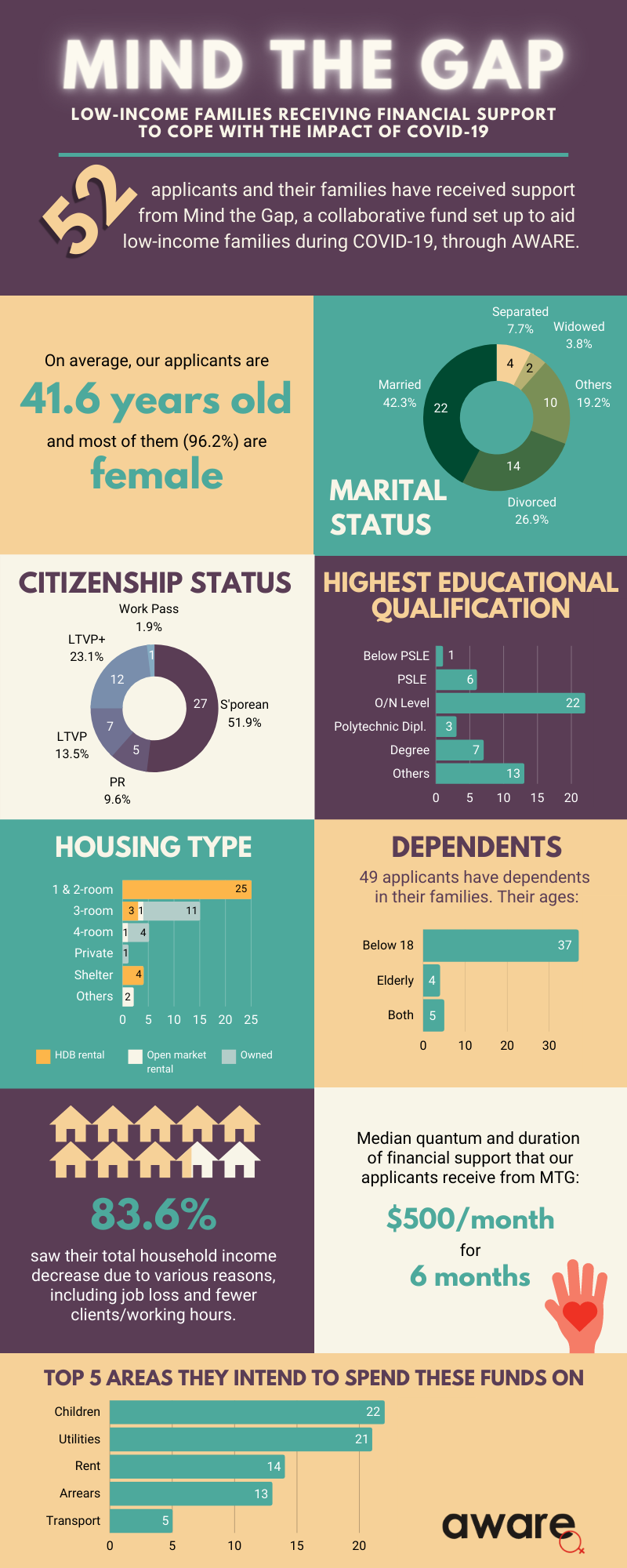
In collaboration with Beyond Social Services and other organisations, AWARE has been providing support to low-income families through the Mind the Gap COVID-19 relief fund.

AWARE has focused its support on households with single mothers, migrant spouses and self-employed persons. From MTG, most families receive $500 a month for six months in 2020.

We’ve put together this infographic with more details about our applicants. Read on.

For more information on Mind the Gap, click here (Please note, we are no longer accepting new applications, but we can refer applicants to other partner organisations.)