Author: Comms Executive

POSITION FILLED: We are hiring! Programme Manager, CARE

We are no longer accepting applications for this role.

AWARE is hiring a manager to coordinate and lead our case management and counselling service. This is a senior management position in a thriving organisation and requires an experienced practitioner, preferably with a background in social work and/or counselling, management and working in an organisational setting. A willingness to embrace and develop a broad range of counselling models, underpinned by gender- and trauma-informed theory, is preferred.

The successful candidate will hold a small number of complex cases but will spend most of their time managing the service and supporting AWARE’s commitment of being trauma-informed at all levels. Professionalism, leadership and management skills are essential. Close liaison with CARE counsellors and case managers, the CARE head of department, Operations team, external consultants, the Advocacy, Communications and Research department and the Executive Director will be part of the work.

Position: Programme Manager
Department: CARE
Commitment: Permanent, full-time
Salary range: SGD$5,200 – 6,200
Starting date: Immediate

Job Description

  • Oversee and manage the planning, development, administration, coordination, monitoring and evaluation of the befriending, case management and counselling service to deliver high-quality, gender- and trauma-informed services in line with AWARE’s mission and values.
  • Provide line management, leadership, empowerment, encouragement and support to the CARE team, including but not limited to: service delivery staff, operations team, case managers, counsellors, volunteers and interns to ensure smooth and effective delivery of the programmes.
  • Lead and monitor the programme such that it is delivered as per strategy plan, on time, within budget.
  • Identify service priority areas and introduce changes to service delivery in order to increase efficiency, improve quality or to respond to the changing landscape of Singapore’s services provision. Liaise and partner with relevant social service, voluntary and statutory services where relevant.
  • Provide casework and carry out planned interventions, including crisis intervention and arranging for various internal and external services to meet overall needs of survivors of gender-based violence (and their significant others). This includes liaising with authorities like the police and hospitals and various community organisations.
  • Build a competent and committed team through recruitment and onboarding. Fostering staff growth through coaching, supervision and identifying growth and training opportunities.
  • Promote the programme among relevant agencies, referrers, clients and potential clients as required.

Requirements

  • Recognised qualification in counselling, social work or psychology
  • Certification in trainings related to trauma-informed care practices
  • Min. 5-8 years experience working in an organisation (experience working in the voluntary/social service sector preferable)
  • Experience in managing service development (especially change management, programme evaluation, service improvement, implementation of new processes and policies)
  • Experience in recruiting and managing staff and volunteers
  • Strong commitment to the values of AWARE, gender- and trauma-informed practice
  • Excellent interpersonal skills and ability to maintain professional boundaries
  • Strong teamwork ethos and ability to work within a multidisciplinary team (social workers, counsellors, managers)
  • Ability to communicate appropriately with clients, co-workers and management, both verbally and in writing (second language such as Chinese, Malay or Tamil preferable)
  • Excellent case recording and record-keeping skills, ability to interpret data and produce reports (experience of research/audit preferable)
  • Good organisational and IT skills. Ability to manipulate and analyse both quantitative and qualitative data; strong Excel skills and project management skills
  • Ability to work under pressure and manage competing demands
  • Ability to work independently and support the workload management of team members

You must read and acknowledge our Privacy Statement here.

Please note that due to the large number of applications, only shortlisted applicants will be contacted for an interview. If you have any questions about this position, please email careers@aware.org.sg.

[POSITION FILLED] Senior Executive, S.P.A.C.E

We are no longer accepting applicants for this role.

AWARE is hiring a senior executive to join its newly created community engagement department, S.P.A.C.E (Support, Partner and Act through Community Engagement).

Position: Senior Executive
Department: S.P.A.C.E 
Commitment: Permanent, Full Time
Salary range: SGD $4,000-4,800
Starting date: Immediate
Citizenship: Singapore citizen/Permanent Resident 

Job Description:

Reporting to the S.P.A.C.E. Manager, you will be part of a three-person team responsible for leading and implementing S.P.A.C.E.’s community engagement programmes. Your role will include the following responsibilities:

  • Conceptualise, develop, market and run new community programmes such as a youth peer sex ed programme and feminist leadership programme for young leaders
  • Engage the community in the Dover heartland with programmes that promote equality, dignity, and inclusion
  • Collaborate with partners from government and non-governmental organisations, community partners, volunteers and sponsors on programmes and initiatives that promote gender equality
  • Work closely with internal teams to create and deliver programmes
  • Train on gender-related topics and facilitate gender-related workshops for community audiences
  • Coordinate volunteers and manage volunteers to ensure they are fulfilling their responsibilities
  • Organise and coordinate events and projects

The role will be subject to satisfactory references and a three-month probation period. At times, weekend and evening work may be required.

Requirements, Competencies and Personal Characteristics:

  • Minimum 5 years of related experience
  • Excellent communication and interpersonal skills and versatility to work effectively with diverse communities, e.g. youths, grassroots, marginalised or low-income communities
  • Strong organisational and time-management skills; good multitasking skills with attention to detail
  • Public speaking, training and/or facilitation skills
  • Good problem-solving skills to address challenges that arise during planning and implementation of projects
  • Ability to find creative ways to motivate, inspire and educate community members
  • Enthusiasm and ability to motivate, guide and mentor volunteers
  • Ability to follow-through and communicate responsively
  • Good knowledge of computer software applications (Google apps, Powerpoint, Excel, MS word, Canva, etc.)
  • Self-motivation, proactivity and adaptable work attitude
  • Proficiency in Chinese or Malay is an asset
  • Strong belief in gender equality and the values of AWARE
  • Warm and friendly attitude and high EQ, energised by volunteerism, working with people and networking
  • Patience and diplomacy
  • Confidence to voice opinions to ED, Board and colleagues
  • Ability to work independently while contributing to an excellent team dynamic

You must read and acknowledge our Privacy Statement here.

Please note that due to the large number of applications, only shortlisted applicants will be contacted for an interview. If you have any questions about this position, please email careers@aware.org.sg.

[Position Filled] Senior Executive, Development and Partnerships

We are no longer accepting applications for this position. 

AWARE is looking for a Senior Executive to join its dynamic fundraising team, led by the Executive Director.

As a key member of our fundraising team, you will be supporting the planning and execution of our signature AWARE Ball and online fundraising campaigns, building strong relationships with our donors and partners, and writing grants and proposals to meet our fundraising goals. You will learn how to carry out effective fundraising strategies while helping AWARE obtain the resources necessary to operate its services and advance its mission of promoting women’s rights and gender equality.

An ideal candidate is someone who has strong project management, communication, marketing and analytical skills. This is an exciting opportunity for a professional who is savvy, hands-on, driven by a strong desire for social impact and looking to learn and grow in a fast-paced environment.

Position: Senior Executive
Department: Secretariat
Commitment: Permanent, Full Time, 40 hours a week
Salary range: SGD $3,800 – 4,800
Starting date: Immediate

Job Description:

  • Implement AWARE’s fundraising strategies and initiatives
  • Support the planning and execution of the annual AWARE Ball, online fundraisers and other donor events
  • Liaise with donors and execute donor stewardship strategies, including preparation of donation appeals, updates and appreciation letters
  • Assist with funding proposals, grant applications and reports for government, corporate and philanthropic entities
  • Conduct research, data mining and analysis for donor projects

Requirements:

  • At least 3 years of related work experience and relevant educational qualifications
  • Experience with fundraising or with the social sector would be an advantage
  • Excellent interpersonal, empathy and communication skills in English (verbal and written)
  • Comfortable and adept at using technology, including Google Suite, Excel, CRM or other database system
  • Good analytical and problem-solving skills
  • Strong project planning: creative, adaptable and a self-starter
  • Superb time-management and organisational skills
  • Competency to manage positive working relationships with a broad range of stakeholders and partners
  • Good eye for design and familiarity with use of photo-editing software is advantageous
  • Strong belief in gender equality and the values of AWARE

You must read and acknowledge our Privacy Statement here.

Please note that due to the large number of applications, only shortlisted applicants will be contacted for an interview. If you have any questions about this position, please email careers@aware.org.sg.

[POSITION FILLED] Programme Coordinator, CARE

We are no longer accepting applicants for this role.

AWARE’s CARE team is looking for a Programme Coordinator. As a counsellor, the programme coordinator will support women in distress along their journeys of healing and recovery, while helping the counselling team in its day-to-day operations and programme development.

Position: Programme Coordinator
Department: CARE
Commitment : Full-time, Monday – Friday, 40 hours a week (Permanent)
Salary range : $4,000 – 4,500
Starting date : Immediate
Citizenship : Singapore Citizen/PR

Job Description:

  • Coordinate and ensure smooth running of gender- and trauma-informed counselling services with the support of an admin team
  • Provide peer clinical support to intern, volunteer and contract counsellors
  • Provide empowerment, encouragement and support to the counselling team, and liaise with staff and volunteers from other departments as necessary
  • Support efforts linked to counselling service and quality issues
  • Support efforts for recruitment, onboarding and engagement of new interns and contract counsellors
  • Support capacity-building and engagement efforts for contract counsellors
  • Promote the counselling service among relevant agencies, referrers, clients and potential clients as required
  • Maintenance of appropriate record-keeping systems in line with data protection
  • Provide a professional and high-quality level of counselling


Requirements:

  • Singapore Citizen/Permanent Resident with at least 5 years of counselling experience
  • A minimum qualification of a Master’s Degree in Counselling, Psychology or related fields preferred, with trauma management credentials a bonus
  • Experience working in the voluntary/social service sector preferable
  • Excellent interpersonal skills, strong teamwork ethos and ability to work within a multidisciplinary team (social workers, counsellors, managers)
  • Ability to communicate appropriately with clients, co-workers and management, both verbally and in writing (second language such as Chinese, Malay or Tamil preferable)
  • Excellent case recording and record-keeping skills
  • Proficient with computers, Google Drive apps and MS Office
  • Ability to work under pressure and manage competing demands
  • Strong commitment to the values of AWARE and to gender- and trauma-informed practice

You must read and acknowledge our Privacy Statement here.

Please note that due to the large number of applications, only shortlisted applicants will be contacted for an interview. If you have any questions about this position, please email careers@aware.org.sg.

AWARE transports guests to Pulau Utopia, raises a ground-breaking $620,000 at 10th annual Ball

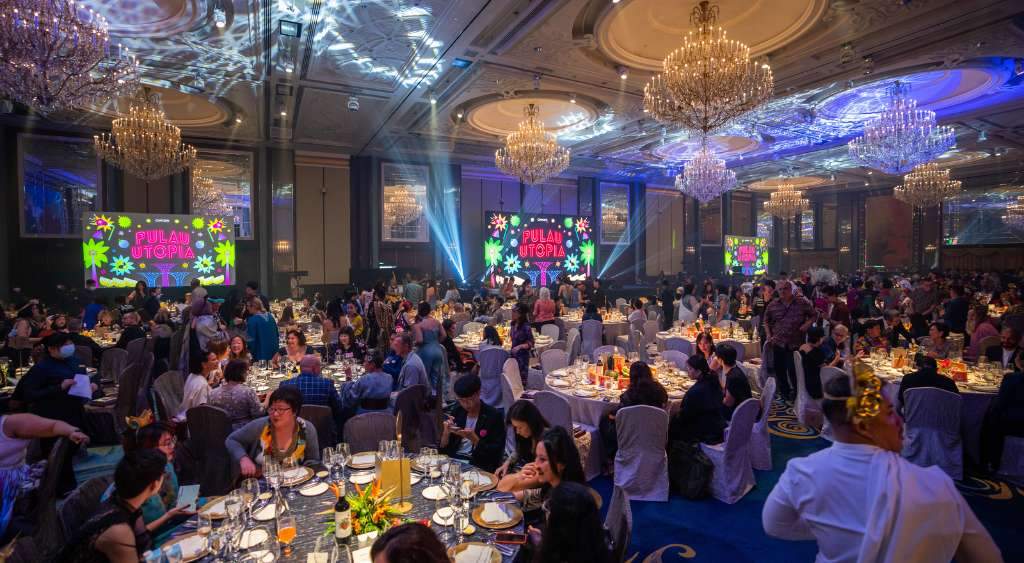
On Saturday, 12 November 2022, AWARE transformed the Shangri-La Singapore ballroom to Pulau Utopia, an island paradise of gender equality and social justice. The event marked AWARE’s 10th annual fundraising Ball, following a hiatus last year due to enhanced Covid-19 measures.

Pulau Utopia proved to be AWARE’s biggest Ball yet, in terms of guests and funds raised. Decked out in tropical glitz and glamour, our 600 guests pooled together a spectacular total sum of $623,400 through table sales, donations, lucky dip, wine sales and both silent and live auctions. This amount exceeded AWARE’s initial target of $600,000. With the Tote Board’s additional matching of $100,000, the grand total raised from this single event comes to an astonishing $723,400.

(L-R) Host Rishi Budhrani, AWARE Executive Director Corinna Lim and host Pam Oei

A sum of $220,000 from this total goes towards the launch of S.P.A.C.E (Support, Partner and Act through Community Engagement), a new AWARE initiative aimed to inspire, empower and connect people to create a fairer, more compassionate and gender-equal future.

S.P.A.C.E, as AWARE Executive Director Corinna Lim announced to Ball attendees, will “harness all the energy, the talent, the idealism, hope and frustration of the people who want to build a more just, equal, inclusive Singapore. S.P.A.C.E will incubate young groups, and also train the next generation of feminist leaders, whatever their gender.”

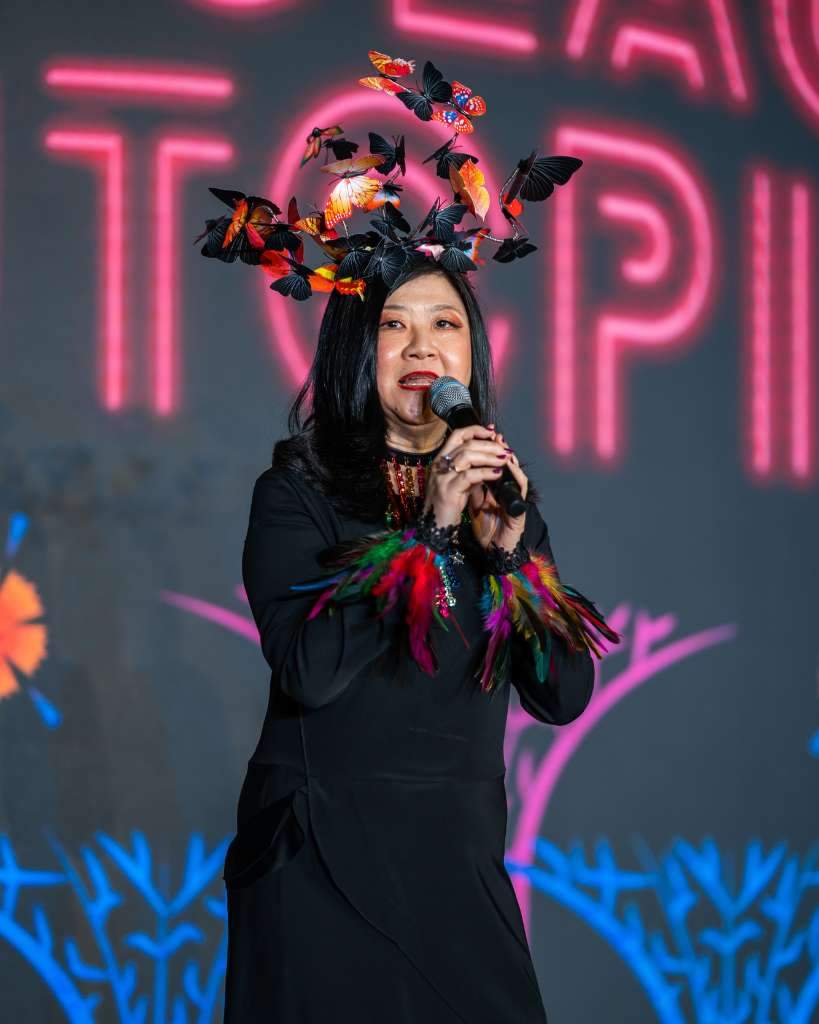
In her opening remarks, AWARE President Ong Soh Chin thanked the many AWARE feminists who came before her. “I am here today because of these pioneering women who spoke up. So tonight, I want to celebrate them, as well as the many young women, and men, who continue to do pioneering work speaking up for a more gender-equal society… Thanks to you, we can dream of a Pulau Utopia, and try to make it as real as humanly possible.”

AWARE President Ong Soh Chin

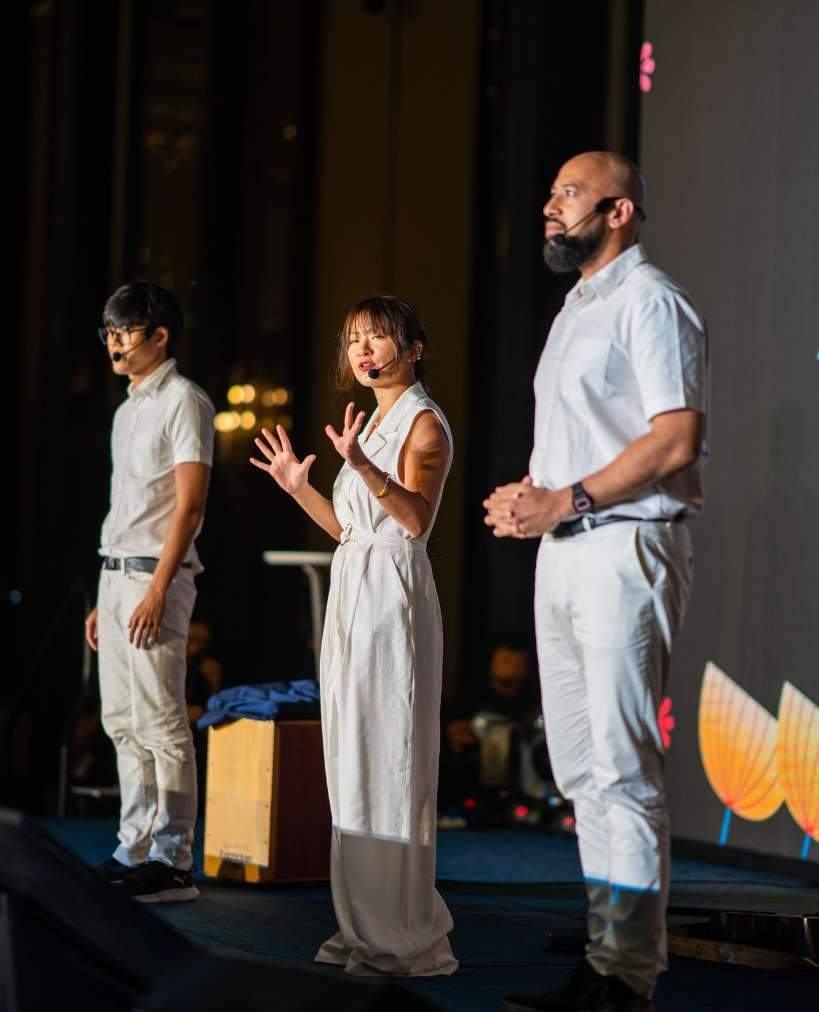
The night’s entertainment programme was three hours of delight, with plenty of feminist twists. Actor-comedians Pam Oei and Rishi Budhrani, paired again as hosts for the Ball, introduced the show. Then, guests were treated to a special collaboration by Marc Nair, Mark Nicodemus Tan and Inch Chua with a piece titled “We Have Something To Say”. The medley commended Singapore’s landmark White Paper on Women’s Development published earlier this year, while providing light-hearted jabs at some of its initiatives.

(L-R) Mark Nicodemus Tan, Inch Chua and Marc Nair

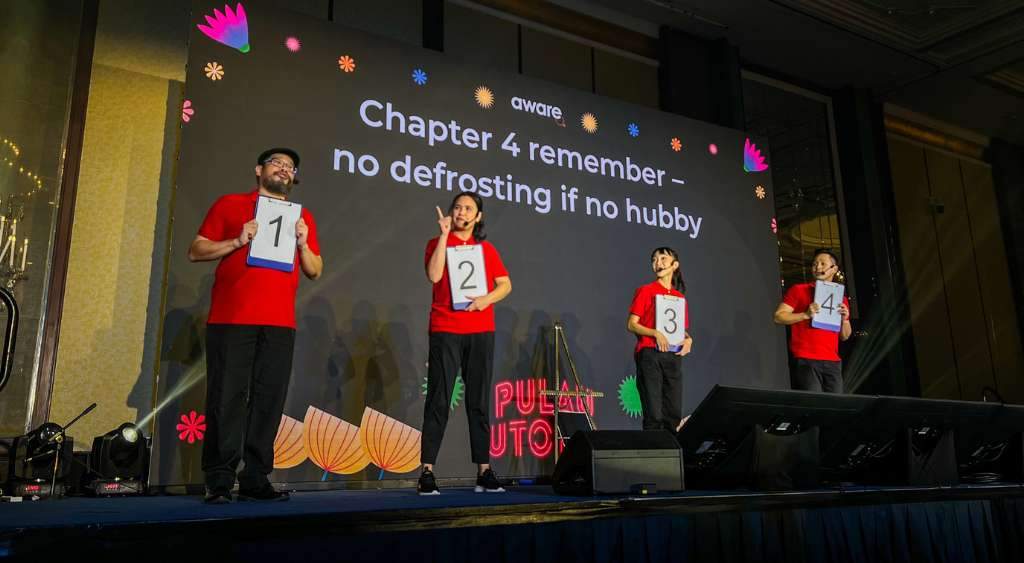
Afterwards, Chestnuts, who have been entertaining the AWARE community since the organisation’s first ball in 2011, returned with more side-splitting musical satire. While AWARE’s traditional Alamak Awards — handed out to the year’s most egregious instances of sexism and discrimination in Singapore — were not officially given out this year, Chestnuts still lampooned three noteworthy items from 2022: Hwa Chong Institution’s sex education faux pas, overly restrictive polices surround social egg freezing and National Crime Prevention Council’s insensitive Facebook ad deriding Amber Heard.

Chestnuts

Pulau Utopia saw the return of another exciting Ball tradition: the Live Auction, hosted by auctioneer Shaun McEwan. The electrifying segment saw guests bidding on exclusive experiences offered by our corporate sponsors, including an Antidote Cruise with Dr. Karenne Tun (organised by 1880), a three-day two-night stay at Montigo Resorts Nongsa (by KOP) and six-day five-night Peru Sacred Valley Exploration by Pudu Puda Travel. This Live Auction complemented the ongoing Silent Auction, which was launched a week before the Ball and featured jewellery by Lee Hwa Jewellery and Ivy Masterpiece; pre-loved luxury bags by Huntstreet; curated tours of Tiong Bahru by Carolyn Oei and Marc Nair; feminist tours of the National Gallery by Ng Yi-Sheng; a Peranakan home-dining experience accompanied by a violin solo by Lynnette Seah; and a “Road to Repeal” talk and dinner with folks from Pink Dot and Ready4Repeal.

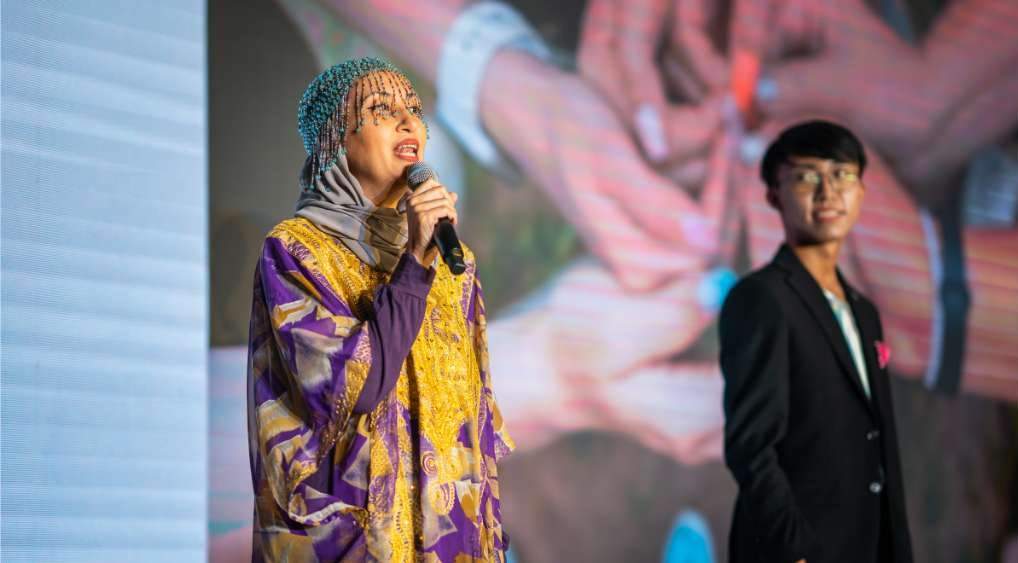
After the auction, AWARE officially launched the first programme under the new S.P.A.C.E banner: a 12-month Community Leadership Programme designed to support and develop emerging changemakers. Guests were introduced to five pioneer S.P.A.C.E “cadets”— Hana Alhadad, Shaun Loh, Nisha Rai, Han Yi and Michelle Low—who took the stage to recount their own experiences with gender inequality, and how these motivate them to fight for change.

(L-R) Hana Alhadad and Shaun Loh

The night drew to a close with the announcement of the lucky dip’s big draw. Three winners went home with, respectively, a Shiseido 150th Anniversary Collection VIP set; a three-day, two-night stay at the St. Regis Hotel; and the grand prize of a two-day, one-night stay at Montigo Resorts Seminyak Deluxe two-bedroom spa villa. Then came the announcement of the night’s three best-dressed individuals and best-dressed table. Finally, long-time AWARE Ball mainstay DJ Aldrin kicked off an exhilarating dance set.

Finalists in the Best Dressed contest

The Ball would not have been possible without the generous support of AWARE’s corporate sponsors KOP Properties Limited and Kah Motor, and official partners Ppurpose, Senses AVL, Cornerstone Wines, World Scientific and Kanyeka.

Missed the Ball but wish to make a donation anyway? Do so here!

Photography by Wesley Loh/Memphis West Pictures and Kathleen Cheong

Workplace discrimination may be more common than you think. Here’s why.

This op-ed was originally published in Southeast Asia Globe on 24 November 2022.

More than half of workers in Singapore have experienced discrimination in the past five years.

An  eye-opening new survey conducted by gender equality organisation AWARE and consumer research company Milieu Insight revealed that 55% of the Lion City’s workers had been subject to discrimination at work—including discriminatory job advertisements, discriminatory practices in appraisal and promotion, and company policies that disadvantage certain groups.

The survey was conducted at a pivotal moment in Singapore’s journey towards fair workplaces: one year after Prime Minister Lee Hsien Loong announced that the country would enshrine its Tripartite Guidelines on Fair Employment Practices (TGFEP) into formal anti-discrimination legislation—thereby placing a new legal obligation on all employers in Singapore to adhere to the TGFEP’s principles of fair employment.

One thousand respondents, nationally representative by age, gender and race, were polled for the landmark survey, which adopted an expansive definition of discrimination encompassing direct discrimination, indirect discrimination and discrimination-related harassment. The broad range of discrimination covered is unprecedented in Singapore and reveals a hidden underside of widespread injustice in the Singaporean workplace.

Direct discrimination is only one puzzle piece

A common misconception is that workplace discrimination is clear-cut: e.g. recruitment processes that specify the exclusion of certain races; insults or belittlement at the hands of colleagues or superiors; or outright firing after disclosing one’s maternity status. Yet this is not always the case.

Direct discrimination results when someone is treated differently due to their characteristics, such as gender, race, disability or age. Indirect discrimination occurs when an organisation-wide policy puts marginalised groups at a disadvantage: For example, a blanket ban of head coverings in the workplace, though it applies to all employees, will disproportionaly affect those who don hijabs. And discrimination-related harassment refers to unwelcome conduct, based on an individual’s traits, that creates a hostile work environment.

The most common experience of discrimination reflected in the survey was unfair company policies or practices, such as prohibitions against flexible work arrangements, which disadvantage those with caregiving responsibilities—18% of respondents recounted such behaviour. (Caregiving and family responsibilities, it should be noted, fall disproportionately on women.) This was followed by discriminatory employment practices in relation to performance appraisal and promotion (17%), such as receiving a poor performance appraisal following the disclosure of their pregnancy, disability or health conditions.

Another 17% recounted job advertisements that mandated preference for certain characteristics not relevant to the job scope. Examples given in the survey included preference for a certain race, gender or persons speaking a particular language.

Some groups are more vulnerable than others

The most common grounds of discrimination as reported by respondents were race (41% of those who faced discrimination), age (35%) and gender (23%).

If we drill down into the characteristics of these discrimination victims, we get a clearer picture of the relative vulnerability of particular demographics. Four groups of respondents stood out as reporting a higher incidence rate than average: 89% of minority races experienced discrimination compared to 44% of the majority Chinese race; 78% of persons with disabilities compared to 50% of those without; 68% of LGBTQ persons compared to 56% of those who did not identify as LGBTQ; and 58% of women compared to 53% of men.

None of this should surprise, considering the relative lack of understanding in Singapore around disability, diverse sexual orientations and gender identities, and the many challenges that stymie working women, such as caregiver burden, maternity and even period pains. When we consider that many individuals exist at the intersection of more than one of these identities, their vulnerability becomes even more pronounced.

One person with disabilities who faces workplace discrimination is Edgar (not his real name), who has osteoarthritis. “Every step I take is painful. It hurts when I stand up or try to sit down,” he says. “Recently, I’ve needed a wheelchair to minimise the pain when I move over longer distances.”

However, after Edgar started using his wheelchair at work, he noticed a change in his employer’s demeanour. “My employer became impatient and would show disdain for me. Some days, I greeted them and was treated as if I was invisible. They also told me off for using the wheelchair at the workplace, claiming that I was damaging the property, especially at various access points.”

Frustratingly, his employer doesn’t display any understanding of Edgar’s condition. “They keep telling me to sign up with a gym to lose weight and therefore minimise the pain. Despite the doctor’s notes, they seem to have concluded that I am lazy and whinging over nothing. My job should not be a physically demanding one, but my employer seems to think that I am not pulling my weight if I don’t do anything physical at the workplace, like moving large boxes or furniture around, on top of my existing duties.”

When he asked if he could speak to management about facilitating his movement around the workplace, Edgar’s request was initially ignored. “When I repeated it in writing, through the proper channels of communication, I was labelled a troublemaker, my actions deemed treacherous. My employer even went so far to suggest that I was being difficult when I provided medical letters to explain my condition.”

Edgar then expressed a desire to clarify his situation with management. While he hoped to discuss solutions regarding accessibility to and around the workplace, however, “it became more of a witch hunt: Higher-ups used the occasion to tell me off for being inconsiderate and not getting approval to use such assistive devices at the workplace. There was even some insinuation that I may stand to lose my job.”

After this slew of direct discrimination, lack of reasonable accommodations and open hostility from colleagues, Edgar approached AWARE’s Workplace Harassment and Discrimination Advisory (WHDA) and is receiving emotional support. “More must be done to build a culture of inclusivity, respect and, dare I say, appreciation for people with disabilities,” he says.


Barriers to seeking help

The negative reactions Edgar faced when he tried to discuss his situation with those at work may indicate why many might find discrimination hard to report. The AWARE survey found that 54% of those who had faced discrimination did not report it to any channels (e.g. Human Resources, a boss or senior, Ministry of Manpower and so on). When asked why not, 36% said they did not believe that the discrimination was “severe” enough; 30% said they did not trust authorities to act on the report, and 29% said they did not have enough evidence of discrimination.

Indeed, AWARE’s WHDA has found that employees often hesitate to report their experiences when their companies have a history of inaction. These employees often express the fear that their companies will retaliate against a complaint, e.g. by dismissing them or making their work environments hostile through harassment and bullying. Witnesses to discrimination may also share this fear and hesitate to support them with making a report, leaving victims of certain kinds of discrimination with little supporting evidence for their case.

Sadly, regardless of whether they sought recourse, both the respondents did and did not report faced adverse impacts: An almost identical proportion of those who reported discrimination (29%) and those who did not report (28%) ended up quitting their jobs.


How effective will legislation be?

The upcoming legislation provides an optimistic outlook, but there are still a number of potholes into which the law may yet fall.

One centres on the grounds upon which workers will be protected. The Guidelines set to be enshrined into law protect employees from discrimination on the basis of age, race, gender, religion, marital status and family responsibilities and disability – but not sexual orientation and/or gender identity. In addition, Singapore’s “Enabling Masterplan 2030”, a national roadmap that charts the path towards a more inclusive society, uses a definition of “disability” that does not cover those with mental or other invisible impairments.

These gaps in the existing discrimination lexicon, if enshrined into law as is, may leave out a large chunk of the country’s most vulnerable.

The new legislation should address experiences of discrimination at different stages of the employement cycle, from recruitment to retrenchment, including for example when mothers return to work from maternity leave. It should also cover reasonable accommodation, include discrimination-related harassment as a form of discrimination and, to better enable victims to recognise and report discrimination, contain clearly illustrated examples that explain a range of discriminatory behaviours.

The multicultural harmony upon which Singapore prides itself can only truly be achieved when all groups of people feel equally protected under the law. A fairer and more equitable society is coming into sight on the country’s horizon. Whether it lives up to hopes is currently in lawmakers’ hands.

Corinna Lim is executive director at AWARE, Singapore’s leading women’s rights and gender equality advocacy group.

AWARE’s Position on Section 424 of the Criminal Procedure Code

Section 424 of Singapore’s Criminal Procedure Code (CPC) was introduced with the intent of ensuring that serious crimes are reported to the police and perpetrators taken to task. It states in summary that every person aware of the commission of, or the intention of any other person to commit, any arrestable offence listed in Section 424 must, in the absence of reasonable excuse, immediately give that information to the police.

Today, Section 424 of the CPC is being reviewed by the government. As it stands, the list of arrestable offences covers sexual assault, including rape.

However, various parties’ obligation to file a police report is not clear. Nor is it clear what qualifies as a “reasonable excuse” not to file a report.

SUPPORTING SEXUAL ASSAULT SURVIVORS

AWARE’s Sexual Assault Care Centre (SACC) has been providing support services to survivors of sexual assault since its launch in May 2014. The centre was developed from AWARE’s Sexual Assault Befrienders Service, which had previously launched in 2011.

Sexual assault, including rape, is often traumatic, and it can take a long time for survivors to recover. We adopt a trauma-informed approach when supporting survivors: prioritising their physical and emotional safety and their agency, and empowering them to make informed decisions about their lives and recovery journeys.

Over the last five years, SACC has seen an increase in sexual assault cases. The total number of cases served by the centre exceeded 1,000 cases in 2020, and again in 2021.

In almost 80% of these cases, the perpetrator of sexual assault had been acquainted with the survivor in some way. The majority of survivors experienced some form of physical sexual violence: More than 60% experienced physical sexual harassment, rape and/or sexual assault by penetration.

AWARE’S APPROACH TO FILING A POLICE REPORT

When clients come to SACC for support, we provide them with all the information they need to come to an informed decision about filing a police report, including legal advice.

When clients are unsure of their prospective success of taking perpetrators to task due to lack of evidence, we highlight the deterrent effects of filing a police report. If they are afraid of filing a police report by themselves, SACC staff accompany them to the police station.

We generally do not file police reports on behalf of our clients. This is because survivors who come to SACC are doing so primarily to seek psychological and emotional support. They need not necessarily disclose full case details to us for this purpose, and we might not always be aware of all the facts of their case.

We also recognise that the agency of a survivor is central to the recovery process. Filing a police report without their consent would likely put tremendous psychological stress on survivors, and compound existing feelings of helplessness and loss of control.

The exceptions to the above are: when we cannot determine that the client or a related person is safe, or when the case involves minors under the age of 16 and there is no other relevant authority involved (e.g. the Early Childhood Development Agency, school, social worker or protective adult such as a parent).

In such circumstances, we would alert either the police or Child Protective Services, who might be better placed to help the child make a police report at some future point.

PERSISTENT UNDER-REPORTING OF SEXUAL ASSAULT CASES

In spite of our best efforts to support survivors and provide relevant information, we know that many who experience sexual assault ultimately do not file police reports.

In 2020, 7 in 10 clients seen by SACC did not file police reports. We understand that most of these clients chose not to report because they:

  1. Were worried about how their families or friends would react (58% of N=190 cases surveyed);
  2. Feared that they would not be believed or that they did not have enough evidence (60% of N=190 cases surveyed).

Many survivors understand that engaging the criminal justice system can be a drawn-out process. Also, having to recall and recount violent incidents during the investigation process may cause them to experience re-traumatisation, impeding their recovery.

As survivors are acquainted with their perpetrators in majority of the cases, many survivors also might not want to file police reports in order to prevent their perpetrator from being convicted of a crime, and to prevent the relationship from becoming irreparable.

INTERNATIONAL FINDINGS

International studies have shown that mandatory reporting deters survivors from seeking support. Many countries with similar mandatory reporting laws—such as the United States, Australia and Canada—have either abolished the law or extensively clarified the obligations under the law.

In a 2020 study* looking at the impact of mandatory reporting laws on survivors of intimate partner violence in the USA, more than a third of the sample (N=2,462) did not seek potential support for fear that their experiences of violence would be reported to an official or authority figure. Of those who received warnings that certain offences had to be reported, about 60% (N=341) said that the warning changed what they chose to disclose about their domestic violence and abuse, with some withholding information and/or misrepresenting their experiences.

*Lippy, C., Jumarali, S.N., Nnawulezi, N.A. et al. The Impact of Mandatory Reporting Laws on Survivors of Intimate Partner Violence: Intersectionality, Help-Seeking and the Need for Change. J Fam Vol 35, 255–267 (2020). https://doi.org/10.1007/s10896-019-00103-w

RECOMMENDATIONS FOR THE REVIEW OF SECTION 424

Our experience, in line with international findings, is that mandatory reporting deters survivors from seeking help, and that it runs counter to the goal of encouraging reports to the police.

If making a police report was the condition upon which support was offered to survivors, many would likely withhold or withdraw information from social service agencies (SSAs).

Section 424 of the CPC needs to be reviewed in a way that strikes a balance between law enforcement and minimising re-traumatisation. It must recognise the well-being of survivors, and recognise that safety, transparency, autonomy and collaborative process are integral to supporting their recovery.

In this regard, we propose the following recommendations.

First, SSAs should not have to report on behalf of adult survivors unless there is risk that the survivor is unsafe. This will ensure that adult survivors are not deterred from seeking help when they need it. SSAs should have the discretion to balance client trust and confidentiality with prospective danger, via the following definition of reasonable excuse: “Reasonable excuse” exists where a Social Service Agency reasonably determines that:

  • It is necessary to maintain client trust and confidentiality in respect of the information that would otherwise trigger a S424 duty, so as to effectively provide that support and assistance; and
  • The risk of prospective danger to the client or another person is not sufficiently clear or significant as to outweigh the need for trust and confidentiality. (The fact that an assailant has not been identified or apprehended should not by itself be taken to establish such a risk.)

Second, reporting can be mandatory when the case involves minors below the age of 18, in line with the definition of a “young person” set out in the Children and Young Persons Act. This is because minors below 18 are not of legal or statutory age to make the right decisions for themselves.

Third, companies should have a legal duty outside existing criminal law and in labour laws—such as the Employment Act or the forthcoming workplace discrimination legislation—to take disciplinary action for inappropriate behaviour and put in place proper training and processes to address them. When appropriate, serious cases can be reported to the police.

CONCLUDING REMARKS

We understand the importance of taking sexual violence perpetrators to task to prevent further assaults. However, more can be done to clarify mandatory obligations to report under the Section 424 of the CPC.

AWARE is happy to work with the government and to provide any further information needed for the review of Section 424 of the CPC.

[POSITION FILLED] Head of Operations

We are no longer accepting applicants for this role.

AWARE’s long-term organisational health is critical to our ongoing efforts to foster gender equality as a core value of Singapore society. The newly created position of Head of Operations is a significant opportunity for a seasoned professional to contribute expertise and experience—from either the corporate or not-for-profit sector—to further build and strengthen AWARE’s capability and ensure sustainable operations.

Reporting to the Executive Director and working in close and continuous collaboration with other senior leaders, the Head of Operations will play a key role in achieving AWARE’s goals through building organisational capacity, ensuring financially sustainable operations and managing risk and governance. The successful candidate will lead finance and people operations, information technology, governance and risk management as well as develop strategies that ensure that all of AWARE runs effectively and efficiently.

Commitment: Full-time, Monday to Friday, 40 hours a week
Salary range: SGD $7,000 – 8,500
Starting date: Immediate
Citizenship: Singapore citizen/PR

Job Description:

  • As a member of the Senior Leadership Team (SLT), anticipate future needs and opportunities to articulate and achieve AWARE’s long-term strategic direction and annual plans. Support the Executive Director in driving the annual and long-term strategic planning process. Provide meaningful data and insights to support and partner with the Executive Director and SLT in making complex organisational and strategic decisions.
  • Provide effective, inspiring leadership to a diverse team of professional staff, consultants and volunteers across the key strategic functions of finance, human resources, information technology, data and knowledge management, governance and compliance, risk management and administration. Manage, develop, evaluate and mentor staff through providing leadership and guidance in goal-setting, problem-solving, resource management and outcome achievement.
  • Build organisational capacity through designing and implementing infrastructure, systems and processes to ensure effective ways of working, as well as collaborative working relationships across the organisation. Develop and implement creative, pragmatic solutions that are appropriate for AWARE’s scale and culture.
  • Successfully lead organisational change and serve as a catalyst for innovation and continuous improvement for the organisation, while ensuring continued alignment with our vision and values. Continuously promote a culture of transparency and collaboration to ensure cooperation and engagement across AWARE.
  • Represent AWARE in dealings with government agencies, independent auditors, legal counsel and other service providers or external stakeholders as needed.
  • Monitor, measure and report on operational issues, opportunities, plans and achievements to the Executive Director and Board.

Preferred Candidate Profile:

  • Singapore Citizen/Permanent Resident with university degree and minimum 15 years’ total professional experience.
  • Significant experience leading motivated, high-performing individuals and teams in a way that is consistent with AWARE’s mission, vision and values (diversity, choice, gender rights, respect for others).
  • Well-versed in talent management and people operations, including payroll; able to attract, engage, develop and retain the right staff in the right roles.
  • Finance-literate, able to lead and direct financial analysis and reporting, forecasting and budgeting, and procurement.
  • Technologically savvy, well-versed in information systems and data management; able to leverage innovative tools and technologies.
  • Highly effective at change management in a well-established yet growing organisation.
  • Collaborative, energetic, self-motivated and personable with sound judgement and a positive, forward-thinking mindset.
  • Able to partner well across organisational levels and achieve results through others.
  • Passionate about solving problems, removing obstacles and making organisations work better; highly skilled at managing and prioritising in complex situations and excited about variety and challenge.
  • Shares AWARE’s feminist perspective and understands what drives people to work and volunteer in the non-profit sector.

You must read and acknowledge our Privacy Statement here.

Please note that due to the large number of applications, only shortlisted applicants will be contacted for an interview. If you have any questions about this position, please email careers@aware.org.sg.

Position Filled: CARE Senior Programme Executive

We are no longer accepting applicants for this role.

AWARE’s CARE department is looking for a Senior Programme Executive to carry out programme development, through monitoring and evaluation, to measure impact and ensure high and consistent quality for its various programmes. The role also involves supporting the Women’s Care Centre (WCC) and Sexual Assault Care Centre (SACC) with analysing data, drafting funding reports and liaising with external stakeholders.

Position: Senior Programme Executive
Department: CARE
Commitment: Permanent, full time
Salary range: SGD $3,800-4,800
Starting date: Immediate
Citizenship: Singapore citizen/PR

Job Description:

This role supports AWARE’s CARE Services, consisting of both Women’s Care Centre (WCC) and Sexual Assault Care Centre (SACC), in

  • Establishing, monitoring and evaluating performance indicators for CARE services and processes to ensure high-quality and trauma-informed practices
  • Ensuring that information gathered through monitoring activities is shared in a timely manner with Programme Managers, such that any issues and/or process gaps can be addressed
  • Assisting in the development of WCC and SACC programmes targeted at enhancement of services and processes
  • Developing data collection tools, and organising and analysing data collected to further CARE programmes and advocacy goals
  • Performing data visualisation, translating data into understandable, visually simple and powerful messages to inform decision-making and strategic short-term and long-term planning, as well as show impact of AWARE CARE’s work
  • Providing relevant, timely and accurate information to key stakeholders through various reports (e.g. monthly reports, funding reports, etc).
  • Liaising with and managing key internal and external stakeholders and collaborations
  • Working closely with relevant stakeholders to support each other’s work.

Requirements:

  • Minimum of 3 years of professional experience in a performance monitoring and/or evaluation role or programme management role or related experience
  • Relevant education qualifications in management, development or related fields. Experience in the social sector is a bonus
  • Excellent analytical skills. You should enjoy working with data to optimise data mining, cleaning, validation and analysis tasks with accuracy
  • Strong project planning: highly creative, adaptable and a self-starter
  • Superb organisational and time-management skills to meet deadlines in a high-paced environment while balancing workload and competing priorities
  • Ability to use initiative and judgement to solve problems independently
  • Strong belief in gender equality and the values of AWARE
  • Ability to main strict confidentiality of sensitive information
  • Proficiency in MS Office, especially Excel, PowerPoint and Word, and Google Suite
  • Excellent interpersonal and communication skills in English (verbal and written)

You must read and acknowledge our Privacy Statement here.

Please note that due to the large number of applications, only shortlisted applicants will be contacted for an interview. If you have any questions about this position, please email careers@aware.org.sg.